



Book links four bankers' gold policies to Great Depression
In 60 seconds
- Four central bankers—Norman, Strong, Schacht, and Moreau—tried to rebuild the gold standard after World War I and instead helped produce the Great Depression.
- War debts and German reparations created a closed loop no country could pay without wrecking itself or its neighbors.
- Britain’s 1925 return to gold at the prewar $4.86 parity forced deflation, elevated unemployment, and the 1926 General Strike.
- Benjamin Strong kept U.S. rates low to defend the pound, feeding the late-1920s stock bubble; he died in 1928 before the crash.
- Countries that left gold earlier recovered sooner; gold orthodoxy itself prolonged the Depression.
- Schacht’s later Mefo-bill financing of Nazi rearmament shows technical brilliance is morally neutral.
The big idea
Ahamed argues that the four central bankers treated gold parity as a natural law rather than a policy choice, and their drive to restore it at prewar values after a war that had made it obsolete produced the deflationary trap that turned the 1929 crash into a decade-long global depression. Recovery began only when countries abandoned gold one by one, proving the framework itself was the obstacle.
The book in brief
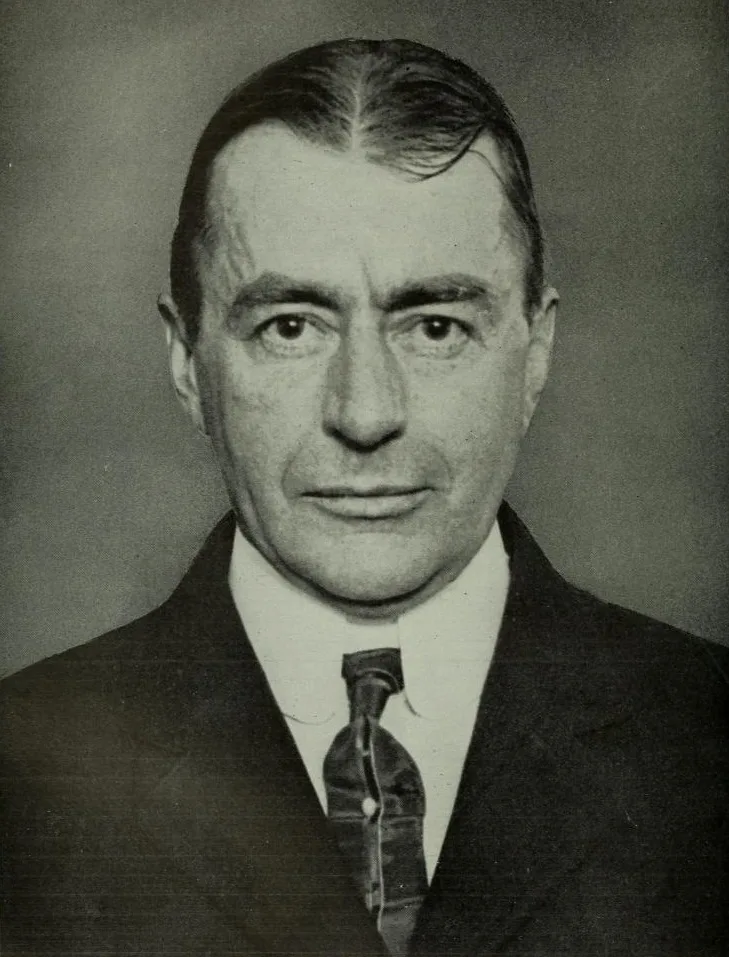
Ahamed opens on four men who inherited a shattered monetary order. Before 1914 the gold standard had worked amid free trade, mobile capital, and decades without a major war. World War I forced combatants off gold, financed itself through debt and inflation, and left Europe owing itself and America enormous sums. Montagu Norman, Benjamin Strong, Hjalmar Schacht, and Émile Moreau shared one conviction: returning to gold at prewar values was the only path back to normalcy.
That conviction collided with the war’s hidden bill. Versailles reparations on Germany and Allied debts to the United States formed a closed loop—Germany to pay France and Britain, who had to pay America, which wanted gold rather than goods and blocked the exports that would have earned the dollars. Temporary patches like the Dawes and Young Plans bought time without solving the constraint. In Germany the same pressure helped produce the 1923 hyperinflation; Schacht stopped it with the Rentenmark, a currency that worked through credible limits more than metal backing.
Britain then locked itself into pain. Norman pressed, and Churchill agreed in 1925, to restore the pound at the old $4.86 rate. Export industries became uncompetitive, unemployment stayed high, and the 1926 General Strike followed mine owners’ wage cuts. Across the Atlantic, Strong kept American rates lower than domestic conditions warranted to ease pressure on Britain’s reserves, feeding the speculative boom. He died in October 1928; his successors lacked his stature.
When the market crashed in October 1929, the initial shock was survivable. What deepened it was the response: gold-defending rate rises, weak lender-of-last-resort action through the 1930–33 banking panics, and a moralistic taste for liquidation. Britain was forced off gold in 1931 and began recovering earlier; France clung on into the mid-1930s and suffered longer. In Germany, after unemployment soared, Schacht returned under the Nazis and engineered off-budget Mefo bills to finance rearmament.
By the mid-1930s the global gold standard was effectively dead. The United States moved under Roosevelt in 1933; France’s Gold Bloc gave way in 1936. Ahamed’s closing arc is that a system designed for automatic adjustment became actively destructive once applied to economies with rigid wages, protectionist politics, and democratic limits on open-ended suffering. Monetary rules are human choices dressed as natural law.
Context
Liaquat Ahamed published the book in 2009, with the narrative explicitly shaped by the 2008 financial crisis and its rhymes with 1929. The framing invites readers to watch how central-bank ideology and personality can amplify a shock, though critics note it sometimes reads recent activism back into the 1920s more neatly than the record supports.
The key ideas

1
Four men, vanished world
Ahamed argues the prewar gold standard’s success was an accident of stability that four bankers tried to restore by force after the world sustaining it had vanished.
- MMontagu NormanBank of England; mercurial, secretive, pressed gold as honor
- BBenjamin StrongNew York Fed; most technically capable of the four
- HHjalmar SchachtReichsbank; brilliant, later enabled Nazi finance
- ÉÉmile MoreauBanque de France; suspicious of Anglo-American motives
Before 1914, gold worked because trade flowed freely, capital moved without restriction, and no major war had disrupted the system for decades. Ahamed introduces his protagonists as men of temperament as much as office: Norman mercurial and secretive at the Bank of England; Strong the most technically capable, at the New York Fed; Schacht brilliant at the Reichsbank and later entangled with the Nazis; Moreau suspicious of Anglo-American motives at the Banque de France.
Each inherited a wrecked version of the old order. The war had forced every combatant off gold and left piles of debt and inflated prices. Their shared answer was to treat a return to gold at prewar values as the only route to prosperity.
Ahamed’s claim, seeded here, is that this was a category error. Gold was treated as a natural law of finance rather than a policy choice with brutal deflationary costs once applied to economies that had changed underneath it. Britain in 1925 was not Britain in 1914: export markets lost, debt accumulated, a workforce unwilling to accept the wage cuts parity demanded.
The method is deliberately biographical. Ahamed follows personalities, not abstractions, because he holds that identifiable men making identifiable decisions—not impersonal market forces alone—made the crisis. National pride and institutional rivalry shaped choices textbooks often present as mechanical.
In practice: Britain’s postwar economy had lost export markets and faced workers who would not accept the wage cuts that 1914 gold parity required, yet the four men still treated that parity as non-negotiable.

2
The unpayable war bill
Ahamed treats reparations and war debts as a closed financial war that no country could settle without wrecking itself or its neighbors.
- 1Germany paysReparations demanded toward France and Britain
- 2Allies owe AmericaRoughly ten billion dollars in war loans due
- 3America blocks goodsTariffs and preference for gold over imports
- 4No sustainable flowCapital and price levels the postwar economy could not sustain
↻ and round again
The Treaty of Versailles imposed reparations on Germany that were, in practice, unpayable at the scale first proposed—figures commonly cited reached 132 billion gold marks. Ahamed presents the number less as economic calculation than political necessity: French and British leaders needed to tell exhausted publics that Germany would pay for the war.
Meanwhile the United States, having lent Britain and France roughly ten billion dollars, insisted on repayment and preferred gold to goods, while American tariffs blocked the exports that would have let Europe earn dollars. Germany had to pay France and Britain; they had to pay America; America would not accept payment in the form that made repayment possible.
Keynes appears early as a prophetic critic, warning that the bill would impoverish Germany and destabilize Europe. Ahamed treats the warning as substantially correct, while noting Keynes underestimated Weimar’s short-run resourcefulness and misjudged the political mechanics of escape.
The tangle was not a side issue to monetary policy. It was the central constraint that made gold-standard restoration nearly impossible without America acting as lender and buyer of last resort. Improvised fixes—the Dawes Plan, later the Young Plan—patched the problem without solving it.
In practice: The loop ran Germany → France and Britain → America, while U.S. tariffs blocked the goods that could have earned the dollars needed for repayment.
3
Hyperinflation as choice
Ahamed argues Germany’s 1923 hyperinflation was a political decision to print money rather than tax elites or default outright on reparations.
Path taken
Print to cover deficits and Ruhr resistance; spare industrialists and landowners from taxes
Paths refused
Raise taxes on elites or default openly on reparations
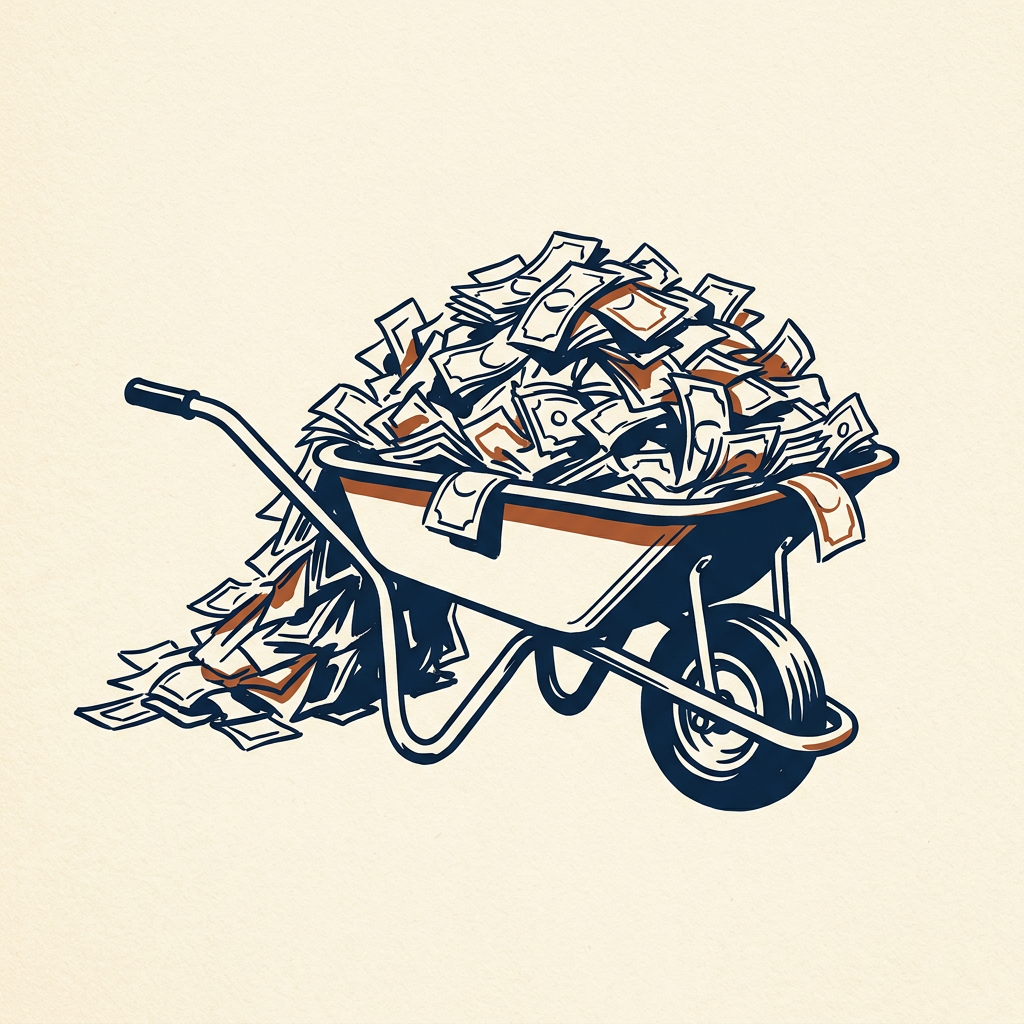
By 1923 the mark was worthless—prices doubling in hours, workers paid twice daily, wheelbarrows of notes traded for bread. Ahamed refuses the uncontrollable-disaster story. The Reichsbank under Rudolf Havenstein printed to finance deficits rather than raise taxes on industrialists and landowners who dominated politics, and passive resistance to the French Ruhr occupation required financing only the press could supply.
Schacht enters as the man who stopped the collapse. In November 1923 he introduced the Rentenmark, notionally backed by mortgages on German land and industry rather than gold. Confidence returned largely through psychological effect and disciplined issuance limits.
The broader point is that currency stability depends on credible commitment as much as commodity backing. The Rentenmark had no meaningful gold reserve, yet it worked because markets believed Schacht would not print it recklessly.
The human cost wiped out middle-class savings—a trauma Ahamed connects carefully, not deterministically, to later political radicalization. Schacht’s rise also fixed his conviction that reparations, not domestic policy, were Germany’s core problem, a belief that would shape his later interventions.
In practice: Schacht’s Rentenmark stabilized prices in November 1923 without meaningful gold reserves, relying on issuance discipline and restored confidence.

4
Poisoned prewar parity
Ahamed presents Churchill’s 1925 return to gold at $4.86 as economically reckless prestige policy that imposed deflation on British workers.
Norman spent years pressing for the prewar parity, treating it as national honor and financial credibility rather than a technical rate with real consequences. Churchill, as Chancellor, agreed in 1925 despite private doubts.
Keynes warned at the time that the policy would require driving down wages across the economy to make exports competitive again at an overvalued rate. That is what followed: coal, textiles, and other export industries lost competitiveness; unemployment stayed elevated through the 1920s; the 1926 General Strike rose directly from mine owners’ attempts to cut miners’ wages.
Gold orthodoxy had detached from its original economic logic. It was defended as a moral commitment and a signal that Britain remained the world’s financial center, even as it imposed deflation an economy could not bear. Norman privately worried yet pushed forward, from institutional momentum and an almost aesthetic attachment to gold as sound finance’s foundation.
The episode sets the pattern that would repeat after 1929: treat parity as sacrosanct, absorb pain through wages and jobs rather than question the rate, and mistake short-term credibility for long-term stability.
In practice: The 1926 General Strike followed mine owners’ wage cuts aimed at restoring competitiveness lost to the overvalued pound.

5
Strong’s split bargain
Ahamed shows Strong kept U.S. rates lower than domestic conditions warranted to help Britain’s gold defense, feeding a bubble he did not live to contain.
- 1927–1929Low U.S. rates help defend sterling; stock boom and margin lending build
- Oct 1928Strong dies; Fed loses its most capable leader
- Oct 1929Crash hits a divided, cautious Federal Reserve
Strong understood credit and speculation better than his peers, yet made a fateful trade-off. To help Norman defend the overvalued pound, he held American interest rates down, encouraging capital to stay in New York rather than seek higher returns in London, and easing pressure on Britain’s gold reserves.
Cheap credit fed the stock boom of 1927–1929. Margin lending and speculative fever built on an interest-rate environment shaped partly by transatlantic diplomacy rather than purely domestic needs.
Strong died in October 1928, before the crash. Ahamed treats the death as a costly accident: the Fed lost its most capable, confident leader just when decisive judgment was most needed. Successors lacked his stature and his willingness to override internal board resistance.
International monetary cooperation, however well-intentioned, created domestic distortions no single central bank fully owned. Strong managed American policy with one eye on London; the costs showed up in New York’s markets, leaving an leaderless Fed, a strained international system, and a bubble about to test every assumption.
In practice: Strong’s low-rate stance in the late 1920s was partly aimed at keeping capital from draining to London, directly easing pressure on Britain’s reserves while fueling New York speculation.

6
Crash meets gold faith
Ahamed argues the 1929 crash became a prolonged depression because gold-worshipping central banks refused to expand credit fast enough.
Off gold earlier
Britain from 1931: rates down, recovery begins sooner
Clung to gold
France and the Gold Bloc into 1936: longer stagnation and capital flight
Markets had crashed before without producing a decade-long depression. Ahamed holds the initial 1929 event was survivable; policy turned it into the Great Depression.
Without Strong, the Fed was divided and cautious, raising rates in 1931 to defend gold reserves when the domestic economy needed the opposite. Through the banking panics of 1930–1933, thousands of American banks failed as depositors fled; the Fed did not act as lender of last resort with sufficient force—partly from doctrinal commitment to convertibility, partly from a moralistic belief, associated with figures like Andrew Mellon, that liquidation of bad debts and weak firms was a necessary purge.
Britain, forced off gold in September 1931 under speculative pressure, could finally lower rates and began recovery earlier. France clung to gold longest and suffered into the mid-1930s. Comparative timing is Ahamed’s evidence: countries that abandoned gold earlier recovered sooner—a pattern later work by historians such as Barry Eichengreen reinforced.
The depth and length of the Depression were, in this account, a policy failure shared across four major central banks, not a natural consequence of the crash.
In practice: Britain’s September 1931 exit from gold let it cut rates and recover earlier than France, which stayed on gold into the mid-1930s.

7
Skill without a moral compass
Ahamed uses Schacht’s arc to show central-bank competence is morally neutral and can serve a destructive political project.
1923 Schacht
Rentenmark and issuance discipline restore confidence after hyperinflation
1933 Schacht
Mefo bills hide and enable rearmament spending under the Nazi government
After the Depression devastated Germany, unemployment soared past six million by 1932. Schacht, who had resigned the Reichsbank in 1930 over reparations, blamed Versailles and Weimar weakness and drifted toward Hitler as a strong alternative.
He returned to head the Reichsbank in 1933 and, as economics minister, engineered Mefo bills—off-budget instruments that funded rearmament while budgets appeared balanced, deceiving domestic and foreign observers about the scale of military spending. The same technical skill that stabilized the mark in 1923 now hid preparations for war.
Ahamed does not exonerate him. Schacht later fell out with Nazi leaders over the pace and recklessness of spending, spent part of the war in a concentration camp for suspected disloyalty, and was acquitted at Nuremberg on the argument that his economic role did not meet the legal threshold for war crimes.
The theme is book-wide: competence is useful to whatever project commands it. Schacht believed to the end he had served German economic interests—a self-justification Ahamed treats with skepticism and intellectual seriousness, given Schacht’s genuine continuing belief that reparations, not Nazism, caused Germany’s ruin.
In practice: Mefo bills let the Nazi regime finance rearmament off-budget while officially appearing to balance the books.

8
Gold’s slow death
Ahamed concludes the world economy recovered only as countries abandoned gold, proving the framework the bankers fought to preserve was the primary obstacle.
- 1931Britain forced off gold; recovery path opens
- 1933U.S. under Roosevelt devalues and leaves gold domestically
- 1936France and the Gold Bloc capitulate amid capital flight
By the mid-1930s the gold standard as a global system was effectively dead, though some countries clung longer. Britain left in 1931; the United States effectively abandoned it domestically under Roosevelt in 1933 through gold purchases and dollar devaluation; France held out until 1936 under the Gold Bloc before capital flight and stagnation forced capitulation.
Roosevelt’s devaluation was controversial even among his advisers. Ahamed presents the results as vindicating the move: American industrial production and prices began recovering once the deflationary anchor was removed—a pattern that appeared country after country, almost mechanically tied to departure timing.
This is Ahamed’s most technical stretch. He draws on later research for a near-linear relationship between how long a country stayed on gold and how long its depression lasted, while noting trade policy, banking structure, and fiscal choices mattered too. Still he treats gold’s deflationary bias as the common thread that made the slump global and prolonged rather than a set of separate national downturns.
The closing lesson is structural as well as personal: a monetary system built for automatic adjustment and free capital flows became destructive under rigid wages, protectionist politics, and democratic publics that would not tolerate open-ended suffering for an exchange rate.
In practice: U.S. industrial production and prices began recovering after the 1933 domestic break from gold, matching the earlier British pattern after 1931.
Key terms
- Gold standard System tying money to gold at fixed rates; Ahamed treats the postwar attempt to restore it at old parities as a deflationary policy choice, not a natural law.
- Prewar parity The old exchange rates, such as Britain’s $4.86 pound, that the bankers tried to restore after economies had already changed.
- Reparations Versailles charges on Germany—commonly cited up to 132 billion gold marks—that Ahamed sees as politically set and practically unpayable in the required form.
- Rentenmark Schacht’s 1923 replacement currency, notionally backed by land and industry mortgages, that stabilized prices mainly through credible issuance limits.
- Mefo bills Off-budget credit instruments Schacht used after 1933 to fund Nazi rearmament while budgets looked balanced.
- Dawes and Young Plans Improvised interwar schemes that rescheduled reparations and debts without removing the underlying closed loop.
- Gold Bloc Countries, led by France, that clung to gold into the mid-1930s and, in Ahamed’s account, suffered longer stagnation.
- Lender of last resort The central-bank role of supplying emergency credit in panics—which Ahamed says the Fed failed to perform with enough force in 1930–33.
What to do
- Ask, of any policy defended as a fixed rule, what real-economy pain it requires and who bears it.
- Read the original justification for an inherited rule before assuming it still fits current conditions.
- Build an explicit trigger to reconsider your framework under stress instead of doubling down when evidence turns.
- Separate technical competence from moral judgment: ask what a skilled leader is skilled in service of.
Questions to think with
- When does a monetary rule stop being a stabilizer and start being a prestige costume?
- Would a longer-lived Strong have changed the outcome, or was gold orthodoxy itself the binding constraint?
- How should technical brilliance be judged when it later serves a destructive regime?
- Which inherited economic ‘laws’ today function like 1925 gold parity—defended with yesterday’s logic?
- Who bears the first losses when a currency peg or budget rule is treated as untouchable?
The other side
The biographical focus risks personalizing structural failure: critics such as Eichengreen argue mass democracy and organized labor made wage deflation politically unsustainable regardless of who ran the banks, so better men inside gold orthodoxy likely could not have saved the system. The book also underweights the real economy—banking structure, agricultural overproduction, Smoot-Hawley tariffs, U.S. inequality, and debt-deflation and bank-failure dynamics stressed by Fisher and by Friedman and Schwartz—while its portrait of Schacht can feel too generous given his service to Nazi rearmament, and its 2009 framing sometimes projects post-2008 central-bank activism backward too neatly.
Who it's for
Readers who want the 1929–33 catastrophe through the personalities who steered money, and anyone tracing how 2008 rhymed with that earlier failure. History buffs get the human drama; readers seeking full quantitative economic history will want Eichengreen or Friedman and Schwartz alongside it.