



How Genghis Khan built systems that shaped the modern world
In 60 seconds
- Temujin's abandonment freed him to rebuild Mongol politics on personal loyalty and proven skill instead of clan blood.
- Decimal units and absorbed ex-enemies gave him centralized command no steppe confederation had held before.
- Smaller armies won through remounts, long-distance signals, borrowed siege engines, and selective terror that sped surrender.
- The Yassa shielded every faith's clergy and traveling merchants; the yam relay cut continental messages from months to weeks.
- Pax Mongolica put Eurasian caravans under one legal roof and moved Chinese printing, gunpowder, and paper money west.
- No fixed succession split the realm into rival khanates; the same routes later carried the Black Death that helped undo them.
The big idea
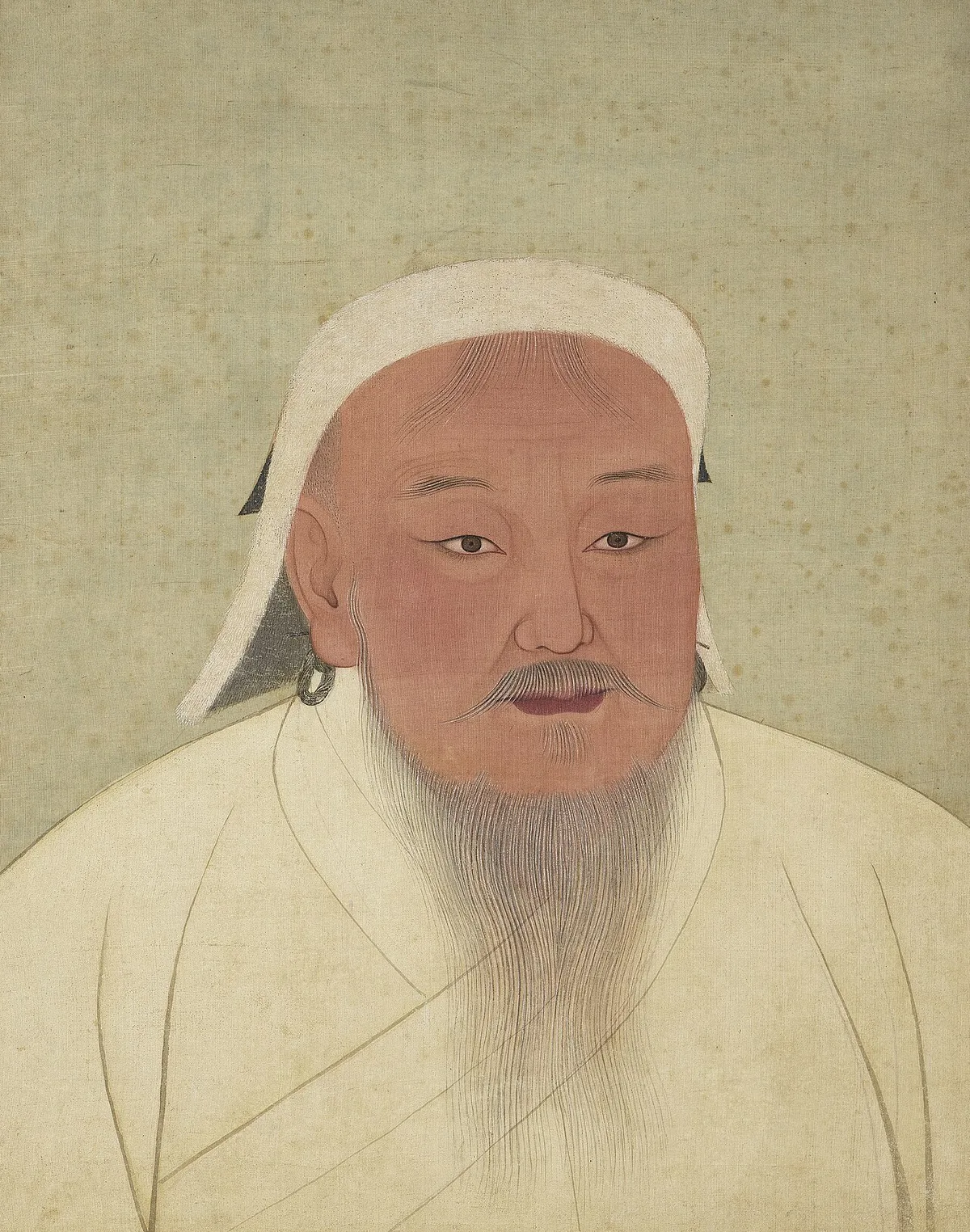
Weatherford argues Genghis Khan was less a simple destroyer than the architect of a meritocratic army, a tolerant legal order, a protected trade network, and a channel that moved Chinese technology across Eurasia. That connected world, he claims, helped create conditions later credited to the Renaissance, even as the same connectivity carried the plague that weakened the empire.
The book in brief
Temujin was born around 1162 into a minor Borjigin line. After Tatars poisoned his father, the clan cast out his mother and the children to live on roots, marmots, and fish. Weatherford's hinge is structural: with no aristocratic house behind him, the future Genghis Khan owed the old order nothing. Decades of blood-brother pacts, captivity, escapes, and shifting alliances ended in 1206, when a khuriltai named him ruler of a newly unified confederation.
Once in power he cut kinship out of the army. Units of ten crossed old tribal lines; commanders rose for skill, including men who had fought him. Conquered talent was absorbed when it submitted. He had Mongol law and administration written in the Uighur script and set down an internal record of his rise. Loyalty now ran to the khan, not the clan elder.
The same drive produced continental infrastructure. A law later called the Yassa taxed no clergy of any faith, protected envoys and merchants, and punished official abuse. The yam—horse stations a day's ride apart—let a rider with a paiza token cross thousands of miles in weeks. Weatherford treats this as long-term administrative intent, not raiding for its own sake. Under that single legal zone, silk, porcelain, spices, missionaries, and merchants moved farther and more predictably than before.
He further claims the empire worked as a transmission belt: Chinese printing experiments reached Mongol Persia decades before Gutenberg; gunpowder weapons and paper money traveled west with armies and travelers; scholars moved between Persian and Chinese courts. After Genghis Khan died in 1227, sons and grandsons divided the realm. Four khanates drifted apart—Kublai's Yuan took Chinese bureaucratic forms; the Ilkhanate turned to Islam—because personal loyalty to one leader left no reliable succession.
The bitter close is connectivity itself. The same corridors carried Yersinia pestis to Kaffa by 1347 and into Europe, where Weatherford notes an estimated one-third of the population died. Plague and rebellion helped topple the Yuan in 1368. Hostile chroniclers and later Soviet-era suppression in Mongolia, he argues, locked the pure-destroyer image in place until fieldwork after 1990 could reopen the record.
Context
Jack Weatherford's 2004 account is a general-audience revision of the barbarian caricature. The summary notes his research became possible only after Mongolia's 1990 political opening restored access long restricted under Soviet-aligned rule, when celebrating Genghis Khan was treated as a nationalist threat and sites tied to him were closed off.
The key ideas
1
Forged outside the clan
Weatherford claims Temujin's abandonment and steppe poverty, not noble birth, produced both the motive and the freedom to dismantle the aristocracy that had cast him out.
- c. 1162Temujin born into minor Borjigin line
- YouthFather poisoned; clan abandons the family
- RiseAnda pacts, captivity escape, shifting alliances
- 1206Khuriltai names him Genghis Khan
Temujin entered the world with almost no claim to rule. His Borjigin line was minor. When rival Tatars poisoned his father, the clan walked away from the widow and children. Status on the steppe meant livestock; they ate what they could catch.
That exclusion, Weatherford argues, is the book's real hinge. A prince bound to preserve his house would have rebuilt the old hierarchy. A boy owed nothing could invent a different one. He sealed an anda blood-brother pact with Jamukha, gathered warriors tired of unearned privilege, survived a wooden neck-yoke, and spent decades in alliance, betrayal, and re-alliance.
By 1206 the khuriltai of steppe leaders named him Genghis Khan of a unified confederation. The origin story is not meant as sentiment. It explains why the rest of the empire could be organized around personal judgment instead of blood.
In practice: After the clan's abandonment, Temujin's household survived on roots, marmots, and fish while he slowly attracted followers who judged him by reliability rather than lineage.
2
Merit cuts the tribes
Reorganizing followers into units of ten chosen for loyalty and skill destroyed the old tribal aristocracy and made allegiance run straight to the khan.
Old steppe order
Privilege and fighting units follow clan blood and inherited rank
Genghis Khan's order
Arban units of ten cross tribes; commanders rise for skill and loyalty to the khan
Steppe life had long ranked men by clan. Genghis Khan broke that map. He sorted people into arban units of ten that mixed former kinship groups so fighting lines no longer matched blood lines.
Command went to performance. Weatherford stresses a pattern: defeated enemies who submitted could rise. Jebe had shot Genghis Khan's horse in battle; Subutai had fought against him. Both became leading generals. Conquered populations were folded into military and administrative work rather than only enslaved, if they accepted Mongol authority.
He commissioned the Uighur script so law and administration could be written down, and set in motion the internal account later called the Secret History of the Mongols. Centralized judgment replaced inherited rank. The empire could then take Turkic, Chinese, or Persian talent without a hereditary nobility blocking outsiders.
In practice: Jebe, who had shot Genghis Khan's horse while fighting against him, was absorbed into the command structure instead of executed and became one of his most successful generals.
3
Organization beats mass
Weatherford attributes Mongol victories over larger armies to remounts, signaling, borrowed siege craft, and calculated terror aimed at quick submission.
- 1RemountsSeveral horses per warrior keep the army moving faster than infantry foes
- 2SignalsFlags and lanterns coordinate feigned retreats and ambushes at distance
- 3Borrowed siege craftChinese and Persian engineers build catapults and trebuchets for walled cities
- 4Selective terrorResist and become an example; surrender and face tribute, not erasure
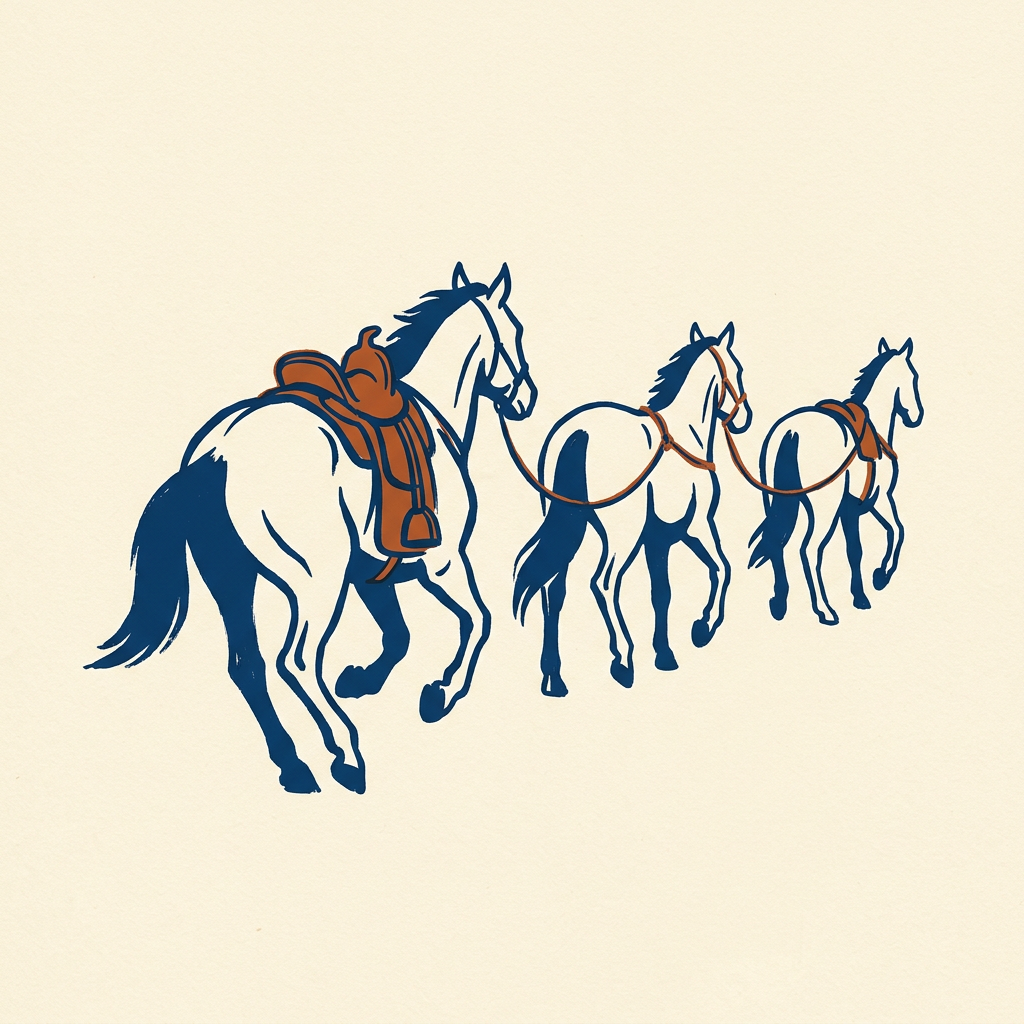
Mongol forces were repeatedly smaller than the Khwarezmian, Jin, Song, and Kievan armies they faced. Weatherford refuses the simple ferocity story. Each warrior kept several remounts, so the army sustained speeds infantry-heavy foes could not match.
Flag and lantern signals coordinated units across distance. Feigned retreats pulled Hungarian and Persian formations into ambushes. Chinese and Persian engineers were brought in to build catapults and counterweight trebuchets against walled cities—steppe tactics alone were not enough.
Terror was applied as policy. Cities that resisted, such as Otrar and Bukhara, were made public examples through mass killing. Cities that opened their gates were often spared wholesale destruction and held to tribute. The aim, as Weatherford frames it, was efficient capitulation and lower Mongol losses, not destruction as an end.
In practice: Otrar and Bukhara were devastated after resistance, while surrendering cities were frequently absorbed under tribute rather than erased, creating a regional incentive to yield quickly.
4
Law, faiths, and the yam
The Yassa's empire-wide rules and the horse-relay yam show administrative innovation Weatherford ranks beside the military machine.
Genghis Khan issued a body of law later called the Yassa that reached subjects of every ethnicity and religion. Clergy—Buddhist, Muslim, Christian, Daoist—received tax exemptions. Weatherford calls the tolerance pragmatic: a multi-faith empire gained nothing from picking a fight with every temple.
Envoys and merchants under Mongol authority were protected, an early form of what later ages would call diplomatic immunity. Officials who abused ordinary subjects could be punished. Law was meant to stabilize rule across distance, not only to glorify the conqueror.
The yam made the distances workable. Horse stations sat roughly a day's ride apart. A rider carrying a paiza token could take fresh horses and supplies and compress journeys that once took months into weeks. Tax collection, censuses, trade oversight, and military orders all rode the same network. Weatherford reads that infrastructure as proof of intent to govern, not only to loot.
In practice: A messenger with a paiza could requisition mounts at each yam station and move official traffic across the continent in weeks instead of months.
5
One roof over the routes
By placing the old Silk Road under a single legal and protective authority, the Mongols created the first sustained overland link among Europe, the Middle East, and East Asia.
Before Mongol control
Fragmented states, separate tolls, unpredictable security along the routes
Pax Mongolica
One legal zone, paiza passage, and punished banditry make long caravans workable
Before the conquests, the routes later labeled the Silk Road were a patchwork of rival tolls and insecure borders. Weatherford argues Mongol control from Korea toward Hungary changed the problem. One administrative zone replaced many hostile ones.
Paiza tablets worked like passports and credit instruments for approved travelers. Banditry inside Mongol territory drew severe punishment. Caravan risk became more predictable than it had been for centuries.
Goods moved farther: Chinese silk and porcelain west; Persian textiles, Indian spices, and European wares east. People moved too. Marco Polo's journey to Kublai's court and William of Rubruck's trip to Karakorum depended on that protected passage. Connectivity, in this account, was built infrastructure, not a natural medieval given.
In practice: European missionaries such as William of Rubruck reached the multi-ethnic court at Karakorum under Mongol protection and returned with detailed accounts of it.
6
A belt for other people's inventions
Weatherford's most contested claim is that Mongols circulated Chinese printing, gunpowder, and paper money westward rather than inventing them, feeding changes later credited to Europe.
- 1Chinese workshopsPrinting, gunpowder weapons, and paper money already in use under Song and Yuan
- 2Mongol courts and armiesEngineers, administrators, and scholars carry practices into Persia and beyond
- 3Westward adoptionIlkhanate type experiments, gunpowder warfare in new regions, travelers describe paper money
- 4Later European useParallel tools appear in Europe after contact along the opened corridors
He frames the empire as a circulatory system. Printing had matured in China centuries earlier; under the Ilkhanate in Mongol Persia, movable-type experiments appear decades before Gutenberg's press in the 1450s. Gunpowder weapons the Song had used defensively were refined in Mongol campaigns and carried into the Middle East and eastern Europe.
Paper currency, a Song and Yuan practice, showed up in European travelers' reports of Mongol administration, though Europe adopted the idea far later. Scholars moved with the goods: Persian and Arab astronomers worked in Mongol-sponsored observatories in China; Chinese physicians and mathematicians served at courts in Persia.
The point is origin and path. Tools often narrated as purely European breakthroughs, Weatherford argues, had Eurasian routes that ran through Mongol power. He also notes this is harder to prove step-by-step than battle narratives, which is why critics land hardest here.
In practice: Movable-type experiments are documented in Mongol-ruled Persia decades before Gutenberg's press appears in Europe in the 1450s.
7
Loyalty without a heir rule
Expansion continued under the heirs, but a system built on personal loyalty to one leader left no stable succession and split into rival khanates.
Genghis Khan died in 1227. Territory was divided among sons and descendants rather than settled on a single European-style heir. A khuriltai elected the third son, Ogedei, as Great Khan. Westward pushes under Batu and Subutai pressed into Russia and toward Hungary and Poland.
Four major khanates took shape: the Golden Horde on the Russian and Pontic steppe; the Ilkhanate in Persia and the Middle East; the Chagatai Khanate in Central Asia; and Kublai Khan's Yuan in China. Kublai finished the Southern Song in 1279, moved the capital to what is now Beijing, and governed through Confucian-influenced bureaucracy more than pure steppe custom.
Each khanate grew its own local bargains. The Ilkhanate converted to Islam; the Golden Horde kept a looser tribute grip on Russian principalities. Disputes over legitimacy returned every generation. Weatherford treats the fracture as the cost of charismatic, personal rule that conquered brilliantly and governed the long multigenerational stretch poorly.
In practice: Kublai's Yuan completed the conquest of the Southern Song in 1279 yet ruled increasingly as a sedentary Chinese empire, widening the gap with the other khanates.
8
The routes reverse
The same trade and relay network that unified Eurasia became the corridor for the Black Death and helped undermine the empire that built it.
- Before 1347Yam and caravans move goods and people across Mongol Eurasia
- 1347Plague reaches Genoese Kaffa in Crimea via those corridors
- Next yearsShips spread it through the Mediterranean; huge European losses
- 1368Weakened Yuan falls to the Ming as khanates fray
Silk, silver, and scholars had moved on Mongol roads and the yam. Pathogens could too. Weatherford follows Yersinia pestis from Central Asian marmot country—Mongol-held ground thick with merchants and soldiers—west along those corridors.
By 1347 the plague reached the Genoese post at Kaffa in Crimea, then shipped into the Mediterranean and across Europe. He cites an estimated one-third of the European population dead within a few years. Mongol territories were not spared; Yuan China and the other khanates lost people and administrative capacity at the same time.
Tax bases shrank. Trade that had propped up legitimacy faltered. Internal rebellion rose. The Yuan fell to the Ming in 1368; the remaining khanates fragmented or were absorbed over the next century. Weatherford presents a bitter irony, not a sermon: the empire's greatest achievement carried the mechanism of its unraveling.
In practice: Along Mongol trade corridors the plague reached Kaffa by 1347, then entered Europe by ship and killed an estimated one-third of the European population within a few years.
9
Who wrote the destroyer myth
Weatherford argues the pure-savage reputation owes as much to hostile chroniclers and later political suppression as to a full reading of the record.
Transmitted image
Hostile chronicles and later suppression spotlight devastation and mute governing systems
Weatherford's rereading
Law, yam, trade protection, and talent absorption sit beside the real violence of conquest
European and Persian writers working under conquered regimes had reason to dwell on ruin and skip administration. That selective memory, he claims, hardened into the Western default image of Mongols as only destructive.
Centuries later, Soviet-aligned rule in Mongolia treated open celebration of Genghis Khan as a nationalist threat. Discussion was suppressed; access to sites tied to him, including the region thought to hold his unmarked grave, was restricted. The Secret History of the Mongols itself was marginalized for long stretches.
Weatherford's fieldwork after 1990 depended on the political opening that lifted those limits. Read without those filters, he argues, the record shows lasting legal, commercial, and administrative institutions beside the massacres. The closing move is explanatory: the achievements were not missing from history so much as inconvenient to remember.
In practice: Only after 1990 could Weatherford gain the extended Mongolian fieldwork access earlier Western scholars had been denied under Soviet-aligned restrictions.
Key terms
- anda A blood-brother loyalty pact Temujin used to bind early allies outside clan rank
- arban A basic unit of ten that mixed old tribal lines and answered to chosen commanders
- khuriltai A council of steppe leaders that could recognize a ruler, as in 1206 and in later Great Khan elections
- Yassa The empire-wide law associated with Genghis Khan, including clergy tax breaks and merchant protections
- yam The relay network of horse stations about a day's ride apart that sped official travel and mail
- paiza An official token that let a bearer requisition horses and supplies along the yam
- Pax Mongolica The period of relative overland security when Mongol law covered trade from East Asia toward Europe
- Secret History of the Mongols An internal Mongol narrative of Genghis Khan's rise that Weatherford leans on for the early life
What to do
- Rank people in your group by recent proved work, not tenure or pedigree.
- Invest in a few high-trust partnerships instead of a wide stack of shallow contacts.
- When you bring in outsiders, judge what they can do and strip needless cultural or bureaucratic barriers.
- Protect the messengers and go-betweens who carry work across teams; punish abuse of that trust.
- Use firm, visible consequences sparingly on clear defiance so most cooperation stays voluntary and fast.
Questions to think with
- If Weatherford is right that exclusion freed Temujin to smash clan privilege, what modern institutions still confuse blood, brand, or tenure with fitness to lead?
- Where is terror still treated as efficiency, and how would you tell calculated coercion from plain cruelty?
- Which parts of today's global trade depend on a single protective order the way caravans depended on the yam and paiza?
- If succession had been clearer, would the khanates have held together, or were distance and local conversion always going to pull them apart?
- How much of the Renaissance technology story still stands if Mongol transmission is only partly proved?
The other side
The strongest fair critique is that Weatherford softens mass death counted in the tens of millions, leans too trustingly on the semi-legendary Secret History, asserts Mongol-to-Europe technology paths more firmly than step-by-step evidence allows, stays thin on footnotes, and underplays conquered peoples and Mongol women's administrative roles.
Who it's for
History readers tired of the barbarian cartoon, students of empire who want to see how a non-literate nomadic society built law and logistics, and anyone tracing how trade networks and technology diffusion—not only armies—decide which civilizations shape what comes next.