



How information became the hidden logic of everything
In 60 seconds
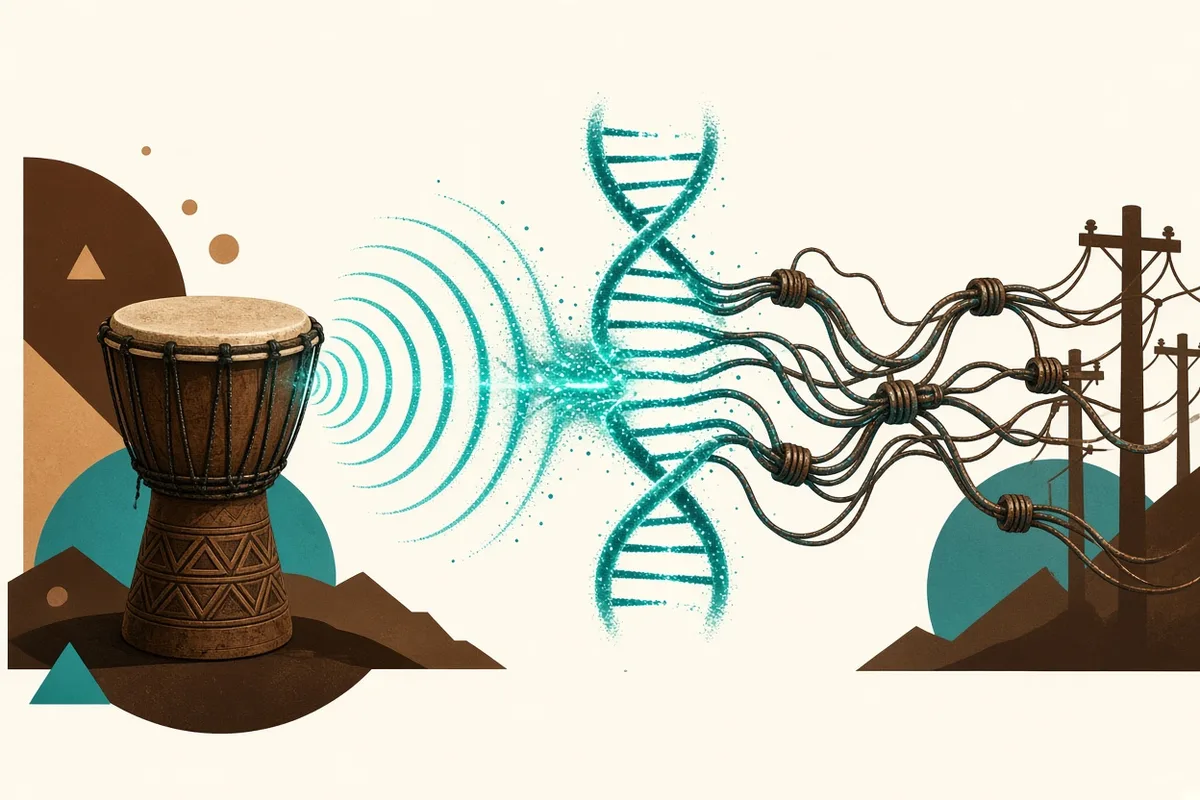
- Human signaling always traded brevity for redundancy so messages survived noise, as Congolese talking drums proved centuries before Shannon.
- Writing and dictionaries turned words into stable, countable objects, making quantitative questions about language possible.
- The telegraph separated information from any physical carrier, then Shannon's 1948 bit measured uncertainty itself by ignoring meaning.
- The same stripped-down math later framed DNA as a four-letter code and culture as competing replicators called memes.
- Algorithmic complexity equates true randomness with incompressibility, so a library of everything is informationally like pure noise.
- Perfect transmission created a new problem: curation, not capacity, is now the hard work of understanding.
The big idea
Gleick argues that treating information as an abstract, measurable quantity separate from meaning became the hidden organizing principle of language, computing, biology, and physics. Solving transmission perfectly, he concludes, never automatically solved understanding; abundance without selection risks turning knowledge into noise.
The book in brief
The book opens with Congolese talking drums, where pitch and rhythm alone were too ambiguous to carry meaning until drummers piled on formulaic redundancy. That practical trade-off between compression and reliability becomes the frame for every later technology. Writing and print then froze spoken words into stable objects that could be inspected and catalogued, culminating in Johnson's dictionary and the citation-driven Oxford English Dictionary, which treated language itself as a retrievable information system. The electric telegraph made the separation visible: facts crossed continents while their physical referents stayed put, and price-per-word economics forced early data compression through code books. Babbage's unbuilt Analytical Engine and Ada Lovelace's notes pushed further, treating a machine as a manipulator of any symbols, not merely numbers. Claude Shannon's 1948 paper completed the conceptual break by defining information as uncertainty reduced, inventing the bit, quantifying English's redundancy, and proving reliable codes exist below channel capacity without needing infinite padding. Norbert Wiener's cybernetics then linked feedback loops to physical order, tying Shannon's entropy to thermodynamic entropy via Maxwell's demon and later work on the cost of erasing information. Biologists adopted the same vocabulary once DNA's four bases were read as a code specifying proteins, complete with transcription, translation, and mutation as transmission error. Dawkins extended the logic to culture with memes, though Gleick notes the unit remains far looser than a gene. Algorithmic information theory, developed by Kolmogorov and Chaitin, redefined randomness as incompressibility and, via Borges's Library of Babel, showed that a collection of everything usable is no better than noise. The book closes on the early-twenty-first-century data flood and institutions like Wikipedia, arguing that Shannon solved the channel problem while leaving receivers drowning in undifferentiated volume. The unresolved task is selection, not more capacity.
Context
James Gleick, a historian and storyteller, published the book in 2011 to give general readers a coherent history of an idea that had quietly restructured science and daily life. It mattered because it connected talking drums, dictionaries, telegraphs, Shannon's bit, DNA, and digital overload into one narrative most people had never seen whole.
The key ideas
1
Redundancy beats brevity
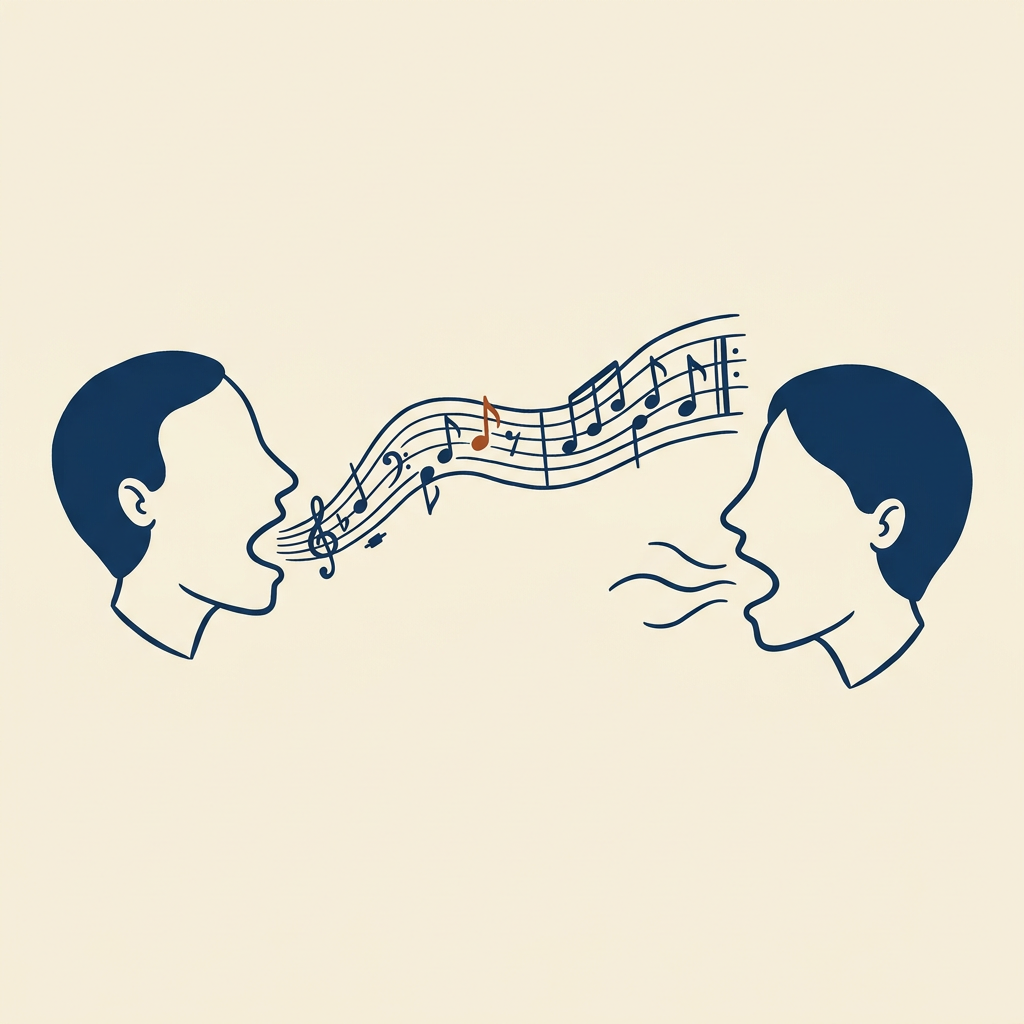
Talking-drum languages proved that piling on stock phrases, not sharpening precision, is what keeps a signal intact across noise and distance.
Brief signal
One ambiguous drum phrase matching many words
Reliable signal
Stock phrases plus repetition that survive distance and noise
Nineteenth-century accounts, especially John Carrington's studies of Kele drum languages, show drummers reproducing only the tonal contours of speech. A single drummed word for chicken could match dozens of unrelated words because drums lack consonants and vowels. Reliability came from wrapping every message in formulaic identifiers of village, family, and cause, far more material than the spoken equivalent. Gleick treats this as the book's founding principle: information systems are judged by how reliably they deliver meaning despite interference, not by how little they say. The same tension between compression and protection reappears in every later chapter, from telegraph codes to genetic error correction. The Congo basin solution anticipated Shannon's formal proof without any mathematics. Modern instincts still prize brevity; the drums reveal that what looks like waste is often the load-bearing structure that lets a message survive.
In practice: A death announcement was drummed with repeated stock phrases naming the village, family, and cause so the full message stayed clear even though any single beat pattern stayed ambiguous.
2
Words become countable objects
Writing and print froze shifting speech into fixed units that could be disputed, stored, and measured, a precondition for later quantitative theories of language.
- 1755Johnson's Dictionary catalogs English
- 1857OED project begins under Murray
- 1928OED completed as a usage archive
Before writing, meaning lived only in speakers' memory and shifted with context. Written forms, then print, let people point at a word and argue over it. Samuel Johnson's 1755 dictionary attempted one man's catalog of English; the Oxford English Dictionary, begun in 1857 under James Murray and finished in 1928, went further by collecting thousands of citation slips showing actual historical use and building definitions from evidence rather than decree. That method turned the dictionary into an information system for storing and retrieving a language's usage history. Once words were stable, countable objects, questions became askable: how many words exist, how often each appears, how much uncertainty remains after the previous letter. Those are precisely the questions Shannon later answered mathematically. Print culture's deeper gift was not literacy alone but the idea that language could be studied like any physical phenomenon instead of merely lived inside.
In practice: OED editors gathered citation slips from readers across centuries and derived definitions from observed use rather than prescribing ideal meanings.
3
Messages leave their bodies
The telegraph proved information could cross a continent in seconds while every physical object stayed put, separating fact from transport for the first time.
- 1837-1844Morse develops the code
- May 1844First Washington-Baltimore message
- 1866Permanent transatlantic cable opens
Samuel Morse developed his code between 1837 and 1844; the first long-distance message traveled from Washington to Baltimore in May 1844. Before that moment a message moved only as fast as horse, ship, or train. Afterward a fact could outrun its own paper. Commerce, journalism, and warfare reorganized almost immediately around near-simultaneous stock prices, war news, and shipping schedules. Because companies charged by the word, operators and customers invented compressed phrasing and shared code books that substituted one code-word for whole common phrases—an informal compression driven by price, not theory. By 1866 a permanent transatlantic cable linked Europe and North America, and information itself was bought and sold by the letter. Like the drummers, telegraphers worked constantly against cost and noise, inventing practical codes long before anyone possessed the mathematical vocabulary for what they were doing.
In practice: Code books let customers replace entire stock phrases with single paid code-words, cutting transmission cost by packing more meaning into fewer units.
4
Machines that handle any symbols
Lovelace saw that Babbage's Analytical Engine could manipulate symbols of any kind, not only numbers, separating pattern from physical embodiment more deeply than the telegraph.
Charles Babbage designed the Difference Engine to eliminate human error in mathematical tables and the never-fully-built Analytical Engine, which took input from punched cards borrowed from the Jacquard loom's patterned weaving. Ada Lovelace, translating an Italian article, added notes three times longer than the source and described an algorithm for Bernoulli numbers—the first published computer program. More lasting than the algorithm was her claim that the engine could, in principle, operate on anything expressible in symbols. She suggested it might compose music if musical relations were stated as rules the machine could process. Gleick treats this as the book's conceptual hinge: once a machine follows rules on symbols rather than arithmetic on quantities, any pattern can be encoded, processed, and transformed. Victorian machining precision doomed the hardware; the idea survived as a blueprint for the mathematics Shannon and others later made rigorous.
In practice: Lovelace's notes described a step-by-step method for calculating Bernoulli numbers on the still-unbuilt Analytical Engine and imagined the same machine composing music from symbolic rules.
5
The bit strips away meaning
Shannon's 1948 theory measured information solely as uncertainty reduced, proving reliable codes exist below channel capacity only by ignoring what any message means.
~1 bit
real information per English letter versus nearly five possible
Working at Bell Labs, Shannon published his mathematical theory of communication and defined information by surprise: the less predictable a message, the more information it carries. He borrowed entropy from thermodynamics and adopted the bit—suggested by John Tukey—as the unit that resolves one yes-or-no uncertainty. His own guessing experiments on English showed skilled readers needed few tries for successive letters, implying the language carries roughly one bit of real information per letter even though its alphabet could in principle carry nearly five. That quantified the redundancy drummers and telegraphers already used by instinct. The noisy-channel coding theorem then showed that for any fixed noise level a code exists allowing arbitrarily low error so long as the rate stays under capacity—reliability without infinite padding. Because the math deliberately ignored meaning, the same equations later described telephone lines, computer circuits, and genetic sequences alike.
In practice: Shannon had people guess the next letter in English sentences; high success rates revealed heavy redundancy and roughly one bit of actual information per letter.
6
Feedback holds order together
Wiener's cybernetics reframed stability in machines and organisms as an information problem of comparing output to a goal and correcting, binding Shannon's entropy to physical entropy.
- 1SenseCompare current output to desired state
- 2CorrectAdjust action from the difference
- 3StabilizeOrder persists against drift toward disorder
↻ and round again
Norbert Wiener coined cybernetics in his 1948 book, generalizing wartime anti-aircraft fire-control research in which machines predicted evasive pilots from incomplete data and continuously adjusted aim. Any system that maintains a desired state—a thermostat, a steering gear, a body regulating temperature—does so through feedback loops that sense difference and act. This recast control as information work rather than pure energy or mechanics. Gleick links it to Maxwell's 1867 demon, the imaginary being that sorts fast and slow molecules and seems to decrease entropy for free. Leo Szilard showed in 1929 that acquiring the needed information itself carries a thermodynamic cost; later Landauer and Bennett refined the point that erasing information generates the compensating entropy. Information was no longer a metaphor borrowed from engineering; it participated in the same physical laws that govern heat and disorder, preparing the ground for finding measurable information inside living cells.
In practice: Anti-aircraft predictors continuously compared a plane's observed path to the gun's aim and corrected, treating incomplete data as an information loop rather than a pure mechanics problem.
7
Heredity as a four-letter message
Once biologists saw genes as transmitted information, DNA's chemistry mattered less than its function as a coded alphabet subject to copying error and repair.
- DNA sequenceFour-base alphabet stores the message
- Codon tripletThree bases map to one amino acid or stop
- ProteinTranslated chain carries out cellular function
In 1944 Schrödinger speculated that heredity required an aperiodic crystal—a stable molecule whose irregular structure could store large specific information. Watson and Crick's 1953 double helix supplied the molecule; Gleick stresses the deeper functional discovery that its four bases act as a code whose sequences specify proteins. Through the 1960s Nirenberg, Khorana and others cracked the code: each base triplet (codon) maps to an amino acid or stop, the same combinatorial logic as Morse. Biology's vocabulary shifted to transcription and translation, terms taken straight from communication engineering. Mutation became transmission noise; redundancy and error correction became evolutionary necessities. Shannon's tools, built for telephone wires, now applied to genetic stability. Information theory had left engineering and become a general framework claimed by an unrelated science.
In practice: Researchers established that DNA base triplets function like Morse sequences, each codon corresponding to one amino acid or a stop instruction.
8
Culture as competing replicators
Dawkins's 1976 meme proposed that ideas, tunes, and beliefs spread by replication and selection inside minds, though no discrete cultural unit matches a gene's fidelity.
Gene
Discrete codon sequence with measurable copy fidelity
Meme
No agreed unit; blends and mutates without base-pair equivalent
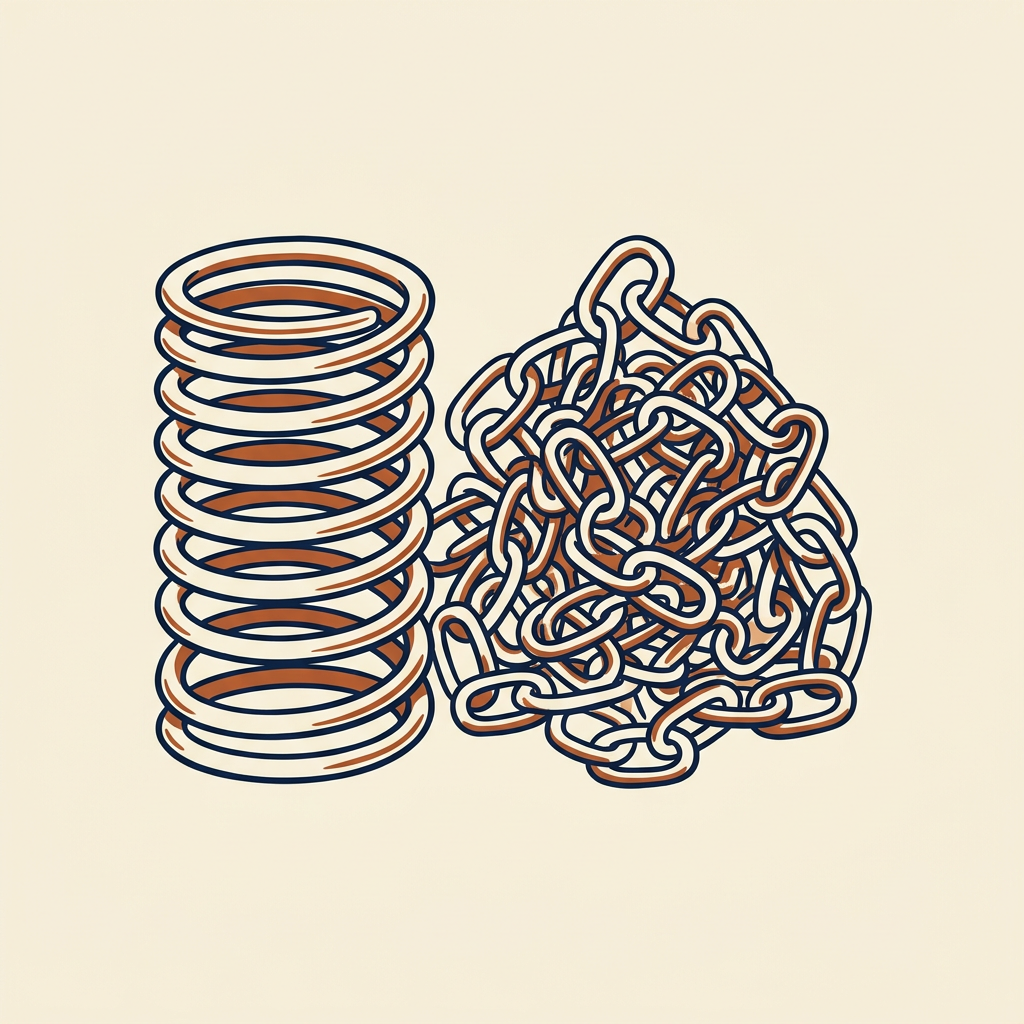
In The Selfish Gene Dawkins argued genes are not the only replicators: catchphrases, melodies, and doctrines compete for mental space and for copying through speech, writing, or imitation. A rumor spreads because it is memorable and easy to copy, not necessarily because it is true—just as a gene spreads by replicating well, not by benefiting its host. The idea itself became a meme, traveling through academic and popular culture until internet usage narrowed it to image macros. Gleick notes the analogy's looseness: a gene has a measurable codon sequence and mutation rate; a joke or doctrine does not decompose into base-pair equivalents and blends in ways genes do not. Evolutionary biologists still debate whether memetics is theory or suggestive metaphor. Gleick presents it mainly as evidence of how far information vocabulary had traveled—from telephone signals to the spread of ideas—inviting both insight and overreach.
In practice: The word meme itself spread for decades and was later repurposed by internet culture to mean image macros, enacting the replication it names.
9
Randomness equals incompressibility
Kolmogorov and Chaitin defined a string's information content as the length of the shortest program that produces it, making maximum randomness identical to maximum information.
Compressible
A million zeros: tiny program, near-zero information
Incompressible
Coin-flip string: shortest program nearly equals the string itself
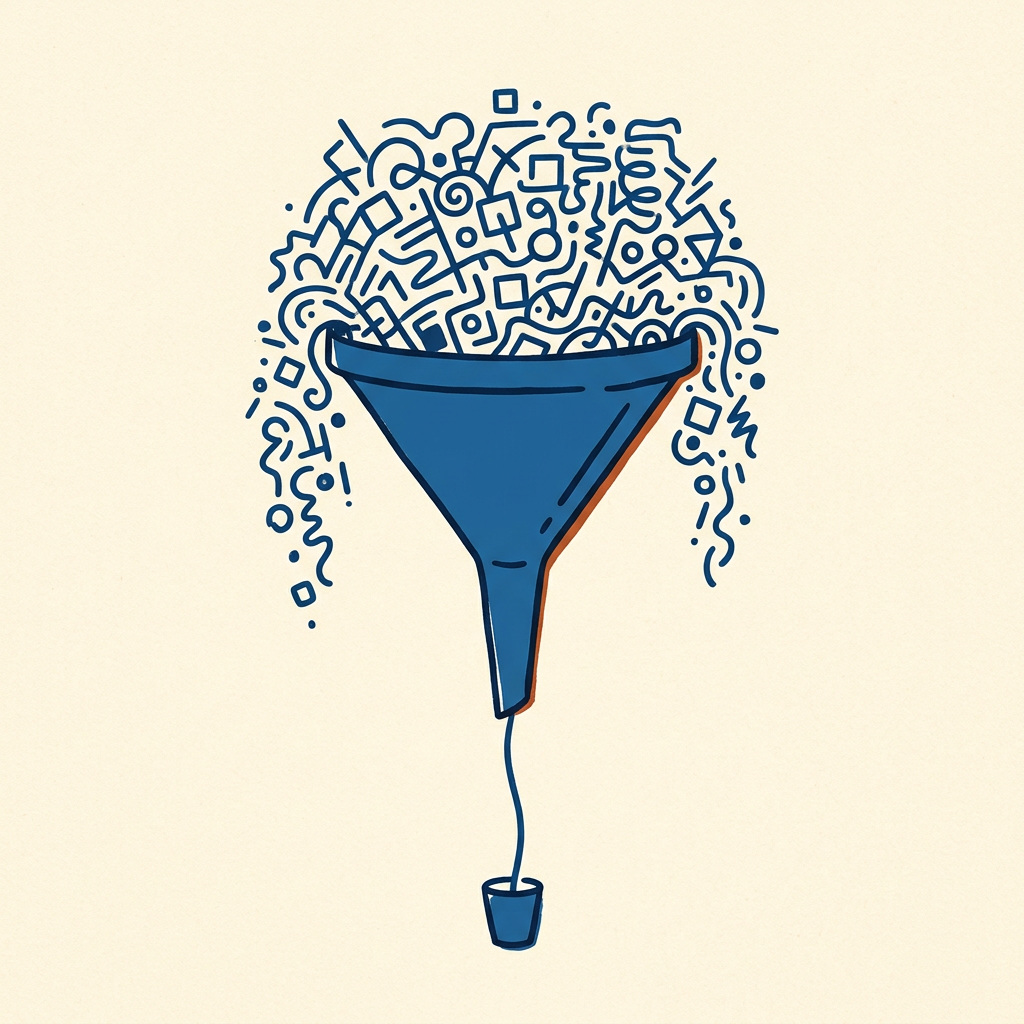
Shannon measured information by symbol probabilities. In the 1960s Andrei Kolmogorov and Gregory Chaitin independently defined it by the shortest computer program capable of generating a given string. A million zeros have almost no information because a tiny program prints them; a million fair coin flips usually cannot be shortened at all. A sequence is random precisely when it is incompressible. Gleick rereads Borges's Library of Babel—an infinite library of every possible book of fixed length—as the literary version of the same proof: a collection containing everything carries no more usable information than pure noise, because nothing can be found without already knowing the target. Meaning therefore requires selection and compressibility, not the mere existence of data. That insight pivots the book toward its final claim about the digital flood.
In practice: Borges's library holds every truth and every falsehood; without a way to select, the whole is as uninformative as random noise.
10
Curation replaces capacity
Exponential digital volume did not solve meaning; it made telling signal from noise the central intellectual task, an open problem Shannon's channel math never addressed.
Gleick closes on early-twenty-first-century estimates of annual digital output already measured in exabytes and growing faster than any human can read. Wikipedia stands as a new kind of institution: an encyclopedia built by decentralized volunteers who correct continuously rather than a credentialed staff fixing entries once in print, a relationship between information and authority without clear precedent in the earlier chapters. Every prior technology solved a transmission problem—how to send reliably despite noise, cost, or distance. Solving all of them at once and cheaply produced an unanticipated receiver problem: unlimited volume with no built-in ranking of relevance. Shannon measured a channel's carrying ability and said nothing about a mind's ability to extract sense from excess. Returning to Borges, Gleick insists a world containing every fact does not thereby contain more understanding and may contain less. The book offers no technical fix, only the inheritance: curation, not more capacity, is the work that remains.
In practice: Wikipedia entries are argued over and revised by largely anonymous volunteers in real time instead of being locked by a small expert staff as the OED once was.
Key terms
- bit The basic unit Shannon adopted: one yes-or-no resolution of uncertainty.
- entropy (Shannon) A measure of how unpredictable a message is; more surprise means more information.
- redundancy Extra pattern or repetition that protects a message against noise at the cost of efficiency.
- noisy-channel coding theorem Shannon's proof that reliable transmission is possible below a channel's capacity with the right code, without infinite padding.
- cybernetics Wiener's name for the study of control through feedback loops in machines and living things.
- codon A triplet of DNA bases that maps to one amino acid or a stop instruction.
- meme Dawkins's proposed unit of cultural replication—an idea or tune that spreads by imitation.
- algorithmic information The length of the shortest program that produces a given string; incompressibility equals randomness.
- Library of Babel Borges's image of a library containing every possible book, used to show that total data without selection equals noise.
What to do
- Cut one recurring report, newsletter, or update by a third this week and keep only the parts that reduce real uncertainty.
- Before adding any new daily information source, name the specific question it answers that your current sources do not; skip pure duplicates.
- Facing unsorted work data, spend ten minutes finding the shortest path to the single fact that would change your decision instead of reading everything first.
- Treat your attention as a channel with fixed capacity and schedule deliberate gaps rather than continuous intake.
- When you rewrite a message, add one protective redundancy only where noise or misreading is likely, not everywhere.
Questions to think with
- Where in your own communication is redundancy actually protecting meaning, and where is it only habit?
- If a machine can manipulate any symbols, what patterns in your work still resist being turned into rules?
- Does treating culture as memes clarify how ideas spread, or does the missing discrete unit make the comparison mostly metaphorical?
- When does more accessible data start decreasing your understanding rather than increasing it?
- What would count as successful curation in a domain you care about—selection by expertise, by use, or by something else?
The other side
The book's sweep is also its weakness: it reads as vivid episodes loosely linked by theme rather than a sustained, testable argument about what information is. Technical readers note that Shannon's math stays at intuition and rarely engages formal derivations. Memetics is presented enthusiastically while its contested status among evolutionary biologists is underplayed. The cast is overwhelmingly Western and male; non-Western contributions beyond the drum chapter get little space. Published in 2011, it largely misses later information politics—surveillance, algorithmic misinformation, platform extraction—and declines to judge whether the flood is on balance good or bad for understanding.
Who it's for
Readers who want the shared logic linking computers, DNA, and language without a textbook, plus science-history enthusiasts seeking Shannon explained in plain narrative. Anyone feeling drowned by digital volume who wants historical perspective on why abundance never automatically produced comprehension will get the most from the full book.