



How pesticide sprays poison the whole web of life

In 60 seconds
- Carson argues synthetic pesticides like DDT and parathion are chemically new, persist in tissue, and concentrate up food chains so ‘safe’ field doses become lethal higher up.
- She traces residues leaving the target field through rain, groundwater, and soil organisms, turning local sprays into regional fish kills and damaged soil fertility.
- Midwest elm-disease DDT campaigns, she shows, fed concentrated poison to robins through earthworms and collapsed campus songbird populations link by link.
- Target insects evolve resistance within years, she reports, locking users into a treadmill of higher doses, dead natural predators, and worse residue loads.
- Targeted tools already in use—sterile insects, specific parasites, and Bacillus thuringiensis—often controlled pests with far less collateral damage.
- The book reached ordinary readers, spurred a congressional inquiry, and helped produce the U.S. DDT ban and the EPA.
The big idea
Carson argues that postwar society saturated landscapes with persistent, accumulating pesticides faster than science or regulators grasped the ecological cost, while industry assurances outranked long-term evidence. She holds that chemical-only control predictably defeats itself through resistance and that more specific biological methods already worked.
The book in brief
Carson opens by inventing a quiet American town where birdsong has stopped, fish float in the streams, and orchards fail—then admits no single place has suffered every blow at once, only that each blow has already happened somewhere. The fable is meant to make slow, uncounted loss feel urgent before any footnote appears.
She then separates synthetic pesticides from older hazards. Chlorinated hydrocarbons and organophosphates, rushed from wartime chemistry into peacetime agriculture, had no deep evolutionary history in living systems. They linger in soil, water, and fat and concentrate at each step of a food chain, so a dose judged safe on a single lab species can still wreck populations years later and miles away.
The middle chapters follow the molecules. Rain carries residues into streams and wells; soil bacteria and invertebrates that keep land fertile die off; roadside and rangeland herbicide programs erase sagebrush and other plants labeled weeds, taking sage grouse habitat with them and often failing even on their own grazing goals when the brush returns. The sharpest wildlife case is DDT sprayed on elms for Dutch elm disease: leaves to earthworms to robins, with tremors, deaths, and collapsing campus counts documented by ornithologists.
On humans Carson is more careful. She reviews applicator poisonings, residues in fat and breast milk, and lab cancer signals, but frames chronic low-dose risk as an open question the era’s acute-toxicity tests were never built to answer. She closes the harm case with resistance: fast-breeding insects shrug off each chemical, predators die first, and the response is only more poison.
The constructive turn lists working alternatives—radiation-sterilized screwworm flies, parasitic wasps on scale insects, Bacillus thuringiensis for specific larvae—and insists the least disruptive method matched to a pest’s biology should come before blanket saturation. The lasting move is to reframe pest control as an ecological problem, not merely an agricultural or industrial one.
Context
Rachel Carson published Silent Spring in 1962, building the case from published science, government data, and field reports rather than original lab work. The book reached ordinary readers, provoked a congressional inquiry, and helped lead to the eventual U.S. ban on DDT and the creation of the EPA.
The key ideas

1
Silence before the data
Carson treats a short invented portrait of a poisoned town as a valid opening because it makes readers feel stakes before they meet a single documented case.
She sketches an ordinary American place where birds have gone quiet, fish have died, and orchards no longer bloom as they should. Then she tells readers the composite is fiction: no one town has taken every blow at once, yet every separate blow has already occurred somewhere in the country.
The move is openly rhetorical. Its job is to give abstract talk of residues and food chains a shape people can feel, not to replace evidence. Everything afterward tries to swap the fable for cases, but the fable first explains why a non-specialist should care.
Carson chose silence on purpose. Missing birdsong is the kind of loss official counts rarely capture—a farmer notices fewer robins and files no report; a stream that no longer holds mayflies makes no headline. The image trains attention on cumulative damage the postwar chemical surge had outrun the science needed to track.
In practice: Her opening town concentrates real, separate American losses—silent birds, dead fish, failed bloom—into one place so the pattern is impossible to miss.

2
Poisons life never met
Carson argues synthetic pesticides persist and accumulate in ways evolution never prepared organisms for, which makes single-species ‘safe dosage’ a misleading frame.
Life had ages to evolve defenses against natural toxins. Chlorinated hydrocarbons such as DDT and organophosphates such as parathion are chemically new, so organisms lack inherited tolerance.
After World War II, firms that had made nerve agents and related compounds turned the same capacity toward farms and pest control, often selling the shift as a peacetime win for chemistry. Many of the new compounds do not break down quickly in soil, water, or animal tissue; they move upward and concentrate at each link.
Regulators of the time, Carson contends, set thresholds from acute lab tests on one species rather than from years of ecosystem accumulation. She grants that insects, weeds, and rodents cause real damage and that some control is fair. Her target is the claim that broad chemical saturation is the only or best tool, a claim she says industry and agencies pushed without honestly weighing long-term cost against short-term gain.
In practice: A low, supposedly safe field application can, she shows, reach lethal or sublethal levels in the fat of a bird several links up the same food chain.
3
Paths through water and soil
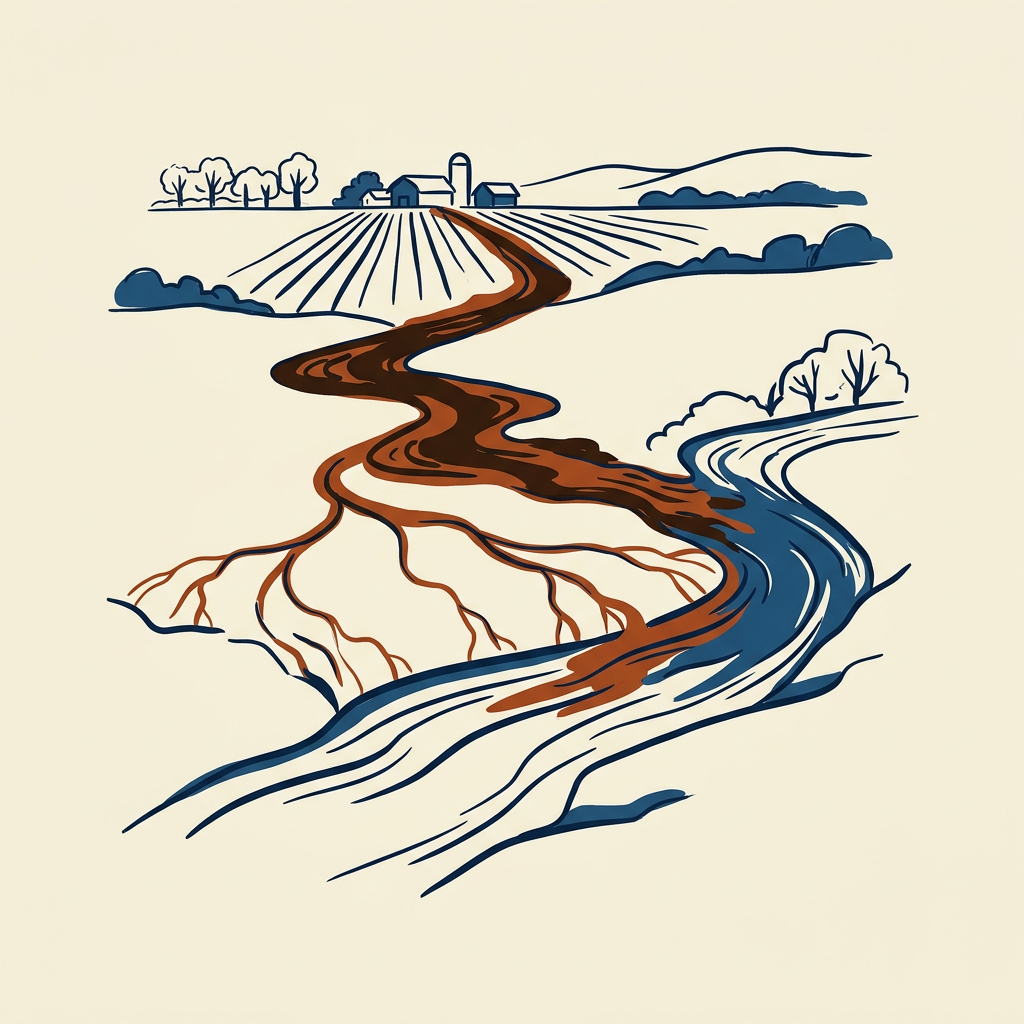
Carson shows pesticides do not stay on the sprayed field; water tables, rivers, and soil life carry them into regional contamination.
Rain washes residues off crops into streams; compounds seep into groundwater; they settle into soil and can affect plantings long after the original pass. Fish kills followed aerial campaigns against spruce budworm and fire ants, with dead and dying fish appearing in waterways far downstream of the treated woods and fields.
Soil, she stresses, is not inert dirt. Bacteria, fungi, and invertebrates break down organic matter and cycle nutrients. Some pesticides suppress or kill those organisms, undercutting the fertility the chemicals were supposed to protect.
That feedback is plain: a spray meant to raise yields by killing pests can lower yields over time by wounding the soil web crops need. A program aimed at one insect on one crop is never only about that insect or crop, because water and soil tie every field to a wider landscape.
In practice: After large DDT and related sprays for budworm and fire ants, downstream waters showed fish kills well outside the spray zone.

4
Weeds that hold habitats
Carson argues herbicide drives against ‘weeds’ often erased native plant communities that backed wildlife and soil, while the weed label hid the loss.
She turns from insecticides to roadside and rangeland programs that hit sagebrush, brush, and other plants marked undesirable. Western sagebrush eradication, meant to clear range for cattle grass, sprayed huge acreages with herbicides such as 2,4-D and paid little mind to animals tied to the original cover.
Sage grouse need sagebrush for food and shelter; other species lock to that same community. Weed, Carson notes, is a human judgment, not a biological box. Plants under that label often hold soil, slow erosion, and house wildlife that vanish when the spray order lands.
Many programs failed even by their own narrow aims. Sprayed range sometimes returned to sagebrush in a few years because the conditions favoring brush over grass had not changed—temporary cosmetic clear-out at real ecological cost, without fixing the land-management problem underneath.
In practice: Federal and state sagebrush spraying in the West removed cover sage grouse depend on, then often watched the brush return while the deeper range problem remained.

5
Robins after the elm spray
Carson presents songbird die-offs after DDT for Dutch elm disease as a biomagnification case clear enough to follow cause and effect step by step.
Towns and campuses across the Midwest sprayed elms to stop the beetle that carries Dutch elm disease. Ornithologists, including work tied to Michigan State University, tracked robins before and after.
DDT settled on leaves; fallen leaves fed earthworms; worms packed the chemical in their tissue and often lived; spring robins that ate those worms took in concentrated doses. Populations on sprayed campuses fell across breeding seasons; birds were found dead or shaking with nerve-poisoning signs.
Each link had been documented on its own, so coincidence was harder to claim. A chemical tolerable for worms could still kill the birds that ate many of them—exactly the blind spot of single-species toxicity tests. Because DDT stayed active in soil and worm tissue, one spray season could keep poisoning birds for years.
In practice: Campus robin counts collapsed after elm DDT programs once earthworms passed accumulated residue to the birds that fed on them.

6
People and untested time
Carson holds that the same accumulation seen in wildlife reaches humans, while 1960s rules measured acute lab death far more than years of low-dose exposure.
She is more cautious on human health than on birds and fish, and she signals that the evidence is thinner. She reviews poisonings among applicators and factory workers, plus early findings of residues in human fat and breast milk.
The methodological charge is the load-bearing one: regulators leaned on how much poison killed a test animal quickly, not on chronic intake through food, water, and air over decades. She raises lab signals that some pesticides might play a role in long-term disease including cancer, yet frames that as a serious open question, not a closed verdict.
Organophosphates, rooted in wartime nerve-agent work, bring documented accidental poisonings among farm workers. Even without settling cancer, her point stands: short-term lethal-dose regimes cannot underwrite claims of safety for continuous, low-level human exposure.
In practice: Early measurements found pesticide residues in human fat tissue and breast milk, exposure routes acute lab tests never stood in for.
7
Resistance’s escalating loop
Carson shows chemical-only control undermines itself because pests evolve resistance faster than new chemicals appear, trapping users in heavier, dirtier cycles.
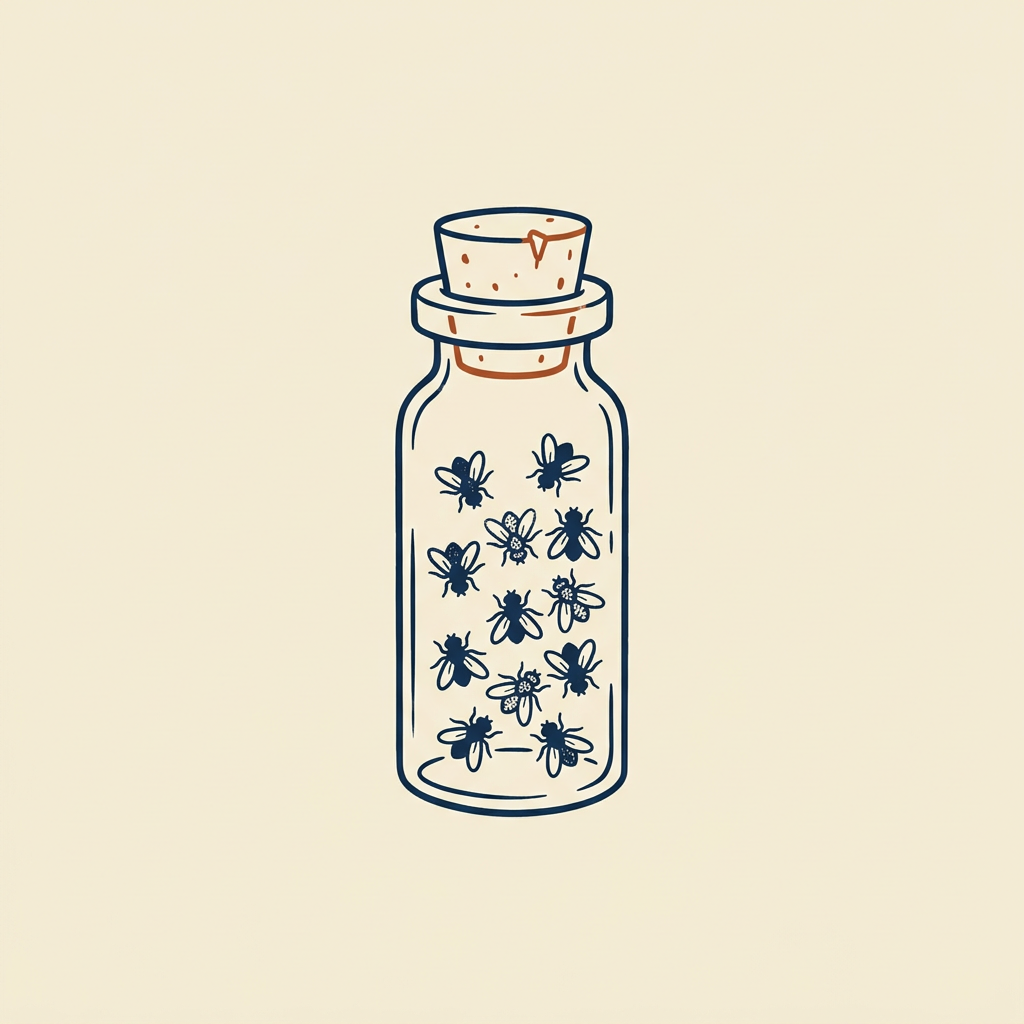
Insects breed fast and in vast numbers. Any sprayed population holds a few individuals with at least partial genetic resistance. The chemical kills the vulnerable mass; the resistant few rebuild the next generations, sometimes within only a handful of years.
By the early 1960s, she notes, resistant houseflies, mosquitoes, and crop pests were already documented across regions—not a thought experiment. The usual reply was not a new strategy but a higher dose or a harsher replacement chemical, buying a short window before resistance rose again.
Broad-spectrum sprays often kill a pest’s natural predators more thoroughly than the pest, because predators are fewer and slower to rebound. Biological control disappears, the pest surges, and residue loads in water, soil, and food chains climb with every turn of the treadmill.
In practice: Documented resistance in houseflies, mosquitoes, and farm pests was already widespread when Carson wrote, pushing programs toward stronger or newer chemicals.
8
Precision already on hand
Carson argues effective pest control never required chemical monoculture; specific biological and ecological methods already existed and often beat blanket spraying.
After chapters of harm, she turns to tools already in use or in active research. The sterile insect method against screwworm flies irradiated males and released them to mate without offspring, cutting wild numbers without dosing the landscape.
Classical biological control backed predators and parasites matched to one pest—for example, a parasitic wasp used against certain scale insects. Microbial agents included early Bacillus thuringiensis, toxic to particular larvae yet largely harmless to other organisms.
Specificity is the thread: hit the pest’s own biology and collateral deaths fall. Carson does not demand a total chemical ban. She wants the least disruptive method that solves the real problem, chosen from field knowledge of that pest’s weak points—evidence, she says, that chemical-first policy was convenience and industry preference, not necessity.
In practice: Radiation-sterilized screwworm males suppressed wild populations without broadcasting poison across whole regions.
Key terms
- Persistence A pesticide’s tendency to remain active for a long time in soil, water, or living tissue instead of breaking down quickly.
- Biomagnification The buildup of a chemical to higher concentrations at each step up a food chain.
- Chlorinated hydrocarbons A class of synthetic pesticides, including DDT, that linger in the environment and in fat.
- Organophosphates Synthetic pesticides related to wartime nerve-agent chemistry, including parathion, that can attack the nervous system.
- Pesticide treadmill The cycle in which resistance forces higher doses or harsher new chemicals, which then breed more resistance and more residue.
- Sterile insect technique Releasing radiation-sterilized males so wild females produce no offspring and the pest population falls without broad poisoning.
- Biological control Using a pest’s own predators, parasites, or targeted microbes instead of indiscriminate chemicals.
- Acute toxicity testing Safety checks built around how much of a substance kills a lab animal quickly, not around years of low-dose exposure.
What to do
- Ask what timeframe and which populations any chemical safety claim actually tested, and whether accumulation or downstream effects were measured.
- When a single strong tool keeps fixing the same problem, check whether it is eroding the system’s own future ability to cope, as resistance and predator loss did.
- Reach for the most specific working fix before the broadest convenient one.
- Treat any method that needs rising strength with each reuse as a warning the strategy is failing.
- Read field evidence on a pest’s biology before defaulting to landscape-wide saturation.
Questions to think with
- What would count as enough long-term, whole-ecosystem evidence before a persistent chemical is called safe for routine use?
- Where does today’s pest or weed policy still treat a human label as if it were a biological fact?
- How should societies weigh wildlife and residue harm against disease-control uses of the same chemical?
- Which modern ‘safe dose’ claims still rest mainly on acute tests rather than chronic accumulation?
- What targeted alternative is being skipped because the broad tool is simply easier to buy and apply?
The other side
Carson’s wildlife pathways, fish kills, and resistance record are her strongest ground; her weaker ground is human cancer, where 1962 epidemiology was thin and she herself used careful, provisional language, while later DDT-human cancer findings remain mixed and debated. Critics also note the book gave little sustained weight to malaria-control benefits of DDT in the tropics, to farmers who then had few cheap alternatives, and to the fact that she synthesized others’ studies—so selection and framing do part of the persuasive work—and that she never demanded a total ban even though the politics that followed sometimes did.
Who it's for
Readers who want the real starting point of the modern environmental movement, and anyone in agriculture, public health, or ecology who needs the historical case against chemical-first pest control and how one book helped shift federal regulation.