



Most drivers check tire pressure at the wrong time
By How To (/journals/how-to)
Cold tires give the only true pressure reading your car was built for. Matching the gauge to the door sticker keeps the contact patch even and the handling predictable.
Gather a pressure gauge, note the cold PSI on the driver’s door jamb, and make sure an air pump is nearby.
1: WAIT three hours after driving before you touch any tire.
Park the car and leave it alone. Every sidewall must feel cool under your palm.
2: FIND the cold-pressure number on the driver’s door-jamb sticker.
Open the door and read the white placard. Note the front and rear values; those are your only targets.
3: REMOVE the valve cap by twisting it counter-clockwise.
Drop the cap straight into your pocket. The stem should sit clean and undamaged.
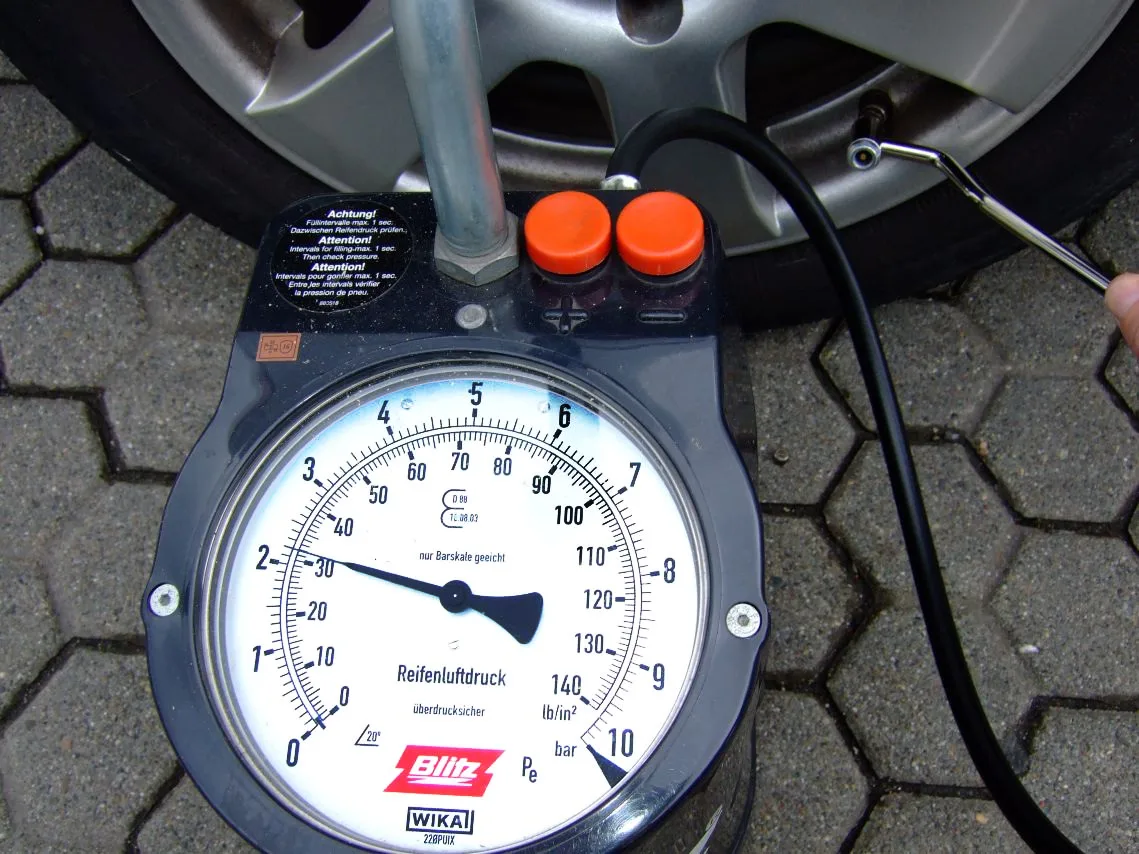
4: PRESS the gauge straight onto the stem for two full seconds.
Keep firm pressure until the brief hiss ends. If air still leaks at the edges, lift and reseat square.
5: READ the gauge face and stack it against the sticker number.
Any gap larger than 2 psi means air must be added or released. Jot the number if you are doing all four tires.
6: ADD air in one-second bursts when the reading sits under the sticker.
Clamp the pump hose on, give a one-second blast, then recheck. Stop the moment the gauge hits the sticker number.
7: RELEASE air in one-second bursts with the gauge bleeder when the reading sits over the sticker.
Press the pin briefly, then read again. Repeat until the needle settles on the sticker number.
8: REPLACE the valve cap by twisting it clockwise until snug.
Stop at finger-tight; do not force it. Walk to the next tire and repeat remove-press-read.
The most common mistake
Checking right after a drive gives a false high reading because heat expands the air. Wait the full three hours so every tire is cool to the touch before you begin.
Pro tip
Check all four tires and the spare once a month and before any long trip.
Say it every time
Wait find remove press read add release replace