



How to check your car's oil
By How To (/journals/how-to)
Oil drains back into the pan only after the engine stops. That settled mark is the one that tells you whether the engine still has enough oil.
Have a clean lint-free rag ready and work where you can see the stick marks clearly.
1: PARK on flat ground with the engine off and the parking brake set.
You'll need the clean rag for the later wipe. The car is set when it sits still on even pavement and does not roll when you ease off the foot brake.
2: WAIT five full minutes so the oil can run down into the pan.
Keep clear of the hot exhaust and block. The wait is finished when your timer shows five minutes and the hood skin feels only warm.
3: RAISE the hood after releasing the cabin latch then the front safety catch.
Slot the prop rod into its hole until it locks. The hood is safe when it stays up on its own and the rod does not wobble.
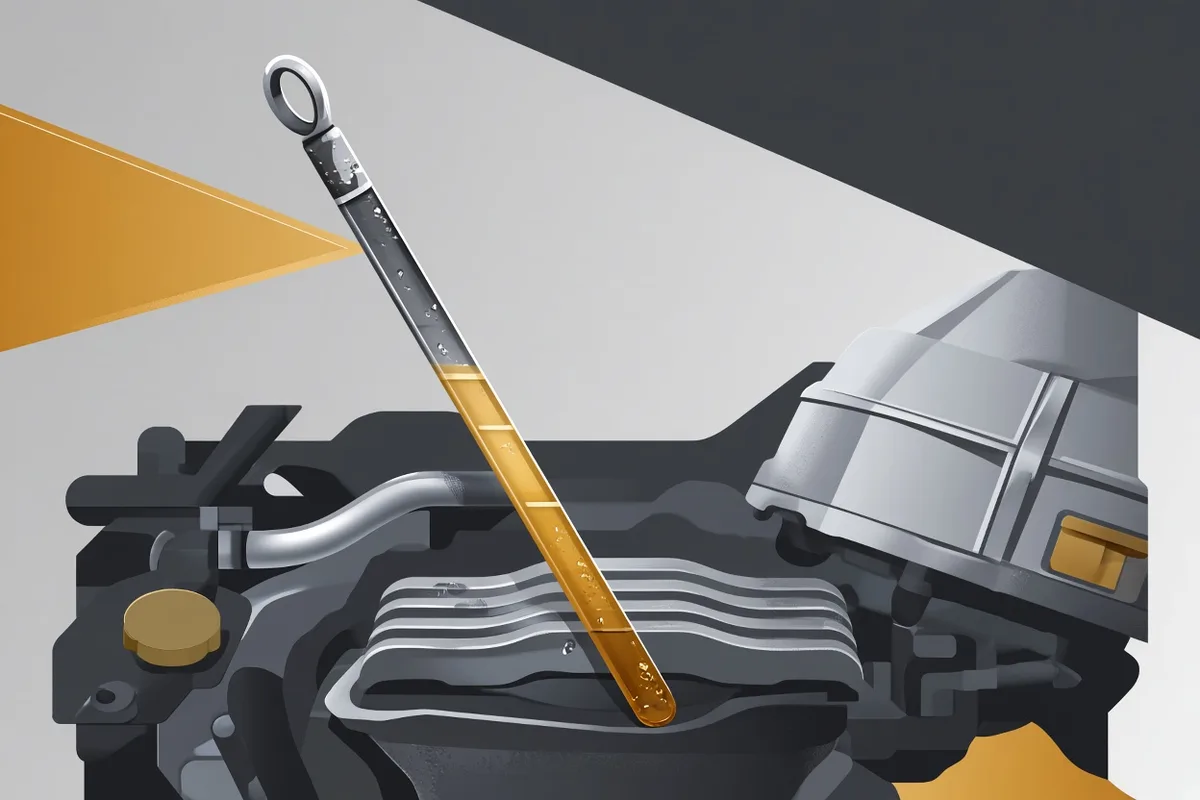
4: PULL the dipstick straight out by its bright loop handle.
The handle is usually yellow or orange and stands near the block. You have the right stick when it slides free with a light tug and the tip feels lightly oily.
5: WIPE the metal tip clean with the rag.
Fold the rag and pinch along the marked end. The stick is ready when bare metal shows and no brown film remains under the light.
6: INSERT the clean stick all the way back into its tube.
Keep the stick straight so it does not bend. It is seated when the handle sits flush on the tube rim and will not go farther.
7: PULL the stick out a second time and hold it level.
Read both sides under clear light. The check is good when the oil film ends between the low and full marks and the oil looks translucent amber without milky swirl or glitter.
The most common mistake
Reading the stick on a slope or right after shutdown skews the level high or low. Move to flat ground, wait the full five minutes, then wipe and read again.
Pro tip
Repeat the wipe-insert-pull once more if the first oil line looks spotted or unclear.
Say it every time
Park pause wipe insert read
Coverage
Comments (2)
This method should help spot low oil sooner and avoid bigger engine problems down the road.
I always check oil on level ground after the car sits overnight for the most accurate dipstick reading.