



How to cover a White House briefing
By How To (/journals/how-to)
Every move serves one principle: stay close enough to hear every word and leave with verified quotes before the next call time.
Have your hard pass, phone fully charged, notebook, pen, and digital recorder ready at the bureau.
1: ARRIVE at the Northwest Appointment Gate one hour before the scheduled briefing with your hard pass clipped outside your blazer.
The uniformed officer checks the pass against the daily list. You know it went right when the gate opens and you walk the short driveway without a second stop. If the list is delayed, stand to the side and count to sixty before asking once.
2: CLEAR the magnetometer and bag scan in the West Wing entrance by placing phone, keys, and recorder in the tray first.
Step through only after the light turns green. You know it is clear when the agent nods and hands back your tray. If the alarm sounds, remove your belt, count to ten, and try again without rushing.
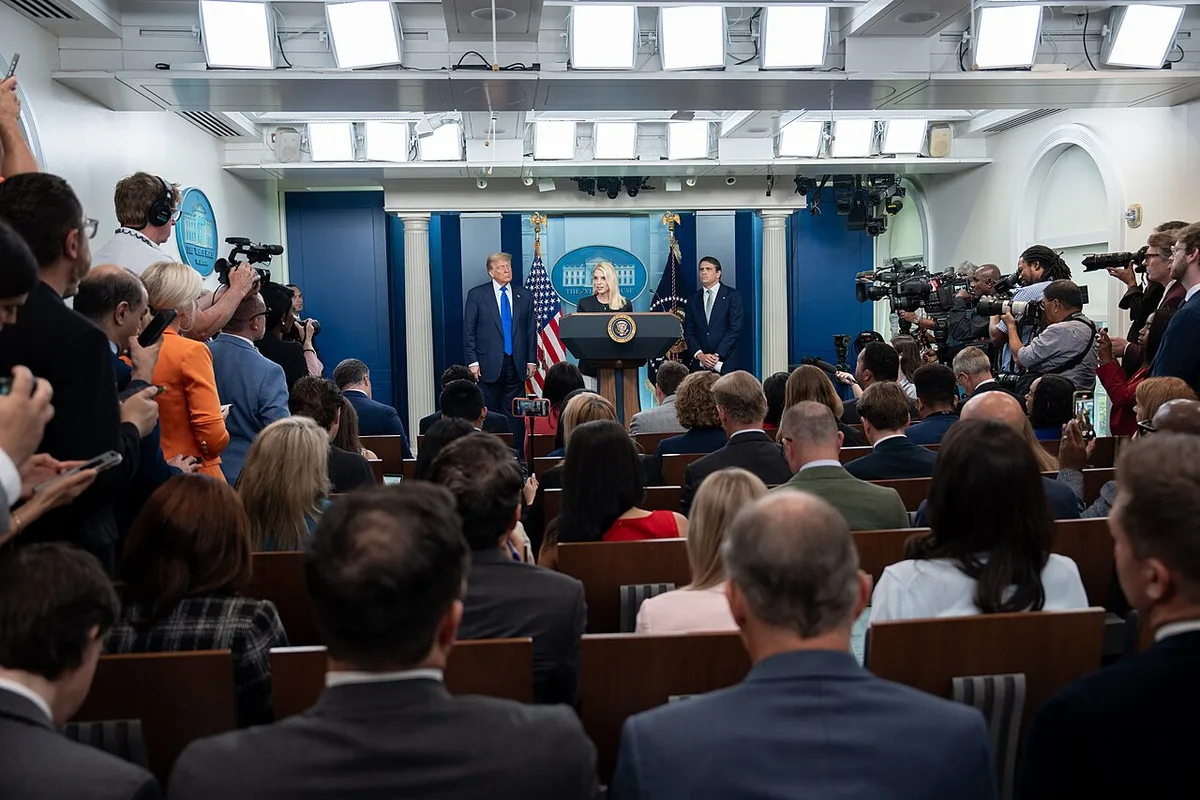
3: TAKE your assigned seat in the James S. Brady Press Briefing Room by matching the row letter on the chair back.
Senior wires sit front left. You know you are right when the name plate or taped card matches your outlet. If the seat is taken, stand along the side wall six feet from the podium line and wait.
4: HOLD your recorder at chest height pointed at the podium the moment the press secretary steps to the microphones.
Press record before the first sentence. You know it is running when the red light stays on and the timer counts up. Keep the notebook open on your lap for the second source of the quote.
5: RAISE your hand straight up only after the press secretary finishes the opening statement and calls for questions.
Wait for eye contact before you speak your outlet name and the question in one breath. You know the turn is yours when the secretary points or says your name. If skipped, lower the hand, count to twenty, and raise again once.
6: FILE the first two graphs from the work space behind the briefing room within fifteen minutes of the end of questions.
Type the key quote first, then the context sentence. You know it is ready when your editor replies with a simple okay. Walk, do not run, the thirty feet back to the workspace so you keep the facts straight.
The most common mistake
Most reporters start packing while the last answer is still being given. Fix it by keeping the recorder rolling and the pen moving until the secretary leaves the room.
Pro tip
Write the exact phrase you will say when called on the night before so the question comes out clean under the lights.
Say it every time
ARRIVE CLEAR TAKE HOLD RAISE FILE