



How to paint a room
By How To (/journals/how-to)
Thin, even coats beat one thick coat every time. That keeps the finish smooth and stops sagging or roller marks.
Have ready interior wall paint, a roller with cover, an angled sash brush, painter's tape, a drop cloth, a paint tray, and a stepladder.
1: CHECK the floor is fully covered and the room is clear: drop cloth taped flat to the baseboards, furniture moved out or stacked in the center under plastic.
Walk the full perimeter once before you open any paint. A bare floor strip or loose cloth edge means fix that spot first.
2: TAPE every surface you will not paint: press painter's tape on trim, ceiling line, switches, and outlets with steady thumb pressure.
Seal the outer tape edge with a fingernail so paint cannot creep under. Lifted corners get pressed flat again before any brushwork.
3: CUT in a two-inch border beside the tape with the angled brush: dip lightly, wipe excess on the can rim, then paint a clean strip.
Set the stepladder on level floor and keep three points of contact when you reach high edges. A wet even band with no blobs means the load was right.
4: LOAD the roller in the tray until the cover is evenly wet: dip into the well, then roll back and forth on the ramp.
Do three full passes on the ramp. Paint dripping off the ends means too much—keep rolling until the drips stop.
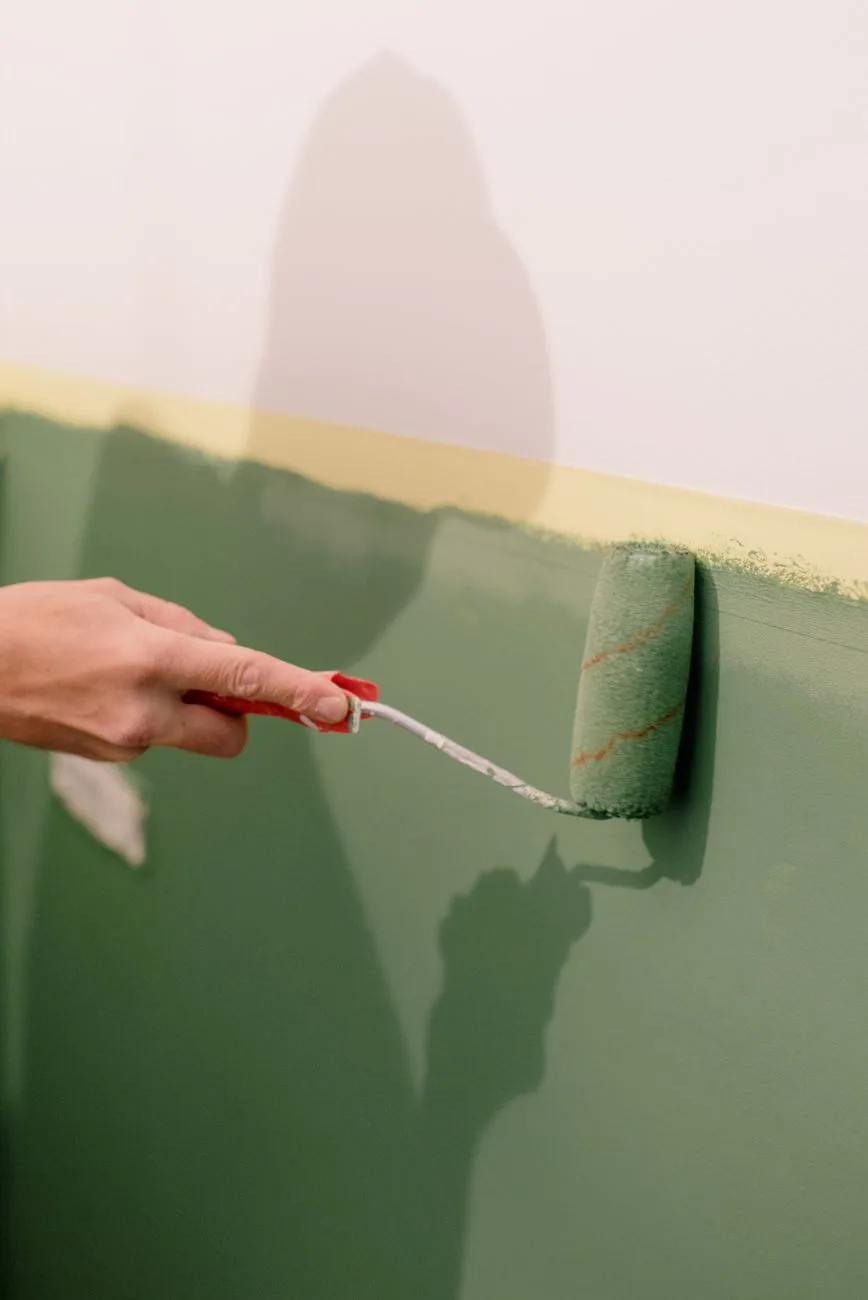
5: ROLL a three-foot-wide wall section in a large W, then fill the W without lifting the roller.
Start about three feet from a corner and work low to high. Overlap each pass a few inches while the paint stays wet so side light shows no bare stripes.
6: WAIT until the first coat feels dry to a clean fingertip: plan on about four hours for typical wall paint.
Test a low corner away from traffic. A smudge means give it more time; a clean fingertip means you can start the next coat.
7: COVER the same sections with a second thin coat: fresh load, W pattern, fill in, keep a wet edge as you go.
Two thin coats hide old color better than one heavy coat. Scan corners and taped edges once more before you wash the tools.
The most common mistake
A roller loaded until it drips leaves runs and thick ridges. Roll it on the tray ramp until the cover is wet but not dripping.
Pro tip
Keep a damp rag in your back pocket and wipe any drip the moment you see it, before it skins over.
Say it every time
Check, tape, cut, load, roll, wait, cover