



Hudson Taylor Goes Inland
I remember the pew creaking under me before I remember anything the preacher said. It was a warm Sunday near the end of June, the light coming long and yellow through the tall windows of that Presbyterian church in Brighton, and I had come down from London to spend a few days at the seaside as a guest in George Pearse's house. Mr. Pearse had a lodger that weekend too, a lean, sunburnt man with something restless behind his eyes, who was introduced to me only as a doctor lately back from China. I did not think much of it. Half of England seemed to know someone lately back from somewhere.
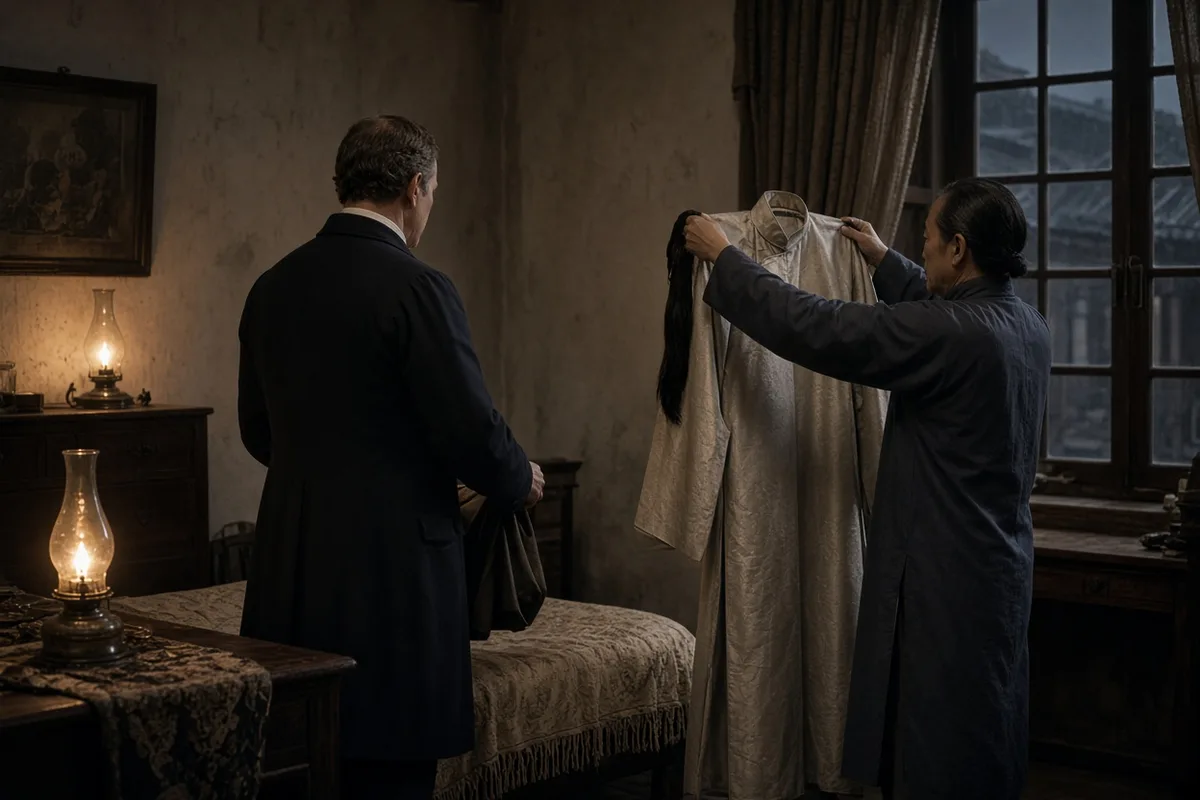
I learned the rest of him the way you learn most things about a man you sit near for two days — in pieces, out of order, some of it from his own mouth and some of it from Mr. Pearse, who spoke of him with the particular hush people use for men they are a little afraid for. He had gone out to Shanghai in 1853, a gaunt, wild-eyed young missionary of twenty-one, on a little three-masted clipper that slipped out of Liverpool without much notice from anyone. China then held only a scattering of Protestant missionaries, most of them clustered in the five treaty ports the Opium War had prised open, translating for merchants and consuls when they were not preaching. He had done something in those early years that scandalized his own countrymen — put on Chinese dress, grown the plaited queue down his back, and gone inland along the Huangpu River handing out Bibles and tracts to villages that had never seen an Englishman's face, let alone heard the name of Christ.

The society that had sent him out, the Chinese Evangelization Society, ran out of money to pay its own missionaries by 1857, and rather than starve at the mercy of a committee three months' post away, he resigned and made himself, as he put it, dependent on God alone for his support. That same year he married Maria Dyer, daughter of missionary parents who had themselves given their lives to China. Together they built up a small congregation in Ningpo that grew, slowly and by hard labor, to twenty-one members — not a large number, but each one had cost something. Then his body failed him. By 1860 the fevers and the wasting sickness that would trouble him the rest of his life had grown severe enough that a London physician, examining him on his return, told him flatly that to go back to China would be to throw his life away.
He did not look, sitting three chairs down from me in Mr. Pearse's parlor, like a man who had taken that warning to heart. He looked like a man biding time.
In London he had not rested. He and Maria set to revising the New Testament in the Ningpo dialect and compiling a hymnbook, work that ate ten or twelve hours of most days, Sundays excepted. He finished his medical training properly this time, sitting for the Royal College of Surgeons and taking a further license in midwifery, as though determined that if he ever returned to the field he would go back better armed than before. And above his writing desk, where he did his translating hour after hour, hung a large map of the Chinese empire — the whole vast outline of it, provinces he had never set foot in, names he had only heard secondhand from merchants and other missionaries. He told me once, in that clipped, tired voice of his, that while he had lived in China the daily press of need immediately around him had crowded out the thought of the greater need farther inland. It was only here, an ocean away, staring at a flat sheet of paper on a study wall, that the whole country came into view at once — and with it, the eleven inland provinces where, by his own reckoning, two hundred million souls lived and died without a single Christian voice among them.
He had gone to the great missionary societies of England with that map folded under his arm, so to speak, and asked them to send workers inland. Every one of them told him the same thing: their funds could not meet the demands already on them, let alone new ones. He kept asking anyway, through the early months of 1865, and the answer never changed.
Something had begun to work on him that spring that no ordinary man could carry alone. He told me, in that unhurried way he had of confessing things as though they were simple facts of weather, that for two or three months he had scarcely slept more than an hour at a stretch, day or night, and had begun to fear for his own reason. The thought that pressed on him, the one he could not set down even to sleep, was that a million people a month were dying in inland China without ever once hearing the name of Christ. He would reason with himself against it — *suppose these workers are given, and go; suppose their faith fails under trial; will they not turn and reproach me for having led them into a place with no safety net beneath them?* — and the reasoning would hold him back for a week, and then the thought of the million a month would return and undo all of it again.
That Sunday in the Presbyterian church, the building was full — a thousand people, by my rough count from the balcony, comfortable people in their good coats, singing with real feeling. I remember thinking it was a fine service. Ordinary. The kind that leaves a man pleasantly tired by the walk home. I did not understand, until I saw his face during the closing hymn, what it cost him to sit through it. He told me afterward he could not bear the sight — a thousand Christians rejoicing over their own security in Christ while, across the world, multitudes went down into the ground having never once heard there was a Savior to be secure in.
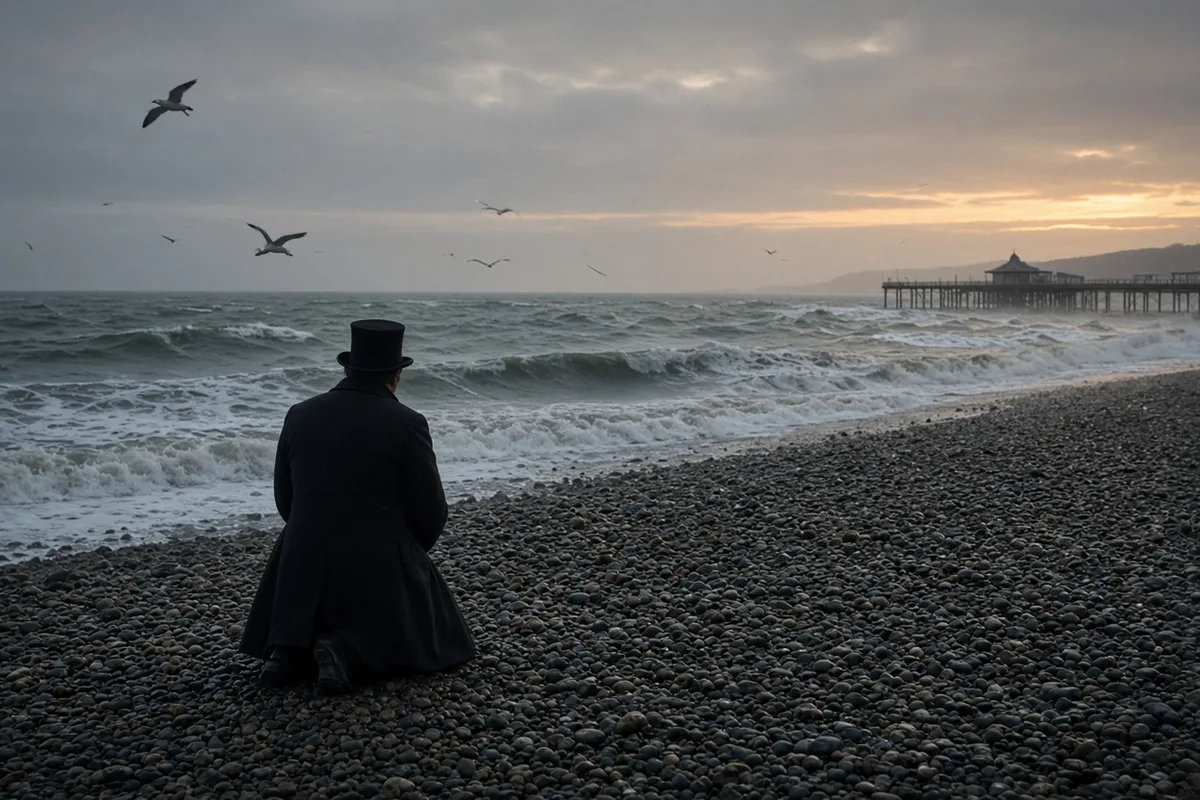
He left the church ahead of the rest of us and did not come back to the house for the midday meal. I went down to the front later in the afternoon myself, meaning only to walk off the heaviness of the sermon and get some air off the water, and that is how I came to see him — pacing the shingle a good distance below the parade, hatless, his coat open, walking the way a man walks when he is arguing with someone who is not there.
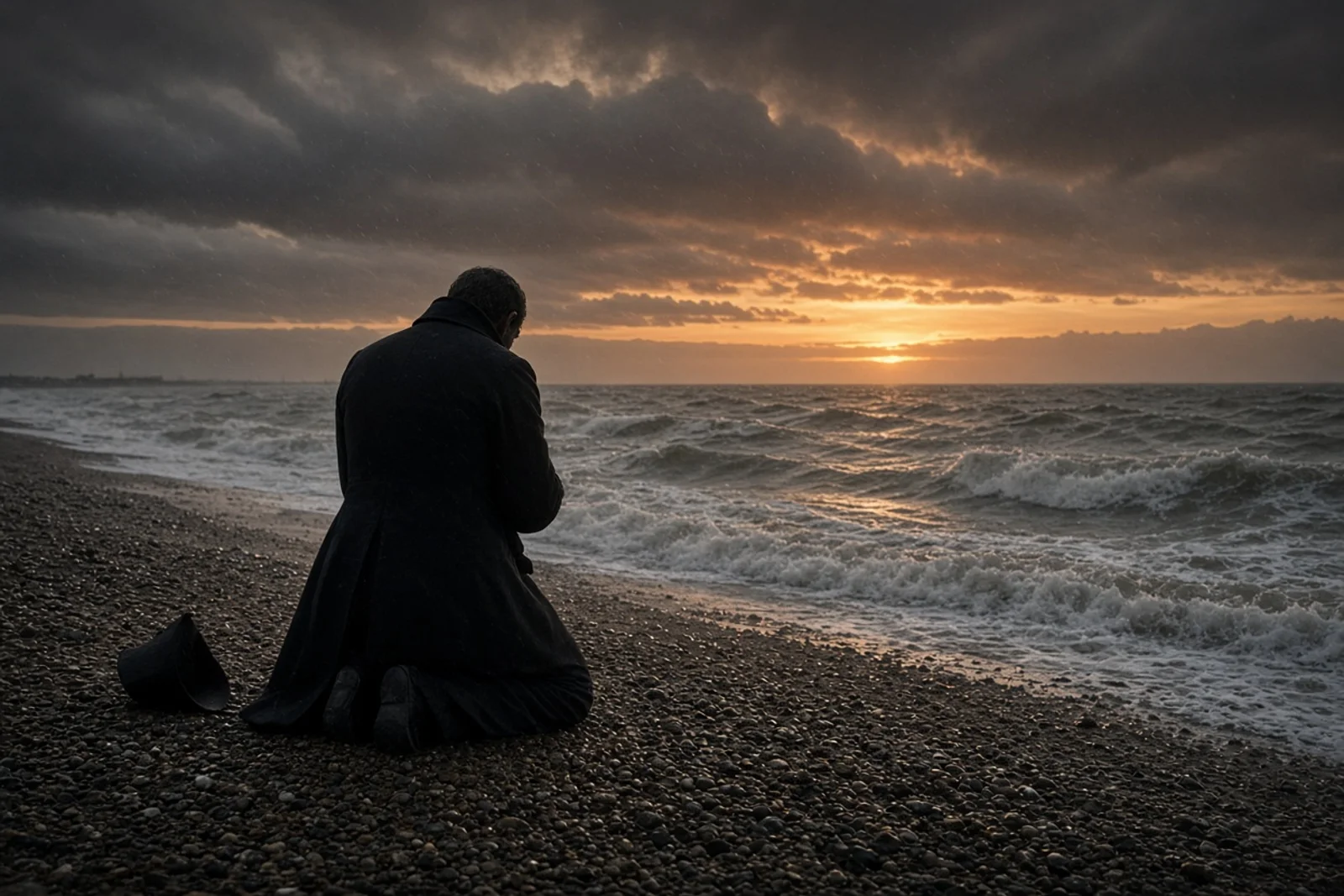
I did not go near him. There are moments you recognize, without being told, that you have no business intruding on, and this was one. I found a bench above the beach and I watched, at that distance where a man's shape means more than his face — the way he would stop dead and stand with his head down, then start walking again faster than before, then stop again and this time drop to his knees right there on the wet shingle, heedless of the tide line, heedless of who might see him from the parade above. The gulls were loud that afternoon. I remember that more clearly than almost anything — the gulls, and the particular gray-green color the Channel takes on in late June before evening, and this one man on his knees on the stones arguing himself, at last, into a decision.
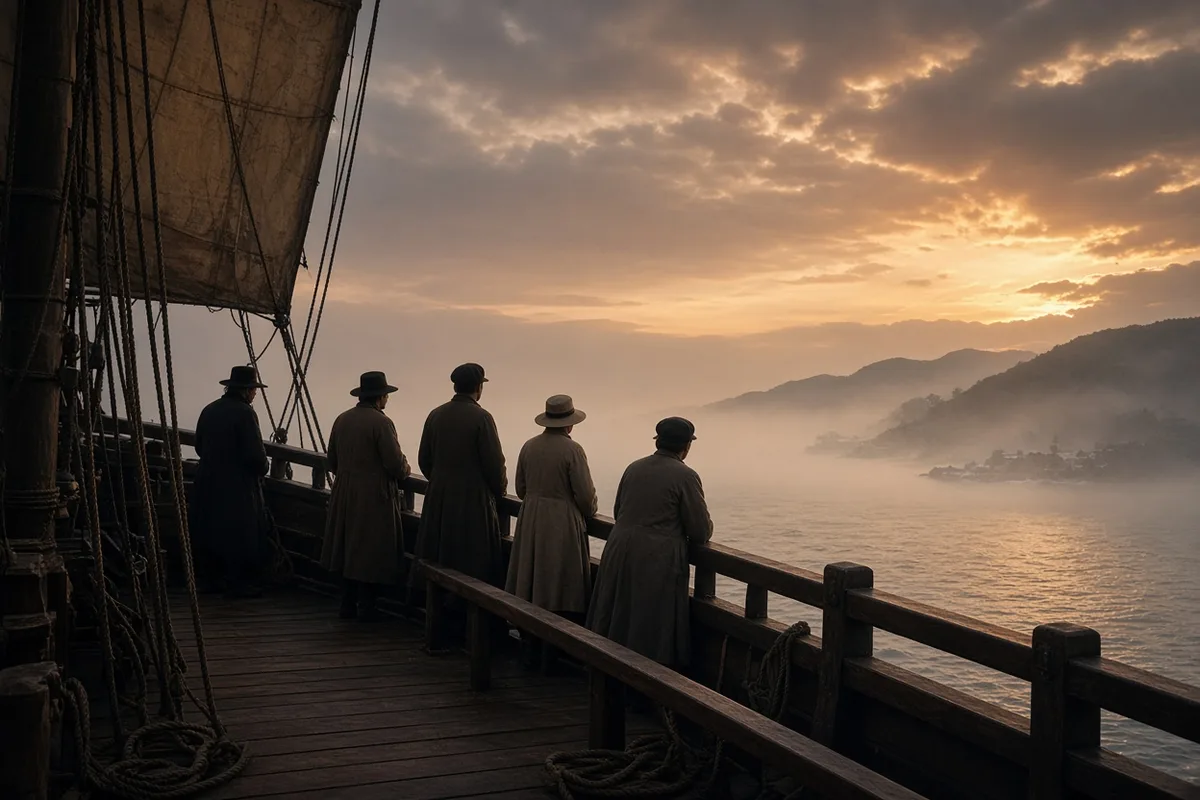
He told me afterward — not everything, a man does not hand over the whole of such a wrestling to a stranger he has known two days — but enough. He said he had gone down onto that beach still carrying the fear that had kept him silent for weeks: that he had no right to call men and women into danger he could not promise to shield them from, that their blood, in some sense, would be on his hands if he asked and they came and it went badly. And he said that somewhere on that walk the fear simply gave way, the way a rope gives way, not gradually but all at once, and he had knelt down on the stones and prayed. He gave me the opening of it, plainly, the way you'd repeat a vow you'd just taken: *Divine Master, I surrender myself to You for* — and there his voice trailed into something too private to hand across, some further surrender of the fear itself, of the consequences, of his own claim to safety in the matter. I did not ask him to finish it aloud. I understood well enough what a man commits himself to who kneels on a public beach in his church clothes at four in the afternoon.
When he came back up to the house before supper, something in him had gone quiet that had not been quiet the two days I'd known him. Not at peace, exactly — he was not a man built for peace in the ordinary sense — but settled, the way a scale settles once the last weight has been placed on it. Mr. Pearse asked him nothing directly, and he offered nothing at table beyond his usual measured talk. It was only the next morning, walking with him briefly before my train back to London, that he told me what he had decided on the shingle: that he would ask God, and no one else, for twenty-four missionaries — two for each of the eleven unreached inland provinces of China, and two more for Mongolia besides. He said it the way another man might mention he'd resolved to plant a hedge. I did the arithmetic later and understood it was not a small thing at all — it would have raised the whole number of Protestant missionaries in China by something like a quarter, in one stroke, on no funds and no society and no promise from anyone but the one he had just made on his knees.
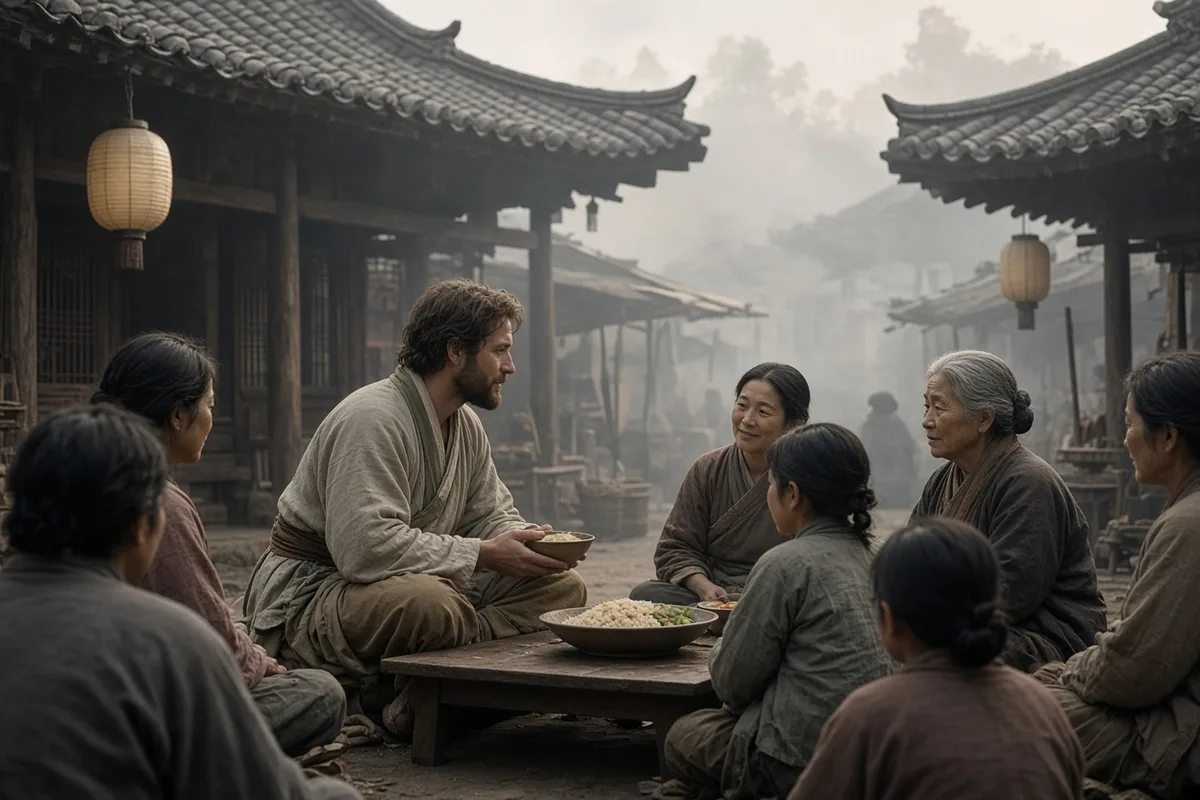
I did not see him again after that week, but a man like that leaves a wake, and word of him kept reaching me the way word does — through Mr. Pearse, through the religious papers, through people who had once dismissed him as a crank and now spoke of him more carefully. He founded his mission that same year, calling it simply the China Inland Mission, and built into its very bones the rule he had settled with himself on the beach: it would ask no government, no wealthy patron, no subscription list for its support. It would ask only God, and trust that if the calling was real the means would follow it. Men who had known committees and boards all their working lives thought this either magnificent or half mad, and said so, freely, in both directions.
He went back out to China not long after, this time trailing behind him the first small company of the twenty-four he had prayed for on the beach, men and women willing to go further inland than any Protestant mission had yet dared to plant itself. There were losses along the way that would have broken a lesser resolve — I heard, years on, of grief in his own household that no mission society's caution could have spared him from, of colleagues who came out full of conviction and went home again broken by fever or by fear, of the long grinding difficulty of a country that did not ask to be evangelized and did not make it easy for those who tried. He had told me himself, that week in Brighton, that China would not be won by quiet, ease-loving men and women, and he seemed to have meant it as much about himself as anyone.
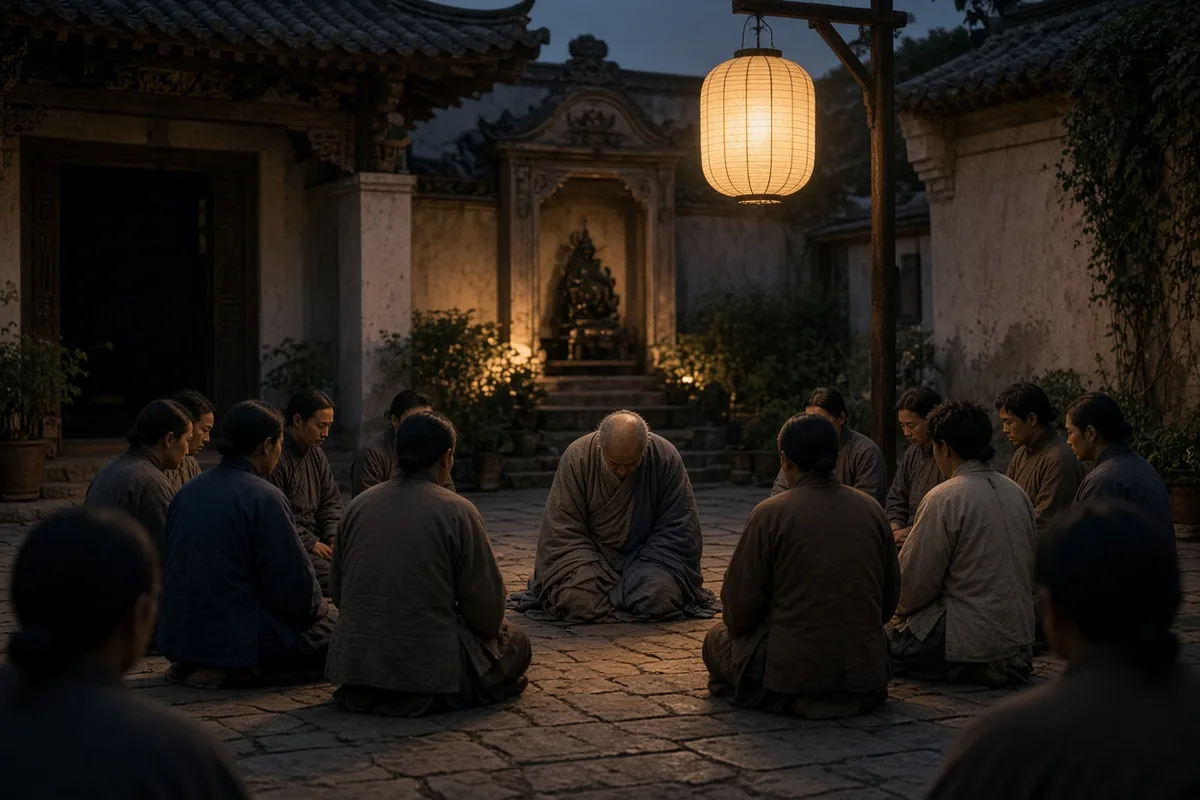
But the mission held. It grew past its own founder's arithmetic many times over in the decades after, until missionaries went out to China by the thousands where they had once gone by the dozen, and inland provinces that had had no Christian voice in 1865 had congregations, however small, however hard-won, by the time the century turned. He died in 1905, in China, the country that had cost him a wife, his health, and very nearly his reason on a beach in Sussex forty years before.
I think of that beach more than I ought to, for a man who only happened to be staying in the same house that weekend. I think of the gulls, and the tide going out over the shingle while a man knelt in it fully dressed, working out on his knees a debt of a million souls a month that no committee in London had been willing to underwrite. Nothing about that Sunday looked, from where I sat on the bench above the parade, like the beginning of anything. It looked like a man having a difficult afternoon by the sea. It was only afterward, watching what came of it, that I understood what I had been permitted, at that distance, to witness.