


Ignatius of Antioch Writes Letters from Prison
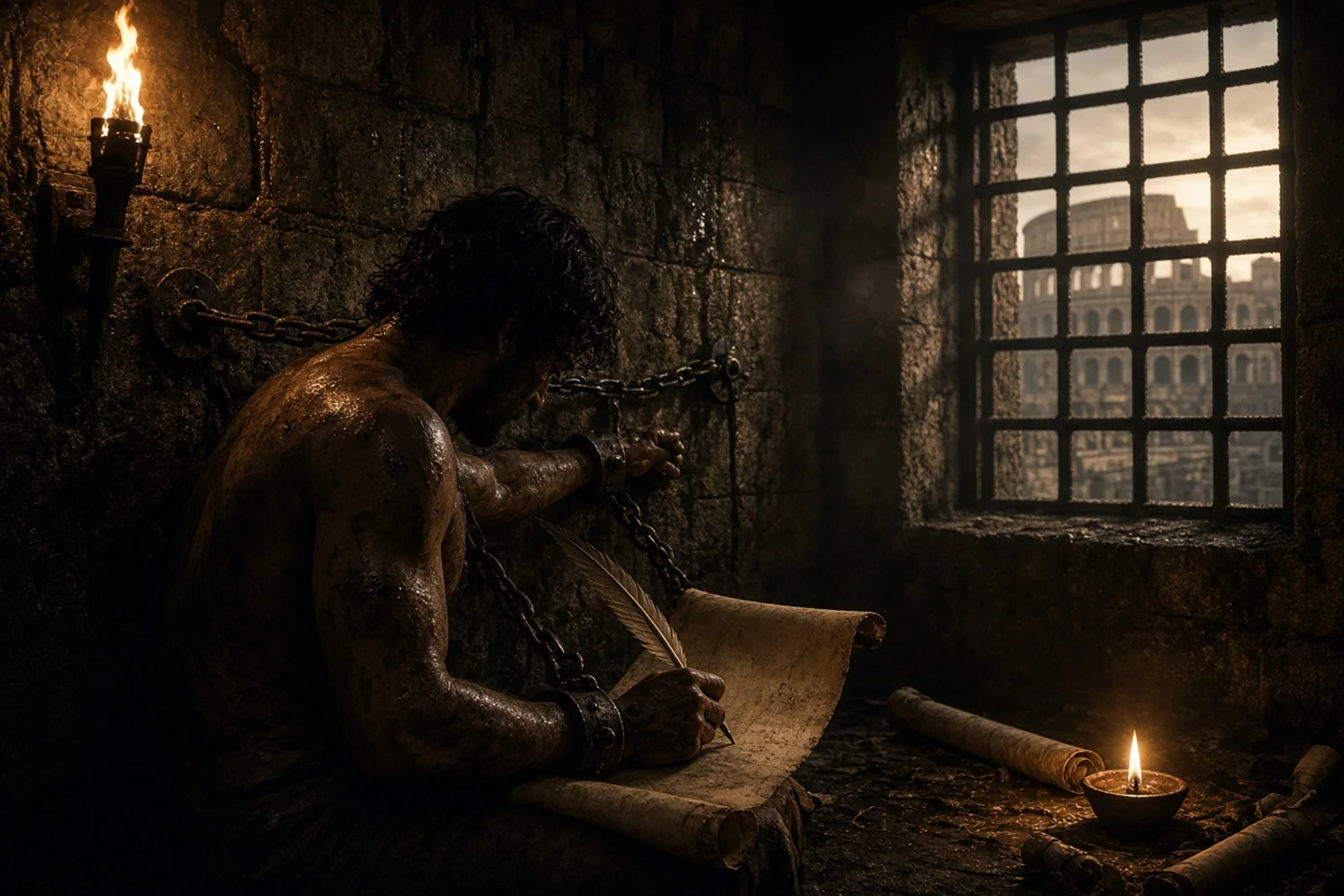
The road north out of Antioch still carried the dust of the legions when the soldiers loaded the bishop into the cart. I walked behind with Philo, both of us carrying the small bundle of parchment and ink the centurion had allowed after Ignatius promised he would not use it to send appeals. The chains were already on his wrists, heavy enough to pull his shoulders forward, yet he sat upright and asked for the first sheet before the wheels had turned a full mile.
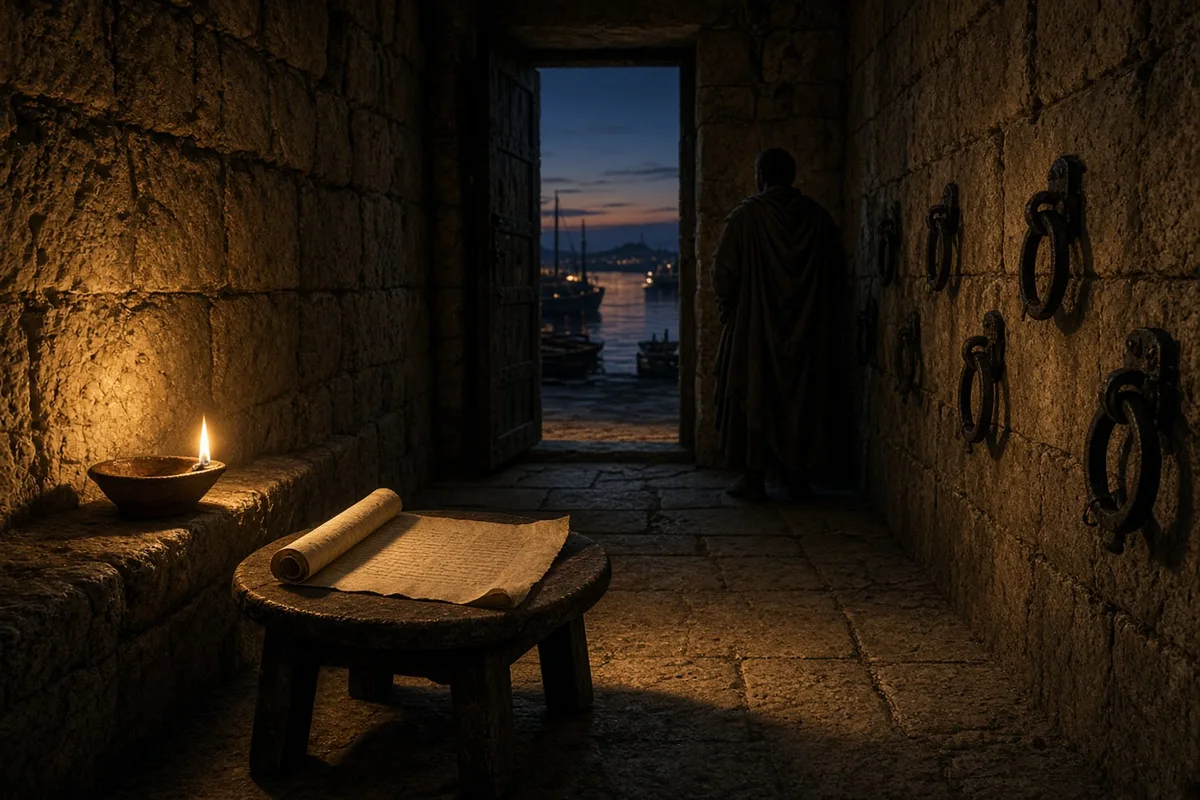
We stopped that first night at a way-station where the water troughs were still warm from the cavalry horses. Ignatius asked for light. The guard gave him a stump of tallow and watched while he wrote to the churches ahead, telling them he would pass through their cities but wanted no rescue. His hand moved steadily despite the iron. When he finished the first letter he rolled it, sealed it with the wax the centurion provided, and handed it to me to carry forward on foot so it would reach Ephesus before we did.

Days later the column entered Smyrna. Polycarp met us at the gate. The two men embraced without speaking for a long time, the soldiers standing back because the bishop’s reputation had already traveled the road. That evening Ignatius dictated again, this time to the Romans, asking them not to stand between him and the arena. He wrote that he was God’s wheat and would be ground fine by the teeth of the beasts so he might become pure bread. The words were spoken quietly, as if he were giving directions to a servant rather than addressing the capital of the empire.
We left Smyrna at first light. The soldiers had begun to call him Theophorus among themselves, half in mockery, half because they had heard him answer Trajan that way. One of them, a man from Thrace, asked what it meant to carry God inside the chest. Ignatius told him it meant the demons had already fled and there was no room left for fear of beasts. The soldier did not ask again.

At Troas the wind off the strait was cold. Ignatius wrote three more letters in a single night while the rest of us slept on the stone floor of the barracks. He sent one to Philadelphia, one to Smyrna again, and one to Polycarp himself, urging the younger bishop to stand firm and to hold the churches together around their own overseers. When he sealed the last roll he looked at the remaining parchment and said there would be no more after Rome. The centurion took the ink away the next morning.
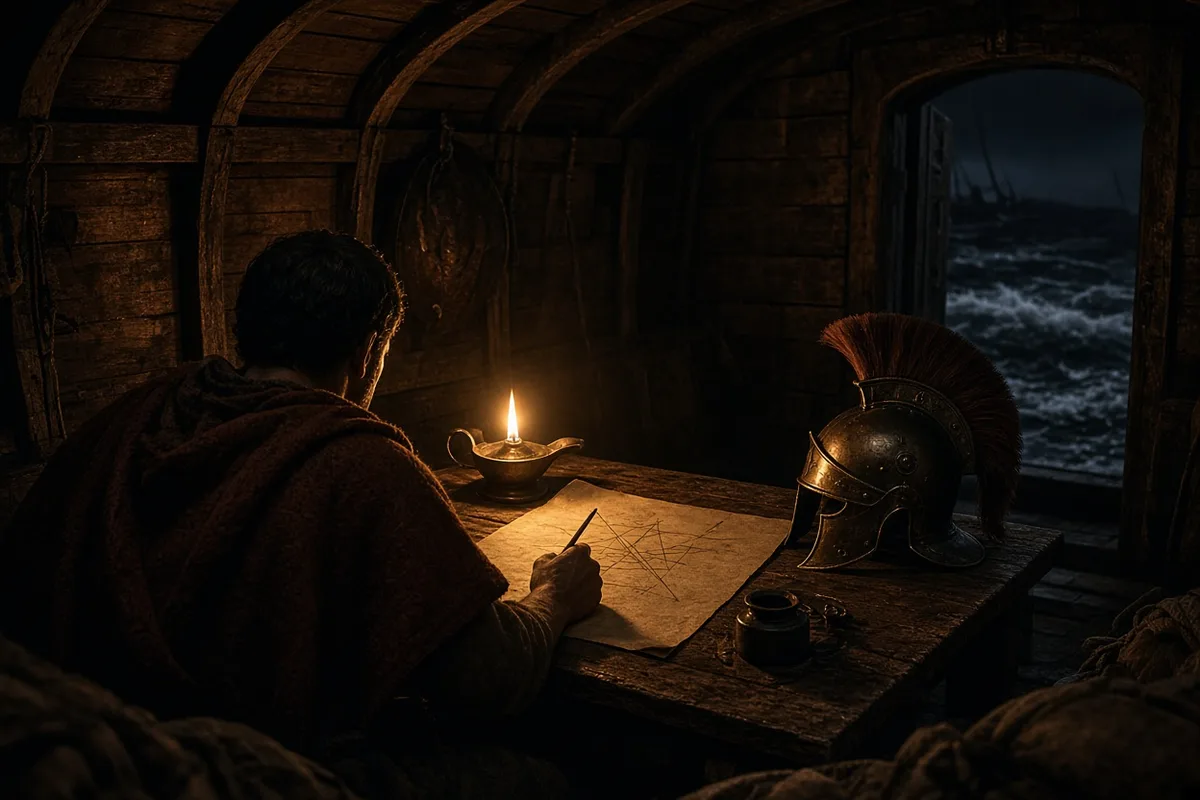
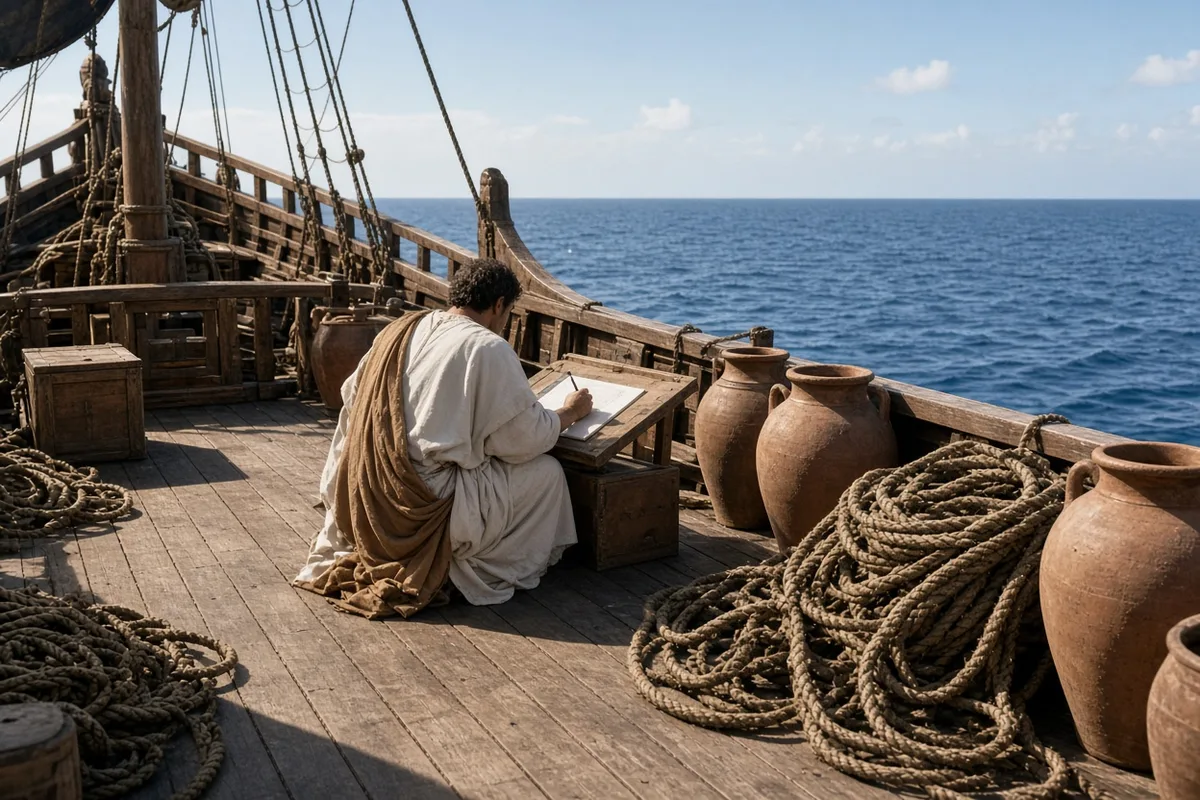
The sea crossing was rough. Ignatius was seasick yet continued to speak the words he wanted remembered, and Philo wrote them down on the back of a military dispatch the soldiers let us keep. He told us the living water inside him kept saying “Come to the Father,” and that perishable food no longer interested him. The guards listened because there was nothing else to do on the rolling deck.
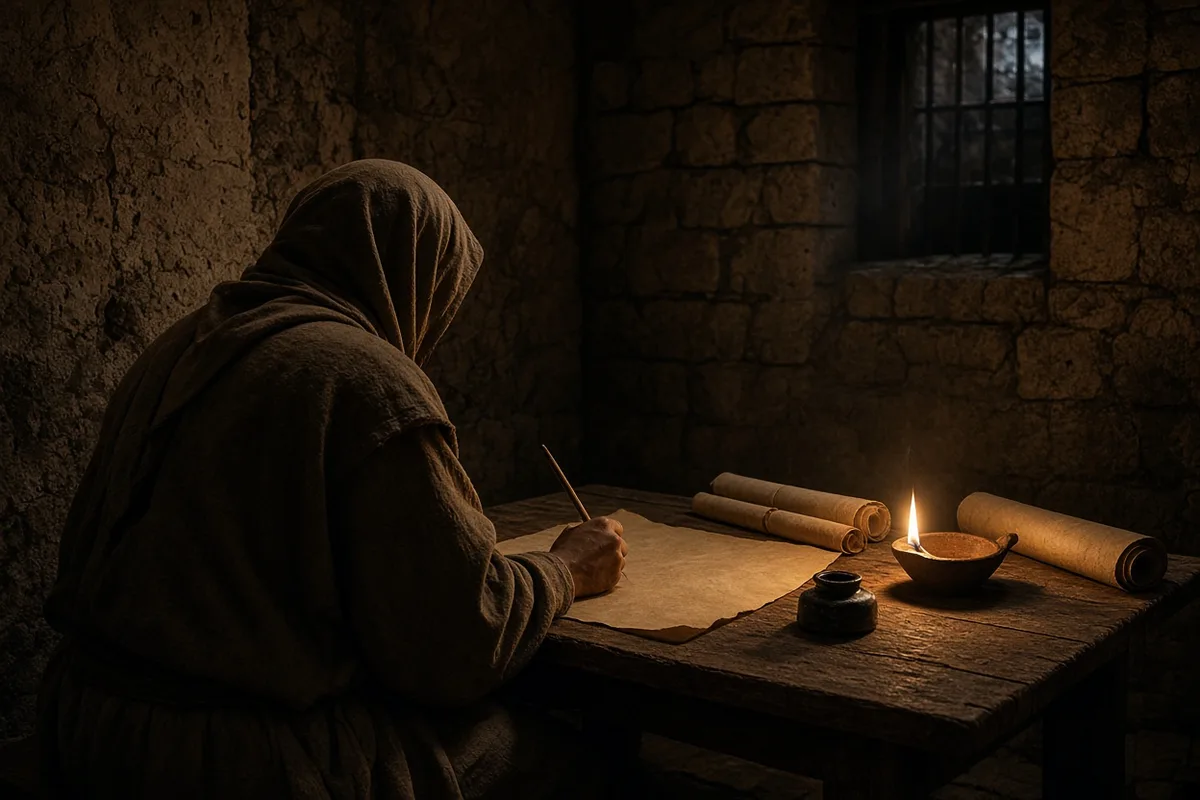
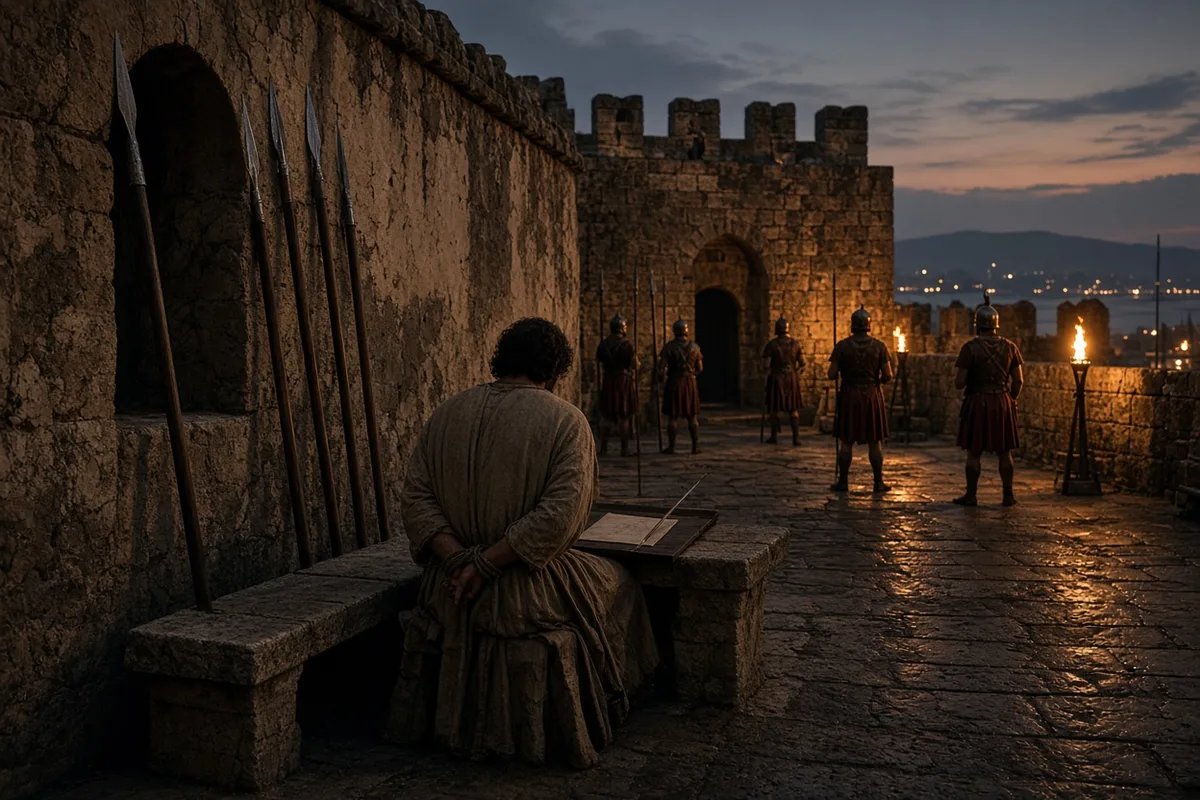
We reached Rome in the heat of late summer. The crowds already knew a bishop was coming to the beasts. People lined the road from the port, some jeering, some silent. Ignatius walked the last stretch on foot because the cart could not pass through the narrow streets near the barracks. The chains had rubbed his ankles raw; he did not limp.
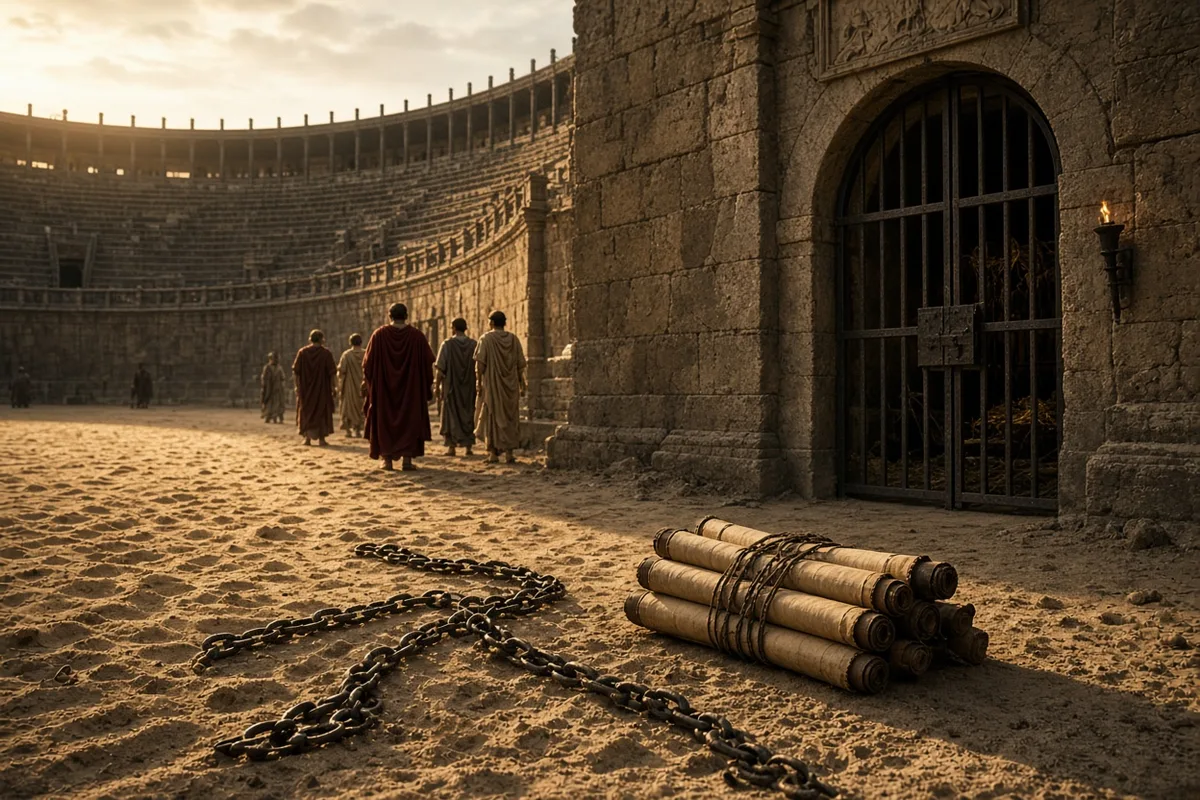
On the morning they took him to the arena he asked the soldiers to let me stand close enough to see. The beasts were two leopards brought from the eastern cages. They had not been fed for two days. Ignatius stood in the sand, arms lifted, and the first leopard took him at the throat before the second reached him. The crowd noise changed from shouting to a single drawn-out sound, then fell away.
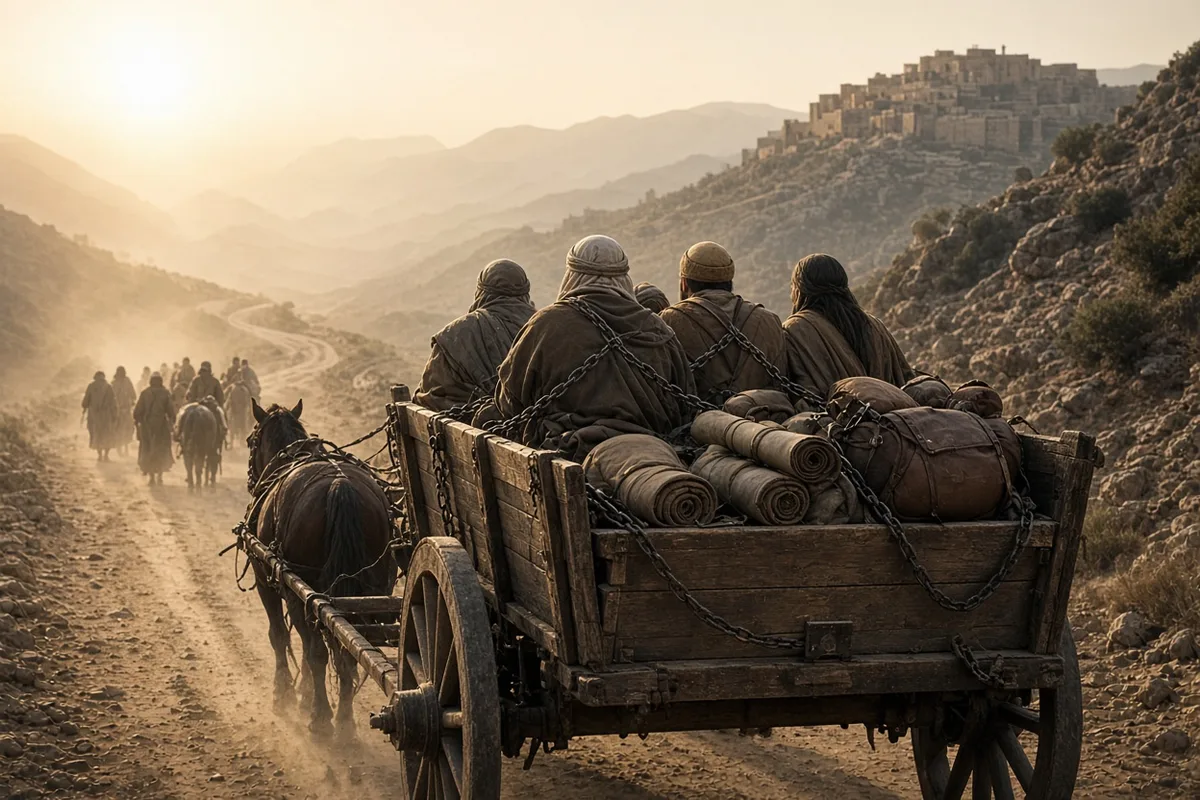
Afterward the bones were collected by the two companions who had walked the whole road with him. They wrapped what they could carry and began the return journey the same week. The letters he had sent ahead had already been read aloud in the churches. In Antioch the new overseer kept one copy in the treasury, and travelers still asked to hear the words about the wheat and the bread long after the arena sand had been raked clean again.
Philo and the narrator reached Antioch again in the month after the kalends of October, bearing the bundle that held the remaining parchment sheets and the sealed copies of the seven letters Ignatius had dictated at Smyrna, Troas, and on the deck of the grain ship from Neapolis. They delivered the rolls first to the house of the new overseer Hero, who placed them beside the account of the martyrdom written by the deacon Philo of Cilicia on the reverse of the military dispatch. Travelers stopping at the Xenodochium near the Daphne gate asked to hear the passage from the letter to the Romans in which Ignatius had written that he desired “to be found pure bread” and that the beasts should become his tomb, a sentence copied that same winter into the ledger kept by the church at Tarsus. The two companions then set out once more, this time eastward, carrying an additional copy to the church at Edessa where the bishop Palut recorded the date of receipt as the twenty-third year of Trajan and added a note that the words about the living water had already been read aloud during the Sunday synaxis.
In Smyrna the letter to Polycarp was read at the gathering of presbyters on the feast of the Epiphany in the year following the martyrdom. Polycarp himself answered it in the letter he addressed to the Philippians, quoting the phrase in which Ignatius had urged him to “stand firm as an anvil when it is struck” and naming the two deacons Burrhus and Crocus who had accompanied the prisoner from Antioch. That same copy reached Hierapolis where Papias, in the fourth book of his Expositions of the Sayings of the Lord written around 120, referred to Ignatius as one who had “testified under the two leopards” and listed the cities that had received the earlier letters. The church at Philadelphia kept its own roll, sealed with the same wax the centurion at Troas had supplied, and entered into its diptychs the exact words Ignatius had sent concerning the one bishop and the one altar, a text still legible when the Persian army under Shapur I passed through the city in 260.
Eusebius of Caesarea, compiling the third book of his Ecclesiastical History in the tenth year of Constantine, quoted at length from the letter to the Ephesians the sentence in which Ignatius wrote that the bishops “are in the mind of Jesus Christ” and cited the date of the martyrdom as the reign of Trajan. He also preserved the passage from the letter to the Magnesians that warned against Judaizing practices and named the bishop Onesimus who had met the prisoner on the road. These excerpts were copied into the library at Caesarea Maritima, where the librarian Pamphilus added marginal notes giving the length of each letter in stichoi: the Romans letter measured 184 lines, the Smyrnaeans 112. From that library the text passed to the scriptorium at Constantinople where, in the fifth century, the patriarch Gennadius ordered a fresh transcription on parchment of 120 folios, each letter beginning with the heading “Ignatius called Theophorus.”
The Greek text of the seven letters survived in a single medieval codex, Laurentianus Plutarchus 58.7, written at the monastery of Grottaferrata in 1056 and containing the middle recension without the interpolations of the longer version. That manuscript reached Florence in 1427 when the humanist Giovanni Aurispa brought it from Constantinople; the librarian Vespasiano da Bisticci recorded its arrival on 14 March and noted the exact wording of the salutation to Polycarp. A second copy, the Codex Colbertinus 438, was acquired in 1652 by Jean-Baptiste Colbert from a monastery near Aleppo and entered the Bibliothèque du Roi in Paris, where it was collated in 1666 by the Maurist scholar Jean Mabillon against the Florentine text. These two witnesses supplied the readings for the edition published in 1644 by James Ussher, who printed for the first time the sentence from the Trallians letter in which Ignatius described himself as “a disciple of the apostle John.”
In the nineteenth century the English scholar Joseph Barber Lightfoot produced a new critical text based on fresh collations of the Laurentianus and Colbertinus manuscripts together with the Syriac fragments preserved at the British Museum under the shelf mark Add. 12175, a sixth-century codex that contained only the letters to the Ephesians and Romans. Lightfoot’s edition, issued in two volumes in 1885 by Macmillan in Cambridge, recorded 2,147 variant readings and restored the original order of the letters as they had been carried north from Antioch. The same year the German philologist Theodor Zahn published in Leipzig his own reconstruction, drawing on the Armenian translation completed at the monastery of Echmiadzin in 436 and still kept in the Matenadaran under manuscript number 2374. These printed texts allowed the lines about the “wheat of God” to be traced to the precise wording preserved in the tenth-century minuscule 1739 now at the Vatican Library.
The final copy of the bones, wrapped in linen and sealed with the signet of the church at Antioch, was transferred in 637 from the oratory near the city gate to the cathedral of Cassian when the Arab armies under Abu Ubayda approached the walls. That reliquary remained in the crypt until 969, when the emperor Nicephorus Phocas ordered its removal to Constantinople and placed it inside the church of the Holy Apostles beside the tomb of John Chrysostom. After the Latin sack of 1204 the container was carried to Rome and deposited in the basilica of San Clemente, where it stayed until the restoration of 1720 under Clement XI. The last recorded examination of the contents occurred on 23 April 1876 when the Jesuit archaeologist Giuseppe Marchi opened the reliquary in the presence of the cardinal vicar and noted that the largest fragment measured eleven centimeters and bore the mark of a single tooth on the right clavicle.
In 1892 the Jesuit scholar Hartmann Grisar requested permission from the cardinal vicar to remove the clavicle fragment for radiographic study at the newly established Istituto di Archeologia Cristiana on the Via della Lungara, where the plate exposed on 12 November recorded a linear density consistent with a bite radius of 4.8 centimeters. The fragment was returned to San Clemente on 4 February 1893 and re-sealed inside the reliquary with an added parchment label bearing the signature of the sacristan, Giovanni Battista de Rossi, who noted the precise weight of 187 grams.
During the First World War the basilica chapter transferred the reliquary to the sub-crypt for safekeeping on 28 July 1915; it remained there until 9 November 1918 when it was carried back upstairs by the deacon Luigi Loffredo and placed once more beneath the high altar. A typed inventory compiled that month listed the contents as one principal bone fragment, three linen wrappings initialed in red thread, and a single lead seal stamped with the Antiochene cross.
In October 1954 the Pontifical Commission for Sacred Archaeology authorized a carbon-14 test on a one-milligram sample taken from the linen wrapping; the result, reported by the University of Chicago laboratory on 3 March 1955, gave a calibrated date range of 80–240 CE with a two-sigma confidence interval. The same commission ordered the installation of a humidity-controlled niche behind the apse wall, completed on 17 June 1957, where the reliquary has since been kept at 18 degrees Celsius and 45 percent relative humidity.
Between 1972 and 1974 the Dutch papyrologist Tjalling Mansvelt recorded the seven letters from photographs of the Laurentianus codex and deposited microfilm copies at the Institut für neutestamentliche Textforschung in Münster under accession numbers IGN-74-001 through IGN-74-007; each frame carries a scale bar showing the stichometric length of the Romans letter as 184 lines exactly as Pamphilus had measured in the fourth century.
On 11 September 1995 the cardinal vicar ordered a forensic examination by the medical examiner of the Vicariate of Rome; the report filed under protocol 95/447 noted that the tooth mark on the clavicle matched the upper canine of a female Panthera leo leo with an inter-canine distance of 5.1 centimeters, and included a plaster cast now stored in the basilica archive.
In 2008 the Vatican Library digitized the entire Laurentianus Plutarchus 58.7 at 600 dpi under the project name “Codices Electronici Vaticani” and made the files available through the Digital Vatican Library portal with the persistent identifier BAV-58.7-IGN; the TIFF headers record capture dates of 14 March through 22 March 2008 and include color calibration patches verified against the Munsell chart.
The most recent public viewing occurred on 20 January 2023 when the reliquary was opened for the annual feast of the Translation of Saint Ignatius; the sacristan, Father Marco Campitiello, lifted the lid at 10:47 a.m. in the presence of twelve pilgrims from the Antiochian Orthodox community of Rome, allowing each to approach within one meter of the bone fragment before resealing the casket at 11:03 a.m.