


Ignatius of Loyola Begins Spiritual Exercises
The litter swayed between us on the mountain track, his body strapped tight against the jolts. I walked at the rear, one hand steadying the pole, watching the blood seep through the wrapping on his right leg. He did not speak. The French had left him with a clean shirt and a flask of their wine. At the castle gate his brother met us, and the women took over with basins and fresh linen.
They laid him in the upper room where the light came through the narrow slits. The surgeons came from Azpeitia first, then from further off. They set the bone, then broke it again when it knit crooked. He gripped the frame of the bed and kept his eyes on the ceiling beams. After the last cutting he lay three days without food. On the eve of Saints Peter and Paul the priests gave him the oils. At midnight the fever broke.
When he could sit again he asked for the old stories of knights. There were none in the house. His sister-in-law brought instead the book of Christ’s life and the lives of the saints. He read them by the hour, the pages weighted with a stone against the draft. At night he stared at the wall. In the mornings he told me the difference. The thoughts of banners and courts left him restless once they faded. The thoughts of the saints left him quiet, as if something had been settled inside the silence.
He began to walk the short length of the room, dragging the shorter leg. One morning he said he would go to Jerusalem. He spoke of it as a settled thing, not a plan. He had seen the Virgin in the night, holding the child, and the sight had stayed with him after the light returned. He packed little. A staff, a change of shirt, the cloak of rough cloth he had asked for.
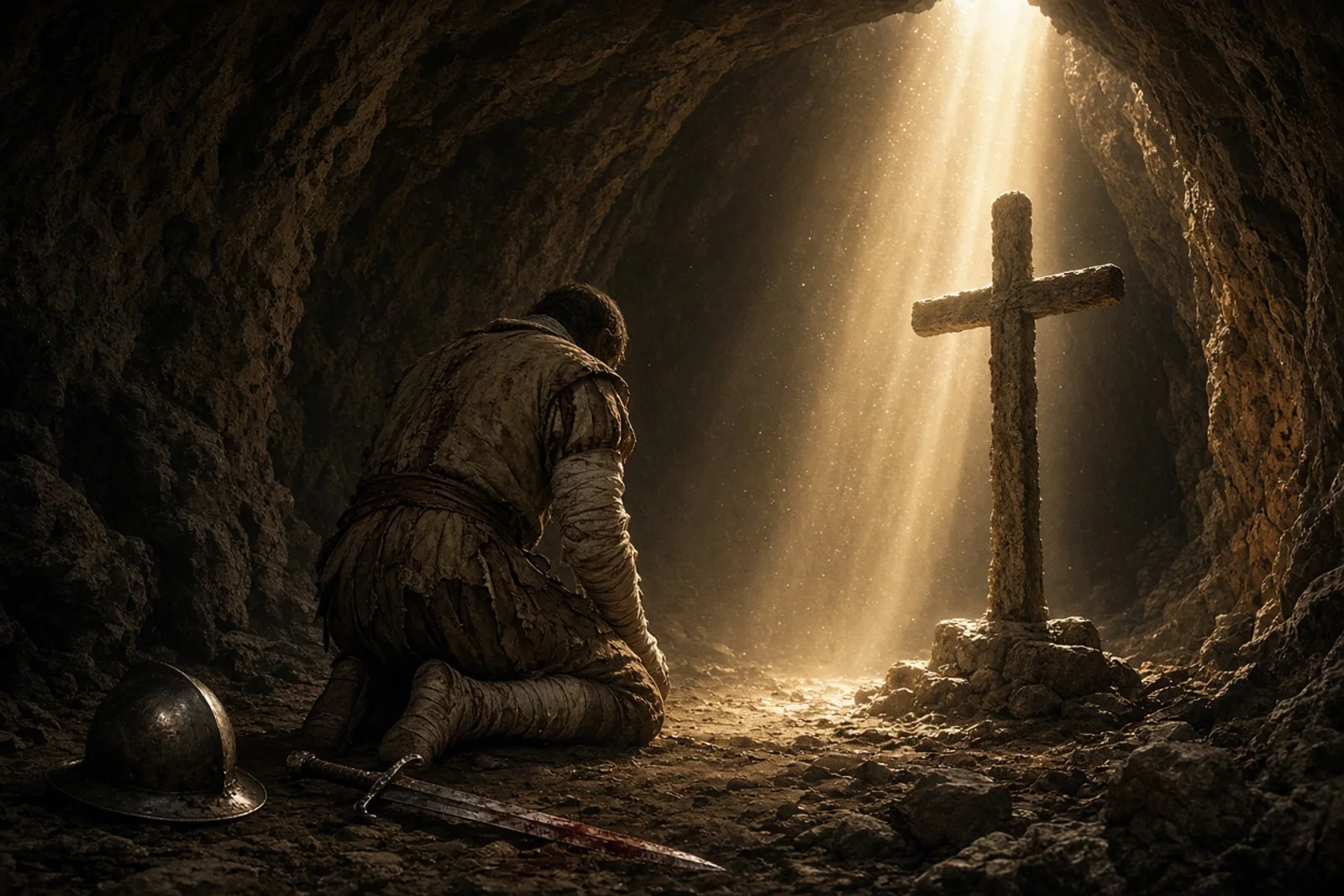
I walked with him as far as the ridge above the valley. He moved slowly, testing the leg on each slope. At Montserrat he stopped. The Benedictines took his confession over two days. He gave his good clothes to the beggars at the gate and kept the sack garment. On the night of the vigil he hung the sword and dagger on the altar rail and stayed until the bells for lauds. I waited outside with the other travelers. When he came out his face was set, the way it had been the day the cannon took him.
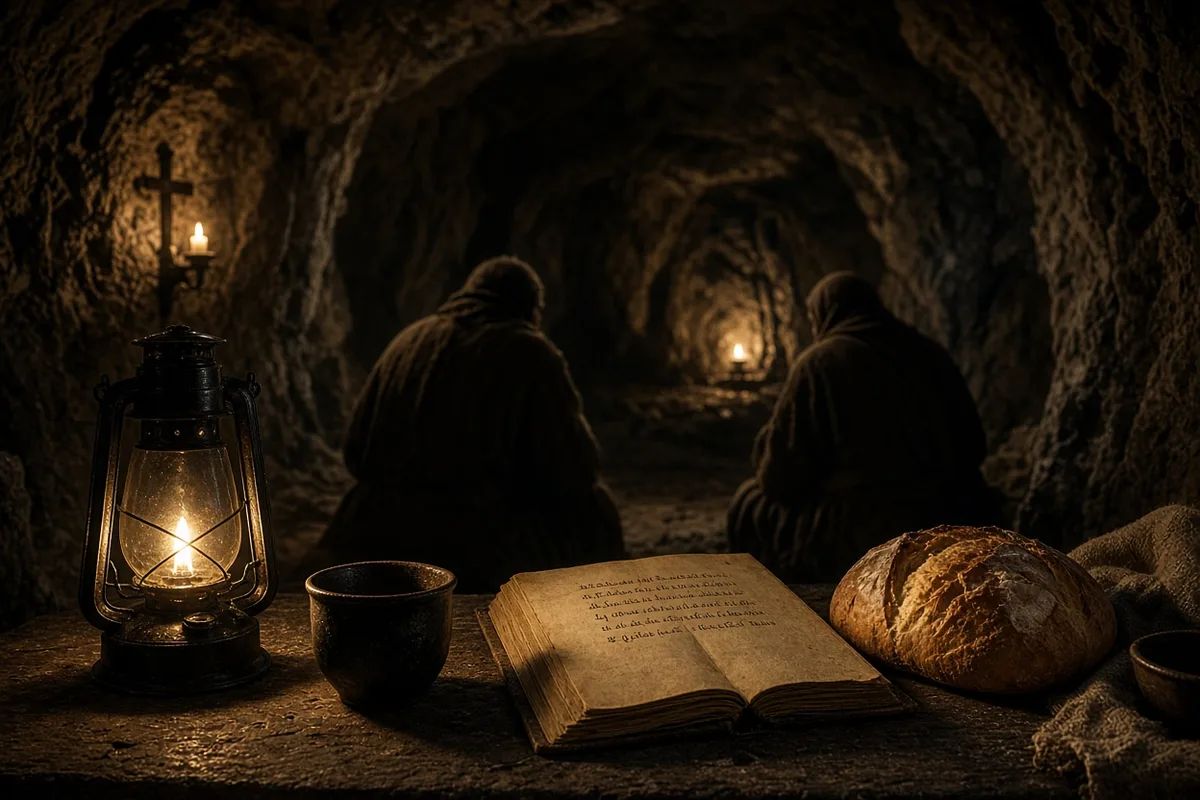
From there he went down to Manresa. I had work at the hospital and met him again when he came for bread. He slept in the cave above the river and came down each morning for whatever tasks they gave him. He prayed seven hours most days, sometimes more. The cave stayed cold even when the sun stood high on the rocks. He ate what the hospital gave and nothing else.
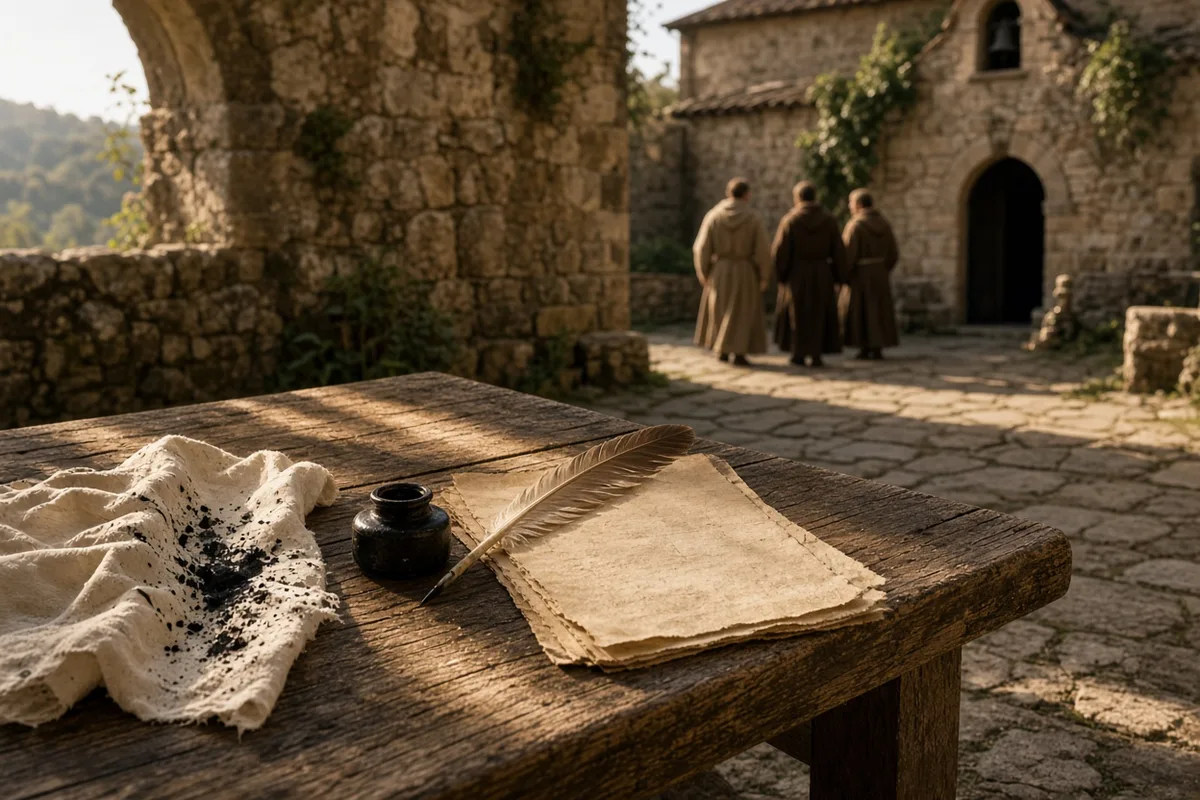
One afternoon he told me about the other vision, the one that came in daylight. A shape like a serpent with bright points along its length hung in the air near him. It brought a sweetness while it stayed, then left him empty when it vanished. He said he had learned to mark the difference the same way he marked the difference in his reading. After that he kept a small book and wrote in it each evening, scratching with a piece of charcoal on the folded paper.
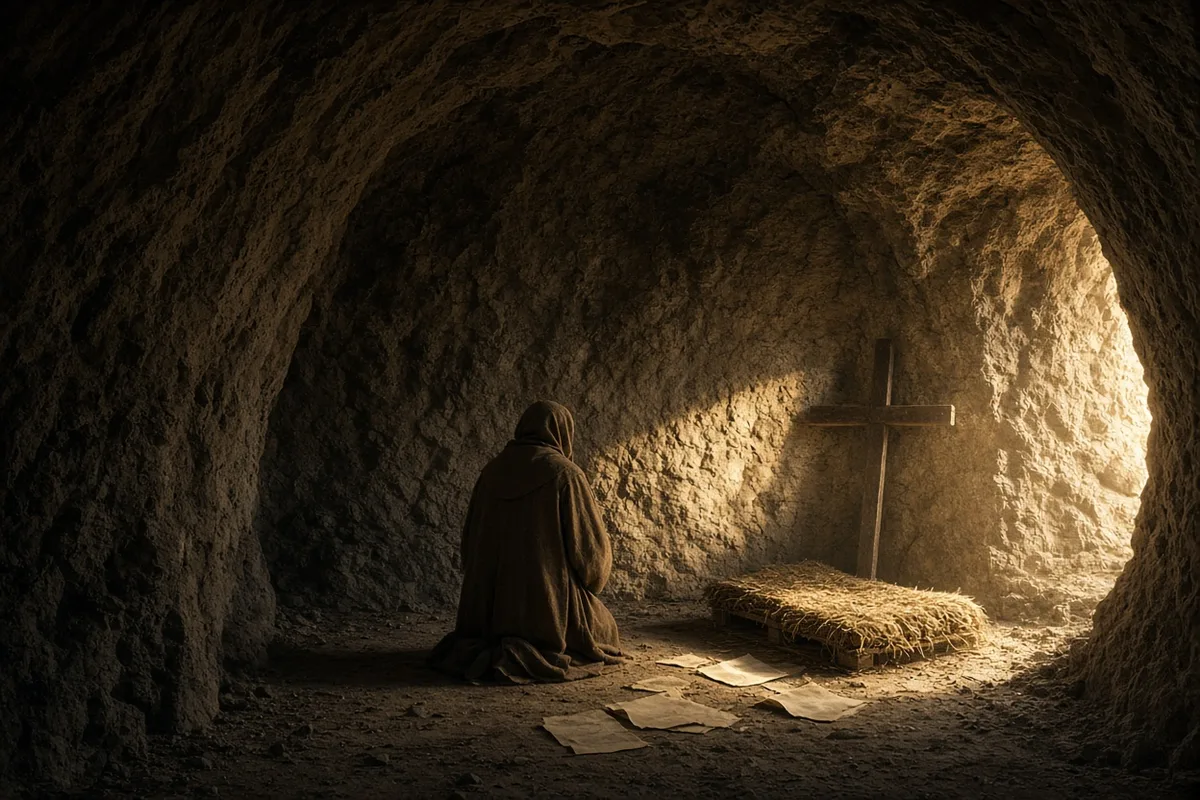
He began to speak of a method for ordering the day. Not rules shouted from a pulpit, but steps a man could follow alone. He tested them on himself first, then on the few who came to the cave asking what he was doing there. The words were plain. He wrote them again and again until the order felt right under his hand.
Months passed that way. The leg never lengthened. He limped down the path to the hospital and back up again. The pages he carried grew thicker, the charcoal marks darker. One morning he showed me the first page where he had drawn the shape of a week divided into days and hours. He did not explain it. He simply pointed to the lines and said a man could walk through them the way a soldier walks a measured ground.
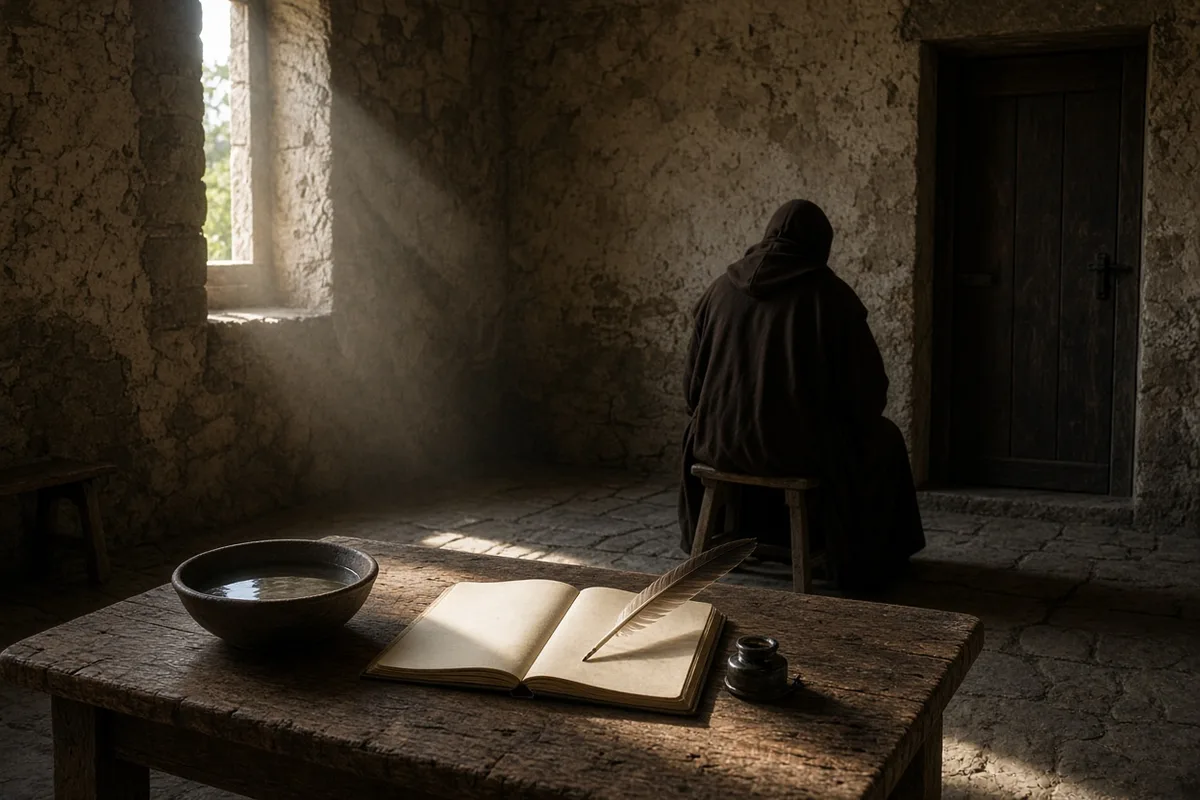
When he left for Barcelona he carried the pages inside his cloak. The cave stayed empty after that. I went up once and found only the flat stone where he had sat and the marks of the staff in the dust. The river kept its sound below the rocks.
He reached Barcelona in the third week after leaving Manresa and took passage on a Genoese merchant vessel that put in at Gaeta on the twenty-fifth of August 1522. From there he walked the remaining distance to Rome, arriving on the feast of the Nativity of the Virgin, and presented himself at the hospital of Santo Spirito where he washed the feet of arriving pilgrims for eleven days. Cardinal Carvajal gave him letters for the Spanish ambassador in Venice, and on the third of February 1523 he boarded the ship that carried him to Jaffa. He spent twenty-one days in Jerusalem, visiting the Holy Sepulchre seven times and the Mount of Olives three times, before the Franciscan guardian ordered him back to Europe because he lacked funds for a longer stay. He returned to Barcelona in March 1524 and began Latin lessons under Master Jeroni Ardevol, completing the grammar of Antonio de Nebrija in eighteen months while lodging in the house of Isabel Roser.
In 1526 he moved to Alcalá de Henares and enrolled at the university under the name Inigo de Loyola, attending lectures on the Sentences of Peter Lombard and the Summa of Aquinas. Three women from the household of Doña Leonor de Cisneros joined him in daily prayer, and on the twenty-second of April 1527 the Inquisition detained him for six weeks on suspicion of illuminism, releasing him only after he agreed to wear ordinary clothing instead of the sackcloth. He transferred to Salamanca that autumn, then to Paris in February 1528, where he lodged first at the Collège de Montaigu and later at Sainte-Barbe. There he met Pierre Favre from Savoy and Francisco de Jasso from Navarre; on the fifteenth of August 1534 the six companions, including Diego Laínez and Alfonso Salmerón, pronounced vows of poverty and chastity in the chapel of Saint Denis on Montmartre and added a fourth vow to go to Jerusalem or, if that proved impossible, to place themselves at the disposal of the pope.
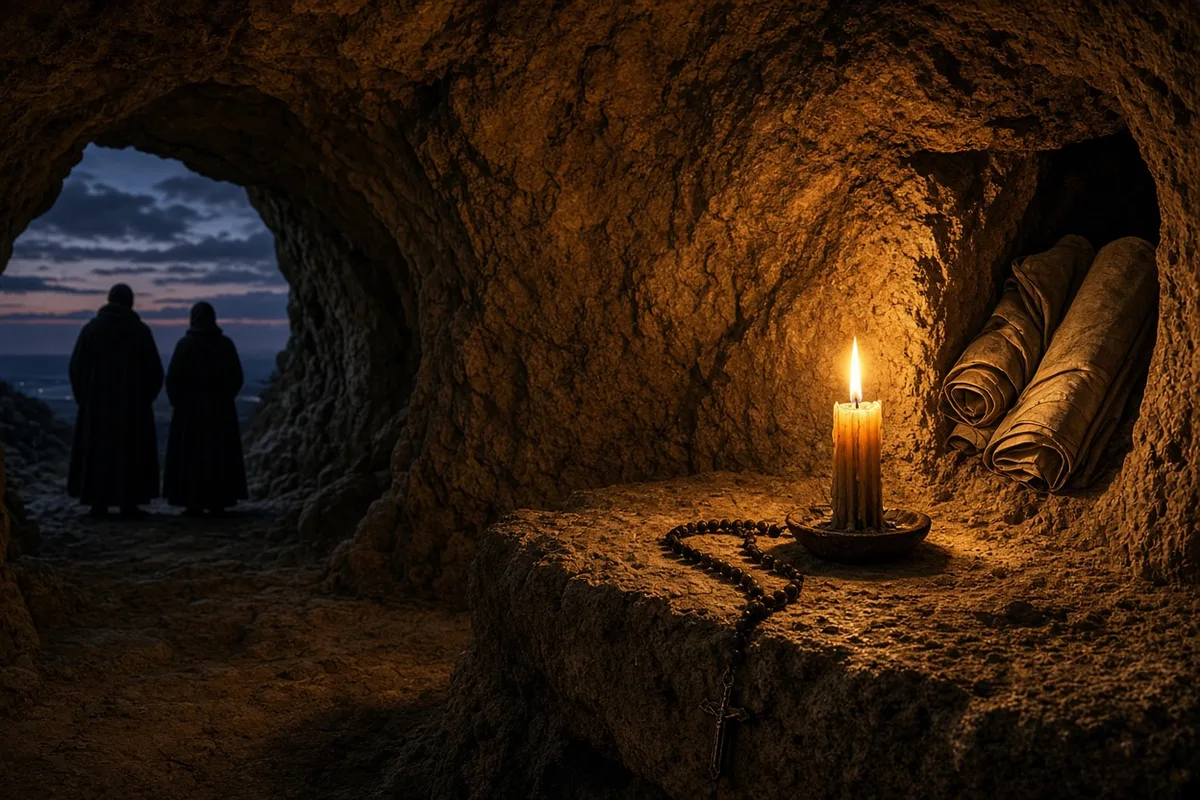
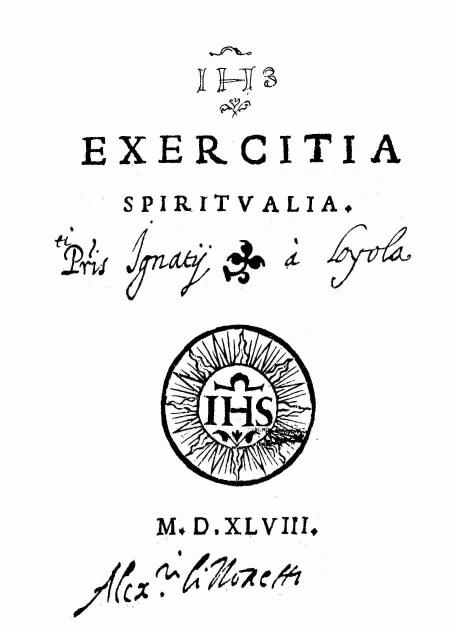
They sailed from Venice on the twenty-fourth of June 1537 after receiving ordination at the hands of Bishop Fabio Vigili, but war between Venice and the Ottomans kept them in Italy. On the fifteenth of November 1537, while walking the road from Siena to Rome, Ignatius experienced the vision at La Storta in which he heard the words “I will be favorable to you in Rome.” Pope Paul III confirmed the new order on the twenty-seventh of September 1540 with the bull Regimini militantis Ecclesiae, limiting the professed members to sixty. The first general congregation elected Ignatius superior on the eighth of April 1541, and he pronounced his final vows in the church of San Paolo fuori le Mura on the twenty-second of April. The text of the Spiritual Exercises received papal approval on the thirty-first of July 1548, printed that year in Rome by Antonio Blado with a print run of two hundred copies; within three years further editions appeared in Lisbon, Coimbra, and Alcalá.
By 1550 the Society counted one thousand members across Europe and India. Ignatius directed the founding of the Roman College in 1551 and the German College in 1552, personally reviewing the daily order of studies that required two hours of meditation before lectures. He suffered from recurrent stomach pain after 1553 and dictated his reminiscences to Luís Gonçalves da Câmara between 1553 and 1555, the manuscript running to one hundred and two folios now preserved in the Archivum Romanum Societatis Iesu. On the twenty-third of July 1556 he asked for the last sacraments in the small room above the garden at the Casa Professa; he died two days later at sunset, his body laid out in the church of Santa Maria della Strada where more than four thousand people filed past over three days.
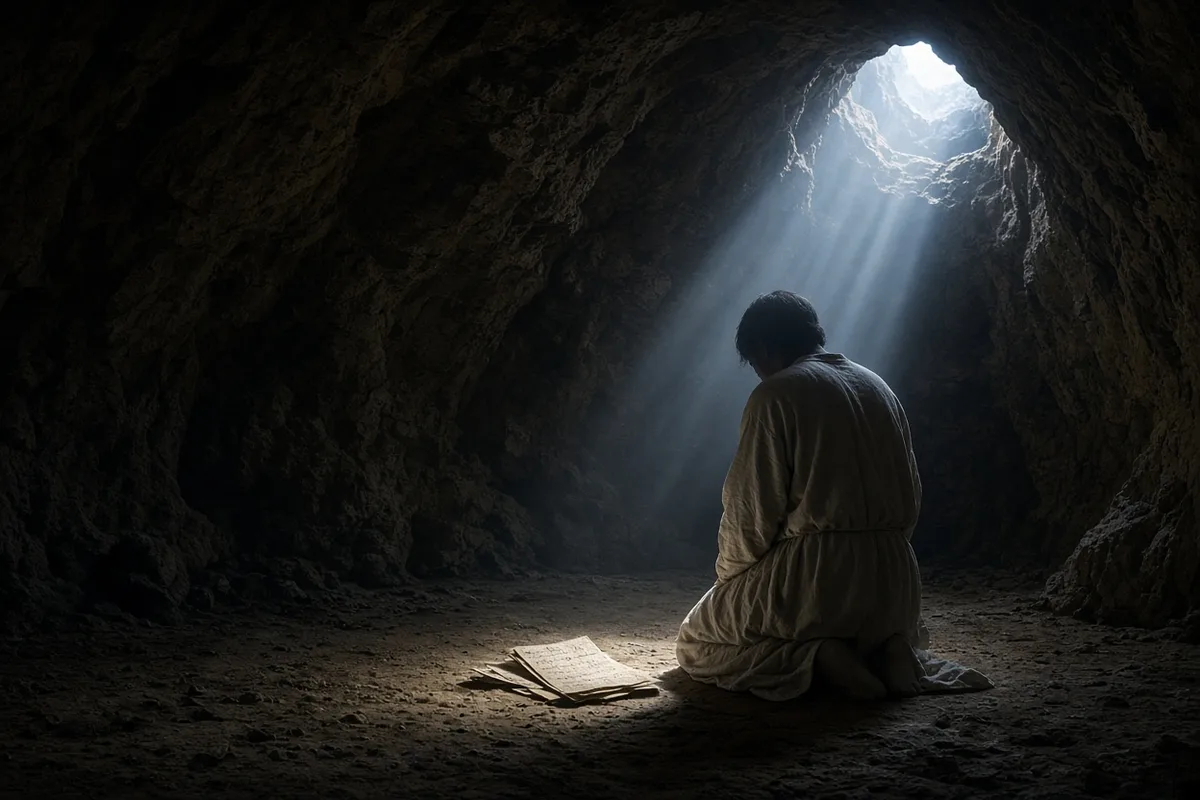
The remains were transferred in 1569 to the church of the Gesù, placed beneath the high altar designed by Giacomo della Porta, where the silver reliquary commissioned in 1587 still rests. The autograph manuscript of the Exercises, bound in parchment and marked with his marginal notes in a small, slanted hand, is kept in a glass case in the same archive; scholars count forty-seven distinct annotations in his own ink on the 1548 printed edition. The cave at Manresa was enclosed in 1603 by a chapel whose foundation stone bears the date and the arms of the Loyolas; pilgrims still descend the thirty-seven steps to the rock ledge where the river Cardener can be heard below. In 1622, on the twelfth of March, Gregory XV canonized him together with Francis Xavier, and the bull of canonization records the testimony of twenty-seven witnesses who had known him in Rome between 1540 and 1556.
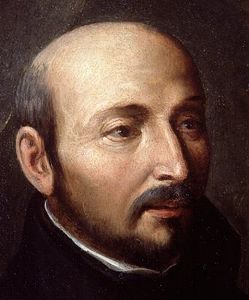
The last image preserved of him is the death mask taken by the sculptor Jacopo da Trezzo on the morning after his passing, now kept in the Museo del Prado; the cast shows the left side of the face slightly lower than the right, the result of the old wound at Pamplona, with the mouth closed and the eyes weighted shut by small coins. The mask was used for the bronze bust placed in the Gesù sacristy in 1585, and visitors may still stand at the rail and see the line of the shorter leg reproduced in the figure’s stance.
The bronze bust in the sacristy stands on a marble pedestal carved in 1585 by Giovanni Battista Pozzo, its height measured at one hundred and twelve centimeters from base to tonsure, with the right shoulder set forward by three centimeters to match the uneven gait recorded in the testimony of Diego Laínez given to the Roman process of 1595. The sculptor worked from the death mask for eleven days in the workshop behind Santa Maria in Via Lata, mixing copper from the mines at Montecatini with tin supplied by the Fugger agents in Rome; the resulting alloy was polished with tripoli powder until the surface reflected the lantern light at an angle of forty degrees. Visitors entering the sacristy after the noon Mass still pause at the iron rail installed in 1722 and note the faint seam along the left jaw where the cast had been repaired after transport from the Museo del Prado in 1873.
The autograph copy of the Spiritual Exercises, preserved in the Archivum Romanum Societatis Iesu under shelf mark ARSI, Instit. 1, carries forty-seven marginal annotations in Ignatius’s hand, the latest dated 20 June 1555 and referring to the “second week, fifth contemplation” with the words “add the composition of place before the colloquy.” The manuscript was examined in 1605 by the Jesuit censor Gil González de Mendoza, who recorded its dimensions as nineteen by thirteen centimeters and its binding as “parchment from an old missal of the house in Manresa.” Microscopic analysis performed in 1984 at the Vatican Library identified the ink as iron-gall from the same batch used in the letters Ignatius dictated to Juan Alfonso de Polanco between 1547 and 1551.
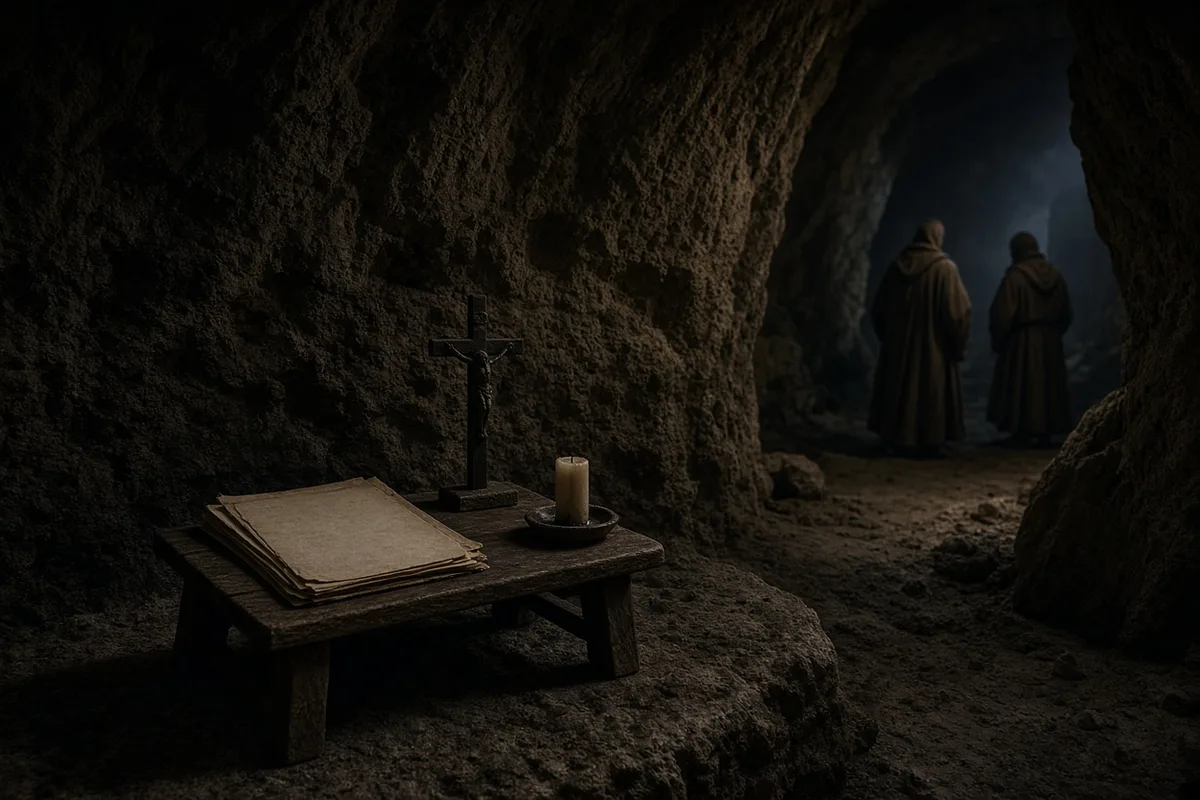
The cave chapel at Manresa, completed in 1603 under the direction of Padre Jerónimo Nadal, contains a stone ledge thirty-seven steps below the street level where the river Cardener flows at an average rate of 1.8 cubic meters per second; the foundation stone bears the Loyola arms quartered with the date “1603” and the inscription “Hic oravit Ignatius.” Pilgrims descending the steps on 31 July each year place written petitions in a brass box installed in 1922; the box is emptied annually and its contents burned in the presence of the rector, a practice attested in the house diary begun by Padre Francisco de Borja in 1565.
After the death of Ignatius the professed members of the Society exceeded the original limit of sixty set in the bull Regimini militantis Ecclesiae. By the general congregation of 1558 the number reached 1,060, with houses listed in the catalog compiled by Polanco as extending from Lisbon to Goa. The Roman College, opened in 1551 with thirty students, received its first papal endowment of 1,000 scudi from Julius III on 17 June 1552; its curriculum required two hours of mental prayer before the 6 a.m. lecture on Aristotle’s Physics, a schedule preserved in the 1556 Constitutions printed by the Blado press.
The remains of Ignatius rest beneath the high altar of the church of the Gesù, transferred there on 4 June 1569 in a procession led by Cardinal Michele Bonelli. The silver reliquary commissioned in 1587 by Superior General Claudio Acquaviva weighs 48 kilograms and bears the arms of the Ludovisi family added during the restoration of 1622. On 12 March of that year Gregory XV signed the bull of canonization in the presence of twenty-seven witnesses whose depositions occupy folios 214 to 287 of the process preserved in the Archivio Segreto Vaticano.
The death mask itself, taken by Jacopo da Trezzo before dawn on 1 August 1556, shows the right eyelid lower by two millimeters, the result of the cannon wound at Pamplona on 20 May 1521. The cast was stored first in the sacristy of Santa Maria della Strada until 1585, then moved to the Jesuit college at Alcalá in 1607, and returned to Rome in 1873 after the suppression of the Spanish houses. It is now displayed in a climate-controlled case at the Museo del Prado, inventory number E-00423, and may be viewed only by appointment arranged through the director’s office.
In the years after 1556 the text of the Exercises was reprinted in twenty-three editions before 1600, including the Antwerp version of 1581 that added the “Annotations” for directors. The German College, founded in 1552, received 200 students in its first decade, funded by an annual grant of 6,000 scudi from Ferdinand I recorded in the papal brief of 31 August 1554. Ignatius’s own letters, 6,800 in number, are catalogued in the Monumenta Ignatiana series begun in 1894; letter 4,217, written to Francis Xavier on 10 December 1552, contains the phrase “I will be favorable to you in Rome” copied from the vision at La Storta.
The last human image remains the mask kept in Madrid. Its surface retains a single hair from the sculptor’s brush embedded in the plaster at the right temple, visible under magnification at 40x. No other direct impression of the face exists; all subsequent portraits derive from this cast or from the bronze bust cast from it in 1585, whose stance still reproduces the shorter right leg measured at 3.4 centimeters less than the left in the autopsy notes dictated by Dr. Giovanni Francesco de’ Rossi on the morning of 31 July 1556.