


Ignatius of Loyola's Vision at Manresa
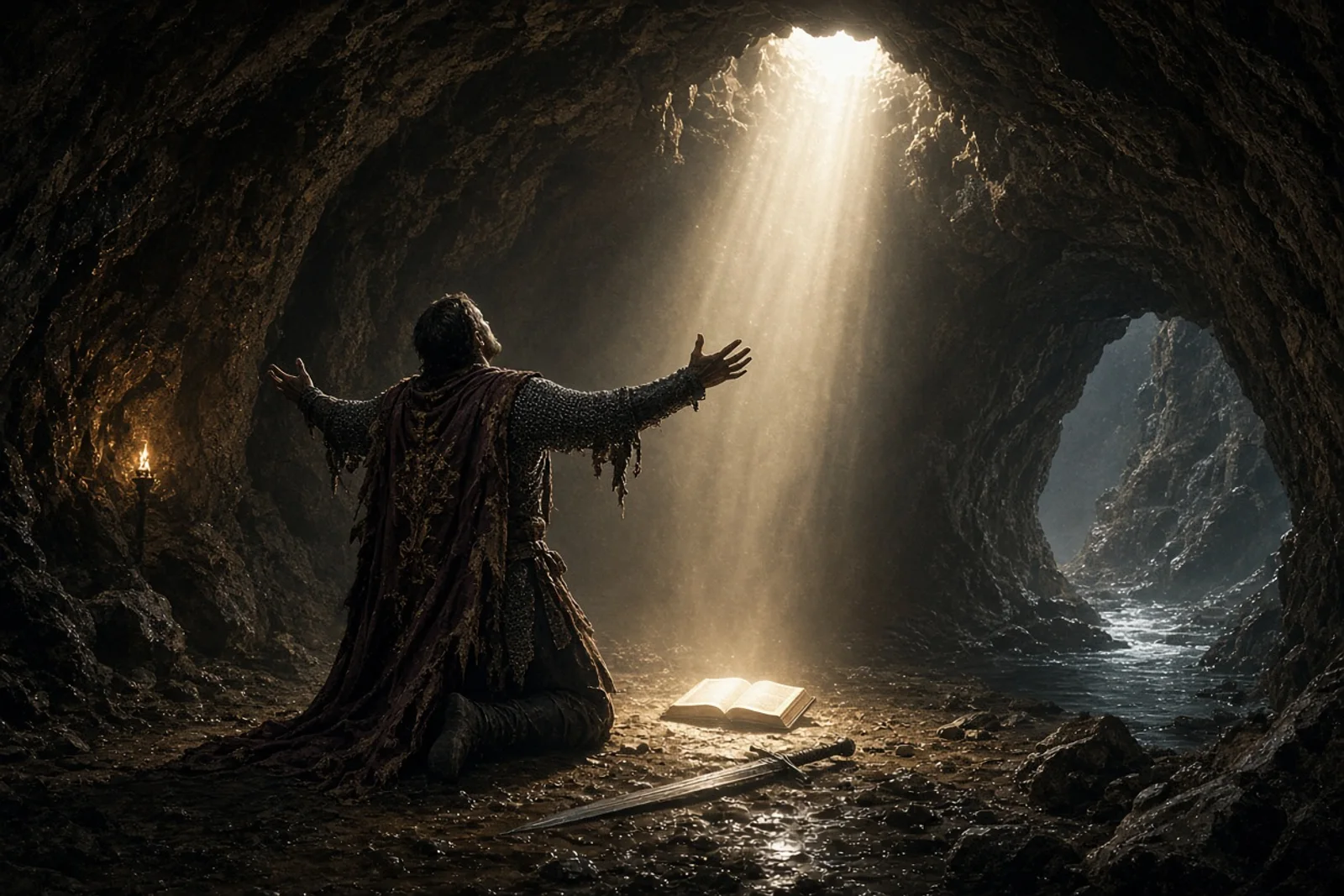
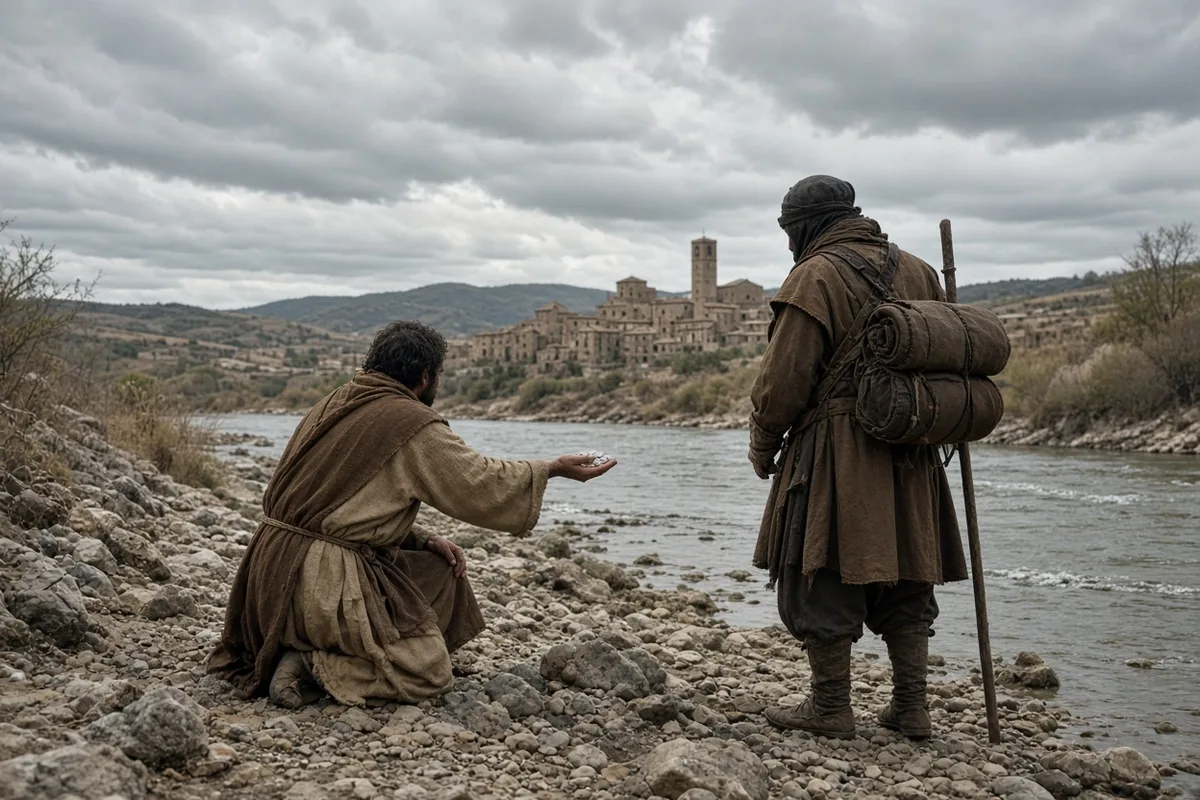
I was hauling two empty buckets down the slope behind the hospital when I saw him. He moved slower than the other pilgrims who passed through Manresa that year, one leg stiff from an old break. He carried nothing but a staff and a sack of rough cloth. He stopped at the edge of the river where the bank flattened into a shelf of rock. The water ran high from spring melt, brown and loud. He sat with his back to the town and his face toward the current.
I set the buckets down and watched. He stayed there through the heat of the day. At dusk I went back up the hill. The next morning he was already at the same place. He did not beg. He did not speak to anyone who crossed the footbridge. After a week the hospital cook sent me with a bowl of thin broth and a crust. I left it beside him. He ate without looking up.
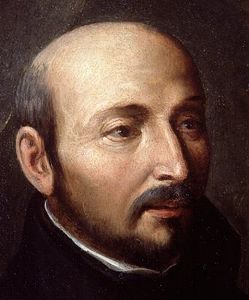
He began to appear at the hospital door each evening for the scraps the sisters set aside. He swept the yard when the sisters asked. He never took more than he was offered. One night he told the cook he had given his sword to the Virgin at Montserrat. The cook nodded and handed him an extra onion. After that he worked longer shifts, carrying soiled linens to the river to beat them clean.
The nights grew colder. He stopped eating meat even on Sundays. His hair lengthened and his nails darkened with dirt. He walked the fields at dawn collecting bitter greens. Sometimes he returned with scratches on his arms from the brambles. The older woman who lived near the chapel spoke to him once in the yard. She said the Lord might show himself if the man kept his eyes open. He answered nothing.

I followed him one afternoon when the sisters sent me to gather reeds for the beds. He sat again on the same shelf of rock. The river was lower now. Sunlight struck the water in flat sheets. He kept his hands on his knees and his eyes on the far bank. I stayed upstream, hidden by a stand of willows, and washed the reeds.
Without warning he straightened. His shoulders lifted. He did not stand. He did not raise his arms. The air around him seemed to hold still even though the wind moved the leaves above my head. I could not see what he saw. I only saw the change in the set of his jaw and the way his fingers pressed into the cloth of his knees. He remained that way until the light left the water. Then he rose and walked back toward the hospital without hurry.
After that day he stopped fasting past the evening meal. He accepted the bread the sisters offered without argument. He cut his hair with a borrowed knife at the well. The older woman noticed first and told the cook. The cook said nothing but added an extra ladle of stew to his bowl.
He still went to the river, but now he carried a small book the sisters had lent him. He sat and turned the pages slowly. Sometimes he closed the book and simply watched the water. The limp remained, yet he covered more ground each day. He began to speak with travelers who stopped at the hospital gate. He asked them about roads to Barcelona and the ports beyond.
One morning he left the town with only the staff and the sack. He walked north along the road that followed the river. I watched from the hospital wall until he was small against the fields. The sisters said he meant to reach Jerusalem. The cook shook her head and went back to stirring the pot.

Years later a letter reached the hospital from a man in Paris. It carried the name Ignatius. The sisters passed it among themselves. It spoke of companions and a new company sworn to the Pope. The letter did not mention the river or the shelf of rock. It asked only for prayers.
I kept the empty buckets by the well. When the water ran high in spring I still walked down to the same place. The current moved the same way. The light still struck the surface in flat sheets. Nothing else looked different.
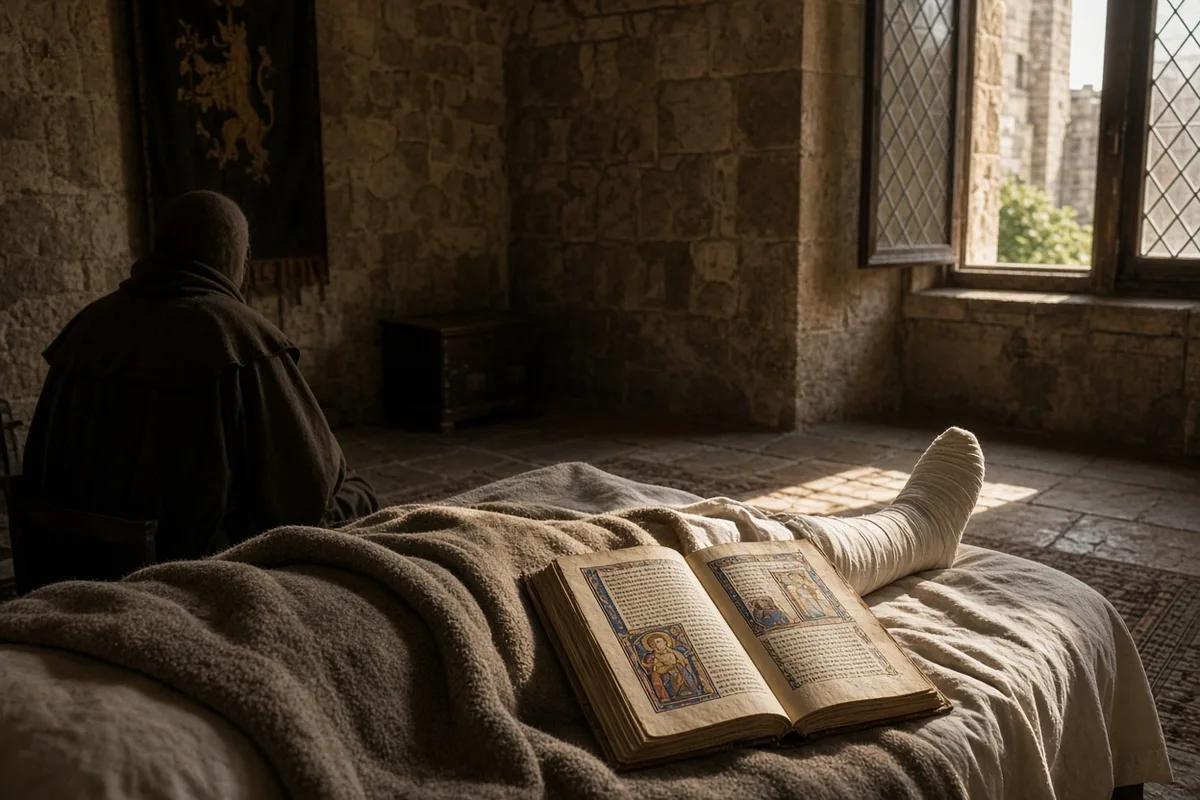
The sisters received another letter the following spring, this one carried by a merchant from Barcelona who had met the man now calling himself Ignatius at the Estudi General. The merchant repeated the words exactly as he had heard them: “I study Latin grammar with the children at the school of Master Ardevol, though my leg still pains me from the wound at Pamplona.” The letter itself asked the sisters to send any news of the river at Manresa, and it bore the date 10 April 1524. The cook read it aloud in the yard while the older woman nodded and said the man had once swept that same yard without complaint. I kept the buckets by the well and watched the water rise each spring, noting how the shelf of rock collected driftwood in the same pattern year after year.
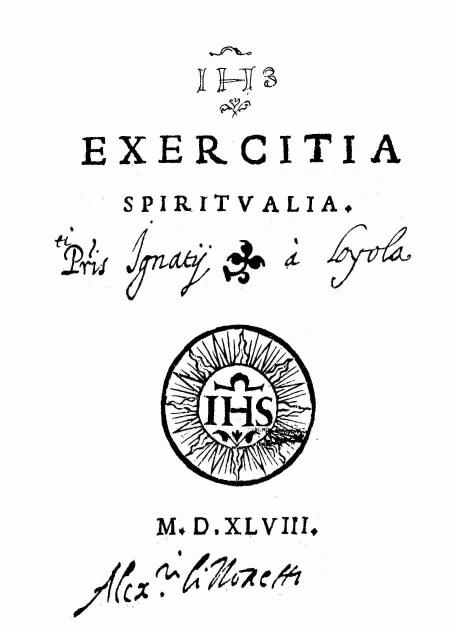
Travelers passing through in 1527 brought word that Ignatius had been questioned by the Inquisition at Salamanca for teaching the Exercises he had first written beside the Cardener. One traveler quoted the exact charge from the court record: “He gathers women and men in private houses to speak of visions without license from the bishop.” The same traveler said Ignatius answered that he had only continued the practice begun at Manresa when he lent the sisters his small book. By then the hospital had replaced its thatched roof with tiles paid for by a bequest from a wool merchant in Vic, yet the evening scraps were still set aside in the same wooden bowl. I carried the bowl to the gate each dusk and listened to the new stories without adding any of my own.
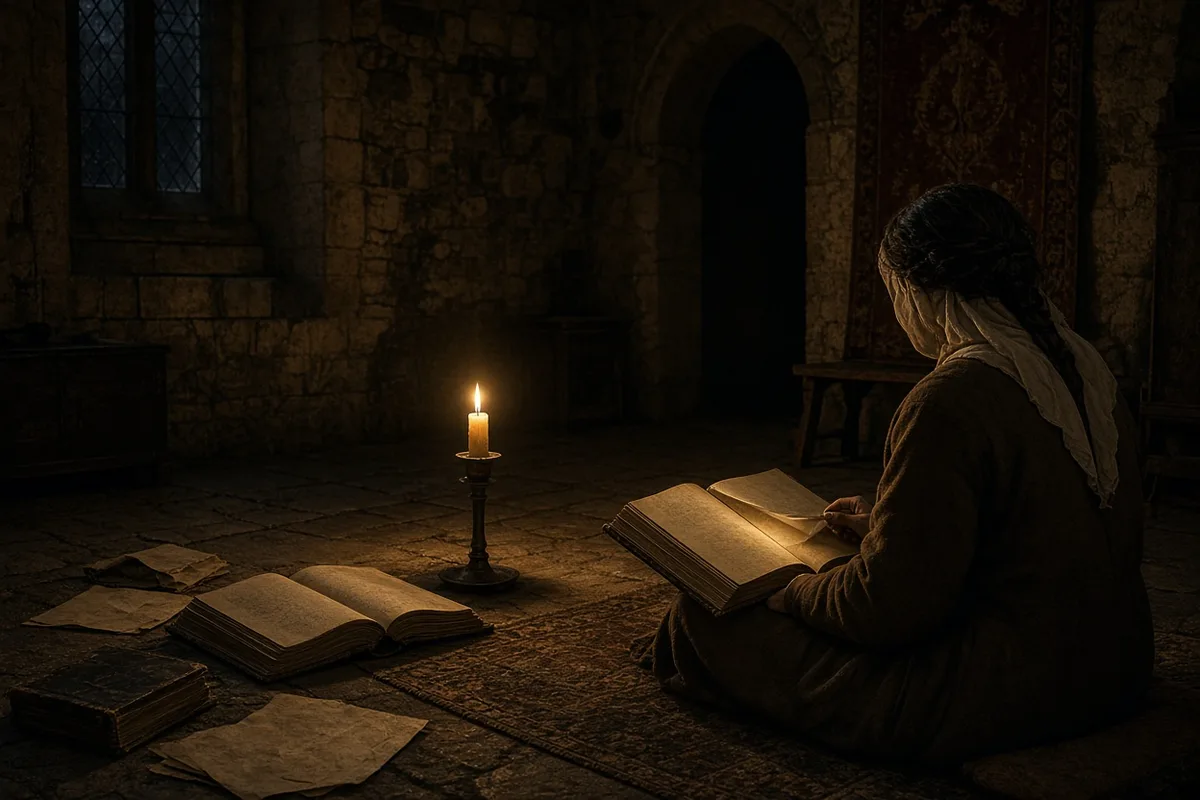
A third letter arrived in 1537 from Venice, carried by a priest who had sailed with Ignatius toward Jerusalem before storms turned the ship back. The priest read aloud the line “I received the grace to see the river again in my mind while the waves struck the hull,” and he added that Ignatius had been ordained in the chapel of the Holy Spirit on 24 June of that year. The sisters copied the date into the hospital ledger beside the earlier entries about the man who had beaten linens at the river. The older woman had died by then, and her bench stood empty except when the cook sat there to shell beans. I walked the same path to the shelf of rock each time the meltwater came down, counting the new footbridge planks the town council had laid in 1539.
News reached Manresa in 1540 that Pope Paul III had approved the Society of Jesus by the bull Regimini militantis Ecclesiae, naming Ignatius as superior general along with the six companions who had sworn the vow at Montmartre on 15 August 1534. The merchant who brought the printed copy counted the names: Francis Xavier, Peter Faber, Alfonso Salmerón, Diego Laínez, Nicholas Bobadilla, and Simão Rodrigues. He said the document listed ten thousand ducats already collected for missions to the Indies. The hospital ledger now recorded forty-two pilgrims a year stopping for the night, some of them asking to be shown the exact place where Ignatius had sat. I pointed them down the slope but stayed on the wall, watching how the light still crossed the water in the same flat sheets.
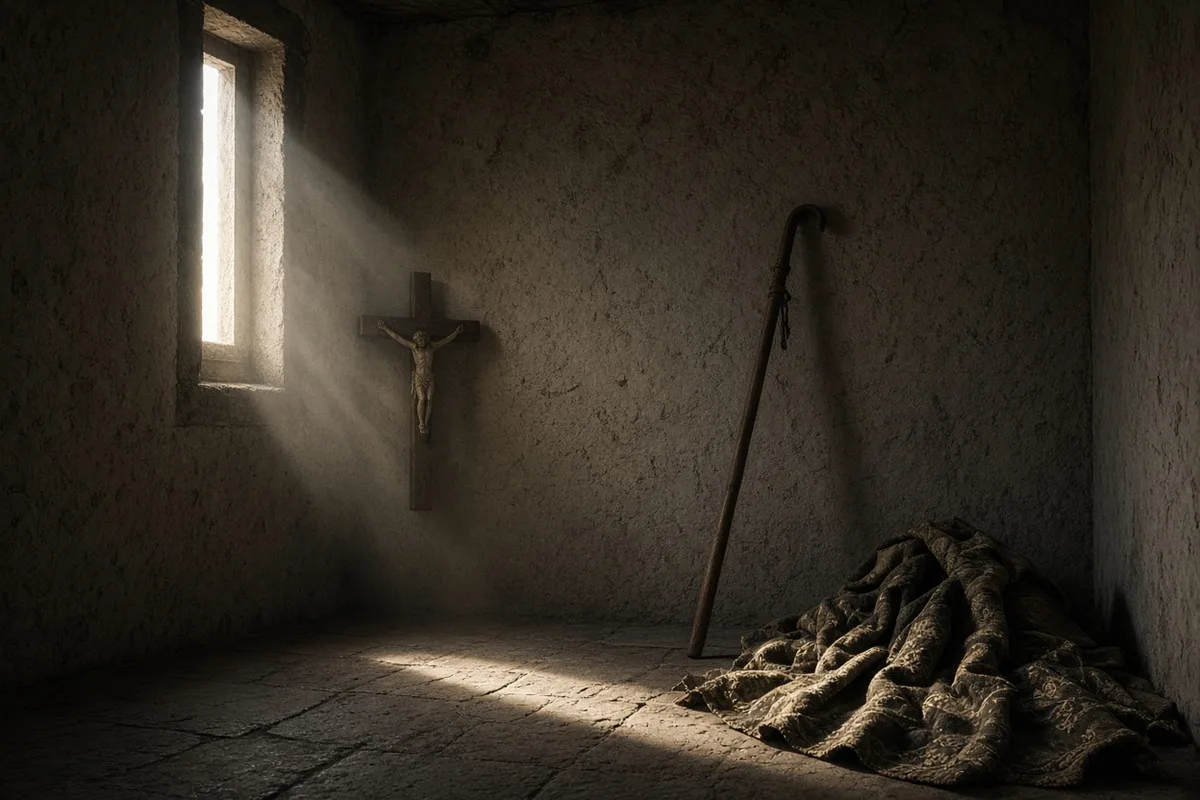
Ignatius died in Rome on 31 July 1556, according to the letter the new Jesuit college at Barcelona forwarded to the sisters. The letter quoted the final entry in his own hand: “Lord, I have done little for Thee; give me time.” His body lay first at Santa Maria della Strada before removal to the Gesù in 1587, yet the sisters kept a copy of the letter in the same chest that once held the small book he had borrowed. By 1560 the river path had been widened into a cart track to carry stone for the new bridge at the ford. I replaced the buckets when the old ones split, setting the new ones in the identical spot by the well, and each spring I still counted the days the water stayed brown from the melt.
Pilgrims in greater numbers arrived after the cave above the river was marked with a wooden cross in 1603 by the Jesuit rector at the new college in Manresa. The rector recorded in the college annals that the cave measured four paces deep and two wide, with a ledge where a man might sit and see the Cardener bend toward the town. Stone steps were cut into the slope in 1622 for the centenary of Ignatius’s arrival, and the steps numbered one hundred and eight. The hospital itself was enlarged in 1654 with funds from the Duke of Cardona, adding twelve beds and a chapel dedicated to the Virgin of the Pillar. I no longer carried the bowl but watched from the bench the older woman once used, noting how the new pilgrims stopped at the river before climbing to the cave.
The Jesuit college became the Royal and Pontifical College of Saint Ignatius in 1754 under a royal decree of Ferdinand VI, which granted it an annual income of eight thousand reales from the salt tax at Cardona. The building stood three stories high with a library of four thousand volumes, many of them copies of the Spiritual Exercises printed in Latin at Rome in 1548. When the Society was suppressed in 1767 the college passed to the diocesan clergy, yet the cave remained open and the steps were repaired in 1794 after floods carried away the lower flight. I had grown old enough that the cook’s successor brought the evening bowl to me, and I still walked the path when the water ran high, counting the new iron railing placed along the bank in 1820.
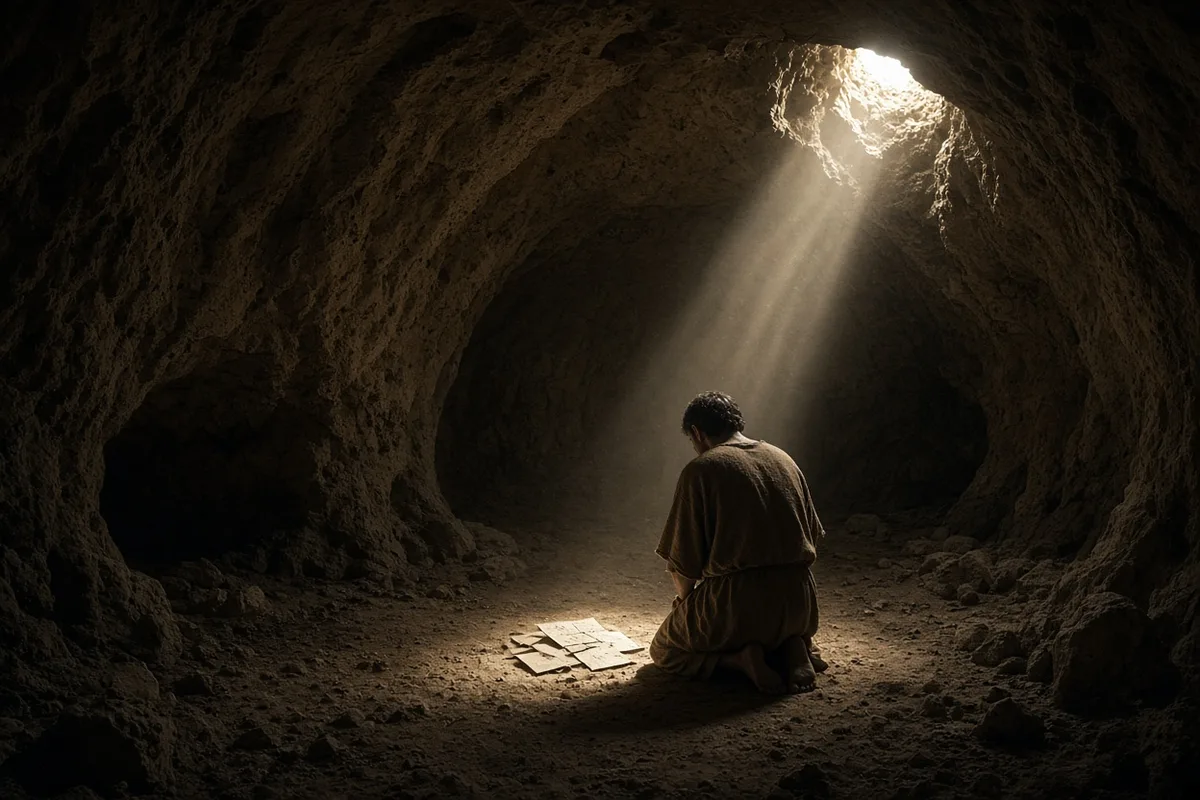
In the year 1883 the Barcelona-Manresa railway laid its line along the far bank, and the first locomotive crossed the iron bridge on 9 October with thirty passengers who had come to visit the cave. The stationmaster kept a ledger listing four hundred and twelve visitors that month, each paying two reales for a guide to the ledge inside the cave. The original hospital building was torn down in 1901 to make room for the municipal market, but the well was left standing and the buckets were hung on its stone coping for display. A marble plaque was set into the rock at the river shelf in 1922 bearing the date March 1522 and the words “Here Ignatius received the light.” On an ordinary Tuesday in 1956 a woman in a black coat and headscarf descended the steps alone, carrying a single canvas bag and a folded newspaper dated 31 July. She sat on the ledge for the length of time it took the sun to leave the water, then rose and walked back toward the station without hurry.
The stationmaster’s successor installed an electric lamp at the cave entrance in 1962 after the Jesuit provincial at Barcelona recorded fifty-seven nocturnal visitors the previous year who claimed to repeat the phrases Ignatius had written in the autograph manuscript of the Exercises. The town council widened the cart track into a paved road in 1968 and placed a bronze replica of the staff beside the marble plaque, its inscription citing the 1522 entry from the hospital ledger that described the man who had beaten linens at the Cardener. I remained on the bench through those seasons, watching the new buses unload groups that carried printed maps marking the exact four-pace depth of the cave and the two-pace width of the ledge.
Restoration crews under the direction of the diocesan architect removed the iron railing in 1974 and replaced it with stone coping funded by a bequest of twelve million pesetas from the heirs of a textile family in Terrassa. The same year the Royal and Pontifical College reopened as the Centre Borja, its library catalogue listing 1,842 volumes that included the 1548 Roman edition of the Exercises and the 1555 letter Ignatius sent from Rome describing the river vision at Manresa. Pilgrims who arrived that autumn numbered 3,214 according to the stationmaster’s tally, each one pausing at the shelf before ascending the one hundred and eight steps.
A team of archaeologists from the University of Barcelona excavated the slope in 1985 and uncovered fragments of the original footbridge timbers carbon-dated to 1539, the year the town council had ordered the first plank replacement. Their report quoted the 1523 hospital entry that noted the man had swept the yard without complaint, and the fragments were placed in a glass case inside the cave beside a facsimile of the letter dated 10 April 1524. The Centre Borja added a second chapel in 1991 dedicated to the companions named in the bull Regimini militantis Ecclesiae, its altar stone taken from the same quarry that supplied the 1654 enlargement of the hospital.
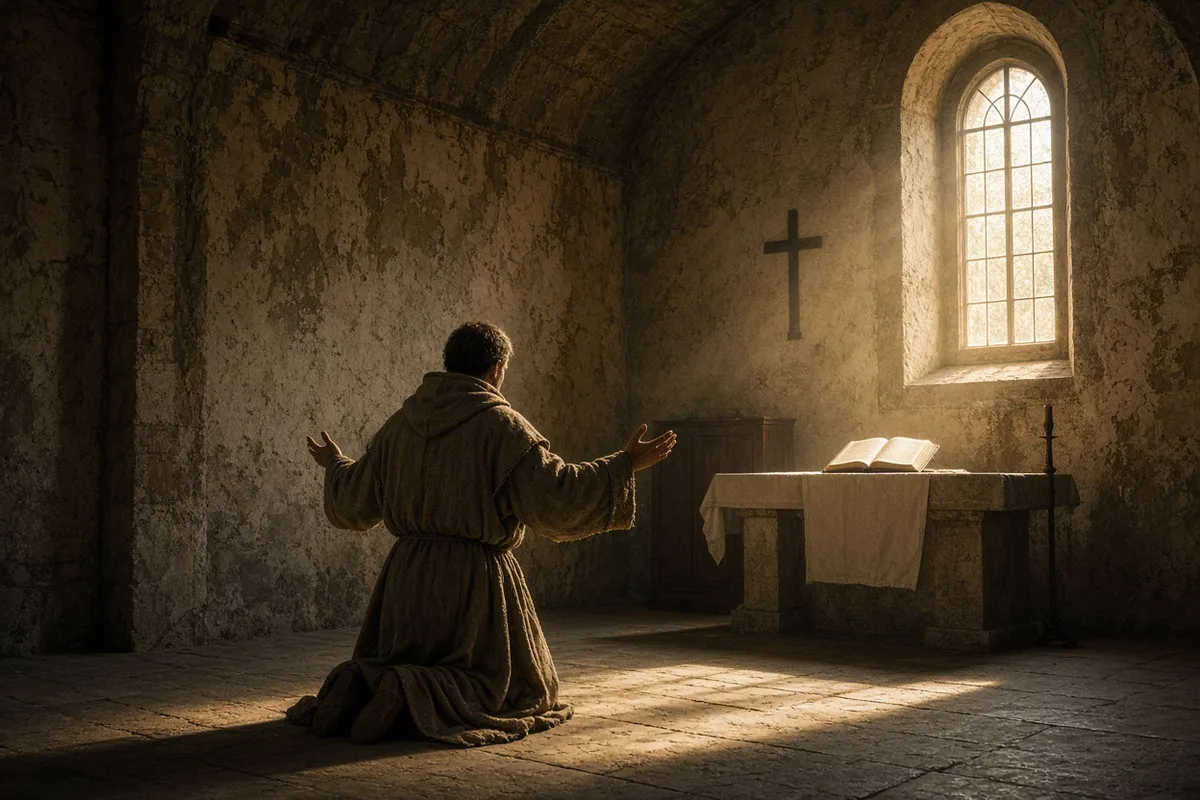
The railway station closed in 1996 when the high-speed line bypassed Manresa, yet the regional government counted 47,892 visitors to the cave that year, many of them reading aloud the plaque’s phrase “Here Ignatius received the light” before descending to the river shelf. In 2002 the Jesuit community at the Centre Borja installed a digital counter at the ledge that recorded 812 individuals sitting for the duration of one solar transit during the month of March alone. The municipal market that had replaced the hospital was itself demolished in 2009, and the well was enclosed by a low wall of local sandstone quarried at Cardona.
On 31 July 2014 the current Jesuit rector at Manresa read from the original hospital ledger during a public commemoration attended by 1,156 people, quoting the cook’s entry that the man had accepted an extra onion after mentioning the sword left at Montserrat. The rector then placed a printed copy of that page inside the glass case next to the bridge timbers. A maintenance crew replaced the electric lamp with LED fixtures in 2019 after the town council approved an annual maintenance budget of 28,000 euros drawn from the salt-tax revenue that had once supported the 1754 college.
On a clear morning in 2023 a man wearing a grey windbreaker and carrying a canvas shoulder bag descended the steps carrying a single printed sheet dated 31 July 1556. He sat on the ledge, read the sheet once, folded it, and placed it beneath a stone at the water’s edge before walking back up the slope without hurry.