



Ikigai book argues small daily reasons sustain well-being better than chasing happiness

In 60 seconds
- A life built on small concrete reasons to rise—gardening, greeting neighbors, cooking for grandchildren—proves more durable than happiness grasped head-on.
- Ogimi's centenarians accumulate plant-heavy meals, gentle daily movement, and lifelong friend circles; lifestyle, not genetics alone, is the lever the authors pull.
- Stopping at roughly eighty percent full with purple sweet potato, goya, tofu, and seaweed compounds better than any superfood.
- Moai groups formed young meet for decades and supply a safety net stronger than family or state support alone.
- Frankl's logotherapy and Csikszentmihalyi's flow supply the psychology: specific meaning and calibrated tasks protect through hardship and sustain ordinary days.
- Ten stacked orientations—stay active, slow down, keep friends, follow your own ikigai—matter more than any single breakthrough habit.
The big idea
García and Miralles argue that longevity and contentment come from routine, not revelation: a modest reason to get up each morning outperforms any grand pursuit of happiness. Diet, gentle movement, durable friendships, flow, and antifragile purpose are, in their reading, different faces of that same daily habit of having something concrete to do.
The book in brief
The authors open by noting that Japanese has no single Western-style word for happiness, but it has ikigai—the reason you get up in the morning. They reframe purpose as repeatable daily acts rather than achievement, drawing on elderly Okinawans who name vegetable plots, morning friends, or being useful to someone. They contrast this with Western purpose tied to career milestones, so retirement often strips purpose along with employment and correlates with poorer health among people who have no replacement activity.
They then take readers to Ogimi, a northern Okinawa village known for residents living past one hundred. Citing the Okinawa Centenarian Study ongoing since the 1970s, they report lower rates of heart disease, certain cancers, and cognitive decline. Genetics play some role, they allow, yet similar genetic groups who migrated away or Westernized did not keep the longevity advantage, so lifestyle becomes the lever they pull.
The middle chapters turn that lifestyle into practices. Hara hachi bu—eating until roughly eighty percent full—pairs with a table built on purple sweet potato, turmeric, bitter melon, tofu, seaweed, and modest fish. Movement arrives as radio taiso, gardening, walking to friends, and household tasks rather than gym sessions, with no hard boundary between work and exercise. The moai, small groups formed in youth who meet and support one another for seventy or eighty years, supplies a structural fix for loneliness.
Psychology then enters through Taleb's antifragility, Frankl's logotherapy from Nazi camps, and Csikszentmihalyi's flow. A clear ikigai can make people stronger after loss rather than merely resilient; a specific future task kept prisoners enduring; ordinary craft calibrated to skill produces absorption that sustains day after day.
The book closes by compressing everything into ten orientations: stay active and do not fully retire, slow down, eat to eighty percent, keep long friendships, move for your age, smile, reconnect with nature, express gratitude, live in the present, and follow your own ikigai. None alone produces Ogimi's outcomes; their combination over decades does. Happiness chased directly stays elusive; a life arranged around small repeated reasons tends to look, from outside, like happiness.
Context
Héctor García and Francesc Miralles published Ikigai in 2016 after visits to Ogimi. The book mattered because it translated a niche Japanese idea into a global self-help vocabulary, though its evidence leans more on anecdote than rigorous science.
The key ideas
1
The reason you wake
A life organized around a small, concrete reason for getting up each morning does more for well-being than any grand pursuit of happiness.
Western purpose
Career milestones and big goals that vanish at retirement
Ikigai
Repeatable daily acts like feeding a garden or cooking for grandchildren
García and Miralles open by treating ikigai as something Japanese names that Western happiness-talk does not. Happiness slips the moment you chase it. Ikigai can be as plain as feeding a garden, greeting neighbors, or preparing one specific meal for grandchildren.
The central move is to locate purpose in repeatable daily acts rather than in achievement or self-actualization. When asked what their ikigai is, elderly Okinawans often give answers that sound trivial to outsiders: a small vegetable plot, the same three friends every morning, or simply being useful to someone.
The authors set this against the Western habit of tying purpose to career milestones. Retirement then removes purpose along with the job, leaving a void that shows up as poorer health and shorter lifespans among newly retired people with no replacement activity. Big dreams are not worthless. A foundation of small sustainable reasons simply outlasts a single large goal that, once reached or blocked, leaves nothing behind it.
Everything that follows—diet, movement, community, resilience—is framed as another expression of the same habit: having something concrete to do each day that matters to you and often to someone else.
In practice: Okinawan elders name caring for a vegetable plot, meeting the same three friends each morning, or being useful to someone as their ikigai.
2
Lifestyle over genetics
Okinawa's exceptional concentration of centenarians is best explained by decades of accumulated lifestyle habits rather than by genetics alone.
From the definition the authors move to the place that anchors their evidence. They travel to Ogimi, a small northern Okinawa village that longevity researchers watch for its unusual number of residents past one hundred.
They lean on the Okinawa Centenarian Study, ongoing since the 1970s, which tracked health markers and lifestyle among the region's oldest people and found lower rates of heart disease, certain cancers, and cognitive decline than other developed populations. In Ogimi they interview residents in their nineties and hundreds and watch ordinary days: plant-heavy food, constant low-intensity activity, tight social bonds, and a refusal to treat age as a finish line.
Genetics matter somewhat, since longevity clusters in families. The book rests harder on the observation that groups with similar genetic backgrounds who left Okinawa or adopted Westernized habits lost the same longevity edge. If lifestyle alone can shift lifespan inside a genetically similar population, lifestyle is the lever worth pulling.
A village saying rendered roughly as 'work makes you forget your age' sets up the later chapters on modest continuous activity.
In practice: Other groups with similar genetics who migrated away from Okinawa or Westernized their habits did not keep the same longevity advantage.
3
Stop at eighty percent
Deliberately stopping short of fullness, paired with a diet heavy in colorful, low-calorie vegetables, extends healthy life more reliably than any single superfood.
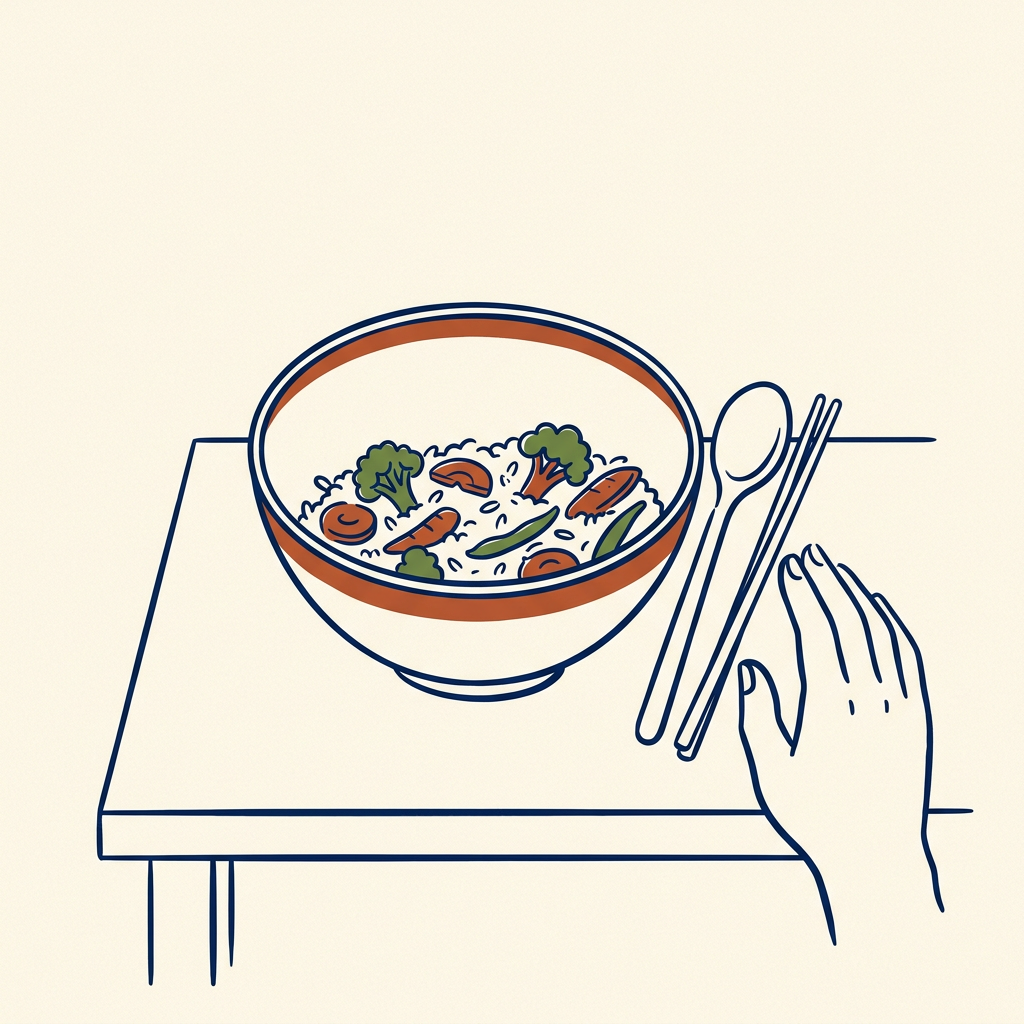
Diet arrives next as a concrete expression of the same modesty. The book describes hara hachi bu, the Okinawan habit of saying a phrase meaning roughly 'eat until eighty percent full' before finishing a meal.
The traditional table centers purple sweet potato, turmeric, bitter melon (goya), tofu, seaweed, and modest fish, with meat as a rare addition. The authors link this pattern to laboratory work on caloric restriction in mice and rhesus monkeys: animals given fewer calories but full nutrition lived longer and showed fewer age-related diseases than unrestricted peers.
They treat turmeric and goya as supporting players, not the mechanism. The real pattern is stopping short of fullness, eating slowly, and favoring plants over animal protein across tens of thousands of meals. Historical scarcity also kept processed sugar and refined grains out of the diet, producing a table naturally low in foods now tied to metabolic disease.
The larger point is that longevity habits need no willpower-heavy diet plan—only a small repeatable adjustment applied for a lifetime.
In practice: Okinawans historically avoided processed sugar and refined grains through scarcity, not deliberate health fashion, yet the pattern still limited foods now linked to metabolic disease.
4
Movement stitched into days
Continuous, gentle daily movement woven into ordinary routines protects health and mood more reliably than occasional vigorous exercise.
Where diet trims excess, movement refuses the hard stop. Okinawan elders rarely join gyms or structured programs, yet they stay capable deep into old age.
Much of that capacity comes from radio taiso—simple calisthenics broadcast over radio and practiced communally across Japan since the early twentieth century—and from gardening, walking to friends, and household tasks treated as life rather than 'exercise' to schedule and abandon. The authors contrast this with industrialized patterns that pack effort into discrete sessions and then default to sitting, and that often end activity abruptly at retirement exactly when protection against cardiovascular decline and muscle loss matters most.
The absence of a boundary between work and exercise, they suggest, is part of what sustains function into extreme old age. Movement lives inside identity and daily obligation instead of a separate wellness block.
Habits that last decades are the ones stitched into necessity. A vegetable garden that needs tending every morning enforces movement more reliably than a gym membership that can be skipped.
In practice: A garden that must be tended each morning keeps elders moving more consistently than any membership they could cancel.

5
Manufactured family bonds
A small, committed circle of friends who meet regularly for decades functions as a stronger safety net than family alone or state support.
Social structure gets the same treatment as diet and movement: build it once, then rely on it. The moai is a traditional Okinawan form in which a small group, often started in childhood or early adulthood, commits to meeting regularly and supporting one another financially and emotionally for life.
Originally the groups pooled money as informal insurance before banking and social security were widespread. Many elderly Okinawans still belong to the same moai they joined as young adults, meeting weekly or monthly with the same handful of people for seventy or eighty years.
The authors hold that this stable long-term bond does what occasional socializing or even close family cannot fully replace: it offers predictable, low-friction connection that does not hinge on mood, convenience, or family ups and downs. Loneliness and isolation track with worse health in old age; the moai is framed as infrastructure, not a personality trait. Villages built an institution that manufactures companionship regardless of individual initiative.
That departs from Western advice to 'make more friends,' which loads the burden onto the isolated person. The moai exists as something built once and then used passively for decades.
In practice: Many elders still meet the same handful of people they joined as young adults, week after week or month after month, for seventy or eighty years.
6
Purpose that grows from shocks
Having a defined ikigai does not just help people endure hardship, it can make them stronger for having faced it.
Resilience
Bounce back to the prior baseline after a shock
Antifragile purpose
The baseline itself can rise; setbacks clarify what remains worth doing
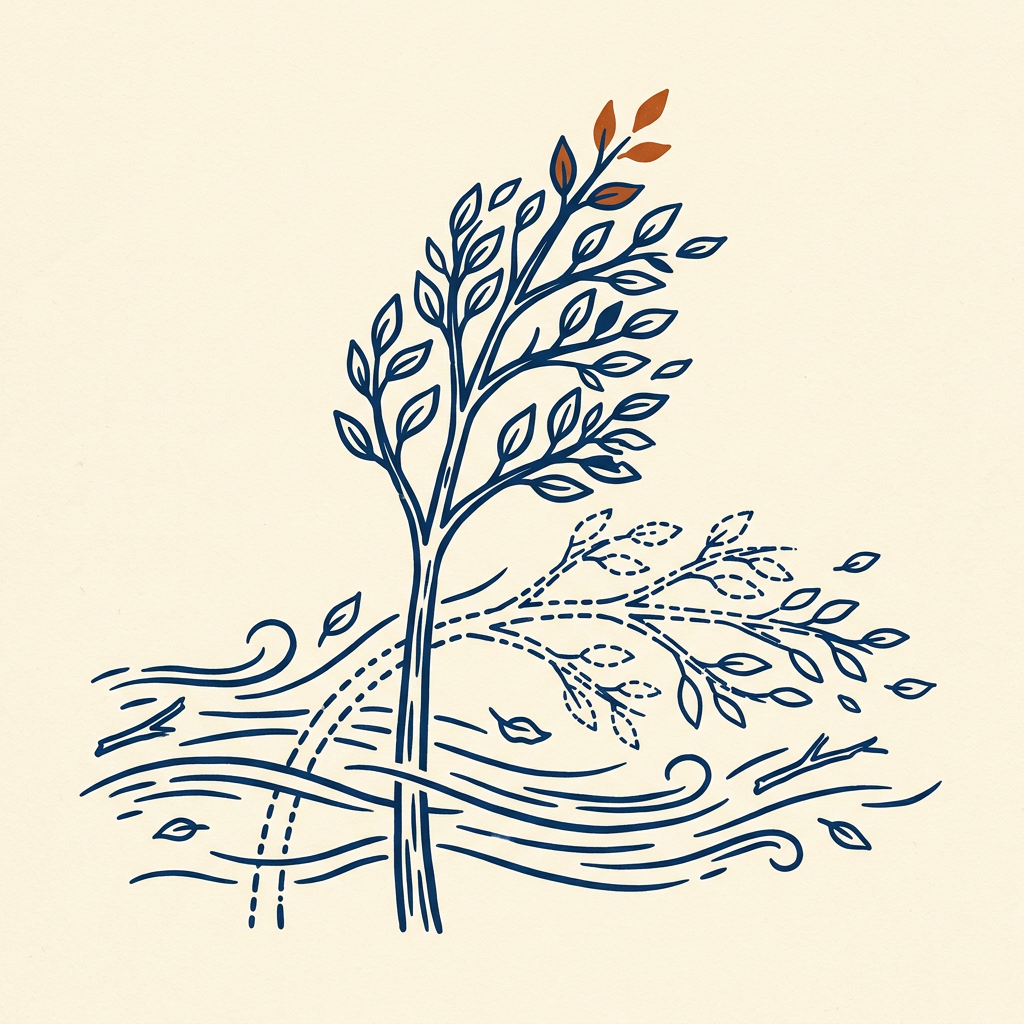
From social infrastructure the book turns inward to how purpose handles blows. The authors borrow Nassim Taleb's antifragility: some systems do not merely resist shocks but improve because of them.
Applied to purpose, a person with a clear internalized reason for living can absorb setbacks, illness, or loss and sometimes emerge with sharper clarity about what matters, rather than staying permanently diminished. This differs from simple resilience, which only returns you to a prior baseline; antifragile purpose lets the baseline itself rise.
They illustrate with Okinawan elders who lost spouses, survived the Battle of Okinawa in 1945, or endured serious illness and who describe those events as having sharpened rather than erased what their remaining time was for. A well-defined ikigai gives a stable reference point that reframes suffering as instrumental instead of meaningless, which changes both the emotional experience and, plausibly, the physiological toll through lower chronic stress.
This chapter is more speculative than the diet and movement sections, resting on testimony and theory. It bridges to Frankl's clinical observations from a far more extreme setting and treats ikigai as protection against the despair that follows loss when nothing remains to anchor to.
In practice: Elders who survived the Battle of Okinawa in 1945 or lost spouses describe those events as having sharpened what their remaining time was for.

7
Meaning keeps you alive
The will to find meaning, more than the will to pleasure or power, is what keeps people alive through extreme suffering.
The antifragility claim gets its strongest citation next. The authors summarize Viktor Frankl's years as a prisoner in Nazi concentration camps and the logotherapy he built from them: human beings are driven primarily by a search for meaning rather than by pleasure or the avoidance of pain.
Frankl watched prisoners under near-identical brutal conditions. Those who held a specific future task—finishing a manuscript, reuniting with one person, completing unfinished work—showed greater capacity to endure than those who had lost any reason to survive the next day.
The book treats this as the psychological backbone for ikigai. Meaning need not be abstract or philosophical; it can be one person, one task, or one unfinished project, and its power sits in that specificity. The authors tie it straight back to Okinawan elders: their small concrete daily purposes function the same way Frankl's prisoners' futures did, only without the extremity.
Logotherapy is a recognized clinical framework with decades of use, unlike some looser cultural observations elsewhere in the book. The authors use it to argue that the search for a reason to keep going is not a lifestyle preference but a documented determinant of survival under the worst conditions, which lends weight to everyday versions of the same mechanism.
In practice: Prisoners who clung to finishing a manuscript, reuniting with a particular person, or completing unfinished work endured better than those who had no reason left for the next day.
8
Absorption over prestige
Engineering ordinary tasks to produce flow matters more for daily satisfaction than the size, status, or prestige of the task itself.
After survival under extremity comes satisfaction in ordinary time. The authors introduce Mihaly Csikszentmihalyi's flow: complete absorption where self-consciousness and time awareness fall away, usually when task difficulty closely matches skill and gives immediate feedback.
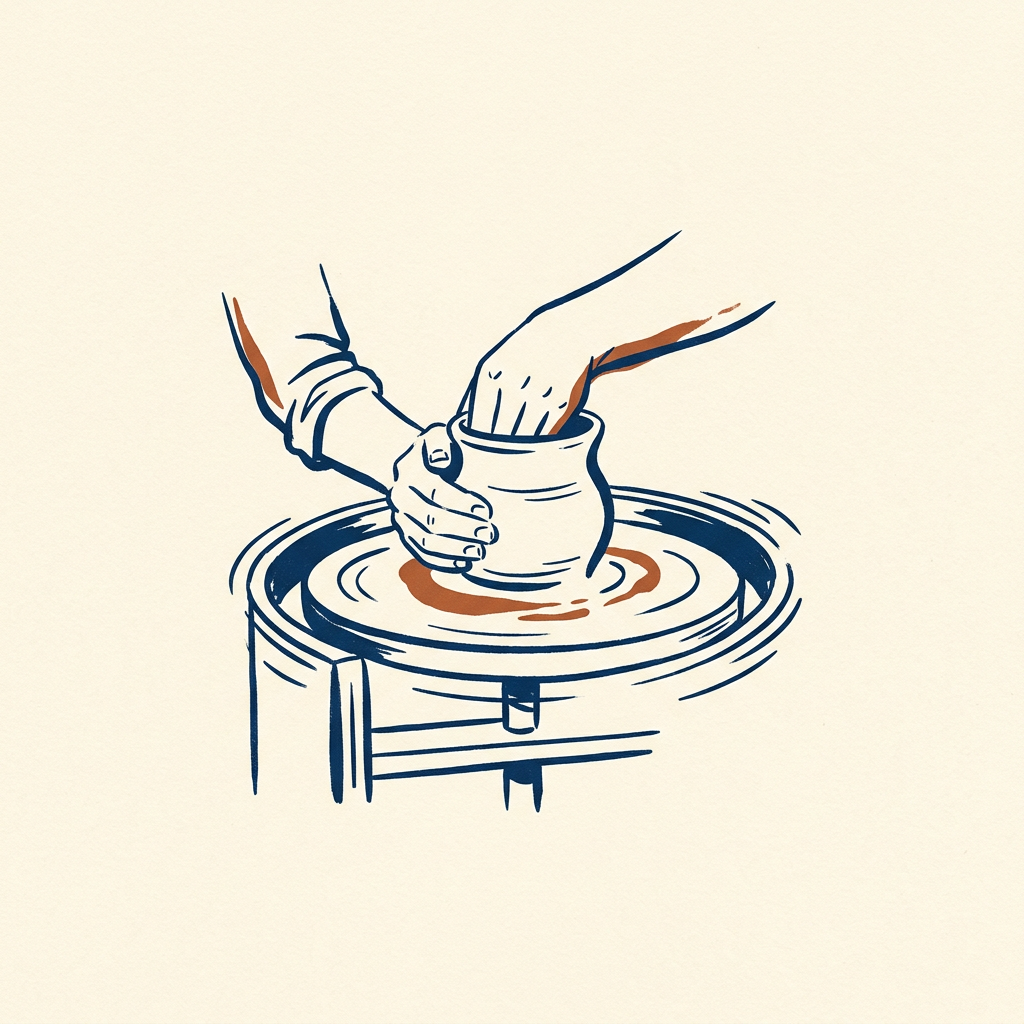
They apply it to Japanese craftspeople—sushi chefs, potters, calligraphers—who describe repetitive mundane tasks as deep satisfaction precisely because years of practice have calibrated those tasks to sit at the edge of ability. Flow, not achievement or recognition, is what makes work feel worth doing day after day, and it is available in almost any occupation if the task is structured right: raise the challenge of a routine job slightly, or find a hobby that demands full attention.
Okinawan elders describe gardening or cooking in flow-like terms, so the state is not reserved for elite professionals. Activity that produces flow is physically protective and emotionally sustaining, which helps explain why elders still engaged in daily tasks report higher satisfaction than those with nothing structured to do.
The practical implication is to increase the challenge of routine tasks a little rather than avoid them. Well-calibrated difficulty produces absorption; too little yields boredom, too much yields anxiety.
In practice: Sushi chefs, potters, and calligraphers treat their most repetitive tasks as sources of deep satisfaction once practice has set the difficulty at the edge of their skill.

9
Stack many small habits
Longevity and life satisfaction depend less on any single breakthrough habit than on stacking many small, low-intensity practices consistently over decades.
The closing chapter compresses the whole arc into ten short rules drawn from Okinawan culture and the earlier chapters. Stay active and do not retire from all purposeful activity. Take life slower. Eat until roughly eighty percent full. Keep close friends across a long span. Maintain fitness appropriate to your age. Smile and keep a positive disposition toward others. Reconnect regularly with nature. Express gratitude for what is present. Live attentively in the current moment. Follow your own ikigai rather than an external definition of success.
None of these alone would produce the outcomes seen in Ogimi. It is their combination, held without interruption for most of a lifetime, that compounds into measurable differences in health and reported satisfaction.
The authors are explicit that this is not a program to finish but a set of orientations to hold indefinitely. That is why the book resists a fixed timeline or checklist beyond the list itself.
They end where they began: happiness pursued directly tends to stay elusive, but a life arranged around small concrete repeated reasons tends to produce something durable that looks, from outside, very much like happiness.
In practice: The ten rules are offered as orientations to hold for life, not a checklist with a finish date, because only decades of stacking produce Ogimi-like outcomes.
Key terms
- ikigai The reason you get up in the morning; a small concrete purpose rather than a grand happiness goal
- hara hachi bu The practice of stopping a meal at roughly eighty percent full
- moai A small group formed young that meets and supports one another for life
- radio taiso Simple communal calisthenics broadcast by radio and practiced across Japan since the early twentieth century
- antifragility Taleb's idea that some systems improve because of shocks rather than merely resisting them
- logotherapy Frankl's view that the search for meaning is the primary human drive and can sustain people through extreme suffering
- flow Csikszentmihalyi's state of full absorption when task difficulty matches skill and feedback is immediate
- Ogimi Northern Okinawa village used as the book's living laboratory of centenarians
What to do
- Pick one modest concrete reason to get out of bed this week—a garden bed, a twenty-minute skill practice, or a person to check on—rather than a five-year goal.
- At your next few meals, stop when you feel about eighty percent full and notice how you feel an hour later.
- Set a recurring weekly meeting with the same small group of friends or colleagues, treat it as fixed as work, and keep it at least six months before judging it.
- Attach ten minutes of movement to something you already do daily, such as walking part of a commute or stretching before checking your phone.
Questions to think with
- What small concrete act would still feel worth doing if your job title disappeared tomorrow?
- Which of your current habits depend on motivation, and which are already stitched into daily necessity?
- Who could form a moai-like circle with you, and what would make the meeting non-negotiable for six months?
- Where could you raise the challenge of a routine task just enough to invite absorption instead of boredom?
- If a hard loss arrived next year, what specific unfinished purpose would still give the next day a reason?
The other side
The book moves quickly from observation to causal claim without controlling confounders: historical scarcity, selection effects, and post-1945 Westernized diets that raised obesity and metabolic disease in later Okinawan generations all complicate the stable-lifestyle story. Broader Blue Zones claims face challenges such as Saul Newman's 2024 analysis linking some centenarian hotspots to poor birth records and pension incentives to misreport age. The popular four-circle Venn diagram of passion, mission, vocation, and profession is not in this book and was retrofitted later, so readers expecting a career-optimization tool will not find one. The moai model also assumes a stable rooted community most urban or transient lives lack, and the book gives little guidance for replicating it.
Who it's for
Readers nearing retirement who want a model for staying engaged, people curious about Blue Zones who prefer a story-driven entry, and anyone burned out by grind culture who wants permission to define success in small sustainable terms will get the most from the full book.