


Irena Sendler Smuggles 2,500 Children to Safety
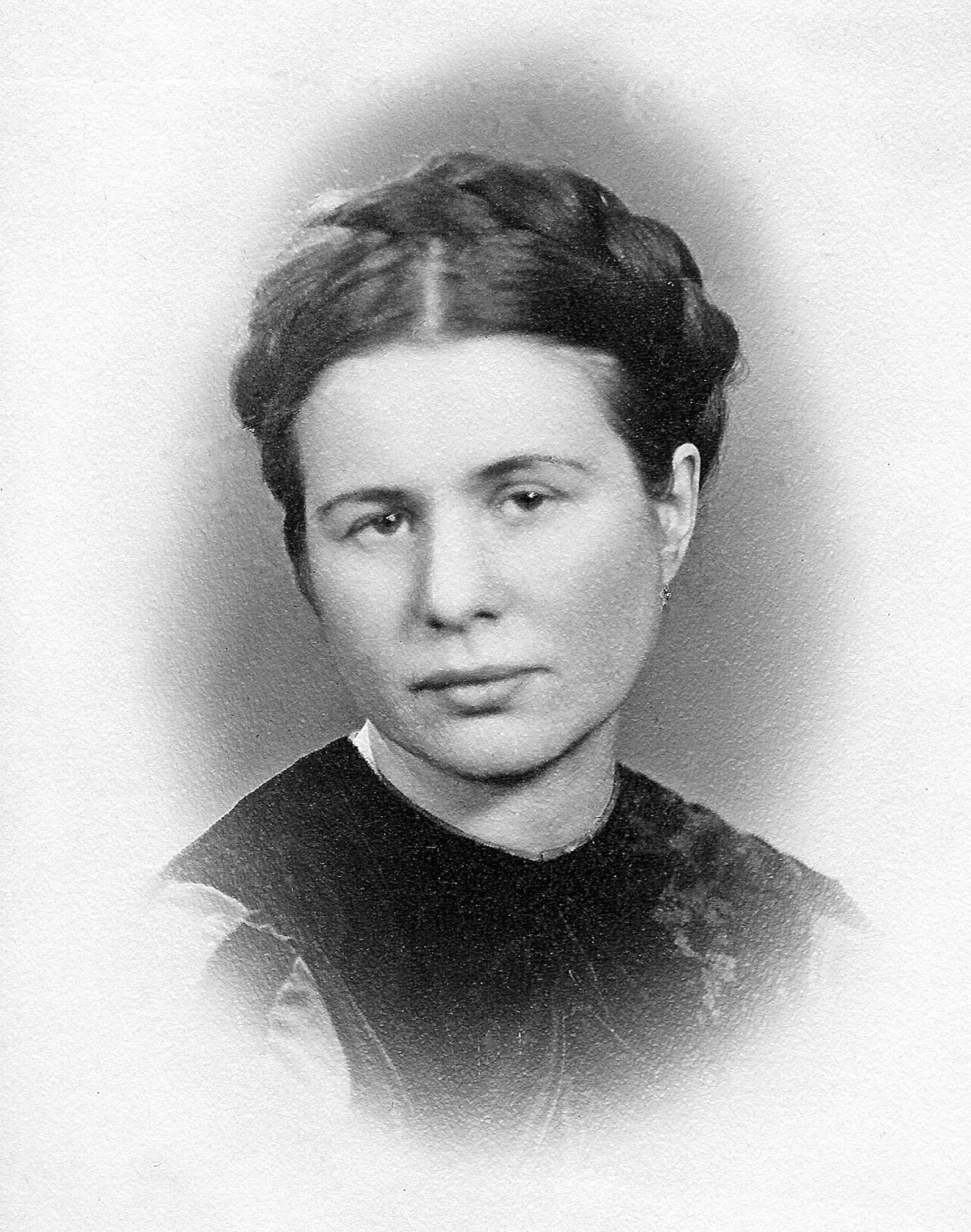
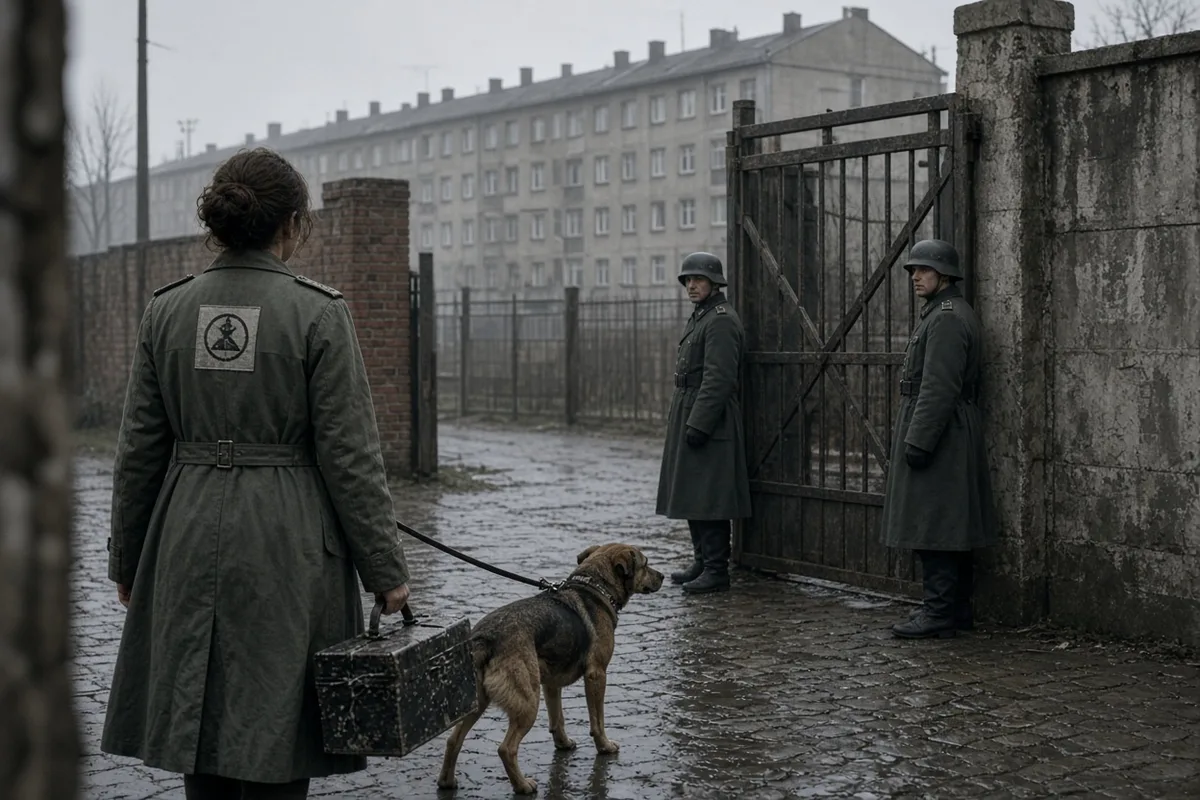
The toolbox is heavier than it looks. I know because I have carried it myself, down Żabia Street, past the guard post, my hands sweating through my gloves even in the cold, and inside, wrapped in a blanket too thin for October, a child who has been taught since Tuesday not to cry. I worked beside Irena Sendler in those years, in the Warsaw Social Welfare Department, and I tell you now what I saw, because someone who was there should say it plainly, without dressing it up: we were ordinary people doing an unbearable thing, and we did it anyway.
Before the war she was already the kind of woman who noticed who was hungry in a room. She had grown up watching her father treat the poor and the Jewish patients of Otwock without asking who could pay, and something of that had settled into her the way water settles into stone. When the Germans came in 1939 she was twenty-nine, a senior social worker, and the department kept functioning under occupation the way a heart keeps beating in a body that has been told it is already dying. We fed the poor. We fed the elderly. And when the ghetto walls went up in November of 1940, sealing nearly four hundred thousand people into a few square kilometers of the city, we found that our jurisdiction, on paper, still extended inside.

I remember the first time she came back from an inspection visit with her face gray as the plaster dust in the stairwells. She did not describe what she had seen in full sentences. She described numbers. Typhus counts. The distance between a working pump and a starving block. She had gotten a permit, official, stamped, allowing her to enter the ghetto to check on sanitary conditions, and she used that permit the way a locksmith uses a key that was never meant to open the door it opens.
Inside, she found the people running the Jewish welfare operations, and she began working with them, quietly, carrying in medicine sewn into linings, money folded into the soles of shoes, clothing stacked under crates of what looked like ordinary relief supplies. She wore, for a time, a yellow star herself, out of some instinct I never heard her fully explain, solidarity or camouflage or both, and once she forgot to remove it walking out, and a German officer beat her for it. She did not stop wearing it because of that. She stopped because someone told her it made her more conspicuous, not less, and conspicuous was the one thing none of us could afford to be.
By the autumn of 1942 the deportations had already gutted the ghetto. Two hundred and eighty thousand people, taken to Treblinka, gone in a matter of weeks that felt like they lasted a single held breath. Those of us on the outside who had been helping in scattered, half-organized ways were pulled into something with a name now — Żegota, the Council for Aid to Jews — and Irena became one of its central figures almost immediately, because she already knew the ghetto's back doors, its sewer grates, its overworked orphanages, better than anyone wearing a Polish armband had any right to know them.
What was left to save, by then, were mostly children. The adults who remained were being hunted block by block. So in September of 1943, four months after the ghetto itself had been leveled to brick dust and silence, she took charge of Żegota's department for the care of Jewish children, and she took a new name for the work — Jolanta — the kind of name you say into a telephone so that if the line is tapped, the person listening hears nothing that leads anywhere.
I want you to understand what smuggling a child actually looked like, because it did not look like courage. It looked like a woman with tired eyes riding in the back of an ambulance that was supposed to be carrying typhus patients, one hand resting on a crate, the crate breathing. It looked like a delivery of goods through the courthouse that bordered the ghetto wall, a building with one foot on each side of the line the Germans had drawn, so that a child could walk in a Jewish citizen and walk out the other entrance a Christian orphan, if no one asked her to speak. It looked like body bags, God forgive us for what that says, driven out in trucks meant for the dead, and once — I heard this from her own mouth, flat, without drama, the way she said everything that should have broken her voice — a baby hidden beneath a toolbox, silent the entire ride because someone had given it something to make it sleep.
Some children walked out through the sewers. Some were carried out in sacks of grain or under piles of rags in a cart, and I remember one summer afternoon watching a wagon roll past a checkpoint with a dog barking in the back, trained, we all understood without saying it, to cover the sound of a hidden child crying, the driver's face arranged into the particular boredom of a man who has made this same crossing a hundred times and intends to make it look that way the hundred-and-first.
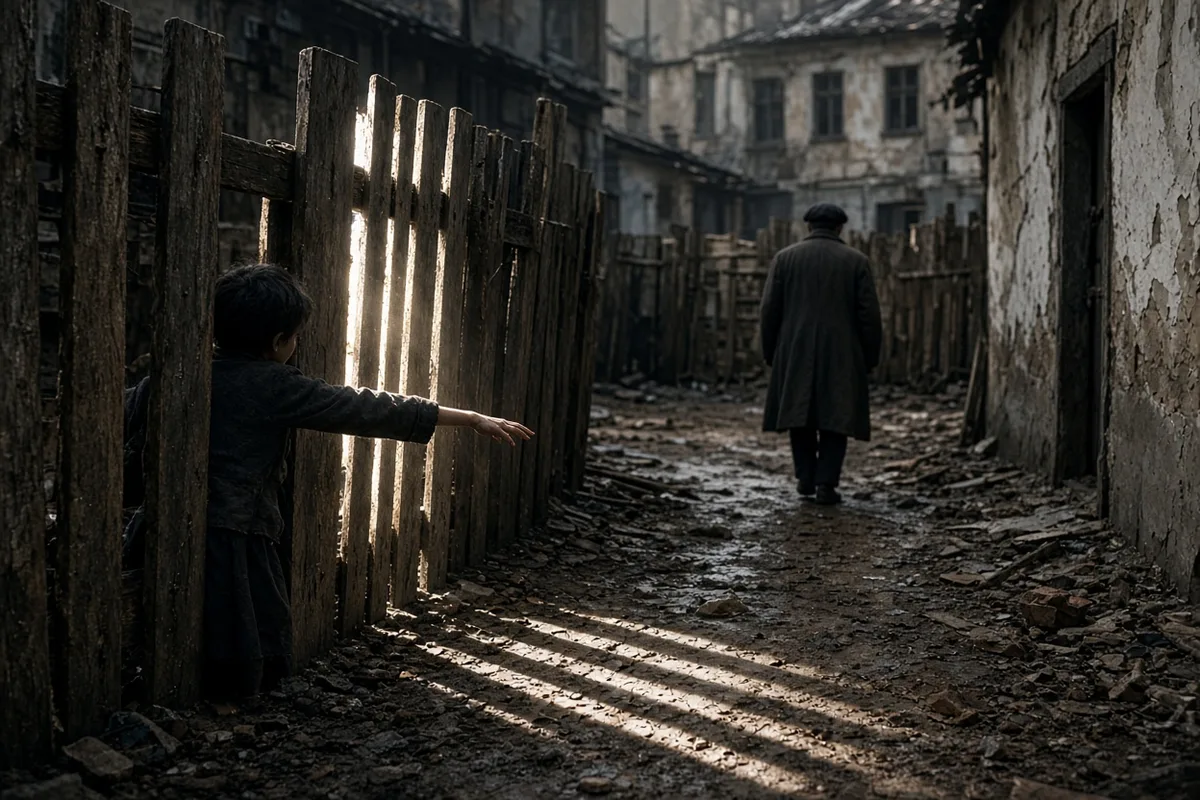
Once outside, the children could not simply vanish into the city as themselves. Żegota forged papers — new names, new baptismal certificates, new invented grandmothers — and Irena placed them, one by one, into convents and orphanages she had cultivated relationships with for years. The Rodzina Marii orphanage took many of them. So did the religious houses out past the city limits, in Chotomów, in Turkowice near Lublin, where the sisters asked fewer questions than the times demanded and answered none at all when the wrong men came asking.
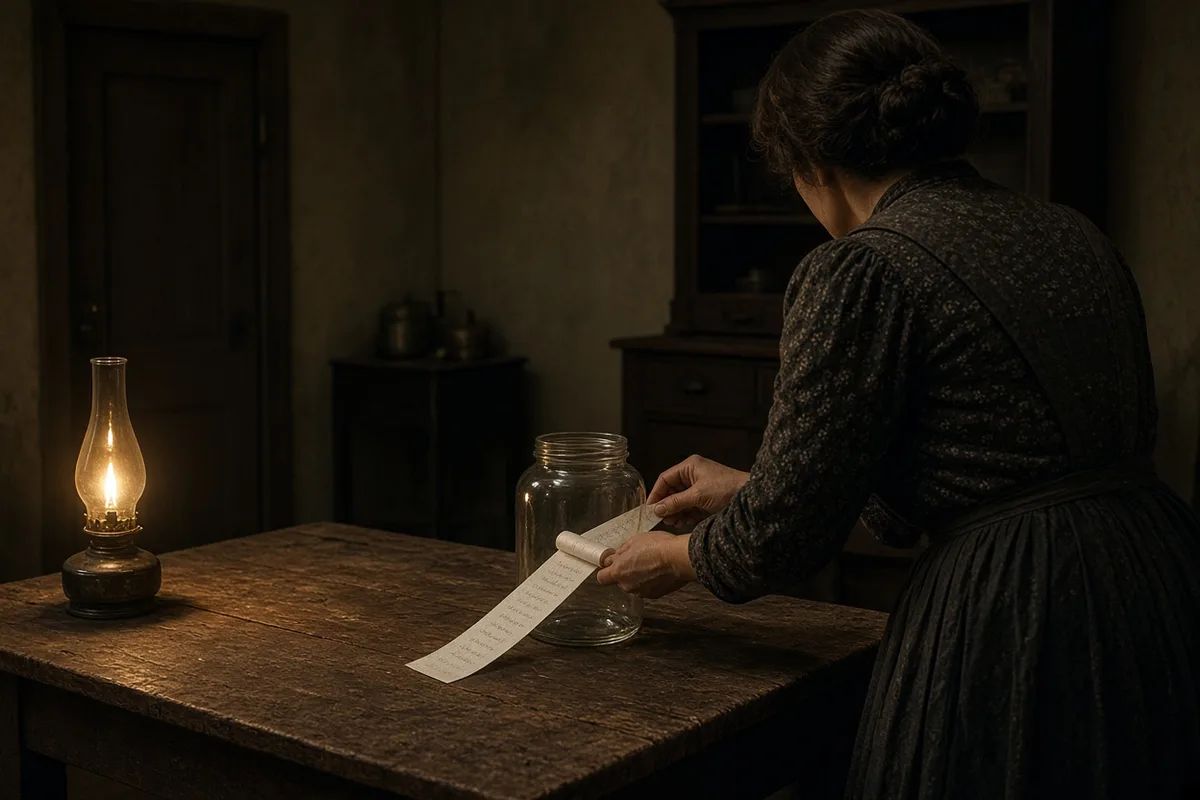
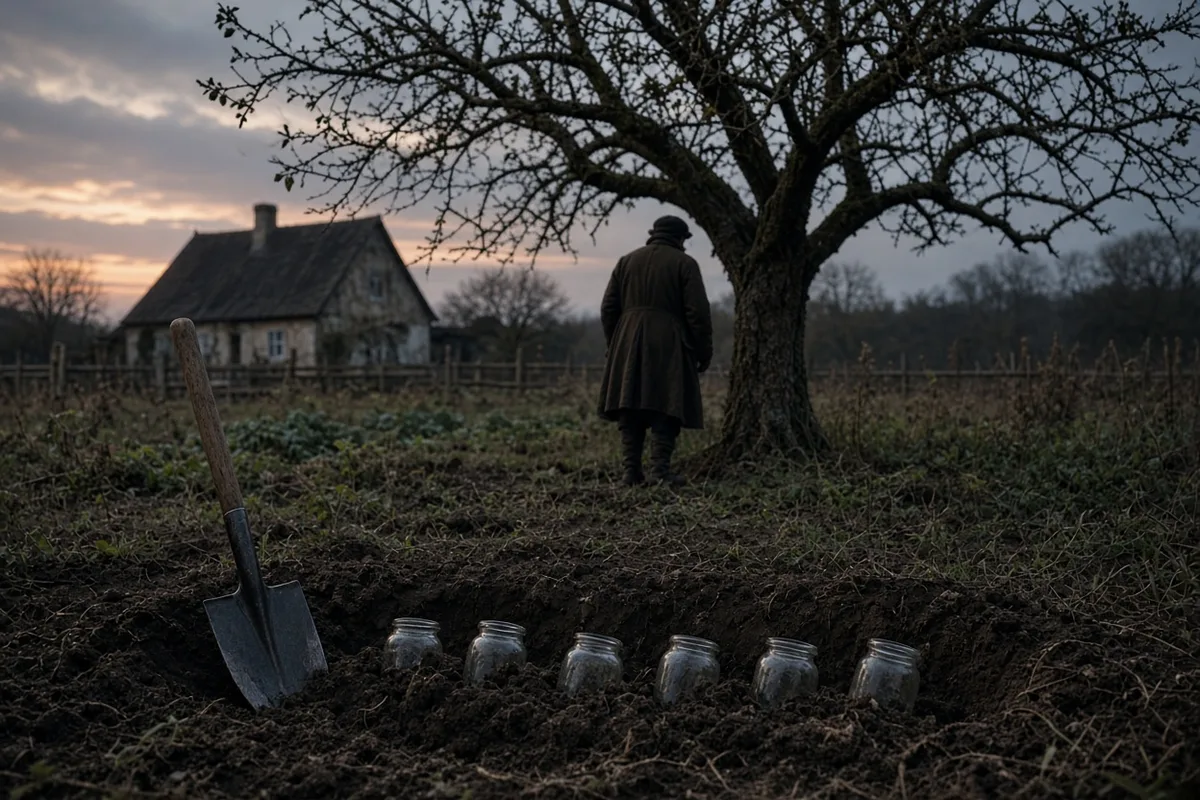
Here is the detail that has stayed lodged in me longer than any other. She could not simply let the children disappear into their new identities, because somewhere, if anyone survived — a mother, a father, an aunt in hiding — that person deserved a way to find the child again after the war, if there was going to be an after. So she wrote down the truth. The real name. The new name. The place. On thin strips of paper, and she rolled them and sealed them into jars, and she buried the jars in a garden, under a tree, the ledger of the disappeared kept safe by nothing but soil and her own memory of where she had dug.
She was the only person who knew the whole of it. Not Żegota's leadership, not the sisters in Turkowice, not the families receiving these strange, silent, watchful new children into their households. Only her. Which meant that every risk she took with her own body, she was also taking with several thousand others, because if she died, the names died with her — unless the jars were found, unless someone dug in the right patch of ground.
I think about the exact number less than I think about that arithmetic of risk, though the number itself is staggering enough to say aloud: something near two thousand five hundred children, passed hand to hand, floor to floor, cart to convent, over the months she ran that department. No one, including her, ever claimed to know the figure exactly. There was no ledger of that kind, only the buried jars, only memory, only the scattered, unglamorous heroism of nuns and drivers and clerks who forged one more signature because she asked them to.
It could not last. On the twentieth of October, 1943, they arrested her. I was not in the room when it happened, but I heard how close it came to being the end of everything — she had, in that stretch of seconds before the door was fully open, managed to get rid of what would have hanged not just her but every child on her lists: the coded addresses, the cash meant to keep families and hiding places fed through the winter. Somewhere it went out a window, or into a stove, or into another woman's coat pocket. I never got the full account and I suspect she never gave one, even to people she trusted, because the habit of silence does not lift just because the danger has passed.
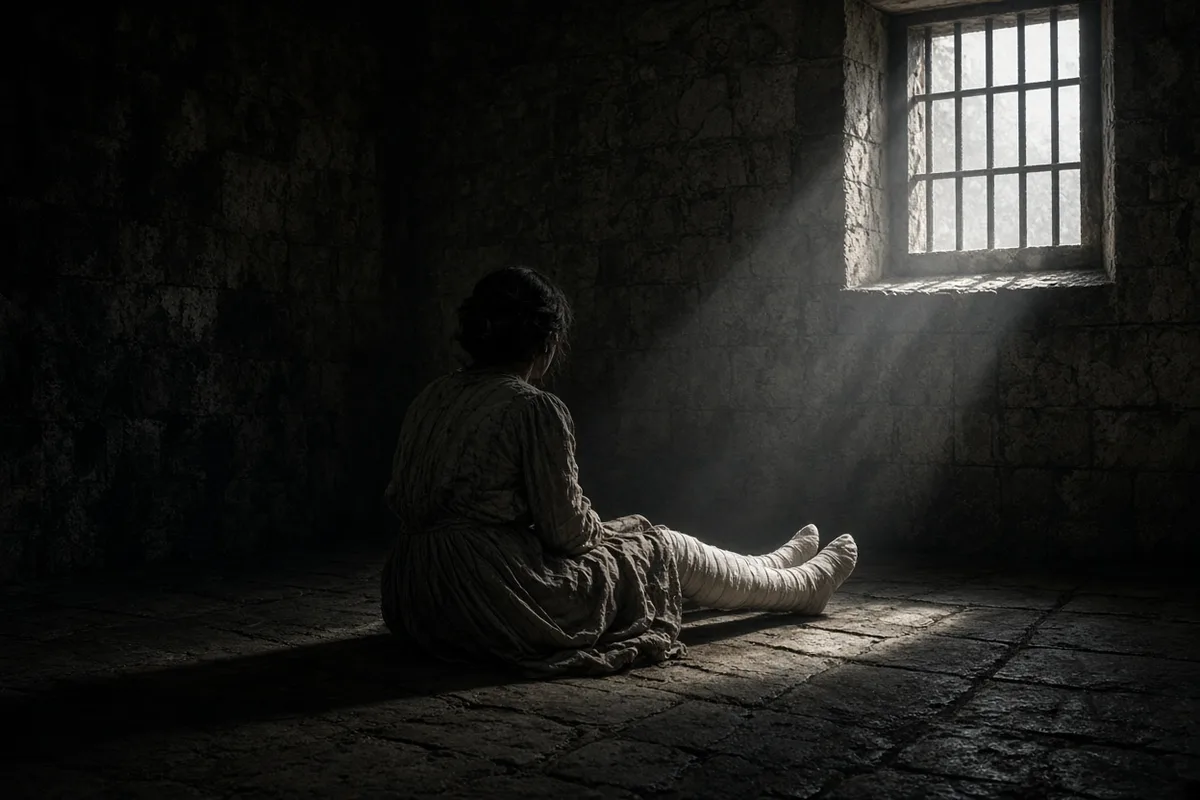
They took her to Pawiak prison. I have stood outside those walls since, in daylight, in a city that no longer smells of fear, and it still takes something out of a person just to look at the gate. She was sentenced to death there. I remember the particular quality of the days that followed, how the whole network moved through them like people underwater, afraid to speak above a whisper even in rooms we were sure were safe, because if they could take Jolanta, they could take anyone, and if they broke her, they could take everyone whose name she carried in her head.
She did not break, or if she did, it was in a place none of us could see, behind a face she kept arranged for her interrogators the same way she kept it arranged for the rest of us — steady, unreadable, giving nothing back. The underground did what the underground did in those months: it found the men who could be bought, and it bought them, and the money that changed hands that winter came from the same desperate pool that fed and hid the very children she had been trying to save. She was released in February of 1944, alive, walking, changed in ways that never fully showed on the surface.
They did not stop watching her. She knew it, the way you know a hand is on your shoulder even after it has technically been lifted away, and so she went into hiding, not because her nerve had failed but because staying visible would have meant leading them straight back to the children who were still, even then, scattered across convents and farmhouses under names that were not their own. It was in that hiding, cut off from her own family by the same secrecy that had kept a few thousand strangers' children breathing, that she learned her mother had died. She could not go to the funeral. I do not know another sentence that says more about what this work cost than that one, and I have never heard her offer an excuse for it, because there was none to offer and she knew it.
The war ended the way wars end, unevenly, with silence arriving in some streets before others. She dug up the jars herself, or saw to their digging, and set to work doing the second half of the labor no one had assigned her — matching names to names, trying to put children back together with whatever remained of the families who had once had them. Most of what she found, in that reckoning, was absence. The parents were gone. Treblinka does not give children back their mothers, whatever ledger you kept, however carefully you buried it.
For twenty years afterward she lived in Poland largely unremarked, one more woman with a past too large for the postwar silence that settled over so much of what had happened in those streets. It was not until October of 1965 that Yad Vashem recognized her among the Righteous, and a tree was planted for her at the entrance to that long avenue of trees, one more name among the growing rows of people who had chosen, in rooms just like the ones I worked in, to risk everything for someone they were not required to save.
She lived to be recognized more widely still, in the years before her death in May of 2008, long enough to see her own story told back to her in languages she had not expected it to travel in. Her daughter Janina carried what remained of that story forward, and I have heard that Janina herself later stood at Yad Vashem, in front of the tree, in front of her own daughter, three generations standing where the record insists on remembering what the ground, for a while, was only asked to hide.
I still think, more than anything, of the jars. Glass, ordinary, the kind meant for preserves, buried under a tree the way you might bury anything you intend to come back for. Inside them, names that would otherwise have been erased twice — once by the men who wanted them dead, and once by the years, the way years erase everything not written down. She wrote them down. She put them in the ground like seed, on the chance that someone, someday, digging in the right patch of soil, might find a child's whole self waiting there, intact, remembered, still theirs.