


Jan Hus Burned at Constance
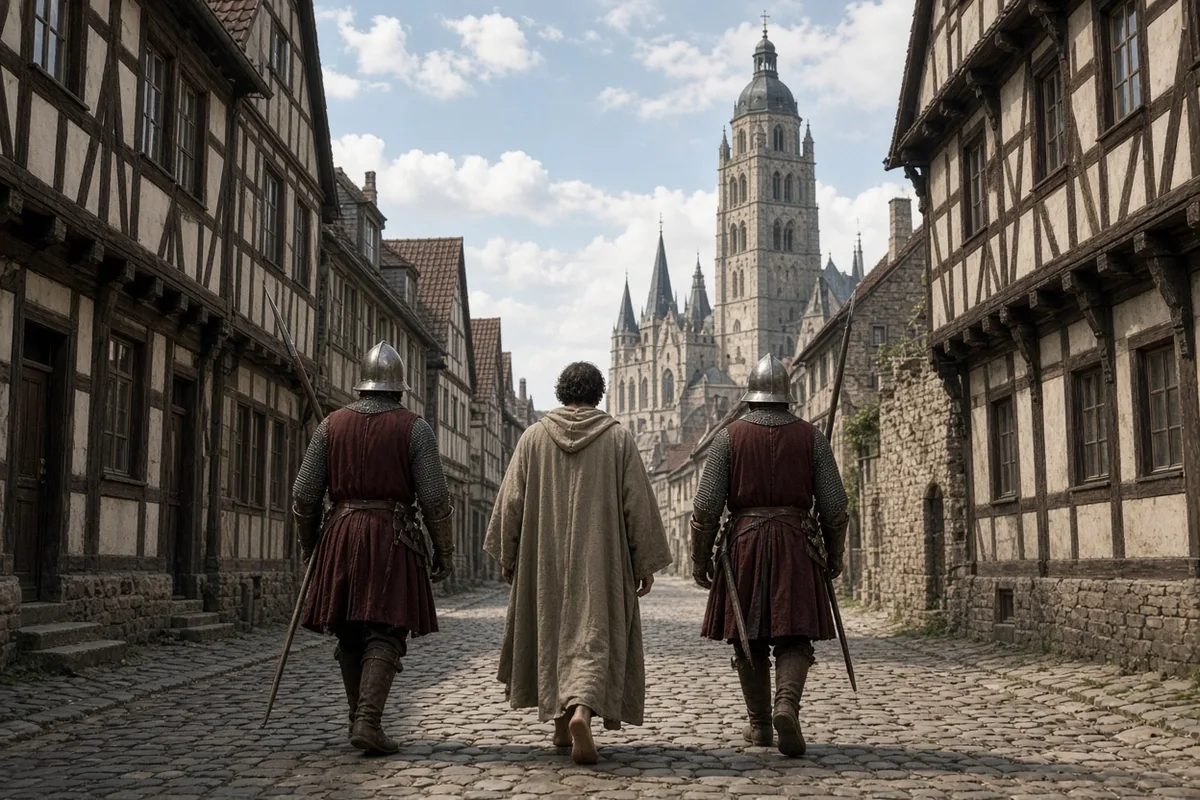
The cart jolted over the last stretch of cobbles and the crowd pressed closer on both sides. I kept my shoulder against a timber post at the edge of the square so I would not be shoved forward into the line of soldiers. Hus walked between two guards, his hands bound in front of him with a short length of rope. He wore the same dark gown he had worn at the hearings, now torn at one sleeve. Every few steps he lifted his voice and called out that the charges were false and twisted, that no one should believe he had taught any of the articles they had read against him.
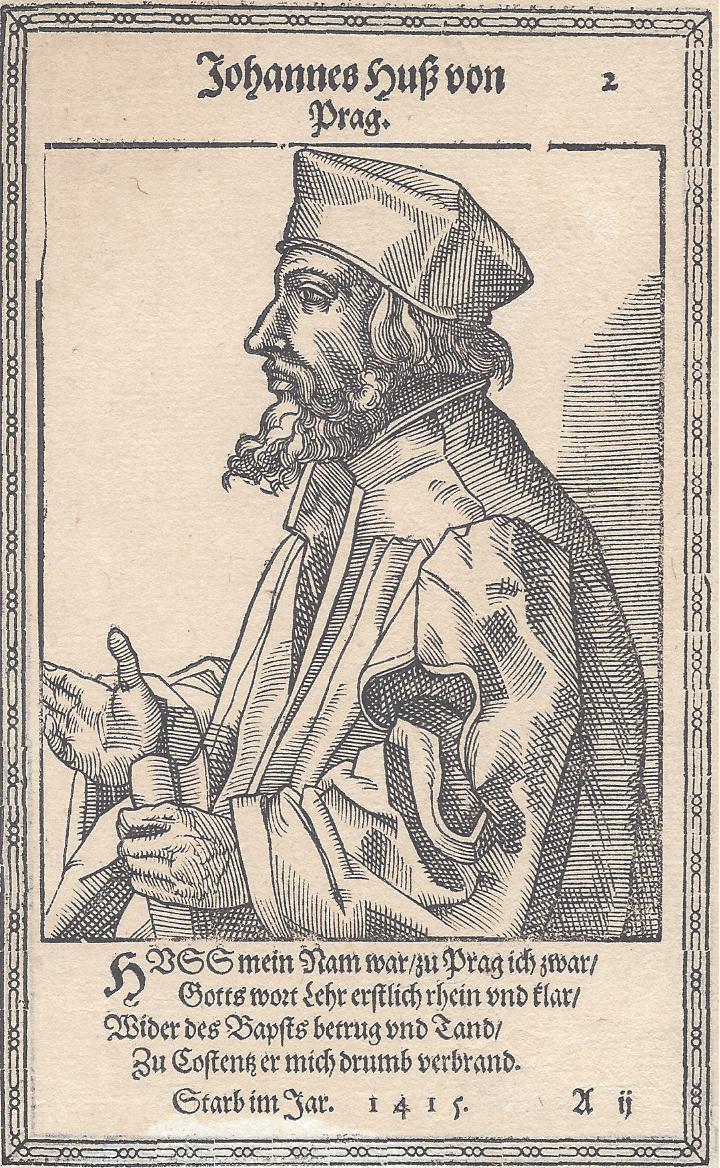
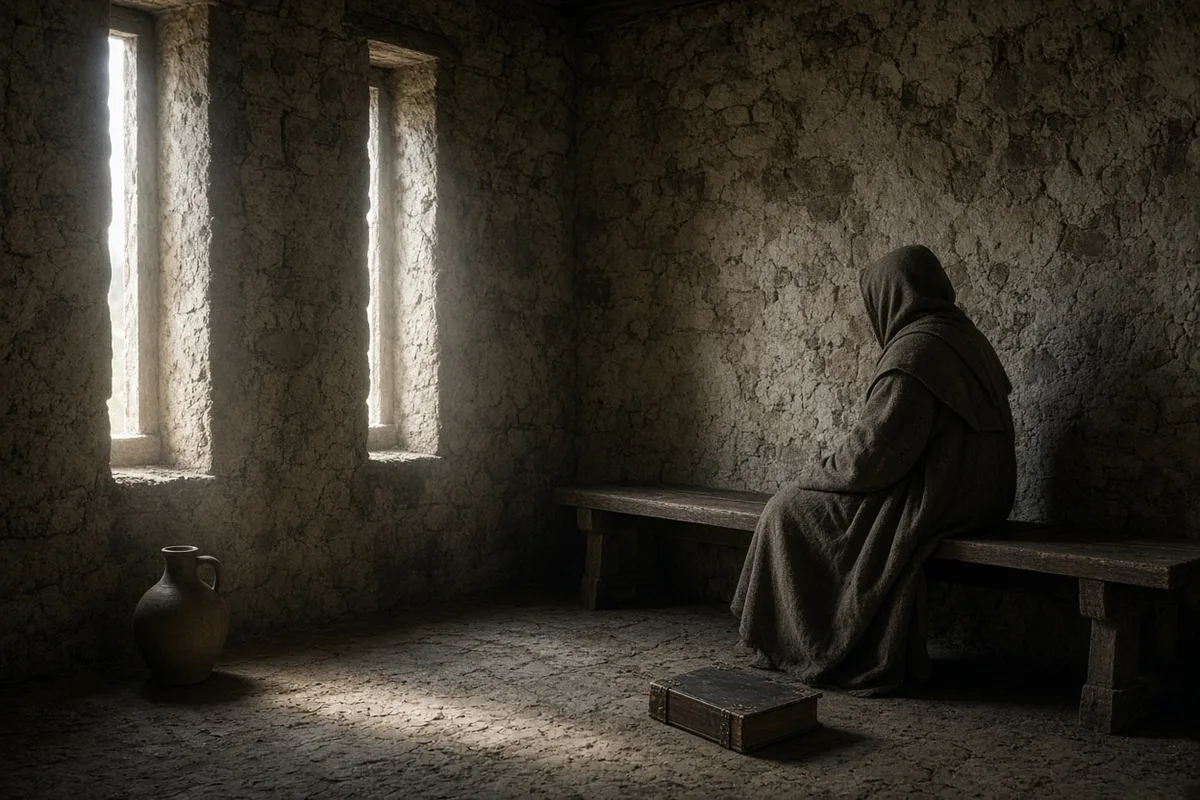
He had come to Constance months earlier under the emperor’s written promise of safe passage. For the first weeks he moved about the town with only a few companions, preaching in a borrowed chapel and answering questions from curious clerics. Then the safe-conduct was set aside. The bishops ordered his arrest and locked him first in the Dominican house by the lake, later in a tower above the bishop’s palace. From there he wrote letters to friends in Bohemia describing the cold and the chains.
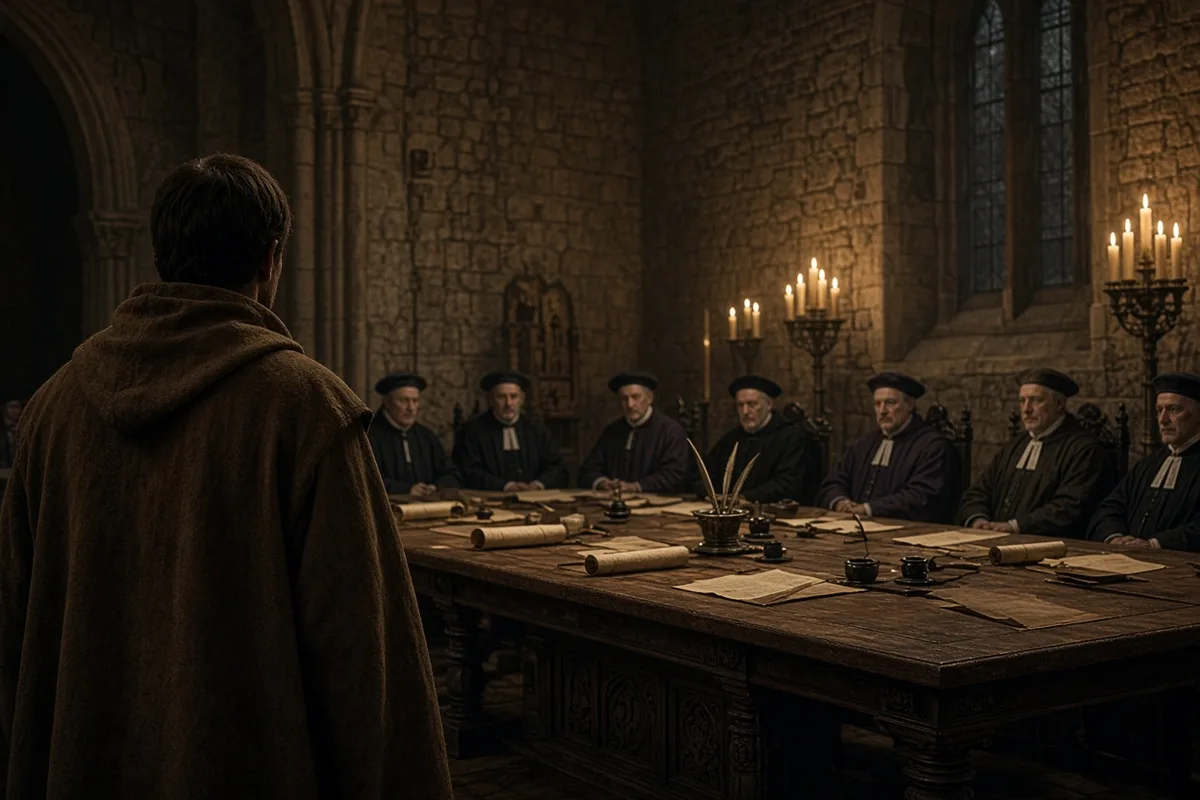
I had stood in the cathedral when the council read the sentence. The words filled the nave for nearly an hour: he was called a disciple of Wyclif, obstinate, incorrigible, a spreader of scandal and sedition. Hus answered each article in turn, refusing to recant. He said he would rather die than betray what he had found in Scripture. When the reading ended the bishops handed him to the secular officers waiting at the door.

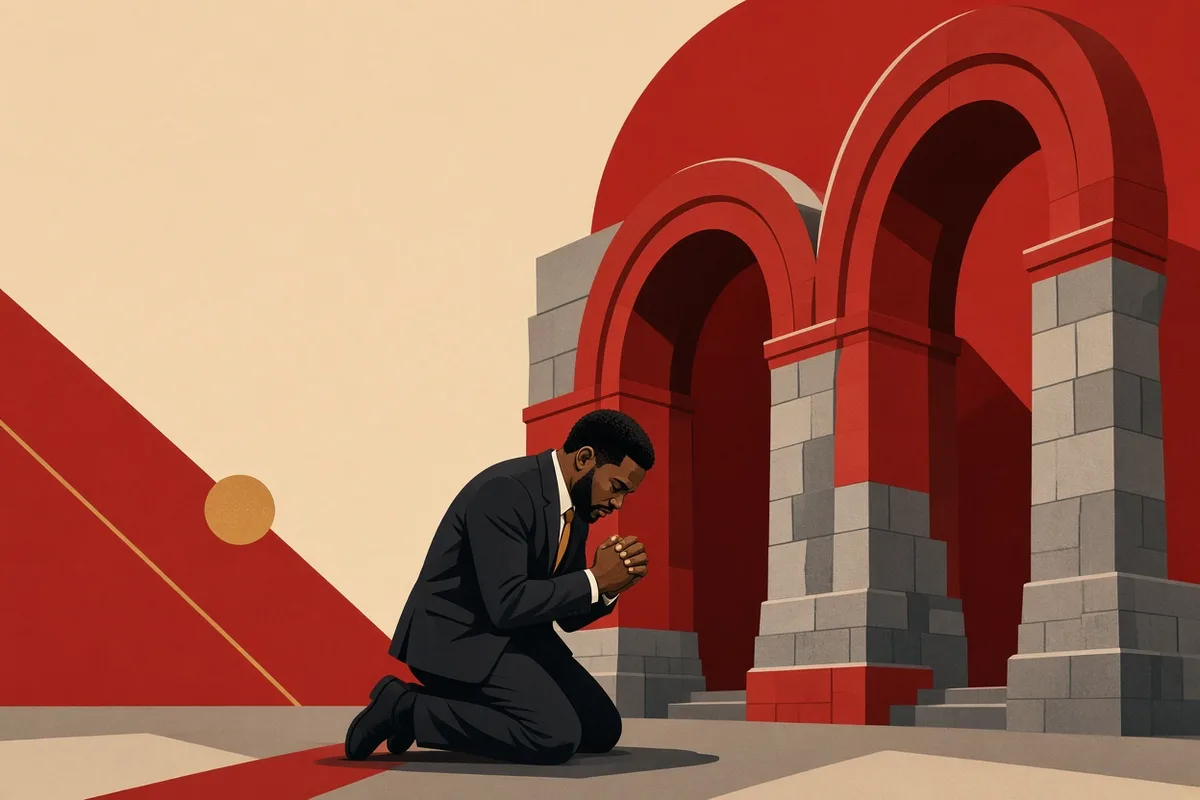
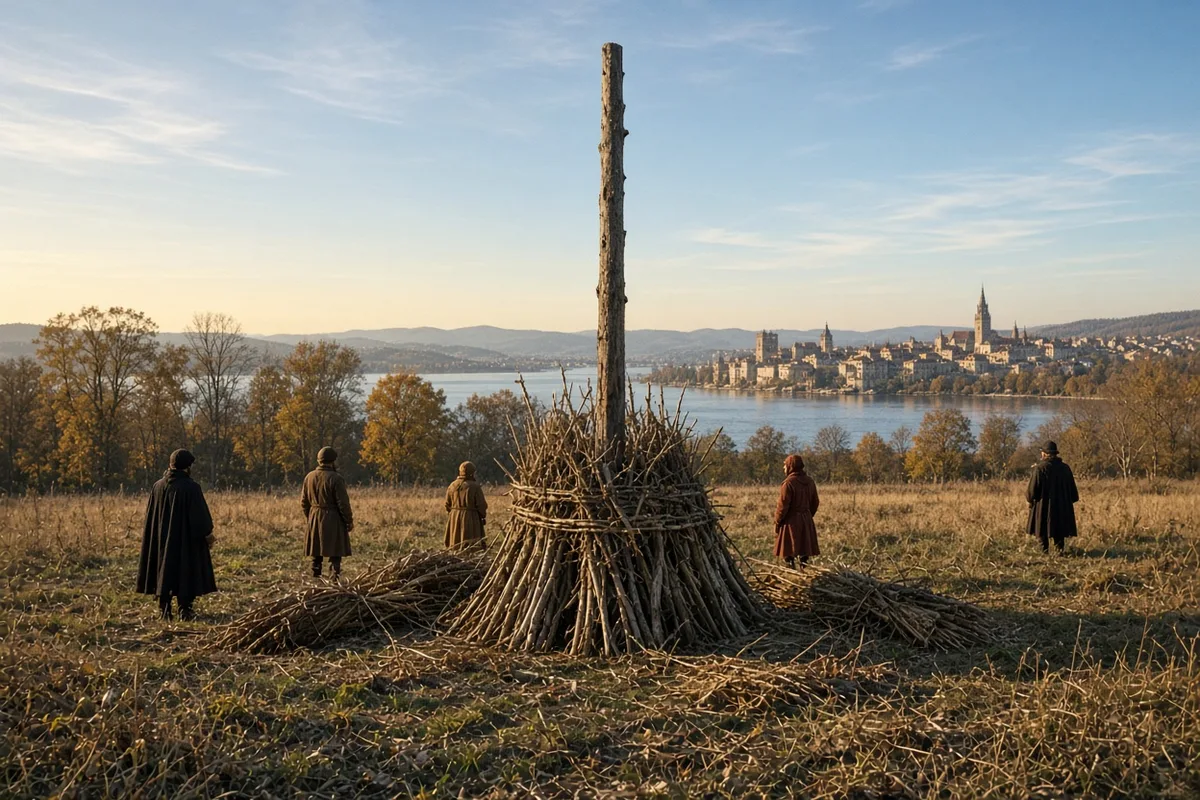
Now the officers halted the cart at the edge of the open ground beyond the city wall. A stake had already been driven into the earth and fresh wood stacked beside it. Hus stepped down without help. He looked at the pile, then knelt on the bare ground and folded his bound hands. His lips moved in prayer. The expression on his face stayed calm, almost bright, as though the words gave him steadier footing than the soil under his knees.
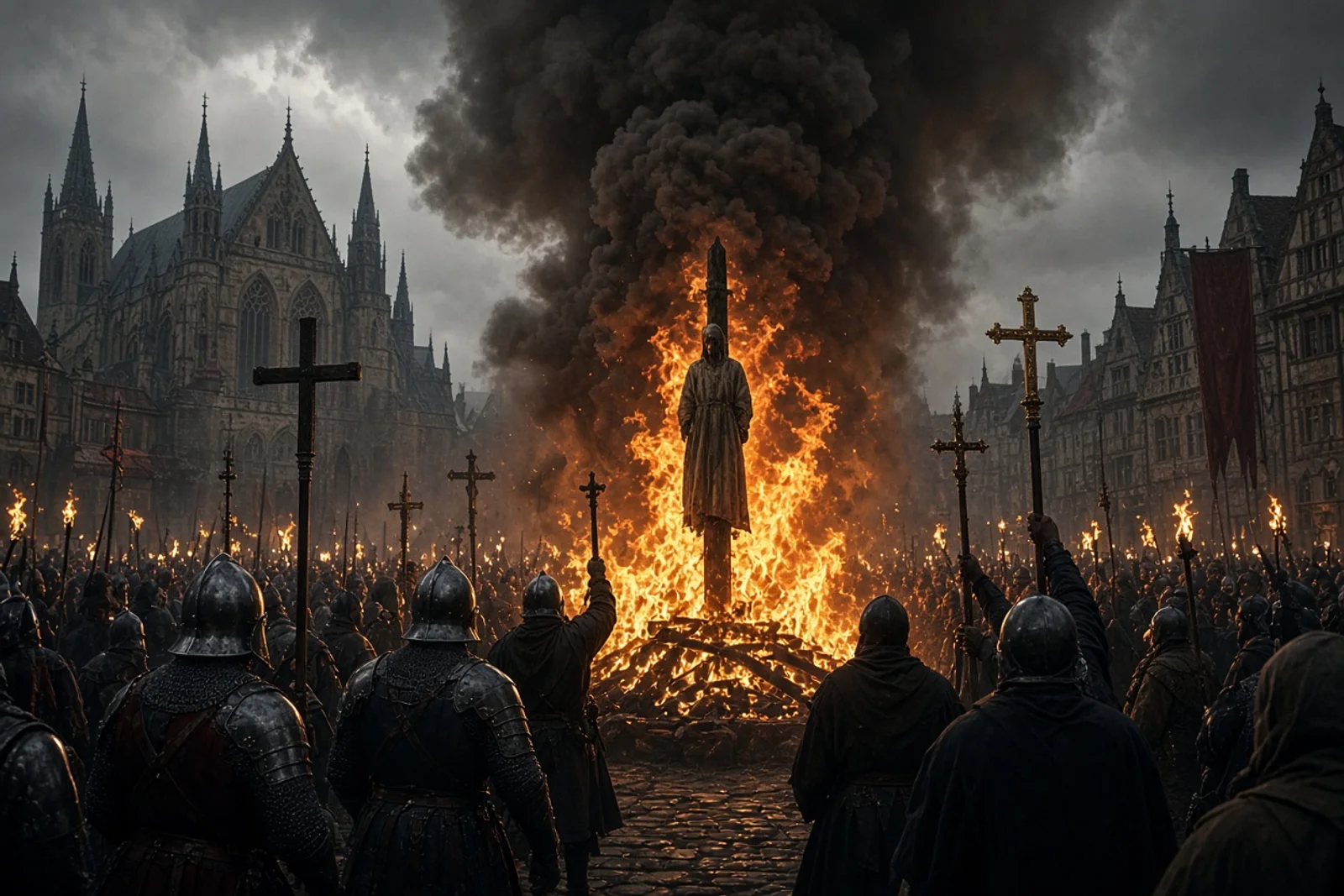
Two men came forward with shears and cut the gown away until he stood in his linen shirt. They fastened an iron chain around his waist and another around his neck, then looped both chains through a ring bolted to the stake. The wood was piled around him until only his head and shoulders remained visible above the heap. A townsman I knew from the market offered him a cup of wine mixed with herbs, the usual mercy before burning. Hus thanked him but said he would meet his end with a clear mind.

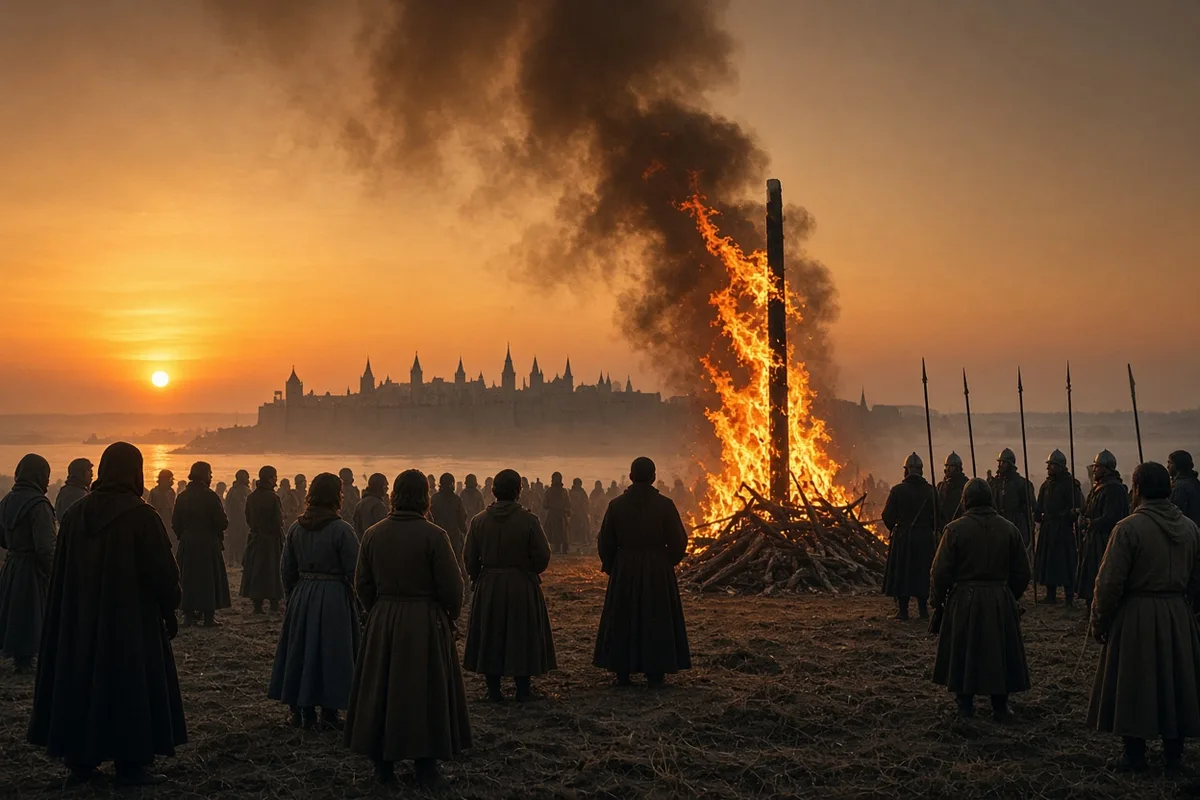
The executioner stepped behind the stake with a torch. Hus began to sing a psalm in Czech. The first sticks caught quickly in the dry summer air. Smoke rose in thin white ropes, then thickened as the larger logs took flame. He kept singing until the heat forced his head back against the stake. The sound broke into coughing, then stopped. The flames climbed higher than the wood itself, bright even in the midday light, and the chain links glowed red where they touched the fire.
I stayed until the last of the wood collapsed inward. The soldiers waited another hour before they raked the ashes apart to be certain nothing remained that could be carried away as a relic. A light wind from the lake scattered the finer ash across the grass. One of the guards picked up the iron chain, still warm, and coiled it over his arm. The crowd thinned. Men who had shouted insults earlier now spoke in lower voices about the emperor’s broken word and the cost of councils.

By evening the square was empty except for two boys kicking at the charred ground. I walked back through the gate and passed the house where Hus had lodged before his arrest. The shutters were closed. A single candle burned in an upper window, the only light on that side of the street. Farther on, at the harbor, the boats that had brought the council fathers still rocked at their moorings. Their lanterns swung in the same wind that had carried the smoke from the stake.
The next morning the council fathers resumed their sessions in the cathedral under the presidency of Cardinal Pierre d’Ailly, who on 8 July read aloud the decree that all of Hus’s books, including the tract De ecclesia written in 1413, must be burned in the same place where the ashes still lay. Emperor Sigismund, lodged at the Petershausen abbey across the lake, signed the order that same day and added a postscript in his own hand directing that any Bohemian who had come with Hus be expelled from the city within three days. I crossed the Rhine bridge that afternoon and saw three of those men, including the scribe Martin of Volyně, loading their carts while a guard read the expulsion notice. Their letters, later carried to Prague, recorded that Sigismund had told them the safe-conduct parchment was now “a dead scrap.”
News of the burning reached Prague by courier on 20 July. The masters at the university closed their lecture halls and the town council ordered the bells of the Týn church rung for three successive hours. King Wenceslaus IV, then at his castle in Točník, received a copy of the council’s sentence and dictated a letter to the council fathers protesting that Hus had left Bohemia under royal protection; the letter, preserved in the university archives, bears the date 25 July and carries the king’s seal showing the double-tailed lion. Within weeks the Utraquist faction began celebrating communion in both kinds at the Bethlehem Chapel, where Hus had preached until 1412, and the priest Jakoubek of Stříbro posted a list of twenty-four articles defending the practice against the council’s prohibition.
By the spring of 1419 the movement had spread beyond Prague. On 30 July a crowd led by the preacher Jan Želivský marched to the town hall on the New Town square and threw thirteen councillors from the windows; the date is fixed by the city records because the new consuls elected that afternoon included four men who had served with Hus at Constance. Žižka of Trocnov, who had lost an eye at the siege of Rábí castle two years earlier, took command of the armed bands that withdrew to the hill called Tábor and there, on 21 September, the first communal eucharist under both kinds was administered to more than three thousand people counted by the priest who kept the register. The chalice banner they raised bore the inscription “Veritas vincit,” the same phrase Hus had written in the margin of his copy of Wyclif’s Trialogus.
The wars that followed lasted fourteen years. At the battle of Sudoměř on 25 March 1420 Žižka’s wagons repelled an imperial force twice their number; the emperor’s own muster roll lists 2,400 cavalry under the command of Henry of Hradec. Three months later the Hussite armies defeated Sigismund’s crusading host outside Prague on 14 July, the same day the emperor had promised five years earlier that Hus would return safely. The Compactata of Basel, signed on 5 July 1436 in the cathedral where Hus had been condemned, granted the Utraquists the right to receive the cup, yet the council of Basel still required every priest to affirm that the 1415 sentence against Hus remained valid. The text of the Compactata survives in the Basel archives with the seals of seven cardinal legates.
After the Compactata the Táborite wing dissolved. On 4 September 1437 the remaining field armies were scattered at the battle of Lipany, where Prokop the Bald fell; the parish register of Čáslav records that 1,438 bodies were buried in three pits dug on the battlefield. The Utraquist consistory continued to meet in the Carolinum until 1621. In 1517 Martin Luther wrote in his Ninety-five Theses that Hus had already taught many of the same positions on indulgences, and a copy of that treatise, annotated by Luther himself, is kept in the Wittenberg archives with the marginal note “Hus, 1415.”
The memorial column erected in Prague’s Old Town Square was unveiled on 6 July 1915, the five-hundredth anniversary, before a crowd estimated by the municipal police at 80,000. The bronze statue stands 8.7 metres high on a granite plinth quarried at Mrákotín; the inscription on the base repeats the words Hus spoke at the stake according to the eyewitness account of Peter of Mladonovice: “Lord Jesus, it is for thee that I patiently bear this cruel death.” In Konstanz the stone marking the execution site was replaced in 1935 by a simple slab set into the pavement at the end of the former city wall; visitors still leave small stones on it, a custom noted in the 1978 guide published by the Baden-Württemberg tourist board.
I returned to Bohemia in the autumn of 1416 and lived another thirty-seven years, long enough to see the chalice restored in the Týn church and then taken down again after White Mountain. On my last visit to Constance, in 1452, the harbor lanterns still swung on the same iron rings, and the wind off the lake carried the same smell of pine resin from the rafts. A young priest from Prague, standing where the stake had been, asked me whether I remembered the face of the man who had sung the psalm. I told him the face was already turning to ash when the chain links first glowed red, yet the words of the psalm remained in the air above the smoke.
The priest turned away without another word and walked toward the harbor where a boat from Lindau was taking on passengers for the crossing to Meersburg. I remained a while longer beside the slab, noting how the paving stones around it had been reset in 1878 when the city widened the street to accommodate the new railway station built by the Baden state railways. A mason from Überlingen who had worked on that project told me the original ring from the stake had been dug up during the excavation and carried to the Rosgartenmuseum, where it was catalogued under inventory number 1423 as part of the collection donated by the antiquarian Franz Xaver Kraus.
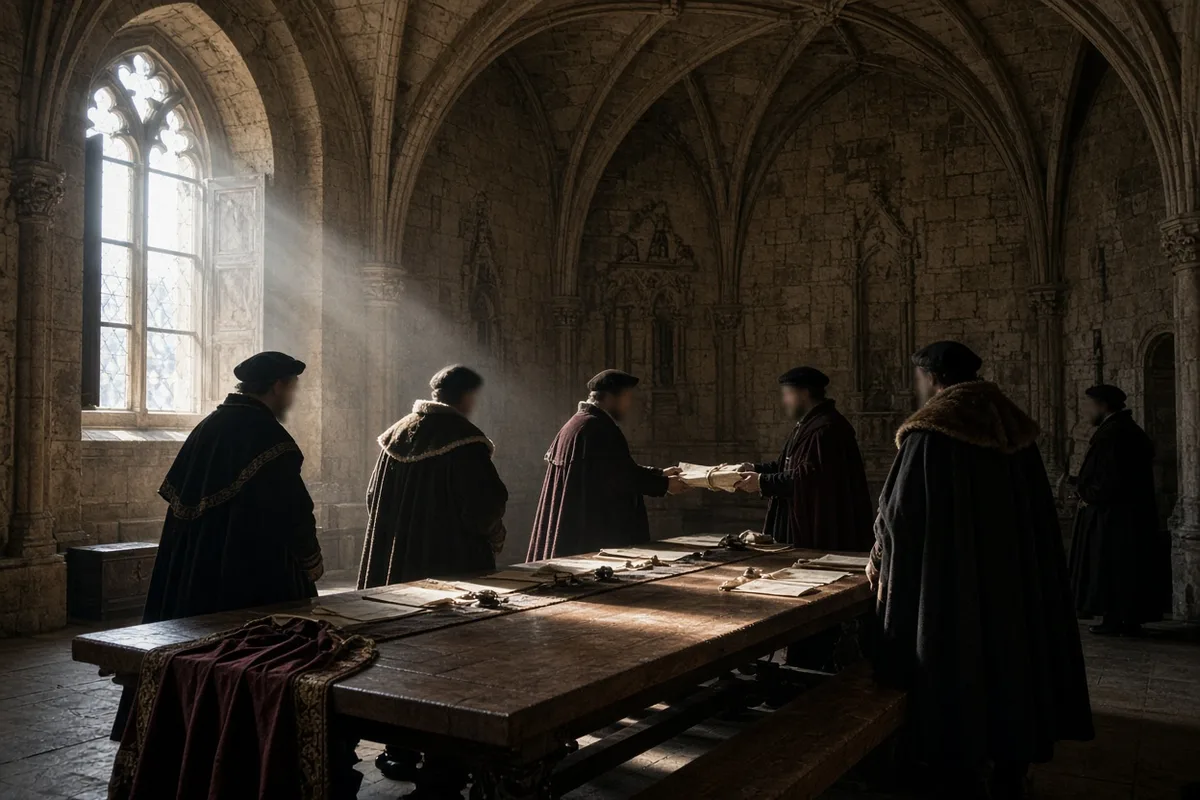
In the decades after my departure the council’s own acts were copied into the great folio registers now kept in the Stadtarchiv Konstanz, volume 7, folio 112 verso, recording that on 11 August 1415 the fathers ordered the destruction of every manuscript Hus had left in the Dominican convent. One of those manuscripts, a set of notes on the Sentences of Peter Lombard copied in his own hand, survived because a scribe named Nicholas of Dresden had taken it to Prague before the burning; it is now MS Prague, National Library, VII A 18, with Hus’s marginal note on folio 47r reading “non est in potestate papae.”
The Utraquist consistory in Prague continued to cite Hus’s 1413 tract De ecclesia in its rulings until the Battle of White Mountain on 8 November 1620, when the imperial army under Johann Tserclaes von Tilly captured the city and the consistory’s library of 1,874 volumes was confiscated and sent to Vienna. Among those volumes was the register kept by the priest at Tábor that listed 3,412 communicants on 21 September 1419; the register itself disappeared after 1627 when the Jesuit college took over the Carolinum buildings.
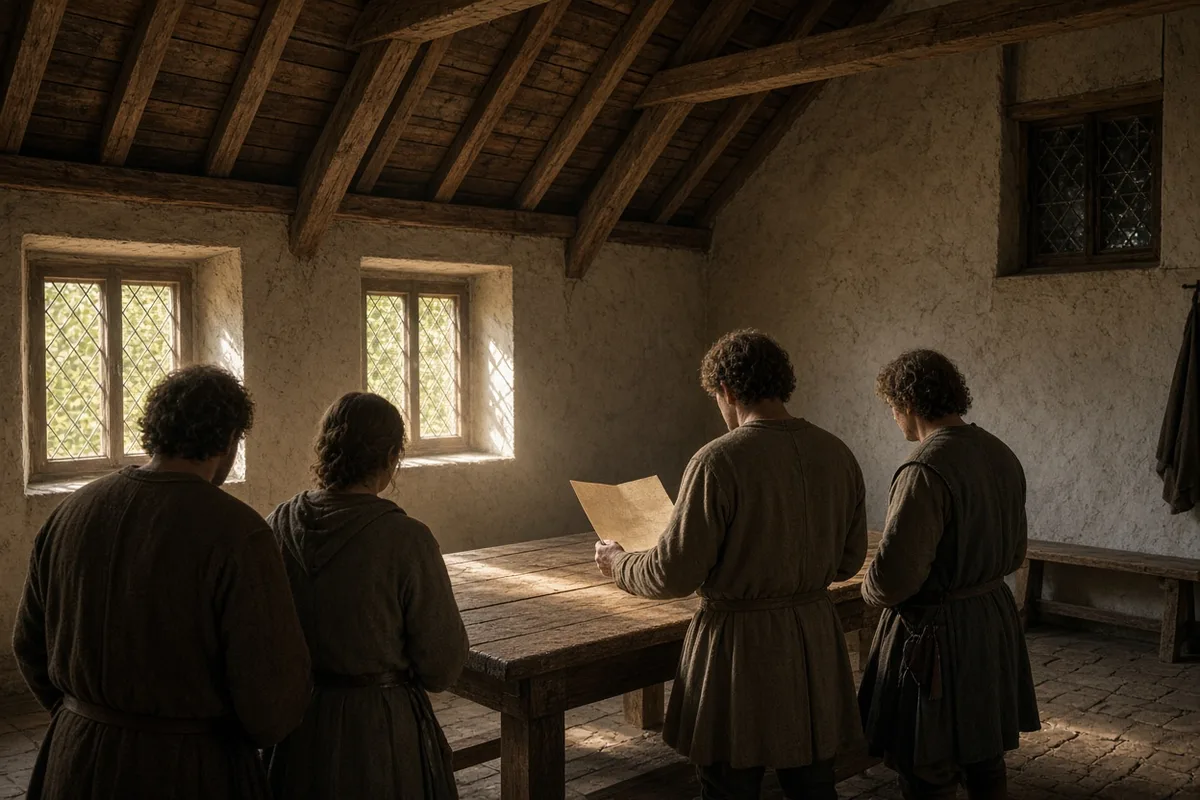
Martin Luther’s 1520 treatise Assertio omnium articulorum, printed in Wittenberg by Johann Rhau-Grunenberg, quoted Hus’s reply to the thirty-ninth article at Constance verbatim: “I appeal to Jesus Christ, who will judge more justly than this council.” A copy of that edition reached Bohemia in 1521 and was read aloud in the Bethlehem Chapel on 6 July of that year, the anniversary of the burning, before an assembly of 420 burghers recorded by the notary of the Old Town.
The first printed edition of Peter of Mladonovice’s Relatio de Magistro Johanne Hus appeared in Nuremberg in 1536 under the imprint of Hieronymus Andreae; the text includes the exact words spoken by Hus when offered the herb wine: “I will drink no cup of oblivion, for I desire to meet my Lord with a clear mind.” That edition was used by the Bohemian Brethren when they prepared their 1572 hymnal, which contains the melody still sung on 6 July in the Evangelical Church of the Czech Brethren.
In 1935 the city of Konstanz placed the present sandstone slab at the execution site after the previous wooden marker was destroyed during street works ordered by the Reichsautobahn authorities. The slab measures 1.2 metres by 0.8 metres and bears only the date 1415; no name is cut into it because the municipal council of that year decided against any inscription that might be read as a political statement under the terms of the Reichskonkordat signed two years earlier.
The last time I stood at that place the young priest had already boarded the Lindau boat. I watched the lanterns on the masts swing once more as the vessel cast off, and I thought of the scribe Martin of Volyně, who had loaded his cart on the far side of the Rhine bridge in 1415 and who, according to a letter he sent from Prague in 1420, had copied Hus’s final letter from prison onto a single sheet of parchment that he kept folded inside his doublet until his own death at the Battle of Vyšehrad on 16 August 1420.