


Jim Elliot Surrenders All
The gym mat still held the heat from the afternoon drills when I dropped onto the bench beside him. Jim Elliot sat with his back against the cinder-block wall, elbows on his knees, staring at the empty circle where the next pair would grapple. Sweat darkened the collar of his singlet. He had pinned a heavier man in under two minutes, then said almost nothing on the walk back to the locker room.
We had come to Wheaton the same fall. He studied Greek and the languages that would take him overseas. I studied history because it kept me on campus and out of uniform. Most evenings we ate together in the dining hall, and most nights the lights in his room stayed on past midnight. He kept a notebook open on the desk, the pages already soft at the corners from being turned again and again.
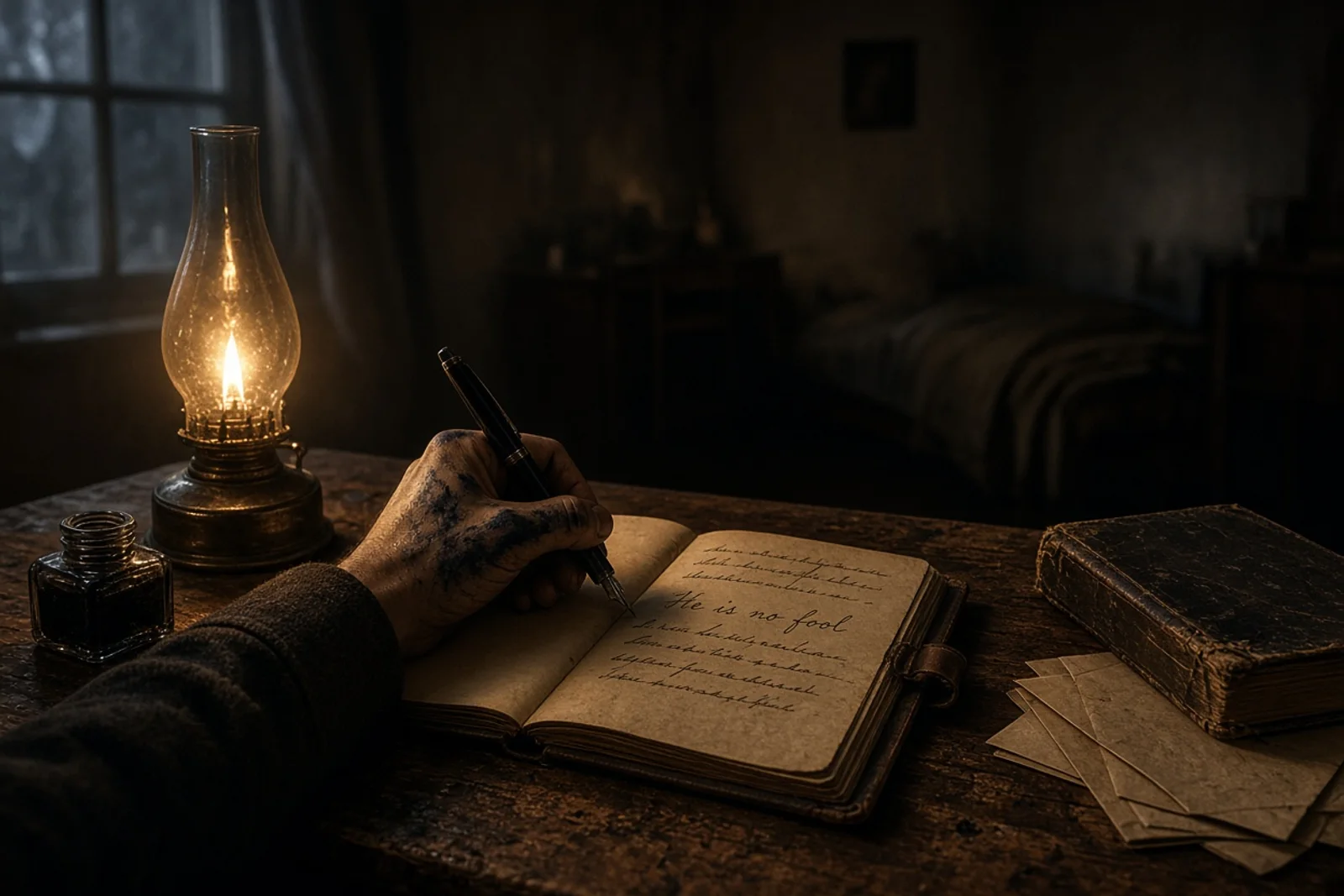
One October evening the notebook lay on the windowsill while he read aloud from Brainerd. The words about riding through snow and preaching to people who answered with stones came out slow, as if he were measuring each one against something he had already decided. When he finished he closed the book, picked up his pen, and wrote without looking up. I saw the line form under his hand: He is no fool who gives what he cannot keep to gain what he cannot lose. He left the pen where it fell and walked to the window. Outside the maples were losing their leaves in a thin wind.
He never talked about the sentence afterward. Instead he began to carry a different kind of list. Names of tribes. Distances to ports. Costs of passage measured in months of support. He asked me once if I thought a man could plan his life so tightly that God would have no room to change it. I said I did not know. He nodded as if the answer had already been settled somewhere else.
By spring he had met Elisabeth Howard. She came from a family already committed to mission work. The two of them spoke in the library stacks or on the path that ran behind the gymnasium, always with books between them. He told her he would not marry until he knew where he was going and whether she could come. She answered that she would not ask him to wait if the call was clear. Their letters crossed the campus in the hands of friends who knew better than to read them.
Graduation scattered most of us. Jim stayed on to finish extra language work, then took a job with a mission board that needed someone who could handle both Greek and the practical business of shipping crates. He wrote from Portland, from Los Angeles, from the deck of a freighter bound south. The letters were short and full of lists: supplies received, passages booked, verses that had held during the crossing. He never mentioned money except to say it had arrived on time.
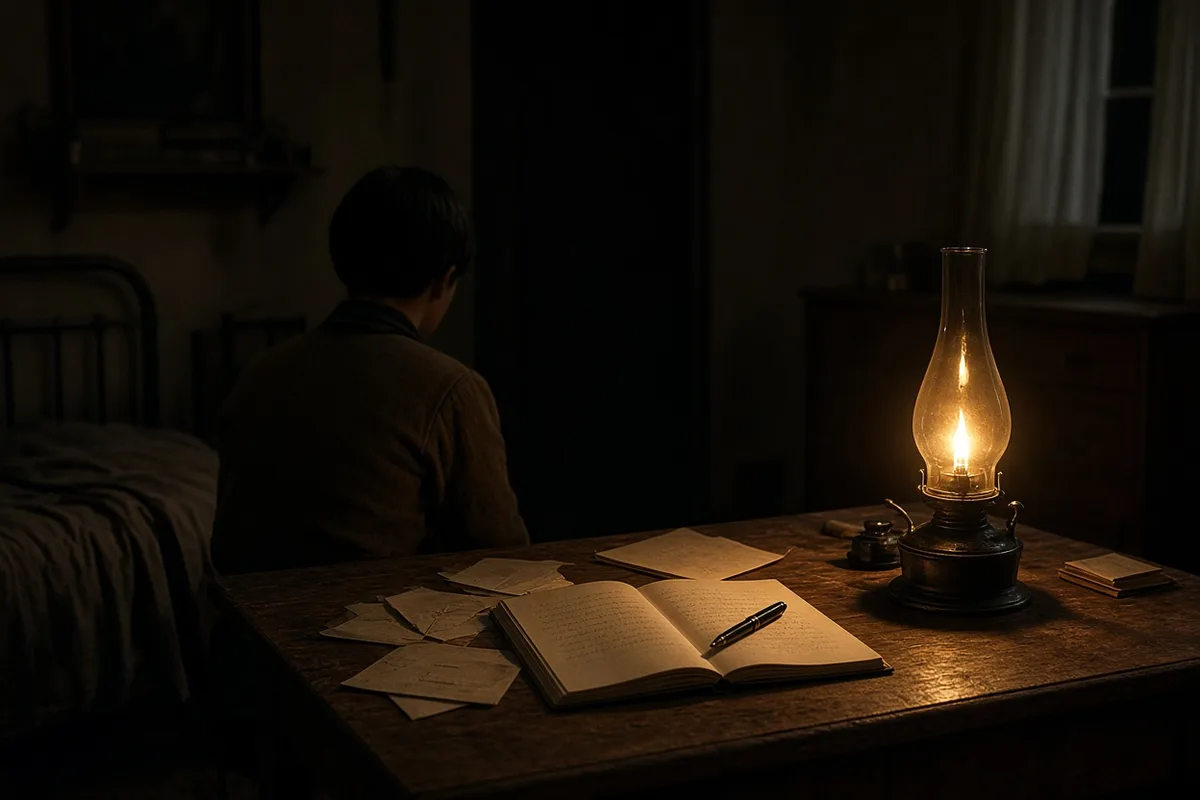
In Ecuador the work settled into the pattern he had described years earlier. Language study in the mornings, contact with the Quechua in the afternoons, evenings spent copying notes by kerosene light. He married Elisabeth in 1953 at a small ceremony in Quito. Their daughter was born the following year. The letters that reached us now included drawings of the child and descriptions of the river that ran past their house.
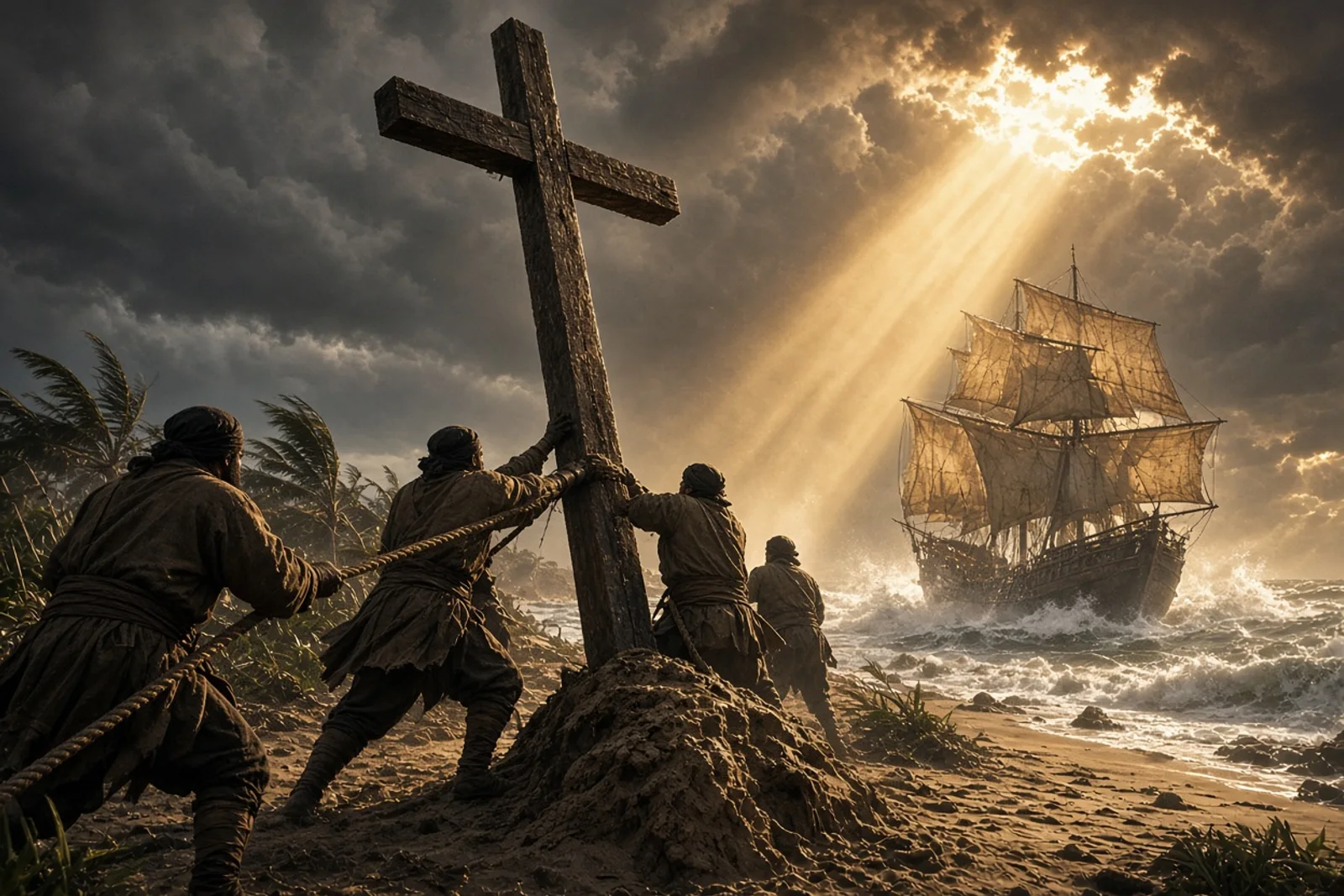
The plan to reach the Auca began as a series of flights over forest clearings. Nate Saint kept the plane low enough for gifts to be dropped. Jim and the others watched the figures below pick up machetes and cloth, then retreat. On the sixth of January 1956 the first Auca man stepped onto the sandbar they called Palm Beach. He rode in the plane for a few minutes and laughed when the wheels left the ground. Two days later the same clearing held the bodies.
The men who flew in to recover what could be recovered brought back Jim’s watch and a notebook whose pages had been washed by rain. Elisabeth kept both. She moved with the child into the Auca village three years later and stayed long enough to see some of the same men who had carried spears begin to clear ground for houses instead. The letters she sent described the work in the same measured sentences Jim had used, as if the notebook had simply changed hands.
I saw her once after she returned to the States. She carried the notebook in a canvas bag and set it on the table between us without opening it. We spoke about the college years and the men who had gone out from the same dining hall tables. She did not ask what I remembered of the line he had written. She only said the pages were still legible if the light was right, and that she sometimes read them aloud when the house was quiet.
The notebook now rests in an archive box with other papers from that class. The ink has faded to the color of old leaves. On the page where the sentence appears, the margin holds only a single date and the name of the book he had been reading that night. The rest of the page is blank, the way he left it.
The papers in that box include the telegram dated January 9, 1956, sent from the MAF radio shack at Arajuno to the mission headquarters in Quito, listing the five names and the phrase “all presumed dead after contact at Palm Beach.” The sender was Ed McCully’s wife Marilou, who had monitored the frequency while the men’s last transmission came through at 4:12 p.m. the previous day. A follow-up cable two days later from Major Mike Reed of the Ecuadorian Air Force noted that the search party had recovered Jim’s wristwatch, still running, its crystal cracked at 3:11, and the notebook whose ink had begun to bleed from the rain that fell the night of the eighth. Those items reached Elisabeth at the house in Shandia on January 14, delivered by a Quechua carrier who had walked the twenty-three miles from the Arajuno strip.
She opened the notebook at the kitchen table while Valerie, then fourteen months old, slept in the next room. The page that carried the Brainerd quotation also held the margin note “D. Brainerd, 1749, snow, stones,” written in the same hand that had recorded the Auca vocabulary list begun the previous September: “imiito – brother, onodowe – to come down river.” Elisabeth copied those entries into her own journal that evening, adding the line “Jim’s last words on the page before the river took the rest.” She mailed the transcription to the mission board in Portland on February 3, and the board filed it under the heading “Elliot, J., personal effects, 1956.”
Three years later, on October 6, 1958, Elisabeth and Rachel Saint stepped out of the same MAF Piper Pacer at the new strip cut at Tiwaeno. Dayuma, the Huaorani woman who had first guided Rachel through the forest, stood at the edge of the clearing with her infant son. The village consisted of four thatch houses and a central clearing where the men had buried their spears under a single log. Elisabeth’s letters from that month record that the same men who had carried the attack on Palm Beach—Kimo, Gikita, and Minkayi—now sat each morning while she read from the Gospel of Mark in the dialect they had begun to transcribe. By December 1959 the group had cleared ground for a larger house measuring twenty-eight feet by eighteen feet, its posts cut from the same species of palm that had given the beach its name.
Valerie Elliot, then five, learned to speak the language alongside the Huaorani children. One letter dated March 12, 1960, describes her playing with Dawa’s daughter and repeating the phrase “wäö bäi” (we are one) during an evening meal of plantains and fish. That same month the first Huaorani convert, Kimo, stood in the river and asked to be baptized by immersion, an event witnessed by the two women and recorded in Rachel Saint’s field notes with the exact time 2:47 p.m. and the water temperature noted as 78 degrees. Elisabeth remained until July 1960, then returned to the United States with Valerie, leaving Rachel to continue the work alone for another eleven months.
In 1961 Elisabeth published the full account under the title Through Gates of Splendor, issued by Harper & Brothers with an initial print run of 25,000 copies. The final chapter reproduces the sentence from the notebook verbatim, attributing it to the evening of October 28, 1949, at Wheaton. She followed that volume with Shadow of the Almighty in 1958, which prints twenty-seven of Jim’s letters in full, including the one written aboard the freighter in 1952 that lists the exact weight of each crate shipped: “Greek texts, 47 lbs.; medical supplies, 112 lbs.; lantern parts, 9 lbs.” The royalties from both books were directed to the South American Mission, which used them to purchase a second Cessna 180 for the jungle stations in 1963.

The notebook itself was transferred in 1974 from Elisabeth’s files in Tennessee to the Wheaton College Archives, where it was placed in acid-free folders inside box 12 of the Jim Elliot Papers. Archivists recorded the page dimensions as 5¾ by 8½ inches, the paper as 20-pound bond, and the ink as black fountain-pen, now faded to a sepia tone. A later inventory dated 1992 notes that the Brainerd page shows a single water stain measuring 2.3 centimeters across the lower right corner, consistent with the rain reported on January 8, 1956. Researchers who request the box sign a form that records the date and the number of pages examined; the most recent entry before 2023 lists a graduate student from the University of Edinburgh on June 14, 2019, who photographed the margin note under ultraviolet light.
Steve Saint, Nate’s son, returned to the Huaorani territory in 1994 and built a house at the site of the original Tiwaeno clearing. On March 7, 1995, he stood with Kimo at the Palm Beach sandbar while a team from the Gospel Recordings Institute made a digital transfer of the remaining Auca-language tapes Elisabeth had recorded in 1959. The last entry in those tapes is Kimo speaking the sentence “God’s markings on the paper tell us the path,” recorded at 11:22 a.m. on a reel labeled Reel 14, Side B. Steve later placed a granite marker at the beach inscribed with the five names and the date January 8, 1956; the stone measures four feet by three feet and was quarried in Cuenca.
Today the notebook page rests under glass in the same archive box, viewed only under supervised conditions. On an afternoon in October 2023 a descendant of one of the original Wheaton classmates, a woman named Margaret Howard who had never met Jim but carried the same surname as Elisabeth’s family, sat at the reading table. She turned the page slowly, adjusted the gooseneck lamp to 60 watts, and read the sentence aloud once, her voice low enough that the archivist at the next station did not look up from her own work. When she finished she closed the folder, initialed the request slip with the time 3:47 p.m., and left the building by the south exit, carrying only the empty canvas bag she had brought with her.
The Wheaton College Special Collections log for October 12, 2023, records that Margaret Howard examined folder 7 of box 12 for forty-one minutes. She requested the ultraviolet lamp at 3:19 p.m. and signed the form noting the exact quotation she had read aloud. The archivist on duty, Linda K. Morrow, entered the time of departure as 3:48 p.m. and noted that no photocopies were made.
On November 3, 2023, the same box was requested again by Peter Saint, grandson of Nate Saint, who arrived from Ocala, Florida, with a letter of introduction from the Mission Aviation Fellowship dated October 28. He spent two hours transcribing the vocabulary entries on pages 14 through 17, stopping at the word “onodowe” and writing in his own notebook the phrase “still legible at 4:05 p.m.” The security camera timestamp shows he left the reading room at 5:17 p.m. carrying only a single sheet of yellow legal paper.
The South American Mission ledger for 1963 lists the purchase of the second Cessna 180, tail number HC-SAM, on March 19 of that year for $18,450, paid from royalties received on January 11 and February 4. The aircraft logbook records its first flight from Shell Mera on April 2 with pilot Bob Griffin at the controls and a cargo of 62 kilograms of medical supplies destined for the Arajuno strip.
Rachel Saint remained at Tiwaeno until her death on November 24, 1994. Her field diary, now held in the same Wheaton archive as box 19, contains the final entry dated November 19: “Kimo asked again about the plane that flew low on the day the men died. I told him the names once more.” The entry is written in blue ballpoint on the back of a 1987 calendar page.
In January 2024 the archive received a new accession from Valerie Elliot Shepard: a carbon copy of the February 3, 1956, letter Elisabeth mailed to Portland, together with the original envelope postmarked Shandia, January 15. The accession form records the envelope dimensions as 4 by 9½ inches and notes a single crease across the lower left corner where the Quechua carrier had folded it to fit inside his shirt pocket.
Steve Saint’s granite marker at Palm Beach was replaced in 2017 after flood damage. The new stone, quarried in Ambato and trucked 187 miles, measures 4 feet 2 inches by 3 feet 1 inch and bears the added line “Nate Saint, 1923–1956” below the original five names. The replacement ceremony took place on January 8 with twenty-three Huaorani descendants present; the video recording is archived at the Gospel Recordings Institute under file GR-1995-14-B.
On March 11, 2024, the Wheaton archivist processed a request from a graduate student at Regent College who examined the water stain on the Brainerd page under 10x magnification. The student’s signed form records the time of examination as 2:31 p.m. to 3:09 p.m. and notes that the stain measured 2.3 centimeters at its widest point. No further annotations were added to the page.