


Joan of Arc Leads Relief of Orléans
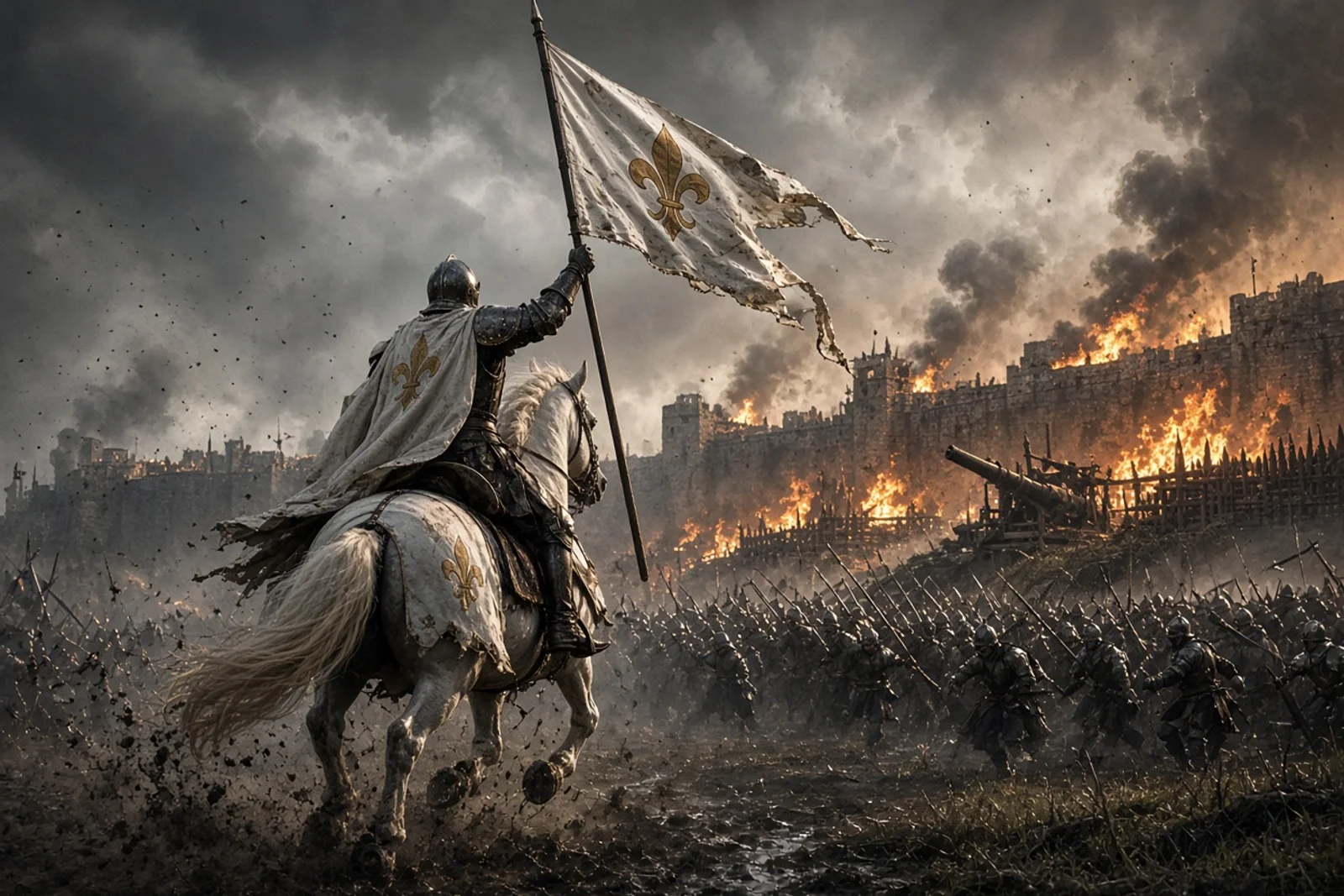
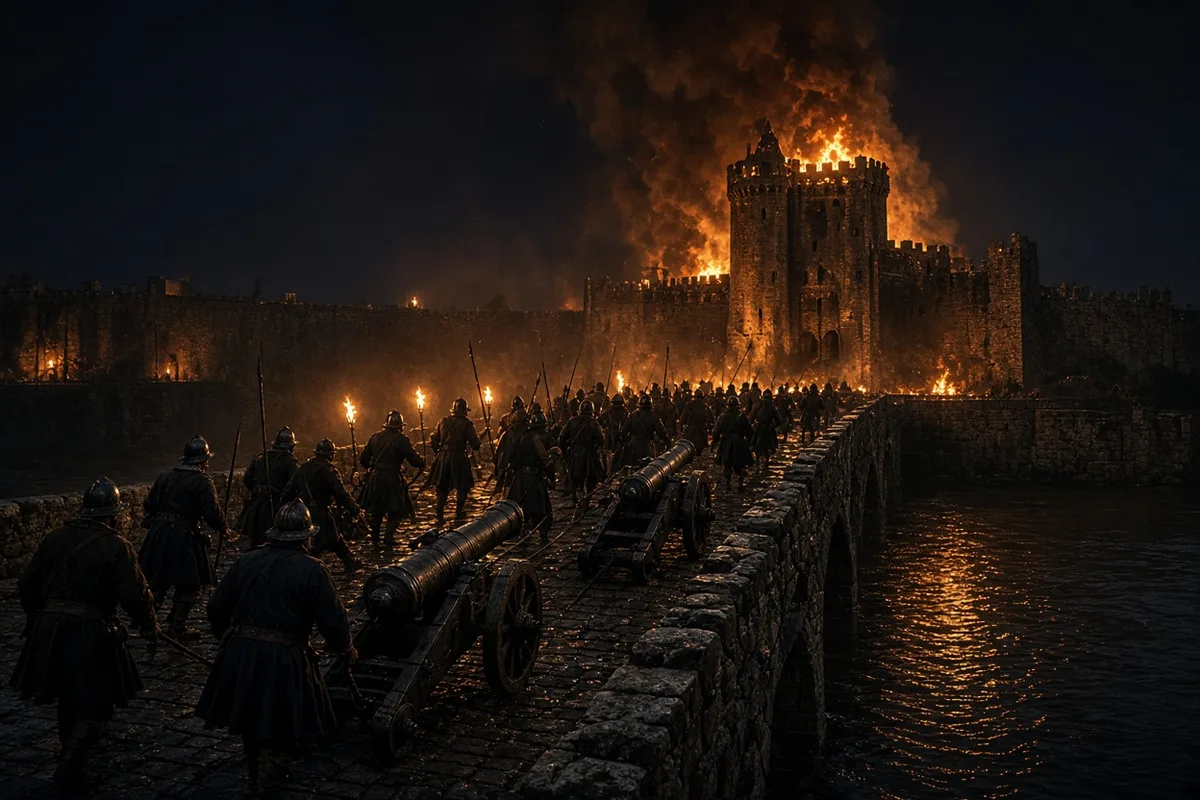
The river ran low that morning and the flatboats scraped bottom half a mile short of the eastern gate. I was in the third boat with two barrels of salt pork between my knees and a crossbowman cursing the mud. Up ahead the city walls showed pale in the early light, and from the western side came the sound of trumpets and the crack of powder. The sortie had begun exactly when the captains said it would. English arrows lifted in long arcs over the roofs and fell into the river behind us.
We grounded and waded the last yards. The gate opened only wide enough for one man at a time. A sergeant with a torn sleeve pulled me through by the strap of my pack. Inside the streets were crowded with people who had not seen fresh meat in weeks. They reached for the barrels as we passed. I kept my head down and followed the line of soldiers ahead of me until we reached the open square before the cathedral.
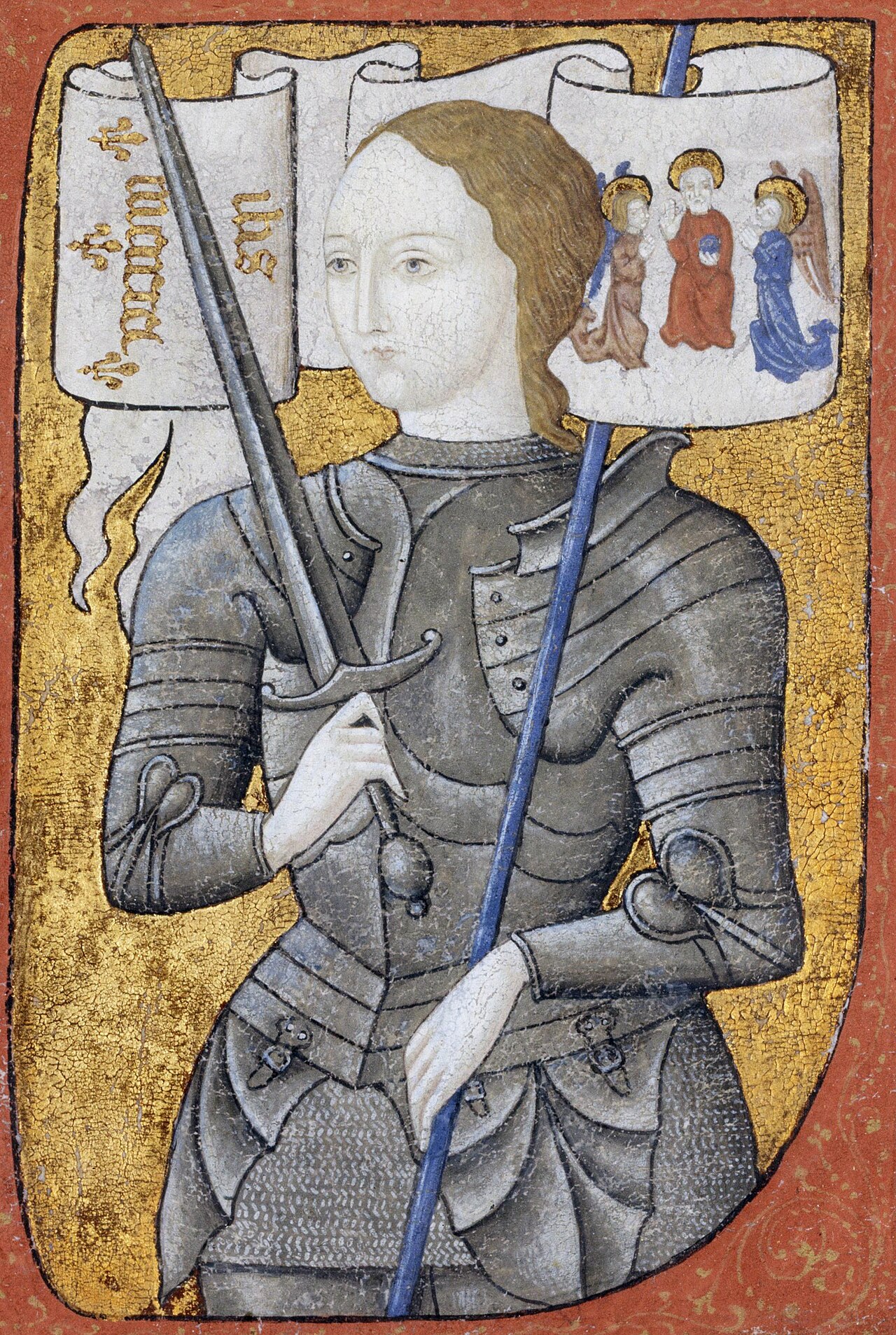
She was already there, standing on the steps with her banner planted beside her. The banner showed the world and the two angels. She wore the white armor they had given her at Chinon, though the breastplate was still too large across the shoulders. Her page held the horse. She did not look at the crowd. She watched the western sky where the smoke from the sortie rose in a single column.
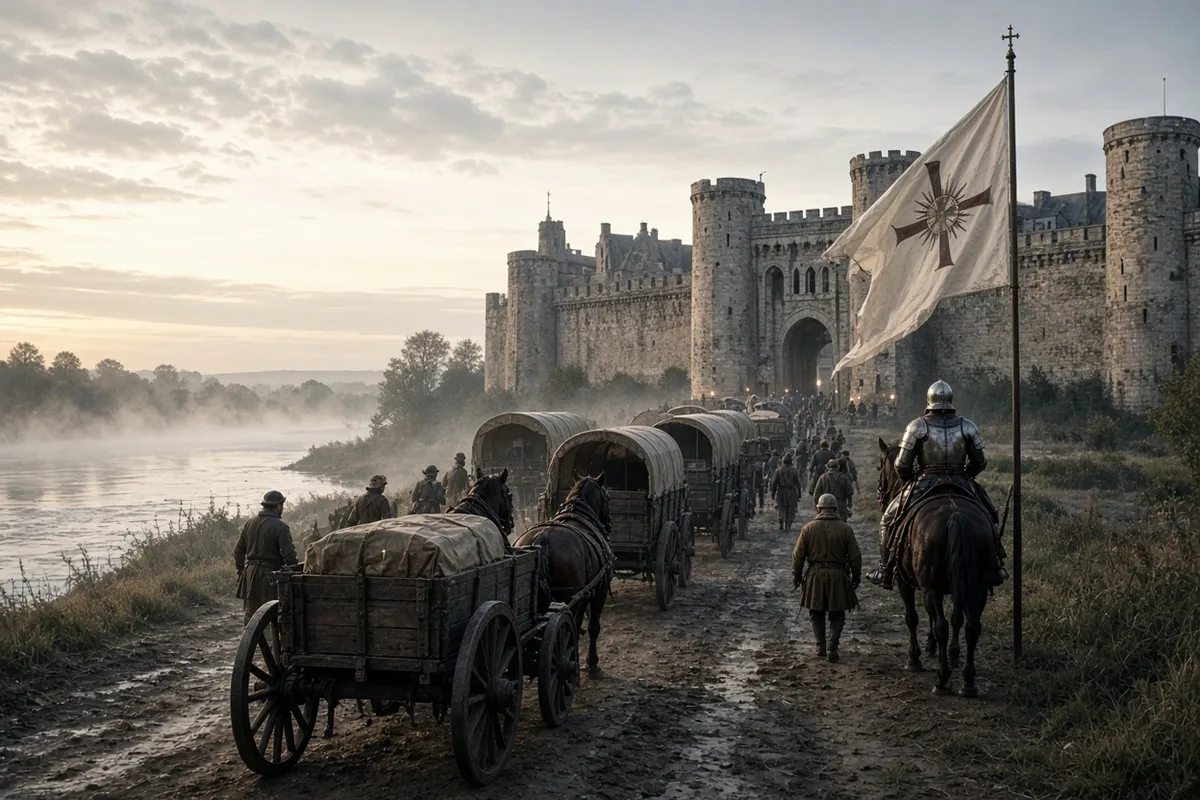
By midday the English had pulled back from their western positions and the city gates were shut again. We stacked the supplies in the old market hall. The crossbowman who had cursed the mud found a corner and slept with his bow across his chest. I sat on an empty sack and listened to the captains argue over how many men could be spared for the next push. No one mentioned her name until a priest came through asking for volunteers to carry messages to the bastions still held by the English.
She rode out on the third day after our arrival. I was part of the escort that followed her along the riverbank toward the English fort called the Tourelles. The ground between the city and the fort was open and cut by ditches. She kept the banner high so the men on the walls could see it. An English gunner on the far bank tried a ranging shot that threw up water fifty paces short. She did not turn her horse.
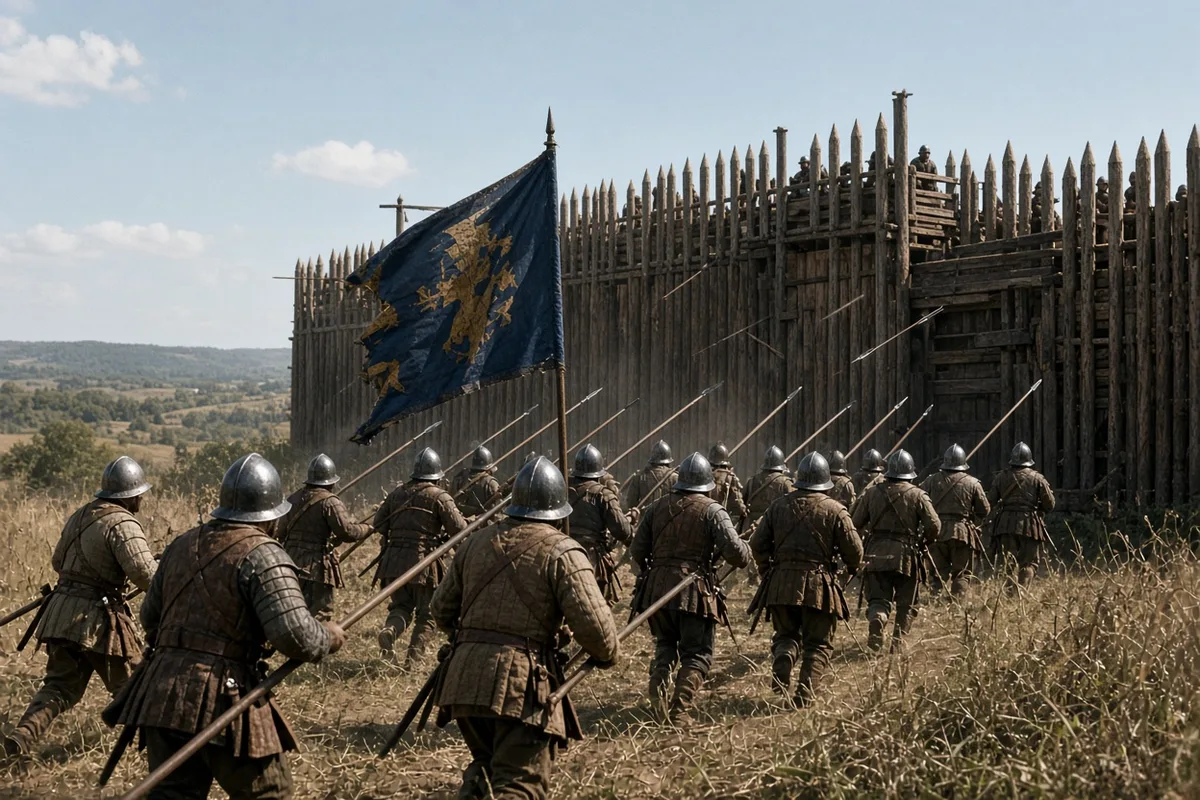
On the morning of the seventh the attack went in at first light. I carried a scaling ladder with three other men from my company. She was already at the foot of the Tourelles rampart when the first English stones came down. The ladder was too short by a foot. We jammed it against the stone and held it while men climbed. An arrow struck the man above me and he fell across my shoulders. I dropped the ladder and pulled him clear.
She was hit just after noon. The arrow took her above the shoulder where the armor plates did not quite meet. She staggered but stayed on her feet. Two men tried to lead her back toward the city. She shook them off, broke the shaft with both hands, and had the wound bound with a strip from her own banner. Then she turned and walked back to the fighting line. The men who had begun to fall back saw her and stopped. They went forward again without orders.
By evening the English had lost the outer works of the Tourelles. Their dead lay in the ditches where the water had turned red. We found one of their captains still alive but unable to stand. He asked for water. The man next to me gave him the last of his flask and then sat down and did not rise again. I stayed with the wounded until the surgeons came from the city with torches.
On the eighth day the English camp was empty. Their tents stood with the flaps open and the cooking fires gone cold. From the walls we watched their columns form on the north road and move away in good order. No one cheered at first. The only sound was the river and the creak of the gate chains as the eastern gate was opened again for the first time since we entered.
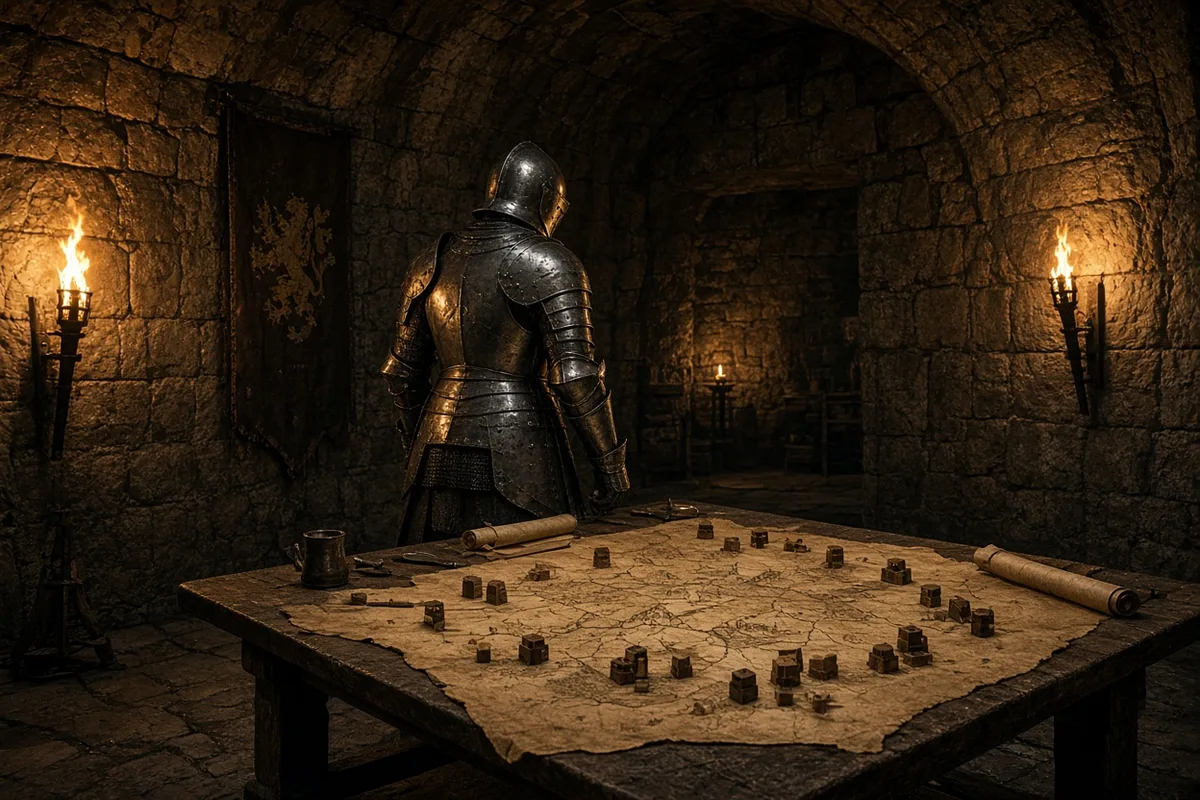
She rode at the head of the column that followed them for half a mile, then halted and let them go. Her shoulder was bound tight under a fresh surcoat. The banner had a new patch where the arrow had torn it. She looked once toward the retreating English, then turned her horse back toward the city. The men who had climbed the ladders the day before walked on either side of her without speaking.
Inside the walls the people came out again. They brought bread and wine to the soldiers who had carried the supplies. The priest who had asked for message carriers was now giving thanks at the cathedral steps. She dismounted and handed the reins to her page. For a moment she stood alone in the square, the patched banner resting against her leg. Then the captains called her name and the crowd closed around her.
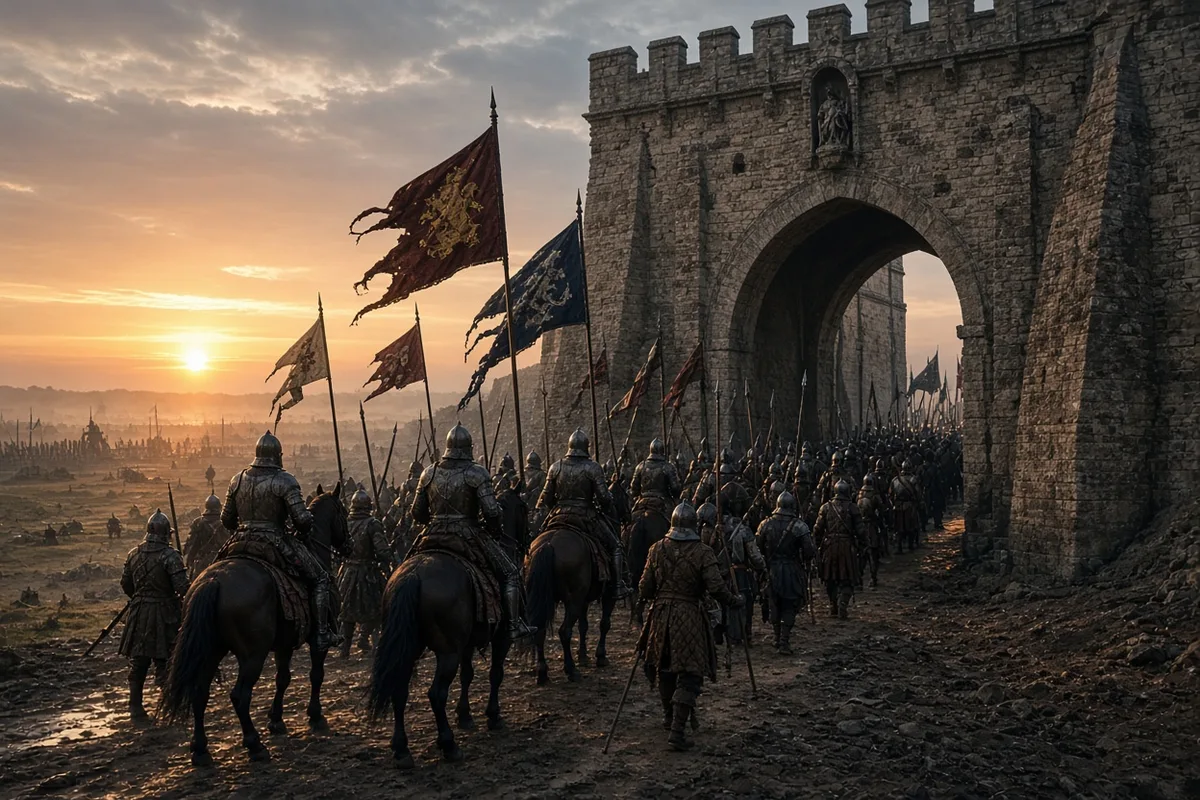
I stayed with the relief force through the next weeks. We moved north after the English, taking the small forts they had left behind. She was always at the front with the banner, never striking a blow herself. At the end of May we turned toward Reims. The road was open and the villages we passed had already heard the news from Orléans. Men came out to join us with whatever weapons they owned.
The last time I saw her was outside the walls of Reims before the coronation. She sat her horse at the edge of the camp, watching the procession form. The white armor had been polished again. The shoulder wound had healed enough that she no longer favored it. Around her the captains argued about who would carry which standard into the cathedral. She said nothing. When the bells began she lifted the banner once more and rode forward with the rest of us into the city.
The cathedral doors stood open when we reached the square. Charles entered under the canopy held by the four peers, the same men who had ridden with us from Gien. Inside the nave the anointing took nine minutes by the count of the sacristan who stood at the rail. The holy ampulla was brought from its chest by the abbot of Saint-Rémy, and the oil touched the king’s forehead, breast, shoulders and arms while the choir sang the laudes. She remained outside the choir screen with the banner until the Te Deum began, then stepped forward only as far as the second pillar on the south side so the captains could see her. When the king emerged wearing the crown of Charlemagne the crowd in the square numbered more than four thousand by the reckoning of the town sergeants who cleared the steps.
From Reims the army moved toward Paris in August. We reached the suburb of Saint-Denis on the twenty-third. The king lodged at the abbey while the captains debated whether to storm the walls. She rode the line each morning with the banner, stopping at the Porte Saint-Honoré where the English had mounted three cannon. On the eighth of September an arrow struck her thigh during the assault on the boulevard. The wound kept her from the saddle for eleven days. When the king ordered the army to withdraw she told the Duke of Alençon, “I would have been in Paris within three days if the men had followed,” words repeated that night by the page who carried her message to the royal tent.
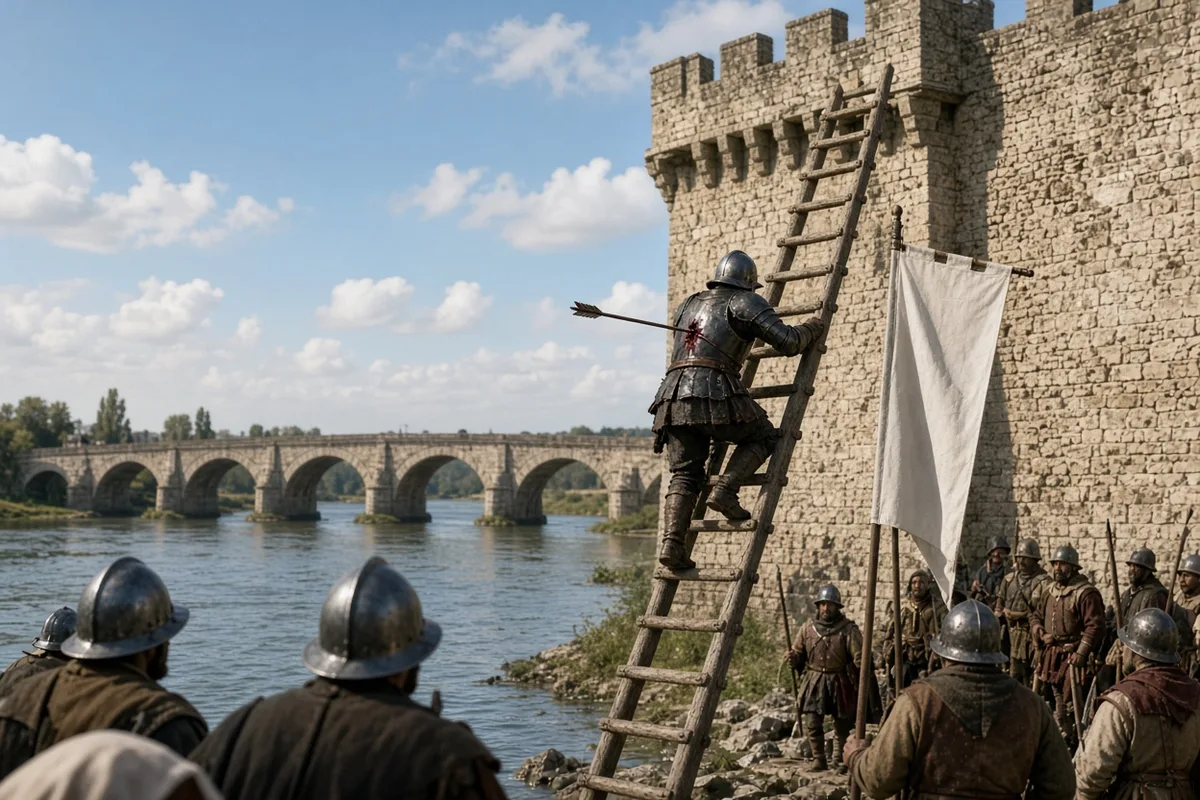
In the spring of 1430 she rode north with a company of three hundred lances under the Count of Vendôme. They reached Compiègne on the twenty-second of May. The town was held by a French garrison under Guillaume de Flavy. She entered at dusk and slept in the house of the mayor. The next morning the Burgundians under Jean de Luxembourg attacked the bridgehead. She led a sortie across the drawbridge with fifty men. The bridge was raised behind them by order of Flavy. She was pulled from her horse by an archer of the Picard company and taken to the castle at Beaulieu.
Luxembourg sold her to the English for ten thousand livres tournois on the twenty-sixth of November. She was brought to Rouen and held in a cell in the castle tower under the guard of the Earl of Warwick. The trial opened on the twenty-first of February 1431 before Pierre Cauchon, bishop of Beauvais. Sixty-four articles were read on the first day. She answered each with the same phrase: “I refer to God and to my voices.” On the twenty-fourth of May she was shown the instruments of torture in the lower room. She signed the abjuration sheet that morning but revoked it two days later, saying the voices had returned.
On the thirtieth of May the stake was built in the Old Market square between the church of Saint-Sauveur and the fish stalls. She was brought from the castle at eight in the morning wearing a long white gown and a mitre inscribed with her crimes. The executioner was Geoffroy Thérage. He tied her to the post with chains at the ankles, waist and neck. The fire was lit at nine. She called out the name of Jesus six times before the smoke covered her. The ashes were thrown into the Seine from the bridge at Pont Boieldieu the same afternoon.
The rehabilitation trial opened in Rouen on the seventh of November 1455 under the legate Guillaume d’Estouteville. One hundred and twelve witnesses gave testimony over seven months. On the seventh of July 1456 the sentence of 1431 was declared null. A copy of the nullification was posted on the doors of every church in Rouen and Orléans. The original trial records were burned in the same square where the stake had stood.
A stone cross was set in the market square of Rouen in 1457 at the exact place of the stake. It was replaced by a larger monument in 1793 and again in 1865. In Orléans the annual procession on the eighth of May still follows the route from the Tourelles to the cathedral. The banner carried in that procession is a replica woven in 1888 from the description given by Jean d’Aulon at the rehabilitation hearings. In Reims the west portal of the cathedral bears a statue of her placed in 1896 at the height of the second archivolt on the north side.
The last time any record mentions the banner itself is an inventory of the treasury of Orléans dated the twelfth of March 1475. It lists one standard of white silk with two angels and the world, torn and patched, stored in a cedar chest behind the high altar. The chest was opened for the last time in 1793 when the contents were sold to a rag merchant from Blois. No further trace appears in any municipal ledger.
The rag merchant from Blois, listed in the Blois municipal register as Pierre Lemaire, carried the cedar chest on a cart to his shop on the rue des Tanneurs and sold its silk contents by the ell to three separate buyers on the twenty-second of March 1793. One length went to a sailmaker at the port of Nantes who recorded the purchase in his daybook as “drap blanc avec anges, 4 aunes.” A second piece reached the upholstery workshop of the widow Dubois in Tours, where it was cut into cushion covers for a set of chairs ordered by the local revolutionary committee. The third fragment, still bearing the stitched patch from the Tourelles arrow, was purchased by a traveling peddler named Jean-Baptiste Moreau, whose route is traced in the 1794 passport issued at the barrier of Orléans.
Moreau’s widow deposited the remaining silk square with the notary of Bourges on the fourteenth of June 1802 as part of her husband’s estate. The notary’s inventory describes it as “un carré de soie blanche, déchiré, orné de deux figures ailées et d’un globe, dimensions 0,72 m sur 0,68 m.” The square passed to their daughter, who placed it inside a prayer book printed in 1789; that book appears in the 1834 succession papers of the same family. A marginal note in the daughter’s hand states the cloth was shown to the curé of Saint-Pierre on the feast of Saint Joan in 1817.
In 1865 the city of Rouen ordered a new granite pedestal for the market-square cross, cut from the same quarry at Saint-Maximin that supplied the 1793 replacement. The mason’s contract, preserved in the departmental archives, specifies a base 1,45 m square and an inscription of twenty-eight letters renewed in lead. The original 1457 stone, broken during the Revolution, lies today beneath the north arcade of the church of Saint-Maclou, its fragments numbered 1 through 7 in the 1892 archaeological report of the Société des Amis des Monuments Rouennais.
Orléans renewed the annual procession route on the eighth of May 1803 after the Concordat restored public worship. The municipal order of the twenty-ninth of April that year lists forty-two participants, including six veterans of the 1429 garrison whose names and ages are entered in the margin: Pierre Drouet, 92; Jean Leclerc, 89; and four others. The replica banner carried that day measured 2,10 m by 1,40 m and was woven in Lyons by the firm of Chazal et fils at a cost of 340 francs.
A bronze statue 3,80 m high was erected on the bridgehead of the Tourelles in 1875. Its pedestal bears the foundry mark of the firm Denys Puech and the date 12 September 1874. The right hand holds a replica banner staff whose iron ferrule was forged from a nail taken from the old drawbridge timbers recovered in 1848 during dredging of the Loire.
The last documented private viewing of any fragment occurred on the twenty-seventh of October 1847 when the Bourges notary’s descendant, Marie Moreau, aged 67, showed the silk square to the historian Jules Quicherat during his visit to the rue Bourbonnoux. Quicherat’s notebook entry records the dimensions, the patch, and the single legible word “Ihesus” embroidered in faded red silk near one corner. The square was placed back inside the prayer book and has not been mentioned in any subsequent family paper or public archive.