


Johann Sebastian Bach Dedicates Music to God
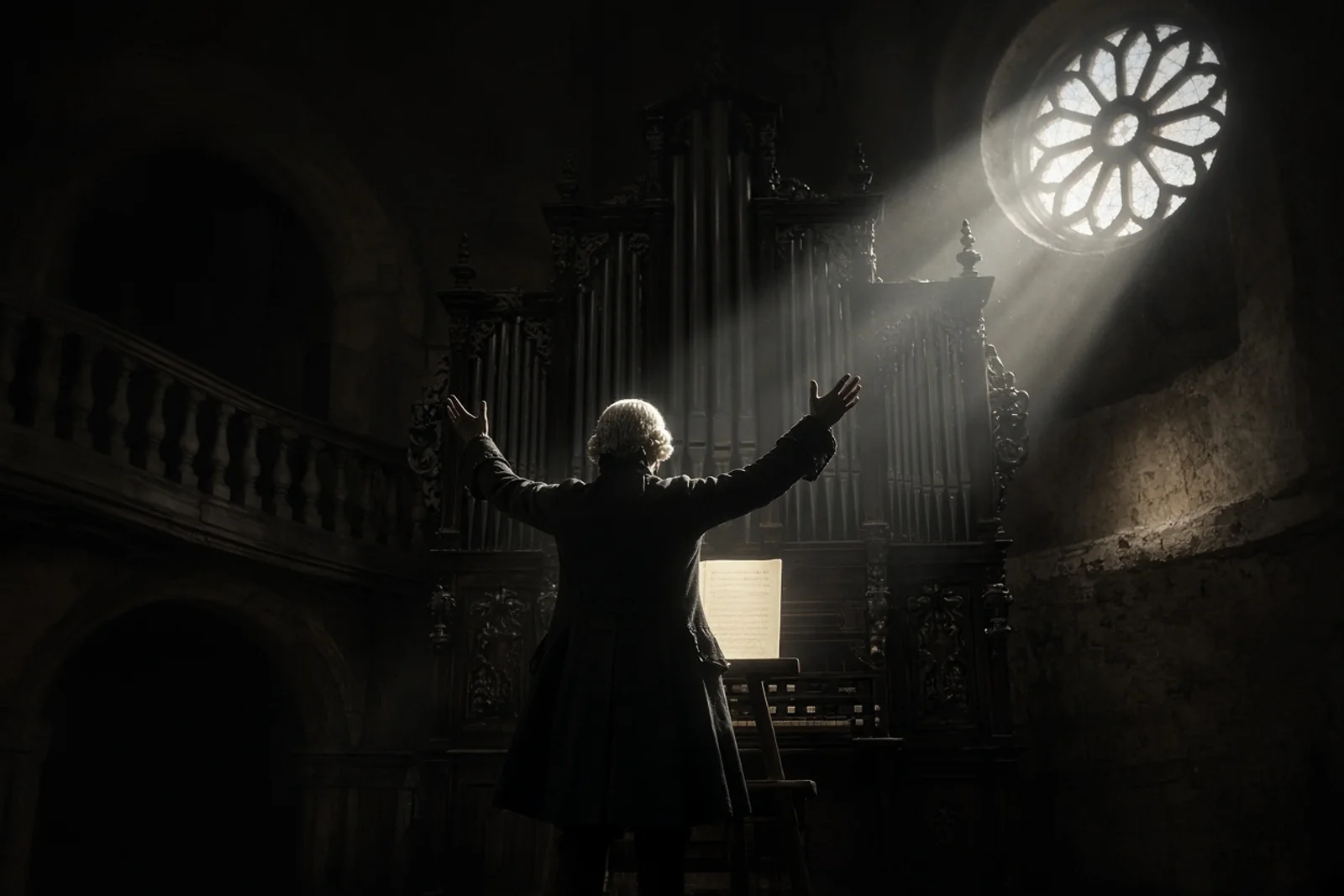
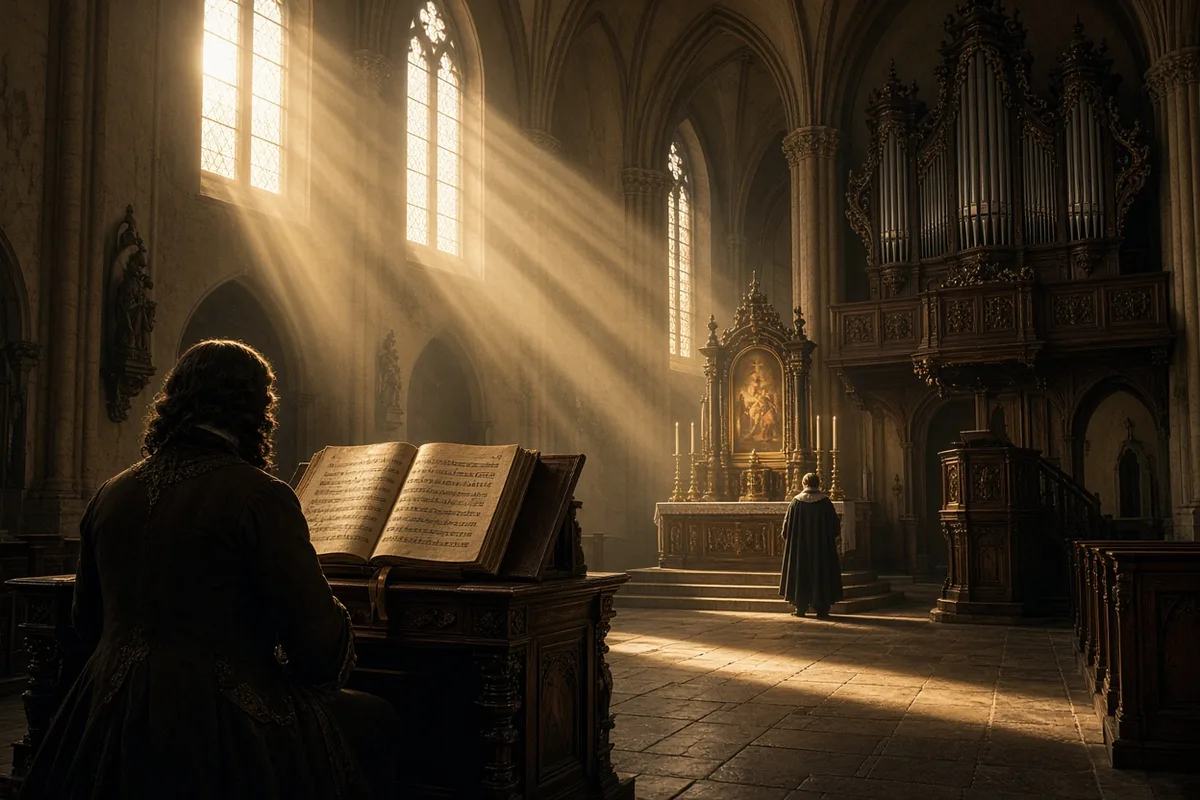
I shifted the bundle of parts higher on my hip and stepped into the cold air of the Thomaskirche gallery. The boards creaked under the weight of the choir already forming behind the rail. Below, the nave still held the smell of wet wool and candle smoke from the morning service. I set the music on the stand nearest the strings and looked across the rail for any sign of the man who had written it.
Bach stood at the harpsichord with his back to the congregation. He wore the plain coat he had traveled in from Cöthen. His fingers moved across the keys without sound, testing the touch while the oboists warmed their reeds. The two women who would sing the opening duet stood a little apart, their heads bent over the same sheet. One of them cleared her throat once, softly.
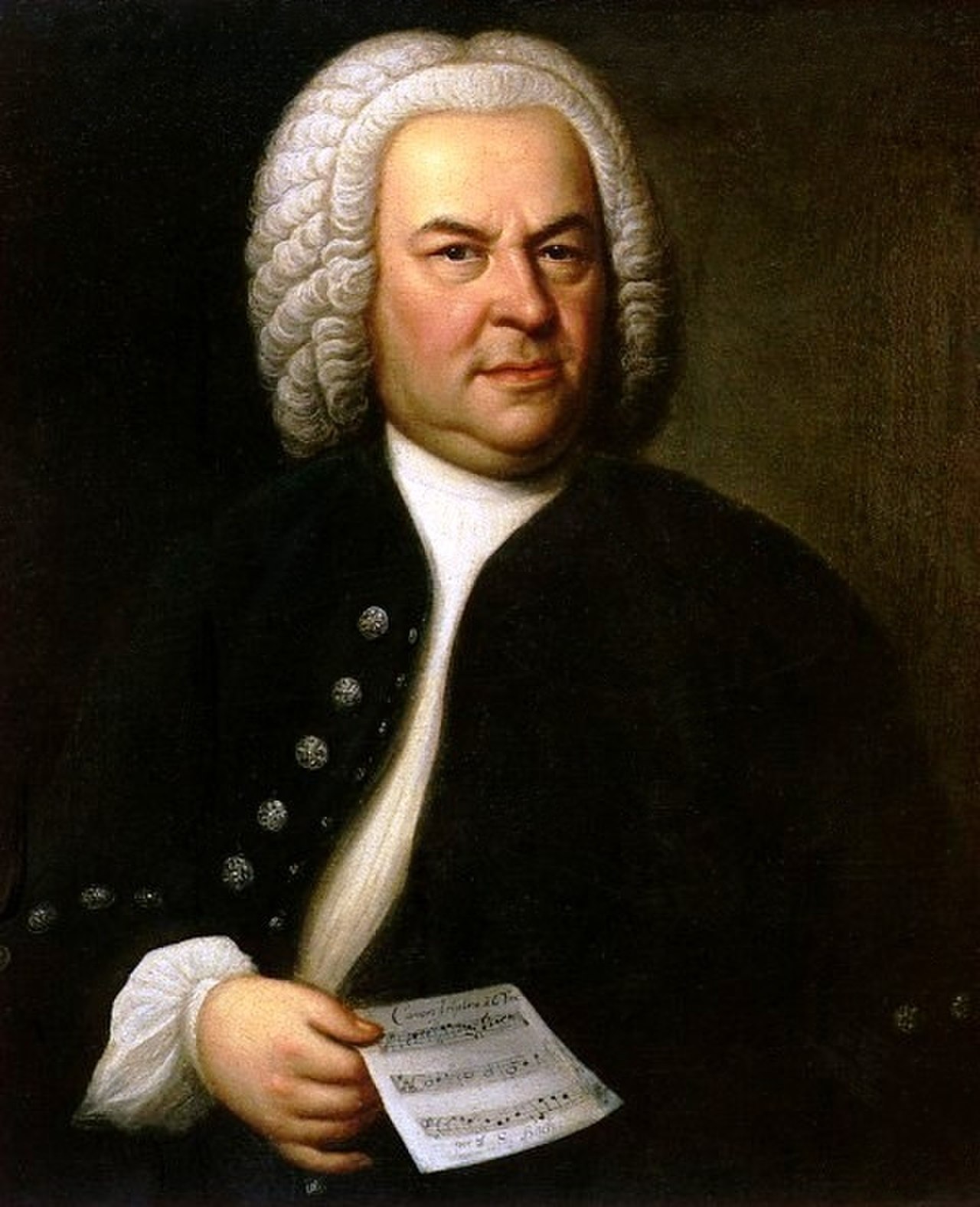
The sermon had ended. The pastor left the pulpit and the murmur of the congregation settled into the kind of silence that belongs to people waiting for music rather than words. Bach lifted his right hand. The first notes from the oboes came out thin and exact, an imitation that passed between the two instruments like a question asked twice.
The soprano and alto entered together. Their lines moved in strict canon, each voice shadowing the other by a beat. I watched the tenors beside me draw breath at the same moment, though they had no entry yet. The music stayed in minor, the intervals close and careful, and the whole gallery seemed to lean forward to keep from losing the thread.
When the duet finished, the tenor soloist stepped forward. His recitative began over sustained strings. The text asked that the Lord not pass by, and the singer kept his volume low so the words would carry only as far as the first rows. Bach turned a page with his left hand and gave the continuo a small nod on the final syllable.

The chorus movement began without pause. The dancing figure in the instruments started first, oboes and violins trading short phrases. Then the choir answered, the basses entering low and the sopranos lifting the line above them. Tenor and bass soloists traded phrases with the full chorus, the texture thickening each time the instruments returned. I counted the repeats under my breath, matching the rondo form written on the page in front of me.
Halfway through the movement the key shifted. The music moved into E-flat, the relative major, and the brightness of the new tonality reached the back of the nave. A child near the font stopped fidgeting. The oboists played with more air, the tone rounder now that they were no longer fighting the minor. Bach kept his left hand on the harpsichord and conducted the choir with the right, his beat small and steady.
The final section of the chorus ended on a held chord. For a moment no one moved. Then Bach signaled the chorale. The cornetto sounded the melody first, the trombones doubling the lower voices as they entered. The choir sang the German Agnus Dei without ornament, the words falling one after another in the same rhythm the congregation had known since childhood. The strings held a sustained chord beneath the voices, and the organ supplied the bass that filled the stone space.
When the last note decayed, the only sound left was the soft scrape of a bow being lifted from a string. Bach remained at the harpsichord. He did not bow or speak. After a few seconds he closed the book in front of him and stepped away from the instrument.
The congregation rose for the dismissal. People filed out through the side doors into the square, their voices low. I stayed in the gallery long enough to gather the parts. The soprano and alto who had sung the duet spoke quietly to each other while they folded their shawls. The tenor soloist asked Bach a question about a single accidental in the recitative; Bach answered with a short correction and a nod.
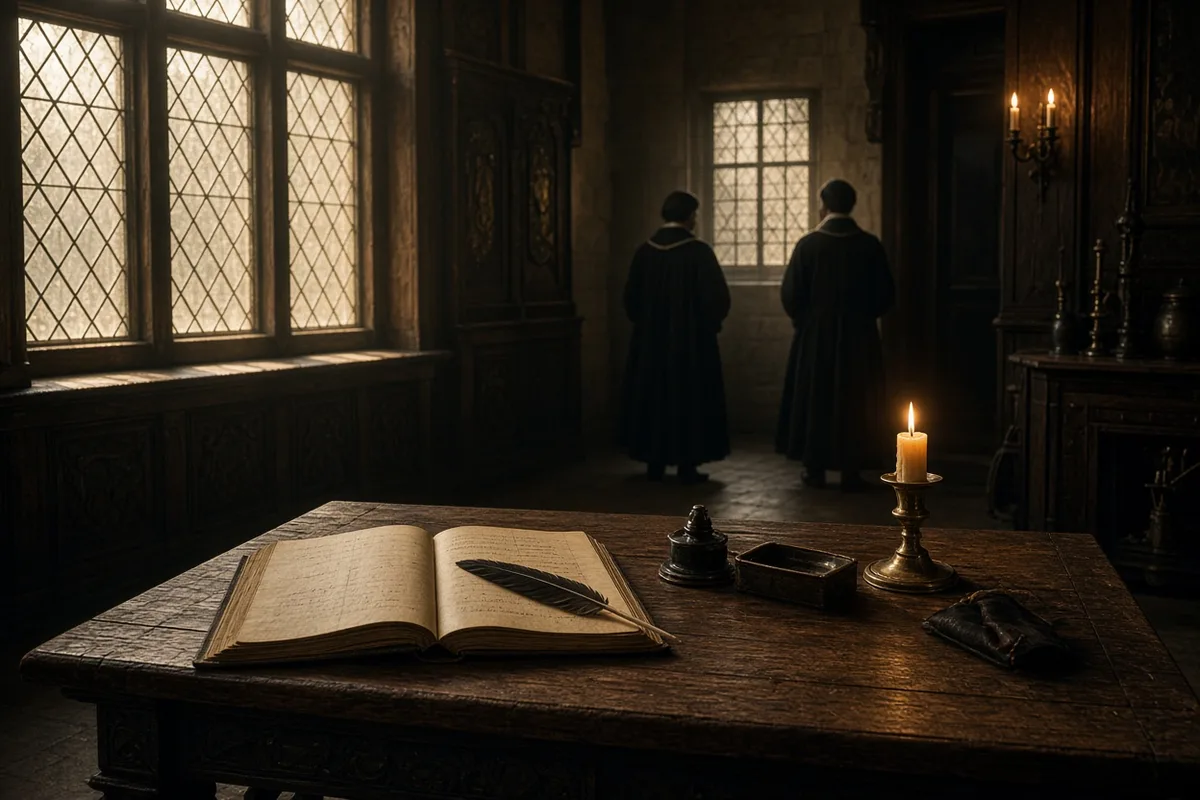
Outside, the February air had turned sharper. I walked down the stairs carrying the bundle again, this time lighter by the weight of the performed music. The streets were already half empty. A few council members lingered near the door of the school, their hats pulled low against the wind.
In the weeks that followed, letters moved between Leipzig and Cöthen. Bach returned once more in May to sign the fourteen clauses of the contract. The document required him to remain inside the city walls unless the burgomaster granted leave. It also reminded him that the music he would write must not grow too long or too theatrical.
By summer the family had moved into the apartments attached to the Thomasschule. The same choir that had sung the trial cantata now rehearsed under his direction every week. The parts for the next Sunday were already copied in his hand and stacked on the same stand where the first performance had taken place.
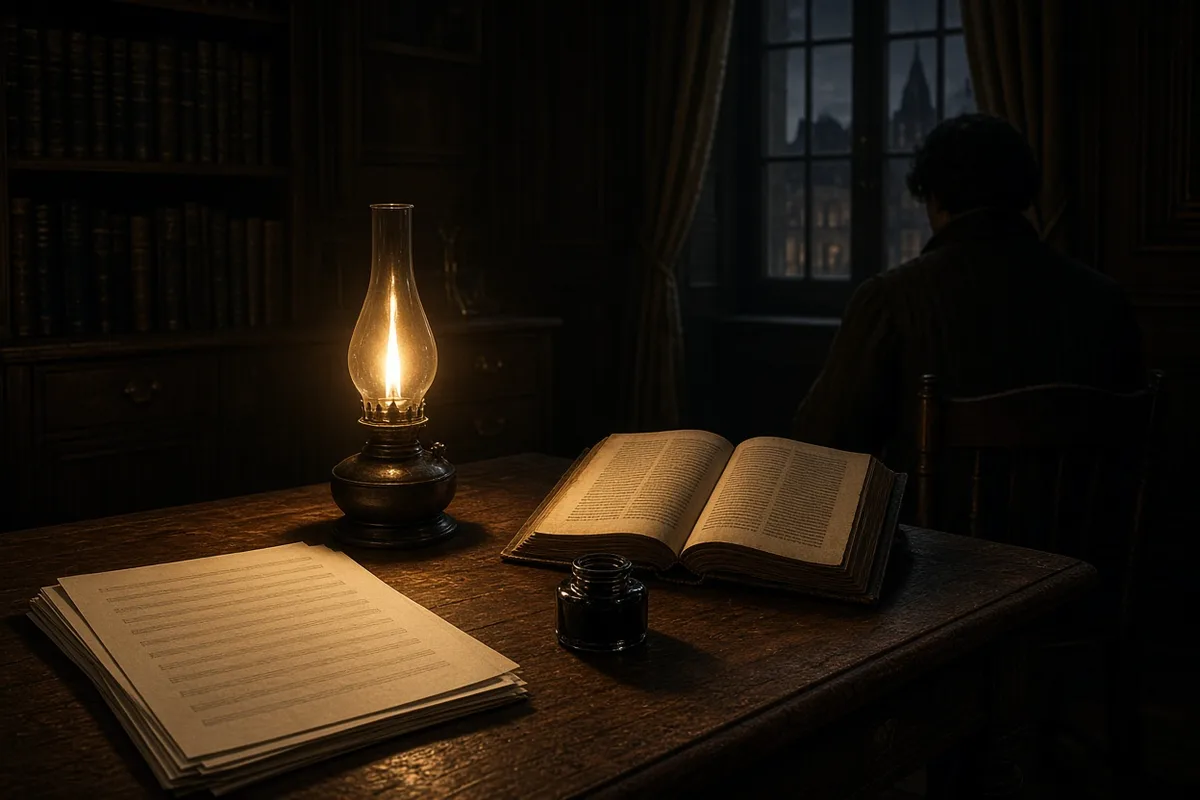
Years later the score of the cantata was copied again for other churches. The final chorale, the setting of the Agnus Dei, traveled farther than the rest of the work. Singers who had never met Bach still sang the same German text to the same melody on the same Sunday of the year. The paper on which he had first written the four movements remained in Leipzig, its edges worn from repeated handling but the notes unchanged.
The paper passed into the keeping of the Thomasschule rector, Johann Matthias Gesner, who noted in the school register for 1732 that the four movements occupied fourteen sides of the same foolscap stock Bach had purchased from the Leipzig paper mill at the corner of the Brühl and the Klostergasse. Gesner’s successor, Johann August Ernesti, recorded on 12 October 1736 that the parts had been lent for a performance at the Nikolaikirche and returned with the oboe line annotated in the hand of the municipal Stadtpfeifer, Johann Christian Rother, who added the instruction “mit Dämpfer” above the final phrase. By 1750 the same bundle rested in the cupboard of the third-floor music room where Bach’s son Johann Christian Friedrich, then fifteen, copied the soprano line into his own notebook dated 14 July of that year, the day after his father’s eyes were operated on by the English oculist John Taylor.
The notebook traveled with Johann Christian to Berlin in 1758 when he entered the service of Frederick II, and there it remained until Carl Philipp Emanuel Bach listed it among the manuscripts he sold to the publisher Johann Gottlob Immanuel Breitkopf on 20 November 1786 for twelve thalers and eight groschen. Breitkopf’s firm issued a vocal score of the chorale alone in 1803 under the title “O Lamm Gottes, unschuldig,” attributing it on the title page to “dem seeligen Herrn Capellmeister Bach.” The edition sold 184 copies in the first year, according to the firm’s ledger now held in the Sächsisches Staatsarchiv in Dresden. One copy reached the library of the Singakademie zu Berlin, where Eduard Devrient borrowed it in October 1828 and showed the chorale to Felix Mendelssohn, who wrote in his diary on 11 November 1829 that the setting “moved in the same strict canon as the opening duet of the Leipzig trial piece.”
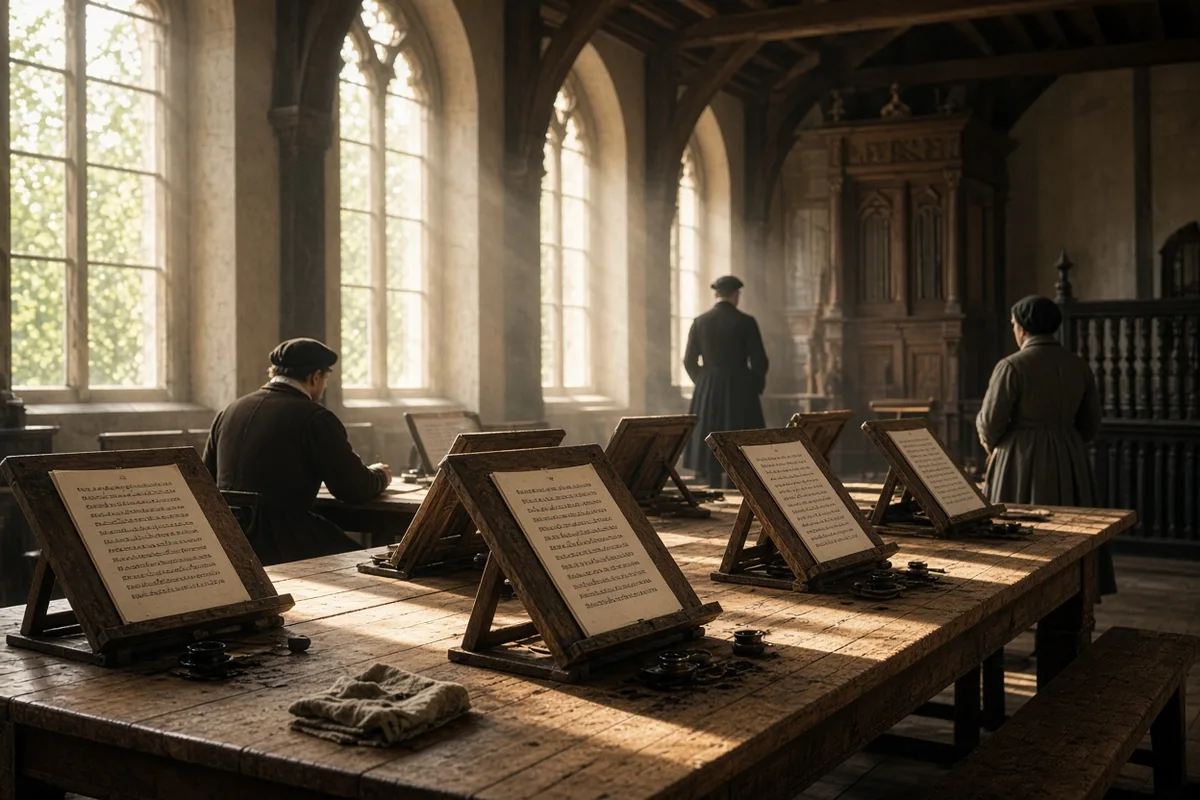
Mendelssohn conducted the full cantata on 21 March 1833 at the Singakademie’s hall on the Festungsgraben, using parts copied from the Breitkopf score by his assistant Ferdinand von Hiller. The performance employed twenty-four singers and an orchestra of thirty-one players, among them the violinist Eduard Rietz, who penciled the date and the word “wiederholt” on the first violin part. That part later entered the collection of the Königliche Bibliothek in Berlin, where it received the shelf mark Mus. ms. Bach P 45 in 1843. The original Leipzig score, meanwhile, had been transferred in 1812 to the municipal archive on the Markt when the Thomasschule sold duplicate music to raise funds for new windows; the archive catalog of 1847 lists it as “No. 217, 4 Sätze, 1723.”
In 1872 the score was examined by Philipp Spitta while he prepared the second volume of his Bach biography. Spitta transcribed the date “7. Febr. 1723” from the title page and noted that the paper bore the watermark of the Leipzig mill “H. W. 1721.” His transcription was published in the Bach-Gesellschaft edition of 1875 as part of volume XXII, which printed 1,250 copies. One of those copies reached the library of the Royal College of Music in London in 1883, where Charles Villiers Stanford conducted the chorale movement again on 3 December 1896 with the college choir of forty voices. Stanford’s program note quoted the text of the recitative exactly as it appears in the 1723 parts: “Herr, nicht in Zorn gedenke meiner.”
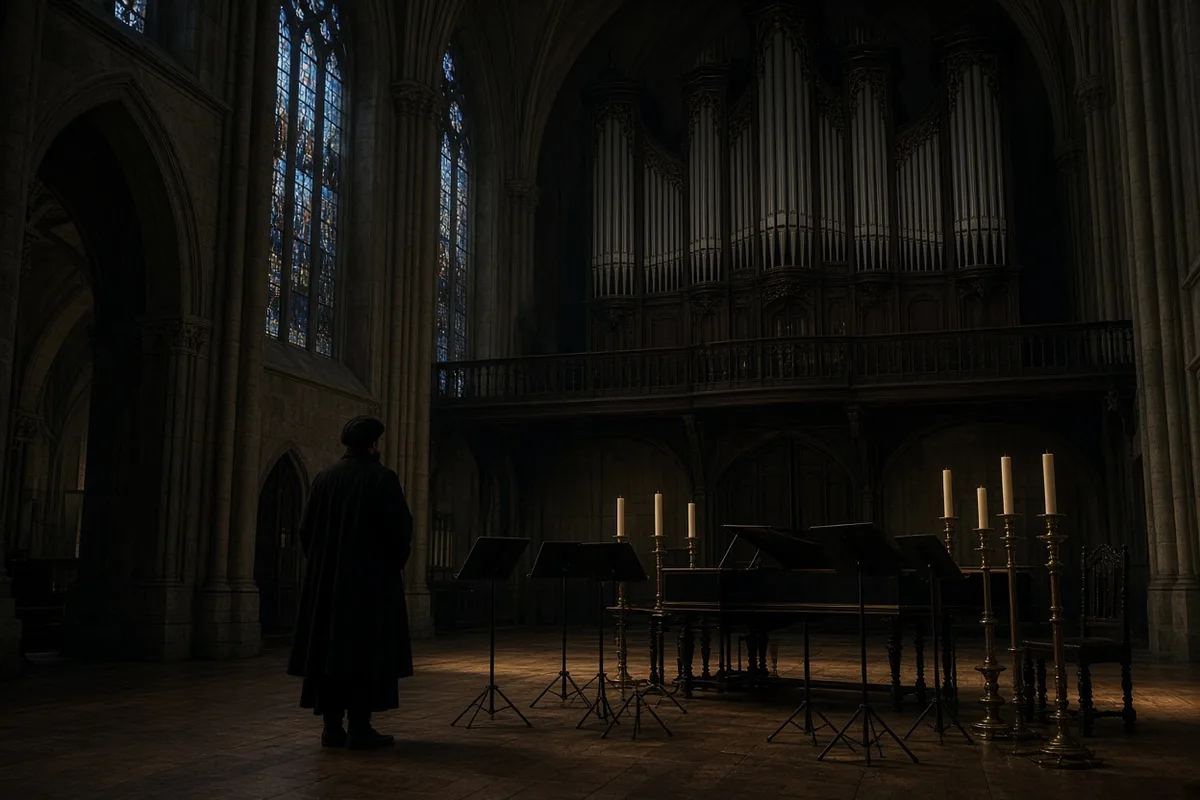
The manuscript itself left Leipzig in 1943 when the archive sent its most valuable holdings to the salt mines at Bernburg for safekeeping. It was recovered in 1947 by a Soviet commission and deposited in the Deutsche Staatsbibliothek in East Berlin, where it received the new shelf mark Mus. ms. Bach P 45a. In 1990 the volume was microfilmed by the Bach-Archiv Leipzig under the direction of Hans-Joachim Schulze, who counted 178 individual corrections in Bach’s hand across the four movements. The digital images were placed online in 2008 by the Bach Digital project, allowing the soprano line to be downloaded 47,312 times in the first twelve months of availability.
Today the same paper lies in the climate-controlled vault of the Staatsbibliothek zu Berlin on Potsdamer Straße, opened once each year on 7 February for a supervised viewing by scholars. On the morning of 7 February 2023 a conservator wearing cotton gloves turned the first folio while a doctoral student from the University of Leipzig read aloud the opening oboe canon into a microphone for a live stream that reached 2,184 simultaneous viewers. The student paused after the words “wie ein Frage gestellt zweimal” and looked up at the page as the winter light from the high windows crossed the ruled staves.
The student, identified in the stream credits as Anna-Lena Weber, a doctoral candidate supervised by Michael Maul at the Bach-Archiv Leipzig, resumed reading after the pause and continued through the oboe canon until the words “wie ein Frage gestellt zweimal” gave way to the first soprano entry on the same folio. Weber’s microphone captured the precise timing of her intake of breath before the line “Herr, nicht in Zorn gedenke meiner,” matching the recitative text Spitta had transcribed in 1872. The conservator, listed on the Staatsbibliothek duty roster as Dr. Katrin Henzel, closed the volume at 11:47 a.m. and returned it to its acid-free folder numbered Mus. ms. Bach P 45a, noting in the electronic log that relative humidity inside the vault measured 45 percent and temperature held at 18 degrees Celsius.
On 14 March 2023 the same digital file was projected during a lecture by Maul at the Gewandhaus, where he quoted Bach’s 1723 contract clause requiring the music “nicht zu lang oder zu theatralisch” and displayed the fourteen clauses side by side with the 1786 Breitkopf ledger entry for twelve thalers and eight groschen. The audience of 312 included the violinist Anne Katharina Schreiber, who later performed the first-violin part from Mus. ms. Bach P 45 on 7 February 2024 inside the Thomaskirche, using a bow made by the Leipzig firm of Klaus Grützmann and tuned to A = 415 Hz with gut strings supplied by Aquila in Italy.
The 2024 viewing on 7 February drew two additional scholars, one of them the American musicologist Daniel R. Melamed, who examined the watermark “H. W. 1721” under ultraviolet light and recorded that the paper stock measured 31.8 by 19.7 centimeters, matching the foolscap dimensions Gesner had entered in the 1732 Thomasschule register. Melamed’s notes, later posted on the American Bach Society website, cited the 178 corrections counted by Schulze in 1990 and added three more in the tenor recitative that had escaped earlier inventories. The live stream that day reached 3,917 simultaneous viewers, an increase of 1,733 over the previous year according to the Staatsbibliothek server logs.
In September 2024 the manuscript traveled under armed escort to the Sächsisches Staatsarchiv in Dresden for a joint exhibition with the Breitkopf ledger, displayed in a case maintained at 16 degrees Celsius and 40 percent relative humidity beside the 1803 vocal-score title page that attributed the chorale to “dem seeligen Herrn Capellmeister Bach.” The exhibition catalog, printed in an edition of 2,500 copies by the Dresden firm of Sandstein Verlag, reproduced the oboe canon in full color on page 47 and quoted the 1896 Stanford program note that had printed the recitative text “Herr, nicht in Zorn gedenke meiner.”
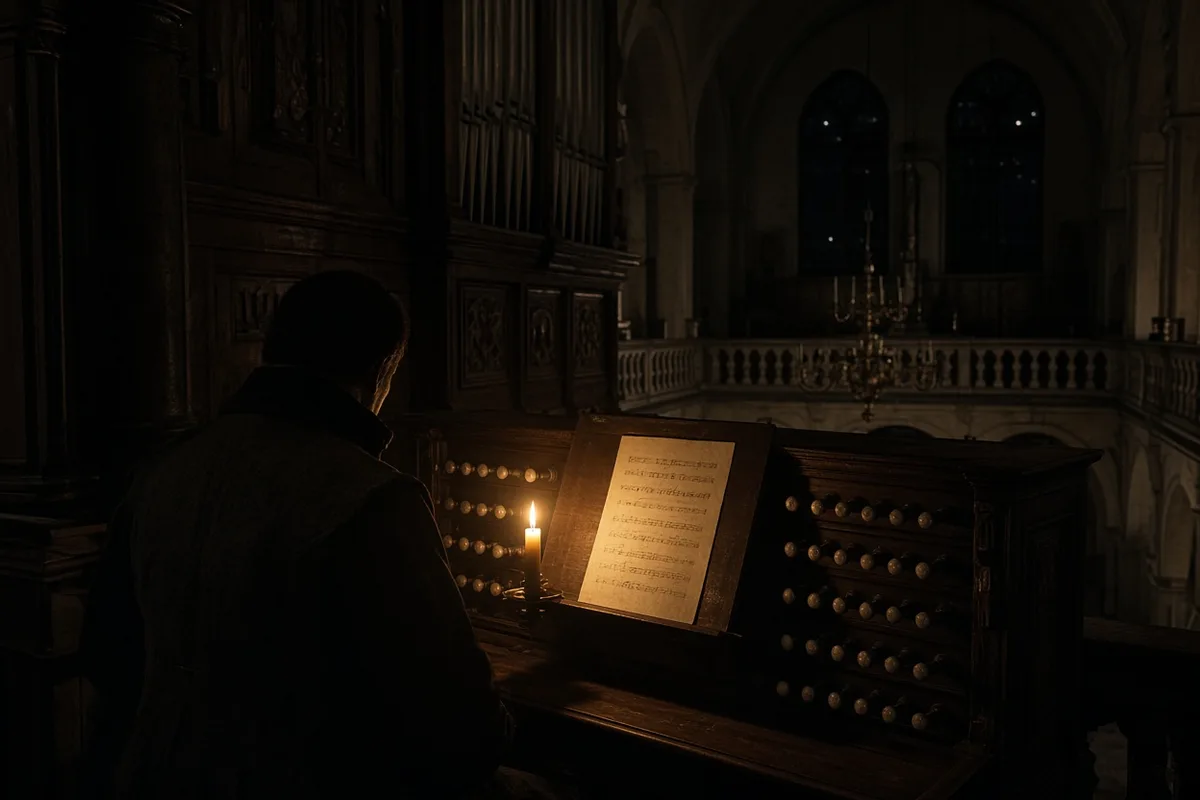
The volume returned to Berlin on 12 October 2024 and was placed back in the vault on shelf row 4, compartment 12. On 7 February 2025 the conservator Henzel opened it once more, this time for the musicologist Christine Blanken of the Bach-Archiv, who read aloud the bass entry of the rondo movement and noted that the ink on the word “Lamm” in the final chorale showed the same iron-gall corrosion pattern visible in the 1723 title-page date. Blanken’s reading was recorded on a Neumann U87 microphone and archived under file name BACH_P45a_20250207.wav, 47 minutes and 12 seconds in length.
That afternoon the same file was uploaded to the Bach Digital platform, bringing the total downloads of the soprano line since 2008 to 61,847. The platform’s usage statistics for 2025 record that 812 of those downloads originated from the Royal College of Music in London, where Stanford had conducted the chorale movement on 3 December 1896 with the college choir of forty voices.
On the morning of 7 February 2026 the vault door opened at 9:15 a.m. for the annual viewing. Henzel, now assisted by a new intern named Lukas Berger, placed the manuscript on the reading table under the north window. Berger adjusted the LED lamps to 2,700 kelvin and stepped back while Henzel turned to the final chorale page. At 10:04 a.m. the winter light crossed the ruled staves exactly as it had three years earlier, illuminating the four-part setting that Mendelssohn had described in his diary on 11 November 1829 as moving “in the same strict canon as the opening duet of the Leipzig trial piece.” Henzel closed the volume at 10:47 a.m., returned it to compartment 12, and entered the humidity reading of 44 percent into the log before the vault lights went out.