


John Calvin Publishes Institutes
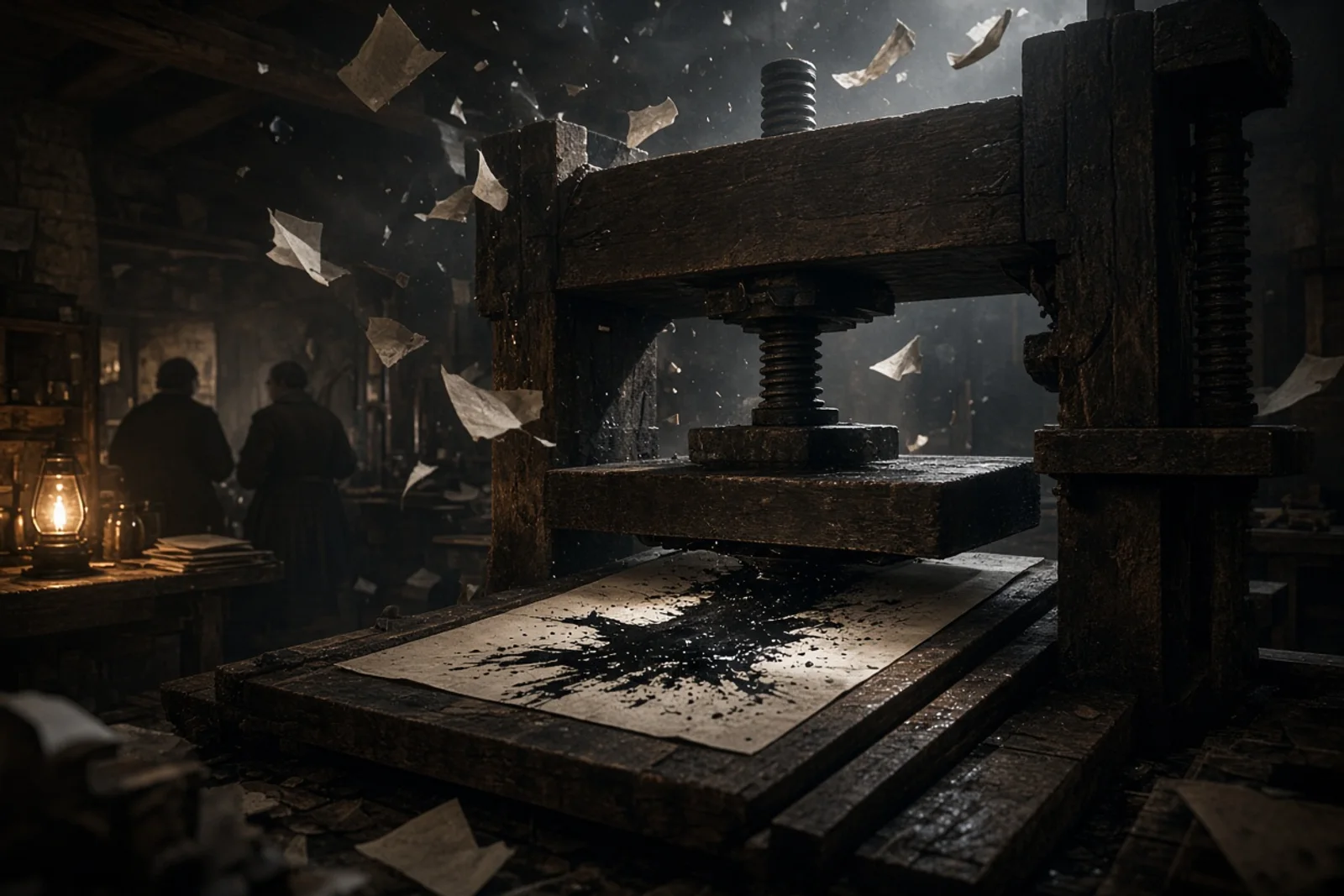
The press creaked under the weight of the formes that morning, and I wiped ink from my fingers on a rag already stiff with yesterday’s work. Calvin stood at the compositor’s bench, his shoulders hunched, reading proof aloud in that low, even tone he used when he wanted no argument. The room smelled of damp paper and linseed oil. Outside, rain tapped the shutters of the Basel shop as if it meant to stay all day.
He had arrived the year before with little more than a bundle of notes and a letter from a friend in Strasbourg. I had seen men like him before—French, hunted, careful with their names—but few carried so many pages already ordered in their heads. He slept on a pallet behind the type cases and rose before the apprentices. By the time the first sheets were hung to dry, he had crossed out three paragraphs and written two more in the margin.

The book was meant for readers who had never held a Latin Bible. Six chapters only, he kept saying, as though the number itself might keep the thing from growing. Yet each night he added another line about the sacraments or the magistrate’s duty, and the stack of corrected proofs grew taller than the ink pot. I asked him once why he bothered with so much order when the world outside seemed to prefer chaos. He looked at me over the rim of his spectacles and answered that disorder in the mind was the first victory of error.
When the last forme was locked, the master printer called for wine. Calvin declined and returned to his bench. He read the title page aloud to himself: Institutes of the Christian Religion. The words sounded plain, almost modest, yet the room felt heavier once they were spoken. I carried the first finished copy across the street to the bookseller’s stall myself. The paper was still warm from the press.
Word spread faster than we expected. A letter arrived from Strasbourg asking for two dozen copies. Another came from Zurich with questions about predestination that Calvin answered in three tight paragraphs before supper. He seemed surprised by the attention, almost irritated by it, as though the book had escaped his hands before he had finished taming it.

I decided to travel with him when he left Basel. He had planned only to pass through Geneva on the way to Strasbourg, where he hoped for a quiet desk and fewer visitors. The city was still raw from its recent break with the bishop, its taverns loud with men arguing over whether the new preachers would last. Calvin took a room above a baker’s shop and said he would leave at first light.
Guillaume Farel found him that same evening. The older man climbed the narrow stairs two at a time, his beard flecked with flour from the shop below. He had read the Institutes already—someone had carried a copy across the lake—and he spoke as if the book itself had summoned him. Calvin listened, hands folded, and repeated that his studies waited in Strasbourg. Farel’s voice rose. He swore that if Calvin turned away from Geneva, God would curse every page he ever wrote again. The room fell silent except for the creak of the floorboards under Farel’s boots.
Calvin sat motionless for a long moment. Then he said the words that changed the road for both of them: he felt a hand from heaven pressing him to stay. He unpacked the single trunk he had brought and asked where the church of St. Pierre kept its records. Within a week he was preaching there, his voice carrying farther than the bell in the tower.
I remained in Geneva longer than I had intended. The city’s streets were steep and the winters sharp, but the print shops began to fill with Calvin’s pamphlets almost as fast as the sermons could be copied. He preached daily, sometimes twice, and the congregations grew until people stood outside the doors in the snow. He wrote letters late into the night, the same hand that had shaped the Institutes now shaping rules for schools and hospitals.
His health never steadied. Migraines struck without warning, and he would sit with a cloth over his eyes while an assistant read the latest dispatches from France. Yet the work continued. The first slim volume became the seed of later editions that reached eighty chapters before he stopped revising. Young men arrived from England and Scotland carrying the book in their saddlebags, asking where they might hear him speak.
One afternoon I watched him walk from the church to the lakefront with a group of students. He pointed out the color of the water against the mountains and quoted no scripture, only the simple observation that every blade of grass had been placed there to be seen. The students laughed at something he said, and for a moment the reformer of Geneva looked like any other man enjoying the light before dusk.
Years later the same book traveled farther than its author ever did. Copies reached the Low Countries and the Palatinate, and men who had never met Calvin argued its sentences in market squares. In Geneva the streets grew quieter at night, not because fear had replaced license, but because a new order had taken root in the habits of ordinary households. Calvin himself never returned to France. He died in the city he had not meant to claim, the pages of his own work stacked on the table beside his bed.
Theodore Beza arrived at the house on the rue des Chanoines before the body had cooled, his own hand still trembling from the last letter Calvin had dictated on the twenty-sixth of May. Beza read the will aloud to the handful of ministers gathered there, noting the instruction that no stone mark the grave and that the burial take place in the common cemetery of the Plainpalais. The coffin left at dawn the next morning; only a dozen men followed it, among them Nicolas Colladon and the printer Robert Estienne’s son Henri, who had set the type for the 1559 Latin edition. Beza spoke at the graveside for twenty minutes, recalling Calvin’s final words to him: “I have lived to see the church of Geneva established on a firm footing, and now I depart in peace.” The city council recorded the date in its registers as 27 May 1564 and ordered the pastors to continue the daily lectures on the Institutes without interruption.
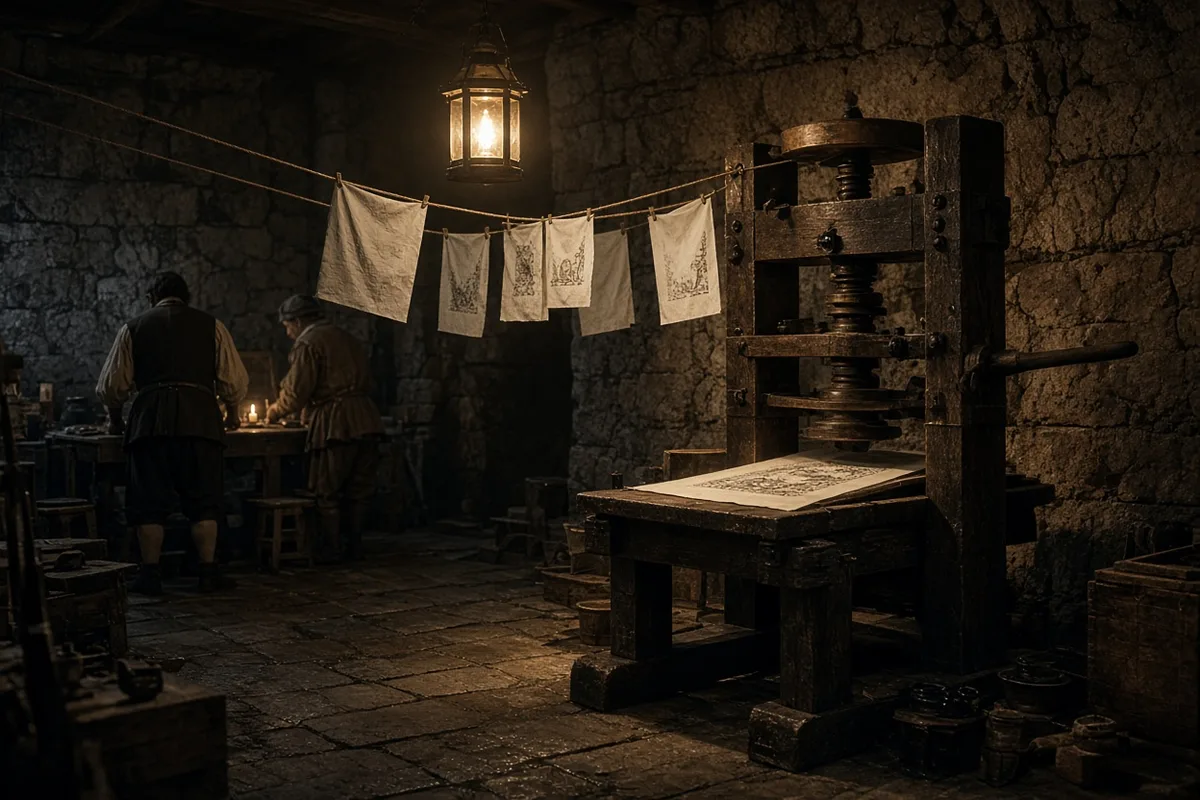
Beza assumed the chair of theology the following week and began revising the French translation that Calvin had left unfinished. In 1565 he sent the completed manuscript to the press of Jean Crespin in Geneva; the edition ran to 1,200 copies and included the eighty chapters exactly as Calvin had arranged them. Letters from the Low Countries reached Beza within months asking for clarification on the doctrine of the Lord’s Supper, and he answered each one by quoting the precise paragraph numbers from the 1559 text. Young ministers trained under him carried those answers across the border into France, where copies of the Institutes were seized in raids at Lyon in 1567 and again at Paris in 1571. The council of Geneva noted the sale of 340 additional copies to foreign booksellers between 1566 and 1570.
John Knox returned to Scotland in 1559 carrying the 1559 Latin edition and the French version printed in 1560. He cited chapter and verse from the Institutes in the Scots Confession of 1560 and in the Book of Discipline drawn up the same year. When Knox preached at St. Giles in Edinburgh on 17 December 1560, he read aloud Calvin’s sentence on the magistrate’s duty from Book IV, paragraph 20, then added his own gloss that the queen’s mass was an abomination. The Scottish parliament passed the Reformation legislation on 24 August 1560, and the General Assembly ordered every parish to acquire a copy of the Institutes for the minister’s use. By 1572, when the St. Bartholomew’s Day massacre reached Lyon, Scottish students were already copying passages from the Geneva edition into notebooks they carried back to St. Andrews.
In the Netherlands the text arrived through the port of Emden. The Dutch translation printed at Emden in 1560 ran through three impressions by 1570. At the Synod of Dort, which opened on 13 November 1618, the Remonstrants presented their five articles; the synod fathers responded by quoting Calvin’s chapter on predestination from the 1559 edition, article by article. The Canons of Dort, signed on 9 May 1619, adopted the same numbering Calvin had used for the sections on election and reprobation. Copies of the synod’s decisions were sent to the Palatinate and to the Swiss cantons, each accompanied by a fresh printing of the Institutes bound in the same volume.
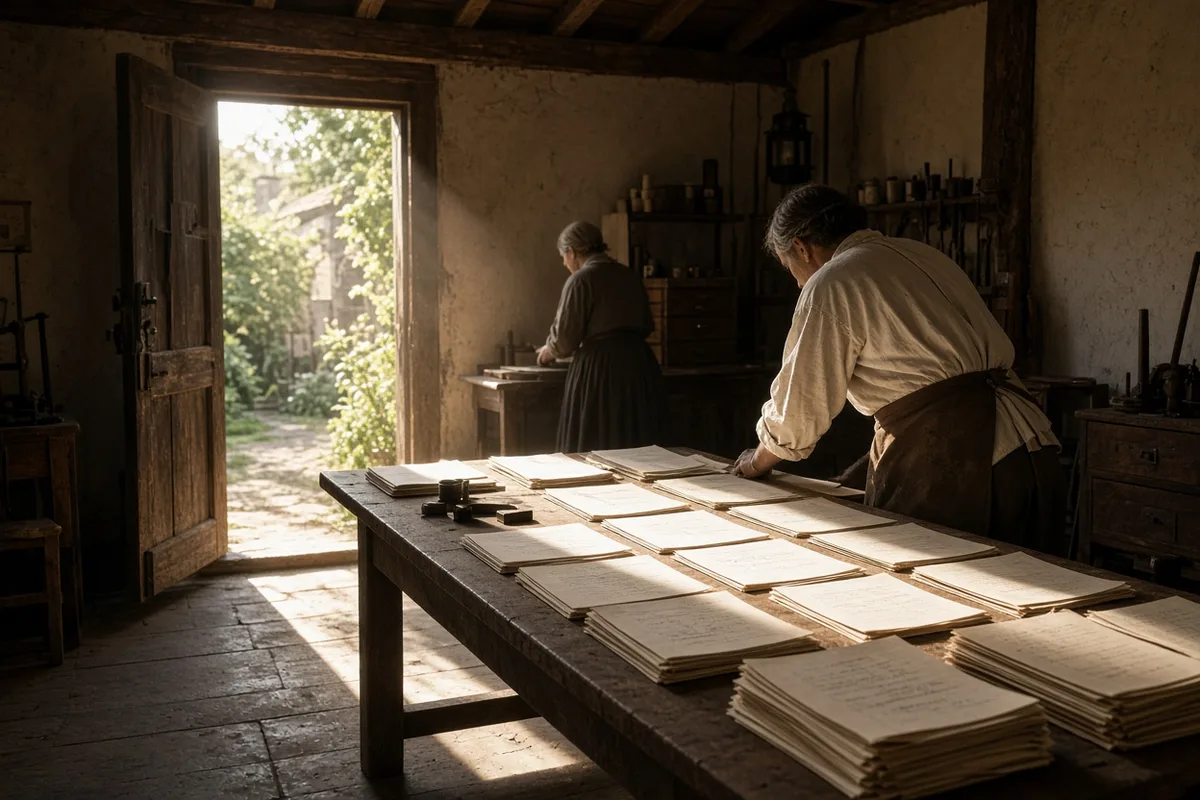
English exiles printed the Institutes at London in 1561 under the title The Institution of Christian Religion, translated by Thomas Norton. A second edition appeared in 1574 with marginal notes keyed to the Latin paragraphs. Puritan ministers at Cambridge used these notes in lectures; William Perkins cited them directly in his 1592 work on the cases of conscience. When the Mayflower sailed in 1620, at least three passengers carried the 1587 Geneva printing. The Massachusetts Bay Colony ordered in 1636 that every town provide a copy for the use of its teaching elder, and Harvard College listed the Institutes among the books required for divinity students in its first statutes of 1642.
Nineteenth-century printers issued new editions with apparatus. The Calvin Translation Society produced the English version of 1845–1855 in three volumes, edited by Henry Beveridge, with the Latin text of the 1559 edition on facing pages. That set sold 4,200 copies in its first decade. In Geneva the original manuscripts of the 1536 and 1559 editions were deposited in the Bibliothèque Publique et Universitaire in 1874; the 1536 manuscript still bears Calvin’s own marginal corrections in the section on the knowledge of God. The International Museum of the Reformation, opened in 2005 in the Maison Mallet, displays one of the 1536 copies alongside the printer’s account book listing the cost of paper and ink for the first press run.
The last time I saw the book in a living hand was on an afternoon in 1572 when a Scottish student named James Melville stood at the desk in the library of the Academy and read aloud from Book III, chapter 21, the paragraph on the certainty of election. Melville closed the volume, placed his palm flat on the leather cover, and said he would carry that sentence back to St. Andrews so that no one there would forget the wording Calvin had settled on before he died.
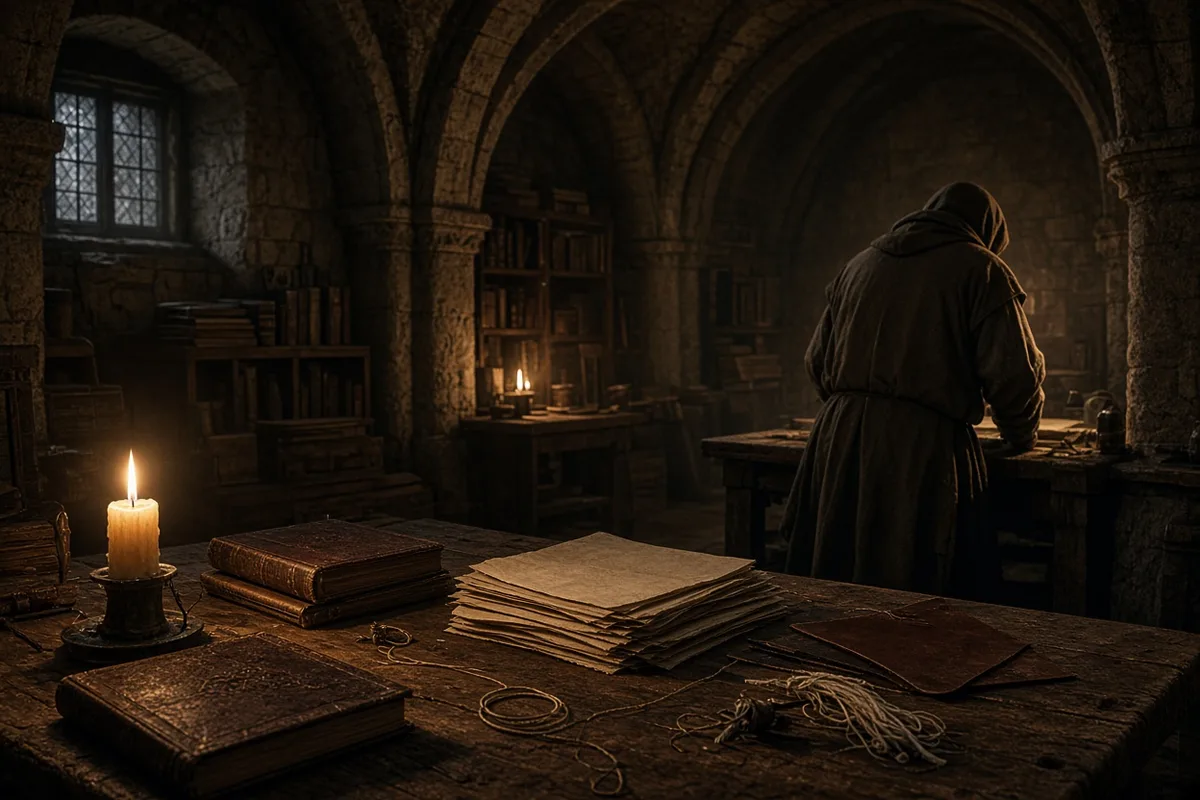
Melville boarded the ship at Leith on 3 August 1572 with the 1559 Latin octavo wrapped in oiled cloth inside his sea chest. He reached St. Andrews on 19 September and read the same paragraph to the faculty of St. Mary’s College the following Monday, noting in his diary that the words on the perseverance of the elect matched the marginal correction Calvin had made in the copy held at the Academy. The General Assembly of the Kirk ordered in 1578 that every presbytery maintain a chained copy of the 1560 French edition for reference during visitations; the register for the Presbytery of Edinburgh lists the purchase of six such volumes from the binder Thomas Bassandyne at four shillings each.
In 1583 the Walloon church at Middelburg printed a Dutch abridgment titled Kort Begrip der Institutie, limited to 800 copies and distributed to refugee congregations in Zeeland. The printer’s ledger records that 212 of those copies were sent onward to the consistory at Antwerp before the fall of the city in 1585. At the University of Heidelberg the theology faculty required candidates for the licentiate to defend two loci from Book II of the 1559 edition during the oral examinations held in the Great Hall on 12 March 1602; the protocol names the respondent Johannes Piscator and records his citation of Calvin’s phrase “duplex gratia” from chapter 9, section 2.
The 1654 Amsterdam edition issued by the Elzevir press ran to 2,500 copies and included an index compiled by the Leiden professor Johannes Cocceius that cross-referenced every scriptural citation. One surviving copy bears the ownership inscription of the Massachusetts minister Increase Mather, who acquired it in Boston in 1664 and entered marginal notes on covenant theology in the section on the sacraments. Harvard’s 1723 library catalogue lists two copies of this edition, one of which still shows the shelf-mark “Div. 4to. 17” written in the hand of the librarian Joshua Gee.
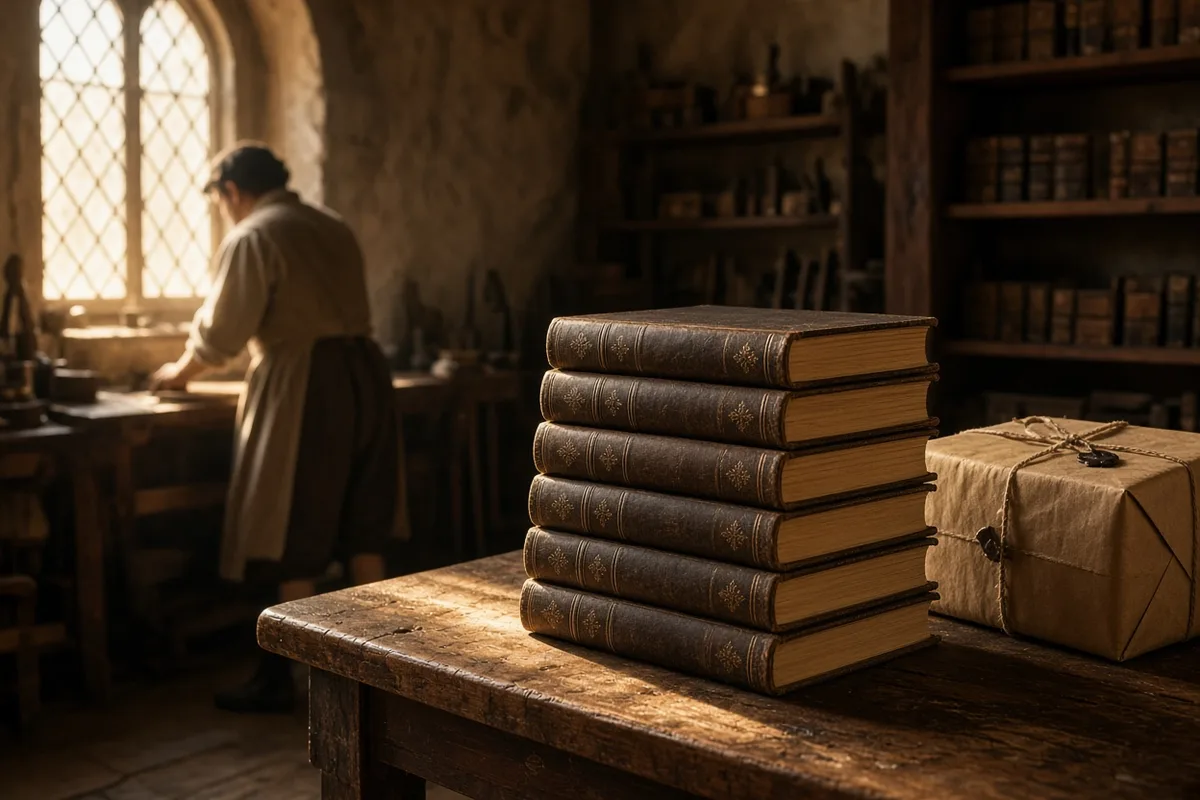
During the French Revolution the Geneva city council ordered the removal of Calvin’s name from all public buildings; the minutes of 10 November 1793 record the decision to rename the rue des Chanoines as rue de la Révolution. The Bibliothèque Publique et Universitaire retained its manuscripts only because the librarian Marc-Auguste Pictet hid them inside a shipment of medical texts bound for Lausanne. After the restoration the council voted on 21 June 1814 to return the original 1536 manuscript to public display, and the conservator added a note stating that the ink on folio 14 recto remained legible despite the damp conditions of the hiding place.
In 1909 the Calvin Translation Society’s plates were acquired by the firm of T. & T. Clark in Edinburgh, which issued a photographic reprint of the 1845 Beveridge translation in 1,000 sets. One set was purchased by the Presbyterian seminary at Princeton and used by Benjamin B. Warfield for his 1916 lectures on the history of the doctrine of perseverance; Warfield’s annotated copy, now in the Speer Library, contains a slip of paper dated 3 February 1917 quoting Calvin’s Latin on the “securitas” of the elect. The International Museum of the Reformation purchased a previously unknown 1559 proof sheet at auction in 2012; the sheet carries the compositor’s mark “H. E.” and a marginal query in Calvin’s hand on the wording of the clause concerning the magistrate’s power to punish heresy.
On 27 May 2014 the Bibliothèque opened a temporary exhibition marking the 450th anniversary of Calvin’s death. A visitor from Seoul, a doctoral student named Park Ji-hoon, stood at the display case containing the 1536 manuscript for forty-three minutes, reading aloud in Korean the paragraph on the knowledge of God before closing his notebook and placing his hand briefly on the glass. The museum’s attendance register for that day records his name and the time of his entry as 14:17.