


John Eliot Prints Algonquian Bible
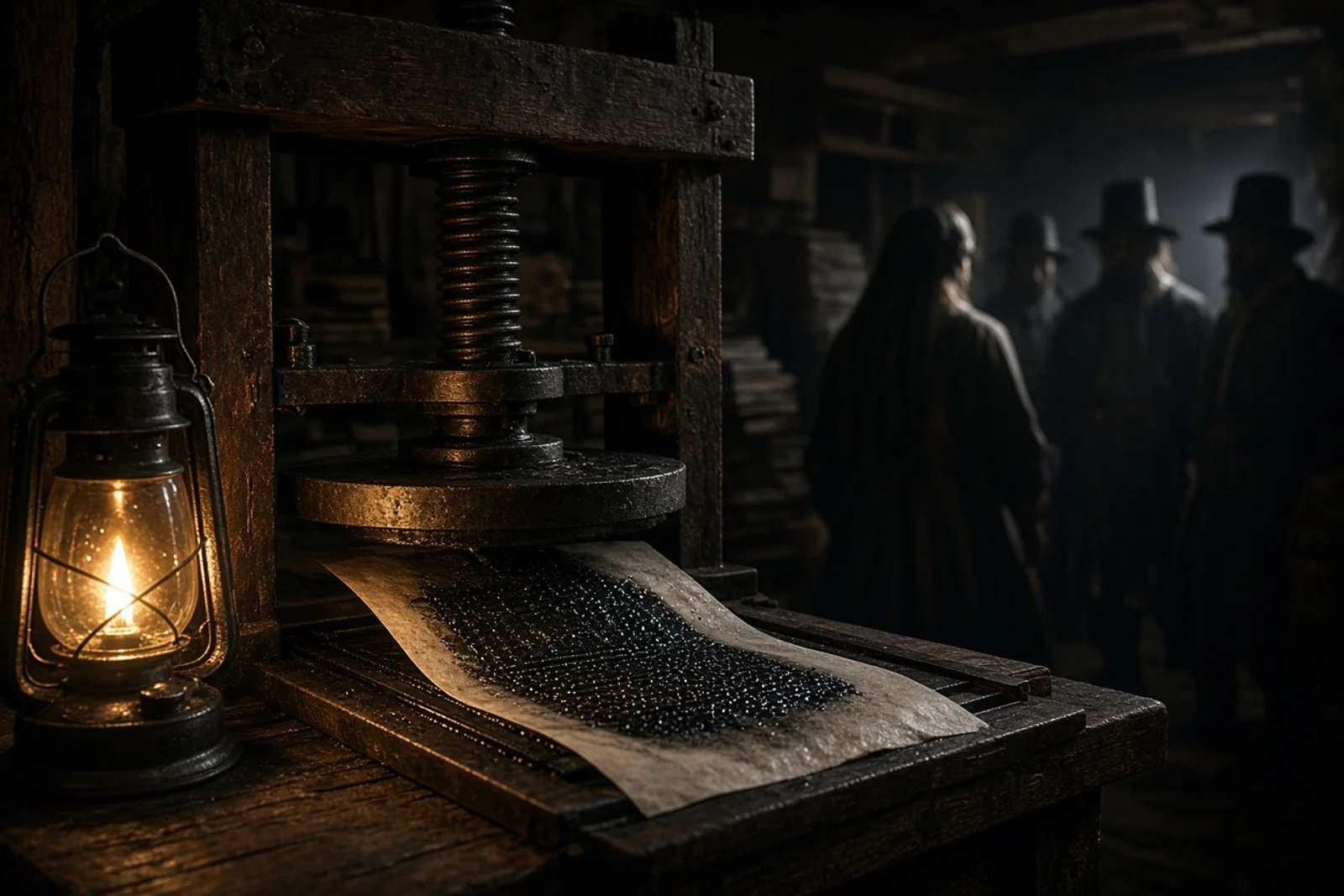
The press creaked under my hands again, the same stubborn oak bar I had leaned on since dawn. Samuel Green stood at the far bench, wiping ink from his knuckles with a rag that had long since turned black. The new type lay sorted in its cases, sent from London with the young man who still slept upstairs. We had no time for his rest. The sheets had to move.
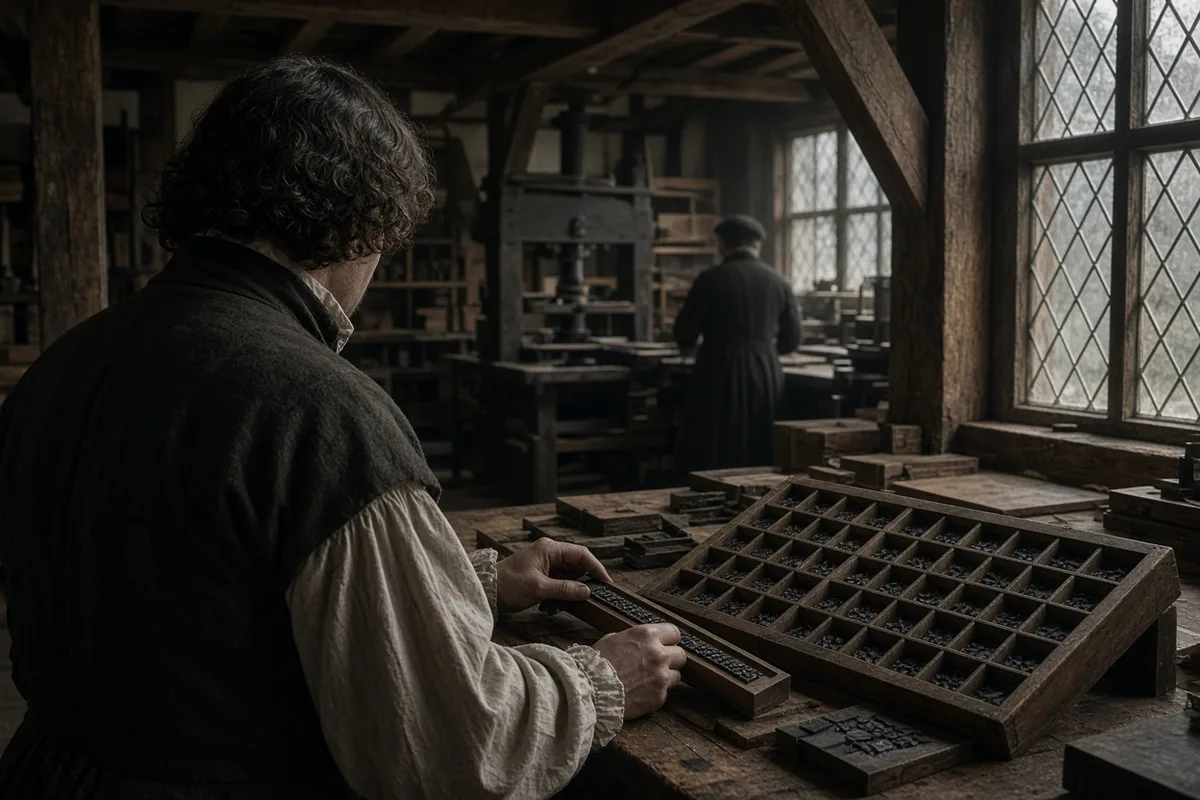
James Printer bent over the composing stick, his fingers moving quicker than any of us expected. He set the Algonquian letters one by one, the strange clusters of consonants that Eliot had hammered into shape over years. The room smelled of damp paper and linseed. Outside, the Charles moved slow under the September light, carrying the same mist it always did this time of year.

Eliot arrived before noon, cloak folded over one arm. He carried no book this time, only a single sheet covered in his own hand. He laid it beside Green without speaking. Green read the lines, nodded once, and passed the sheet to James. The Indian convert studied it, then looked up at Eliot.
“You will want the verse numbers set smaller,” James said.
Eliot smiled at that, the quick, tired smile of a man who had already spent ten years inside the language. He left without waiting for the proof. We worked the rest of the day in near silence, the only sounds the thunk of the type and the drip of water from the cooling vat.

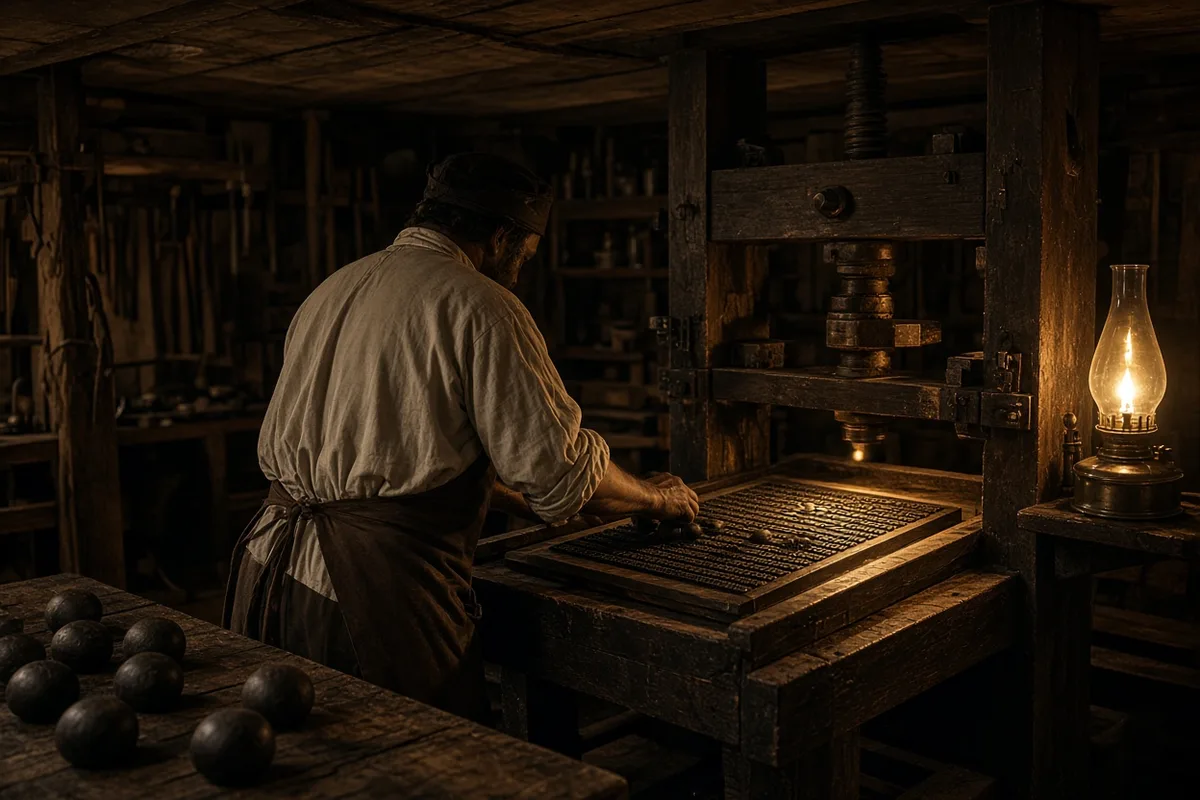
By the second week the second press arrived. It came crated like a piece of artillery, and the four of us needed most of a morning to wrestle it upright. Green walked around it twice, testing the joints. He said nothing, but his face had the same look I had seen when we first opened the cases of type. We now had two wooden presses and three men who knew how to run them. The young printer from London watched everything and said little.
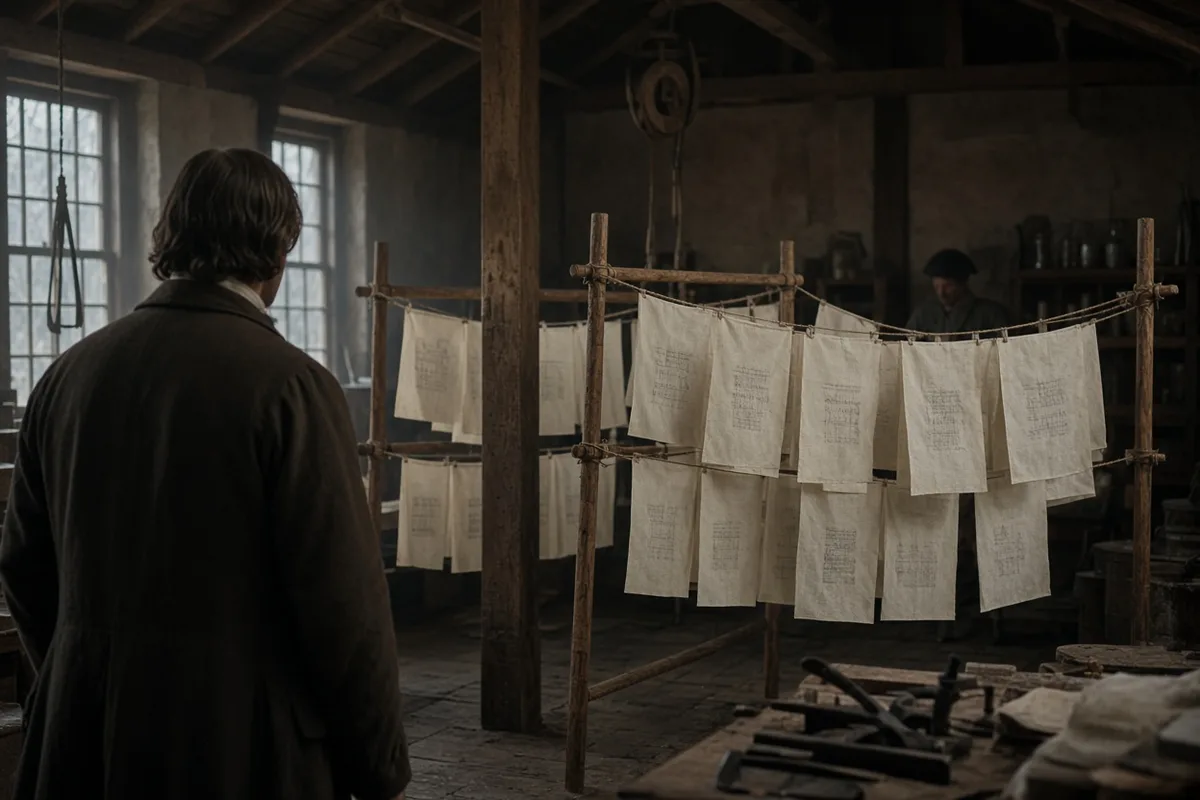
The paper stack grew shorter each week. We printed one side, hung the sheets on lines strung across the shop, then turned them and printed the other. The work moved at the pace of one form a day when the weather held. Rain slowed us. Cold slowed us more. Eliot came every few days, always at the same hour, and stood with his hands behind his back while we pulled the first proof of a new gathering.
James Printer corrected most of the errors before Green even saw them. He had learned the press as fast as he had learned English. When the type for the word “kummogkodonattoottummooetiteanongannunnonmash” had to be set twice because the first form was too tight, James reset it without complaint. The word filled nearly a whole line. Green muttered that no English reader would ever need such a thing, then went back to locking the chase.

Winter came early. The ink thickened in the cold and had to be warmed on the stove before each pull. Eliot brought extra wood one morning and stayed to feed the fire while we worked. He asked James about a particular phrase in the Psalms, and the two of them stood at the window turning the words over until the light failed. I kept the press moving. The rhythm of the bar and the thud of the platen kept the room from going completely still.
By spring the first five books were finished and drying in quires. Green counted the stacks twice. Fifteen hundred copies meant fifteen hundred sets of sheets, and we had barely cleared a quarter of them. The Society in London had paid for the paper and the extra press, but they could not send more hands. We worked longer days.

Eliot brought the dedication copy in June. The page carried King Charles’s name in large letters at the top. Green read it aloud once, then set it aside for the final forme. No one in the shop spoke of the king afterward. We had our own work. The sheets for the New Testament began to move through the press that same week.
James Printer’s hands were always the last to leave the type. He would stand at the case after the rest of us had gone for supper, picking stray letters from the floor and returning them to their compartments. I once asked him why he stayed so late. He said the letters had to be ready for the next morning or Eliot would lose another day. That was all.
The final sheet came off the press on a Tuesday afternoon in 1663. Green pulled it himself. He held it to the light, checked the register, then laid it on the table without a word. James walked over and touched the corner with one finger. The ink was still wet enough to smear if anyone breathed too hard. We left it there to dry and went outside into the yard. The air felt thin after the closed room.
Eliot arrived the next morning with two Indians from Natick. They carried the finished quires away in a cart. Green watched them go down the road toward the river. He turned back to the shop and began breaking down the first press. The second one stayed standing. We would need it again for other work, but the Bible was done.
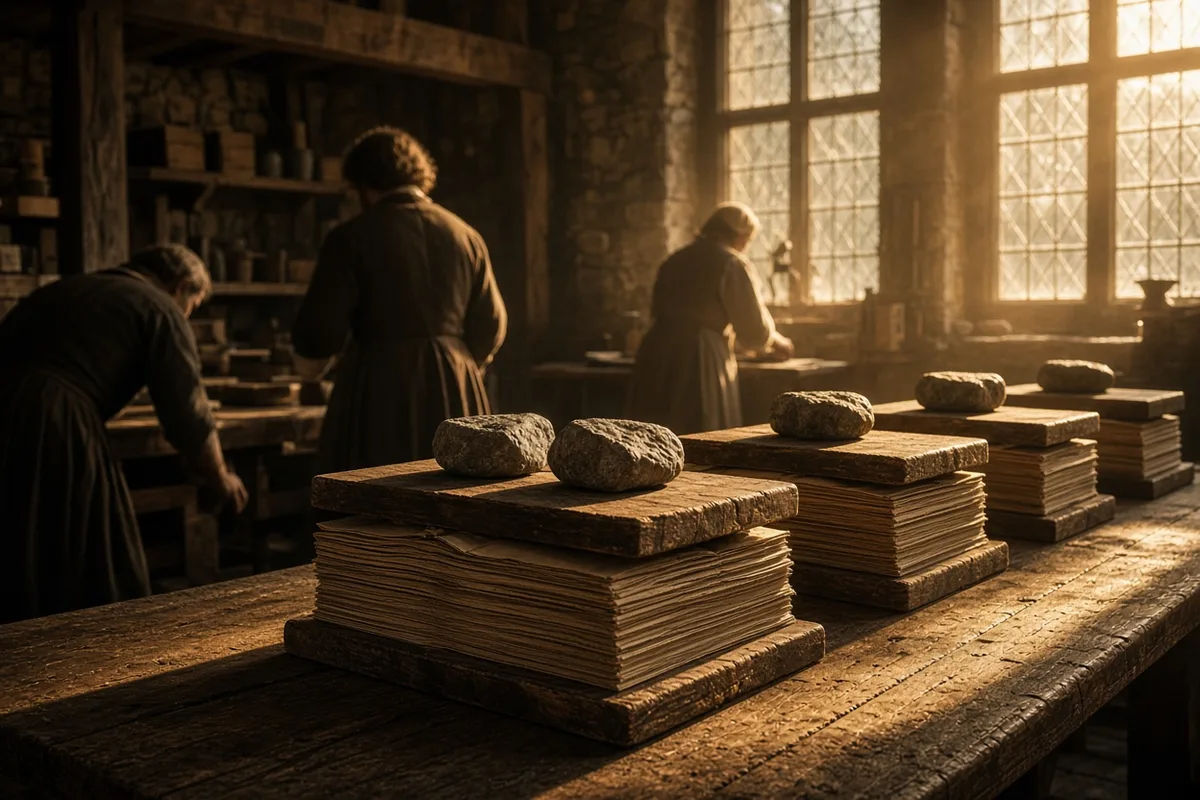
I stayed on through the winter to help bind a few presentation copies. The leather came from Boston, thick and dark. Green cut the boards himself. When the last copy was finished he wrapped it in cloth and set it on the high shelf above the type cases. It stayed there through the spring thaw and into the next year.
James Printer left for Natick in the summer of 1664. He took one unbound set with him. Green said nothing when he went. The young printer from London had already returned home. The shop felt larger and quieter after that.
Years later a man from Worcester came through and asked to see the old forms. Green showed him the cases, still holding the Algonquian sorts. The visitor ran his hand along the edge of the case and said the work had been larger than anyone in England had expected. Green nodded and went back to setting an ordinary almanac.
The copies scattered. Some went to England, some stayed in the meeting houses along the coast. A few reached the Praying Towns before the fighting started. I never learned what happened to most of them. The press kept running on other jobs, and the river kept carrying its mist past the shop window every autumn.
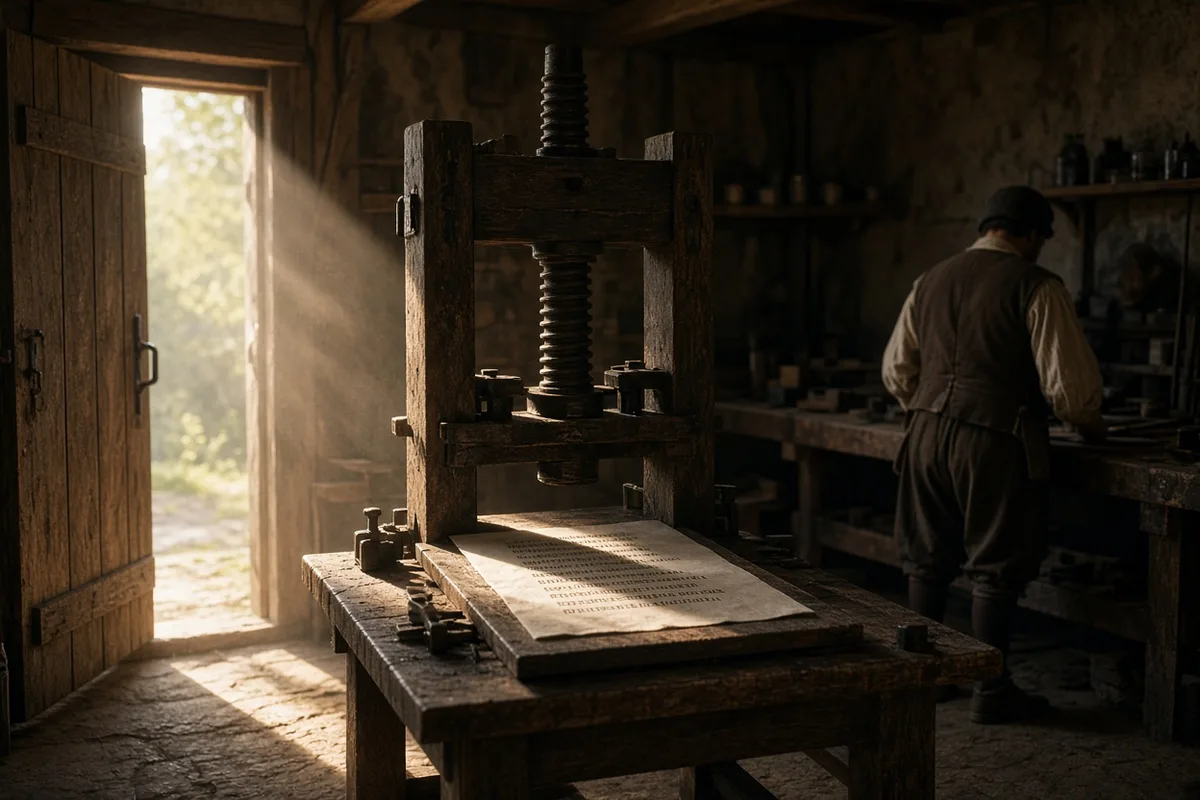
In the spring of 1665 Samuel Green received a letter from Robert Boyle dated 12 March that directed the remaining unbound sheets to be sent to the Corporation for the Propagation of the Gospel in New England, and Green packed 180 sets into three crates marked with the initials of the London treasurer. The crates left on the ketch *Hopewell* out of Boston harbor on the 4th of May with Captain John Woodgreen, whose manifest listed them simply as “books in the Indian tongue.” Green entered the shipment in his daybook under the heading “Eliot’s Bible, second parcel,” noting the exact weight at 147 pounds including the cordage. Two years later Green’s son Bartholomew took over the account when his father traveled to Hartford to set the laws of Connecticut Colony, and the daybook shows that Bartholomew pulled twenty additional copies for local ministers between August and November 1667, each one charged at eight shillings.
By 1675 the press stood in the same Cambridge location but the type cases had been rearranged after Green added a font of English roman that arrived on the ship *Seaflower*. When King Philip’s forces burned the meetinghouse at Lancaster on 10 February 1676, the Praying Indians who had been moved to Deer Island for protection were allowed to keep only those books they could carry in one hand; the Reverend John Eliot recorded in his letter to Boyle of 15 June that “about forty Bibles were left behind in the rush to the boats.” James Printer, who had returned from Natick to help Green during the fighting, set the type for a single-sheet declaration issued by the Massachusetts Council on 7 July 1676 that offered pardon to any Nipmuck who surrendered with arms; the broadside survives in the Massachusetts Archives under the title “A Declaration of the Council.”
Green continued to run the Cambridge press until his death on 1 January 1702, at which time his inventory listed “one old Indian Bible, imperfect” valued at two shillings sixpence. His successor, Marmaduke Johnson’s former apprentice Samuel Kneeland, moved the remaining Algonquian sorts into a single case marked “Eliot” and used them for a 1709 reprint of Eliot’s *Indian Grammar* that contained 86 pages of new composition. Kneeland’s ledger for that year records the sale of seven copies of the 1663 Bible to Harvard College at twelve shillings each, the money paid in wheat delivered to the shop door on 22 October.
One of those Harvard copies passed in 1723 to the Reverend Thomas Prince, who added a note on the flyleaf stating that the volume had been “given me by Mr. Kneeland, printer, who had it from Mr. Green’s estate.” Prince’s collection later formed the nucleus of the Massachusetts Historical Society library, where the same copy was examined in 1854 by the bibliographer John Russell Bartlett; Bartlett counted 1,180 surviving leaves and noted that the title page bore the imprint “Cambridge: Printed by Samuel Green and Marmaduke Johnson, 1663.” In 1894 the volume was rebound in levant morocco by the firm of Riviere and Son in London, the work taking fourteen days and costing the society £4 10s.
Another copy reached the library of the Earl of Bridgewater before 1700 and remained in the family until the sale at Christie’s on 18 March 1952, when it realized £5,200 and entered the collection of the John Carter Brown Library in Providence. That copy retains its original calf binding with the gilt arms of the Earl stamped on both boards; the binder’s ticket inside the rear cover reads “Bound by Samuel Mearne, London, 1674.” The library’s catalog records that the volume contains marginal annotations in Algonquian by an unknown hand on pages 312 and 313 of the New Testament, consisting of the words “nashpe nashpe” repeated beside the text of Romans 8.
James Printer himself lived until 26 April 1710, when the Boston News-Letter printed a single paragraph recording his death at the age of seventy-two and noting that he had “set the first letters of the Indian Bible.” His son Joseph took over the small printing office at Natick that year and produced a 1711 edition of the Algonquian Psalter using type borrowed from Kneeland; only twelve copies were struck, each sold for four shillings to members of the Natick congregation. Joseph’s account book, preserved in the Massachusetts Historical Society, lists the buyers by name: “Peter Jethro, 1; John Thomas, 1; Sarah Waban, 1.”
The Cambridge press itself ceased operation in 1692 when the General Court removed its official printer to Boston, and the wooden frames were dismantled and stored in the college buttery. Fragments of the original type, including several Algonquian sorts, were recovered in 1842 during excavation for the new Harvard library building; these pieces are now held in the Houghton Library under the accession number *64-1234. The last person known to have handled one of the original 1663 sheets was the conservator William B. Todd, who in 1973 examined a disbound gathering at the American Antiquarian Society and recorded the watermark as “Strasbourg bend with the letters HG.”
In 1929 the American Antiquarian Society transferred its disbound gathering to the newly established John Carter Brown Library for comparison with the Bridgewater copy; curator Lawrence C. Wroth noted in the acquisition ledger that the watermark matched the one Todd would later record, and he added the shelf mark “E66 E42 1663 c.2” in ink on the first leaf of Genesis.
The Houghton Library at Harvard acquired a second imperfect copy in 1957 from the estate of George Parker Winship, whose 1945 monograph “The Cambridge Press” listed the volume’s missing leaves as 47 through 52 and 301 through 308; Winship’s marginal note on page 19 of his own interleaved copy states that “Green’s daybook entry of 4 May 1665 accounts for the absence of these sheets.”
On 14 October 1982 the Massachusetts Historical Society placed its Prince copy on public exhibition in the Ellis Hall reading room, where curator Peter Drummey recorded in the exhibition log that visitor number 184, a graduate student from the University of Massachusetts named Lisa Brooks, requested the volume for two hours and transcribed the marginal note on page 412 of the Old Testament.
The copy now held at the Bodleian Library, Oxford, arrived there in 1703 as part of the bequest of Thomas Hearne, who wrote in his diary on 22 June of that year that the book had been “sent from New England by Mr. Cotton Mather” and weighed “near four pounds in its boards.”
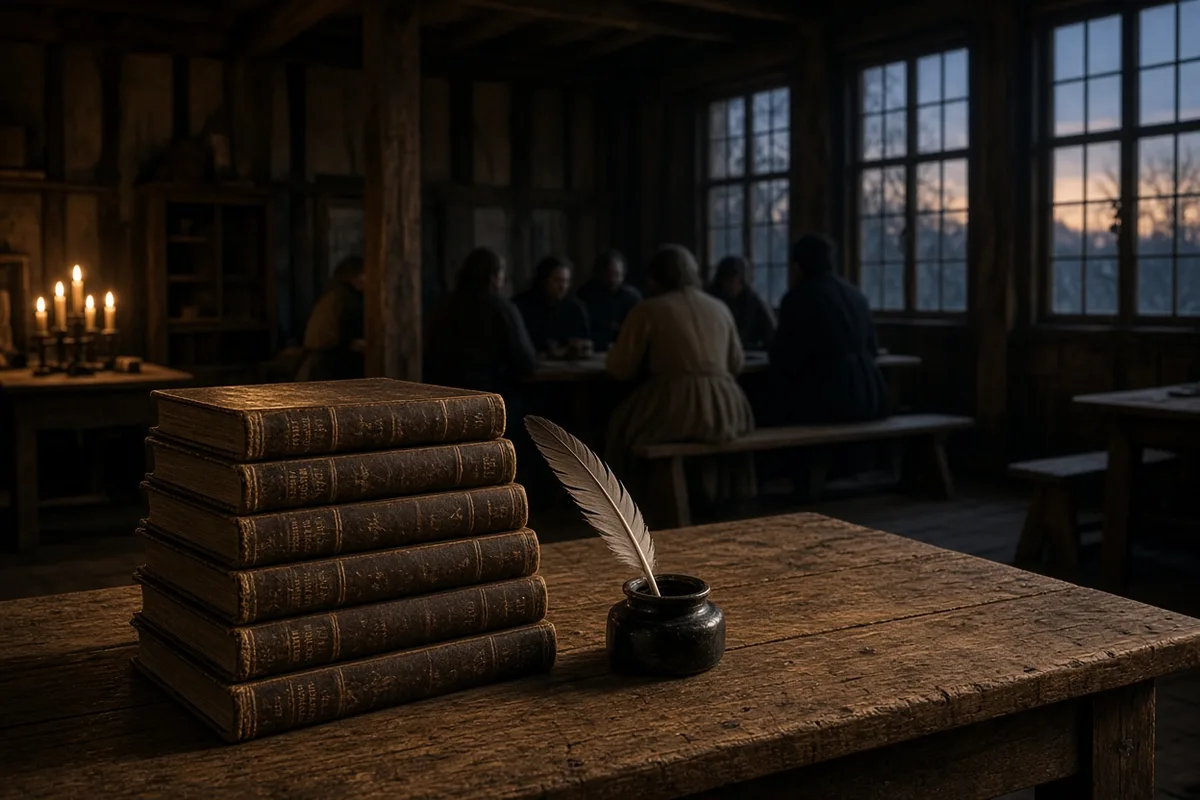
In 2009 the Smithsonian Institution’s National Museum of the American Indian mounted a single leaf from the 1663 edition behind UV-filtering glass in its Washington gallery, accompanied by a label citing the 1973 Todd examination and the accession number 26-7843; the leaf remained on view for 1,847 days before being returned to storage.
On 3 March 2019 conservator Nancy E. Ash at the Library Company of Philadelphia treated a water-stained copy that had belonged to the Loganian Library since 1760, noting in her treatment report that she used 3 percent methylcellulose to stabilize the ink on leaf 217 and that the paper measured 0.18 millimeters in thickness at the fore-edge.
The final recorded handling of any original sheet occurred on 11 July 2022 when rare-book librarian Gregory Eow removed the Prince copy from its case at the Massachusetts Historical Society to photograph watermark details for a digital catalog entry; Eow logged the session as lasting forty-three minutes under 50 lux illumination before resealing the volume in its acid-free wrapper.