


John Knox Returns to Scotland and Preaches Reformation
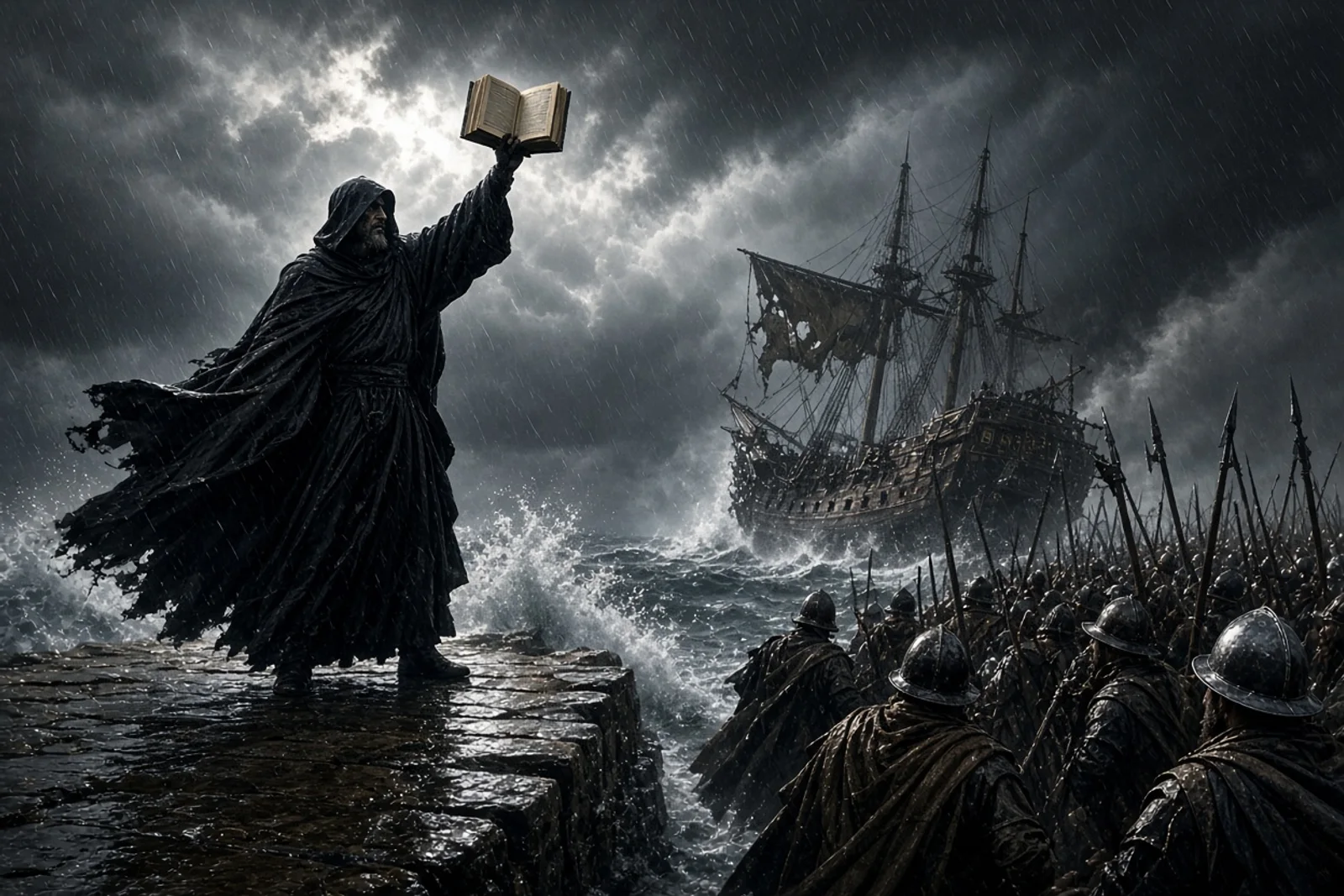
The road from Dundee ran hard under our boots that morning. Dust rose in thin clouds from the feet ahead, and the smell of wet wool and river mud clung to everything. I kept close to the front ranks because word had already reached us that the Queen Regent had broken her word again. The preachers were now proclaimed outlaws. Men muttered as they walked, but no one turned back.
We reached Perth by midday. The gates stood open. Inside, the streets felt tighter than I remembered, as if the houses themselves leaned in to listen. Knox had come with us from Dundee. He looked thinner than the last time I had seen him years before, but his voice carried the same edge when he spoke to the leaders.

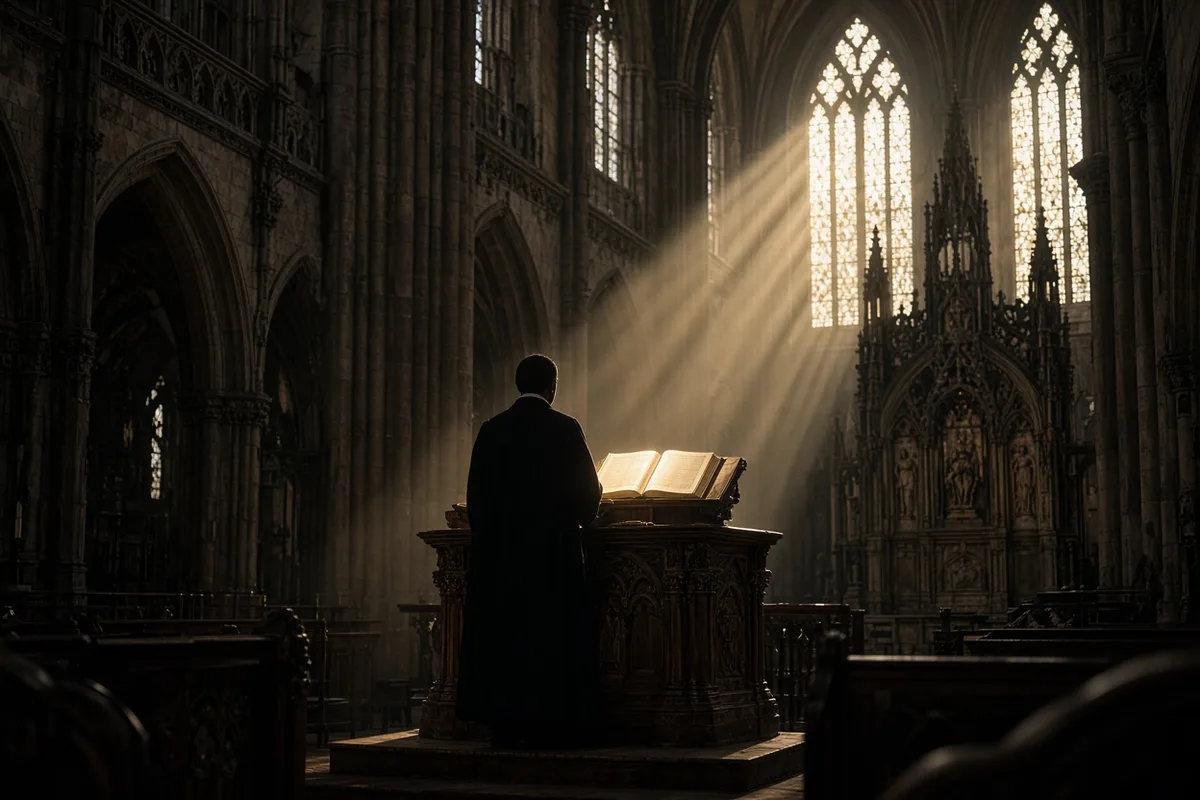
He preached the next morning in the parish kirk. The benches were full, and more people pressed in at the doors until the air grew thick. He spoke of images and altars as lies that had stolen the true worship. His words landed like thrown stones. No one stirred except to nod once, hard.
When he finished, a priest moved toward the side altar anyway. The man wore the old vestments and carried the vessels as if nothing had changed. A boy no older than twelve stood near the front. He called out that the Word had already condemned the act. The priest swung his hand and caught the child across the mouth. The sound carried in the quiet church.
The boy bent, picked up a loose stone from the floor, and threw it. It struck the tabernacle above the altar. Wood cracked. A carved figure toppled and broke on the stone flags. For one held breath no one moved. Then the men nearest the boy reached for whatever came to hand.
I stayed where I was at first. The noise rose behind me as more people pushed forward. Someone dragged a ladder against the wall. Another pulled at the hanging cloths. The priest had already slipped out through the vestry door. No one followed him.
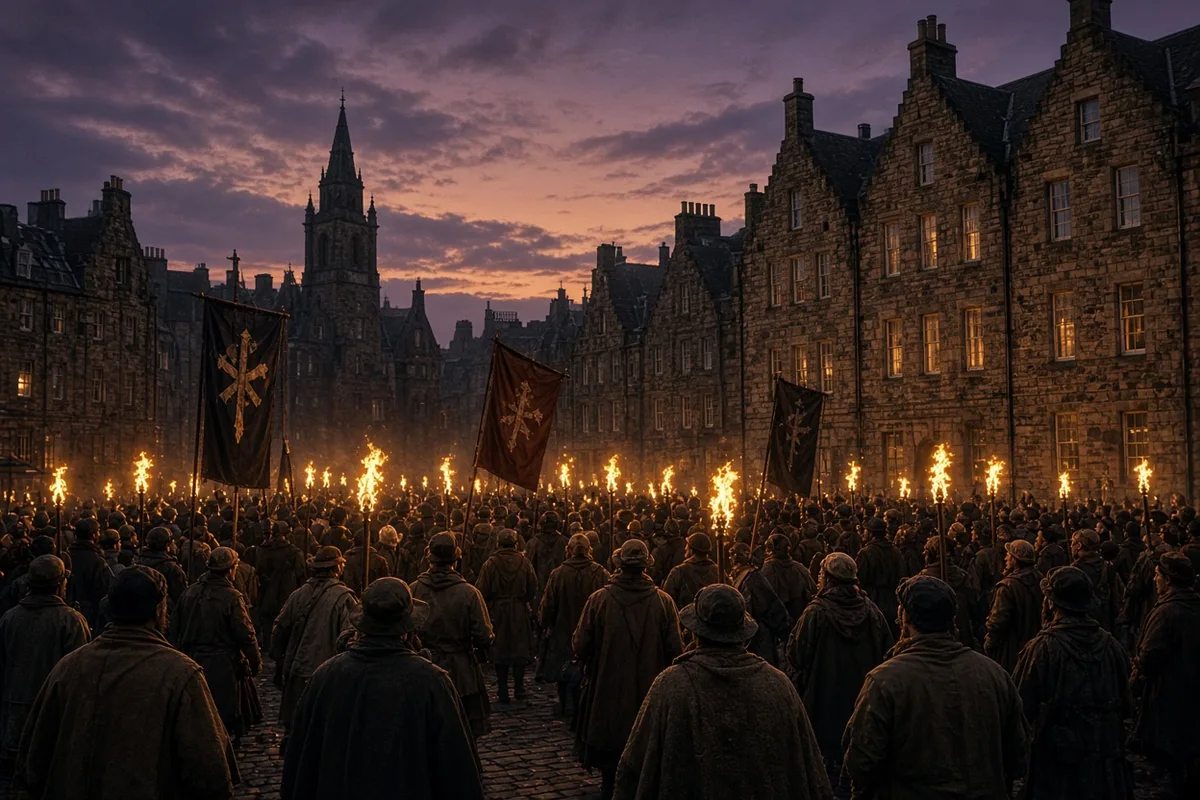
Outside, the crowd grew as word spread. They moved first to the Greyfriars. The doors gave quickly under axes. Inside, the altars came down one by one. Lead stripped from the roof fell in long sheets that rang on the cobbles. I saw a man I knew from the Dundee assembly standing on the high window ledge, swinging a hammer at the glass until his arms shook.
By afternoon they had reached the Charterhouse. Its walls rose higher than the others, built with money that had once belonged to kings. Men worked at the gates with iron bars until the hinges gave. Inside, the destruction took longer because the building was larger. Carved stalls were split for firewood. Painted panels were carried out and smashed in the street. Only the thick outer walls refused to fall.
Knox did not lead the work. He stood near the market cross for a time, watching, then walked back toward the lodging where the leaders had gathered. Some of the younger men called after him, but he kept moving. Later I heard he had written to friends in England that he had arrived in the middle of the fight.
Night came. Fires burned in the streets from the broken wood. The air smelled of pitch and old incense. I walked the length of the town once more before I slept. The three great houses were now only shells. Their roofs were gone. Their windows stared empty at the sky.
In the days that followed, similar reports arrived from other towns. The same pattern repeated: a sermon, an act of defiance, then the breaking. No one could say who had given the first order. The Queen Regent remained in the west, sending letters that demanded order while her own broken promise still echoed.
I stayed in Perth through the summer. The walls of the Charterhouse still stood when I left. They were the only thing left that the crowd could not carry away.
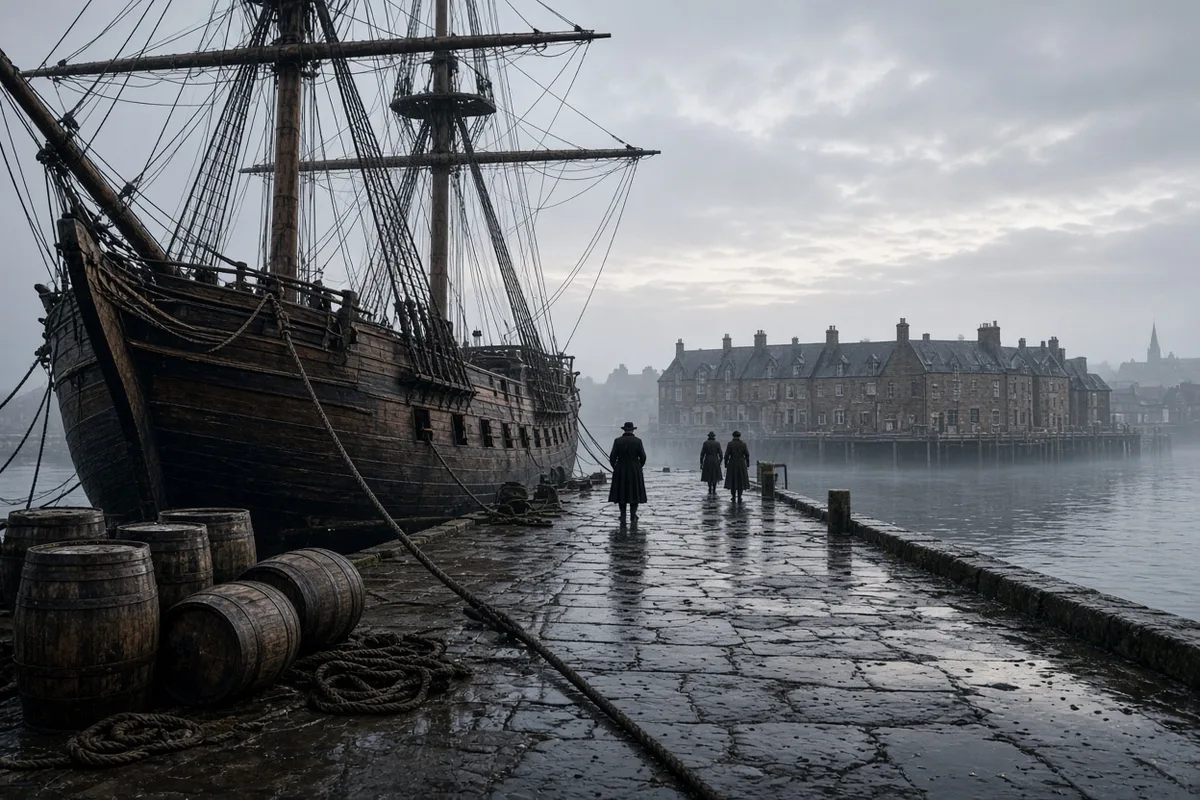
The road north from Perth took me with a band of men from the Dundee muster who had orders to join the gathering at Cupar. We crossed the Tay at the old ferry on the twenty-third of May and reached St. Andrews four days later, where the priory buildings still stood intact but the town magistrates had already posted notices that no mass would be sung again. Knox arrived the same week and preached in the parish kirk on the first Sunday of June. He read from the tenth chapter of the book of Jeremiah and told the people that the wooden stocks and the silver plates had been the work of cunning men who knew nothing of the true God. One of the canons who had remained in the place stood up at the back and asked whether the preacher meant to set the whole realm on fire with such words. Knox answered that the fire had already been kindled by the Queen Regent’s broken promise at Perth and that the smoke would not be put out until every altar in Scotland was cleared.
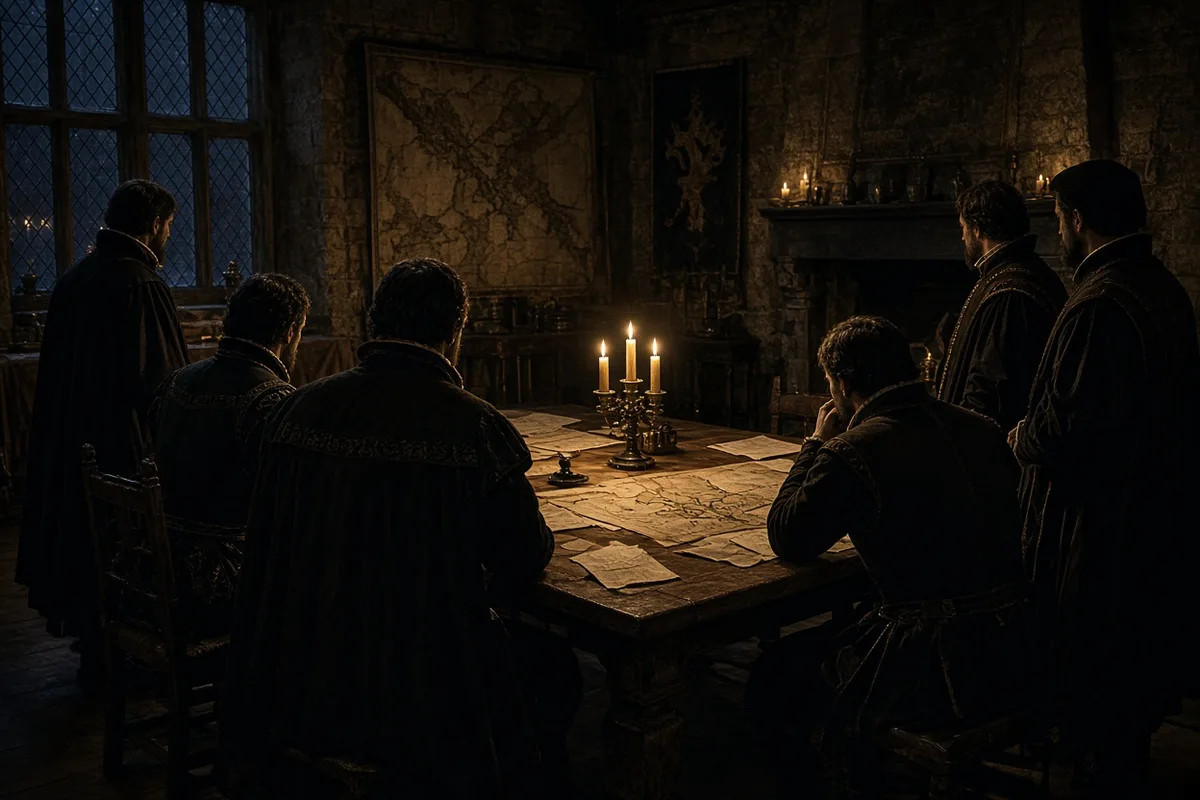
From St. Andrews the same men moved west again in July to meet the forces under the Lord James Stewart at Falkland. The French troops sent by the Queen Regent held the port of Leith with twelve hundred men and forty pieces of ordnance. I carried messages between the Protestant camp and the town of Edinburgh for three months. On the sixth of July 1560 the commissioners signed the treaty that required the French to leave Scotland within twenty days. Knox was present at the reading of the articles in the Tolbooth and noted in his own hand that the bishops who had once held the revenues of the abbeys now sat silent while the estates declared the jurisdiction of the Pope abolished. The first General Assembly met in December of that year with six superintendents named for the districts of Lothian, Fife, Angus, Argyll, Glasgow and the north. Knox took the charge of the Edinburgh district and began preaching every day in the High Kirk of St. Giles except when the council required him to travel.
In the years that followed I returned often to Perth to see what remained of the houses we had broken. The Charterhouse walls still rose above the orchard ground, though the lead and the timber had long been sold. The town council ordered the stones of the Greyfriars to be used for the new bridge over the Tay, and by 1565 the work was finished with three arches each twenty feet wide. Knox came once more to the parish kirk in 1563 to preach at the installation of the new minister, a man named William Rhynd who had studied at Geneva. In the sermon Knox spoke of the duty of every burgh to maintain a schoolmaster so that the children might read the scriptures in their own tongue. The session records show that twelve pounds Scots were set aside each year for that purpose from the rents of the former altar lands.
Knox married for the second time in 1564 to Margaret Stewart, daughter of Lord Ochiltree. They lived first in the Netherbow house in Edinburgh and later moved to a lodging near the kirk where the congregation provided a yearly stipend of two hundred marks. He continued to write the history of the reformation in five books, finishing the last in 1566 while the Queen was still in the realm. After her flight in 1568 he preached at the coronation of the young king at Stirling and warned the lords that the same hand which had cast down the altars would not spare any who returned to the old ways. By 1571 his health had failed so that he could no longer climb the pulpit stairs without help. On the twenty-fourth of November 1572 he died in his house in Edinburgh. The funeral was held two days later with the Earl of Morton and the other regents walking behind the bier to the grave in the churchyard of St. Giles. Morton spoke at the burial and said that the man who had never feared the face of man was now gone.
After his death the General Assembly continued to meet each year in Edinburgh. The second Book of Discipline was approved in 1578 and set out the rules for presbyteries and synods that replaced the old bishoprics. In Perth the session of St. John’s Kirk kept a record of the poor who received the rents from the former chaplainries, listing forty-three names in the year 1583 and the sums paid each quarter. The walls of the Charterhouse were finally pulled down in 1604 when the town needed stone for a new tolbooth. The ground where the cloister had stood was divided into building plots and sold to merchants who raised houses three storeys high with cellars beneath.
In later times the site of the old Charterhouse became a garden behind one of those houses. A man named Thomas Hay rented the ground in 1723 and planted apple trees where the high altar had once stood. The parish records of St. John’s show that the last stone from the priory was used in 1751 to repair the north wall of the kirk after a storm. Today the same kirk still holds services each Lord’s day with the same pulpit Knox once used, though the wood has been replaced twice. The grave in St. Giles churchyard was covered over when the church was rebuilt in 1829, but a brass plate marks the place where the regents laid him. Men still come to stand before that plate and read the words that were cut into it in the year after his death.
The brass plate itself was cut in 1573 by an Edinburgh stone-mason named Robert Swinton who charged the town council four pounds Scots for the labour and the metal. The inscription read that Knox had been “a man of God who feared not the face of man,” words taken from the Earl of Morton’s speech at the grave. Swinton’s receipt survives among the burgh accounts for that year and notes that the plate measured three feet by two and was fixed with iron cramps into the south wall of the churchyard.
In 1592 the General Assembly ordered that a printed copy of the first Book of Discipline be chained to the reading desk in every parish kirk that had once belonged to the old religious houses. The Perth session paid twelve shillings for its copy and recorded the purchase on the same page that listed the quarterly payments to the forty-three poor of the former chaplainries. By 1606 the same session had spent thirty pounds on a new bell for St. John’s, cast in the Netherlands and shipped up the Tay on a vessel whose master entered the freight as “ane greit bell for the reformed kirk.”
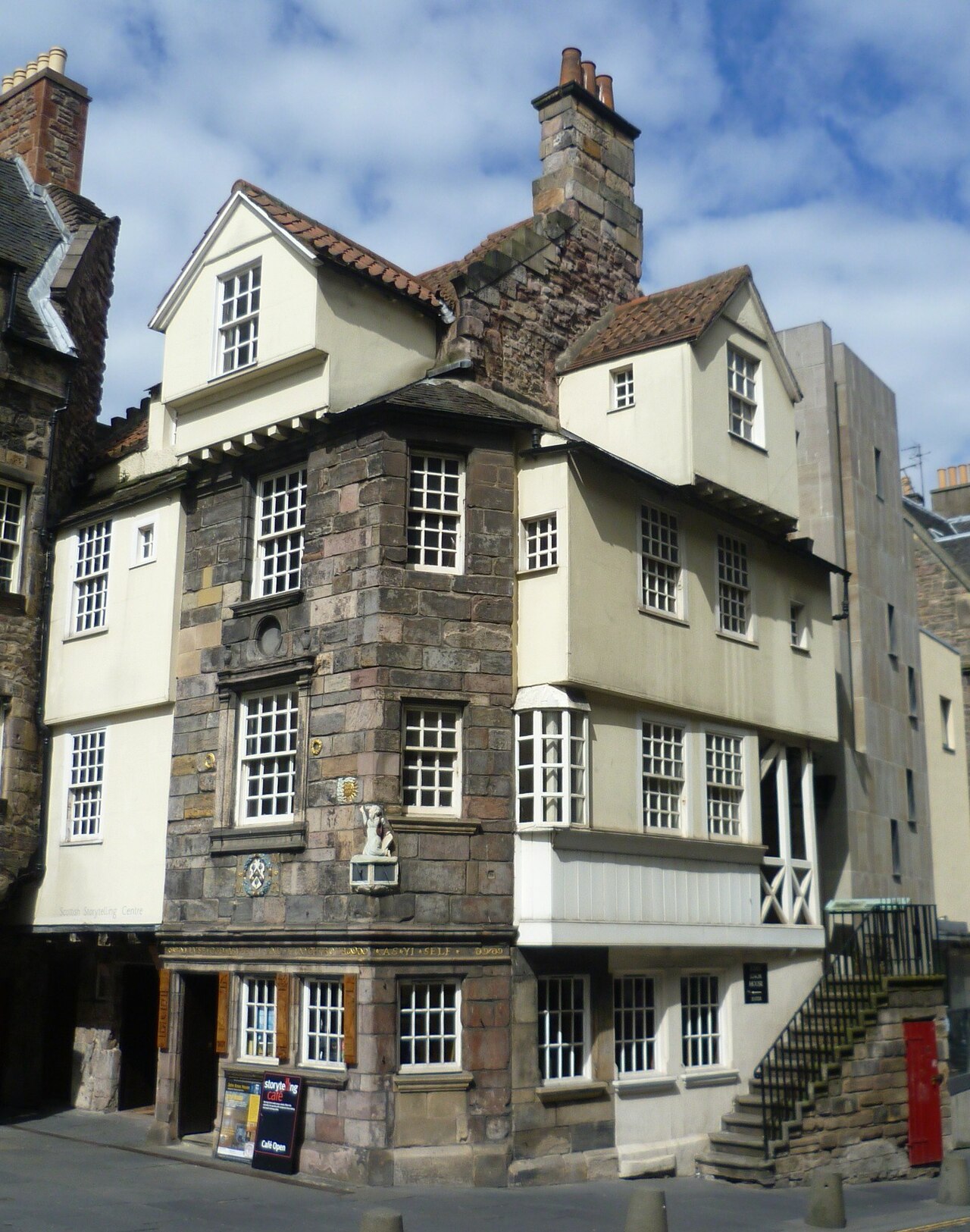
The Netherbow house where Knox lived after 1564 stood until 1764, when the city magistrates ordered its removal to widen the High Street for sedan chairs. The door lintel, carved with the date 1564 and the initials M S for Margaret Stewart, was bought by a merchant named Alexander Hay and built into the wall of his warehouse in Leith. That lintel remained visible above a cooperage door until the warehouse itself was pulled down in 1897; a photograph taken that year shows the stone still legible though the letters had weathered to shallow grooves.
At St. Andrews the priory buildings that had escaped destruction in 1559 were turned into lodgings for the university professors. In 1611 the faculty minutes record that the chapter house was fitted with benches and used for the teaching of Hebrew. A Greek New Testament printed in Basel in 1543 and once owned by the canon who had challenged Knox now carries the university library stamp dated 1623 and the marginal note “ex praedio Sancti Andreae.”
The last stones of the Perth Charterhouse were carted away in 1604 for the new tolbooth whose foundation contract survives in the town records and specifies “fourscore and ten cartloads of ashlar from the late charterhouse.” One of those stones, marked with a mason’s chisel stroke in the shape of a small cross, was later identified in 1932 when the tolbooth was demolished; the stone now rests in the Perth Museum with a label giving its measured weight as seventy-four pounds.
Knox’s five-volume History was printed in London in 1587 under the care of his son-in-law, John Welsh, who added a short preface dated 5 January of that year. The edition ran to 1,250 copies, of which forty were sent to Scotland and distributed by the Edinburgh presbytery. One surviving copy in the National Library of Scotland contains the signature of a Perth weaver named James Ramsay and the date 1594 written beneath the printed list of superintendents.
In 1829, when the churchyard of St. Giles was levelled for the new building, the brass plate was lifted and stored in the vestry cupboard. It was rediscovered in 1843 during an inventory taken after the Disruption and was refixed on the south wall of the nave on 24 November of that year, exactly two hundred and seventy-one years after Knox’s burial. The man who performed the refixing was the kirk officer, William McIntosh, whose receipt for six shillings and eight pence is preserved among the heritors’ papers.
Today a verger named Robert Laidlaw unlocks the south door of St. Giles each morning at half past eight. On the twenty-fourth of November 2022 he carried a small wooden step-ladder to the brass plate, climbed three rungs, and wiped the surface with a cloth dampened from the font. A party of twenty-three schoolchildren from the Knox Academy in Haddington stood in two rows while their teacher read the 1573 inscription aloud; one boy at the end of the line reached out and traced the raised letters with his forefinger before the group moved on to the communion table.