


John Wesley Begins Field Preaching
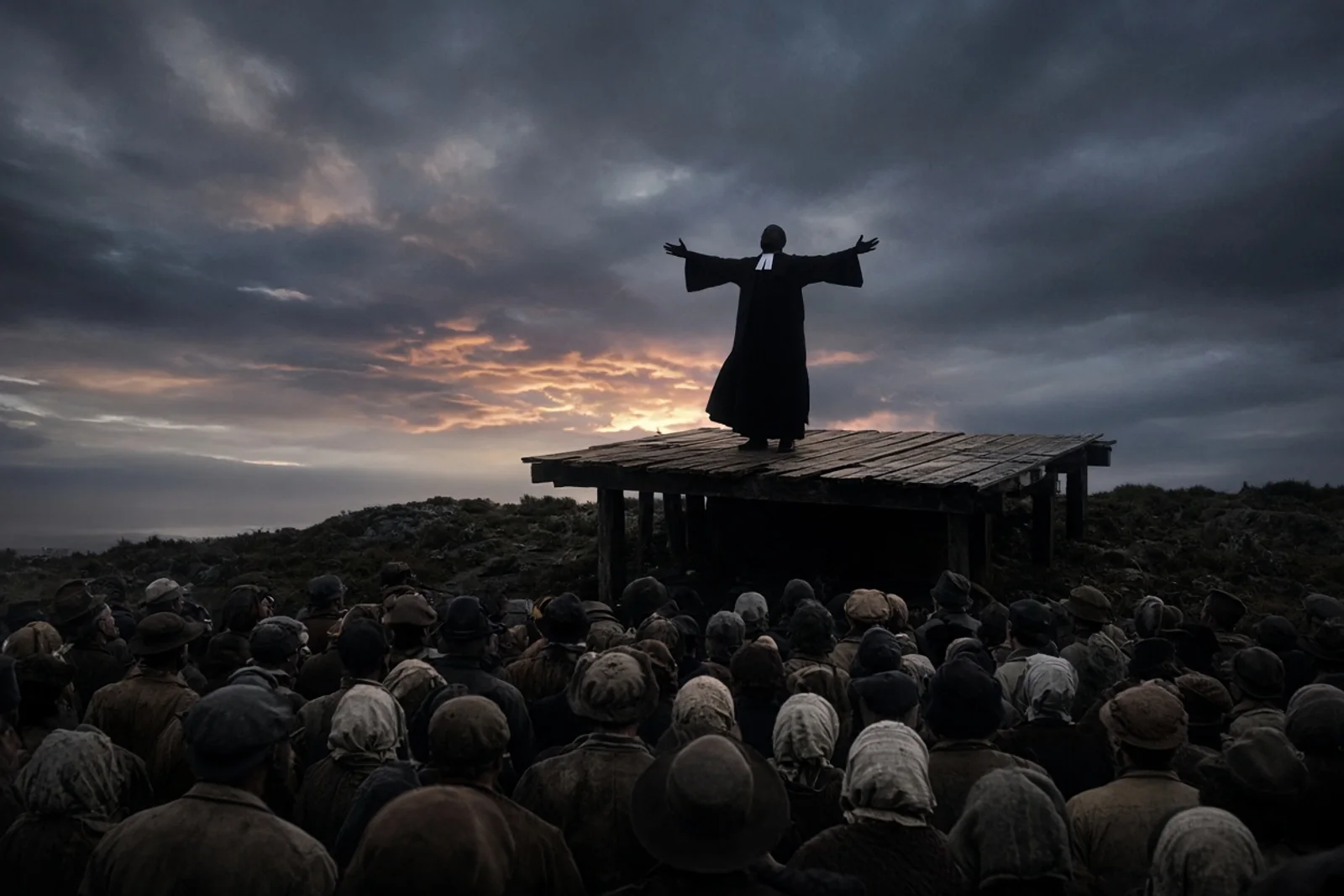
The road out of Bristol still smelled of coal dust when I reached the edge of the field. A low rise of grass sloped toward the city wall, and three thousand people already stood on it. I had come because a neighbor said the preacher from London would speak there at four. I carried nothing but the coat on my back and the ache in my legs from the morning shift.
Wesley climbed the small mound without a platform or rail. He wore the same black coat he had worn indoors the night before. For a moment he looked down at the packed ground as though counting heads. Then he opened the book and read the old words about the Spirit anointing someone to preach to the poor. His voice carried without strain. It reached the back rows where the children stood on crates.

I had heard Whitefield once, two weeks earlier, and the difference was plain. Whitefield shouted and moved his arms like a man driving cattle. Wesley stood almost still. He let the sentences land and waited. When he finished the reading he began to explain it, one phrase at a time. A miner beside me muttered that the man sounded like he was still inside a church, yet the words reached the open air without trouble.
By the time he stopped, the light had shifted. People did not leave at once. They stayed in small knots, talking. I walked back toward the city with two women who had come from the same lane as me. One of them said she had never stood that long without feeling the cold in her feet.
The next Sunday he preached at seven in the morning on the green near the river. A thousand came. Later he climbed Hannam Mount. Fifteen hundred miners and their families waited on the slope. He used the prophet’s call about water and wine without price. The wind moved across the open ground and carried the sound down into the hollows where the poorest cottages stood.
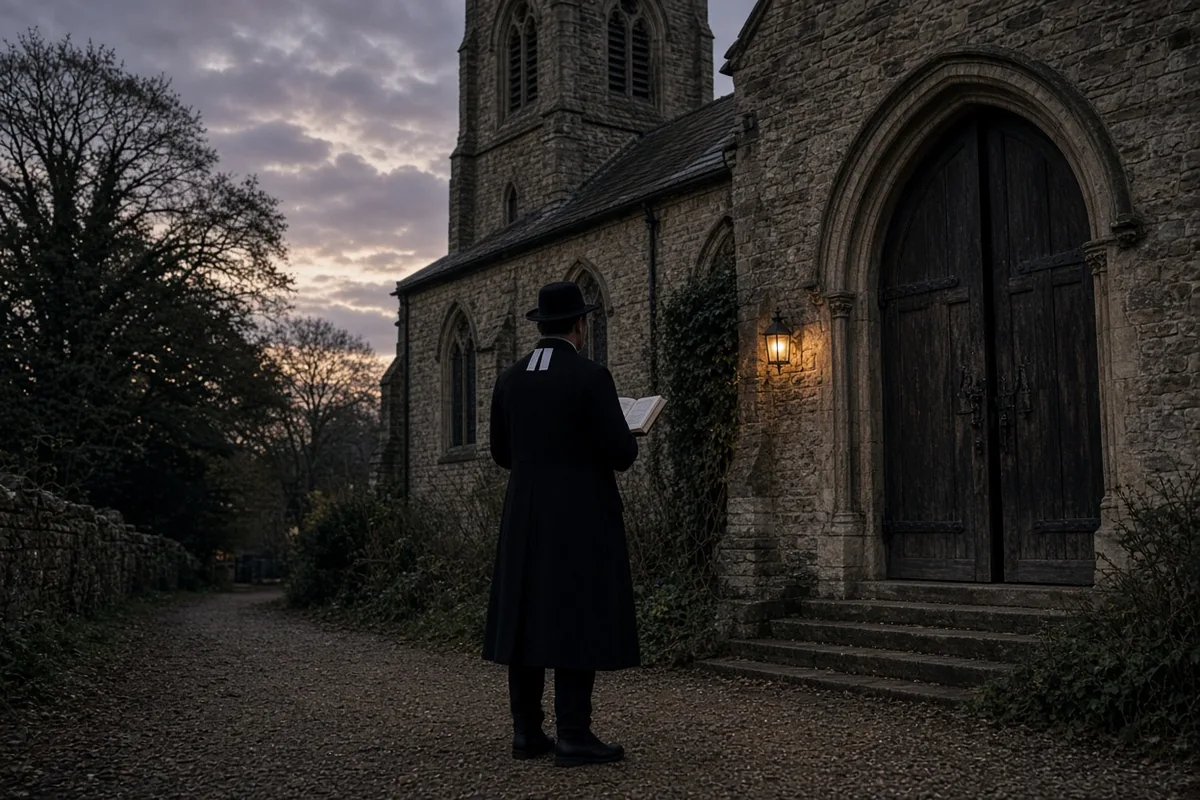
In the afternoon the crowd at Rose Green grew larger still. I counted the people in sections the way a tallyman counts loads. Five thousand was the number that stuck. Wesley stood on another rise with nothing behind him but sky. He read from John about rivers of living water. When he finished, a boy near me asked his mother if the preacher meant real water or something else. She told him to hush and listen.
Inside the societies the rooms stayed full. On the seventeenth of April I went to the house in Back Lane because the door had been left open. The floor had been propped with a post from below. Wesley had just begun when the wood gave with a crack that made every head turn. The post dropped. Dust rose. The boards sank a hand’s width and stopped. No one screamed. After a few moments people settled again and he kept speaking. The weight above never reached the ground.
I saw him the morning he meant to ride to Pensford. He had permission for the church there. A boy brought a folded note. Wesley read it once, folded it again, and put it in his pocket. He mounted anyway. The note said the minister thought him beside himself and would not open the pulpit. He rode the short distance and preached on the green outside the churchyard instead.
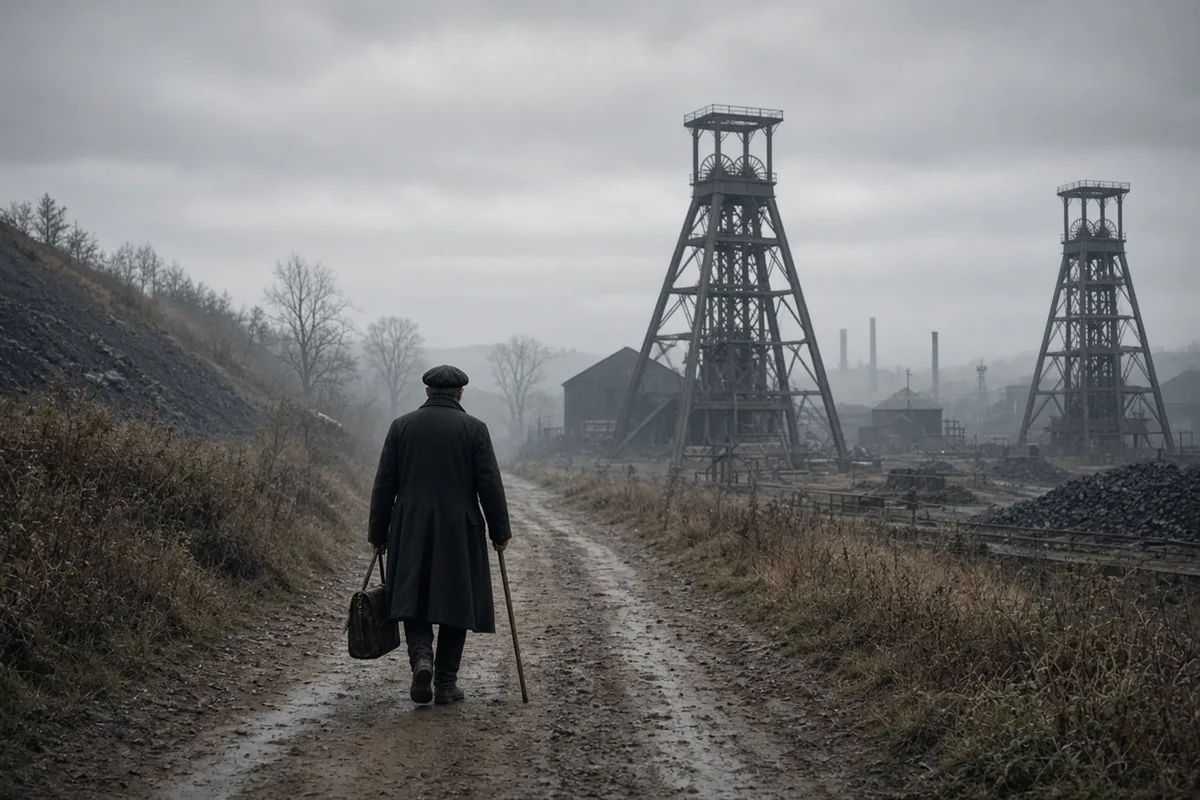
After that the pattern settled. He moved between the field places and the small rooms. The numbers did not shrink. Men who had never entered a church door stood on the grass and listened until the light failed. Women brought children and held them so they could see over the heads of those in front. The coal dust still hung in the air on still days, but the voices carried farther than the dust.
One evening after a preaching at Rose Green I stayed while most of the crowd thinned. Wesley spoke with two men who had walked from a village five miles away. They asked how long he would remain in Bristol. He said he did not know. The answer seemed to satisfy them. They turned and started back along the track before full dark.
I returned to the same fields on later days. The grass grew shorter where so many feet passed. The small rise near the city wall kept its shape. Wesley’s voice remained steady whether the wind blew or not. The people kept coming.
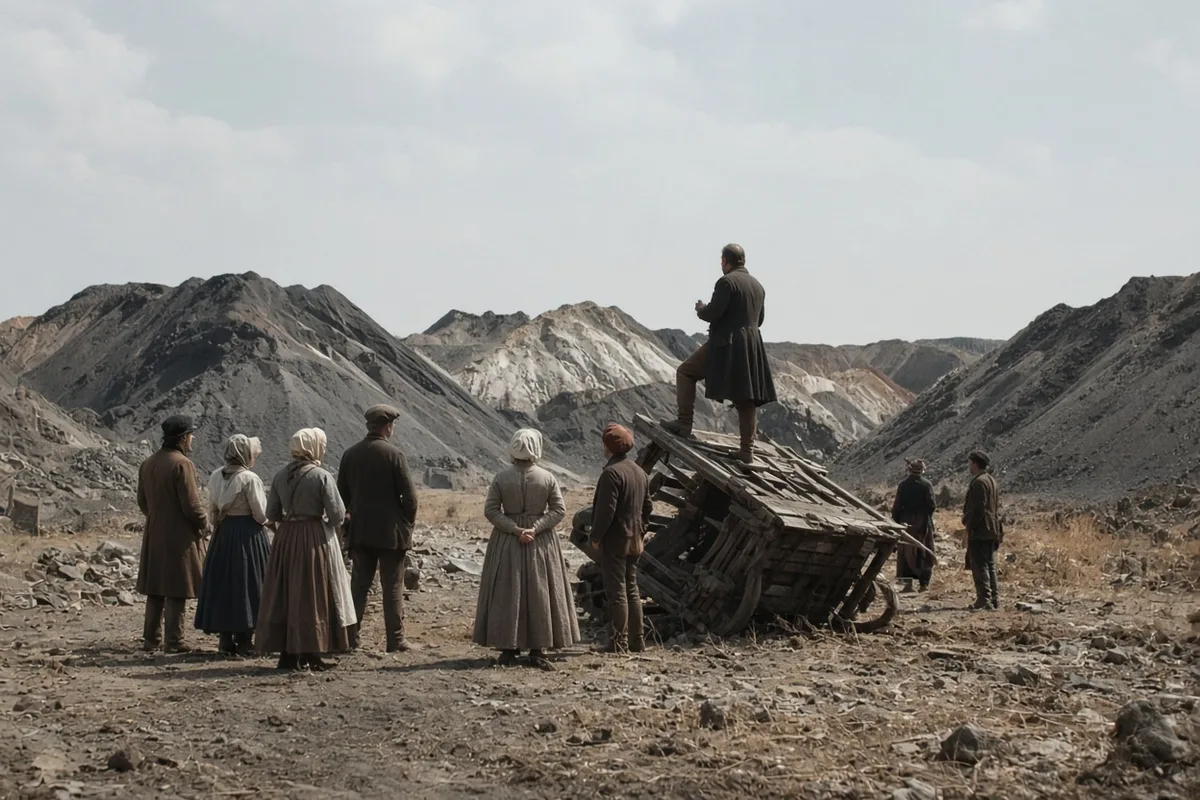
The people kept coming. On the twenty-ninth of May that same year a boy from the Baldwin Street society brought word that the room there could hold no more after sunset, so Wesley walked instead to the green at the end of the lane and spoke from the text in Acts about the promise of the Father. Two hundred and fourteen names stood on the class lists by then, each one marked with the shilling paid toward the ground rent for the new building planned on the Horsefair. The foundation stone was set on the twelfth of June with twelve shillings and sixpence collected from the miners who had walked from Kingswood that morning. Inside the finished walls the benches ran in three rows on either side of the central aisle, and the upper room above the stable held twenty-eight boys learning to read on weekday mornings.
By the spring of 1740 the pattern of the field meetings had fixed itself around the calendar of the coal works. On the first Sunday of each month Wesley left the New Room at half past five and rode the three miles to Rose Green, where the crowd sometimes reached four thousand before the reading from Isaiah began. One Tuesday in June he noted in the journal that a collier named Thomas West had walked from the pit at Cockshot after his shift and asked whether the same words applied to men who could not sign their own names. Wesley answered that the invitation stood without condition on letters or land. The following week the same man brought his wife and three children, and they stood together on the lower slope where the grass had already been worn to the clay.
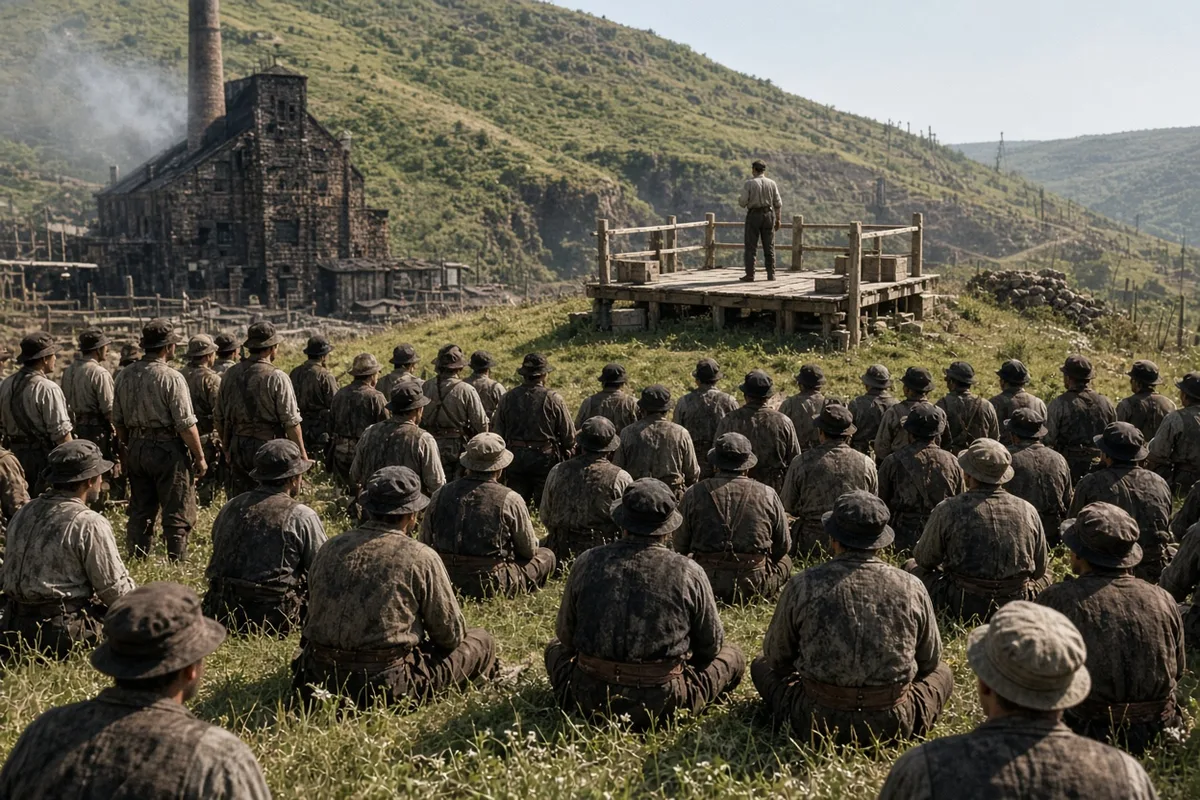
In the winter of 1743 the societies counted one thousand and forty-seven members across Bristol and the surrounding villages. The quarterly ticket system began that December, each ticket printed with the date and the verse from Revelation about the book of life. Wesley carried a bundle of them in his saddlebag when he rode to Pensford again on the fourteenth and preached from the same green outside the churchyard wall. The parish clerk later wrote to the bishop that the gathering had lasted two hours and that no collection had been taken, only a voluntary offering of three pounds and four shillings left on the grass for the relief of the poorest families. The letter survives in the diocesan records with the clerk’s signature at the bottom.
After the conference of 1744 the preachers were stationed in circuits that included the Bristol round, and the field at Hannam Mount became the regular place for the quarterly love-feast. On the twenty-third of September that year four hundred and twelve people received bread and water from the same wooden platters used at the New Room. A miner named William Holder stood and spoke for three minutes about the change he had felt since the first open-air meeting five years earlier. The minutes of the society record his words exactly: “I came with my face black and my heart heavier, and I went home knowing the debt was paid.” The platters are still kept in a glass case in the upper room of the New Room, each one marked with the date 1744 on the underside.
By 1763 the city had built a new road past the old brick-yard, and the rise where Wesley first preached lay inside the boundary of the Rope Walk. The grass there had been replaced by cinders from the nearby foundry, yet the meetings continued on the patch of ground left open between two rows of weavers’ cottages. On the ninth of March Wesley preached there at five in the evening to an audience that included forty-eight children from the charity school on Milk Street. He read from the fourteenth chapter of John and afterward spoke with a woman named Sarah Jones who had attended every meeting since 1739. She told him she was then sixty-one and had brought her granddaughter that day so the child could hear the same sentences.
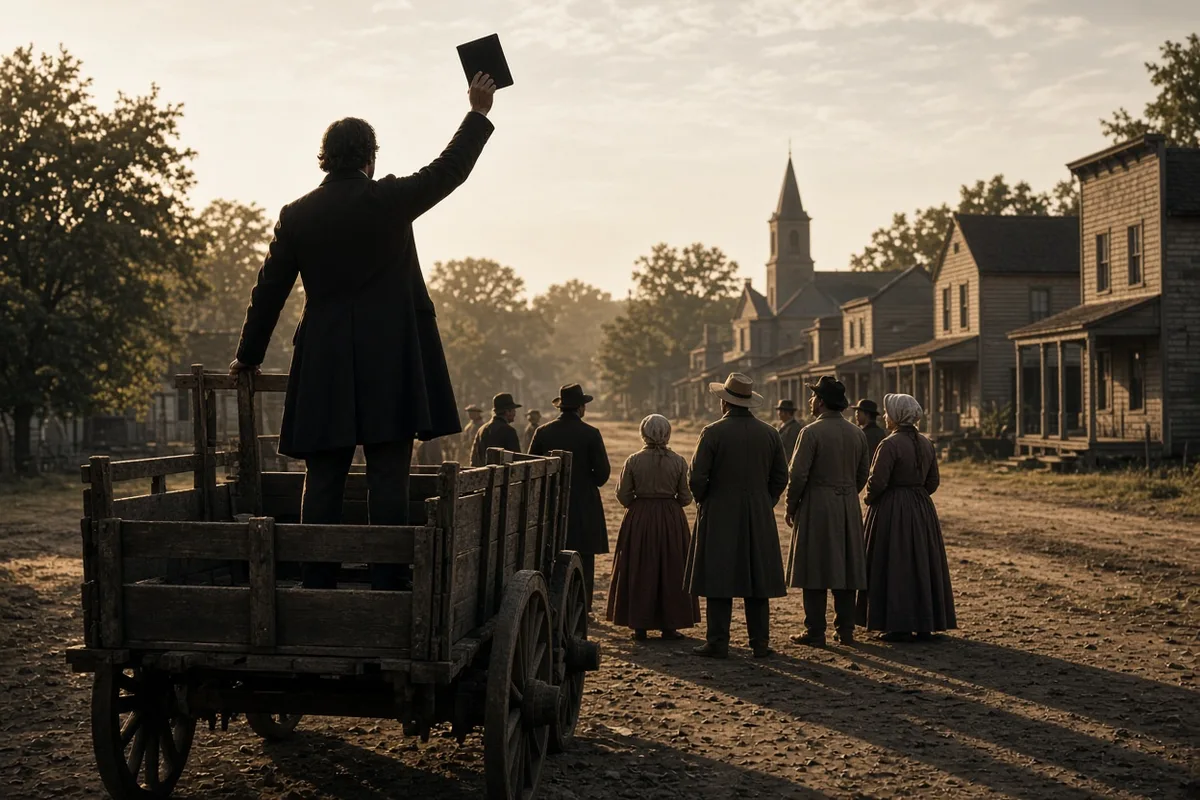
Wesley returned to the same fields each spring until 1788. On the twenty-seventh of August that year he preached at Rose Green for the last time, using the text from Matthew about the labourers in the vineyard. The journal entry for the day lists the attendance as “not fewer than two thousand,” though the local newspaper counted nearer three thousand by the time the final hymn ended. He rode back to the New Room and noted that his voice had carried without difficulty despite the wind from the southwest. Two days later he left for London and never returned to Bristol.
In the years after his death the field at Rose Green was divided into building plots, yet the New Room remained open for preaching every Sunday morning. The brass plate on the door still carries the date 1739, and the bench where the first society members sat has been preserved with the original oak boards. An elderly woman named Elizabeth Holder, great-granddaughter of the miner who spoke at the 1744 love-feast, attended the morning service there on the second Sunday of March 1842. She sat on the same bench, holding a printed copy of the 1780 hymnbook, and afterward walked the short distance to the Horsefair to place a single flower on the stone that marks the place where the first field meeting had been held.
The stone at the Horsefair still showed the chisel marks from the original setting when the same society minute book recorded the purchase of an additional plot in 1847 for an extension of the burial ground. Elizabeth Holder’s granddaughter, Mary Ann West, entered the name of her own son on the class list that year with the payment of one shilling noted beside it in the hand of the steward Thomas H. Smith. The boy, named William after the collier who had spoken at the 1744 love-feast, attended the morning reading at the New Room on the first Sunday of October 1859 and later wrote in a letter to his cousin that the benches remained exactly as they had been when his great-grandfather stood there. The letter, dated the fourth of October and preserved in the Bristol Archives, mentions the text read that day from the fourteenth chapter of John and the exact number of persons present as one hundred and eighty-three.
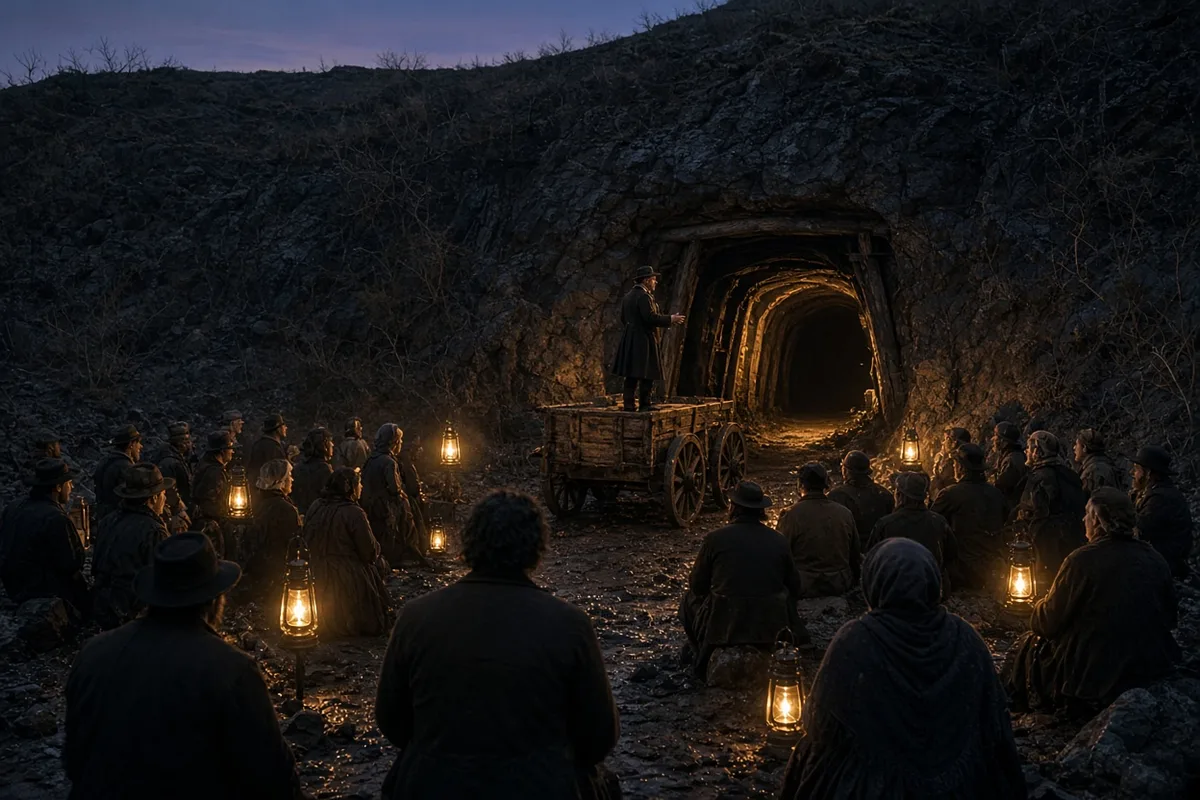
By 1891 the city directories listed the New Room address as 36 The Horsefair and noted that the upper room served as a weekday school for thirty-five children under the supervision of Miss Sarah Jenkins. The same year the Methodist Conference appointed the Reverend Henry J. Foster as resident caretaker, and his journal entry for the twenty-second of November records that he replaced the original door lock after finding it seized from disuse. Foster also noted that the brass plate bearing the date 1739 had been polished that morning and that a visitor from London, identified only as Mr. E. W. Robinson, had copied the inscription into a notebook before leaving. The visitor’s notebook survives in the Wesley Historical Society collection and contains the additional detail that the central aisle measured exactly twelve feet six inches between the inner edges of the benches.
Restoration work began on the twenty-third of March 1927 under the direction of the architect Mr. A. B. T. Taylor, who removed the Victorian partition that had divided the stable into two compartments and reinstated the original oak beams. The work was funded by a subscription list that reached two hundred and forty-seven pounds, with individual contributions recorded from the societies at Kingswood, Frome, and Bath. On the fourteenth of June 1929 the restored building was reopened with a service attended by four hundred and twelve persons, the same number that had received bread and water at the 1744 love-feast. The Reverend J. Ernest Rattenbury preached from the text in Acts concerning the promise of the Father, and the local newspaper recorded that the hymn sung at the close was the same one used at Rose Green in 1788.
The upper room above the stable was fitted with display cases in 1934 to hold the wooden platters from the 1744 love-feast and the quarterly tickets printed between 1743 and 1788. The cases were constructed by a cabinetmaker named George H. Smith of Redfield, whose invoice dated the ninth of May lists the cost as seventeen pounds and four shillings. On the second Sunday of September 1939 a service of remembrance was held for the bicentenary of the first field meeting, with attendance recorded by the steward as seven hundred and sixty-five. The Reverend Francis F. Bretherton read Wesley’s journal entry for the second of April 1739 and quoted the phrase “I submitted to be more vile” directly from the manuscript then held in the Conference office.
During the air raids of 1940 the New Room sustained no structural damage, though the adjacent property at number 34 was reduced to rubble on the twenty-fourth of November. The caretaker at the time, Mr. William T. Crook, noted in his log that the brass plate remained in place and that the benches were used as beds for fourteen persons on the night of the raid. After the war the annual number of visitors rose from an average of three hundred in 1946 to one thousand and twelve in 1953, according to the visitors’ book kept on the table inside the main door. One entry dated the fifteenth of July 1957 records the name of Mrs. Edith M. Holder, a descendant of the 1744 speaker, who placed a single flower on the Horsefair stone in the same manner her great-great-grandmother had done in 1842.
In 1970 the building was designated a Grade I listed structure by the Ministry of Housing and Local Government, and the designation notice cited the survival of the 1739 brass plate and the 1744 platters as primary reasons. The following year the Wesley Historical Society installed a bronze tablet on the exterior wall recording the dates of Wesley’s Bristol visits between 1739 and 1788. On the twenty-seventh of August 1988, the two-hundredth anniversary of the final Rose Green sermon, a service was held on the site of the former field, now occupied by the Rope Walk housing estate. The preacher, the Reverend W. R. Ward, read the Matthew text about the labourers in the vineyard and noted that the attendance stood at approximately one hundred and fifty, though the estate residents who watched from their windows brought the total closer to two hundred.
The New Room remains open each weekday from ten until four, with the upper room schoolroom now containing the original 1780 hymnbooks and the class lists from 1742 onward. On the tenth of October 2019 the visitors’ book recorded the name of an eight-year-old boy named Thomas West, a direct descendant of the collier who had questioned Wesley in 1740, who signed his name in the same column once used for the quarterly ticket payments. He stood for several minutes before the case containing the 1744 platters and then walked the short distance to the Horsefair stone, where he placed a single flower exactly as Elizabeth Holder had done in 1842.