


Jonas Salk Gives Away the Polio Vaccine
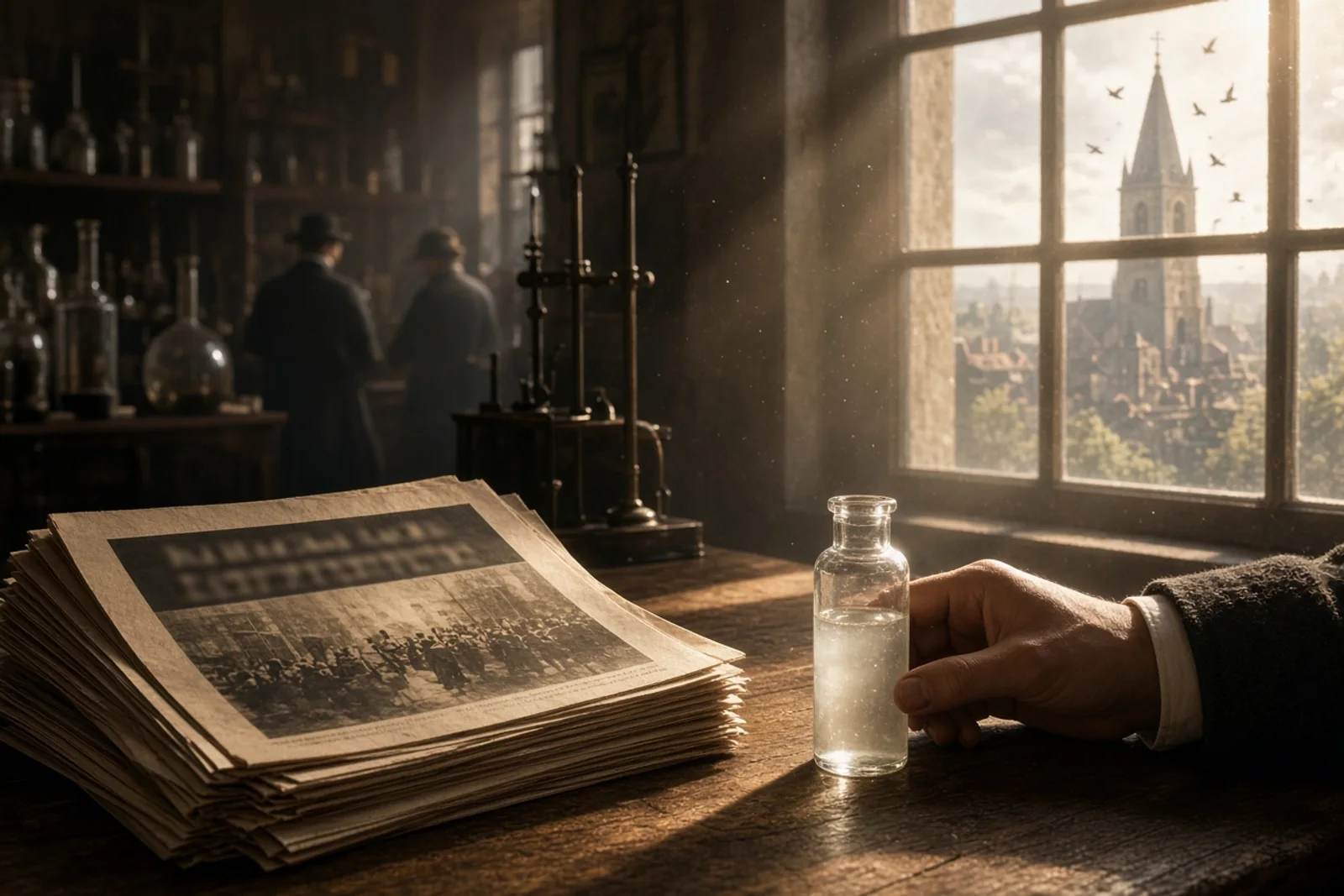
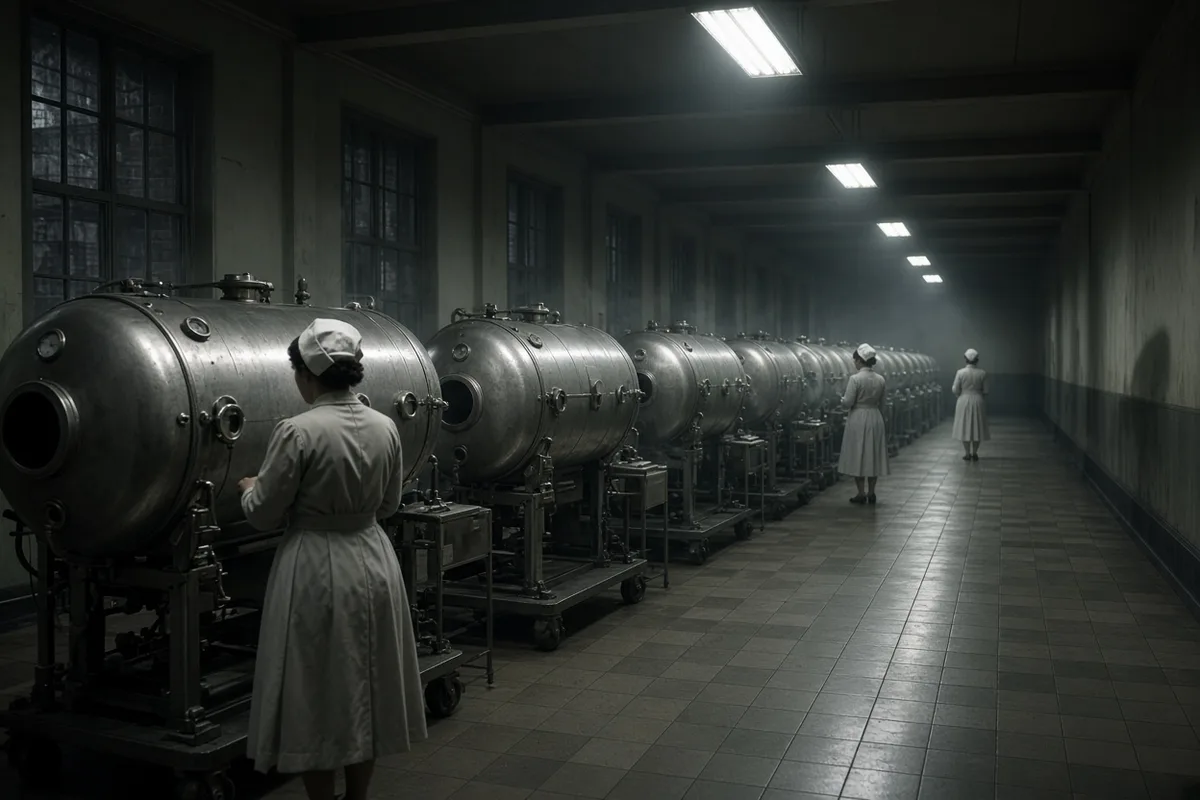
The smell of the ward never left my hands, not even after the third washing. Carbolic soap, and under it the metal smell of the machines, the iron lungs breathing for children who could no longer breathe for themselves. I worked the polio ward before anyone outside Pittsburgh had heard the name Jonas Salk spoken with any weight, back when summer meant something different than it does now, when the arrival of warm weather was measured not in relief but in dread. Mothers kept their children from swimming pools. Movie theaters emptied. A cough in July carried a different kind of silence behind it than a cough in December.
I remember a boy no older than nine, brought in on a Tuesday, still wearing his football jersey because nobody had time to change him before the ambulance came. The day before he'd been running routes on a scrubby lot two blocks from his house. Now he lay in the tank respirator up to his neck, the rhythmic hiss and sigh of the machine breathing for him, and he screamed because he did not understand why his legs would not answer him, why his own body had become a stranger overnight. When his legs still worked he kicked the metal wall of the lung out of pure fright, a hollow sound that traveled the length of the ward. I have never forgotten that sound. I don't think any of us who heard it ever did.

We washed our hands raw. That was the whole of our armor. No one told us there would be more protection than soap and water and the discipline of scrubbing after every single contact, because there wasn't any more. The disease moved through families, through swimming holes, through church picnics, and it did not care whose child it took. It had already reached into the White House once, years before I ever set foot in that ward — a rising young politician struck down in the prime of his ambition, left paralyzed from the waist down, a man who would go on to found a charity that asked not for a few rich men's fortunes but for dimes, millions of dimes, from ordinary people terrified enough to give what little they had.
By the time I was changing dressings and monitoring pressure gauges, two names had begun to surface in the newspapers and in the hushed, hopeful talk of doctors on rounds. One was Albert Sabin, a careful man in Cincinnati who believed answers came slowly, block by block, the way a scientist builds a cathedral stone by stone and expects to die before the roof goes on. The other was the man down the hall from where I worked, in the University of Pittsburgh's virus laboratory, a younger researcher who moved faster than anyone thought wise. Dr. Salk. I would see him some mornings, coat still on, moving through the corridor like a man who had already spent the whole night thinking. He did not carry himself like someone chasing glory. He carried himself like someone who was late for something urgent that only he understood the shape of.

The science, as it was explained to those of us who were not scientists, sounded almost too simple to trust. The virus entered through the mouth, traveled the bloodstream, and did its damage in the nerves. Other men had already done pieces of the puzzle — Enders had shown how to grow the virus in quantity, Hammon had shown that antibodies already circulating in the blood could stop it cold, Howe and Morgan had found a way to kill the virus without killing its power to provoke the body's own defenses. Dr. Salk's task, as I heard it put once by one of his own research associates, was to take all of those separate pieces other men had forged and weld them into something that could be given to a child's arm without risk of giving that child the disease it was meant to prevent.
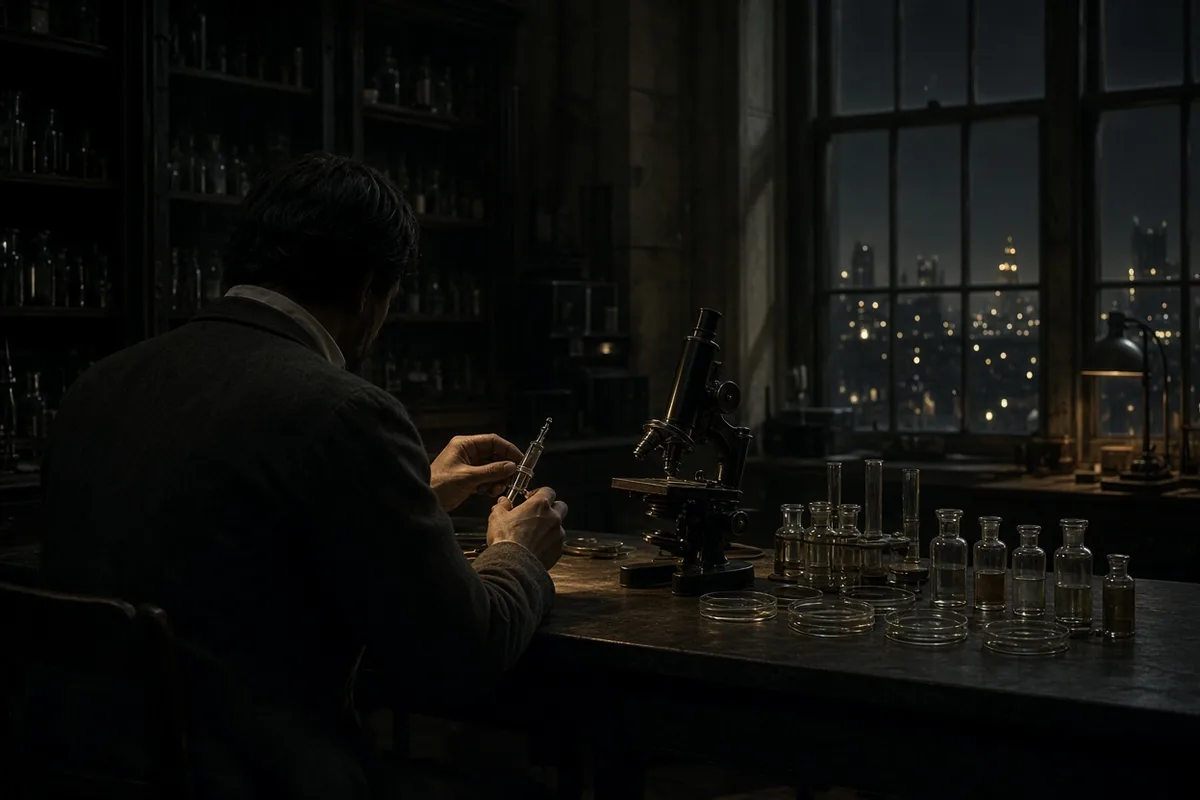
It began, in practical terms, with monkeys. Crates of them, flown in from India and the Philippines, forty-two dollars apiece delivered to the laboratory door. Their kidneys became the broth in which the polio virus was grown, coaxed to multiply far beyond its natural strength, and then killed — carefully, exactly, with formaldehyde measured to destroy the virus's ability to spread while somehow leaving intact its ability to teach the body's blood what an enemy looked like. Three strains went into the mix, Brunhilde and Lansing and Leon, so that whichever one might come knocking at a child's door, the body would already have the face memorized.
I did not understand the chemistry. I understood the stakes. Every vial that left that laboratory was going to end up, eventually, in the arm of somebody's son or daughter, and there was no room in that equation for a mistake. Word moved through the hospital in fragments — trial injections here, monitored blood draws there, small studies growing into larger ones, until finally the scale of what was being attempted became impossible to ignore. Nearly two million children, the papers would later say, were drawn into what people started calling the largest medical experiment in the history of the country. Some received the real vaccine. Some received a dummy shot that did nothing at all. Some were simply watched, unknowing controls in a drama they would never fully grasp until years afterward, when their own children asked what a "polio pioneer" button pinned to an old sweater had meant.
I remember the tension of that spring of 1955 the way you remember weather before a storm, a pressure in the air that had nothing to do with barometers. Parents who had spent years keeping their children from public pools now stood in line at schools and churches to have those same children rolled up their sleeves. There was no vaccine yet on the market. There was only trust, offered forward into uncertainty, the way desperate people offer trust when the alternative is doing nothing at all.
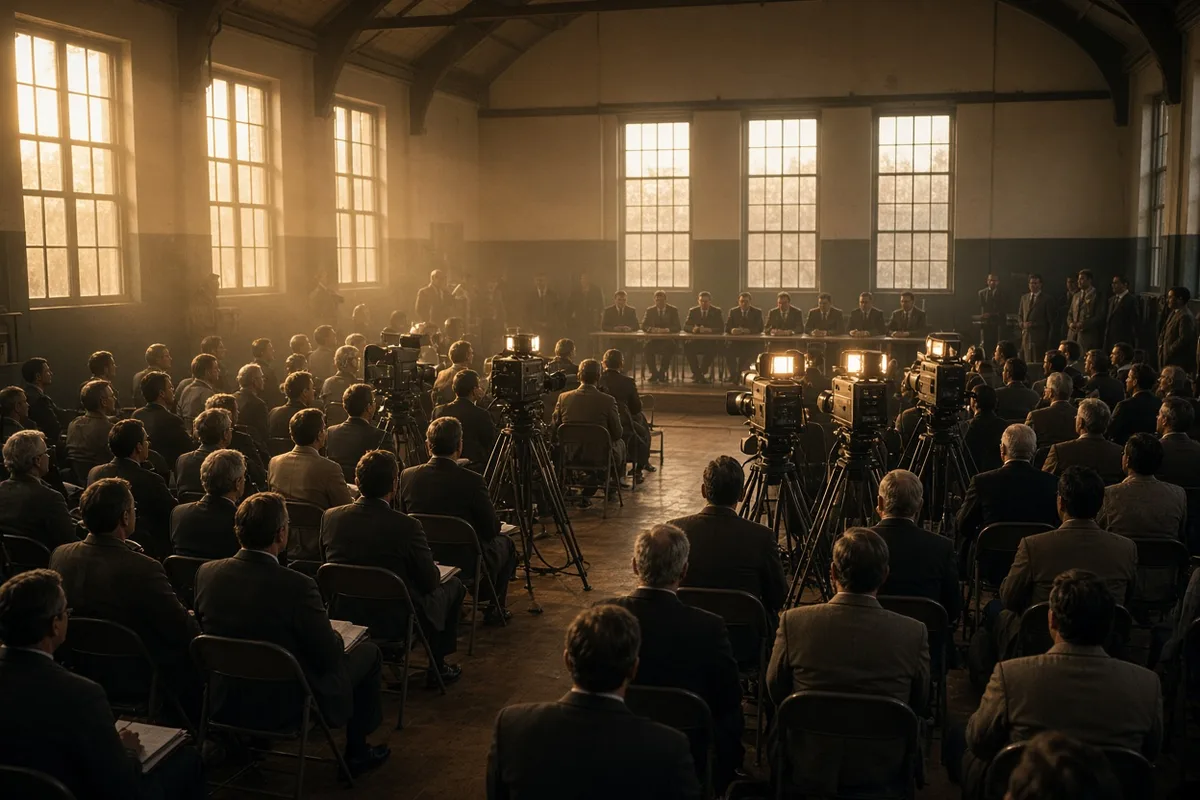
The verdict, when it came, came not in Pittsburgh but in Ann Arbor, Michigan, on the twelfth of April. I was not in that auditorium. Almost nobody who lived through that day was. But word of it moved through the country with a speed that had no precedent, and within the hospital that morning it moved through us like electricity finds water — instantly, and everywhere at once. Dr. Thomas Francis, the epidemiologist chosen to judge the results with cold statistical honesty, stood before some five hundred scientists and a hundred and fifty reporters and read his findings for an hour and a half in a voice that, by every account, never once rose or wavered. The vaccine worked. Up to ninety percent effective. Side effects minor, and few. The scientists in that room, men trained their whole careers to withhold enthusiasm until the data demanded it, rose to their feet in an ovation that would not have suited their usual reserve.
In our ward, someone came running down the hallway before the details had even settled into full sentences. I remember a nurse near me putting both hands over her mouth. I remember not being able to speak for a moment myself, standing beside a bed where a child lay in a brace, feeling something crack open in my chest that I had been holding closed, without realizing it, for years.
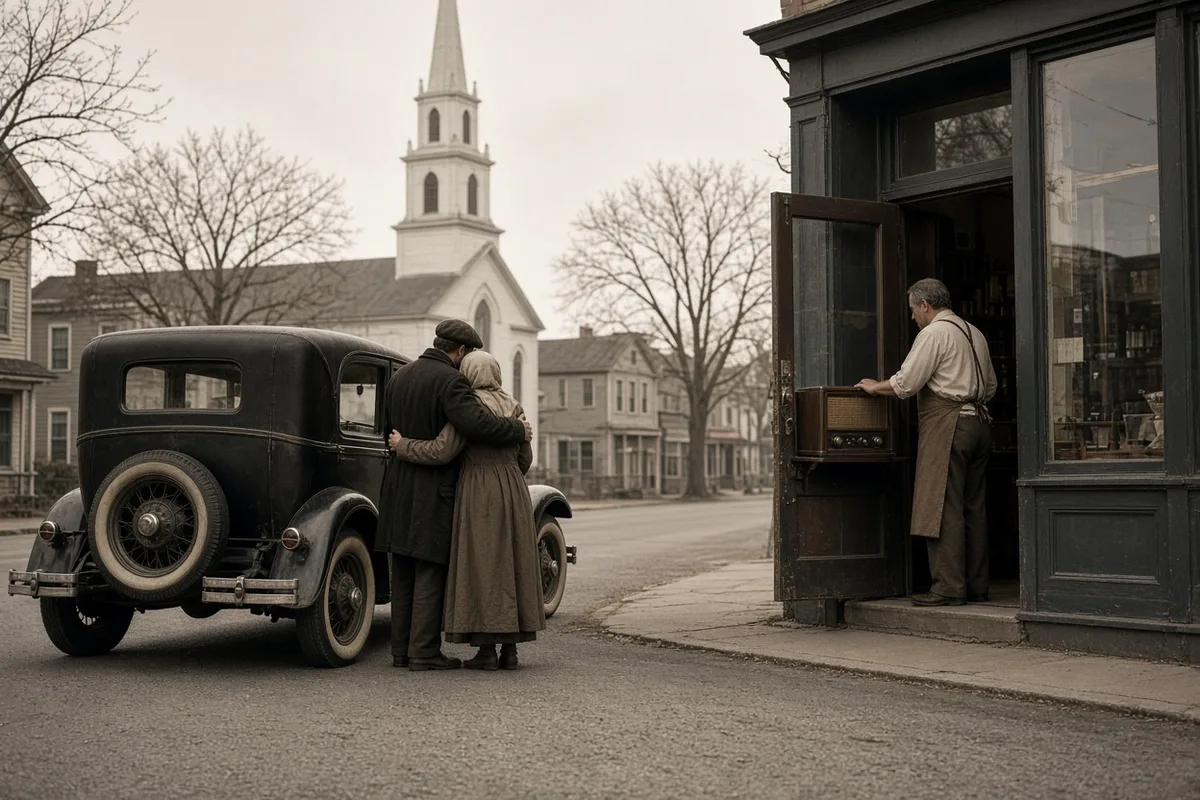
Outside, across the country, church bells began to ring. Not because anyone had ordered it. Because people simply could not think of another way to say what they felt. Sirens sounded in some towns. Strangers embraced on street corners. Department stores put messages on their marquees. Radio programs broke in with bulletins the way they might for the end of a war. In a very real sense, for the parents of America, it was the end of one.
That evening, television cameras found Dr. Salk, and a reporter asked him the question that must have seemed obvious to ask a man who had just handed the world a weapon against one of its oldest fears. Who owned the patent. It was a fair business question. Six major pharmaceutical companies were already scrambling to manufacture the vaccine, and somewhere behind that scramble sat the assumption that a discovery of this magnitude belonged, in the end, to whoever had funded and built it. Dr. Salk did not hesitate the way men hesitate when they are calculating an answer. He simply said that he supposed it belonged to the people. There was no patent, he told them. You could no more patent that vaccine, he said, than you could patent the sun.
I heard those words secondhand, the way most of us did, repeated in the break room and in the corridor outside the wards, passed along like something too good to keep to yourself. I did not fully appreciate, standing there in my white shoes with my raw, over-washed hands, what those seven words would come to mean over the following decades — how many countries with no capacity to pay licensing fees would be able to manufacture and distribute the vaccine freely because one man had refused, at the moment of his greatest possible profit, to claim ownership over what he had made. I only knew, in that moment, that it felt like relief given a shape.
Manufacturing accelerated within weeks. The pharmaceutical companies that had been waiting on results now moved into full production, monkeys arriving by the thousands each month to keep the kidney cultures growing, laboratories running around the clock to keep pace with a demand that had no precedent. There were stumbles — a batch produced by one manufacturer would later be found improperly inactivated, and for a terrible stretch that spring the shadow of the disease itself flickered across the very program meant to end it, cases traced back to faulty production rather than natural spread. It was a frightening detour, and it slowed things, and it demanded fixes to safety protocols that had not yet caught up to the speed of the triumph. But it did not undo what had already been proven in Ann Arbor. The vaccine worked. The problem now was making enough of it, correctly, fast enough.
I watched, over the seasons that followed, as the terror that had defined every summer of my working life began, slowly, to lose its grip. Fewer beds in the ward. Fewer iron lungs wheezing through the night. Children who, a few years earlier, would have been carried in on stretchers now walked in for a scheduled injection, cried a little at the needle, and walked back out to whatever ordinary afternoon waited for them. It did not happen all at once. Diseases do not disappear the way headlines suggest they should. But the numbers fell, year over year, in a way that no one in that ward would have dared predict a decade before.
Albert Sabin, the man who had taken the slower road, would go on in time to develop his own vaccine, one given by mouth on a sugar cube rather than by needle, and it would eventually become the version most widely used around much of the world. There was rivalry between the two men and their camps for years afterward, arguments about method and merit that outlasted the disease's grip on the public imagination. But by then the essential thing had already happened. The fear that had once arrived every June like a scheduled visitor had been broken, and it never fully returned in the form we had known it.
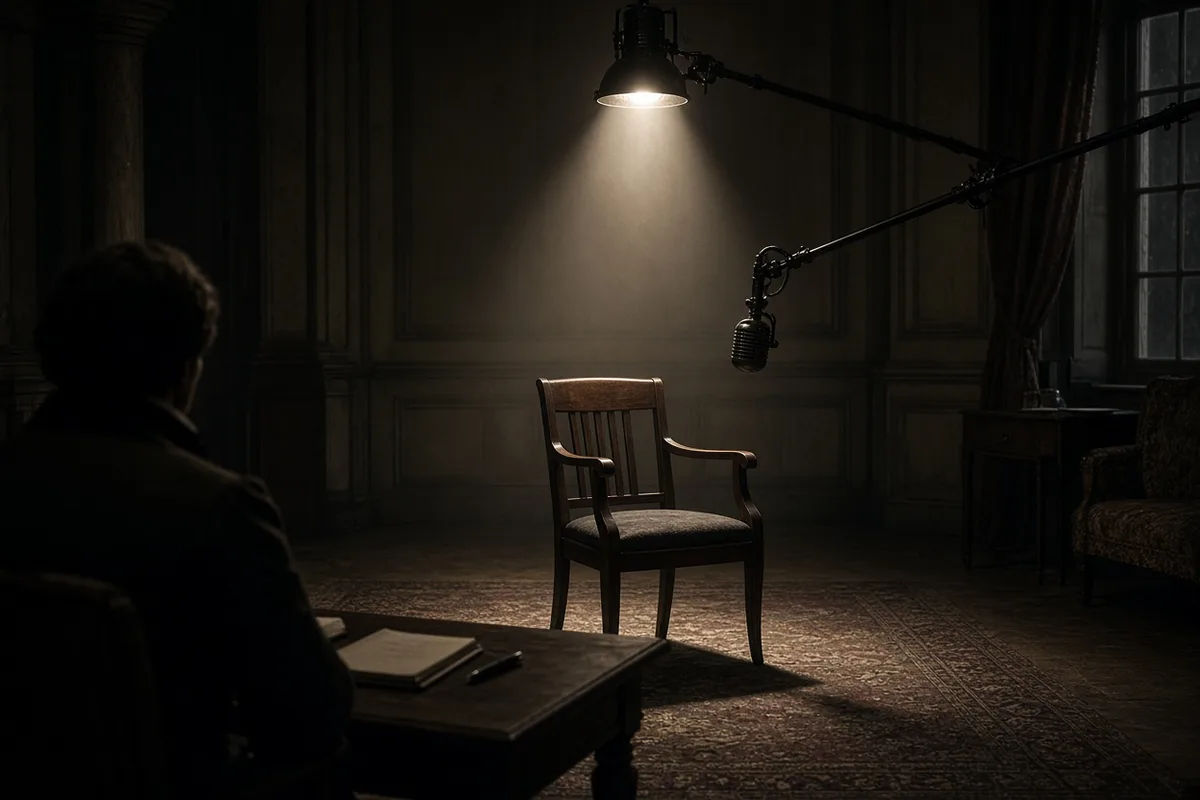
Dr. Salk did not disappear into wealth or leisure after that April. He went on founding, years later, an institute in California devoted to research, and in the interviews he gave afterward, including one to the BBC decades on, he spoke of the work not as a single triumphant leap but as a long walk through failures that had turned out, when looked at properly, to be doorways rather than dead ends. He said something once about blind alleys being opportunities, a phrase that stuck with those of us who had watched him from a distance in those hallway mornings, coat still on, moving like a man late for something urgent. I think of that phrase sometimes when I think of the ward itself, of the boy still in his football jersey, of how many blind alleys the science had to pass through — Enders, Hammon, Howe, Morgan, all the names most people never learned — before one determined man in Pittsburgh found the door at the end of them.
I left nursing eventually, the way most of us leave the work that shaped us, carried off by time and by other necessities. But I kept, for years, a small tin button that had been given to the children who took part in those trials, the ones who rolled up their sleeves not knowing whether they were receiving medicine or salt water, trusting adults they had never met with something that mattered more than they could have understood. Polio Pioneer, it read. I think of those children now grown old, grandparents themselves, most of them never having needed a brace or a respirator because of what was decided in an auditorium in Michigan on an April afternoon in 1955. I think of the bells that rang that day in towns that had nothing to do with Pittsburgh or Ann Arbor, ringing simply because people needed a way to say that something enormous and merciful had finally arrived, and the only instrument loud enough, old enough, was the church bell down the street, sounding the way it always had for births and for endings, now sounding for neither, but for a beginning instead.