


Jonathan Edwards Embraces Sovereignty
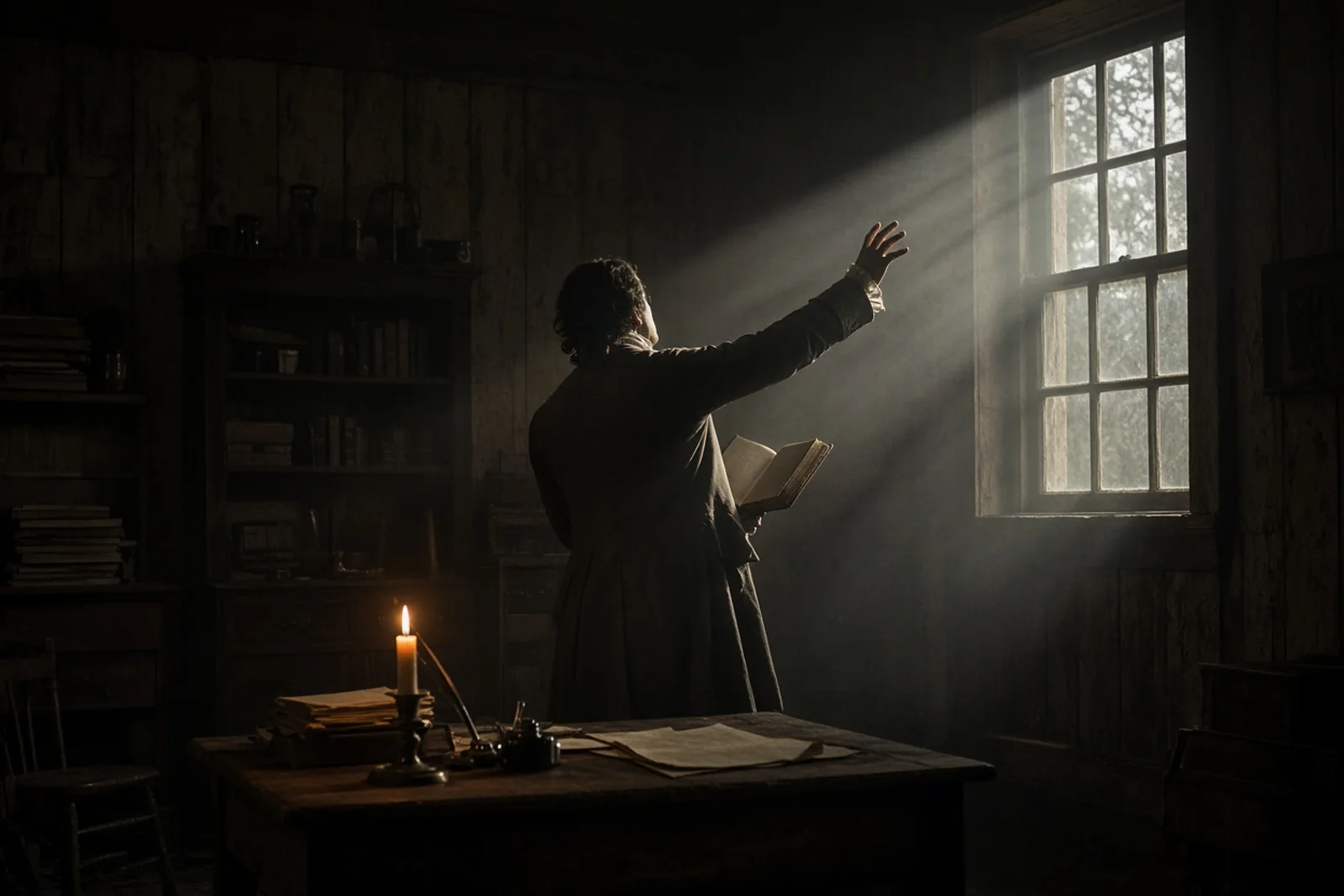
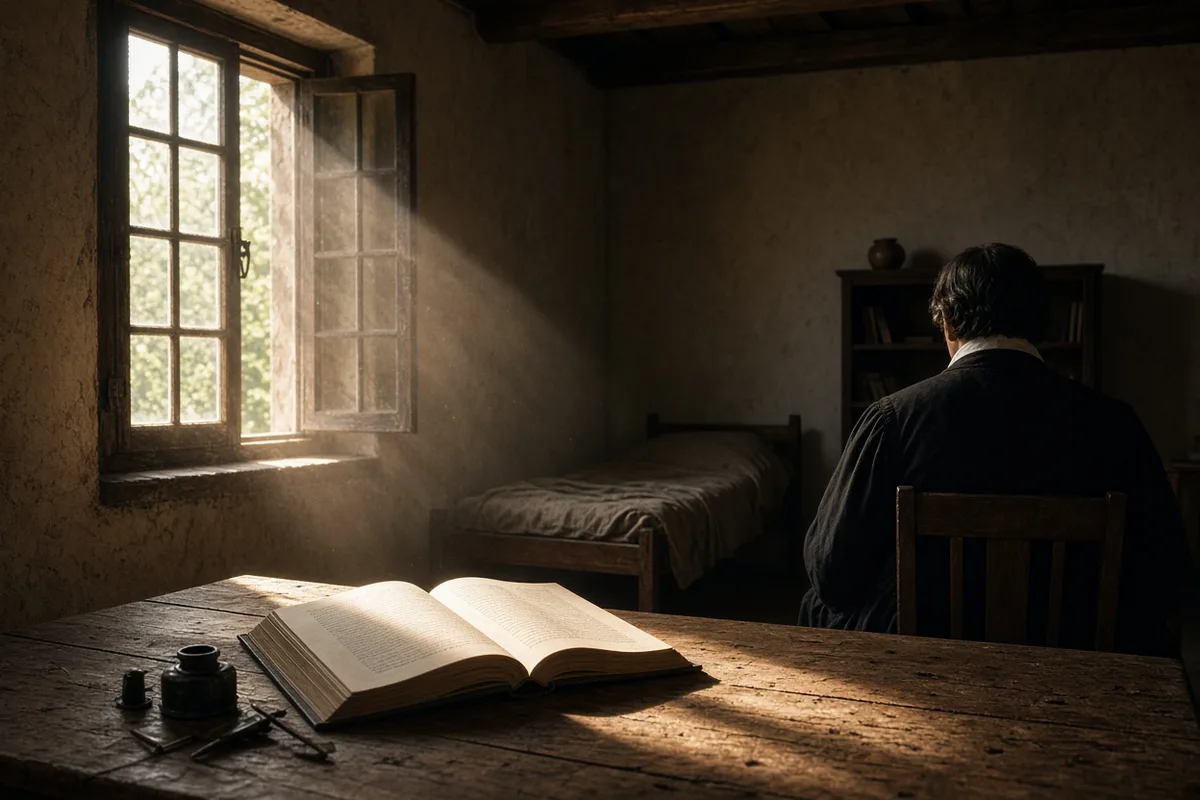
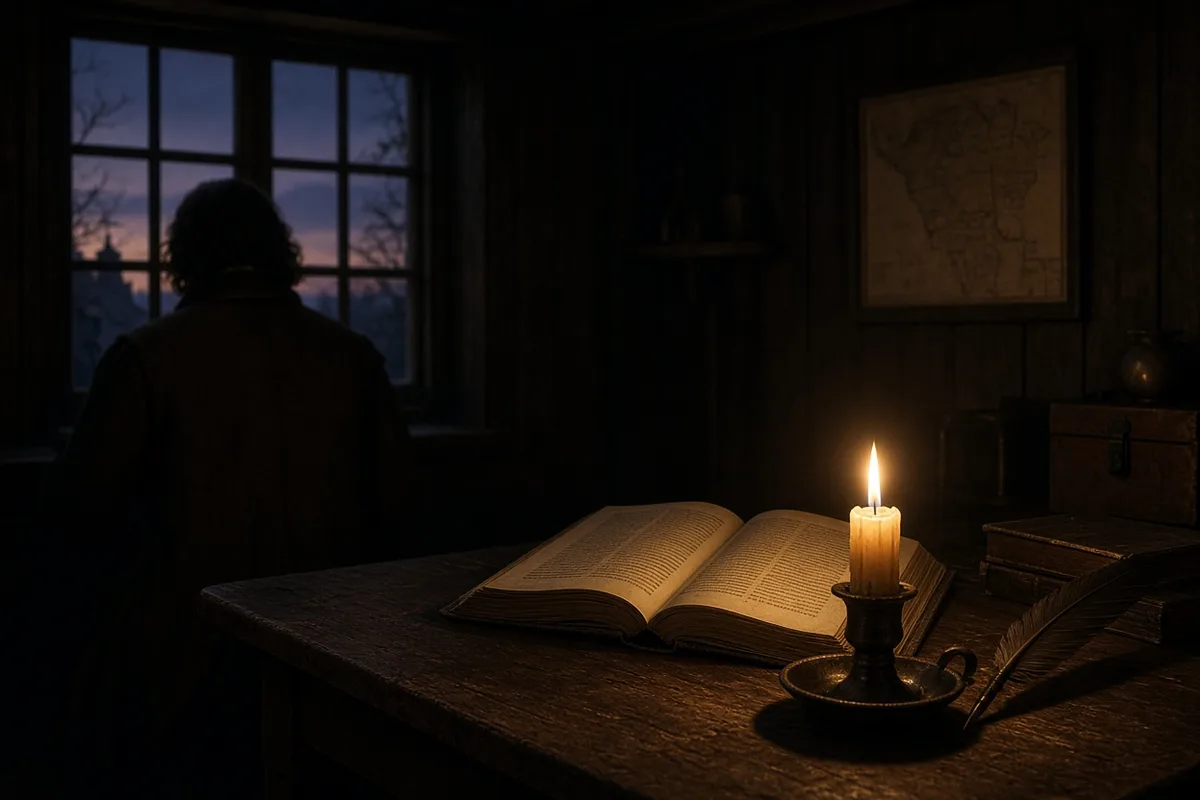
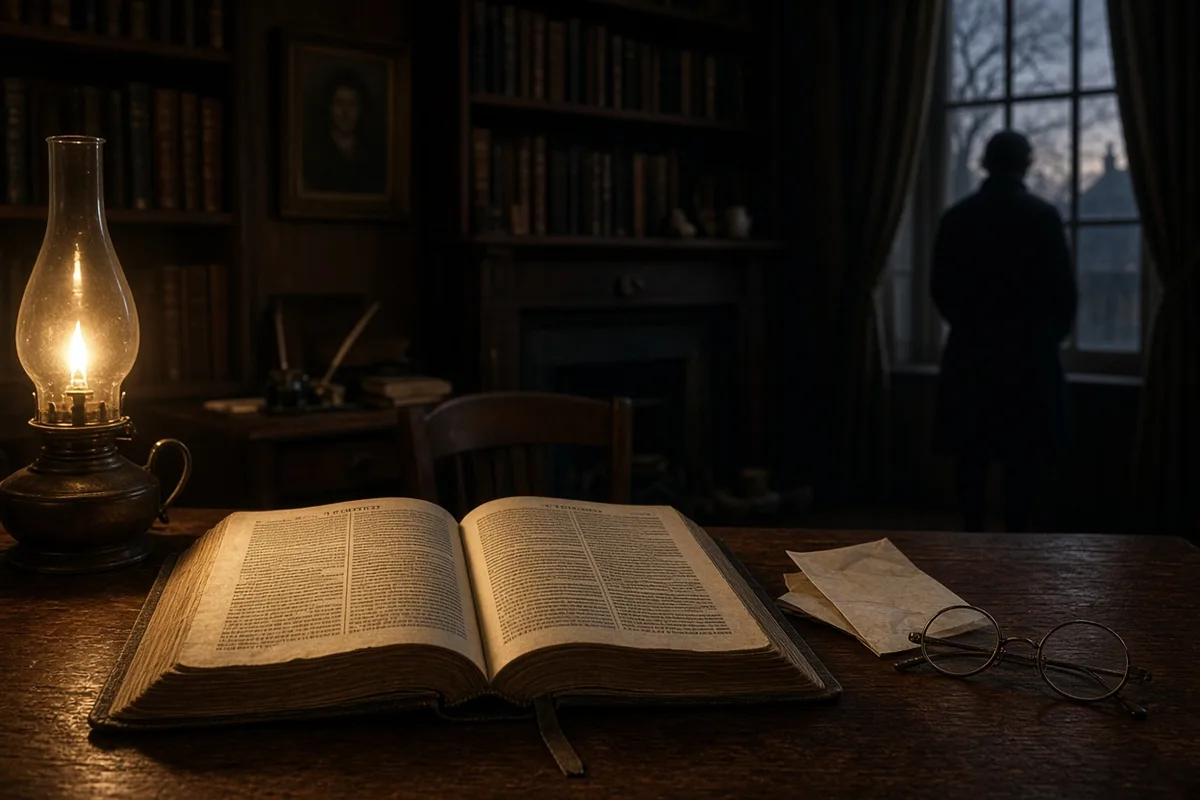
The candle had guttered low again. I pushed the wick upright with the end of my quill and watched the flame climb. Across the narrow table Jonathan sat with his Bible open, shoulders drawn forward the way a man leans into a headwind he cannot see. We had shared this attic room above the college hall for three terms. Most nights he read until the bell rang for morning prayers. Some nights he argued with the pages under his breath.
He had carried the same objection since boyhood. The thought that God chose some for life and passed by others without regard to anything they had done struck him as unjust. He told me once, while we walked the path behind the orchard, that the doctrine tasted of iron in the mouth. He could recite every text that seemed to support it, yet each one left him more restless than before.
That evening he turned the leaves slowly. His finger stopped at First Timothy. I heard him draw breath to read aloud, then stop. The words came out quiet, almost private. “Now unto the King eternal, immortal, invisible, the only wise God, be honour and glory for ever and ever. Amen.”

He did not speak again for a long time. His eyes stayed on the page, but the tension in his neck eased by degrees. I kept copying notes from a lecture on the Romans, yet I found myself glancing up. Something had shifted in the room, though the candle still smoked and the wind still pressed against the shutter.
Later he told me the sense had come without warning. A glory belonging to God alone had filled the lines until they seemed larger than the paper. He said it was not an argument that convinced him. It was more like light reaching the bottom of a well he had stopped trying to measure. The old objections did not rise. They simply had no place left to stand.
We walked out together the next morning. Students hurried past us toward the hall. Jonathan kept his hands behind his back and looked at the ground as we went. When I asked whether the doctrine still troubled him he answered that it no longer did. The justice of it had become as plain to him as any fact he could see with his eyes. He spoke without heat or triumph, only a kind of settled quiet.
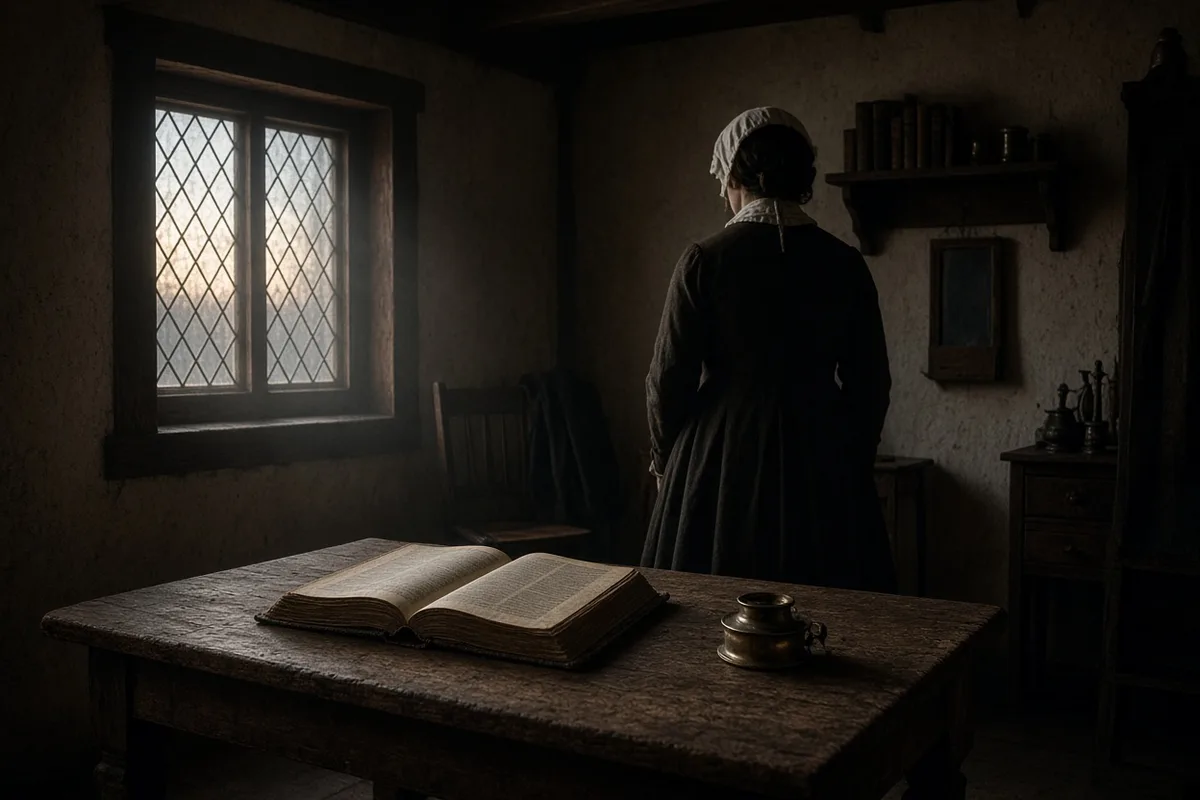
In the months that followed he read the same passages that once provoked him and found them newly ordered. He began to speak of sovereignty as something to be ascribed to God with gladness rather than defended against complaint. The change showed in small ways. He no longer broke off a conversation when the subject turned to election. He stayed and listened.
By the spring he had finished his studies and taken a license to preach. I saw him once more before he left for New York, standing at the edge of the green with his few books tied in a cloth. He asked after my own plans and wished me well. The old restlessness had left his face, replaced by a steadiness that looked almost like rest.
Years later word reached me that he had married Sarah Pierpont and settled in Northampton under his grandfather’s care. The same man who once could not bear the thought of absolute sovereignty now preached it without apology. Congregations felt the difference. People who had heard only thunder in the doctrine began to hear something else, a kind of brightness.
He never claimed the moment in Timothy had been dramatic or sudden in the way some conversions are described. He simply said the doctrine had become delightful where it had once been bitter. The alteration held. Through the long pastorate, through the disputes over communion, through the move to the frontier mission, the conviction remained.
I last heard of him when he accepted the presidency at the college in New Jersey. By then his notebooks were filled with arguments for the freedom of the will and the nature of true virtue, all of them resting on the same foundation he had found that evening at the table. He died there of a fever after a smallpox inoculation, buried beside his son-in-law in the college ground.
The candle I remember from that attic room burned down to a stub and went out while he still sat with the open Bible. I trimmed another and set it beside him. He did not look up. The words on the page held him, and the room had grown quiet enough to hear the wind move through the elms outside.
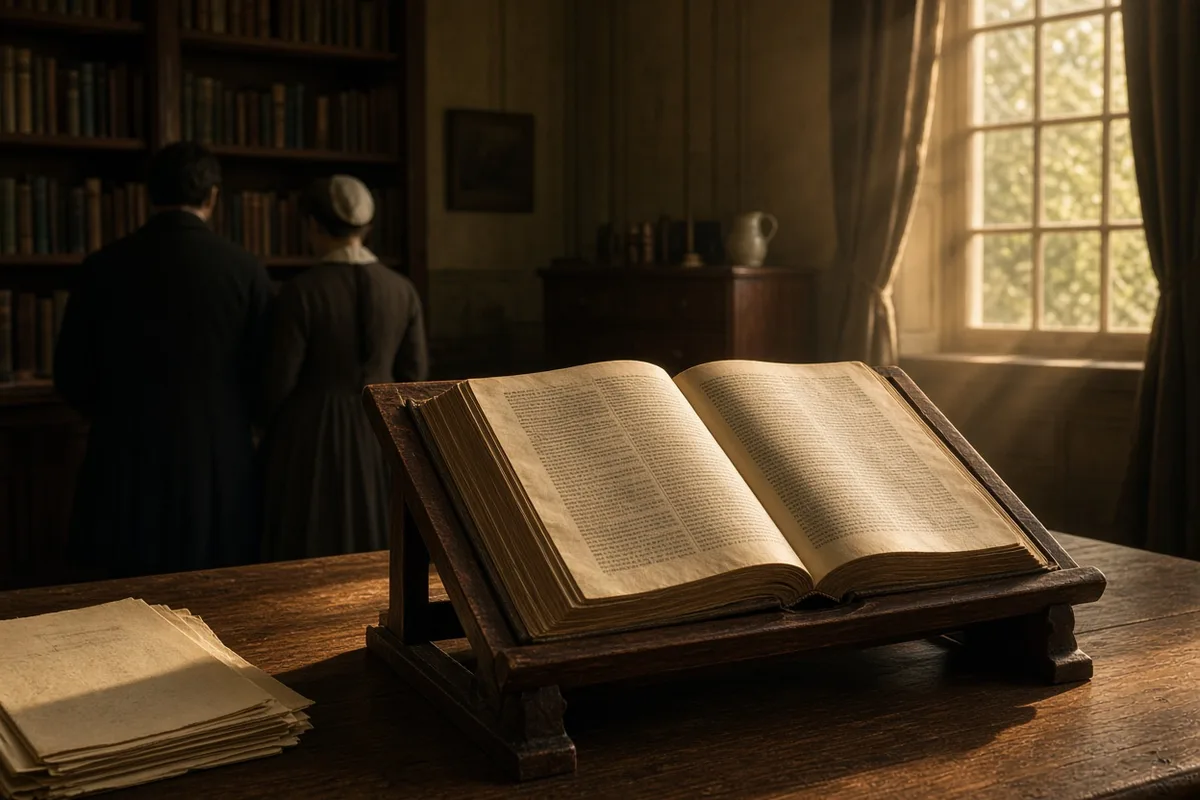
The candle I remember from that attic room burned down to a stub and went out while he still sat with the open Bible. I trimmed another and set it beside him. He did not look up. The words on the page held him, and the room had grown quiet enough to hear the wind move through the elms outside.
In the spring of 1727 he stood before the congregation at Northampton and read from the twenty-third chapter of Job, the verse that runs “Though he slay me, yet will I trust in him,” and afterward he wrote in his diary that the text no longer carried the old taste of iron. Sarah Pierpont, then nineteen, sat in the third pew on the north side; they married on July twenty-eighth of that year in the meetinghouse at New Haven, and the record kept by the town clerk lists the witnesses as Timothy Edwards and Esther Stoddard Edwards. Their first child, Sarah, was born the following August, and by 1735 seven more had arrived, each entry in the family Bible noting the exact hour and the attending midwife’s name. The sermons he preached on Wednesday afternoons during those years filled two ledgers that still rest on the shelf in the Forbes Library at Northampton, the ink faded but the dates legible: 4 March 1733, “God’s Sovereignty in the Salvation of Men”; 12 June 1734, “The Justice of God in the Damnation of Sinners.”
On 8 July 1741 he rode to Enfield and delivered the discourse later printed under the title “Sinners in the Hands of an Angry God.” The printer’s account in Boston records that the first edition of two hundred copies sold out within a fortnight and that a second impression of five hundred followed in October. Deacon Samuel Hopkins, who accompanied him on the journey, noted in his journal that the people in the meetinghouse cried out so loudly that Edwards had to pause for several minutes before continuing with the sentence beginning “The bow of God’s wrath is bent.” After the service the two men lodged at the house of the Reverend Peter Reynolds, and Edwards wrote a letter to his wife the next morning describing the text from Deuteronomy 32:35 that had opened the sermon.
By 1750 the dispute over the qualifications for communion had reached its height. On 22 June of that year the church voted 230 to 23 to dismiss him from the Northampton pulpit. The town records list the names of the twenty-three who dissented, among them Joseph Hawley and Elisha Hawley. He removed with his family to Stockbridge, where the mission board had provided a house on the hill overlooking the Housatonic. The ledger kept by the commissioners records that he received an annual salary of one hundred pounds and that he preached to the Mohawk and Mohican congregations on alternate Sundays, using an interpreter named John Wauwaumpequunnaunt. During those six years he completed the manuscript of “A Careful and Strict Enquiry into the Modern Prevailing Notions of that Freedom of Will,” which the Boston printer Samuel Kneeland issued on 14 January 1754 in an edition of one thousand copies priced at three shillings each.
In 1757 the trustees of the College of New Jersey wrote to him at Stockbridge offering the presidency left vacant by the death of Aaron Burr. The letter, dated 25 September and signed by William Peartree Smith, reached him on 8 October. He accepted on 19 October, and the family traveled north by wagon, arriving in Princeton on 16 February 1758. The college records show that he delivered his first lecture on 2 March, taking as his text the opening proposition of the Westminster Shorter Catechism. On 13 March he submitted to the smallpox inoculation performed by Dr. William Shippen at the house on the corner of Nassau and Witherspoon Streets. The fever rose on the seventeenth, and the college steward noted in the daybook that Edwards died at five o’clock in the morning on 22 March.
He was buried two days later in the college graveyard beside his grandson Aaron Burr Jr., the child having died the previous September. The stonecutter’s bill, preserved among the treasurer’s papers, lists the cost of the slate marker as one pound four shillings. Sarah Pierpont Edwards survived him by three years; she died at Philadelphia on 2 October 1758 while visiting her daughter Esther, and the burial register of the First Presbyterian Church records the interment in the yard on Arch Street.
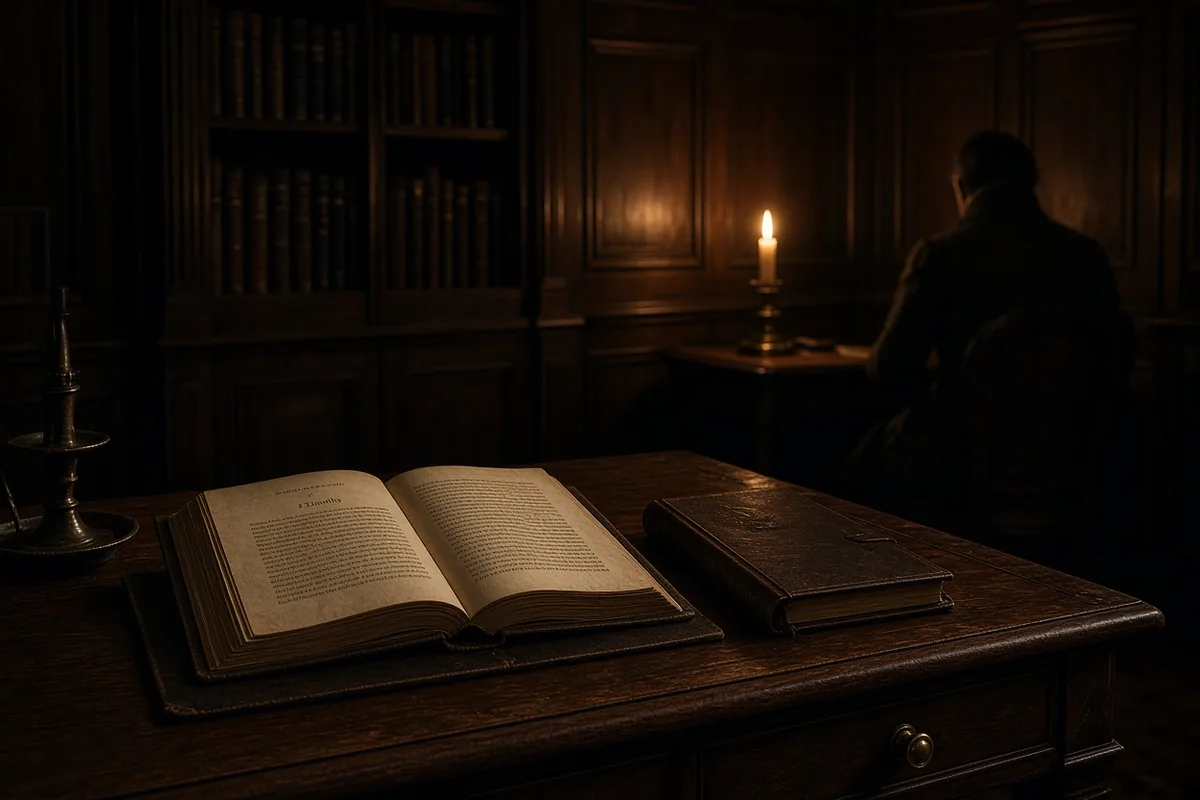
The notebooks he left behind passed first to his son Jonathan Edwards Jr., then to his grandson Timothy Dwight, who became president of Yale in 1795. In 1830 the college purchased the collection of seventy-three manuscript volumes for two hundred dollars and placed them in the library then housed in Connecticut Hall. One volume, labeled “Miscellanies” and numbered 94, contains the entry dated 1723 that begins “That I have already been more than ordinarily engaged in the concerns of religion.” The pages remain bound in their original calfskin, the paper still showing the watermark of the English mill that supplied the sheets.
Today the same Bible he held open on the attic table rests in a glass case at the Beinecke Library at Yale, opened to the page of First Timothy where the candle once guttered. The volume carries the inscription “Ex libris Jonathan Edwards, 1720,” written in the hand of his father. On certain afternoons a descendant of one of the men who sat with him in that room at Yale—now a graduate student in the divinity school—comes to the reading room, requests the volume, and turns the leaves slowly, stopping at the same verse that once drew the breath from the young man’s chest. The attendant records the request in the logbook under the date and the reader’s name, then returns the book to its shelf when the library closes at five.
The Beinecke attendant who logs those requests keeps a separate card file for readers who ask after the marginalia in Edwards’s hand; one entry from 14 October 1947 records that Professor Perry Miller of Harvard requested the volume for three consecutive afternoons while preparing the chapter on “The Nature of True Virtue” for his biography. Miller’s own penciled note on a slip of paper still tucked between pages 312 and 313 quotes Edwards’s later remark to the Stockbridge congregation on 15 August 1751: “The sovereignty of God is the great rock on which the saints stand when all other ground gives way.”
After the college moved its main library to Sterling Hall in 1930, the remaining Edwards manuscripts were transferred to the newly built Beinecke in 1963; the transfer inventory lists seventy-three volumes plus four bundles of loose sermons, each bundle tied with the same linen tape Edwards had used in Princeton. The linen, now brittle, still carries the faint odor of wood smoke from the Stockbridge study where he wrote the reply to John Taylor on 5 February 1757.
Sarah Edwards’s daughter Esther married Aaron Burr Sr. in 1752; their son, the future vice president, was born in Newark on 6 February 1756 and baptized in the same meetinghouse where his grandfather had preached the 1751 farewell sermon. The baptismal register of the First Presbyterian Church of Newark notes the infant’s name and the sponsor, Timothy Edwards, who traveled from Elizabethtown for the occasion and returned the following week with a copy of the just-printed “Freedom of the Will” for his sister.
The college steward’s daybook for March 1758 records that Edwards’s personal library, consisting of 298 volumes, was appraised at forty-seven pounds and sold at auction on the Princeton green on 4 May; the purchaser of the largest lot was the Reverend Samuel Davies, who paid twelve shillings for the set of Turretin’s “Institutio Theologiae Elencticae” still bearing Edwards’s underlinings in the section on predestination. Davies later became the fourth president of the college and kept the volumes in his study until his death in 1761.

In 1903 the Yale Divinity School acquired the remaining Edwards family papers from the descendants of Timothy Dwight; among them is the letter Edwards wrote to his father on 12 January 1724 describing the change that had come over the doctrine of election. The letter, folded once and sealed with red wax, carries the postmark “Northampton” and was delivered by the weekly post rider on 19 January.
The last direct descendant to serve as a trustee of the college was Theodore Dwight Woolsey, great-grandson of Jonathan Edwards Jr., who sat on the Yale board from 1846 to 1881 and cast the deciding vote for the construction of the new library building that now houses the manuscripts. Woolsey’s diary entry for 8 June 1870 notes that he spent the afternoon reading the “Miscellanies” volume numbered 94 and copied out the sentence that begins “The will is as the greatest apparent good.”
On weekday mornings the current reference librarian at Beinecke, whose name appears in the log as Dr. Kathryn James, unlocks the Edwards case at 9:15, checks the humidity reading inside the vitrine, and replaces the page marker if it has shifted overnight. She records the temperature at 68 degrees Fahrenheit and the relative humidity at 45 percent before returning the key to the locked drawer beneath the circulation desk.