


Jonathan Edwards' Personal Narrative of Faith
We crouched in the mud that afternoon, Jonathan and I and two others from the meeting-house yard, hauling cut branches into a low ring where the swamp water barely reached our ankles. The air smelled of rot and pine pitch. We drove the poles deep and lashed them with strips of bark, then spread the last boughs across the top until the space inside was dark enough for prayer. Jonathan kept saying we needed one more layer so the rain would not reach us when we knelt. His hands were raw from the work, but he would not stop until the roof held.
After that we met there most weeks when the weather allowed. Five times a day he slipped away from the house, sometimes alone, sometimes with us. I watched him come back from the woods with his face still set, as if the words he had spoken in secret were still moving on his tongue. The rest of us tired of the habit before long. He did not.

By the time he left for college the booth had fallen in on itself. I saw him once more before he went, standing at the edge of the pasture with his bundle. He said nothing about the old places. Two years later word reached us that he had been taken with pleurisy and lay near death. When he returned home the following winter his face had thinned and his voice carried a new roughness. He sat at his father’s table and ate little. At night I heard him pacing the upper room.
He began to speak of the old objections again, the ones that had troubled him since boyhood. God’s choice of some and not others, the eternity of the lost, the justice that left men in torment without remedy. These thoughts came between him and sleep. He told his father he had tried to lay them aside by force of will, but the more he pushed the heavier they pressed. His father listened without answering at once. They sat together in the small study until the lamp burned low.
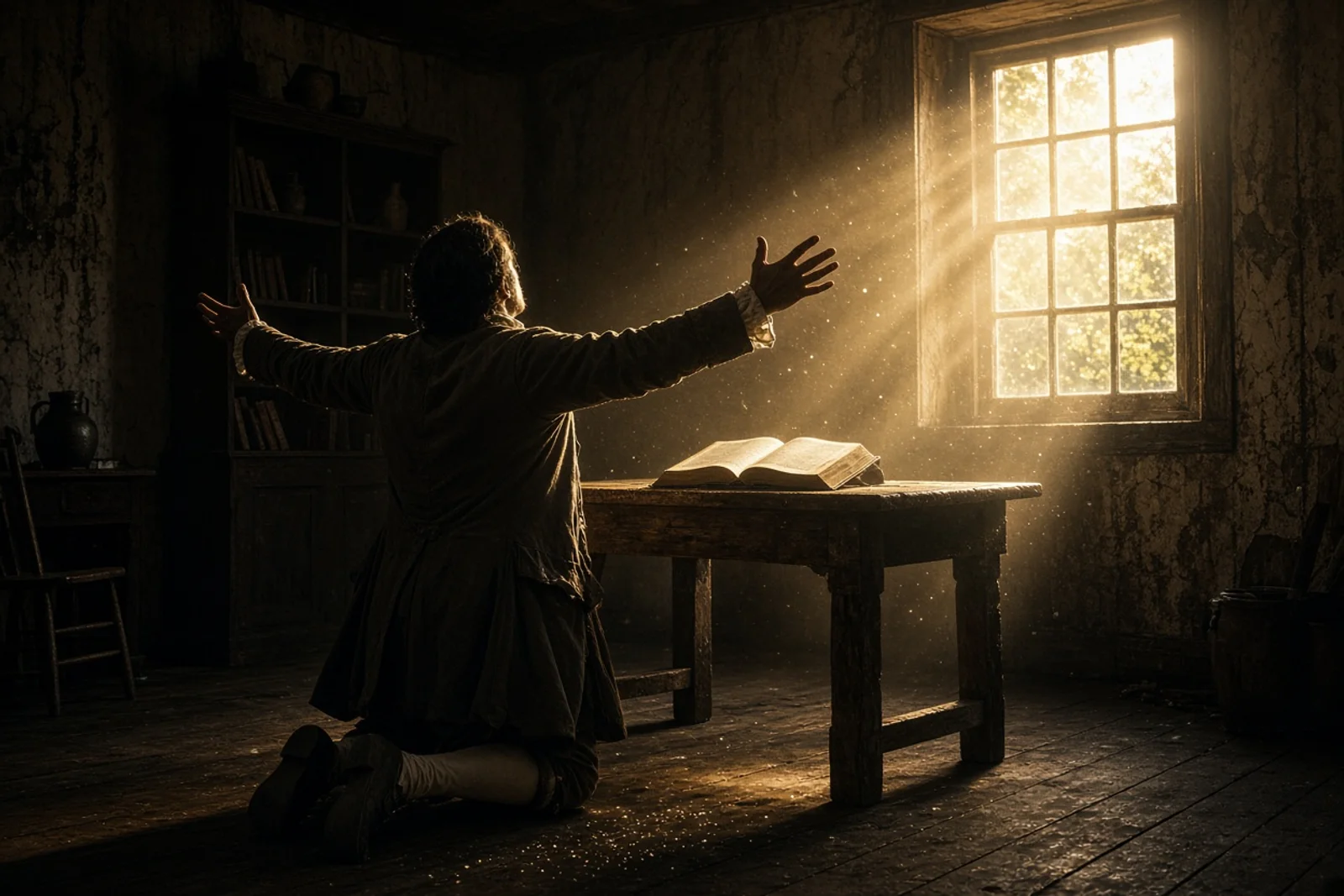
One evening after supper Jonathan opened the Bible at the table and read aloud from the first letter to Timothy. When he reached the seventeenth verse he stopped. He read it again, slower. Then he closed the book and sat with both hands flat on the boards. His father asked what had struck him. Jonathan said only that the words had come into him differently than before, as if the weight of them had shifted. He did not say more at the table.
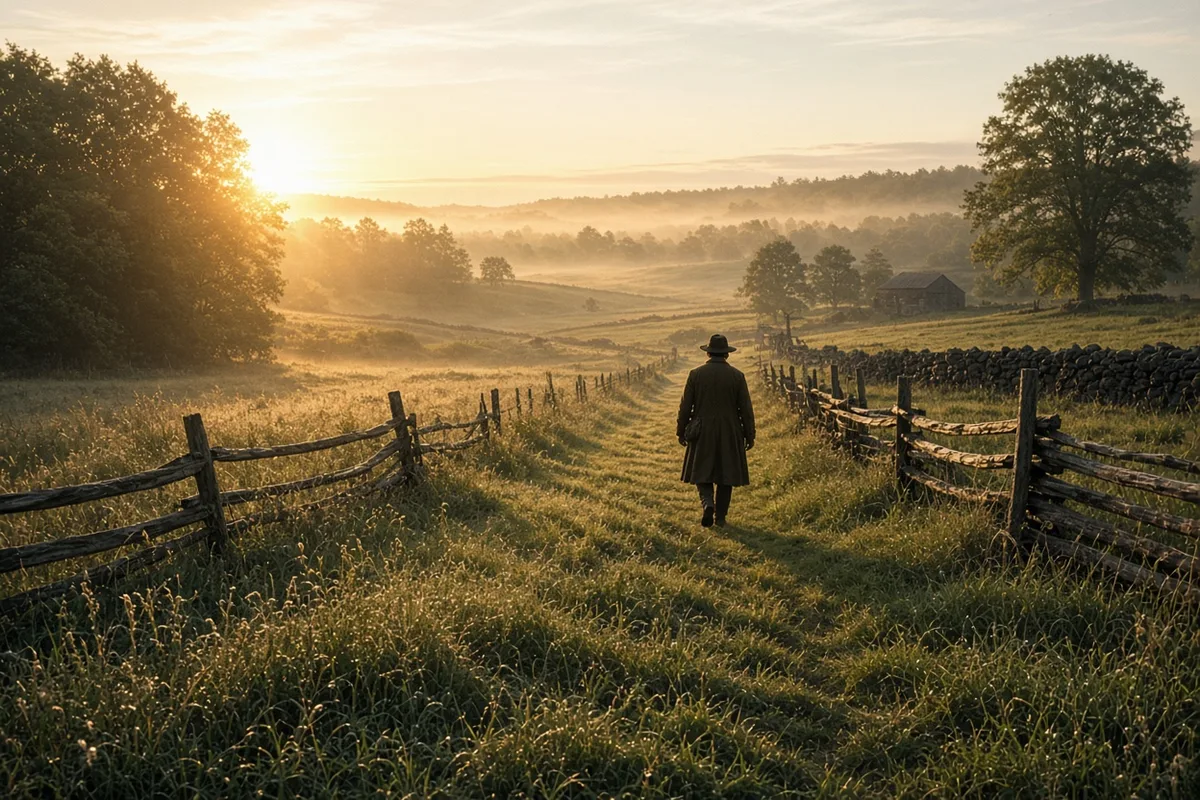
Later he walked out alone into the pasture behind the house. I was mending a fence rail at the lower edge and saw him stop midway up the slope. He stood a long time with his head lifted toward the clouds that were just beginning to thin after rain. When he came back his step had changed. He did not hurry. He looked at the grass as though he had not seen it that morning.
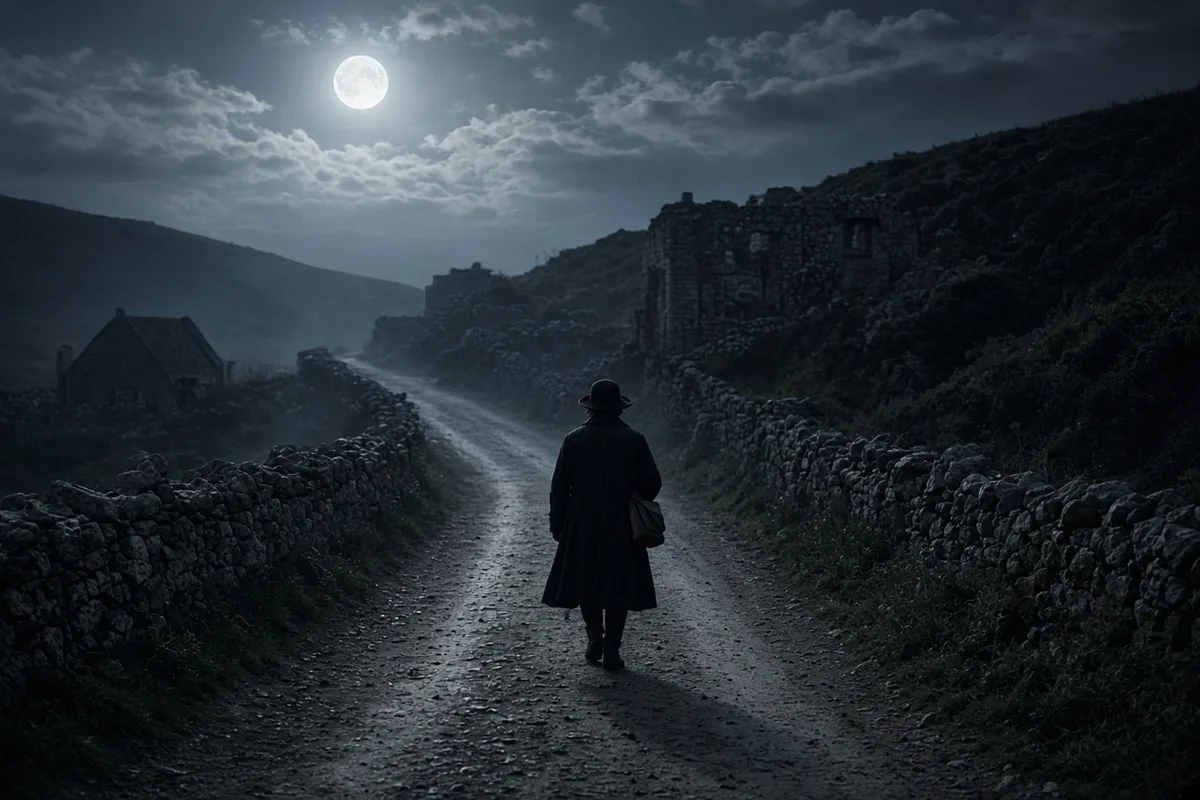
In the weeks that followed he took fewer walks into the woods for the old kind of prayer. Instead he stayed near the house and read for longer stretches. Sometimes he carried the book outside and sat with it open on his knees while he watched the light move across the fields. He spoke less about his own efforts and more about what he saw in the ordinary sky. The moon held him one night for nearly an hour. He stood at the window and traced the edge of it with one finger on the glass, saying nothing.

His father noticed the difference first. One afternoon they spoke again in the study. Jonathan told him the sense of things had grown steadier, not loud but constant, so that even the plainest objects carried a brightness he had not known how to name. His father asked whether this had come by any sudden terror. Jonathan said it had not. It had come while he read and had stayed without being forced.
By spring he was riding out with his father to neighboring pulpits. He still carried the same objections in his mind, yet they no longer stopped him. He told me once, while we walked the lane, that the doctrine no longer appeared as a barrier but as part of the same glory he had met in the verse. He did not press the point. He simply walked on.
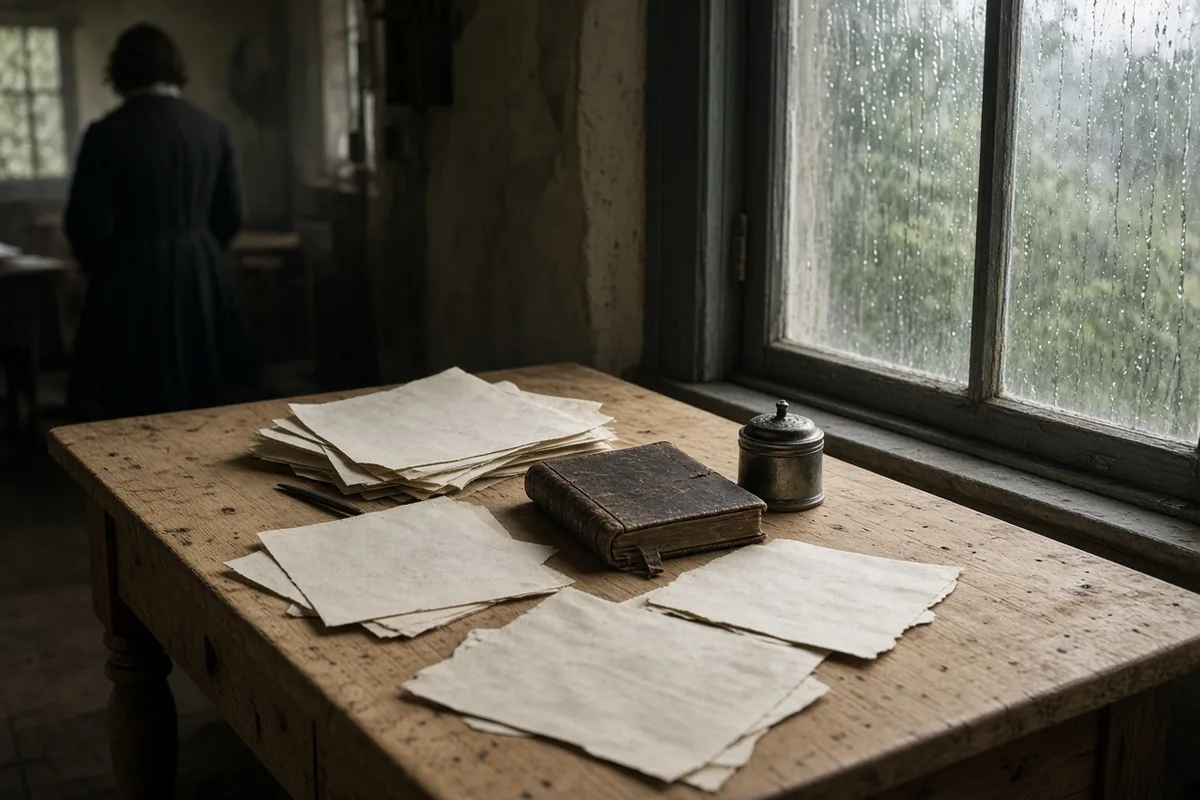
The change showed itself most clearly in the way he met ordinary days. He rose earlier and read before the household stirred. When the younger children asked questions at table he answered without hurry. He began to keep a separate sheet of paper for notes on passages that now struck him with the same weight as the first. The sheet grew longer each week.
One clear morning he asked me to come with him to the edge of the wood where the old booth had stood. The poles were still there, half sunk. He did not mention what we had done as boys. He only looked at the place for a moment, then turned back toward the house. On the way he pointed to a line of light between two clouds and said the same glory he had once sought in secret places now seemed to rest on the fields without being asked.
Years later, when he preached in Northampton, the same steadiness remained. He spoke of redemption as something already moving through the ordinary hours rather than a single height to be climbed. People who had known him earlier remarked that the old restlessness had gone out of his face. He still studied late, but the lamp no longer burned against fear. It burned because the work itself had become the place where the sense of glory continued.
On the last afternoon I saw him at the parsonage he stood again at the pasture fence, older now, watching the same slope. The clouds were low and moving fast. He did not speak. He only lifted his hand once, as if to mark the line where the light broke through, then let it fall.
Two months after that afternoon the letter arrived from the committee in Northampton inviting him to supply the pulpit for a season. He rode there on the eighth of November 1726 with two saddlebags and a volume of Locke, and by the following August the church had voted to settle him at sixty pounds salary plus firewood. On the twenty-eighth of July 1727 he stood with Sarah Pierpont before her father’s congregation in New Haven and repeated the words of the covenant. They returned north the same week and took the parsonage rooms that faced the meeting-house green. Each morning he walked the short path to the study and set out fresh paper beside the inkhorn before the first light reached the windows.
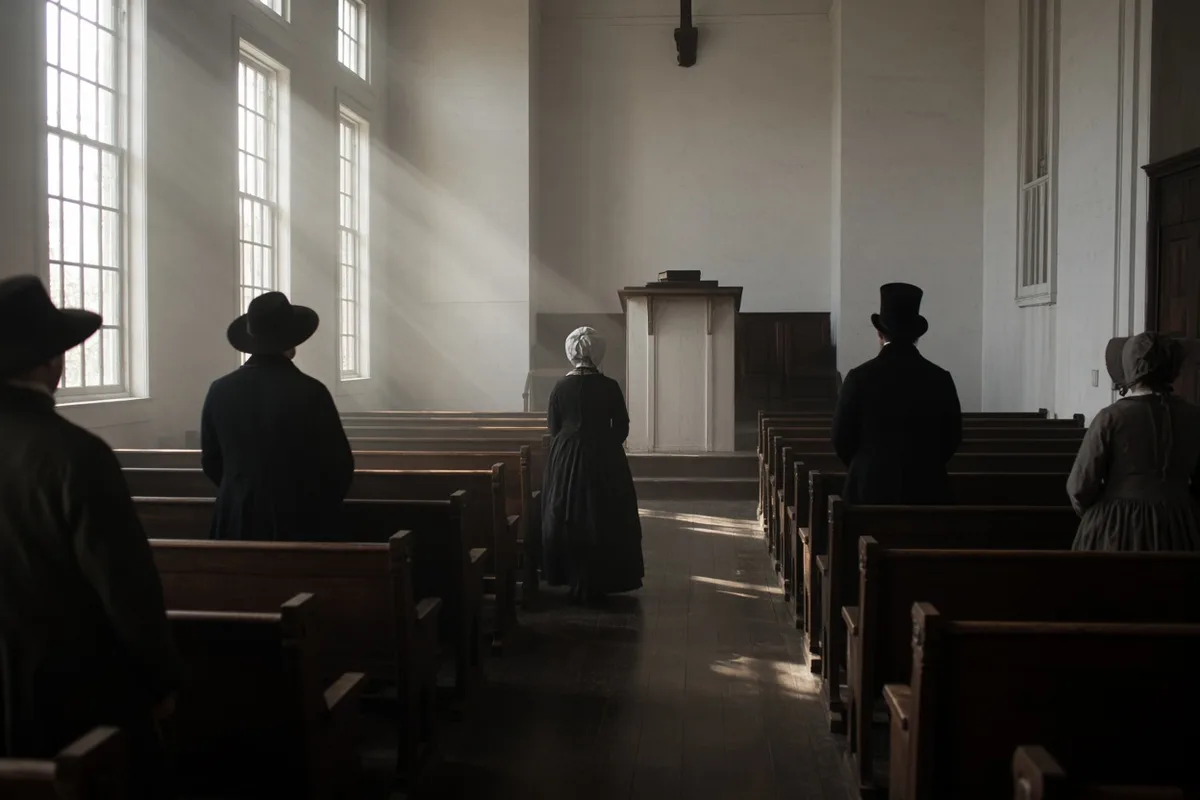
In the winter of 1734 the pews began to fill earlier on Sabbath afternoons. He noted in the church book that one hundred and thirty persons had joined by profession of faith between January and May of the next year. When he preached from Romans 5 on justification he counted forty-two heads bowed in the front rows alone. Sarah kept the household accounts and recorded that the woodpile lasted through the third week of March without replenishment because so many families sent sledges. The revival lists he sent to Boston included the names of thirty-seven heads of households from the outlying farms.
By the summer of 1741 the same steadiness carried him to Enfield on the eighth of July. He stood in the high pulpit and read from Deuteronomy before turning to the text on the bow of wrath. The manuscript pages show he had written the sentences out in full the night before, numbering each clause in the margin. After the sermon he remained at the table in the parsonage until the lamp burned down, answering questions from three deacons who had ridden over from Suffield. He recorded only that the meeting continued until past midnight and that no one present disputed the doctrine.
The vote in June 1750 stood two hundred and thirty against him and twenty-three in favor. He packed the study books into four crates and labeled each with the year he had first read the contents. On the second of July the family left the parsonage at first light and traveled west along the river road. They reached Stockbridge on the ninth and moved into the house provided by the commissioners. There he met each week with the Housatonic interpreters and prepared sermons in their language, writing the English draft first and then the shorter Indian version beneath it.
During the Stockbridge years he finished the treatise on the freedom of the will and sent the manuscript to Boston in the spring of 1754. The printer returned the first sheets in November; he corrected them at the same table where he had once kept the notes from Timothy. He also completed the dissertation on the end for which God created the world, dating each section in the margin. When visitors asked about the work he answered only with the number of pages still to be copied.
In September 1757 the trustees of the college at Princeton wrote offering the presidency. He accepted after two months of correspondence and arrived in January with Esther and the younger children. The college records list his installation on the sixteenth of February. He continued the daily lectures on divinity, rising at five and reading until the students assembled at eight. On the thirteenth of February 1758 he submitted to the smallpox inoculation performed by Dr. William Shippen. The fever rose on the twentieth and the pustules appeared the following day.
On the morning of the twenty-second of March he asked for the curtains to be drawn back so he could see the light across the college green. Esther sat at the foot of the bed and read aloud from the seventeenth verse of the first chapter of Timothy. He repeated the phrase “the King eternal, immortal, invisible” twice and then asked that the window be opened another inch. The last motion recorded was the lifting of his right hand toward the moving clouds beyond the glass before the hand fell again to the coverlet.
The news reached East Windsor on the twenty-sixth of March through a rider sent by Dr. Shippen, who carried the college register showing the entry for the twenty-second at half past five in the afternoon. Esther remained in the room until the body was prepared, then wrote to Samuel Hopkins in Newport that the final words had been the same verse from Timothy her father had read at his own conversion. She packed the remaining manuscript sheets into a single trunk and sent them by wagon to Hopkins on the third of April, noting in her letter that the section on the nature of true virtue stood unfinished at page one hundred and forty-seven.
The burial took place in the Princeton cemetery on the twenty-fifth, with the trustees recording that twenty-three students and nine ministers from the surrounding presbyteries attended. The marker was cut from local sandstone and inscribed only with the dates and the single line from the first of Timothy that he had repeated at the window. Sarah arrived from Stockbridge on the twenty-ninth and stayed six days, during which she copied the last pages of his notebook on the will before returning west with the younger children.
In the years that followed, the four crates of books from Northampton were divided between the Princeton library and the Stockbridge parsonage. Hopkins published the treatise on original sin in 1758 from the sheets Edwards had corrected in the margin with his own hand, adding a preface dated the twelfth of September that quoted the author’s note on page seventy-two concerning the imputation of Adam’s sin. The dissertation on the end for which God created the world appeared the next year under the imprint of Daniel Henchman in Boston, running to two hundred and eight pages including the appendix on the nature of virtue.
Sarah died at the home of her daughter in Philadelphia on the second of October 1758. Esther followed her father by eleven months, succumbing to the same fever on the seventh of April 1759, leaving her two children in the care of relatives in Newark. The interpreters at Stockbridge continued the weekly meetings Edwards had begun, using the shorter Indian versions he had written beneath the English drafts; the last such sermon, dated the fourteenth of June 1757, remained in use until the mission house was closed in 1785.
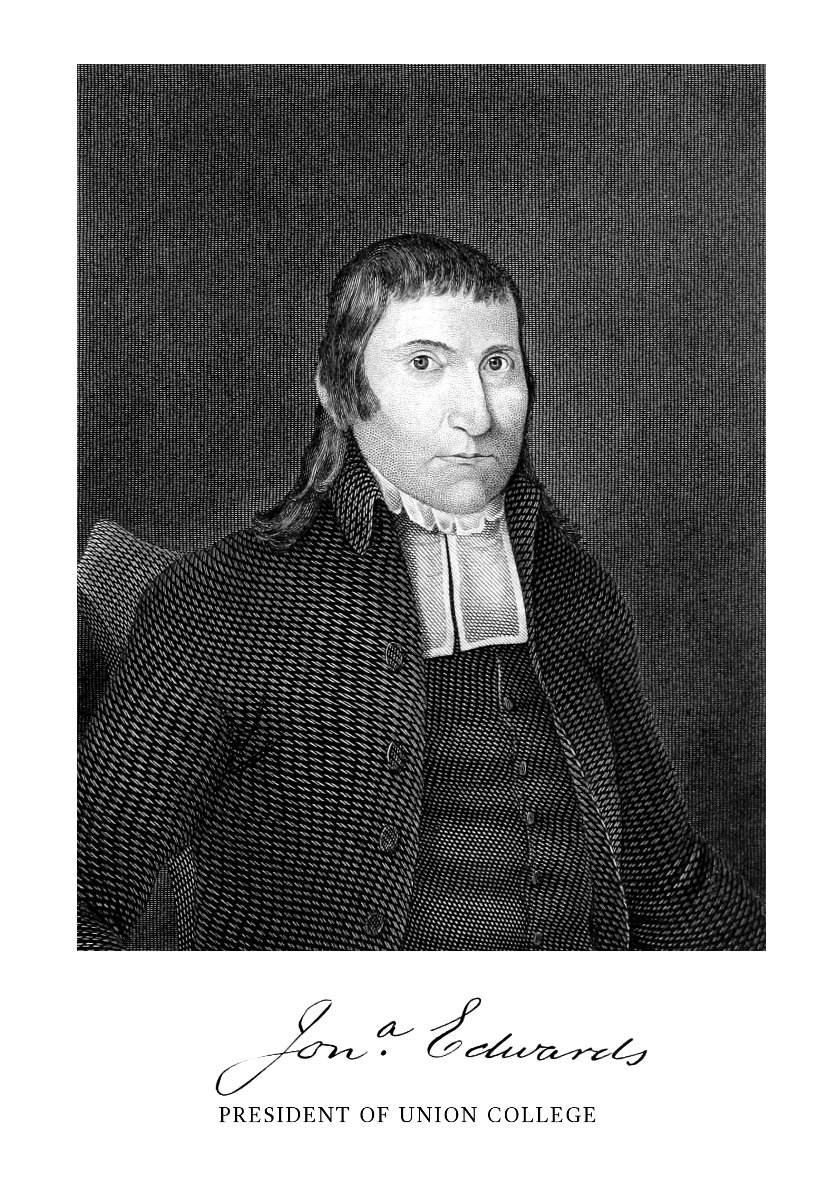
The college at Princeton placed his portrait in the library in 1768, showing him at the table with the open volume of Locke visible at the lower left corner. Visitors to the Stockbridge house after 1800 noted the window where he had once traced the edge of the moon, still fitted with the same panes of crown glass. The manuscript pages sent to Hopkins passed through three private collections before entering the Yale library in 1900, where the ink on the Timothy verse is still legible under magnification.
The last record of any family member at the old booth site came in 1842, when a great-grandson named Timothy Dwight Edwards walked the lane with the local surveyor and marked the half-sunken poles on the township map. He carried with him the original sheet of notes from the first Timothy reading, folded inside the same leather cover his ancestor had used in the study at Northampton.