



Judge voids New York ban on civilian body armor
By The Conservative Desk (/journals/conservative-desk)
On Wednesday in Buffalo, U.S. District Judge John L. Sinatra Jr. issued a 47-page opinion in Heeter v. James and struck down New York Penal Law 270.21, the statute that barred most civilians from buying body armor.
Body armor is an arm protected by the Second Amendment.
“Indeed, body armor is an ‘Arm’ protected by the plain text of the Second Amendment. As such, regulation in this area is permissible only if the state demonstrates that the new enactment is consistent with the nation’s historical tradition of sufficiently analogous regulations. New York fails that test,” Sinatra wrote.
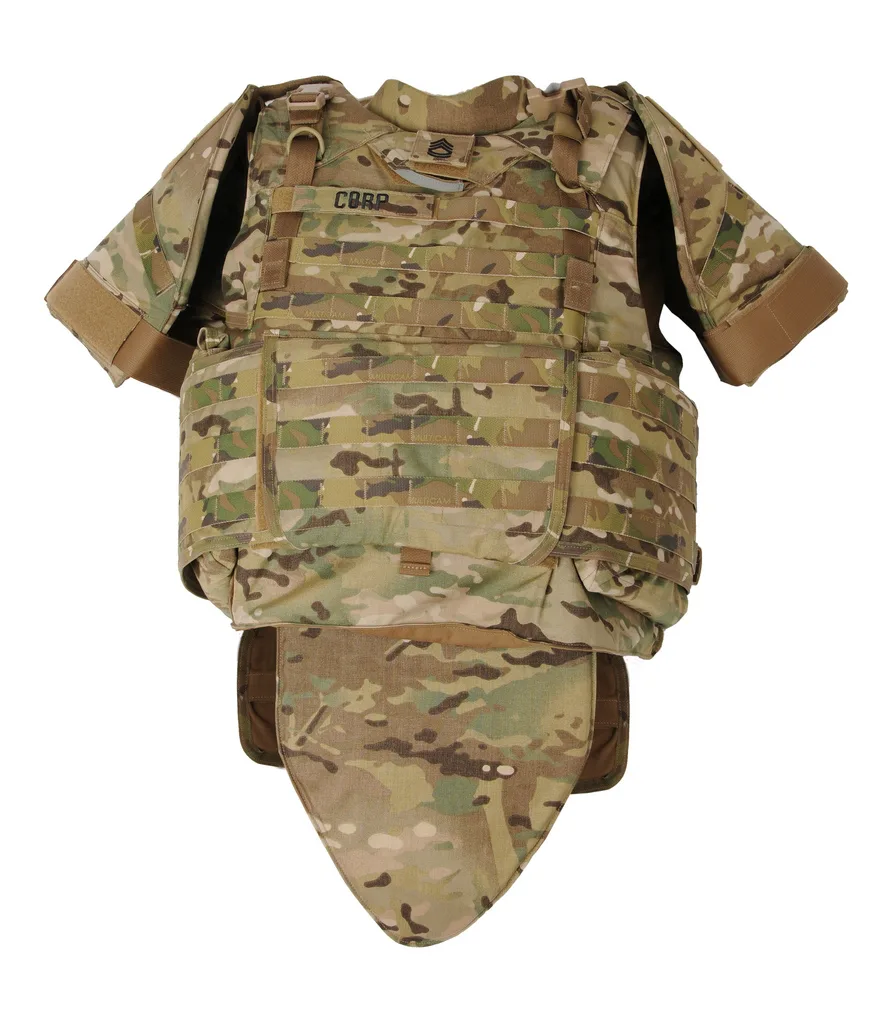
The law, enacted in 2022, made New York the only state to prohibit most civilians from possessing body armor. It carved out exceptions for law enforcement, peace officers, and military members. A first offense was a class A misdemeanor; any later offense was a class E felony.
Legislators passed the measure after the May 14, 2022, racially motivated mass shooting at Tops Friendly Market on Jefferson Avenue in Buffalo. Gunman Peyton Gendron killed 10 Black people and wounded three. He wore steel-plated body armor and a tactical helmet. Former Buffalo Police Lt. Aaron Salter Jr., working security that day, returned fire; the rounds were stopped by the armor, and Salter was killed. Gendron pleaded guilty in November 2022 to state murder charges and is serving life without parole. He still faces a separate federal death-penalty trial.
In 2024 the Firearms Policy Coalition and two residents, Benjamin Heeter and Joseph Wurtenberg, sued. They said they wanted to buy body armor for lawful self-defense and could not under the statute. Named defendants included Attorney General Letitia James.
Sinatra applied the Supreme Court’s decisions in District of Columbia v. Heller (2008) and New York State Rifle & Pistol Association v. Bruen (2022). Heller established that the Second Amendment covers all instruments that constitute bearable arms, including those not in existence at the founding. Bruen requires the government, once the plain text is shown to cover the item, to prove that its restriction is consistent with the nation’s historical tradition of sufficiently analogous arms regulations.
New York argued that modern materials such as Kevlar “were not possessed by early Americans.” It offered medieval and English monarchy-era laws that restricted the wearing of armor, plus Antebellum-era statutes, as historical analogues. Sinatra rejected the comparisons. English monarchs’ armor rules, he held, were irrelevant to the American tradition and ignored the historical reason the right to keep and bear arms is understood as an individual right protecting against public and private violence. The Antebellum evidence likewise failed to show a tradition of reasonable regulation comparable to a near-total civilian purchase ban. The state, he concluded, had not shown modern body armor to be dangerous or unusual in the constitutional sense.
That holding is the constitutional point. Once the text reaches defensive armor, the burden is the state’s, not the citizen’s. A government that criminalizes the purchase of equipment designed only to stop bullets must produce a genuine historical match; New York produced none that survived scrutiny. Limited government and the rule of law require that test to be applied as written, not rewritten around a recent tragedy or a novel category of “military-grade” gear. Public safety that begins by disarming the peaceable person of the means to survive criminal gunfire is not the safety the Second Amendment secures. The ordinary New Yorker who simply wanted a vest for home or work protection was the person the 2022 statute forgot.
Brandon Combs of the Firearms Policy Coalition released a statement calling the decision “a humiliating defeat for New York’s authoritarian gun control regime.”
“Governor Hochul and Attorney General James actually made it a crime for peaceable people to buy body armor — equipment designed to stop bullets and save lives — and had the tyrannical audacity to call that ‘public safety,’” Combs said. “Not satisfied with banning guns, they tried to ban the means of surviving criminal gunfire, too. We said from the beginning that this immoral ban was absurd and unconstitutional.”
Former Republican Congressman Chris Jacobs, who after the Tops shooting had worked with colleagues on federal efforts aimed at military-grade body armor, reacted in a WBEN interview. He stated the counter-argument in its own terms: the armor had let the shooter continue, and the legislation was never intended as a Second Amendment measure.
“Unfortunately, the shots that Aaron fired were repelled because the mass shooter was wearing military-grade body armor. But for that body armor, he would have been taken out, and we wouldn’t have lost so many lives in that Tops shooting,” Jacobs said. He added that the ban was “not a absolute ban” and that easy access to such armor can function as “another incentive and comfort for a mass shooter.”
Jacobs said he holds “immense respect for Judge Sinatra” yet found the reasoning a surprise. “I have immense respect for Judge Sinatra, but the fact that, basically, the ruling is saying that body armor is akin to a gun and that it is protected constitutionally by the Second Amendment; boy, in all the discussions of crafting this legislation, that was never brought up by anyone on my staff or on committee staff that had expertise in this.” He called the definition broad: “Boy, this is a broad definition of the Second Amendment, in my mind, for what he’s doing here.” He asked whether a helmet or steel-toed shoes would next be covered and labeled that prospect “outrageous.” He urged the state to appeal.
The record contains no separate public reply from the governor’s office on the ruling itself. The New York Attorney General’s office said it is reviewing the decision. Sinatra stayed his own order for 14 days so state officials can consider an appeal.
Whether the attorney general files that appeal before the stay expires is the next concrete decision.