



Kids' meltdowns mean an unintegrated brain, not bad character
By Books (/journals/books)
In 60 seconds Children's tantrums and defiance mark an unintegrated brain whose parts work in isolation or conflict, not a moral failure. A healthy mind links logic with emotion, upstairs judgment with downstairs instinct, memory with present experience, and self with others. Having a child narrate a frightening event recruits left-brain language to contain right-brain flood better than dismissal or pure logic. The upstairs brain for empathy and impulse control stays immature into the mid-twenties, so wait out a flipped lid before teaching. Build self-control and empathy through low-stakes daily choices, not only lectures after misbehavior when that circuitry is offline. Stay present and curious in conflict, enforce the boundary after the child feels heard, and treat family fights as training for relational life.
The big idea
Children's meltdowns and defiance are neurological signs that distinct brain regions have not yet learned to work together, not character flaws. The parent's real job is to strengthen those links through everyday connection, narration, and low-stakes practice before correction.
The book in brief
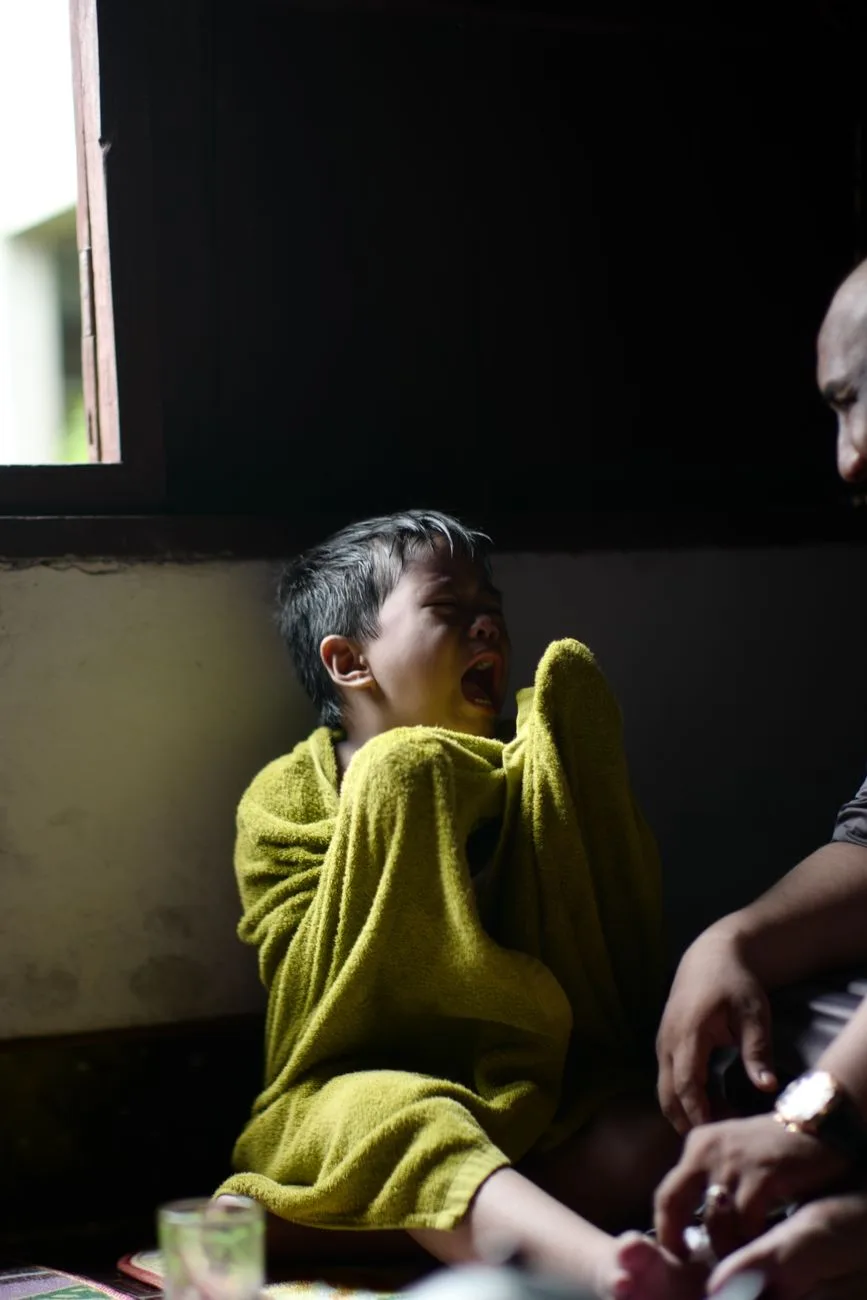
The book opens by reframing everyday child problems. A toddler screaming over a broken cracker or biting a sibling is not manipulating or failing morally; emotional circuits have overwhelmed a capacity for reason that barely exists yet. Rigidity and chaos both signal a mind whose parts run in isolation. The parenting task shifts from enforcing obedience to building connections between those parts.
It then walks through four major splits. Left and right processing come first: young children live in intense wordless feeling, and inviting ordered narration calms the flood by giving it a verbal container. Upstairs and downstairs come next: the cortex for judgment and self-control sits atop survival and limbic circuitry and is still under construction for years, so a flipped lid is temporary loss of access, not chosen defiance. Waiting for the storm to pass before reasoning follows directly from that biology.
The middle chapters turn from crisis response to deliberate building. Impulse control, empathy, and moral reasoning strengthen like muscles through repeated calm decisions and perspective-taking, not mid-tantrum lectures. Frightening experiences leave implicit bodily traces that shape later behavior until they are walked into explicit, narrated stories. Children also need language and tools such as SIFT so feelings register as temporary states rather than fixed identity.
The final movement extends integration outward. Kids need both a solid sense of separate self and real belonging; handled well, sibling fights and family disagreement become the practice ground for holding both. The closing applied model for defiance and refusal is stay engaged—close, quiet, reflecting feeling—then enforce the boundary. The arc lands on a durable stance: connect before you correct, and treat self-control as a skill built patiently across years rather than a switch children should already flip.
Context
Siegel, a psychiatrist, and Bryson, a child therapist, published the book in 2011. It reframed discipline for a generation of parents as brain-building rather than compliance-training and popularized phrases such as name it to tame it and the upstairs/downstairs brain.
The key ideas
1
Integration, not compliance
Tantrums and defiance show brain parts that have not learned to work together, so the job is to build links between regions rather than only enforce obedience.
See bad behavior Reach for punishment and demand obedience
See unintegrated brain Connect first, then correct to build links
Most behavior problems look moral from the outside and neurological from the inside. When a toddler screams in a grocery store over a broken cracker, emotional circuits have simply overwhelmed a reasoning capacity that barely exists yet. The authors organize the whole book around integration: a healthy mind links distinct regions and functions so logic and emotion, memory and present experience, self and other operate as a coordinated whole instead of in isolation or conflict.
An unintegrated brain shows up as rigidity—getting stuck, tantrums, obsessive insistence—or as chaos—overwhelm and disorganized outbursts. Suppressing one side and rewarding the other does not fix the split. Strengthening the links does. That single reframe changes the parent's first move: a meltdown read as bad behavior reaches for punishment; a meltdown read as an unintegrated brain in distress reaches for connection first.
Every later chapter takes one concrete split and offers a daily technique for bridging it. The early claim is practical, not abstract. Punishing a bite addresses the surface act and leaves the internal capacity untouched. Connecting with the frustration, then addressing the biting, does both jobs at once.
In practice: A child bites a sibling; connecting with the frustration before addressing the bite builds the capacity that pure punishment leaves untouched.
2
Name the emotional storm
Inviting a child to narrate a frightening event in order recruits left-brain language to organize right-brain flood, calming better than distraction or pure logic.
1Feel firstAcknowledge the right-brain flood without minimizing 2NarrateInvite ordered retelling with words 3Then logicAdd perspective once the feeling has a container
The authors use left hemisphere as shorthand for linear, logical, language-oriented processing and right as holistic, nonverbal, and emotional—a teaching device, not a strict anatomical map. Young children live disproportionately in right-mode: intense wordless feeling with little ability to turn it into a coherent account. After a fall from a bike, sensation and fear flood in with no story yet attached.
The move they popularize is name it to tame it. Retelling what happened, in sequence, with words is itself calming because narration activates left-mode sequencing and gives the right-mode flood a container. Comfort helps; the ordering work of language does separate regulatory work.
Two common parental shortcuts skip the needed step. Minimizing—you're fine, it's nothing—and jumping straight to over-logic both address the left brain while the right brain still needs acknowledgment. The usable sequence is feel first, then narrative, then perspective. Parents can practice that order until it becomes habit rather than a one-off trick.
In practice: After a child sees a news story about a fire, the parent first draws out the child's own account of what frightened them before offering facts or reassurance.
3
Upstairs still under construction
The prefrontal upstairs brain for judgment, empathy, and impulse control is immature until the mid-twenties, so expecting reliable use under stress is unrealistic and discipline should build capacity rather than assume it.
The second major metaphor splits downstairs brain—brainstem and limbic areas for survival reactions, strong emotion, and instinct—from upstairs brain—the cortex, especially prefrontal regions for planning, moral reasoning, and self-control. The hand model makes it teachable: thumb folded into palm, fingers closed over it for upstairs sitting atop downstairs; fingers popping up shows a flipped lid, upstairs regulation gone offline.
The developmental claim carries the practical weight. A five-year-old genuinely cannot access empathy or reasoned self-control the way a functioning adult can, especially under emotional flooding. Tantrums read as temporary loss of access to a region not yet reliably online, not as chosen defiance.
Punishing a flipped-lid moment as if the child freely selected it misunderstands the biology. The more useful move is to wait until the downstairs storm eases, then engage the upstairs brain with reasoning or consequences. Addressing sportsmanship in the heat of a board-game meltdown reaches no one; the circuitry is not available yet.
In practice: A child melts down after losing a board game; the parent waits out the storm before revisiting the sportsmanship lesson later.
4
Exercise the upstairs brain
Impulse control, empathy, and moral reasoning strengthen like skills through repeated low-stakes practice, so build them in ordinary decisions rather than only during crises.
Because the upstairs brain is immature, it can still be developed through deliberate rehearsal when it is calm and reachable. Lectures delivered mid-crisis arrive when that circuitry is least available. Small daily decisions do the real training.
Letting a child choose between two shirts, negotiate screen-time limits, or plan the order of errands rehearses weighing options and delaying gratification. Asking how a friend might feel about a shared toy in a neutral moment builds empathy so the skill is already familiar when real conflict hits. Repetition across ordinary hours matters more than any single dramatic lesson after misbehavior.
The investment shift is counterintuitive for punishment-oriented parents. The moment of misbehavior reveals missing capacity and is the worst time to try to install it. Spread the practice across calm life instead. A family dinner ritual in which each person names one hard decision and how they made it models the reasoning process out loud without waiting for trouble.
In practice: At dinner each person names one hard decision from the day and walks through how they made it, giving the upstairs brain calm rehearsal.
5
Make memory explicit
Frightening experiences leave implicit bodily traces and fears without conscious recall that quietly drive behavior; building an explicit narrated story reduces that hidden grip.
Implicit trace Bodily fear and reaction with no usable story, still driving behavior
Explicit story Ordered narrative with feeling words that integrates and reduces the charge
Implicit memory is unconscious, often encoded early and before verbal memory, carrying bodily sensations, emotional associations, and behavioral patterns. Explicit memory is conscious, narratable recollection of specific events. Many childhood fears and reactive behaviors trace to implicit traces that never became a story.
A toddler knocked over by a dog may later show unexplained anxiety around dogs even after conscious recall of the incident is gone. Unprocessed implicit memory does not disappear; it keeps operating in the background. Distraction or hoping the child forgets leaves the trace intact.
Helping the child walk through what happened, in sequence, with feeling words attached, integrates the memory and lowers its power to trigger later reactions. The same narration tool used for in-the-moment distress now serves memory consolidation over time. Revisiting hard experiences in a safe context becomes deliberate integration work rather than something left to chance.
In practice: A child grows anxious about car rides after a minor accident; the parent has the child calmly recount the accident repeatedly until the story turns ordinary and loses its charge.
6
Ride emotion as weather
Teaching that emotions are passing states rather than fixed identities builds resilience only when paired with concrete self-observation tools used repeatedly, not reassurance alone.
Mindsight is the capacity to notice and name internal states with enough distance to observe them instead of being swallowed by them. Children and adults suffer more when a feeling becomes a permanent fact about who they are—I am an angry person—rather than temporary weather passing through—a cloud of anger is here right now.
Language carries the distinction. Helping a child say I am feeling frustrated rather than I hate this builds the habit of observing emotion instead of merging with it. SIFT makes the move concrete: Sensations, Images, Feelings, and Thoughts. Parents can walk a distressed child through the checklist so a vague overwhelm breaks into nameable pieces.
One calm explanation that feelings pass will not be available during an actual meltdown. The language has to become familiar through prior repeated use. Integration here is applied to the self's relationship with its own inner states, not only to links between brain regions.
In practice: Before a school test, a parent helps a child notice the tight stomach, the mental picture of failing, the fear, and the thought I will embarrass myself, separating the threads so anxiety feels less total.
7
Balance me and we
Healthy development needs both a strong separate identity and real connection to others; family conflict handled well is primary training for that balance, not a problem to erase.
Integration now moves from inside one brain to between people. Children need a sturdy sense of their own separate identity and a sturdy sense of belonging. Lean too far toward individuality and compromise and empathy suffer. Lean too far toward harmony and conformity and children learn to suppress their own needs to keep the peace.
Interpersonal integration means holding differentiation and connection at once. That is a skill. Family conflict is one of its best practice grounds when it is navigated rather than avoided or simply won. A sibling fight over whose turn it is, with each child helped to state a perspective and find a resolution that acknowledges both, teaches that difference does not have to sever the relationship.
Shared jokes, rituals, and deliberately engineered play build the we side in low-stakes ways. Goodwill and trust accumulate so higher-stakes disagreements become easier to survive. Fights parents often rush to suppress become opportunities to practice a relational capacity children will need for the rest of their lives.
In practice: During a turn-taking fight, the parent helps both children state their views and reach a resolution that recognizes each side instead of declaring a quick winner.
8
Connect through conflict
Staying present and curious during defiance—close, quiet, reflecting feeling, then the boundary—turns discipline into brain-building at the cost of more time and patience than pure punishment.
This chapter gathers the earlier tools for the moments parents dread: defiance, meltdowns, outright refusal. Two instinctive exits both skip connection. Capitulating ends the fight fast. Escalating with authority and punishment ends it by force. Neither builds the links the book has been describing.
The proposed stance is stay engaged. Get physically close, lower the voice, reflect what the child seems to feel, and only then introduce the boundary or consequence the situation still requires. The approach is not permissive; the limit still lands. It lands after the child feels heard, which the authors argue yields more durable change than compliance extracted through fear or exhaustion.
Some conflicts will still end in a tantrum no matter the technique. The authors do not pretend otherwise. What they claim is cumulative: many such moments across years wire integration, not the perfect outcome of any single incident. The neuroscience framing pays off here as a practical sequence parents can attempt under stress.
In practice: A child refuses to leave the playground; the parent names the disappointment aloud, waits briefly while the feeling is witnessed, then still follows through on leaving.
Key terms integration Linking distinct brain regions and functions so they work as a coordinated whole instead of in isolation or conflict name it to tame it Inviting ordered narration of a scary or overwhelming event so language can contain the emotional flood upstairs brain Cortex and prefrontal regions for planning, empathy, moral reasoning, and impulse control, still maturing for years downstairs brain Brainstem and limbic areas running survival reactions, strong emotion, and instinct flipped lid Moment when upstairs regulation loses its grip and downstairs reactivity runs the show implicit memory Unconscious traces—body sensations, emotional associations, patterns—often formed before verbal memory explicit memory Conscious, tellable recollection of what happened in sequence mindsight Ability to notice and name your own inner states with enough distance to observe them rather than be consumed SIFT Checklist of Sensations, Images, Feelings, and Thoughts used to unpack an overwhelming inner state
What to do
When a meltdown starts over something small, get physically close, name the feeling out loud, and wait for the storm to ease before reasoning or enforcing the boundary. Add one daily narrated choice—breakfast, clothing, errand order—and have your child explain the reasoning behind it. When your child mentions something scary from earlier, ask for the full ordered retelling instead of rushing to reassure or dismiss. In a calm moment, walk through SIFT together so sensations, images, feelings, and thoughts become familiar labels before the next spike. Treat one sibling disagreement as practice: help each child state a perspective, then find a resolution that acknowledges both sides.
Questions to think with When your child last melted down, did you reach first for connection or for correction, and what happened next? Which daily low-stakes decisions could become upstairs-brain practice this week instead of parent decrees? Is there a lingering fear or reaction that might still be an unprocessed implicit memory needing a calm, repeated story? In family conflicts, do you over-protect harmony, over-protect individual wins, or practice holding both? Where does the connect-then-correct sequence feel hardest to execute given your actual time and stress?
The other side
The twelve strategies rest on general brain-development findings, but the specific claim that these techniques reliably build integration and better-adjusted kids has not been tested in randomized trials or longitudinal studies; evidence is clinical and anecdotal. The left/right teaching frame and hand model are vivid metaphors that outrun what imaging supports—hemisphere-as-personality thinking has been challenged, including by a 2013 University of Utah study—and the book does not flag the metaphor gap clearly enough. It also assumes caregivers with time, bandwidth, and safety to pause through meltdowns, and stays largely silent on poverty, unsupported single parenting, caregiver trauma, and neurodevelopmental differences such as autism or ADHD.
Who it's for
Parents of toddlers and young children who want alternatives to yelling and time-outs, plus teachers, caregivers, and clinicians who need plain language for why kids act out under stress and how to explain brain development to families.
Read the full summary in Library →