Kroger Plans 3,000 Corporate Job Cuts
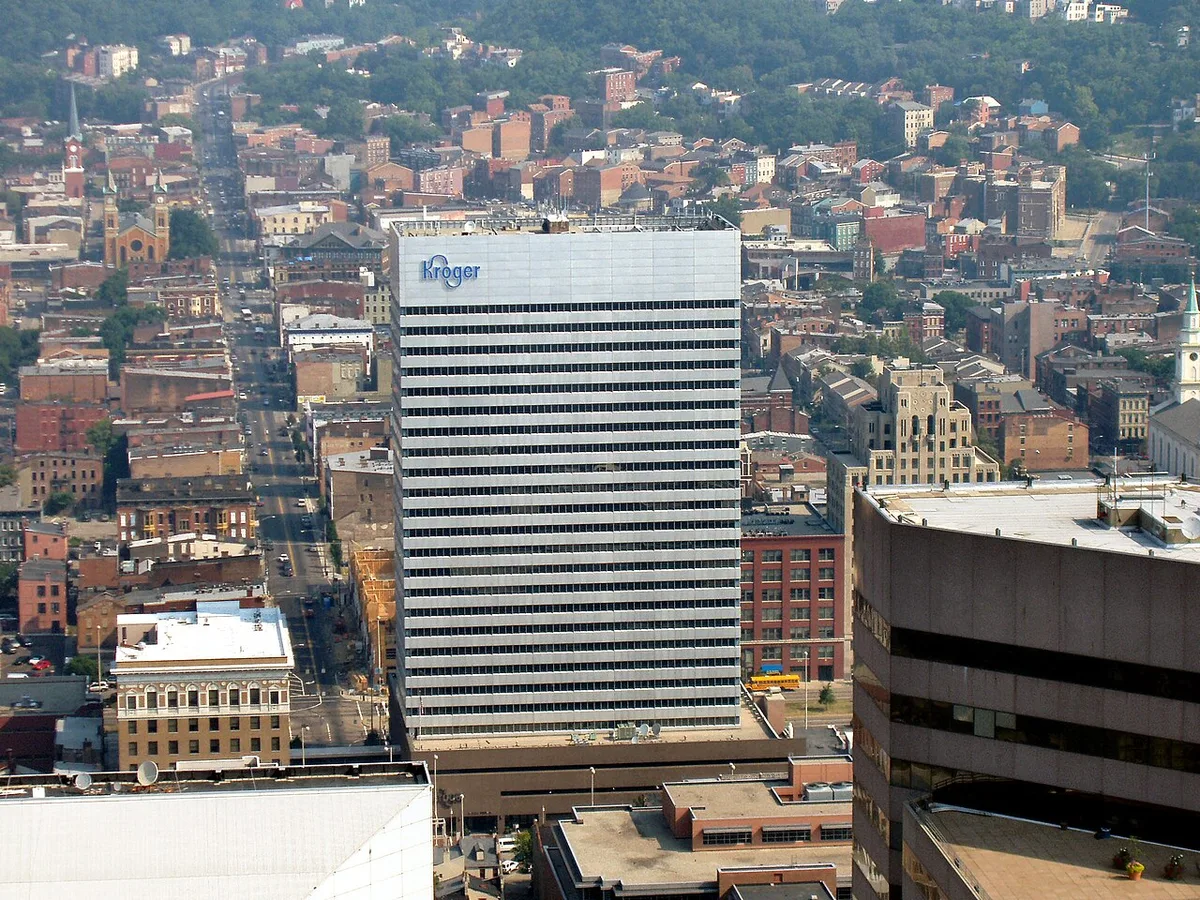
The company-wide all-hands had just ended on Monday, October 12, 2026, when Greg Foran’s internal memo reached Kroger staff. The chief executive put the problem in the simplest terms the company would hear that day. Headquarters, he wrote, ran with more layers, more handoffs and more overhead than it needed. Work had grown duplicative. Decisions took too many stops. Technology was changing, and the structure above the stores had not kept up.
“Simplifying means making faster decisions and deploying more resources where they matter most,” Foran wrote.
“Our business is becoming leaner, more focused and more competitive,” he added. The memo framed a headquarters that had grown thicker than the work required, and a company that intended to cut through it for speed.
Greg Foran had become chief executive in February 2026 after leading Walmart’s U.S. operations. The second quarter of that year put the weight of the job in concrete figures. Kroger posted $34.6 billion in sales, up from $33.9 billion a year earlier. Identical sales excluding fuel—sales at stores open at least a year, stripped of the swing from gas prices—grew just 0.2 percent. A year earlier the same measure had risen 3.4 percent.
Adjusted e-commerce sales surged 20 percent in that stretch. The company still cut its full-year identical-sales forecast from a range of 1.0 percent to 2.0 percent down to 0.2 percent to 0.8 percent. “Improving sales momentum remains a top priority,” Foran said when those results landed in September.
Since taking the job he had already launched some of the grocer’s most significant price reductions in years and pushed for friendlier, faster service on the store floor. He had taken a tougher line with suppliers as well. Every move aimed at the same thin number on the identical-sales line. What the structure above those stores would have to become next was the decision still waiting.
Roughly 3,000 corporate jobs would go over the next three years. The cut would take about 37 percent of Kroger’s corporate workforce of some 8,200 people. Founded in Cincinnati in 1883 and now in its 143rd year, the company was preparing one of the largest restructurings in its history.
“We have the opportunity to make changes that will create broader roles and faster decision making,” Foran wrote. “This lets us move vital resources closer to the customer to lower prices, invest in our associates and create a better shopping experience.”
The savings were aimed outward—toward lower prices on the shelves, toward a better shopping experience, toward resources moved closer to the stores. The headquarters that remained would carry broader roles. The memo named no departments and no titles. The three-year reduction had a headcount and a purpose. It did not yet have a roster. Weeks earlier, on a different stage, the company had already begun to describe the technology meant to help that thinner structure hold.

In September at GroceryShop 2026, Yael Cosset took the stage and set out Kroger’s artificial intelligence plan. The systems would reach demand forecasting, personalized shopping, and the daily work of running stores. More than 400,000 associates had already received AI training. Agent-based tools were in development to support the people on the floor.
“The goal is not autonomy everywhere,” Cosset said. The machines would assist. Human judgment would stay in control of operations.
Foran’s memo, weeks later, returned to the same ground from another direction. Technology would keep evolving, he wrote, and the company should shed duplicative work as the tools changed. He did not link the corporate cuts to automation. The savings were not framed as money for the technology. An earlier reduction supplied the contrast in scale. In June 2025 Kroger had eliminated about 1,000 corporate roles. That cut had been real. It had not been this.
The thinner headquarters was meant to push what remained outward—toward the places where the company already met its customers.
Those places numbered more than 2,700 stores across 35 states and the District of Columbia. Kroger operated them under 20 banners, including Fred Meyer, Ralphs, Harris Teeter, and King Soopers. The company ran supermarket and multi-department stores under those names, and in some markets marketplace and warehouse-style locations as well. That ground network was what the thinner headquarters was built to serve.
“These reductions will allow us to continue to invest in our frontline associates,” Foran wrote. “We are working to be more agile; more precise in our execution; and deliver benefits to our customers, associates and our shareholders.”
Leaner corporate overhead was meant to feed store-level priorities across every banner. Resources freed at the center were supposed to settle with the people already inside the stores and with the work done under each name on each door. The three-year window had opened. The departmental map of which headquarters roles would go inside it had not yet been drawn.
Foran’s memo reached beyond the company. Bloomberg, Reuters, and Grocery Dive each carried the same next step. Details on the affected roles, Foran wrote, would come in the coming months. The reductions themselves were slated to begin rolling out in the next few months and would phase over the full three-year window as those lists took shape, unfolding across multiple departments over the next several years.
The memo that reached the wires named none of those departments. It listed no titles and no functions. Foran did not give a specific schedule for which groups would be touched first, or say which parts of the headquarters workforce would be drawn down. What the pages gave was the scale of the reduction and the stretch of time set aside to complete it. Which headquarters jobs would end, and in what order, stayed off the page.
The departmental map remained unwritten.