



Book claims leaders who multiply intelligence get twice the output

In 60 seconds
- Wiseman’s interviews with more than 150 leaders found people report about half their capability used under Diminishers and nearly all under Multipliers—roughly double.
- The gap comes from five learnable disciplines, not hiring smarter people or raw charisma.
- Diminishers often mean well: they rescue, spout ideas, pace-set, and decide fast, yet train teams to stop thinking.
- Multipliers attract and deploy native genius, keep the bar high while making struggle safe, pose hard questions, open real debate, and hand over full ownership including failure risk.
- Most readers are Accidental Diminishers; the fix is one specific behavior change practiced for a defined stretch, not a personality overhaul.
- The headline double-capability figure is self-reported and unverified, so treat it as a diagnostic frame rather than proof.
The big idea
Wiseman argues leadership impact hinges on whether you amplify or suppress the intelligence around you, and that the difference shows up as roughly double the usable capability from the same people. That difference, she claims, is five concrete disciplines anyone can practice rather than talent or title.
The book in brief
The book starts from a puzzle Wiseman met managing at Oracle: two equally able executives, similar resources, wildly different team results—one team got sharper, the other waited to be told what to do. Interviews with more than 150 leaders across four continents produced a blunt split. People under Diminishers said only about half their real capability was used; people under Multipliers reported close to full use, roughly double.
Diminishers are often accomplished and well-meaning. They give quick answers, step in to fix, and decide fast. The signal lands as only their thinking counts, so people quietly downshift. Multipliers assume the people around them are smart and will figure things out if conditions allow. Wiseman treats this as five behavioral disciplines, each paired with a look-alike Diminisher pattern.
Talent Magnets hunt native genius—the thing someone does so easily they assume everyone can—and redeploy work around it; Empire Builders hoard headcount and underuse talent as status. Liberators hold a high bar while making it safe to think out loud and admit confusion; Tyrants create the same intensity with fear, so people self-censor. Challengers open problems with pointed questions just past the team’s edge; Know-It-Alls supply the answer and slowly de-skill the group. Debate Makers put real tension in front of a wider group and let people argue alternatives; Decision Makers settle things in a tight circle and get shallow compliance later. Investors transfer full ownership of a result, including visible failure risk; Micromanagers stay the last checkpoint and keep accountability above the doer.
A later chapter complicates the tidy split. Most diminishment is accidental—Rescuers, Idea Fountains, Always-On leaders, Pacesetters—strengths that curdle because the leader never checks how the behavior lands. Becoming a Multiplier, Wiseman says, is narrow practice: pick one discipline, change one recurring behavior for a set period, tolerate worse early results while the team relearns initiative. Organizations that reward solo brilliance and instant decisions keep selecting for Diminisher habits even when they say they want collaboration.
The arc lands on a modest test: teams that volunteer more, ask sharper questions, and need less oversight are the evidence the shift is working.
Context
Liz Wiseman published Multipliers in 2010 after managing at Oracle and interviewing more than 150 executives across four continents. The book offered managers a practical five-discipline checklist for diagnosing how their presence either extracts or suppresses capability. Her later book Impact Players shifts some focus toward what employees can control when the boss never changes.
The key ideas

1
The capability gap
People under Diminishers report about half their capability used; under Multipliers, nearly all—roughly double from the same talent.
2x
reported team capability, Multipliers vs Diminishers
Wiseman opens with two equally intelligent, hard-working Oracle executives whose similarly resourced teams diverged: one grew more capable, the other stagnated. To test the pattern she and her team asked people reporting to more than 150 leaders what percentage of their actual capability the leader accessed. Answers clustered. Diminishers landed near half; Multipliers near full use.
She insists Multipliers do not hire smarter people. They get more from the same people. Diminishers need not be bullies. Many are accomplished and believe quick answers, rapid fixes, and fast calls help. The behavior still signals that only the leader’s thinking counts, so people wait to be told what to do.
Multipliers run on the opposite assumption: the people around them are smart and will figure things out given the right conditions. Wiseman frames the difference as five learnable disciplines, not personality or charisma, and spends the rest of the book pairing each with its Diminisher twin.
In practice: Under leaders labeled Diminishers, interviewees estimated roughly half their ability was in play; under Multipliers, close to all of it.
2
Talent Magnet vs Empire Builder
Attracting talent matters less than spotting each person’s native genius and circulating it even outside your own turf.
Empire Builder
Hoards headcount, blocks lending, underuses talent on home turf
Talent Magnet
Names native genius, redeploys work around it, circulates people to where needed
Talent Magnets hunt the activity someone does so naturally they may not list it as a skill. One executive in the research asked new hires and staff what they do so easily they assume everyone can, then reorganized assignments around the answers. Quirky strengths—pattern recognition, calming tense rooms, relentless follow-through—become deliberate resources rather than performance-review footnotes.
Empire Builders accumulate people and headcount as status and protection. They resist lending staff, keep talent underused on their own turf, and believe keeping good people close builds capability. Wiseman notes the irony: they limit how much of that capability the wider organization can use.
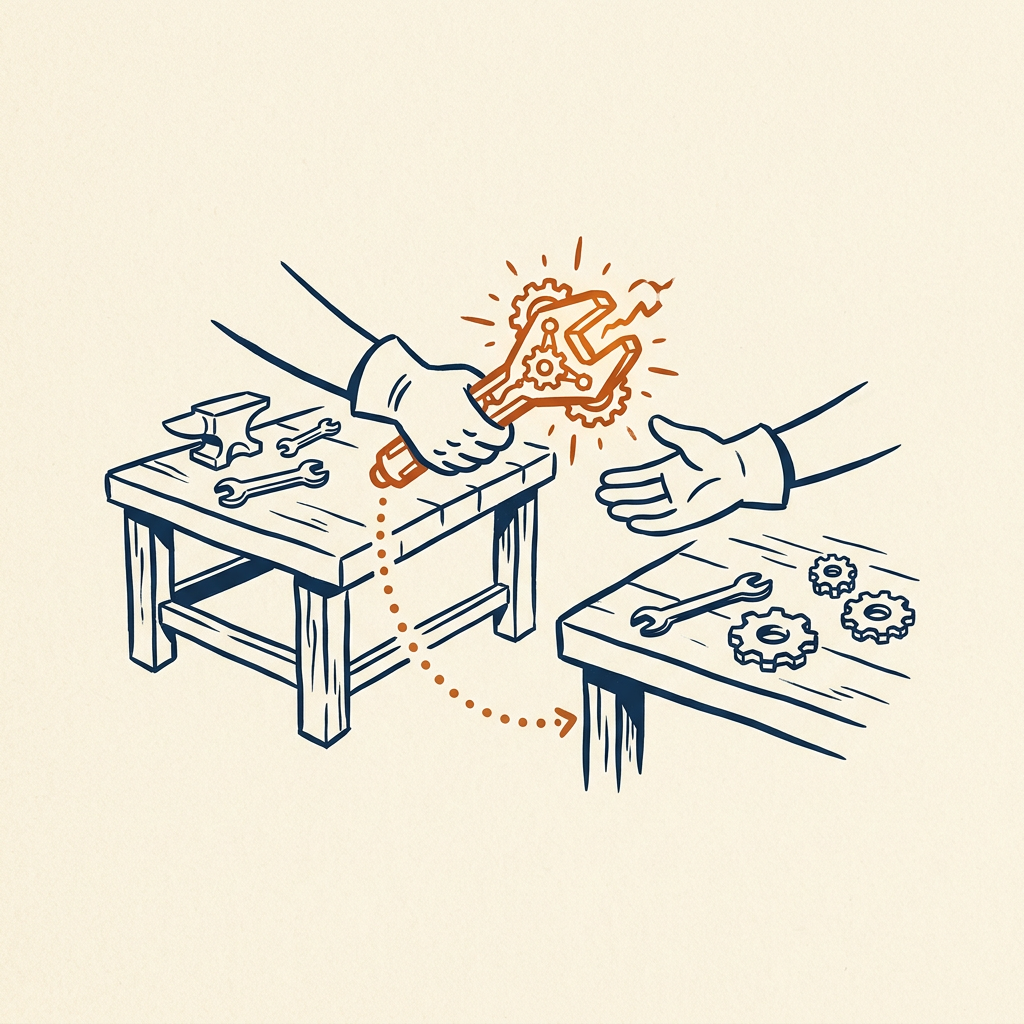
Multipliers circulate talent. They lend a strong performer to another department for a stretch project, expecting the person back sharper and more loyal, and treating movement toward need as system strength rather than a threat to personal domain. Identifying genius is only half; deploying it fully, even beyond direct control, is the rest.
In practice: An executive routinely asked what people do so easily they assume everyone can, then rebuilt assignments around those answers.

3
Liberator vs Tyrant
A high bar with safety for imperfect thinking unlocks contribution; the same bar with fear makes people self-censor before they speak.
Tyrant climate
High bar plus fear; people self-censor and bring only safe ideas
Liberator climate
High bar plus safety; half-formed thoughts and visible struggle allowed
Wiseman separates intensity from tension. Liberators keep standards high and treat mistakes as part of serious work, yet people can voice half-formed ideas or admit confusion without punishment. Tyrants may hold the same standard, but the climate punishes uncertainty, so people agree fast or stay quiet to protect themselves.
Liberators model imperfection: they admit when wrong, ask questions they truly do not know, and use meetings to think out loud rather than perform certainty. That costs some short-term appearance of authority and buys long-term access to the group’s real thinking once fear of looking foolish drops.
Tyrants, often without meaning to, create a climate where people think more about not looking stupid than about the problem. A sharp reaction to a bad update, interrupting to correct small errors, or impatience with unfinished thoughts all say: bring only polished, safe ideas. Teams narrow their thinking before it reaches the leader, which makes the pattern hard to see from above. The practical split is standards versus safety—keep the bar high, make it safe to reach it in stages with visible struggle.
In practice: Leaders who admit mistakes and ask genuine unknowns in meetings get unfiltered input once people stop filtering for fear.

4
Challenger vs Know-It-All
Supplying the answer feels fast but trains the team to stop generating answers; hard questions build the next cycle’s capability.
Know-It-Alls size up a problem from their own experience and tell the team what to do. The problem gets solved and the leader’s sharpness reputation grows. Wiseman argues the pattern de-skills the group because it never has to frame the problem itself.
Challengers use pointed questions before anyone rushes to a fix—what would need to be true for this solution to work, what would you try if the obvious constraint vanished. They often know a great deal; they deploy that knowledge by shaping the question rather than handing the conclusion. She calls this planting seeds of opportunity: a challenge just past what the team believes it can do, then space to stretch.
One research pattern: faced with a stall, the leader refuses to solve it in the room and asks the team to return in a week with three approaches. The delay forces generative work upward instead of deferral. Know-It-Alls win short-run speed; Challengers accept slower first cycles for a team that handles the next problem with less help.
In practice: A leader facing a stalled project sends the team away for a week to return with three possible approaches instead of solving it live.
5
Debate Maker vs Decision Maker
A fast inner-circle call often executes worse than a slower open debate because debate builds the understanding that later edge cases need.
Many capable leaders consult a tight circle then roll the conclusion outward. It looks decisive and is often technically sound. Wiseman found these decisions meet quiet resistance or shallow compliance because the people who must execute never wrestled with tradeoffs or discarded alternatives.
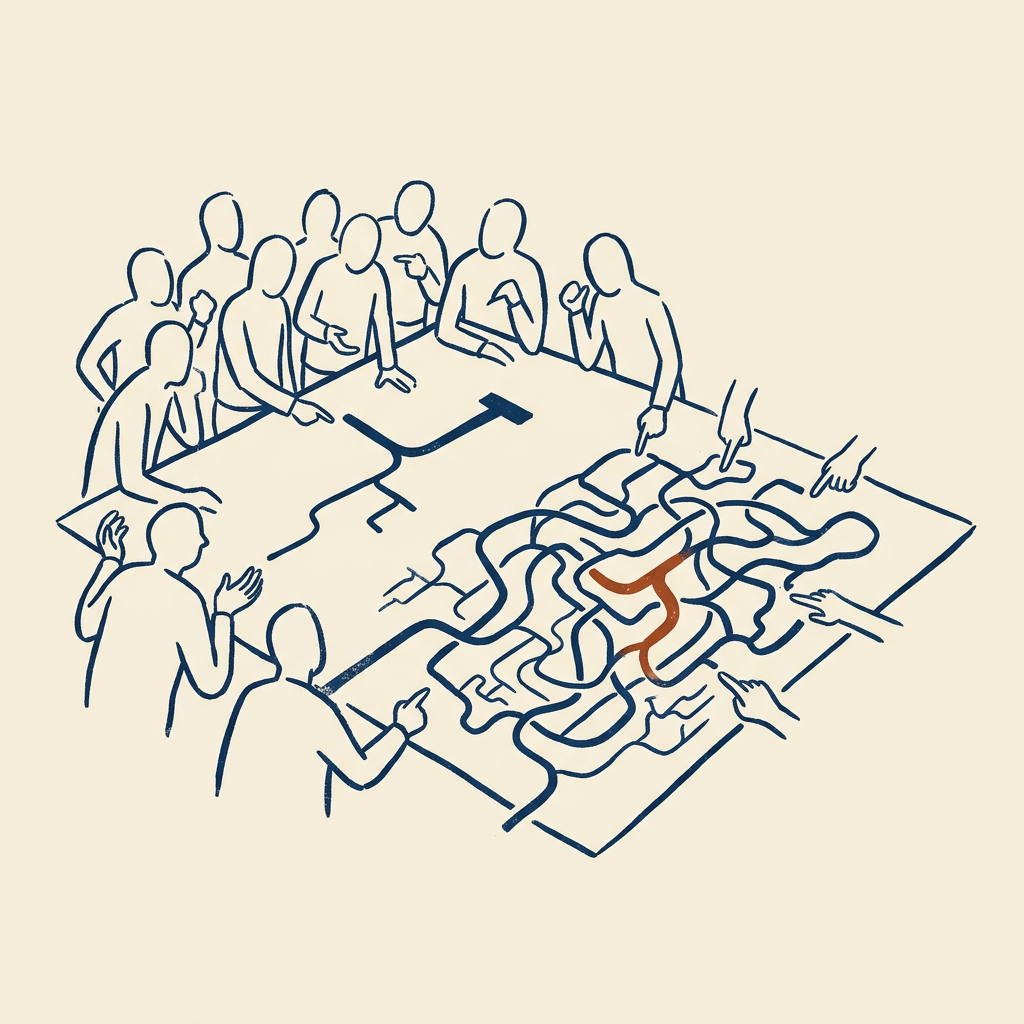
Debate Makers put a real decision in front of a wider group, lay out actual tension rather than a pre-cooked recommendation, and let people argue it through—sometimes taking positions they do not hold to pressure-test the strongest option. It takes longer and looks messier.
She locates the value in the mess: people who argued from multiple angles know not only what was decided but why alternatives lost, so they can extend the logic to situations the original call never covered. A team that only received the answer must ask permission for every edge case; a team that debated the reasoning can judge on its own. The chapter extends the Challenger habit: raise the hard question, then insist it gets fought in the open rather than settled behind closed doors.
In practice: Debate Makers sometimes assign people to argue positions they do not personally hold so the strongest option gets pressure-tested in public.

6
Investor vs Micromanager
Full ownership of a result, including visible failure risk, builds more capability than close involvement that protects the outcome.
Micromanager
Last checkpoint on drafts and details; accountability stays above
Investor
Whole-job ownership with resources, public credit, and real failure risk
Micromanagers stay inside delegated details—reviewing drafts, sitting in on unneeded meetings, correcting small choices. Intentions are usually good: quality and early problem-catching. Wiseman argues constant involvement removes the thing that actually grows someone else: full accountability for an outcome and its failure modes.
Investors delegate the whole job. They define success, provide resources, then step back and resist intervening when someone takes a path they would not have chosen, so long as a real chance to succeed or fail remains. She likens it to a venture investor backing a founder: capital and counsel without running the company day to day, because ownership produces the growth they want.
The mechanism is accountability transfer. When the manager remains the last checkpoint, the doer knows ultimate responsibility still sits above and calibrates effort accordingly. When ownership includes public credit and public consequence, people rise to care and initiative close supervision rarely produces. The discomfort is real: leaders must tolerate mistakes a hands-on style might have caught, in exchange for a team that needs less oversight next time.
In practice: Like a venture investor, the leader gives capital and counsel then stays out of day-to-day running so ownership can produce growth.

7
The Accidental Diminisher
Most diminishment comes from habits that feel like help—rescuing, idea fountains, always-on energy, pacesetting—so leaders get no internal alarm.
- RRescuerTakes the problem the moment someone struggles
- IIdea FountainSo many suggestions the team stops offering its own
- AAlways OnSpeed and energy crowd out quieter voices
- PPacesetterUnsustainable visible rate burns people out or shuts them down
Few leaders are pure, deliberate Diminishers. Far more common is the Accidental Diminisher who believes they are supporting the team while suppressing it. Wiseman catalogs familiar patterns. The Rescuer jumps in at the first struggle and takes the problem away instead of leaving the discomfort of solving it. The Idea Fountain generates so many suggestions that the team stops proposing and waits to see which leader idea wins. The Always-On leader moves so fast quieter members never get a word in. The Pacesetter models an unsustainable visible rate until people burn out or disengage.
None of these starts in malice. They grow from strengths—energy, expertise, desire to help—that curdle because the leader never checks the landing. From the inside, rescuing looks like support and a fountain of ideas looks like engagement.
Fixing it needs specific feedback; good intentions supply no internal signal that the behavior is the problem. The chapter shifts the book from hero-villain contrast to a more useful discomfort: the reader is likelier an accidental Diminisher than a Multiplier, and the work starts with noticing.
In practice: The Idea Fountain floods every meeting with suggestions until the team simply waits to see which of the leader’s ideas gets picked.

8
Practice one discipline
Moving from Diminisher to Multiplier is one narrow behavior change at a time for a set period, not a personality rebuild.
Wiseman rejects the idea that Multipliers are simply born more generous or secure. Her interviews included leaders who moved along the spectrum after direct feedback, a mentor’s example, or the jolt of a talented person quitting rather than staying.
The method is narrow: pick one discipline, not all five, and change one recurring behavior tied to it for a defined stretch. A Liberator practice might be admitting one mistake out loud in every team meeting for a month. A Challenger practice might be answering a subordinate’s problem with a question instead of an answer for two weeks while tracking the urge to just tell.
Early results may look worse. A team used to being told what to do does not instantly turn confident when the leader steps back. Organizations share the load: promotion systems that reward individual brilliance and instant decisions keep selecting Diminisher habits even when they claim to want collaboration. The test she offers is practical—teams volunteering more, asking sharper questions, needing less oversight—not a grand transformation story.
In practice: A leader working on Challenger habits answers problems with questions for two weeks and tracks how often the urge to tell arises.
Key terms
- Multiplier A leader who draws out and amplifies the intelligence of people around them through five disciplines.
- Diminisher A leader who shrinks others’ usable intelligence, often while meaning to help.
- Native genius The thing a person does so naturally they may not even see it as a skill.
- Talent Magnet Leader who finds and fully deploys each person’s native genius, including by circulating talent.
- Liberator Leader who keeps standards high while making it safe to think out loud and struggle in view.
- Challenger Leader who opens problems with stretch questions instead of handing answers.
- Debate Maker Leader who puts real decision tension in front of a wider group and lets people argue it through.
- Investor Leader who hands over whole-job ownership, resources, credit, and failure risk, then steps back.
- Accidental Diminisher Well-meaning leader whose rescues, idea floods, pace, or always-on energy suppress the team.
What to do
- Pick one meeting where you would normally give the answer and ask the question that forces someone else to propose it; notice how long you tolerate silence.
- Hand one task you have been protecting through close review to someone with full ownership and no check-in until the agreed deadline.
- Ask two people who report to you what percentage of their real thinking they get to use and where the gap comes from; write the answers without defending yourself.
- Choose only one discipline and one recurring behavior to change for a defined month rather than resolving to become a better leader in general.
- Admit one real mistake out loud in each team meeting for the next several weeks if you are practicing Liberator habits.
Questions to think with
- Which of your strengths most often curdles into accidental diminishment—rescuing, idea flooding, pace-setting, or always-on speed?
- Where do you still act as the last checkpoint on work you claim to have delegated?
- When did a fast inner-circle decision later meet shallow compliance, and what debate never happened?
- What native genius on your team have you noticed but never deliberately redeployed?
- If you asked your reports what percentage of their capability you access, what number would surprise you least?
The other side
The central roughly-double capability claim rests on unverified self-reported percentages open to mood, memory, and relationship bias; leaders were often pre-labeled Multiplier or Diminisher, inviting halo effects, and the five-discipline binary underplays context where fast directive calls may be right, while the book treats a systems problem of power and incentives mostly as individual self-fix.
Who it's for
Managers who sense their teams are quieter and less capable than the people actually are, experts moving into roles that depend on others’ thinking, and HR or leadership-development staff who need a practical style diagnostic rather than abstract theory.