



Oktoberfest Ride Hands Out 100 Shorts Against Upskirting
Elisabeth Polaczy, eighty years old, operates the ride known as the Devil’s Wheel inside its tent at Munich’s Oktoberfest. For three consecutive years she has handed free cycling shorts to women and girls who arrive at the Teufelsrad in dresses or dirndls. This festival she has already given out more than a hundred pairs. Some accounts put the number she expects to distribute closer to six hundred before the grounds close.
“I want to do everything I can to make people feel secure,” she said. The shorts cost her real money. She has decided the expense is worth the peace of mind.
At least 32,000 videos of women on the Teufelsrad circulate online. One clip reportedly earned its uploader €9,000 (£7,650). The Munich daily Süddeutsche Zeitung reported the overall count. Researchers located more than 32,000 of those videos on Meta platforms alone and found thousands of further clips on YouTube and TikTok. Some of the videos have been viewed millions of times across the platforms. Many focus on women wearing traditional dirndl dresses at the moment the spinning platform lifts their skirts, leaving underwear visible to cameras held in the crowd. The recordings often appear to have been made without the women’s knowledge or consent.
The Teufelsrad is one of the festival’s oldest attractions. Its design is plain: a rotating platform that gathers speed until no one left on it can hold on. Riders sit or lie on the disc as it turns faster. They lose balance and tumble off. The same force that flings bodies clear of the disc lifts the hems of dresses. Traditional dirndls rise with the spin. Smartphones fill the space around the attraction, and she cannot fully watch them all. Warning signs and police posters ring the tent, yet the crowd of phones makes total control impossible. The garments cover what the spin exposes. They do not stop the cameras. Some waitresses working the festival have begun wearing shorts under their own dirndls.

Local broadcaster BR examined how the material was being turned into money. An investigation by the outlet identified a group of professional YouTubers from Ukraine and several people from Bavaria who were behind the videos. The network monetized the footage from the attraction and generated thousands of euros. BR also reported that some of the images had been digitally altered to depict the women and the staff as naked.
Oktoberfest director Christian Scharpf called the filming and the online distribution “a disgrace.”
Upskirting has been a criminal offence in Germany. It carries a sentence of up to two years in prison. The statute makes it illegal to photograph or film, without permission, intimate areas of the body that clothing would ordinarily keep from public view, and to share those recordings.
Josephine Ballon, head of the German non-profit Hate Aid, which supports victims of digital violence, says the wording still leaves a gap. “Applies only when you film under the skirt,” she said. When a skirt or dirndl rises with the natural motion of a ride and a camera simply records what becomes visible, the law may not reach that image. Ballon has flagged camera glasses as a rising threat. She wants those who upload intimate pictures of women prosecuted, and she wants the platforms that host the material prosecuted as well. She has said there are plans for a new law.

A 45-year-old Swiss man was arrested this year for using his phone to film under a German woman’s dirndl. Bavarian police made 10 upskirting arrests in 2025 and seven in 2024. Since 2025 the force has run a poster campaign at Oktoberfest warning that the practice is a crime.
Munich officials, acting on recommendations from the city’s Equal Opportunity Office, had additional clothing painted onto the historic papier-mâché female figures above the Teufelsrad entrance. The alterations were intended to address stereotypes and reduce imagery associated with skirts flying up. Bavarian FDP politician Martin Hagen criticised the change. “Abolish the equal opportunity officers!” he said.
The city also restricted commercial filming. Live streaming from the festival is banned. Anyone who wants to film there for money must obtain a paid permit. Hundreds of licences have been issued this year to influencers who earn through sponsorships and product placements.
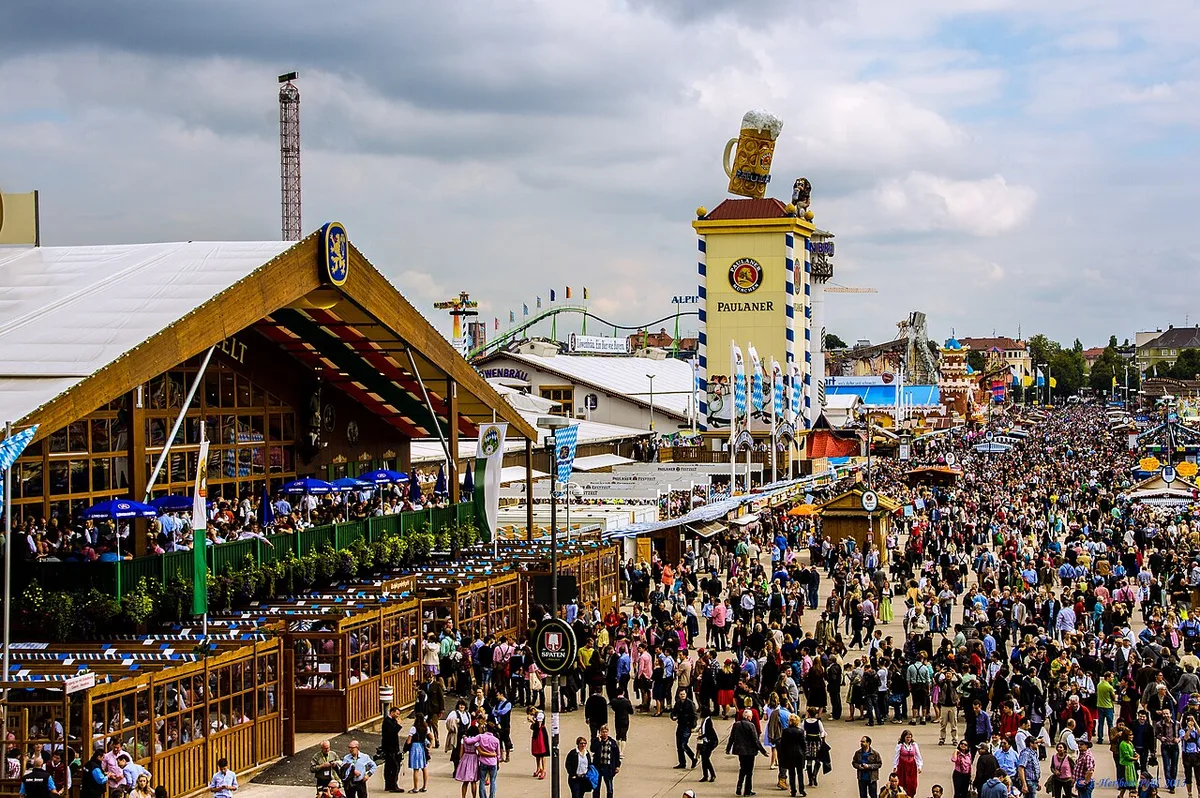
The festival fills the Theresienwiese, the meadow first opened to the public in 1810 for the wedding of Crown Prince Ludwig and Princess Therese of Saxony-Hildburghausen and named for her the following year. Beer tents, food stalls and rides have defined the Wiesn ever since, drawing crowds that now exceed six million across a full edition. Oktoberfest 2026 began on 19 September. It runs sixteen days and ends on the first Sunday in October. That Sunday falls this weekend.
In the closing sessions the Teufelsrad keeps turning. Its circular platform still accelerates until riders lose their hold and tumble off. At the operator’s station the remaining stack of cycling shorts sits ready as the sixteen days finish.