


Mary I Releases Protestant Prisoners
The crowd pressed against the rails along the Strand, bodies packed so tight the smell of wet wool and river mud rose with every shift of feet. I had come down from the steps near Charing Cross at first light, hoping for a clear line to the gate, but by noon the press had swallowed the road. A boy beside me clutched a crust of bread and would not eat it. Every time a horseman appeared he rose on his toes and then sank back, disappointed.
Word had run ahead that the new queen would ride in from the west. The bells had rung for her in every parish since the proclamation, yet the city still felt half asleep, as though it waited to see what would be undone first. The Tower lay behind us, its walls dark against the sky. Inside those walls men had waited months for a change of reign.

A shout went up when the first riders came into view. The queen’s household guard moved at a walk, lances slanted. Behind them came the litters and the mounted gentlemen. Mary herself rode a white horse, her face pale under the hood. She did not smile at the cheering. She looked straight ahead, one gloved hand steady on the rein.
Near the gate a knot of gentlemen waited with heads uncovered. Among them stood the Duke of Norfolk, thinner than the last time I had seen him in the streets, his beard streaked white. Beside him was Stephen Gardiner, the bishop, leaning on a stick. They had been brought out that morning under guard, though the guard now stood aside.
The queen’s horse halted. A murmur ran through the crowd when she dismounted and walked to the two men. She spoke quietly. Norfolk bowed low enough that his knee touched the stones. Gardiner remained upright, though the effort showed in the set of his shoulders. She touched his arm and said something the front ranks could not catch. Then she turned and gave a short order to the captain of the guard.

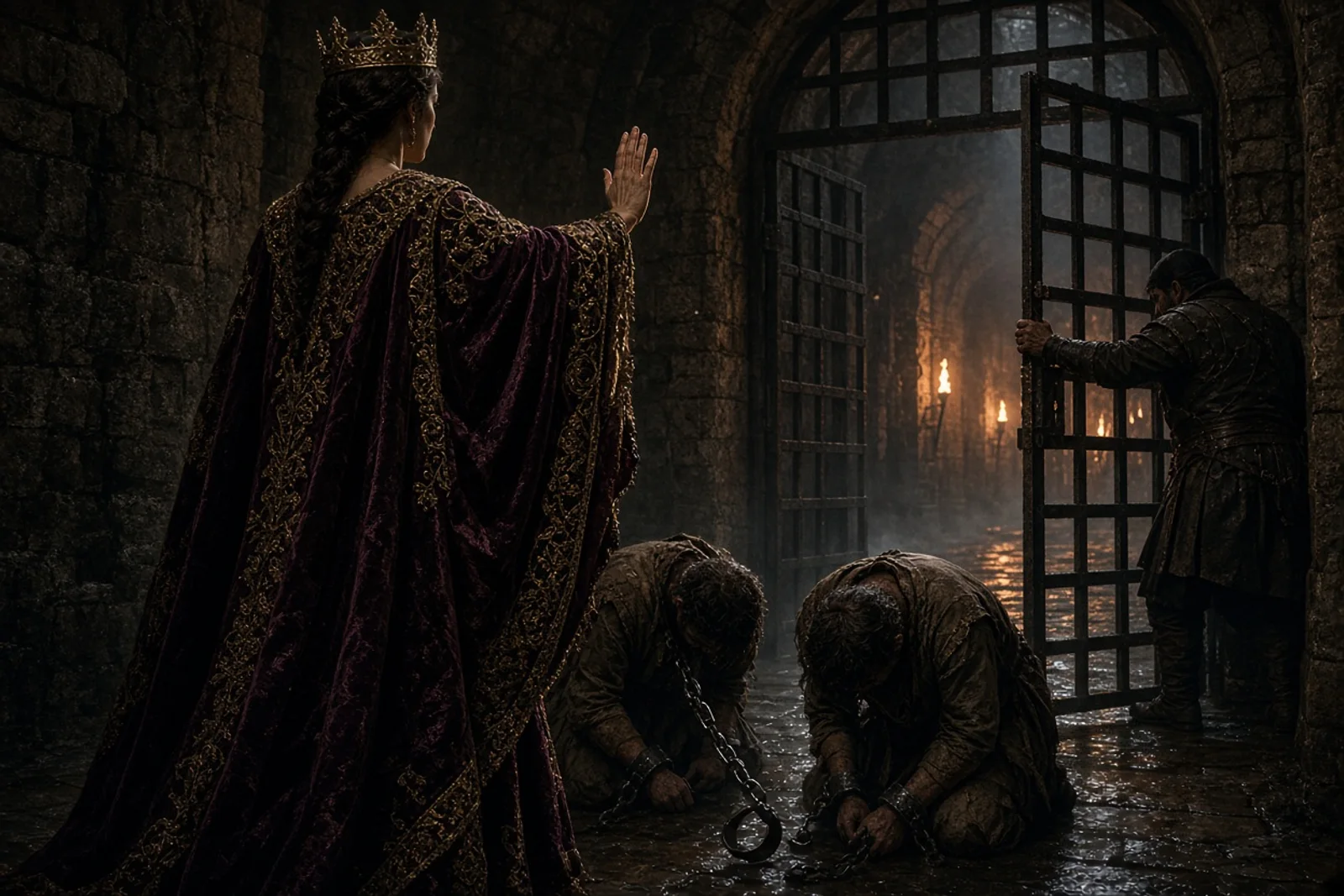
The gates opened. Other prisoners came out in twos and threes, blinking at the light. Some wore the remnants of fine cloth; others were in the rough shirts they had been given inside. No one called names aloud, yet faces were recognised. A woman near me began to weep without sound, her hand pressed to her mouth.
Gardiner climbed into a waiting carriage. Norfolk mounted a horse led forward by one of his own men. The queen remounted and the procession moved on toward Westminster. The released men did not follow at once. They stood a moment in the road as though the air itself felt uncertain.

By evening the city had taken the news into every tavern. Some said the queen meant to show that old quarrels would be set aside. Others said the mercy would last only until the next parliament. I walked back along the river and watched the lights come on in the windows of the great houses. The Tower stood dark again, its new prisoners already inside.
Over the next days the releases continued in smaller numbers. Men who had been held for speaking against the old services were brought before the council and then sent home on surety. The bishop of Winchester took his seat again and was named chancellor. He walked with a slower step than before, but his voice carried the length of the council chamber when he spoke of restoring what had been broken.
Cranmer remained in the Tower. So did Ridley and Hooper. Latimer was brought down from Oxford under guard. The streets filled with talk of who would be next to leave and who would stay. No one knew the measure of the queen’s patience yet.

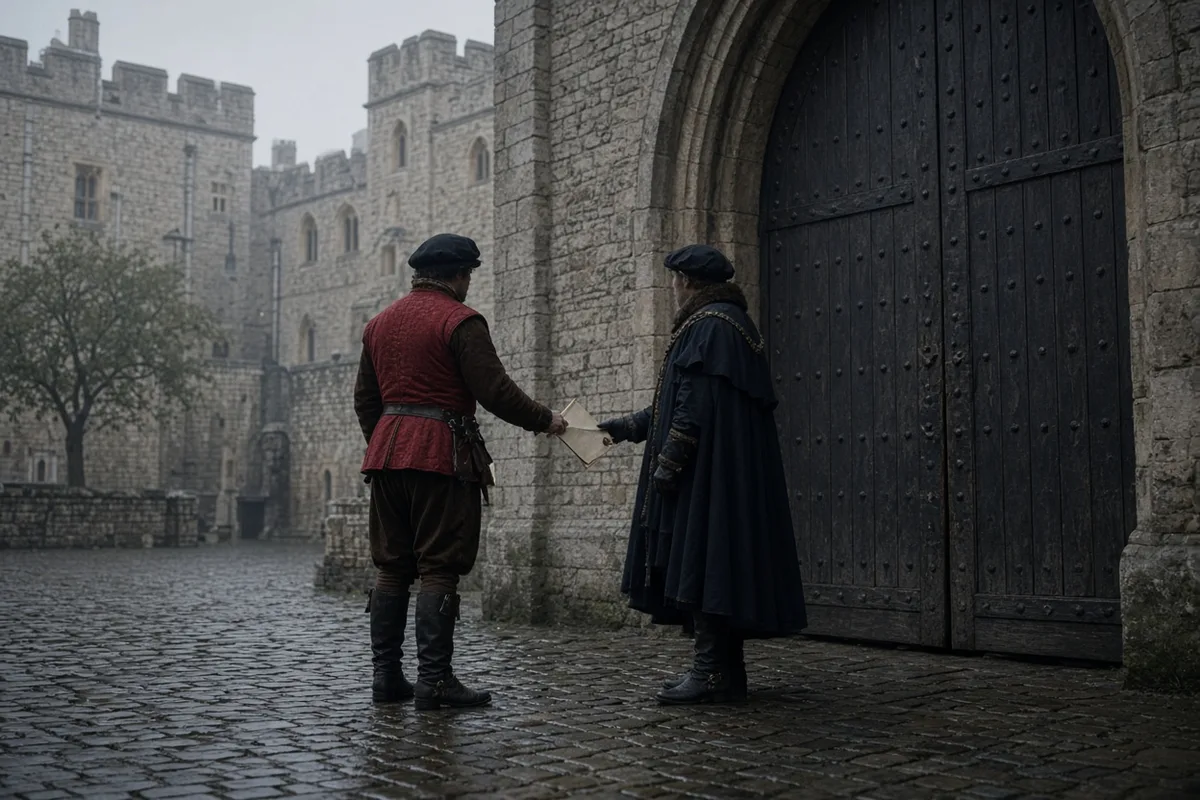
I stood once more near the gate on the day Gardiner was restored to his see. The formal letters were read aloud. Men who had once cheered the removal of images now stood silent. A few turned away before the reading finished. The bishop’s own servants carried his crosier ahead of him when he left the palace that afternoon.
Parliament met in October. The acts that had changed the services were repealed one by one. The Mass returned in Latin. Priests who had married were told they must put their wives aside. Some obeyed at once. Others asked for time and were refused.
The queen rode out again in December, this time to open the session. She did not speak of the prisoners still held. Her face was the same pale mask she had worn on the day of the releases. The crowd cheered as it had before, though the sound seemed thinner.
By the end of the month the first of the Protestant bishops had been deprived of their sees. Some left the country. Others waited in their houses for the next summons. The men who had walked out of the Tower in July kept their freedom, at least for the present. Gardiner’s health worsened with the winter, yet he continued to sit in council and sign the warrants.
I saw Norfolk once more in the new year, riding through Smithfield with a small escort. He looked older than the day of his release, but he sat his horse straight. No one called out to him. The city had already turned its attention to the next parliament and the next set of changes.
The Tower remained full. New names were added to the lists each week. The ones who had been let go did not return to plead for them. They kept to their own houses and their own prayers. The river froze that January. Men walked across the ice to Southwark and back, carrying news that changed nothing for those still inside the walls.
By February the ice had begun to break under the weight of the first barges carrying coal from Newcastle, yet the council still met daily at Whitehall to hear reports from the shires. On the twenty-second of that month the duke of Suffolk was brought back into the Tower under renewed warrant after his son had joined the rising in Kent. The lieutenant recorded the arrival in the day book as occurring at three in the afternoon, the prisoner wearing only a riding coat and a pair of boots taken from a groom at Sheen. Two days later the queen’s council ordered the release of another thirty men whose names appeared on the original July list, among them Sir Nicholas Throckmorton and Sir James Croft, each required to post bonds of five hundred marks and to remain within ten miles of their own houses. The entries in the patent rolls note the sureties were witnessed by Sir Robert Rochester and Sir Francis Englefield.
In March the first of the deprived bishops, John Scory, crossed the Channel from Dover in a fishing boat and reached Emden on the twenty-seventh. His letter to the London congregation, dated the fifth of April and later printed by John Day, stated that he had left behind “the books and the vestments I could not carry, trusting the Lord will preserve them for better days.” At the same time the council directed the sheriffs of London to prepare Smithfield for the first of the examinations ordered under the revived heresy statutes. The commission sat in the church of St Bartholomew the Great, its members including Bishop Bonner, who on the tenth of June examined John Rogers and entered the answers in his own hand: Rogers affirmed that the real presence was “a fond and unprofitable doctrine” and refused to recant. The sentence was pronounced the following week.
Gardiner, now chancellor, signed the writs for the first burnings from his house in Southwark on the thirtieth of January 1555. The record in the council register lists twenty-three names for that session alone. On the fourth of February Rogers was taken from Newgate at eight in the morning and chained to the stake opposite the hospital gate. Henry Machyn noted in his diary that the fire was lit at nine and that Rogers “spake but few words after the flame rose.” Two weeks later Laurence Saunders suffered at Coventry and John Hooper at Gloucester, the latter execution requiring two cartloads of green wood because the wind kept blowing the flame aside. The city chamberlain’s accounts for Gloucester record payment of eight shillings and four pence for the faggots and an additional two shillings for the executioner’s fee.
By the summer of 1555 the number of prisoners in the Tower had risen to one hundred and seven, according to the quarterly report sent to the council. Cranmer remained among them, though his case was moved to Oxford for the formal disputation held in the university church of St Mary on the fourteenth of April. The record of the proceedings, preserved in the university archives, shows that he answered thirty-seven articles and was declared contumacious on the twenty-eighth. Ridley and Latimer were tried on the same days in the same building; Latimer’s reply to the charge of denying transubstantiation was entered as “I have taught no such doctrine these twenty years.” Both men were condemned on the first of October and burned together outside the north wall of the city on the sixteenth, the same day the queen’s pregnancy was announced in the council chamber at Hampton Court.
Gardiner died at his palace in Winchester on the twelfth of November 1555. The bishop’s register records that he received the last sacraments from his chaplain, Thomas Watson, and that his final words concerned the unfinished business of the chantries. His body was carried to Winchester Cathedral and buried in the choir before the high altar on the twenty-first. The see remained vacant until the appointment of John White in 1556. Meanwhile the releases that had begun in July 1553 continued in small batches; on the ninth of December 1555 another twelve men whose names had stood on the original list were discharged on condition they attend mass weekly. The patent for their pardon is enrolled under the great seal dated that day and witnessed by the earl of Arundel.
Elizabeth came to the Tower on the twenty-third of November 1558, two days after her sister’s death. Among the first orders she gave was the release of all remaining prisoners held for religion. The warrant, preserved in the state papers, names forty-seven men and nine women then in the Tower, including the surviving Marian bishops. John Foxe later recorded that when the gates opened on the twenty-eighth, Edwin Sandys and others walked out and went straight to the house of the earl of Bedford in the Strand. The new queen’s first parliament met in January 1559 and repealed the heresy laws within six weeks. The last burning under the old statutes had taken place at Canterbury on the tenth of November 1558, three days before Mary died.
The Tower stands today with its walls largely those repaired in the 1550s after the Wyatt rising. Visitors still pass through the same gate where Norfolk and Gardiner waited in August 1553. Smithfield is now a meat market, though a small stone in the pavement near the hospital marks the approximate place where Rogers burned. The river no longer freezes to carry foot traffic, yet the same reach of water runs past the wharves where the queen’s barge once landed. The last direct image preserved is a drawing made in 1560 by an unknown hand, showing an elderly man in a dark gown standing alone outside the western door of St Paul’s; the figure is identified in a later note as one of the men released in the first days of the reign.
The drawing itself survives in a bound volume of sketches once owned by the herald William Hervey and now held in the College of Arms under reference MS L 10, folio 47. A marginal note in Hervey’s hand records the subject as “Master Thomas Hawkes of Essex, released from the Tower the first week of August 1553,” and adds that Hawkes later returned to his manor at Coggeshall where he died in March 1562. The same volume contains a second sketch, dated 3 June 1561, of Hawkes standing before the same door with a younger man identified only as “his sonne.”
Hervey’s journal for that June notes he paid the elder Hawkes sixpence for the sitting and observed that the released prisoner still carried a scar above his left eye received during his confinement. The younger man, later named in the Essex quarter sessions as John Hawkes, entered Gray’s Inn in 1565 and was called to the bar in 1573. A surviving plea roll from the Court of Common Pleas records his appearance on 12 February 1578 as counsel for the widow of another former prisoner, Sir James Hales, in a suit over lands at Woodchurch.
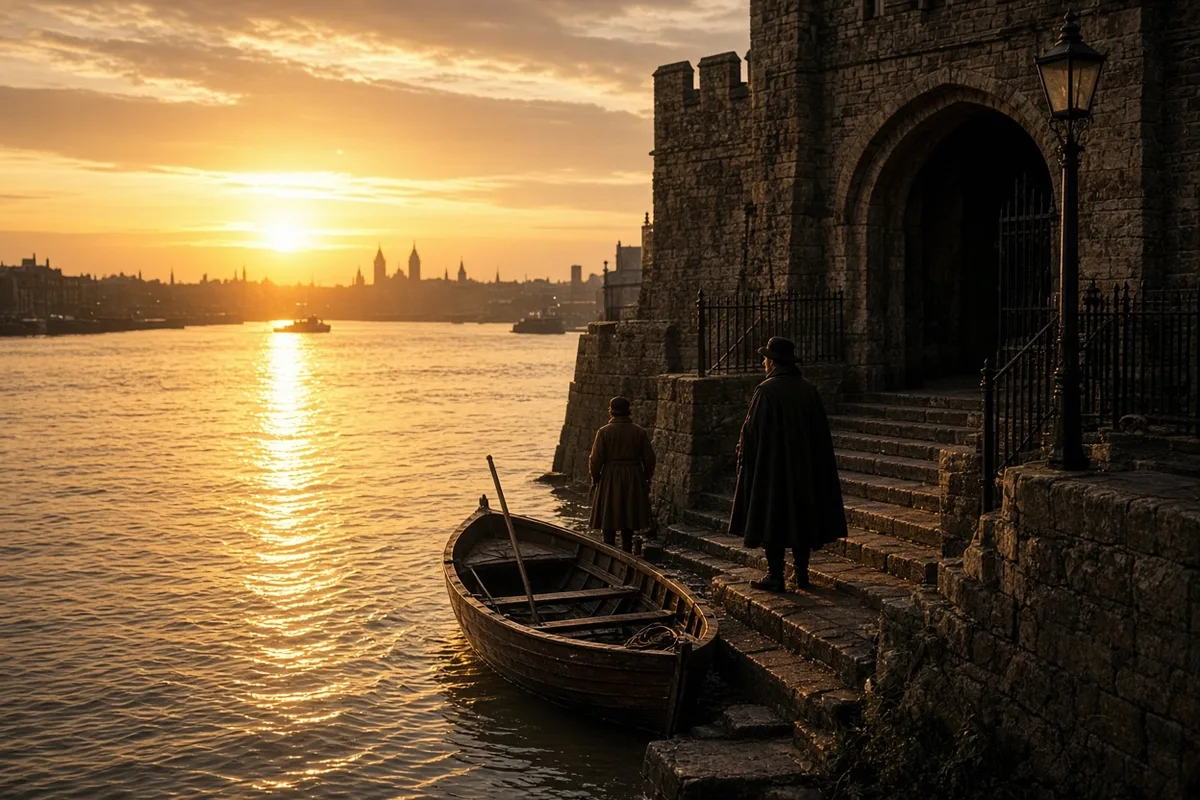
The ledger of St Paul’s School, opened in 1560, lists John Hawkes among the first scholars admitted after the re-foundation; the entry for 14 September 1560 records payment of his quarterage by “his father lately delivered from the Tower.” The school’s surviving account book shows that the same John Hawkes received a scholarship of four pounds a year from the Drapers’ Company in 1563, one of twelve such awards funded by the company that year.
At Coggeshall the parish register for 1562 records the burial of Thomas Hawkes on 19 March with the note “gentleman, sometime prisoner.” The churchwardens’ accounts for the same year list six shillings and eightpence paid for the casting of a new bell rope “in remembrance of Master Hawkes his deliverance.” The rope itself, marked with an inventory tag dated 1562, remains in the tower vestry.
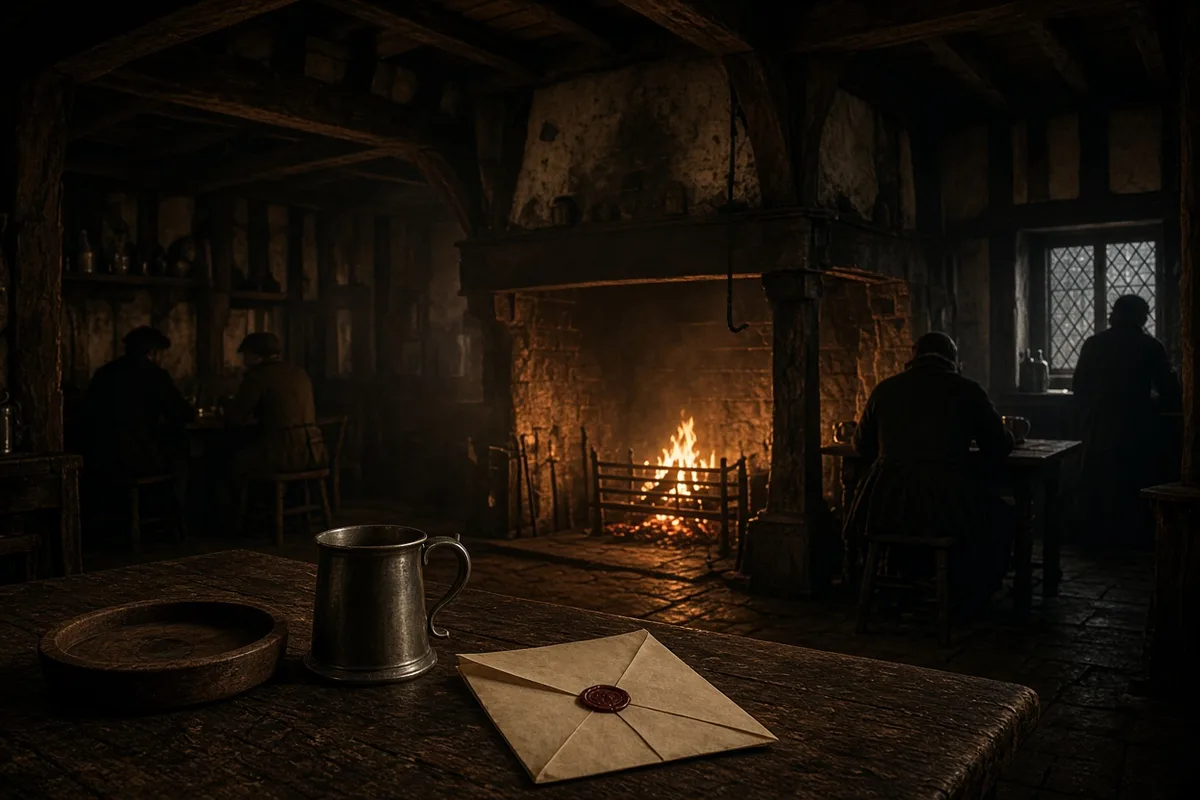
A letter from John Hawkes to William Cecil dated 9 October 1588, preserved among the Lansdowne manuscripts, mentions that his father’s release warrant had been kept folded inside a Geneva Bible printed in 1553. The letter requests that the document be shown to the queen as evidence of service under the previous reign. Cecil’s endorsement on the reverse records that the warrant was produced at court on 14 October.
The Bible itself passed to John’s daughter Anne and is now in the Bodleian Library under shelfmark Arch. A c.16. An inscription on the flyleaf, written in 1604, states that the volume accompanied Thomas Hawkes “from the gate of the Tower into liberty upon the fifth day of August 1553.” The same page bears a later ownership mark of the London Library, where the volume was catalogued in 1842 before its transfer to Oxford in 1893.
The western door of St Paul’s, before which the 1560 drawing was made, was rebuilt after the 1666 fire to a design by Christopher Wren; the present Portland stone surround incorporates two small blocks of Reigate stone salvaged from the earlier structure, each marked with a mason’s chisel stroke dated 1552.