


Mary Verghese Rebuilds Life After Paralysis
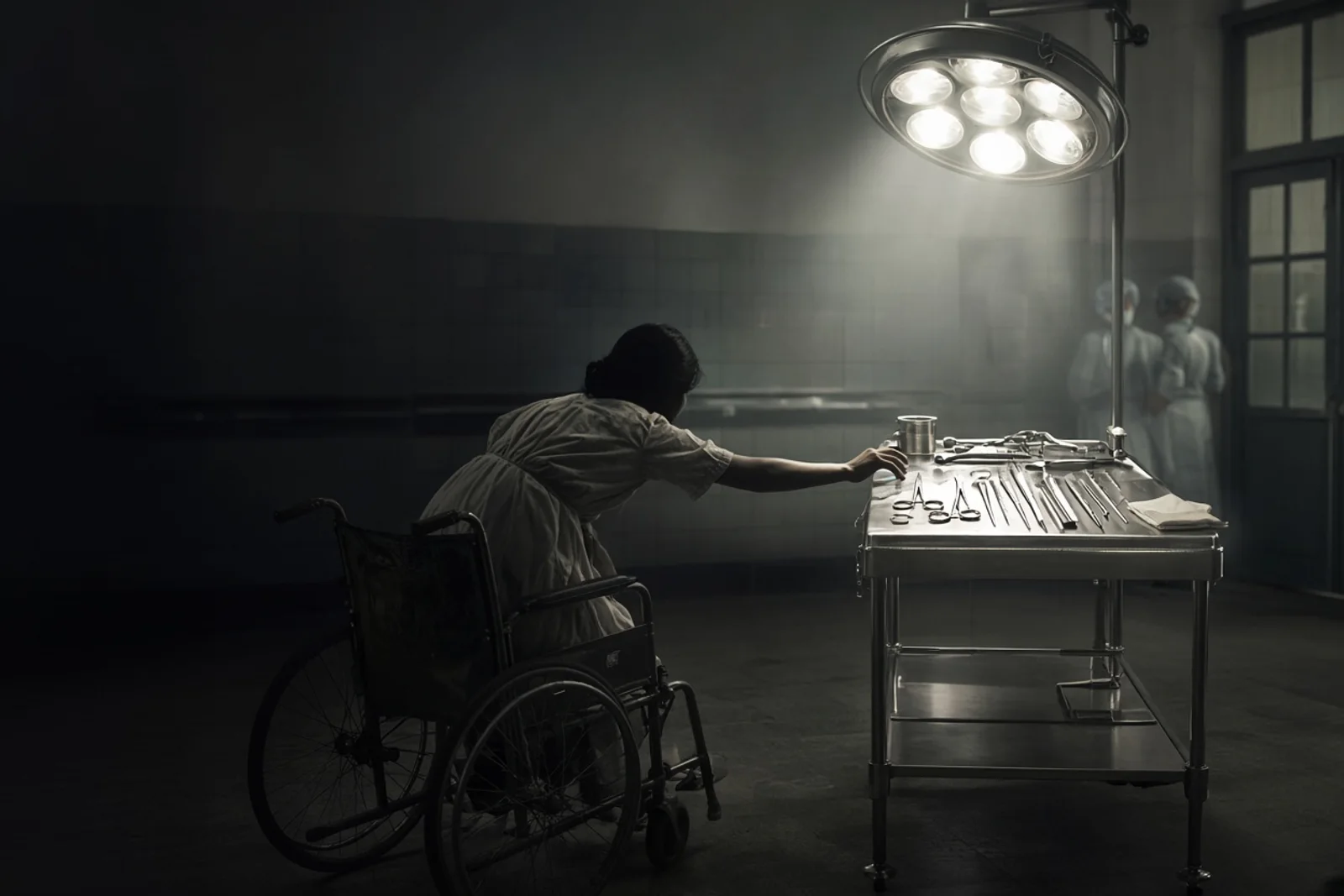
The wheels stopped just short of the instrument tray. I adjusted the lamp so the beam fell across the patient’s face without throwing glare into her eyes. Mary Verghese sat already gloved, her chair locked, the footrests folded away so nothing caught the pedal. She reached for the fine hook without asking for it. The room held the usual quiet that came when she worked, only the soft click of metal and the hiss of the sterilizer in the corner.
She had returned from New York three weeks earlier. The letter from Dr. Rusk’s office had arrived first, then the trunk with the new braces and the diagrams she had drawn herself. She unpacked the diagrams on the long table outside the leprosy ward and showed us how the new exercises would begin the same week. Patients watched from their beds. One man with both hands bandaged asked whether the chair would fit through the doorway. She measured it with her forearm and said it would.
Before the accident she had planned to deliver babies. Everyone at CMC knew that. After the road crash in fifty-four the surgeons told her the cord was cut. She lay weeks without feeling below the waist. Dr. Brand came to the bedside one morning and told her there was still work a surgeon could do sitting down. She answered that she had never planned to sit. He left a pair of tendon-transfer drawings on the sheet anyway.

Months later she began to operate again, first assisting, then taking the knife herself. The leprosy patients needed eyelids rebuilt so the lashes would not scratch the cornea. She learned to steady her elbows on the armrests of the chair and to keep the tremor out of her hands by bracing one wrist against the other. I stood at the head of the table and counted the minutes for her. She never asked for the count out loud, but when I reached twenty she would pause and flex her fingers once before continuing.
The day she left for the fellowship she wore the same white coat she had worn in the ward. Someone had sewn extra pockets on the inside so she could carry instruments without reaching behind her. She did not say goodbye to the patients. She told the head nurse the new exercises would start when she came back and that the measurements for the parallel bars should be taken before the monsoon.
When she returned the monsoon had already begun. The corridors smelled of wet cement. She brought back a suitcase of printed schedules and a single photograph of Dr. Guttmann at Stoke Mandeville, signed on the back. She hung the photograph above the desk in the new department and said the beds would be ready by October. We cleared the old storage room and painted the walls the same green used in the main wards. She tested the doorway with her chair twice before the paint dried.
The first class of physiotherapy students arrived in the rain. They stood in the corridor holding their shoes because the floor was still tacky. Mary Verghese rolled to the blackboard and wrote the schedule in chalk. She did not mention her own injury. She told them the patients would arrive with pressure sores and contractures and that the first task was to prevent both. One student asked whether a person could walk again after a complete lesion. She answered that the question was not whether they walked but whether they reached the toilet unaided.
We built the low-cost tricycle frames in the workshop behind the laundry. The design came from a drawing she had copied in New York. The wheels were bicycle wheels bought in the market. She sat beside the welder and pointed where the axle needed an extra brace so the frame would not twist on uneven ground. The first frame was tested by a boy whose legs had been crushed in a bus accident. He pedaled the length of the veranda and back before the chain slipped. She tightened it herself, leaning forward from the chair until her forehead touched the handlebar.
By the end of the second year the department occupied two wards and the workshop. Occupational therapy students learned to make splints from scrap leather. The prosthetics bench stood under the same tin roof as the bicycle frames. Mary Verghese moved between the rooms without a schedule posted on the door. She stopped at each bed long enough to check the skin and ask what the patient had eaten that morning. If the answer was only rice water she sent the diet sheet back to the kitchen with her own note.
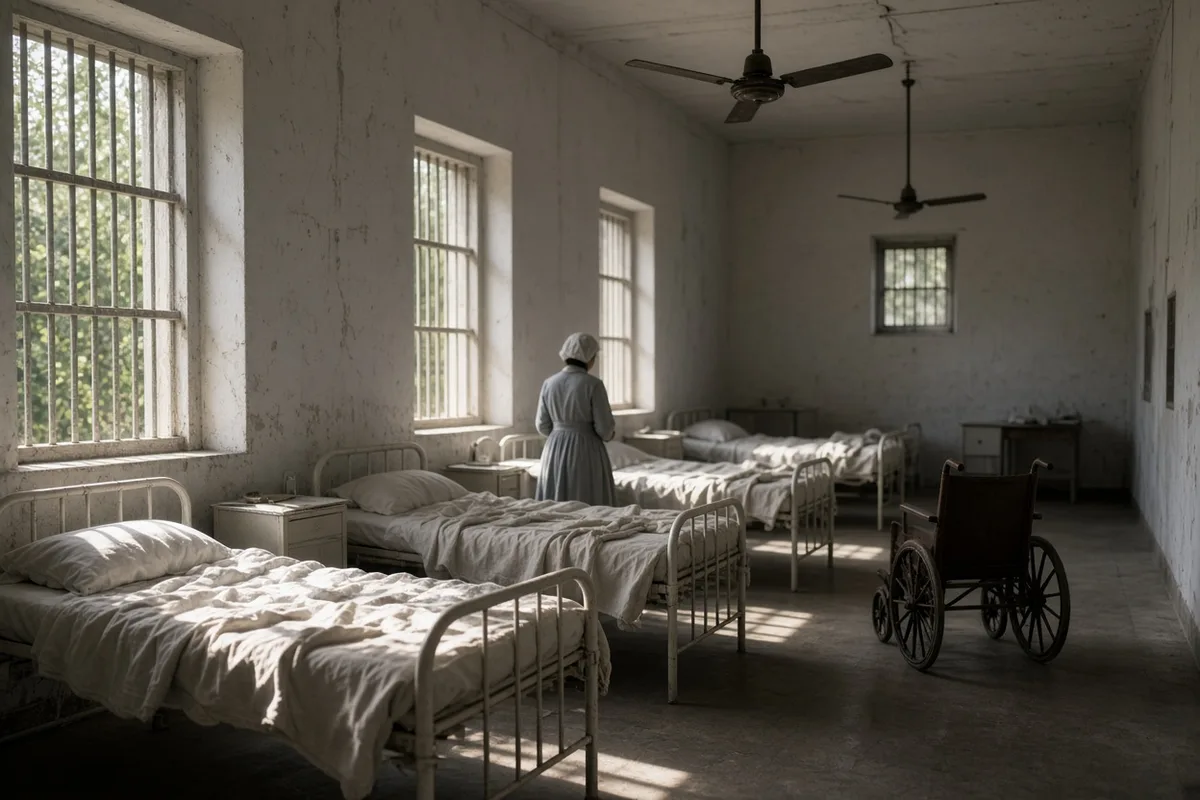
One afternoon a man who had lost both legs below the knee asked whether he could still drive a bullock cart. She asked how high the cart seat was. He said it came to his hip when he stood. She measured the height from the floor to her own chair seat and told him the answer depended on the strength left in his arms. Two weeks later he left with a set of wooden blocks fitted under the cart seat and a pair of short crutches lashed to the side.
The sports equipment arrived in crates marked from the Rotary Club. We unpacked parallel bars, a shot put, and a set of bows. She had the targets set at seated height. The first archery session was held on the lawn behind the chapel. Patients who could not yet sit unsupported used sandbags to prop their backs. She kept score on a clipboard balanced on her lap. No one asked her to shoot. She recorded the distances and noted which bows needed lighter draw weights.
The vocational training room opened the following month. Women learned to roll bandages and pack dressings while sitting on low stools. Men who could use their hands were taught to assemble catheter kits. She visited once a day and asked each person what they would do with the first wages they earned. Most answered they would send money home. She wrote the answers in a notebook she kept in the left pocket of her coat.
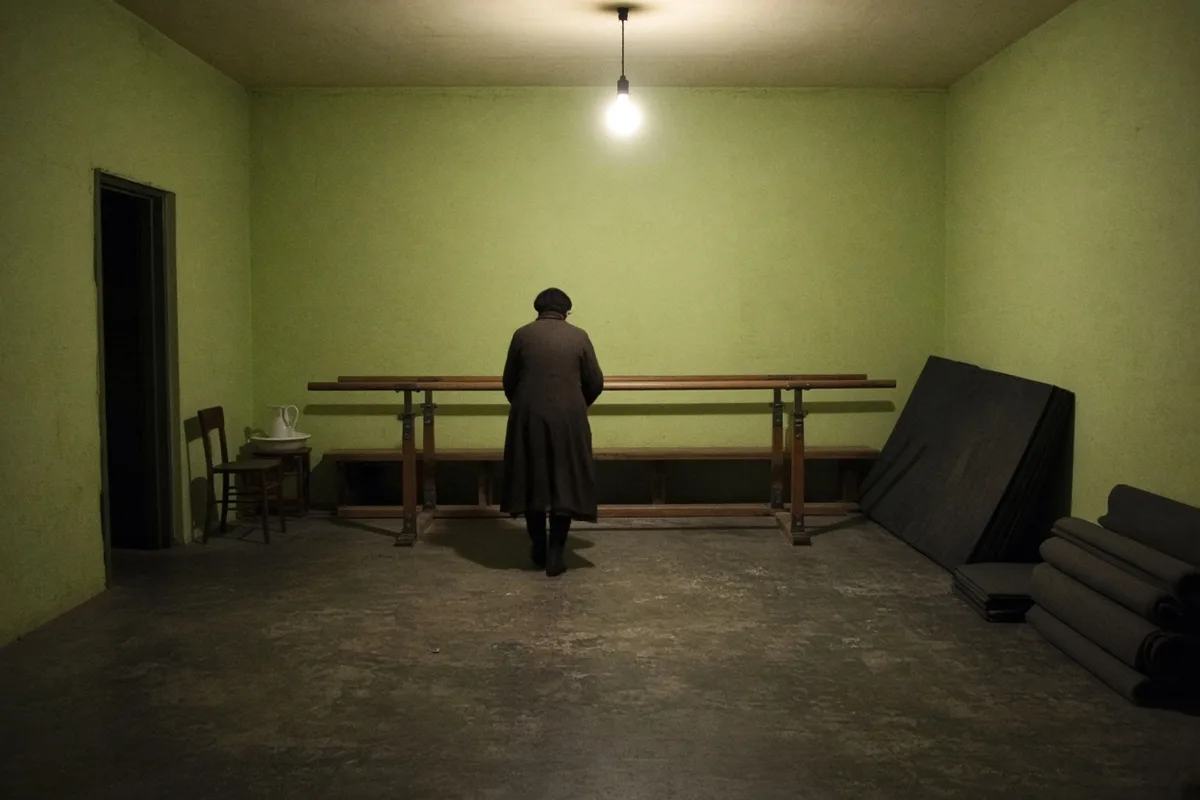
By nineteen sixty-two the department had its own budget line and a sign painted on the outer wall. Patients came from districts three days away by bus. Some arrived with only a letter from a district hospital. She read each letter at the admission desk and decided the order of the waiting list herself. The rule was simple: the person whose skin was already broken went first.
One evening after the last patient had been settled she remained at the desk longer than usual. The photograph of Dr. Guttmann had begun to curl at the corners. She smoothed it flat with the edge of a ruler and weighted it with a paperweight made from a discarded brace joint. Outside the window the tricycle frames stood in a row under the overhang, their paint still bright where the rain had not reached them. She turned off the lamp and rolled toward the door. The wheels left two clean tracks across the wet floor.
The next morning the admission desk logged thirty-seven new names before noon. A letter from the district collector in Salem arrived with the eleven o’clock post, requesting beds for two men whose pressure sores had already reached bone. Mary Verghese initialed the form and added the date 12 March 1963 in the margin. She asked the head nurse to reserve the two beds nearest the workshop door so the men could watch the tricycle frames being welded. At four o’clock she rolled into the occupational therapy room and watched a woman named Kamala thread a needle with her left hand only. Kamala said the first wages would buy a tin roof for her mother’s house in Gudiyatham. Mary Verghese wrote the sentence in the notebook and underlined the word “tin.”
By 1968 the department budget reached 1,12,000 rupees and the staff numbered twenty-nine. The Rotary Club sent a second set of bows, this time with sixty-pound draw weights. On 4 September a former leprosy patient named Joseph, whose right leg had been amputated at the knee, placed third in the state archery meet held on the CMC lawn. Mary Verghese recorded his score of 287 on the same clipboard she had used the first day. After the meet she asked Joseph whether the bowstring still caught on his shirt cuff. He answered that he had sewn a leather guard himself. She requested the pattern and pinned it above the prosthetics bench with a note that read “Joseph 1968 cuff guard, copy for next batch.”
In 1972 the Indian Council of Medical Research granted funds for a three-year study of pressure-sore incidence among 214 spinal-cord patients discharged from the department. Mary Verghese designed the follow-up card that listed skin checks at one week, one month, three months, and six months. The first cards returned from villages as far as Tiruvannamalai and Krishnagiri. One card, signed by a health worker on 17 November 1973, noted that a patient named Lakshmi had rolled herself 1.8 kilometers to the nearest clinic for the three-month check. Mary Verghese entered the distance in the margin and circled it twice.
The new building opened on 15 August 1976. It contained thirty-eight beds, a gymnasium with parallel bars set at two different heights, and a classroom that seated twenty. The sign on the outer wall read “Mary Verghese Department of Physical Medicine and Rehabilitation.” At the dedication Dr. Paul Brand spoke for eight minutes and said the phrase “she refused to let the cord decide the work.” Mary Verghese sat at the end of the front row and did not speak. After the ribbon was cut she rolled through each room once, testing the doorway widths with her forearm as she had done with the storage room in 1959.
By 1981 the vocational section employed forty-seven former patients on contract work for three hospitals and two pharmaceutical firms. The catheter-kit assembly line produced 2,400 kits per week. A woman named Fatima, who had lost both hands to leprosy, supervised the line and kept the production log in a notebook identical to the one Mary Verghese carried. On 3 February Fatima reported that the week’s output had reached 2,650 because two new workers had been added. Mary Verghese initialed the log and asked whether the new workers needed extra padding on their stools. Fatima answered that the padding had already been cut from scrap leather left over from the splint class.
The last class she taught met on 9 December 1985. Twelve physiotherapy students sat on the floor because the chairs had been moved for painting. Mary Verghese wrote the word “contracture” on the blackboard and asked each student to name one preventable cause. When the twelfth student answered “positioning,” she erased the board and rolled to the doorway. She told them the next lecture would cover wheelchair transfers and that the demonstration would use the low-cost tricycle frame still stored in the workshop. None of the students asked when she would return.
On 18 May 1986 the department recorded its 4,872nd admission since 1963. The patient, a nineteen-year-old man named Ravi from Vaniyambadi, had sustained a complete T-10 lesion in a motorcycle accident two weeks earlier. Mary Verghese reviewed the chart at the admission desk, wrote the standing orders for skin checks every two hours, and initialed the bottom of the page. That evening she remained after the staff had left and straightened the photograph of Dr. Guttmann once more. The wheels left two clean tracks across the floor that had been mopped an hour earlier.
The admission desk logged the next entry at half past eight. A woman named Sundari from Ranipet arrived with a letter from the government hospital noting a T-12 fracture sustained when a cart overturned on the road to Arcot. Mary Verghese initialed the form and added the instruction “skin inspection every ninety minutes” in the margin before rolling back to the office. She opened the notebook from the left pocket of her coat and wrote the date 19 May 1986 beside the entry for Ravi’s standing orders. The pen stopped after the second digit of the year.
On 20 December 1986 the department recorded its 4,901st admission. Dr. Suranjan Bhattacharji, who had assisted her since 1978, signed the intake sheet and noted that the new patient would occupy bed twelve in the west ward. The photograph of Dr. Guttmann remained on the desk, weighted now by a brass paperweight cast in the workshop from a discarded brace joint. Staff placed a fresh copy of the pressure-sore follow-up card on every chart that morning.
The Mary Verghese Trust was registered on 14 March 1987 with an initial grant of 75,000 rupees from the hospital endowment. Its first project funded twelve additional tricycle frames built to the 1959 New York drawing. Bhattacharji chaired the board and kept the original notebook in the department safe. The trust statement listed the address as “Mary Verghese Department of Physical Medicine and Rehabilitation, Christian Medical College, Vellore 632002.”
In 1992 the Indian Council of Medical Research extended the pressure-sore study for another five years, covering 387 patients across four districts. Cards returned from 214 villages. One card dated 11 July 1994 from a health worker in Chengam recorded that patient Lakshmi had traveled 2.3 kilometers by tricycle for her six-month skin check. The distance was entered in blue ink and circled three times in the master ledger.
The gymnasium was enlarged in 2004 to include an indoor track marked at 25-meter intervals. The parallel bars remained at the original two heights. On 15 August that year the department admitted its 12,456th patient since 1963. A former student named Priya, now head of physiotherapy training, demonstrated wheelchair transfers using the low-cost tricycle frame stored since 1985. She quoted the 1962 rule that “the person whose skin was already broken went first.”
By 2016 the vocational section produced 9,800 catheter kits per week under contract with four hospitals. Fatima’s successor, a woman named Meena who had trained in 1983, maintained the production log in a notebook of identical size. The 2016 annual report recorded that 184 former patients earned wages through the section. The outer wall sign was repainted in 2018 with the same lettering used at the 1976 dedication.
On 17 December 2023 a physiotherapy student named Anjali rolled the original 1959 tricycle frame the length of the veranda during a demonstration for twelve new trainees. She stopped at the workshop door, tightened the chain with a wrench from the bench, and recorded the distance of 47 meters in the logbook kept beside the prosthetics bench. The wheels left two clean tracks across the floor that had been mopped that morning.