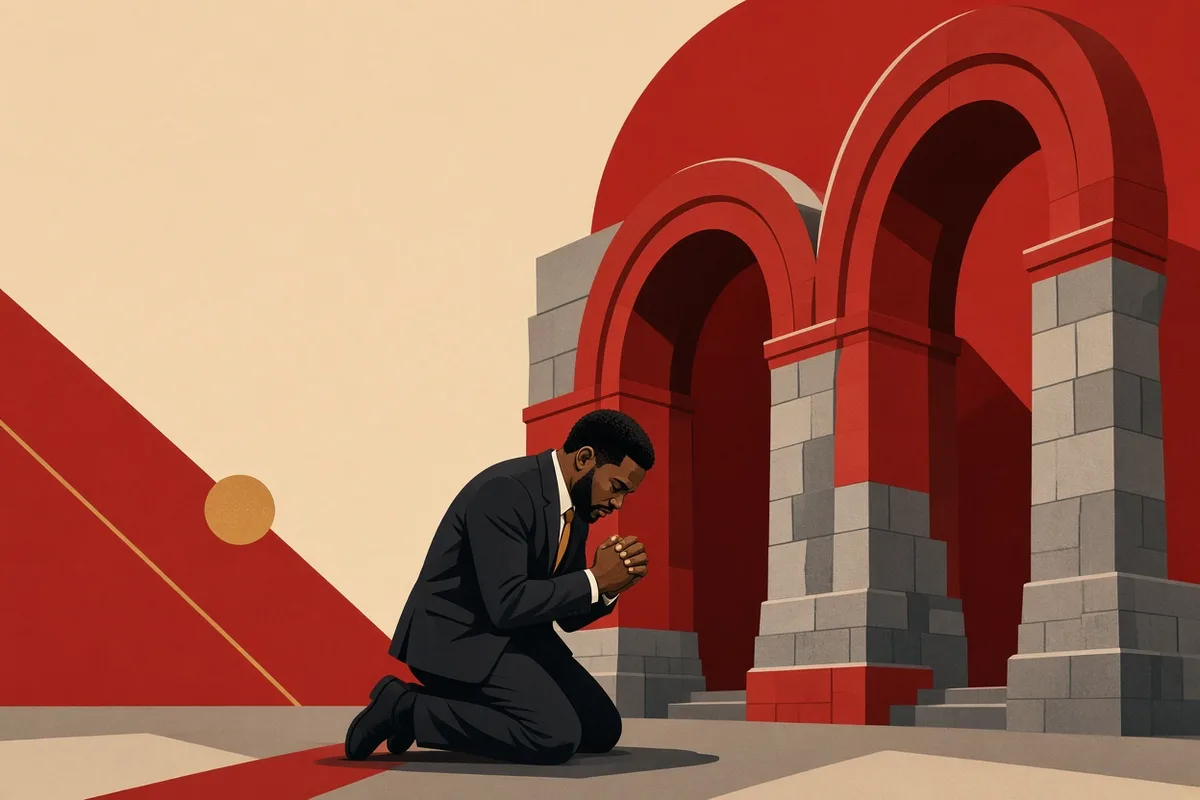



Maximilian Kolbe Takes a Stranger's Place
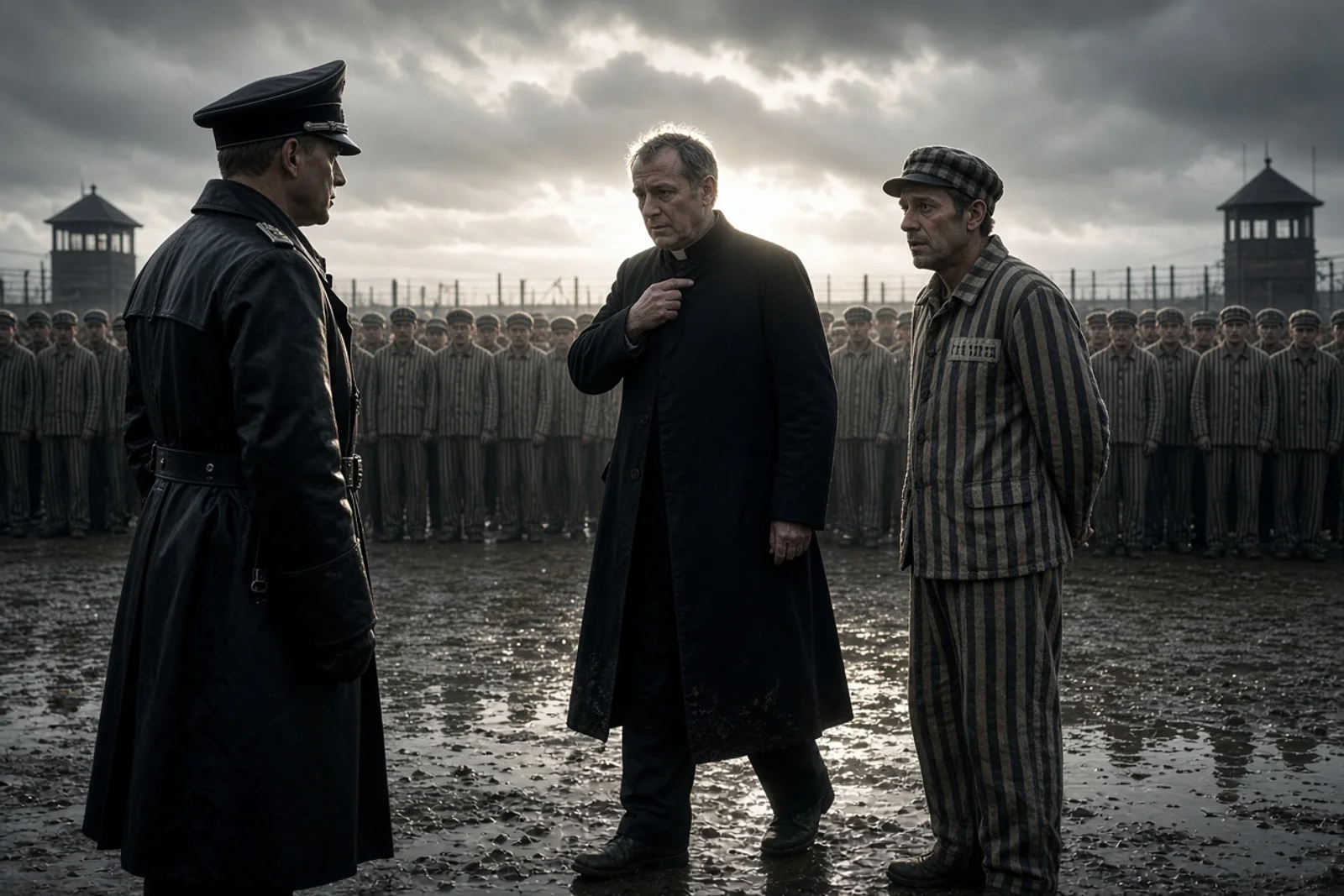
The whistle came at five, same as every morning, and my feet were already raw inside my clogs before we reached the gate. Block 14 stood in the gray light like all the others, a long brick shape with nothing behind its windows. I had been at Auschwitz since the spring, long enough to know the sound of boots that meant nothing and the sound of boots that meant everything. That July morning, after the evening roll call three days before, we all understood what was coming. A man from our block had gone missing. The camp did not use the word escape carefully. It used it like a match to dry grass.
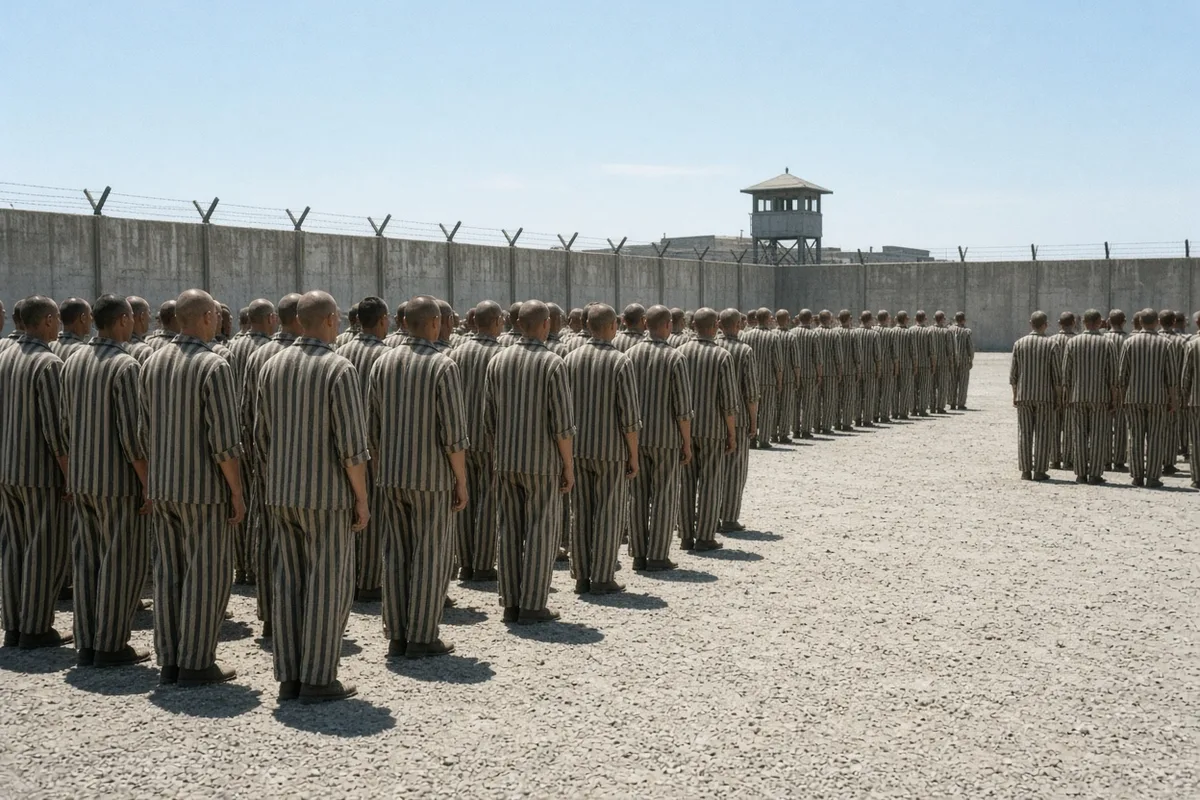
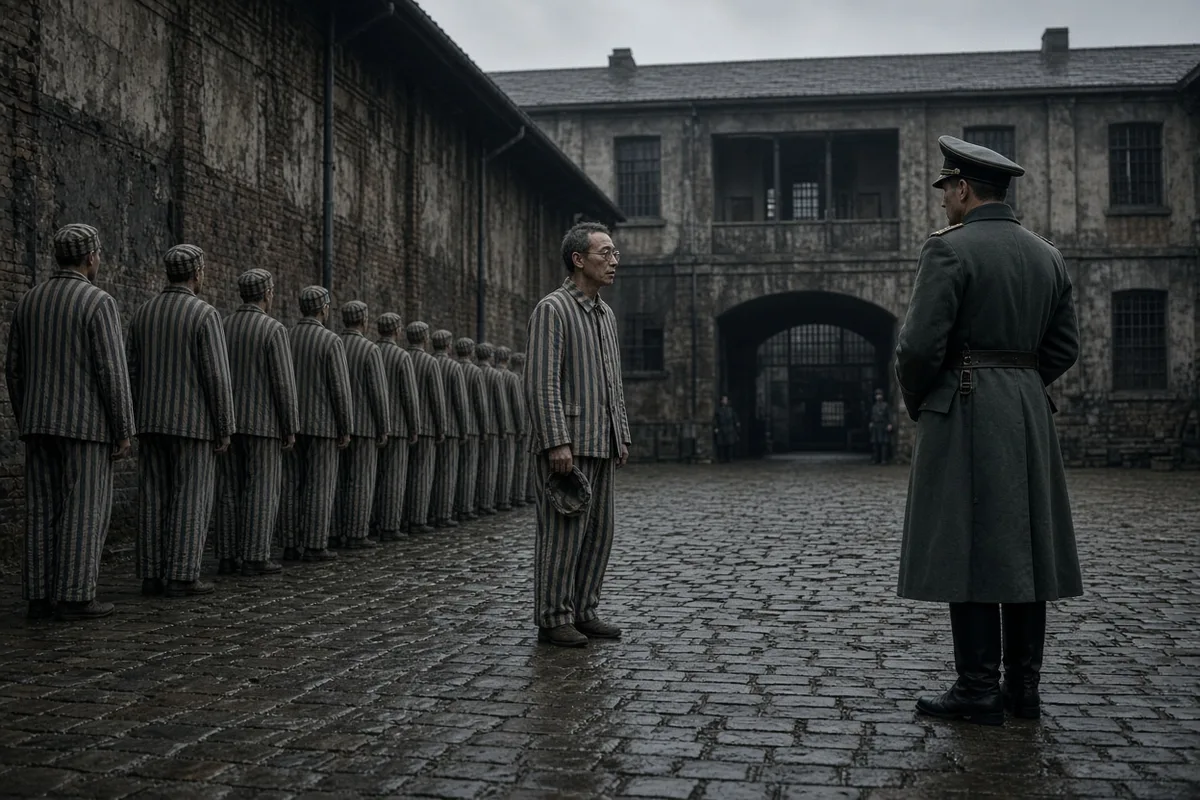
We stood in the yard for hours, rows of us in striped cloth gone thin at the knees, while Karl Fritzsch walked the lines. He was the deputy commandant, and he had a way of looking at a man that made the man feel already dead. Word passed low along the ranks before he even opened his mouth — ten for one, they always take ten for one, the ratio was as fixed as the layout of the barracks. We watched him move down the row of faces, counting nothing but making us feel counted, and every one of us tried to become smaller, tried to become someone his eyes would slide past.

He stopped in front of a man near me, a sergeant from the reserves named Franciszek Gajowniczek, prisoner number 5659. Fritzsch pointed. That was all it took, a finger, and Gajowniczek's face did something I still see when I close my eyes — not fear exactly, past fear, into the place where a man's whole life rushes up behind his eyes at once. He cried out. He said he had a wife. He said he had two sons who would have no father. It was not begging so much as a kind of drowning, a man going under and reaching for anything.
Nothing reached back. Ten men had been chosen and Fritzsch did not unchoose them. That was the shape of the camp — decisions did not bend, they only broke people who stood in front of them. I remember the stillness that followed Gajowniczek's outburst, the particular silence of hundreds of men agreeing without a word to look at the ground, because looking up cost something none of us could spare.

Then a man stepped out of the ranks. I did not know his name yet, only that he was older than most of us, gaunt in the way of men who had already been fasting long before the camp started starving them for him, with round spectacles and the calm of someone who had decided something before his feet ever moved. He walked toward Fritzsch the way you would walk toward a superior you were not afraid of, which in that place was its own kind of miracle, because fear was the only weather we had.
He said he was a Catholic priest from Poland. He said he had no wife, no children, and that the other man did. He asked to be taken instead.
Fritzsch did not answer him at once. There was a pause that felt longer than it could have been, the whole yard holding its breath in a way you could almost hear, hundreds of men who had learned not to want anything now wanting, silently, furiously, for this one strange request to be granted. Fritzsch asked him something — who he was, what he was — and the man repeated it, priest, missionary, no family. Something in that answer seemed to satisfy the deputy commandant in a way nothing else could have. He nodded. He said the substitution would be permitted.
I did not know his name then. I would learn it later the way we learned everything in that place, in fragments passed hand to hand at the wire, at the soup line, in the dark: Maximilian Kolbe, prisoner 16670, a friar from a monastery outside Warsaw called Niepokalanów, arrested that February with four of his brothers, brought to Auschwitz at the end of May on a transport of over three hundred men from the Pawiak prison in the city. None of that meant anything to me in the yard that morning. What meant something was simpler. A man had traded his life for a stranger's, in the open, in front of guards who killed for entertainment, and the guards had let it happen.
Gajowniczek did not move for a moment, as if his body had not caught up to what his ears had heard. Then he was pulled back into the ranks of the living, and the ten condemned men, Kolbe among them now instead of him, were marched away toward Block 11.
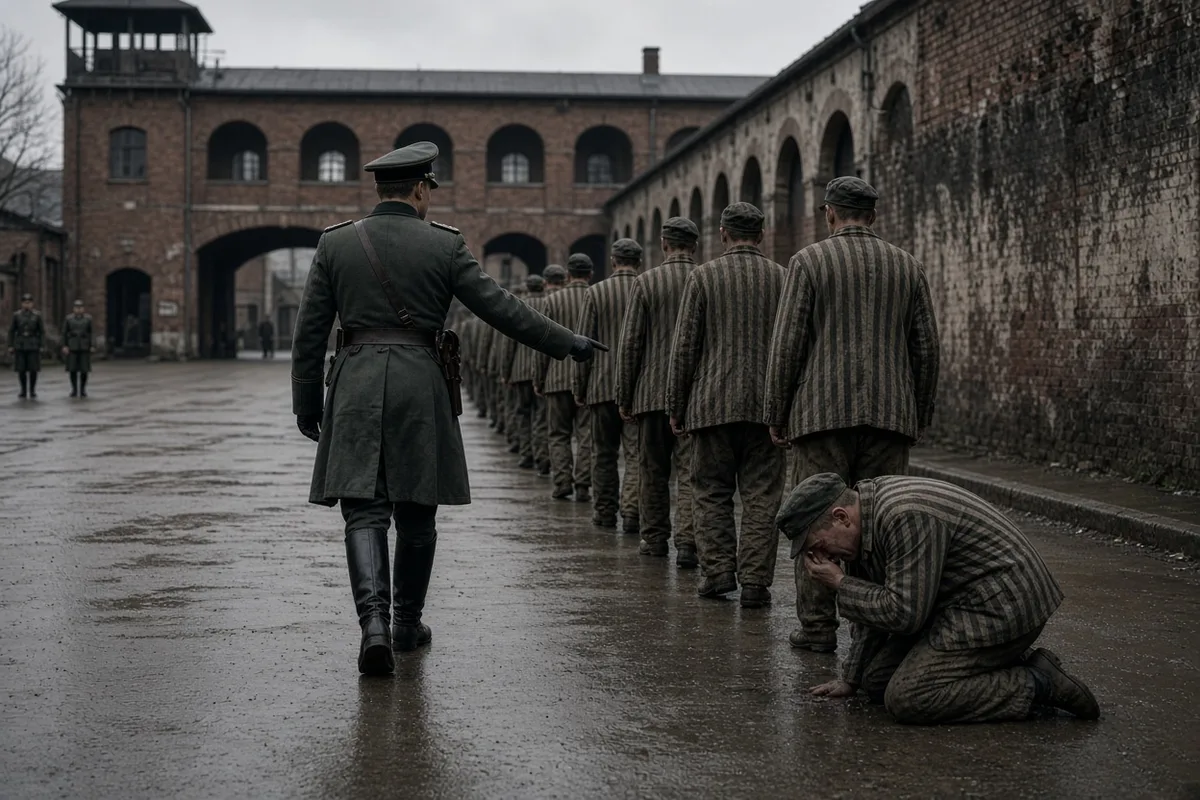
Block 11 was the block none of us spoke of by name if we could avoid it. It held the cells beneath the ground where the camp kept the ones it meant to make disappear slowly instead of quickly. The starvation bunker was its own particular horror, understood by everyone, discussed by no one, a cellar of small cells where men were left with nothing, no bread, no water, until their bodies did the guards' work for them. Ten men went down into that dark on the strength of one escape that might not even have happened the way the camp claimed.
I was not permitted near Block 11 in the days that followed — none of us were, unless our work assignments carried us close, and even then only near enough to see the shape of the building and imagine the rest. But there were men who worked inside, an orderly, men who carried water or emptied buckets, and their stories moved through the camp the way all true stories moved through Auschwitz, slowly, in whispers, changed slightly with each retelling but never losing their center.
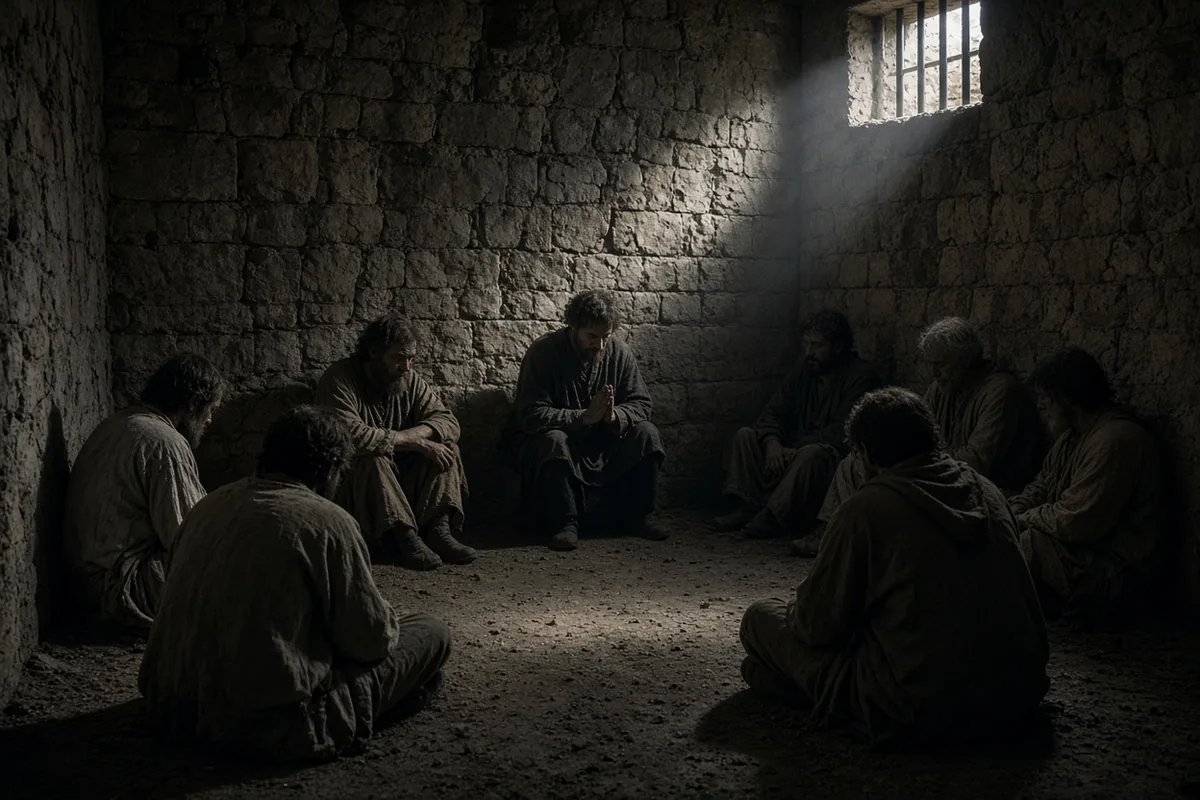
They said the priest sang. They said that from behind the cell walls, weakened voices some nights still lifted into hymns, and that his was among them, quieter as the days went by but present, until one by one the other voices stopped and his did not, not for a long while. They said when guards opened the cell to check the count, they found Kolbe not lying down like the others in whatever strength remained to them, but on his knees or standing near the door, meeting their eyes, as if the hunger had emptied him of everything except the willingness to look at another man directly. Whether every detail was exact I cannot swear, only that this was what passed among us, prisoner to prisoner, and what passed among us was often the only truth we were permitted.
Two weeks is a long time to starve. It is also, in that bunker, longer than most men lasted. By the middle of August, when the SS came to clear the cell for the next round of the condemned, most of the ten were already gone, bodies collapsed against the walls the way exhaustion finally lays a man down regardless of what he intended. But a few were still breathing. Kolbe was among them, alive in some diminished sense of the word, on August 14th, eyes open when the door swung wide.
The guards did not wait for hunger to finish what it had started. There was a syringe, and in it a solution of phenol, and it was used on each of the survivors in turn, a fast injected death in place of the slow one the sentence had promised. I did not see it. No prisoner outside that room did. But we learned of it before the day was over, the way we learned of every death that mattered to us, through the low channel that ran under the camp's silence like water under ice, and by then the fact had already settled into something larger than a rumor. Maximilian Kolbe was dead. His body, like the others, was carried to the crematorium and burned, and there was no grave, because the camp did not permit graves, only smoke.
Gajowniczek lived. He lived through the roll calls and the labor and the winters that followed, through transfers and through the final chaos of the camp's last months, and he lived past the liberation into a world that had kept moving without him. He did not go quietly back into an ordinary life. He carried the debt the way some men carry a wound that never quite closes, visible if you knew to look. He spoke of it for the rest of his years, to strangers, to congregations, to journalists who came asking, because the alternative to speaking of it was letting it be forgotten, and he seemed to understand, better than almost anyone alive, that forgetting was its own kind of second death for the man who had died in his place.
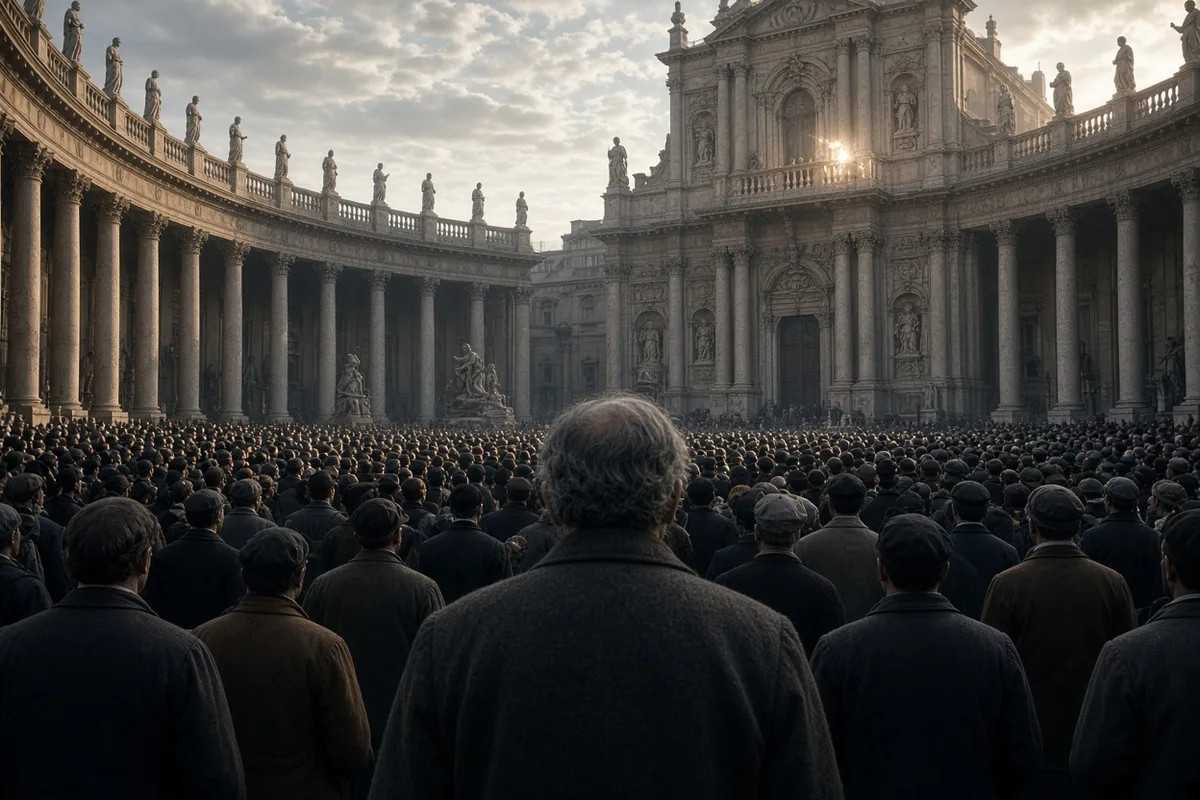
He was present in Rome in 1971, an old man now, when Pope Paul VI beatified Kolbe before the wider church, the first formal step toward sainthood. He was present again in October 1982, when Pope John Paul the Second, a countryman, canonized him fully, declaring him a saint of the church that had once sent him to seminary in Lviv as a boy given the name Maximilian in place of the one his mother had chosen at his birth, Rajmund. Gajowniczek stood in both crowds and watched a stranger become forever more than a stranger. He died in 1995, more than half a century after the yard, after the finger pointed and then pointed elsewhere, having spent much of that half-century traveling — to parishes, to schools, to anyone who would listen — telling them plainly what had been done for him and by whom.
The camp itself did not stop for any of it. The roll calls went on the next morning as they had the morning before, the same whistle, the same mud, the same hunger that had killed nine other men in that cellar and had not finished with the rest of us either. Nothing about the machinery of the place paused to acknowledge what one man had chosen to do inside it. That, more than anything, is what I remember about hearing the story pass along the wire that week — not that it changed anything visible, but that it changed something we could not point to, some small stubborn thing in the men who heard it and carried it forward, a proof that the camp had not yet managed to make every choice for us.
Block 11 still stands at Auschwitz, brick and iron, the courtyard beside it holding what is called the Death Wall, and every August, near the anniversary, people gather there who were never inside the wire at all — bishops, friars, ordinary visitors — to lay flowers and to stand in the cellar cell where he was killed, a room with a number on the door, eighteen, small enough that you would not guess anything at all had happened there if you did not already know.
I think sometimes of the exact moment before he stepped out of the line. The moment before is where the whole world still had a choice in it, before Fritzsch's decision made it stone. In that moment, in a yard full of men trained by months and years to disappear into their own silence, one man moved instead, walked forward on legs that had already been weakened by prison and interrogation, and made himself visible to the one power in that place that could end a life with a single word. He did it for a stranger, a sergeant with two sons he had likely never spoken to before that morning. He asked for nothing in return, and there was, in the entire architecture of Auschwitz, nothing to be gained by doing what he did. That absence of gain is, in the end, the whole of what happened there. A man walked toward death so that another man could walk toward his family, and the guards, for reasons of their own, let the exchange stand.