


Maximilian Kolbe Volunteers for Starvation Bunker
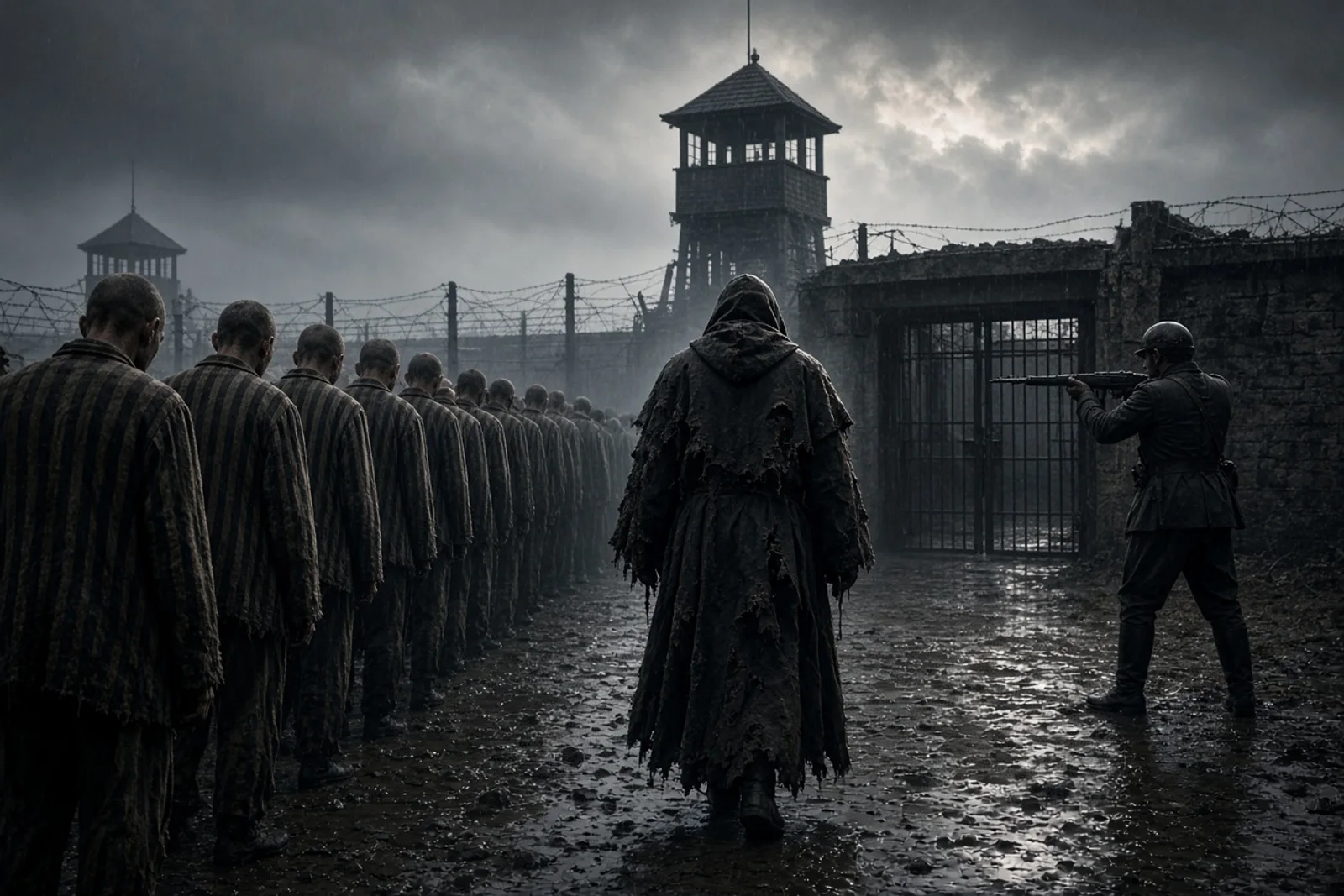
The sun pressed down on the gravel yard outside Block 14 while the count dragged on past midday. Men stood shoulder to shoulder in rows that stretched the length of the block, boots sinking slightly into the loose stones. No one spoke. The only sounds were the occasional scrape of a rifle butt against concrete and the low cough of someone trying not to draw attention.
I kept my eyes on the ground two paces ahead, counting the minutes by the shift of shadows. We had been standing since before dawn after the escape was discovered. The deputy commandant Karl Fritzsch moved along the front rank with Gerhard Palitzsch at his shoulder, both men stopping now and then to point. Each time a prisoner was pulled out of line, the rest of us adjusted our stance by a fraction, closing the gap without being told.

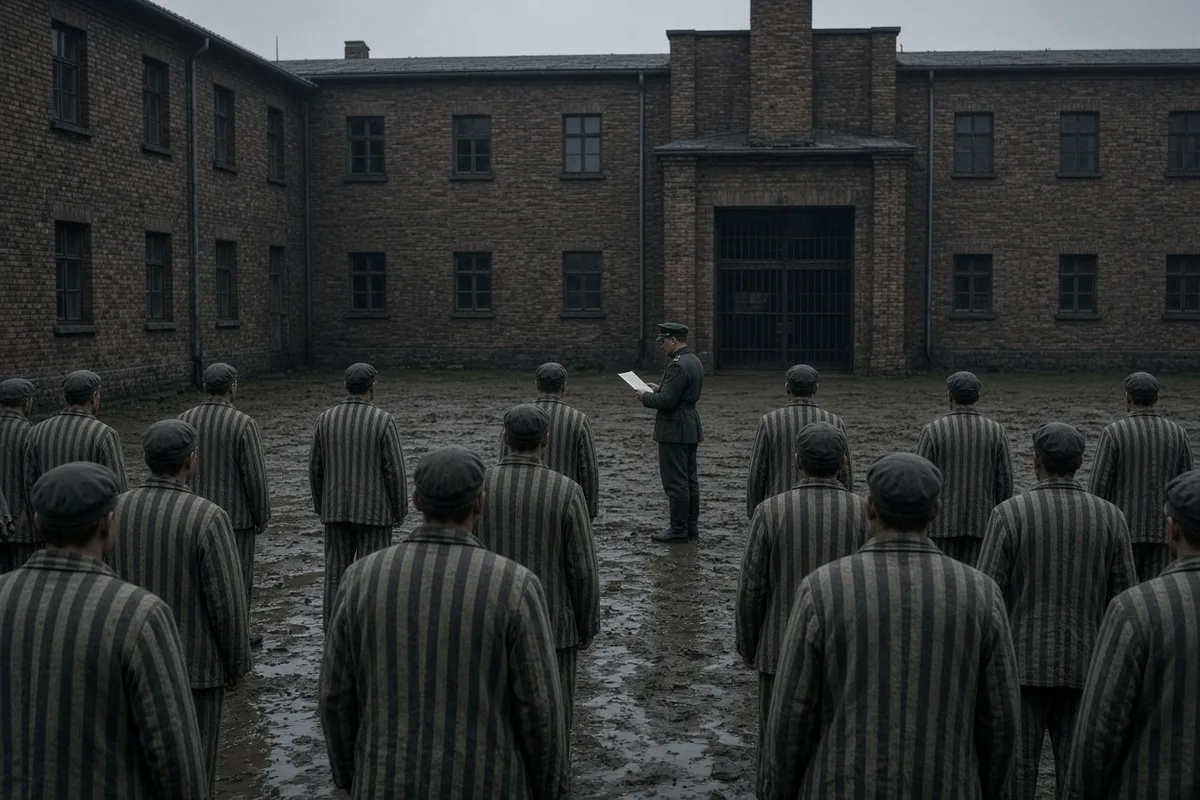
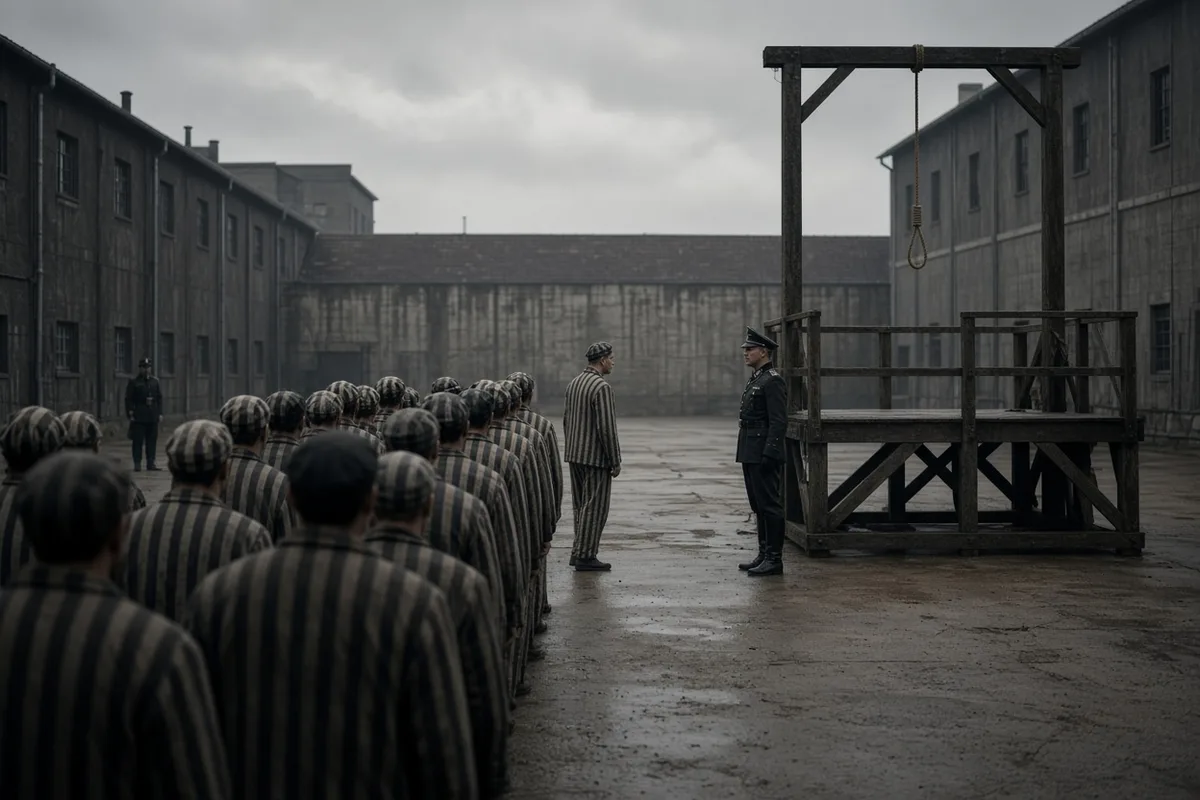
Fritzsch reached the middle of our block and halted. He studied the faces for a moment, then lifted his hand and named ten men. The chosen stepped forward one by one, their numbers called out and written on a sheet by a clerk standing behind the officers. When the tenth name was read, a sudden movement broke the line a few ranks to my right.
Franciszek Gajowniczek, a sergeant from the Polish army, had been among the ten. He took half a step forward and began to plead, voice cracking as he spoke of his wife and two young sons waiting somewhere outside the wire. The words carried across the silent yard. Fritzsch turned, expression unchanged, and waited for the outburst to finish.
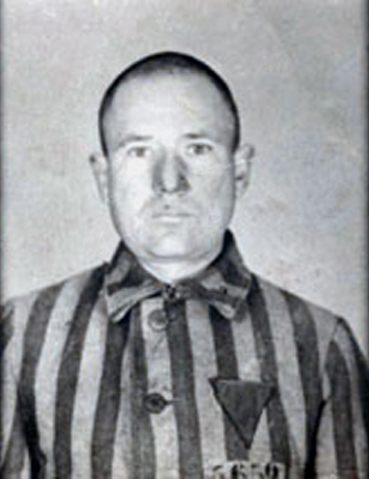
From the same row a different prisoner moved. Prisoner 16670, the Franciscan friar everyone in the block knew as Maximilian Kolbe, walked out of formation without hurry. He stopped in front of Fritzsch, stood at attention, and offered to take Gajowniczek’s place. He said he was a priest and older than the man with the family. The request was made in the same tone men used when asking for an extra ladle of soup.
Fritzsch studied him. For several seconds the only movement was the slow drift of dust across the yard. Then the deputy commandant gave a short nod. Gajowniczek was ordered back into the ranks. Kolbe took his position among the ten and the group was marched toward Block 11 under guard.
We remained at attention another hour before dismissal. No one discussed what had happened until the evening meal, and even then the talk stayed low. The ten men had been locked in the basement cells of Block 11, the hunger bunker reserved for special punishments. Water and food were withheld. The doors stayed shut.
Over the following days word reached us through prisoners assigned to clean the corridors outside those cells. They reported singing at night, the sound of voices reciting prayers in Polish and Latin. Kolbe’s voice was the one they recognized most often. The guards on duty sometimes stood at the door listening before moving on.
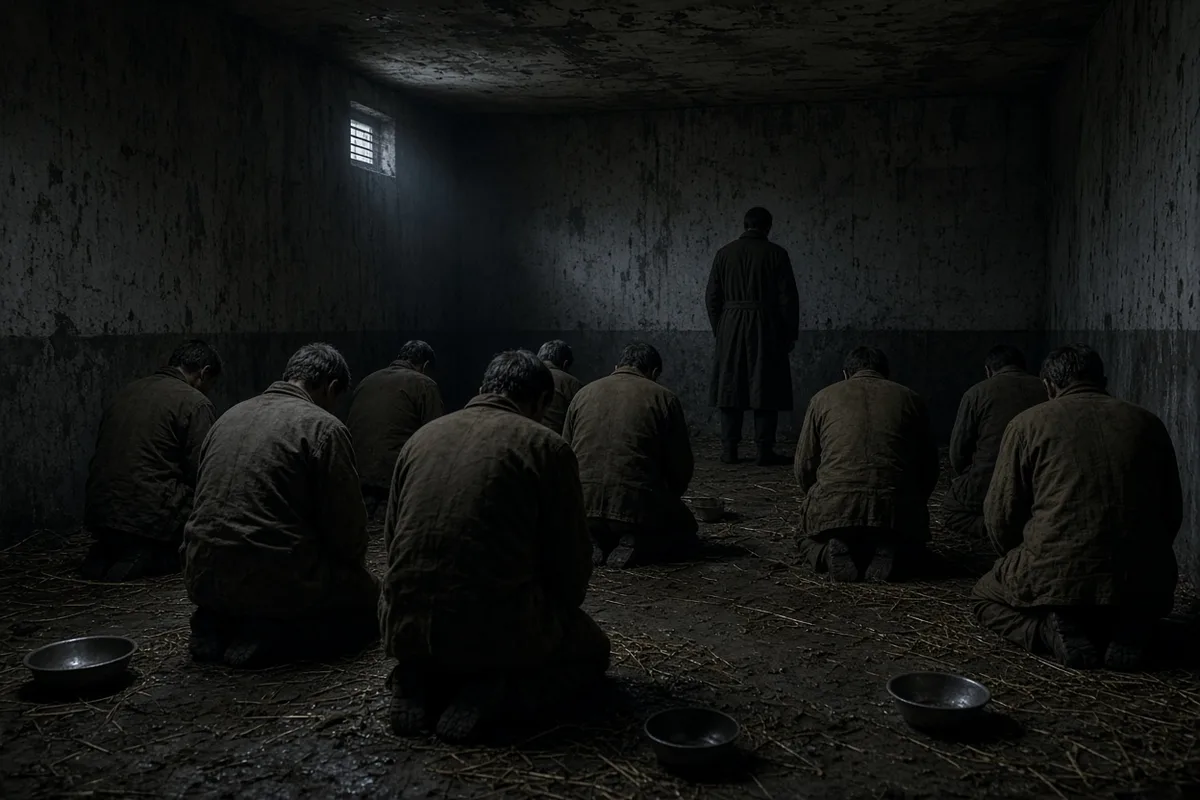
By the tenth day only a few of the original ten were still alive. The others had died from thirst and weakness. Kolbe continued to lead what remained of the group in prayer. An assistant janitor who passed the cells each morning later described seeing him on his knees or standing upright, eyes open, as if the deprivation had not yet reached him.
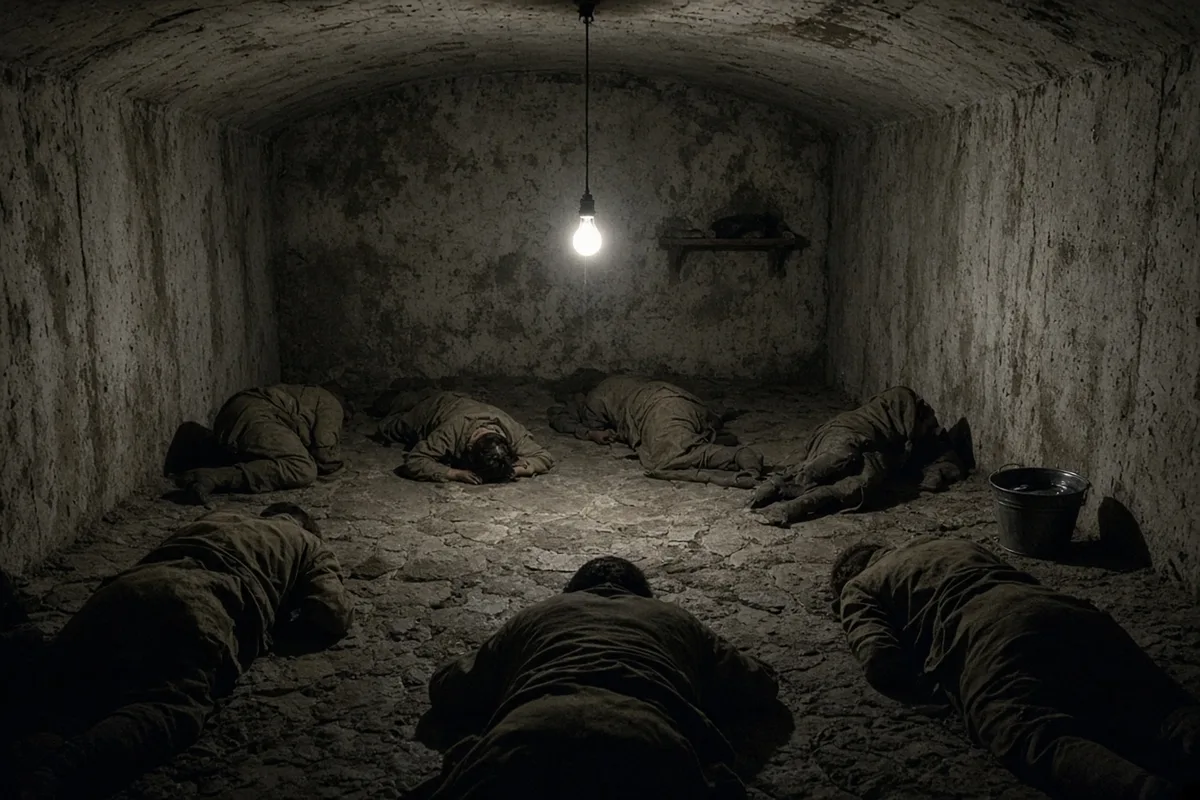
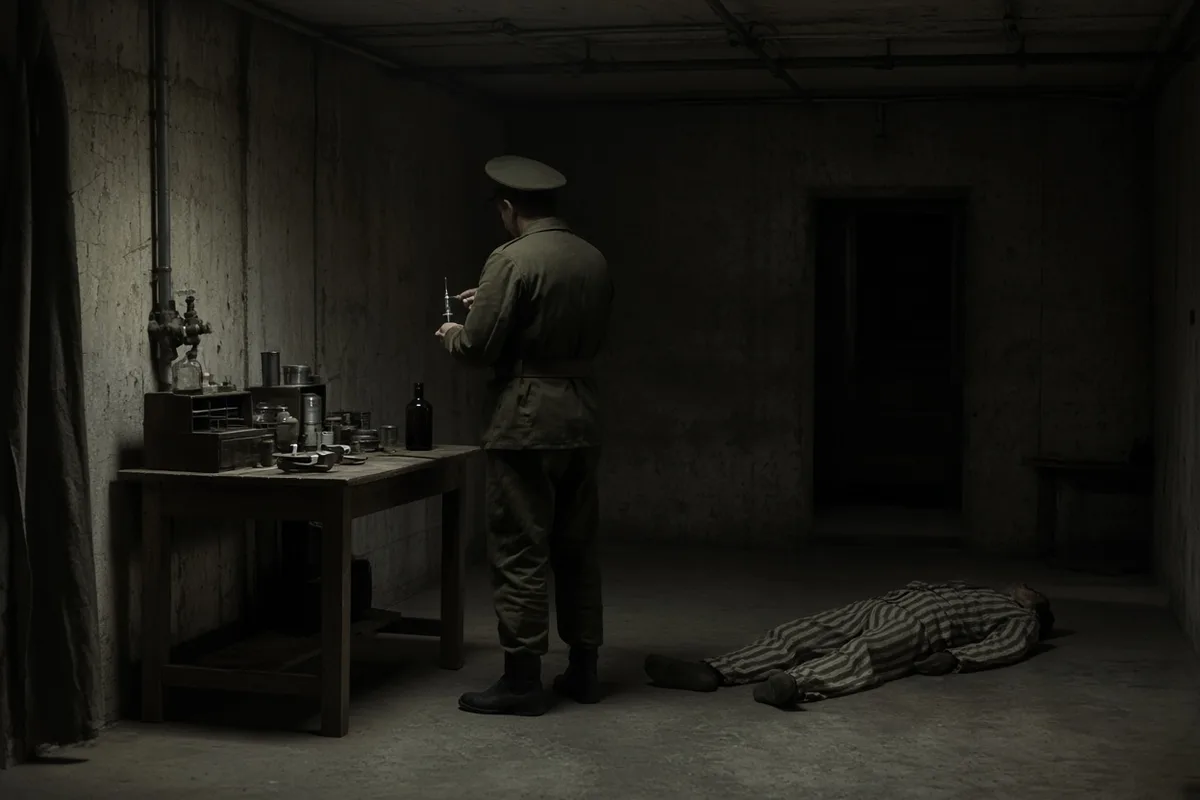
On the fourteenth day the bunker was opened. Nine bodies were removed. Kolbe was the only one left. He was standing when the door swung back. The guards ordered him to lie down. He did so without resistance. A syringe of phenol was prepared and administered directly into the vein of his left arm. He raised the arm himself and held it steady until the injection was finished. Two words were spoken before the drug took effect.
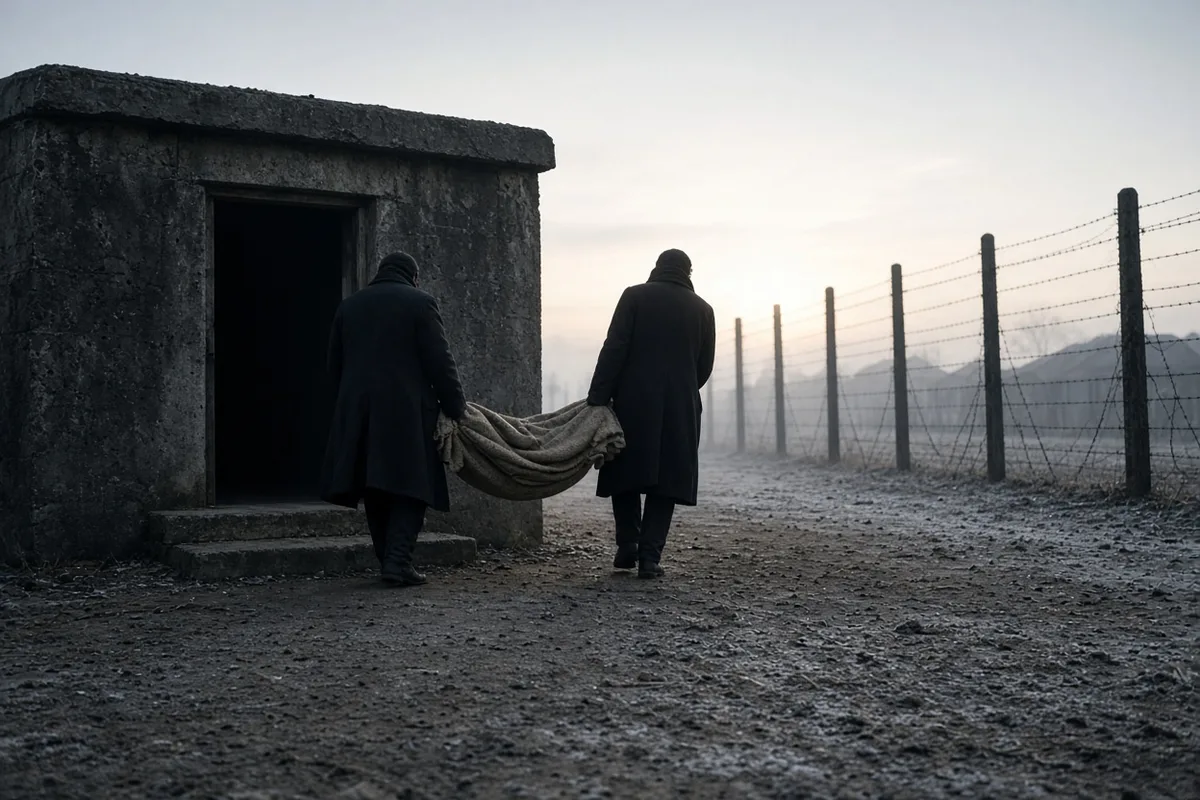
His body was taken to the crematorium the next morning along with others who had died during the night. The smoke from the chimney rose in the usual thin column above the camp. No record of the death was sent to his monastery until months later.
Franciszek Gajowniczek remained in the camp until liberation. He survived the war and spent the rest of his life repeating the name of the man who had taken his place at the roll call. Other prisoners who had stood in the same formation carried the story to Dachau and to the outside world after the camps were emptied. The number 16670 appeared in letters and in the first postwar issues of the magazine Kolbe had once edited.
The cell in the basement of Block 11 stayed empty after that August. When the camp was abandoned, the iron door was left open. Rain and dust collected on the concrete floor where the ten men had been held.
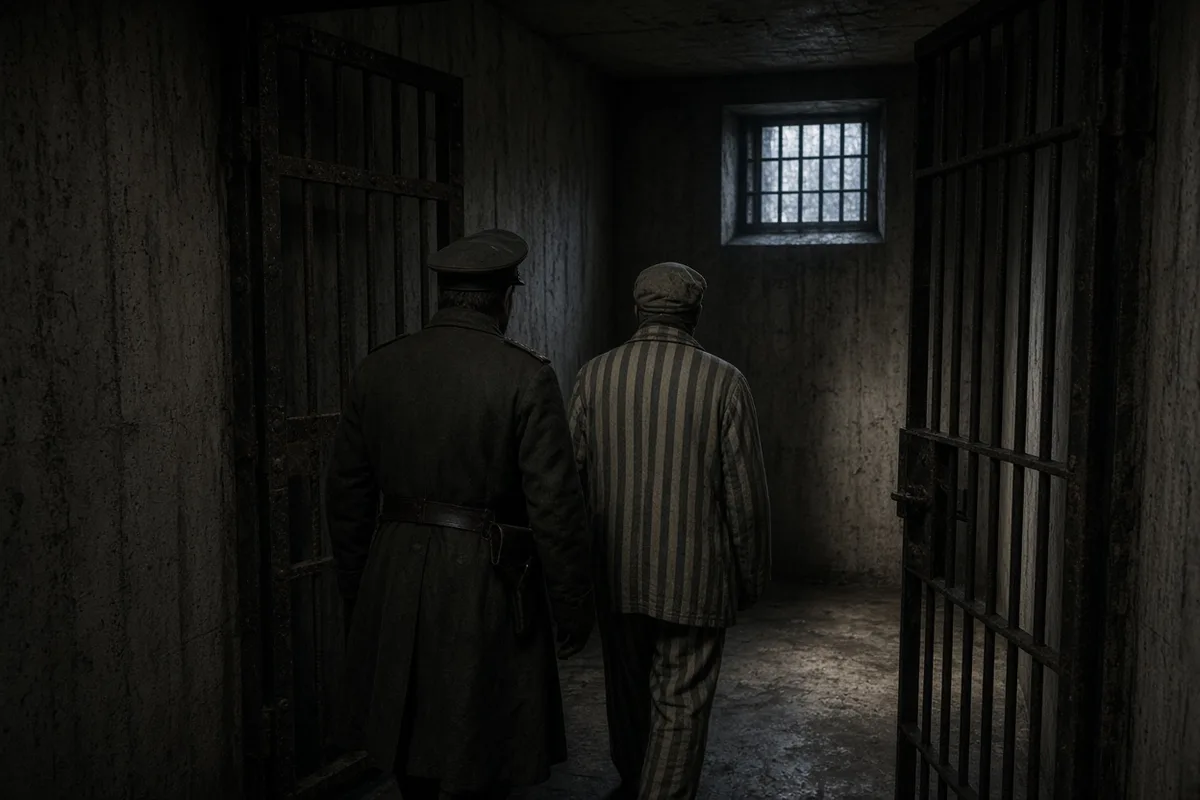
The iron door of the bunker remained ajar through the winter of 1945 as Soviet forces under Marshal Ivan Konev advanced from the east. On 27 January the 60th Army of the First Ukrainian Front reached the main gate of Auschwitz I and recorded 7,000 living prisoners still inside the perimeter, among them 1,200 children. Red Army medical teams entered Block 11 that afternoon and noted the open cell at the end of the corridor; the concrete floor held only scattered straw and a single discarded enamel bowl marked with the camp number 16670. Captain Anatoly Shapiro, the first Soviet officer to tour the basement, logged the dimensions of the room as 1.8 metres by 2.4 metres and photographed the iron latch still turned outward.
Franciszek Gajowniczek, released from the camp on that same day, returned first to his home village of Zakopane and then to Warsaw, where he worked as a clerk in the Ministry of Reconstruction until 1952. In 1947 he gave a signed deposition to the Polish Main Commission for the Investigation of Nazi Crimes, stating that Kolbe had spoken the words “I am a Catholic priest” before stepping forward at the roll call. Gajowniczek attended the Nuremberg trials as a witness in 1946 and later testified at the 1947 trial of Rudolf Höss in Warsaw, repeating the exact sequence of numbers called by the clerk on 29 July 1941. He lived until 13 March 1995, dying at the age of 93 in the same apartment on ulica Świętokrzyska where he had kept a framed photograph of Kolbe above his desk.
The beatification process opened in Rome on 12 May 1948 under the direction of Cardinal Alfredo Ottaviani. Testimonies collected between 1948 and 1950 included statements from 32 former Auschwitz prisoners, among them Józef Garliński, who described hearing Kolbe’s voice reciting the “Salve Regina” through the ventilation grille on the night of 3 August 1941. The Congregation for the Causes of Saints examined 42 volumes of documentation before Pope Paul VI signed the decree of heroic virtue on 17 October 1971. On that date the Vatican also published the precise text of the 1941 camp register entry that listed Kolbe’s death as occurring at 12:50 on 14 August.
Canonization took place on 10 October 1982 in Saint Peter’s Square before an estimated 150,000 people. Pope John Paul II, in his homily, quoted the phrase Kolbe had used in a letter dated 15 February 1938: “I wish to be a sign of the Immaculata’s love.” Franciszek Gajowniczek, then 82, occupied a place of honour on the steps of the basilica and later told reporters from the Polish Press Agency that he had carried the same leather wallet he received at liberation, still containing the original camp release document numbered 23471.
After 1947 the Polish Ministry of Culture converted the former Auschwitz I site into the Państwowe Muzeum Auschwitz-Birkenau. The basement corridor of Block 11 was sealed with a glass partition in 1955; the cell itself received a new iron door fitted with a lock that could be opened only by museum staff. Annual visitor counts rose from 180,000 in 1960 to 2.1 million in 2019. In 1979 UNESCO inscribed the site on the World Heritage List under criterion (vi), citing the documented events of 29 July and 14 August 1941 as evidence of “outstanding universal value.”
The last recorded visitor to the preserved cell on a documented date was Stanisław Szczęśniak, a 91-year-old survivor of the original transport from Warsaw in 1940. On 14 August 2019 he entered the corridor at 09:15 accompanied by a museum guide, stood for four minutes at the glass, and left a single white carnation on the ledge outside the door before departing by wheelchair through the main gate. His signed entry in the visitors’ book reads: “I stood in the same rank as 16670 on the day the ten were chosen.”
The Państwowe Muzeum Auschwitz-Birkenau installed a permanent conservation team in 2020 under the direction of Dr. Piotr Cywiński, who authorized quarterly inspections of the Block 11 basement using laser scanning equipment calibrated to 0.1 millimetre accuracy. On 14 August 2022 the team replaced the glass partition after micro-cracks appeared along the lower edge, documented in report AM-2022-147 as measuring 2.3 millimetres in length and caused by seasonal humidity fluctuations between 42 and 68 percent. The new panel, manufactured by the Polish firm Szkło-Art in Kraków, carries an etched serial number 2022-AU-004 and bears a small brass plate stating the cell dimensions recorded by Captain Shapiro in 1945.
Archivist Ewa Pawęska retrieved the original visitors’ book entry made by Stanisław Szczęśniak and digitised it on 3 September 2021, assigning it the reference code PMAB-19-0814-01. The same archive holds 47 additional handwritten testimonies from former prisoners who visited the cell between 1958 and 1987, including one dated 29 July 1961 by Józef Kral, prisoner number 752, who wrote that he had stood three places behind Kolbe during the selection and remembered the exact time the clerk read the tenth number as 12:17. These pages are stored in acid-free folders in vault B-3, maintained at 16 degrees Celsius and 35 percent relative humidity.
The Franciscan convent at Niepokalanów received Kolbe’s personal breviary, recovered from the camp effects store in 1947, and placed it on public display in a climate-controlled case on 8 December 1952. The volume, bound in black leather with the owner’s name stamped in gold on the flyleaf, contains marginal notes in Kolbe’s hand dated 12 March 1939 quoting the phrase “Greater love has no one than this” from the Gospel of John. The convent ledger records that 214,000 pilgrims viewed the breviary between 1953 and 1978.
In 2023 the museum commissioned a new audio guide track narrated by historian Dr. Jacek Lachendro, recorded on 22 March at Studio 42 in Warsaw and running 14 minutes and 37 seconds. The track describes the route from the roll-call square to the bunker door, citing the precise distance of 187 metres measured by museum surveyors in 1994. It also includes a 1946 radio interview excerpt with survivor Tadeusz Borowski in which he states that the singing from the bunker could be heard “clearly through the air vent on the north wall” during the night shift of 5 August 1941.
The last direct descendant of any member of the original ten men to visit the site was Anna Gajowniczek-Wójcik, granddaughter of Franciszek Gajowniczek, who arrived on 29 July 2024 at 10:40. She signed the current digital register with the note “My grandfather’s number was called first” and deposited a photocopy of the 1947 deposition transcript, reference number IPN-1947-112, into the museum’s collection. She departed through the same main gate at 11:25, accompanied by two museum educators.
Conservation records show that the iron door now fitted to the cell was forged in 1955 at the Gliwice steelworks using 4.2 millimetres thick plate and fitted with a three-point locking mechanism numbered 1955-GL-892. The original 1941 latch, removed in 1954, is preserved in the museum’s metalwork repository under catalogue number M-1128 and bears a single fingerprint lifted in 1971 by forensic technician Janusz Kaczmarek.
On 14 August 2024 the museum opened the cell corridor for thirty minutes at 06:00 to allow a private visit by 87-year-old Henryk Mandelbaum, the final surviving member of the Sonderkommando who had worked in the crematorium on the morning Kolbe’s body was delivered. Mandelbaum stood at the glass for nine minutes, noted the position of the enamel bowl relative to the back wall, and remarked to the guide that the bowl’s camp number matched the one he had seen on the body tag. He left the site at 06:42 by the same wheelchair-accessible path used by Szczęśniak five years earlier.