



Memory champions are trained, not born with special brains
In 60 seconds
- Extraordinary memory is a learned skill built on ancient techniques like the memory palace, not an innate gift.
- Writing, print, and later devices shifted remembering from internal storage to external reference, eroding a capacity once central to thinking.
- Patient H.M. showed memory is separable systems: after 1953 hippocampal removal he could not form new declarative memories yet still improved at motor skills.
- Any information gets easier to hold once turned into vivid, bizarre images placed along a familiar mental route.
- Expert recall comes from deliberate practice at the edge of ability with timed feedback, not raw talent or comfortable repetition.
- Foer won the 2006 US title but still forgot where he parked; competition speed does not automatically sharpen everyday memory.
The big idea
Foer argues that exceptional memory is a trained skill built mainly on ancient spatial visualization techniques, not an inborn gift. His own year of coaching ending in a national championship win is the proof of concept, while the deeper claim is that modern life has outsourced remembering without reckoning what cognition loses.
The book in brief
Foer begins as a journalist covering the US Memory Championship, expecting savants and instead finding ordinary people using trainable techniques. He traces how oral and early literate cultures treated memory as central to education and identity—Cicero reciting hours-long speeches, medieval scholars holding whole books—until writing and print gradually turned internal storage into external reference, a shift Socrates already warned would weaken the faculty by making exercise unnecessary.
He grounds the science in patient H.M., whose 1953 hippocampal surgery left him unable to form new long-term declarative memories while procedural skill learning remained intact. That dissociation frames why later techniques work: they convert abstract lists into episodic, spatial form the brain already handles well rather than brute-forcing rote facts.
The technical core is the memory palace, or method of loci. A familiar route becomes a scaffold; each fact is a vivid, often absurd image parked at a locus; recall is simply walking the route again. Foer trains this under British grandmaster Ed Cooke with timed drills on cards, digits, and words, linking the regimen to deliberate-practice research in which a subject expanded digit span from 7 to over 80 through chunking and edge-of-ability work that breaks plateaus by forcing uncomfortable speed.
He examines savants such as Kim Peek and Daniel Tammet to show their gifts are narrow, often bundled with other deficits, and involuntary—unlike the flexible, learnable systems athletes build. A Bronx teacher’s students using the same methods to reach competitions further suggests structured memory can help learners dismissed as poor. Medieval and Renaissance memory palaces, via Frances Yates, once organized whole bodies of knowledge so memorization served comprehension and synthesis rather than bare rote.
The arc closes with Foer’s 2006 US championship win—cards under two minutes, random words, a poem, binary digits—yet the victory is anticlimactic. Speed skills for arbitrary sequences did not stop him forgetting where he parked. Technique proves memory is trainable; broad daily usefulness still requires deliberately applying it to speeches, names, and knowledge one actually cares about, against a culture that has quietly let the capacity atrophy.
Context
Joshua Foer, a science journalist, spent a year training with competitive memorizers under Ed Cooke and entered the US Memory Championship himself; the 2011 book turns that experiment into both narrative proof and a cultural argument about what is lost when remembering is handed to books and then phones.
The key ideas

1
Memory as cultural choice
Modern forgetfulness is not a natural limit but the result of outsourcing recall to external tools long before computers.
Earlier cultures
Memory central to education, identity, and long speeches held internally
After writing and devices
Recall outsourced to books, phones, search; internal skill atrophies
Foer arrives at the US Memory Championship expecting freaks of nature and meets ordinary people who have simply trained a skill once common. In oral and early literate cultures, memory organized education and identity; ancient rhetoricians delivered hours-long speeches without notes and medieval scholars held entire books internally.
Writing and later print shifted the function from internal storage to external reference. Socrates’ warning in Plato’s Phaedrus already held that writing would weaken memory by removing the need to exercise it. Every aid that helps us remember also lets us forget how to remember.
Foer refuses pure nostalgia, yet uses the history to set the book’s founding tension: the mental athletes he meets are practitioners of techniques that used to be ordinary knowledge. He then commits to a year under Ed Cooke to test whether an average, self-described forgetful journalist can become a champion.
In practice: Cicero could recite hours-long speeches without notes; Foer starts the same year of training expecting to fail.

2
Several memories, not one
Losing one memory system does not erase the others; declarative and procedural memory are separate.
Declarative / episodic
Facts, events, images tied to place; lost in H.M.
Procedural
Motor skills that improve with practice; retained in H.M.
Foer turns to Henry Molaison, known as H.M., whose hippocampus was removed in 1953 to treat epilepsy. For the rest of his life he could not form new long-term declarative memories—he forgot breakfast—yet he could learn new motor skills.
Day after day he improved at tracing a star through a mirror with no conscious memory of having practiced. Brenda Milner’s studies of the dissociation showed procedural memory and declarative memory are handled by different brain structures.
That framework matters for everything that follows. Memory athletes exploit declarative and specifically episodic memory—events and images tied to place and narrative—rather than rote symbolic drill or pure skill learning. It also explains why someone can be strong at faces or routes yet weak at number lists: the systems differ.
In practice: H.M. improved daily at mirror star-tracing without ever remembering he had done the task before.
3
The memory palace method
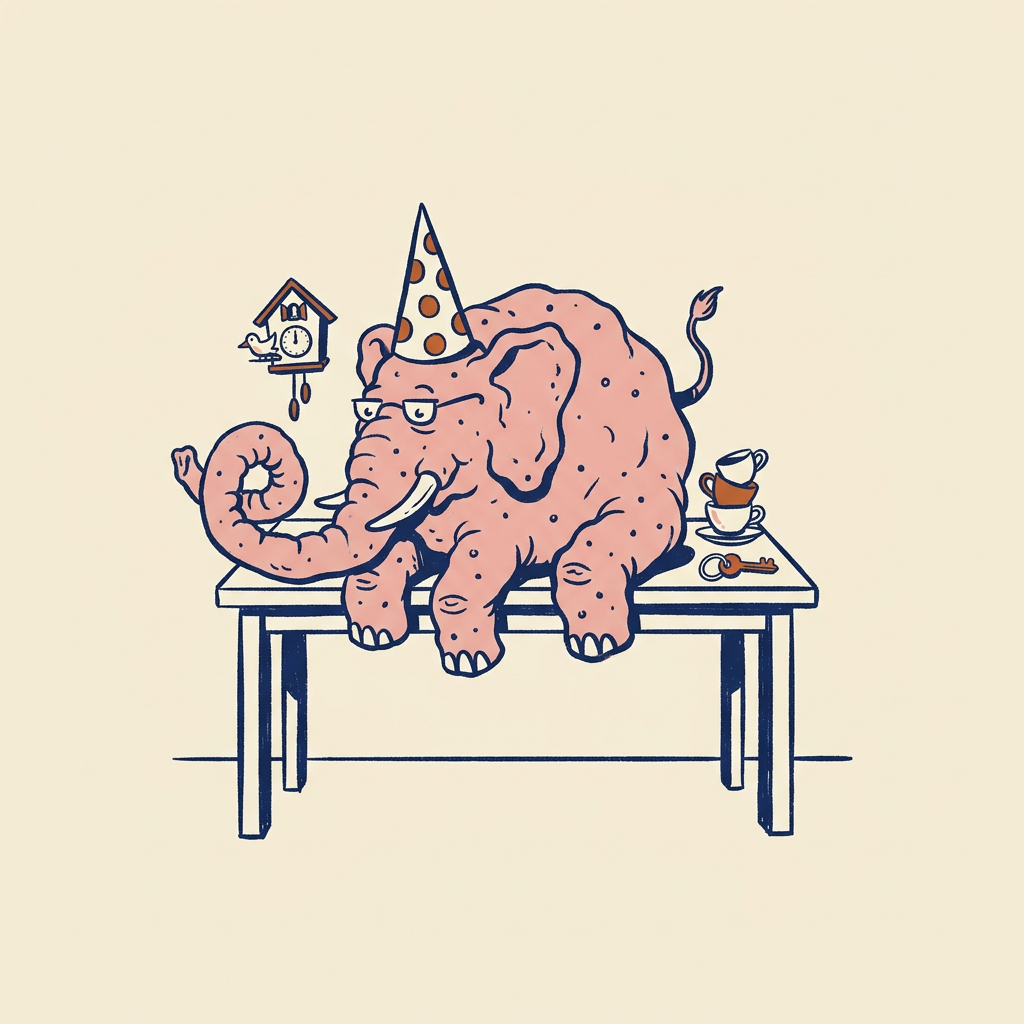
Information becomes far easier to hold once translated into vivid images placed along a familiar spatial route.
- 1Choose routePick a deeply familiar space such as a childhood home
- 2Place imagesPark one vivid, absurd image per item at successive loci
- 3Walk to recallMentally re-walk the route and encounter the images in order
The method of loci is attributed to the Greek poet Simonides, who supposedly identified crushed banquet guests by recalling where each had sat. The user mentally walks a known space—a childhood home—and parks a bizarre image for each item at successive points.
Recall is re-walking the route and meeting the images in order. Psychologists’ encoding specificity principle and the finding that people show near-perfect recognition of thousands of photographs seen once support why this works: the brain’s capacity for visual and spatial memory dwarfs its capacity for abstract symbols.
Novelty and emotional punch strengthen encoding, so the stranger the image the stickier it is. Foer assigns a vivid character or action to each of the 52 cards so a shuffled deck becomes a sequence of scenes strung through a palace. Improvement is less about trying harder than about converting data into the form the brain already handles well.
In practice: Foer turns each playing card into a specific character or action and strings the 52 images through a mental house to memorize a deck.
4
Deliberate practice edges
Expert memory is built by timed, uncomfortable practice with feedback, not talent or easy repetition.
7→80+
S.F. digit span after years of chunking practice
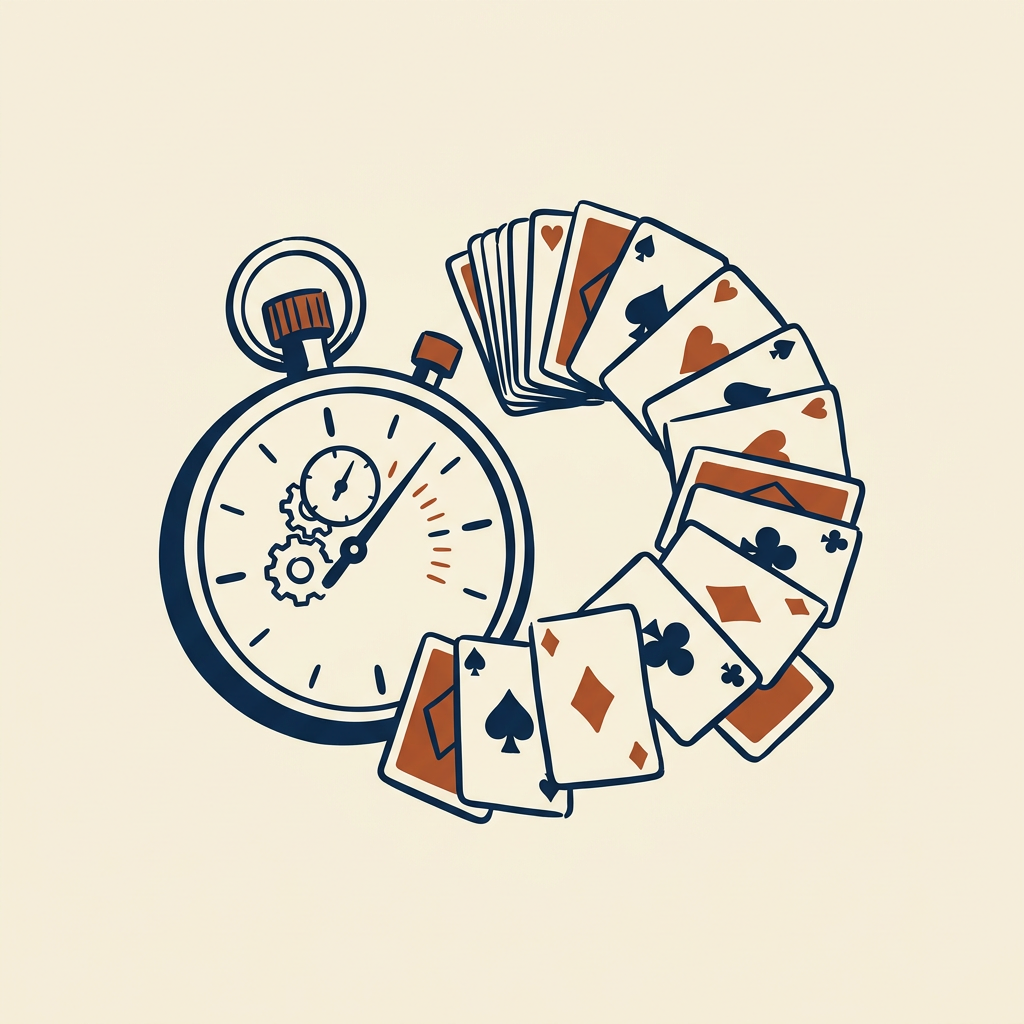
Under Cooke, Foer ran daily drills on card decks, digit strings, and word lists, each timed and scored so incremental gains were visible. He links the regimen to K. Anders Ericsson’s deliberate-practice research, including subject S.F., who over years expanded digit span from 7 to over 80 by chunking.
What separates champions is thousands of hours at the edge of current ability, with immediate feedback, repeated until a skill turns semi-automatic, then pushed again. Foer hit a plateau where card-sequence speed stopped improving no matter how much he practiced.
Cooke’s advice was to force memorization faster than felt comfortable, deliberately producing errors; that broke the stall. Plateaus are usually not biological ceilings but practice that has grown too automatic to generate further learning. Technique alone is insufficient; results require sustained, measured discomfort.
In practice: Foer’s card speed stalled until he deliberately went faster than comfort allowed and used the resulting errors as feedback.
5
Savants do not disprove training
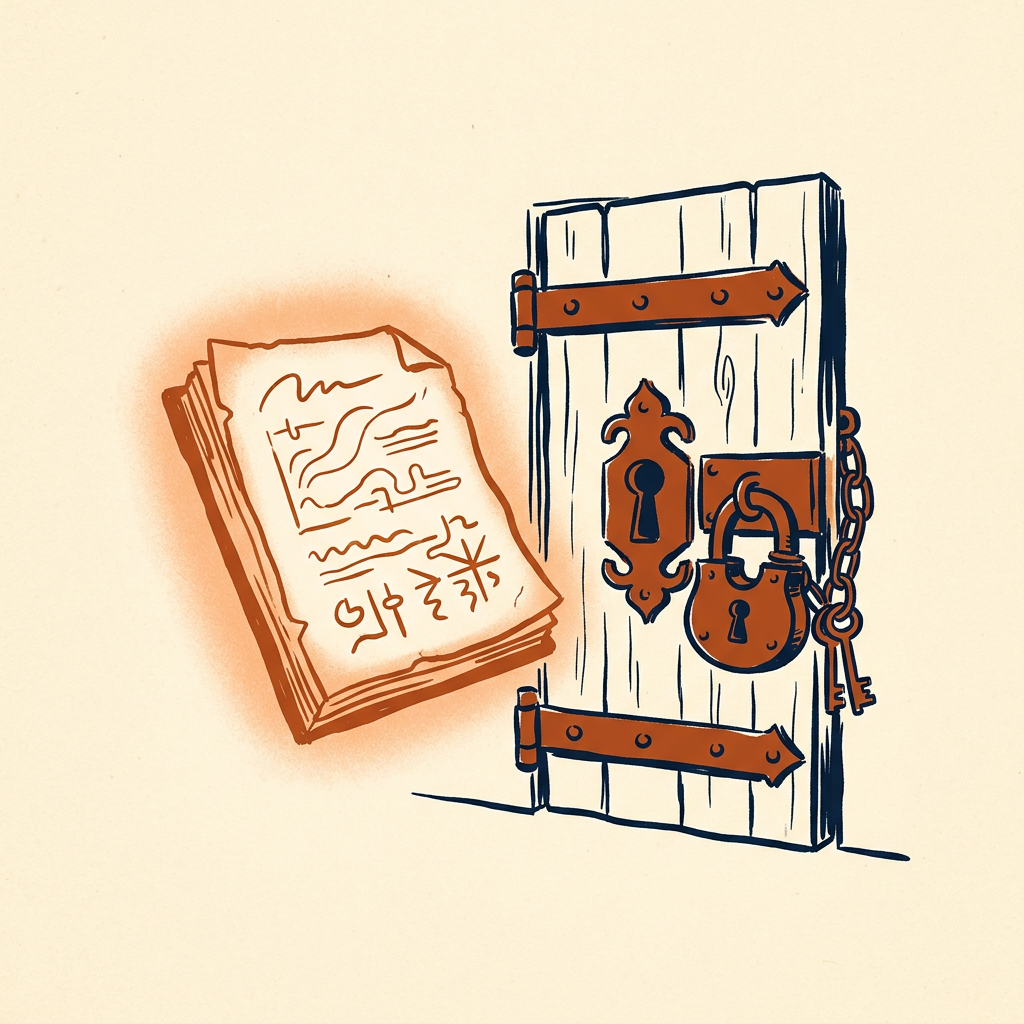
Prodigious natural memory is typically narrow and costly, while trained technique is flexible and general-purpose.
Savant gift
Narrow, often involuntary, frequently bundled with other cognitive costs
Trained athlete
Flexible, general-purpose, deliberately applied to chosen material
Kim Peek, inspiration for Rain Man, could recall vast text after one reading yet had major deficits in abstract reasoning and independent life. Such cases look like counter-examples to training, but Foer reads them as support: the gifts are narrow, content-specific, and often paired with costs elsewhere.
Daniel Tammet’s synesthesia lets him experience numbers as shapes and colors, an involuntary encoding edge. Memory athletes instead build deliberate, learnable systems they can point at any material they choose.
The comparison blocks the claim that champions must simply have been born different. Foer’s own shift from average forgetfulness to national champion in under a year is offered as counter-evidence, though he notes the privileges of health, education, and free hours to train.
In practice: Peek retained huge volumes of text at a glance yet struggled with abstract reasoning and independent functioning.
6
Memory scaffolds thinking
A trained, organized memory supplies the raw material for connection and creativity that look-ups cannot supply in the moment.
In earlier eras the point of memory training was cognition itself, not performance. Medieval and Renaissance scholars built elaborate palaces to hold entire bodies of knowledge; Frances Yates’ scholarship shows memorization was then inseparable from comprehension and synthesis.
Modern schooling often strips rote of structure—multiplication tables without scaffolding—producing brittle, forgettable fragments. Foer profiles Raemon Matthews, a Bronx teacher who taught students memory techniques; some later competed successfully, evidence that structured training can aid learners otherwise written off.
Memory and understanding are not opposites. A well-stocked, retrievable mind makes real-time connections a mind that must look everything up cannot make. The techniques reframe memorization as the architecture thinking draws on.
In practice: Matthews’ public-school students learned the techniques and some advanced to memory competitions.
7
Championship and narrow transfer
Winning proves the techniques work under pressure, yet competition speed does not automatically fix everyday forgetfulness.
- Year of drillsTimed cards, digits, words under Cooke
- 2006 championshipWins US title across cards, words, poem, binary
- AfterwardCompetition skill fails to stop everyday lapses like parking
Foer enters and wins the 2006 US Memory Championship: a deck under two minutes, pages of random words, a poem, a binary sequence. He learns to manage the adrenaline that itself degrades recall.
The win feels anticlimactic. The speed skills built for cards and digits did not give him a generally sharper life memory; he still forgot parking spots. Narrow, time-pressure methods optimized for arbitrary lists differ from slower palace work on speeches, vocabulary, or professional knowledge.
Technique demonstrates trainability. Broader usefulness still requires choosing to apply the same methods to material that actually matters, rather than stopping at competition drills. The personal arc closes by reopening the cultural claim: capacity can be rebuilt, but only if one decides to use it that way.
In practice: After winning in 2006 Foer still forgot where he had parked his car.
Key terms
- memory palace (method of loci) Placing vivid images for facts along a familiar mental route, then re-walking it to recall
- declarative memory The system for facts and events that can be consciously stated; damaged in H.M.
- procedural memory The system for skills that improve with practice even without conscious recall
- episodic memory Memory for events and images tied to place and narrative, the form athletes exploit
- encoding specificity Recall works best when the cues at retrieval match how the material was stored
- deliberate practice Timed work at the edge of current ability with immediate feedback, repeated and then pushed harder
- chunking Grouping items into larger meaningful units so more can be held, as in S.F.’s digit training
What to do
- Pick one real thing you need this week—a talk, name list, or vocabulary set—and build a palace for it on a route you already know.
- Assign one vivid absurd image to each item and park it at a distinct spot along that route.
- Walk the route mentally daily for ten minutes before you need the material.
- Track whether recall improves over the week on that specific content.
- Notice honestly whether any gain spreads beyond the material you actually trained.
Questions to think with
- What have you stopped bothering to remember because a phone or search bar will hold it?
- Where in your work or study would a spatial palace beat another round of rereading?
- How would you tell a plateau caused by comfortable practice from a true personal limit?
- If competition speed does not fix parking-spot memory, what everyday material is worth the slower palace effort?
- Who around you lacks the free hours Foer had, and what smaller version of the method still helps them?
The other side
The proof is essentially a sample of one—young, healthy, coached, and free to train for hours—so the narrative win invites a stronger ‘anyone can’ claim than the evidence supports; competitive skills are narrow for list-like material and transfer poorly to everyday associative memory, the historical reach of the techniques is more contested than presented, and the book offers little for people whose forgetfulness stems from ADHD, depression, aging, or simply lacking leisure.
Who it's for
Readers who want to know whether memory can be trained rather than inherited, plus students and professionals who need concrete ways to hold names, speeches, and facts, and anyone curious how writing and phones quietly changed what thinking feels like.