


Menno Simons Organizes Peace Churches
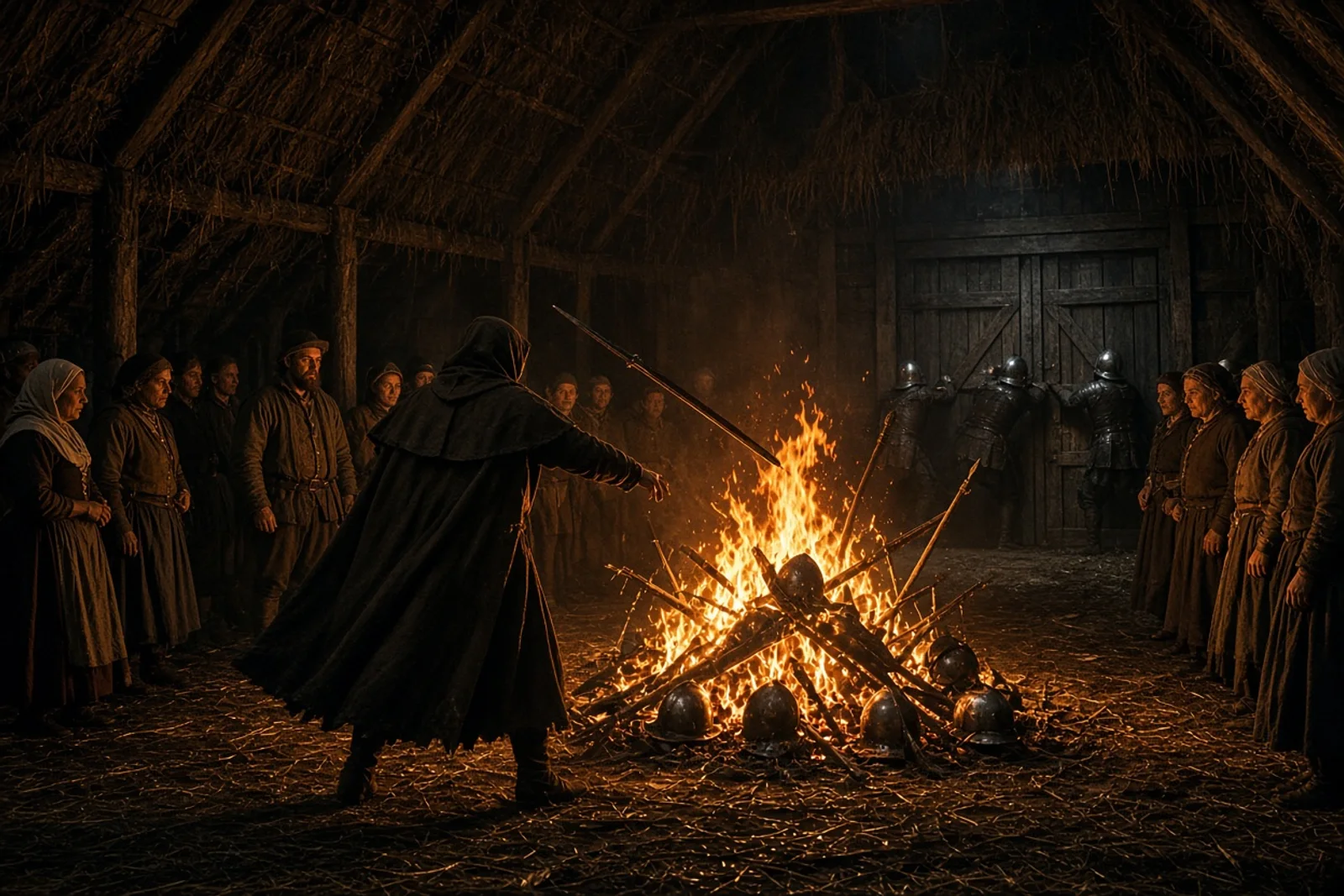
The wind off the Zuiderzee carried the smell of wet thatch and distant smoke the morning I reached Witmarsum. I had walked through two nights after the last raid near Bolsward, my cloak stiff with mud, my mind still fixed on the bodies left in the square. Menno’s brother had been among them. The Münster men had promised a new city of the saints and delivered only swords and fire.
I found him in the back room of a brewer’s house, the shutters drawn though it was midday. He sat on a low bench with a single candle, the New Testament open on his knees. His hands shook when he turned the pages. Two other men waited near the door, one of them the cooper who had hidden me the week before. None of us spoke at first. Outside, a dog barked at the canal.
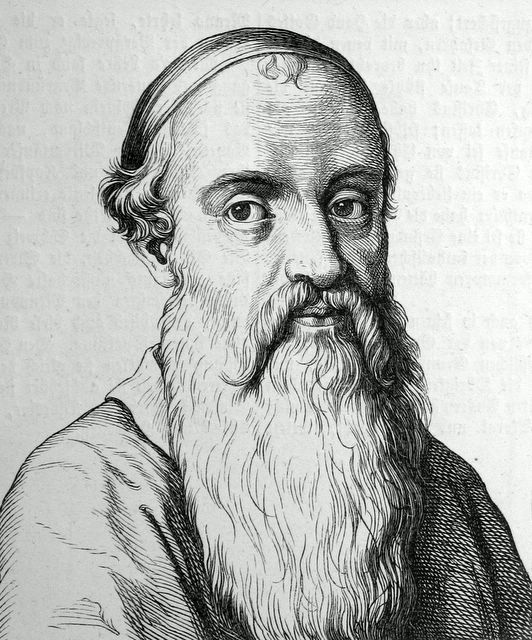
Menno looked up. His face had thinned since the last time I had seen him say mass in Pingjum. He asked whether I had eaten. I told him the road had offered nothing but turnips. He nodded once and sent the cooper for bread. Then he returned to the book.
Word had already spread that the authorities were searching every farm for anyone who had spoken against infant baptism. The Münster disaster had made every Anabaptist the same in their eyes. Menno had been warned to stay quiet, yet he kept receiving visitors at night. They came from Leeuwarden and Franeker, from villages whose names I no longer remember, asking what should be done now that the prophets had failed.
He answered them the same way each time. No kingdom would be taken by force. No sword would bring the kingdom nearer. The only mark of the true church was the willingness to suffer without striking back. Some left angry. Others stayed and listened until the candle burned low.

One evening a woman arrived whose husband had been taken after the fall of Münster. She demanded to know why Menno had waited so long to speak plainly. He did not defend himself. He said only that he had loved the world too much to risk losing its good opinion. The words hung in the room after she left. I watched him fold his hands and stare at the floorboards until the cooper doused the light.
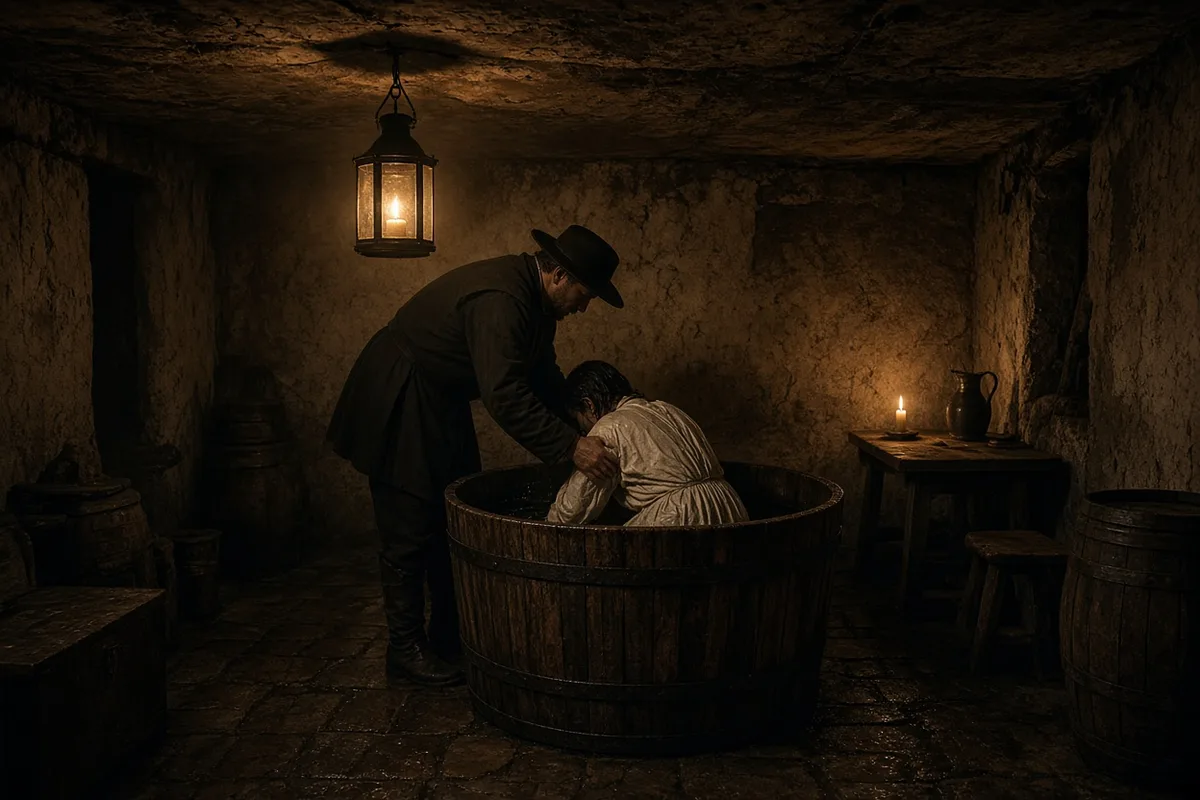
In the weeks that followed he stopped wearing the priest’s collar. He traveled on foot between scattered groups, always at dusk, always with one companion who knew the back paths. I went with him twice. The first time we reached a farmhouse near Sneek where eight people waited in a barn. Menno read from Matthew, then asked each one what they believed about the water. No one was rushed. When a young man said he wanted to be baptized, Menno led him to the horse trough at the edge of the yard. The water was cold enough to make the man gasp, but Menno’s voice stayed steady as he poured.
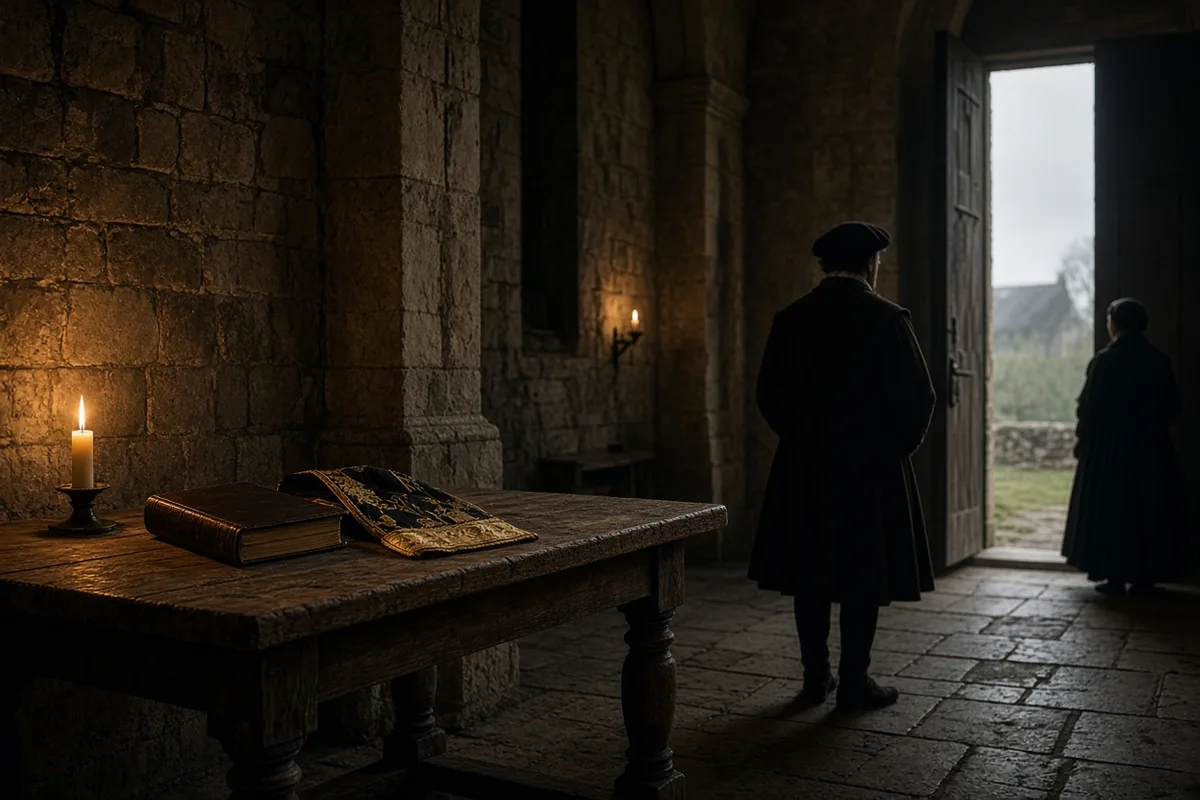
News traveled faster than we did. In some places the magistrates had posted notices offering reward for his capture. In others, families opened their doors and fed us without asking names. Menno never stayed more than one night in the same house. He carried no weapon, only the small book wrapped in oiled cloth.
By harvest time the scattered fellowships had begun to call themselves by a single name when they wrote to one another. They spoke of Menno’s letters as though they were maps. In them he repeated the same instructions: stay clear of any plan that promised power, refuse every oath that required the sword, and count the cost before the water touched the head. The letters were copied by hand and passed along the canals.
I was with him the day he married. It was a quiet ceremony in a kitchen, witnessed by the woman’s brother and an old widow who had once hidden Melchior Hoffman’s followers. Menno made no announcement afterward. He simply continued the same round of visits, now with one more mouth to feed when he returned home.
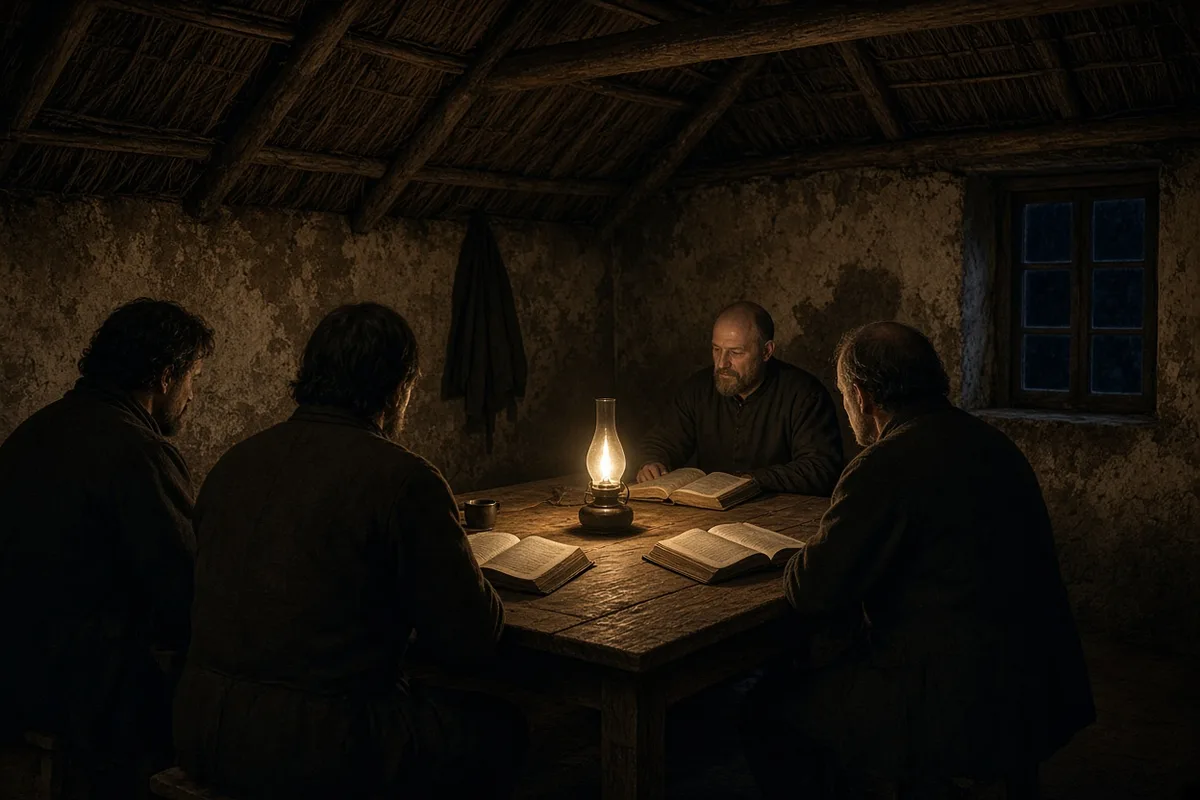
The persecution did not lessen. Three men from our circle were taken near Harlingen and questioned about his whereabouts. They gave no names. One of them died in the prison before winter. Menno heard the news while we sat beside a peat fire. He said nothing for a long time, then asked whether the widow still had flour enough for the children.
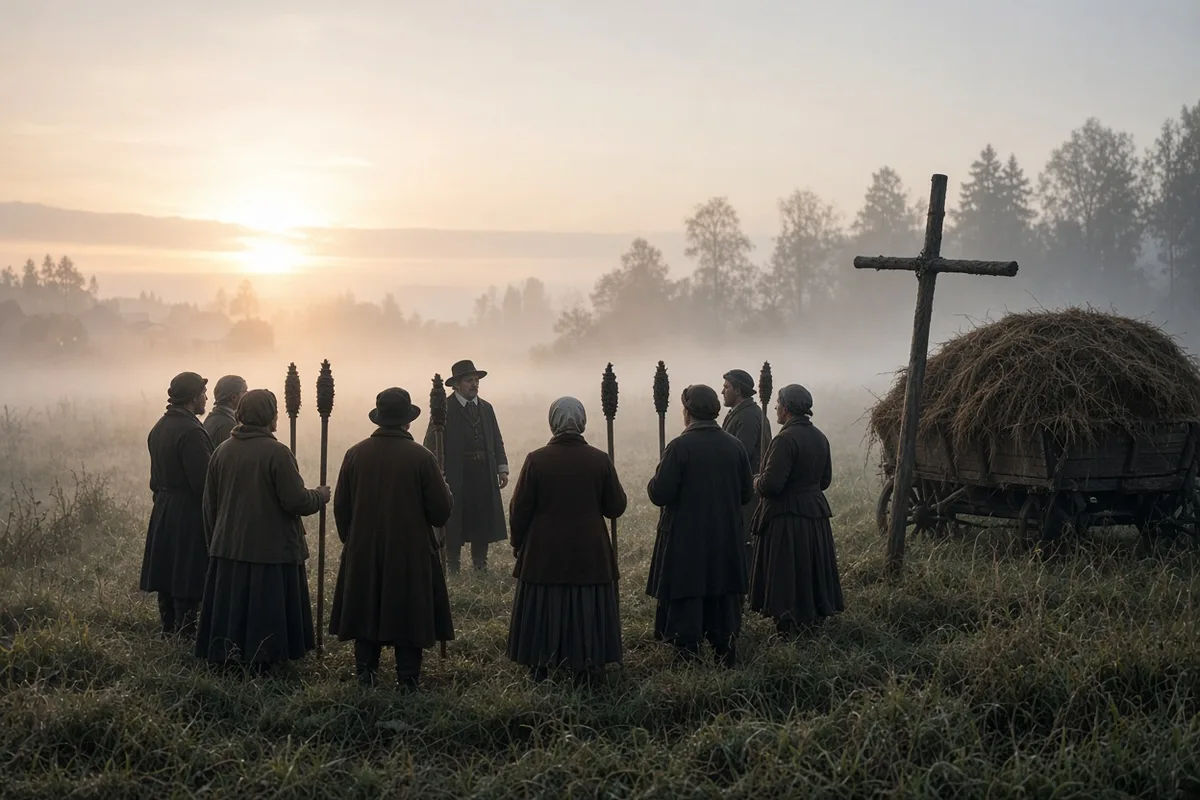
That spring the first small congregations began to meet openly on Sunday mornings, though never in the same place twice. They sang the same psalms the Münster prophets had sung, yet the words carried a different weight now. No one spoke of thrones or vengeance. The prayers asked only for strength to endure another week without betraying a neighbor.
Menno’s health had begun to trouble him even then. He coughed through the nights and sometimes could not finish a reading without stopping to catch his breath. Still he kept moving. When I asked why he did not rest, he answered that the living needed the word more than the dead needed mourning.
One afternoon near the end of that year I watched him baptize a former priest who had once mocked him in the village square. The two men stood knee-deep in the canal, the water brown with autumn leaves. After the younger man rose, Menno placed both hands on his shoulders and spoke so quietly that only those on the bank could hear. Then they walked back to the house together.
I left the Low Countries the following month. Before I went, Menno gave me a copy of one of his letters, the ink still fresh. He said it might be useful if I met others who had lost their way after Münster. I folded it inside my shirt and did not open it until I reached the border. The first line read simply that the cross of Christ had never been carried by those who demanded thrones.
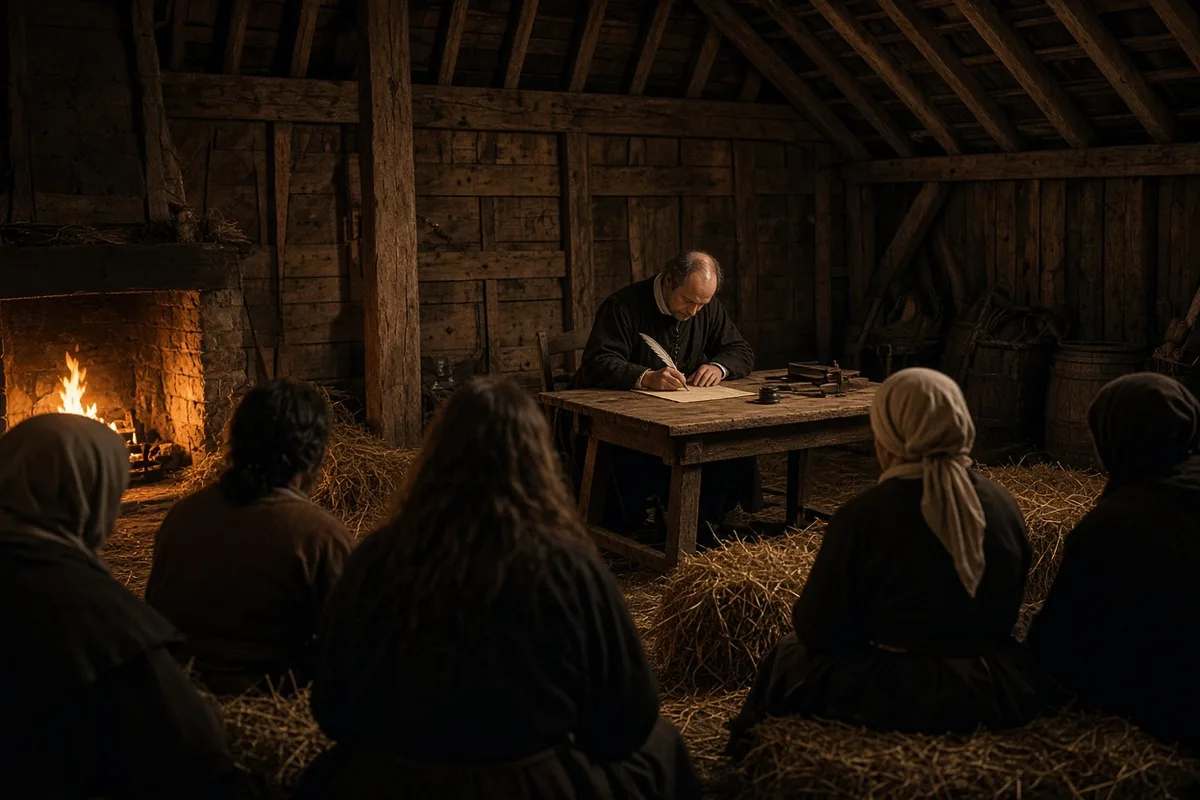
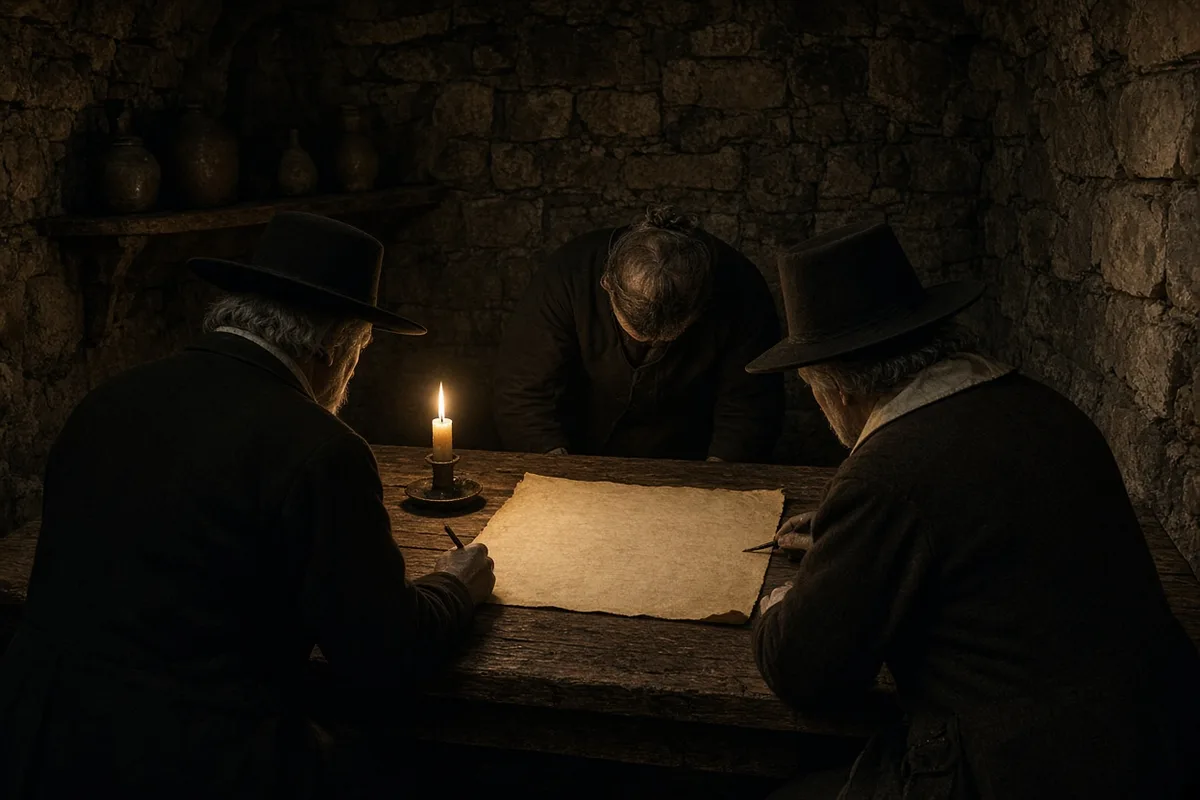
The letter reached me months later by way of a ship’s carpenter from Harlingen who had carried it folded inside a cask of herring to the port at Emden. Menno had written it from a garret above the print shop of Jan van Gent on the Hoogstraat, where he had set the type himself for the second edition of his “Foundation Book” dated 12 December 1539. The printer’s mark showed two clasped hands beneath a cross, and Menno had added in the margin a note to the reader that any who wished to answer must do so from the same New Testament he kept open on the bench in Witmarsum. The carpenter told me Menno had already left for Norden by then, traveling with Dirk Philips and a tanner named Hendrick from Delft who kept a record of every village they passed through. In Norden they met with twenty-three believers in the loft of a sailmaker’s workshop on the 14th of March 1540; Menno read from the twenty-third chapter of Matthew and asked each person present to name the cost they had already paid. One woman answered that her husband had been drowned at Leeuwarden the year before, and Menno wrote her words into the margin of his copy before they parted.
By the spring of 1544 he had moved farther east to the city of Emden under the protection of Countess Anna of East Friesland, who issued an edict on the 12th of June allowing foreign refugees to worship provided they took no part in any armed rising. Menno lodged in a house on the Faldern canal owned by a widow named Anna Jansz, whose husband had been executed at The Hague in 1534 for refusing the oath. There he dictated letters to the congregations at Leeuwarden and Groningen, instructing them to elect elders by lot rather than by vote and to keep written lists of those who had been baptized so that no one would be forgotten when the next collection for prisoners was taken. One such list dated 3 September 1545 records seventy-four names, including seven children under the age of twelve whose parents had been taken to the castle at Groningen. Menno himself traveled that winter to the village of Oldenburg, where he baptized twelve adults in the river Hunte on a single night while a watchman kept guard from the bridge.
In 1554 the Baron von Ahlefeldt offered him refuge on the estate at Wüstenfelde in Holstein after Menno’s wife Gertrude had fallen ill during their flight from Wismar. The estate records show that Menno paid an annual rent of twelve guilders and two barrels of rye for the use of a stone house beside the millpond. He continued writing there, completing his “Reply to Micron” on the 7th of February 1556 and sending the manuscript by courier to the printer at Lübeck. The book contained thirty-two separate citations from the writings of John Calvin, each one copied in Menno’s own hand and answered with a verse from the epistle to the Hebrews. His daughter Elizabeth kept the household accounts, noting on 22 March 1558 the purchase of two ells of black cloth for her mother’s burial shroud. Menno preached the funeral sermon himself from the text of First Thessalonians chapter four, and the neighbors recorded that he wept openly when the coffin was lowered.
After Gertrude’s death he remained at Wüstenfelde with his son Jan and two servants who had come with him from Friesland. The estate ledger for 1559 lists payments for paper and ink totaling four guilders and eight stuivers, most of it used for the “Book of Distinction” that appeared in 1560. In that work Menno listed the names of twenty-seven men and women who had been executed in the Low Countries between 1535 and 1559 for the sole offense of adult baptism. One entry records the death of Claes de Vries at Amsterdam on 14 October 1558, noting that de Vries had refused to name his fellow believers even after the rack was applied three times. Menno added a marginal note that the man’s last words had been taken down by a notary and sent to the congregation at Hoorn.
On the morning of 31 January 1561 Menno asked his son to read aloud from the fourteenth chapter of John while he lay in the bed beside the window overlooking the millpond. The servant who attended him recorded that Menno repeated the phrase “peace be with you” three times before his breathing stopped. He was buried two days later in the orchard behind the house, the grave marked only by a flat stone without inscription, as he had requested in a letter written the previous autumn to the elders at Hamburg. The Baron von Ahlefeldt ordered that the stone be kept clear of weeds, and the estate accounts show an annual payment of one stuiver for that purpose until 1572.
Leenaert Bouwens, who had worked with Menno in East Friesland, kept a register of every baptism he performed after Menno’s death. Between 1561 and 1582 he entered the names of 10,051 persons, noting the exact date and place for each one. The register, now held in the archives at Amsterdam, shows that 4,237 of those baptisms took place in the province of Groningen alone, most of them in farm kitchens after midnight. Bouwens wrote to the scattered groups each year on the anniversary of Menno’s death, reminding them to send copies of any new letters to the printer at Hoorn so that the words would not be lost.
In 1683 a company of twenty-nine families from Krefeld and Kriegsheim arrived at the port of Philadelphia on the ship Concord. Among them were Heinrich van Bebber and his wife Catherine, who carried a copy of Menno’s “Foundation Book” printed in 1619. They settled on land purchased from William Penn along the Wissahickon Creek, where they built the first meetinghouse in Germantown in 1688. The deed, recorded on 3 November of that year, lists the trustees as van Bebber, Jan Lensen, and Reynier van Tiesen, each of whom signed with the same mark used by Menno’s followers in the Low Countries two centuries earlier.
When I walked the lanes of Lancaster County in the autumn of 1787 I found a meetinghouse built of fieldstone where an old man named Christian Herr still read from the same 1619 edition each Sunday. He kept the book wrapped in a linen cloth embroidered with the names of his grandparents who had come from the Palatinate in 1717. After the reading he rose and asked the younger men present whether any of them had yet counted the cost of refusing the oath required by the new state assembly. No one answered at once. He closed the book, placed both hands on the bench before him, and waited while the afternoon light moved across the plain benches and the single window without glass.