



Mindfulness is the dishes, not the cushion after them
In 60 seconds
- Thich Nhat Hanh argues ordinary chores done as ends in themselves are the whole of practice, not warm-ups for a cushion.
- Conscious breath is his one portable bridge that reunites a scattered mind with the body in seconds.
- Sitting still is a diagnostic rehearsal that makes restlessness visible, not a purer path than daily activity.
- He treats anger like a crying infant to be held first, not vented or repressed.
- Interbeing reframes death and loss as continuation in altered form rather than pure ending.
- Compassion under fire and shared group practice are the real tests; solo willpower, he says, usually fails.
The big idea
Thich Nhat Hanh argues mindfulness is not a special state reserved for retreats but a quality of doing whatever you already do—washing dishes, breathing, eating, holding anger—with full presence. He builds from private attention to the claim that presence survives only inside a community practicing together, so helpers facing suffering do not go numb or bitter.
The book in brief
The book begins as practical counsel for people whose days are already full. Thich Nhat Hanh opens by treating ordinary chores as the spiritual life itself, not obstacles between you and some later reward. Most waking hours, he says, are spent absent from one’s own life because tasks are treated as delays before dessert, bed, or the weekend.
He then supplies the mechanism that makes any activity mindful: the breath, which sits at the border of automatic and voluntary control and can pull a wandering mind back into the room without strain. Formal sitting follows not as a higher practice but as a concentrated rehearsal that removes the cover of motion so restlessness has nowhere to hide.
Fine-grained examples come next—eating a tangerine section by section, drinking tea with nothing withheld for later—so the opening claim about dishwashing becomes a repeatable template rather than a single story. The book then turns to harder material: strong emotion, held like a crying infant before any attempt to fix or explain it, and the fear of death, met through interbeing, the observation that nothing exists independently of everything else.
The wartime context finally becomes explicit. Relief workers under fire risk either numbness or hatred; the same breath and body awareness are offered as maintenance so compassion is not destroyed by the suffering it tries to relieve. The closing move is social: individual resolve drifts within weeks, he argues, unless others are visibly practicing alongside you. The arc runs from private dishwashing to collective endurance.
Context
Written in 1974 as a long letter to a young colleague running relief work in wartime Vietnam, the book mattered because Thich Nhat Hanh translated monastic practice into instructions usable under ordinary stress and insisted that inner calm and social compassion are the same practice, not two. It later traveled far beyond that origin, often stripped of the community and ethical frame he treated as essential.
The key ideas
1
Dishes as the practice
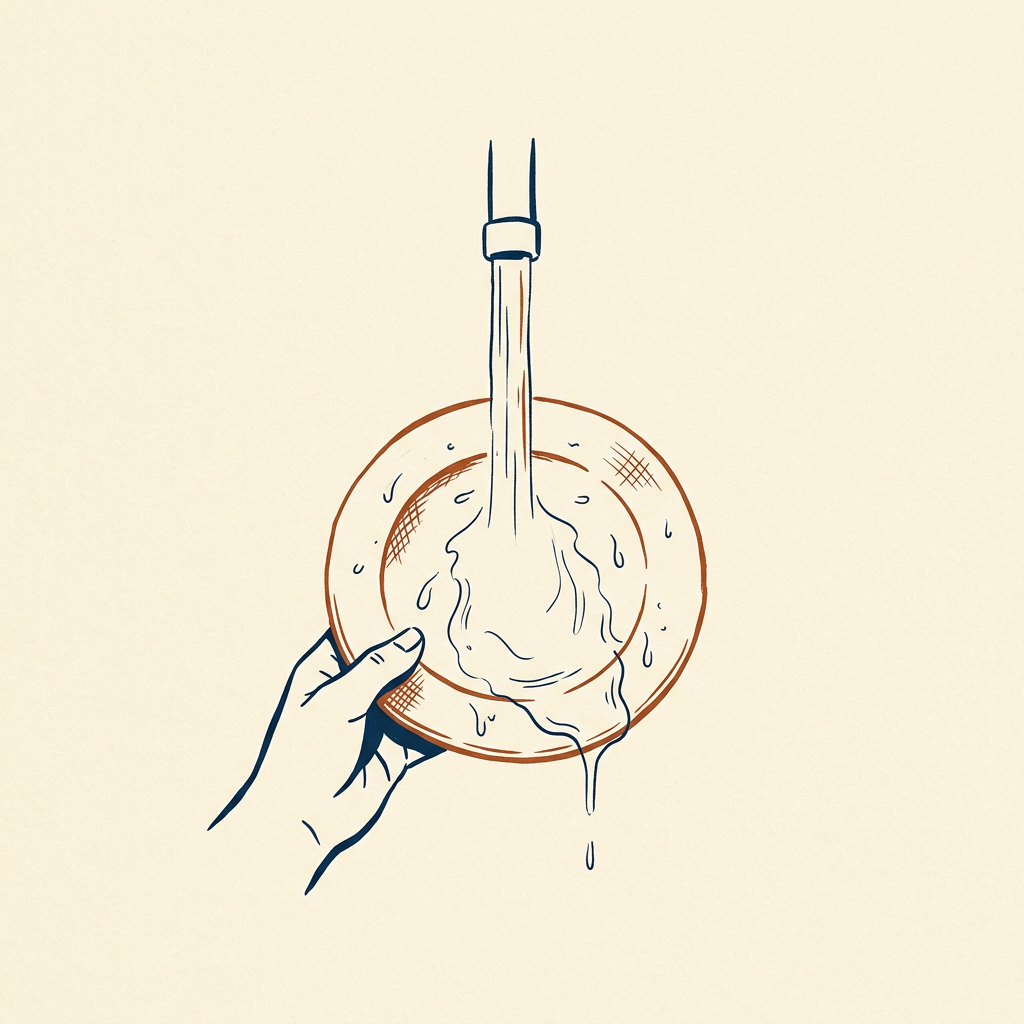
Thich Nhat Hanh claims there are two ways to wash dishes—to get them clean, or to wash them as an end in itself—and the second way is the whole of mindfulness compressed into one chore.
To get them clean
Rush through the chore as delay before dessert, bed, or weekend; hours spent absent from your own life.
To wash as an end
Task and awareness are one thing; the chore itself is the spiritual life, no hall required.
He opens with a novice memory of sometimes rushing toward dessert and sometimes feeling the water on his hands. The distinction becomes a rule: when daily tasks are only obstacles before a future reward, nearly all waking hours are spent absent from one’s own life.
His claim is stronger than layered attention on autopilot. The task and the awareness of the task must be one thing. Meditation halls and incense are not necessary conditions.
This matters because most people cannot add formal sitting hours to full days, yet everyone already washes, drives, or waits. If those minutes become practice rather than dead time, opportunity multiplies without new time. The test is not cushion length but presence for the actual minutes of an ordinary day.
Every later exercise elaborates this first claim rather than introducing a separate discipline.
In practice: He extends the same standard to eating, walking to the well, and cutting vegetables: presence during the chore itself, not afterward.
2
Breath as the bridge
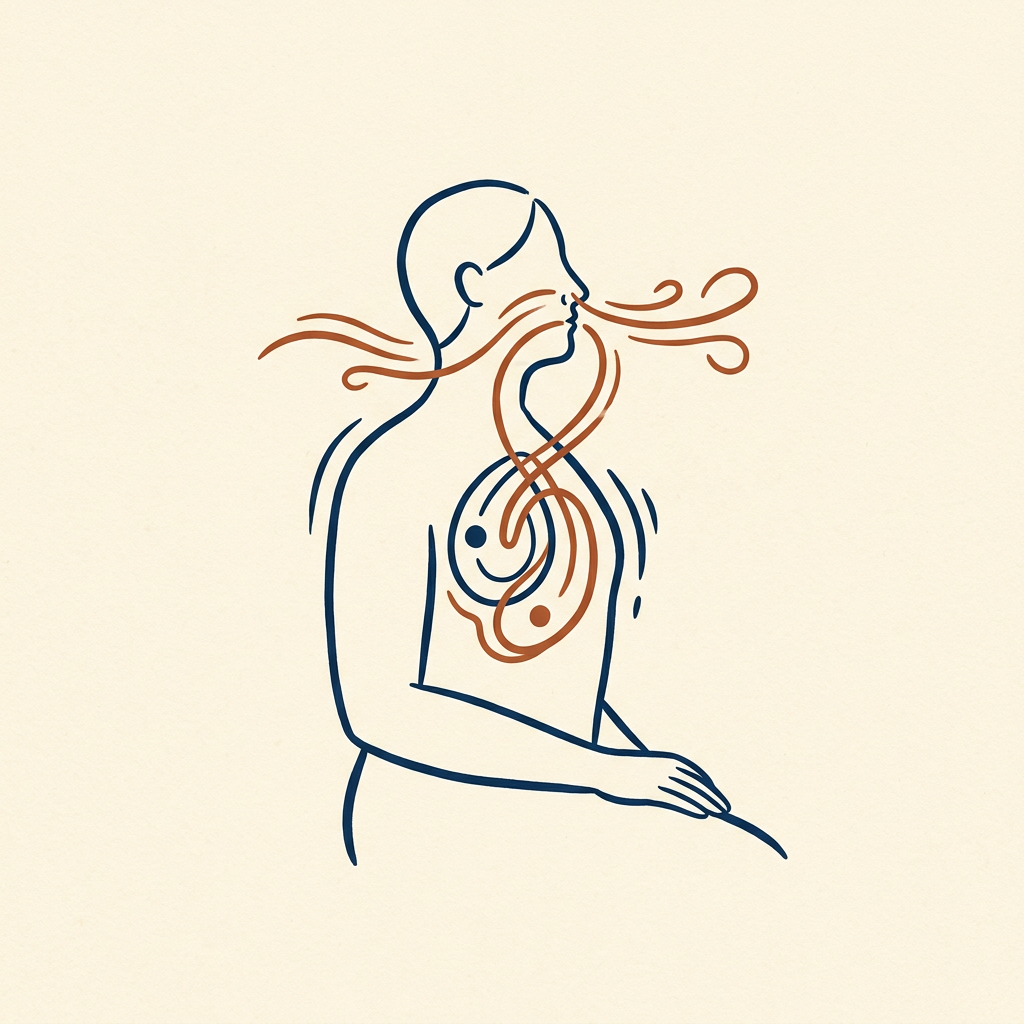
Conscious breathing reunites scattered mind and body because breath is one of the few processes both automatic and voluntary at once.
Thought and body constantly drift apart—one can wash a dish while rehearsing tomorrow’s argument. Forcing attention onto the hands is awkward; other methods are slow.
Breath works, he argues, because you breathe whether you attend or not, yet the moment you attend it becomes an act of will that pulls the mind back into the room. The plain form: breathe in and know you are breathing in, breathe out and know you are breathing out, without first altering the natural rhythm.
He warns against dramatic forced breaths that turn unification into performance. Counting—one on the inhale, two on the exhale, up to ten and back—is scaffolding for beginners; a wandering mind loses count and thereby notices its own wandering.
Everything later—sitting, eating, handling anger—depends on this portable anchor so “stay present” has a concrete first step in the next ten seconds.
In practice: A beginner whose mind resists simply sits or stands and counts breaths until losing the count reveals the drift.
3
Sitting to see restlessness
Formal sitting is not purer than mindful daily activity but a concentrated rehearsal that makes the mind’s habits visible enough to work with.
Hidden in motion
Washing or walking lets the wandering mind hide behind the hands’ activity.
Nowhere to hide
Still sitting with only the breath makes restlessness obvious and workable.
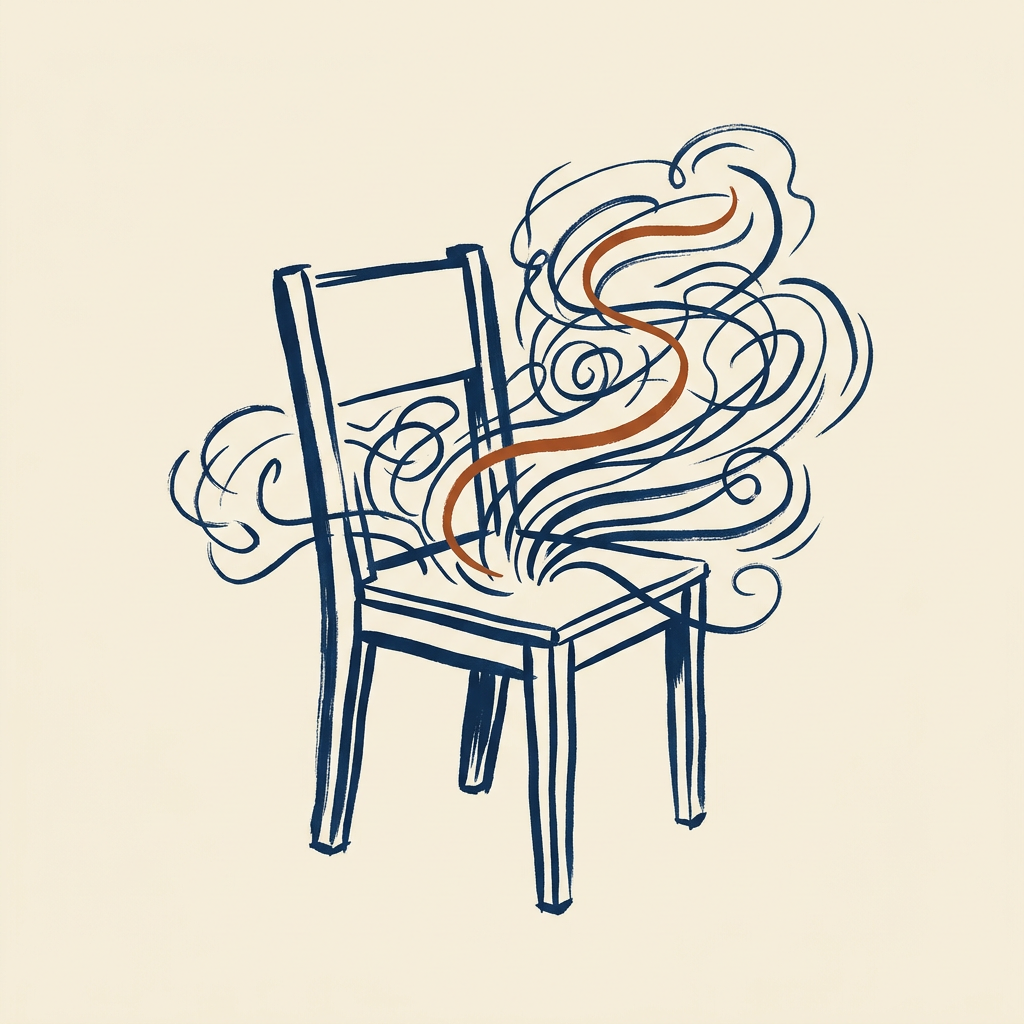
If any activity can be meditation, why sit still? His answer: sitting removes the cover of activity. Behind dishwashing motion, a wandering mind can hide; with nothing to do but breathe, restlessness has nowhere to hide.
He recommends a sustainable posture—cross-legged if possible, otherwise a chair, spine upright but not rigid, hands resting—because comfort sustained over minutes beats a perfect lotus that collapses in ten. Small mechanics matter: half-closed or closed eyes, unclenched jaw, dropped shoulders, since body tension feeds mind tension and the reverse.
Start short, ten minutes rather than an hour; daily short sessions build more capacity than one abandoned long attempt. He adds the half-smile: a slight deliberate softening of the mouth that can loosen face and, indirectly, mind—working on mind through body rather than willpower alone.
Sitting is diagnostic as much as rest: it shows without excuse how untrained attention is, a humbling step before daily-life practice can be honest.
In practice: A reader who can only manage ten upright minutes on a chair still gains the visibility that an hour of collapsed striving would not.
4
The tangerine template
Eating without awareness is a small telling case of consuming our own experience without tasting it.
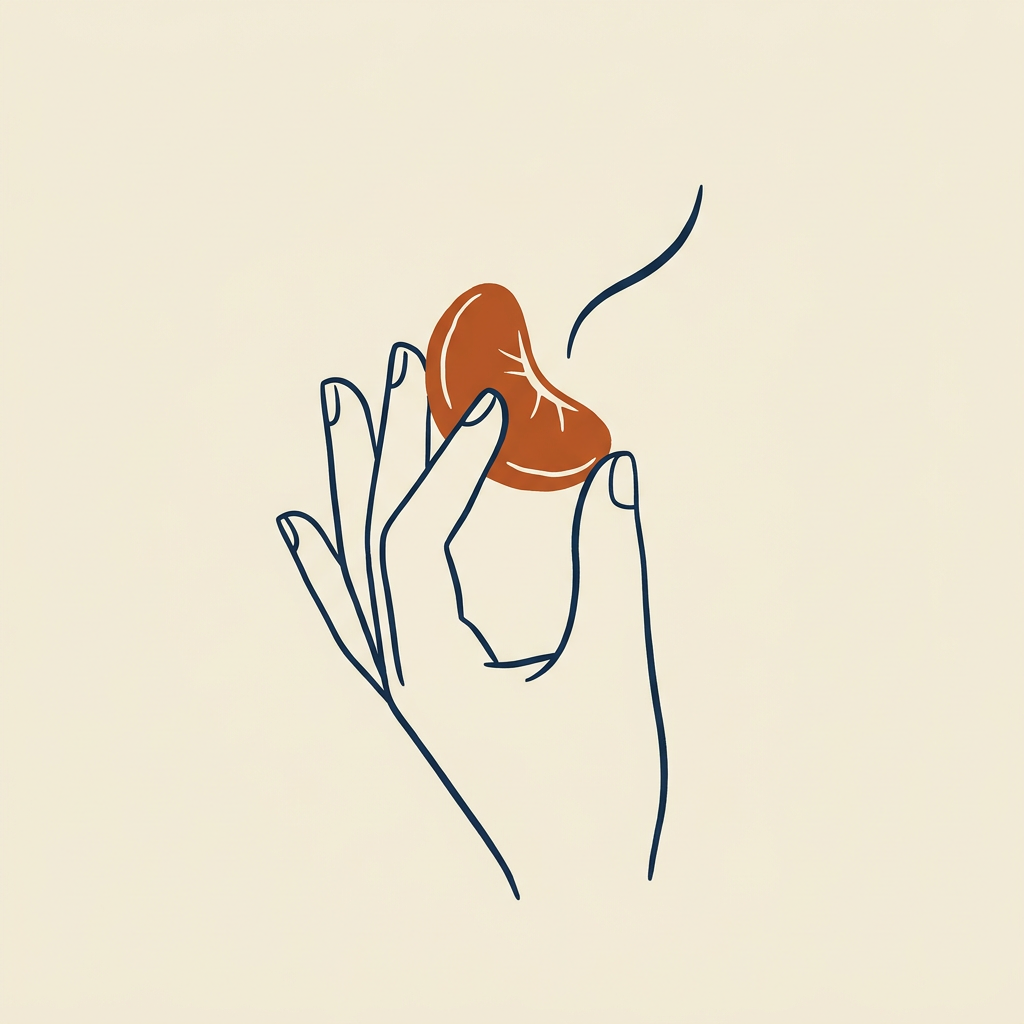
He recounts eating a tangerine with children who talked and planned while chewing, effectively finished with the fruit before they tasted it. The pattern is wider: being mentally already on to the next thing while the present one is still in the mouth.
The instruction is concrete—separate into sections, look at one, smell it, place it in the mouth, and let the brief span of chewing and swallowing be the whole of attention, nothing added, nothing saved for later. This is not slowness as performance or asceticism; it is being present for a pleasure otherwise wasted by inattention.
He generalizes to a cup of tea: drunk in full awareness it delivers more of what tea can give than the same cup gulped while reading or arguing.
The tangerine answers what mindful daily activity looks like moment to moment, turning the dishwashing claim into a method copyable onto brushing teeth, washing hands, or folding laundry.
In practice: Children finish a tangerine in conversation without having tasted it; the same fruit, section by section with full attention, is not wasted.
5
Anger held like a baby
Suppressing and venting anger are both neglect; the better response is to hold the emotion with a mother’s tenderness for a crying infant before trying to fix it.
He rejects the two common moves—repress because unseemly, or express fully because repression is unhealthy—as both treating the emotion as something to get rid of rather than understand.
The domestic image: a mother hearing her baby cry does not first analyze the cause or ignore the noise; she picks the baby up and holds it, and holding often calms before the cause is known. Apply the sequence to anger: first recognize it is present, using the breath to stay with the sensation rather than being carried into words or actions; second hold it with attention rather than judgment; only then, if needed, look at where it came from.
This is not suppression, which denies the feeling. His method insists the feeling be fully acknowledged, just not immediately acted on. The same holding extends to fear, jealousy, and grief.
Capacity for this is built through breath and sitting already introduced, not invented fresh in crisis—and it is the bridge from private exercise to behavior under pressure.
In practice: Instead of snapping or swallowing rage in a hard moment, he has the reader breathe, recognize the anger, and hold it the way one holds a crying infant.
6
The leaf that continues
Because nothing exists independently, birth and death are not the absolute opposites we assume, which should change grief and fear of our own end.
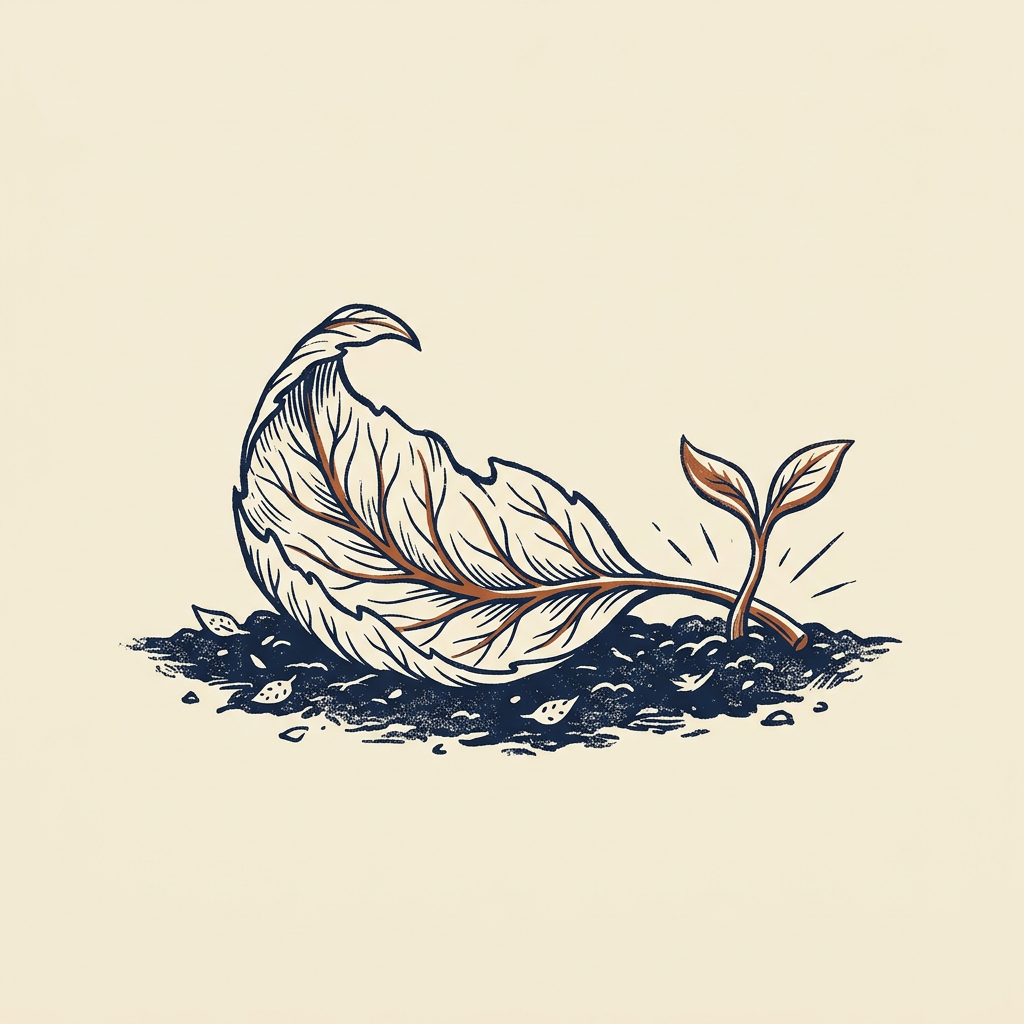
He presents interbeing as closer to observation than doctrine. Watching a dying leaf, he refuses to see its fall as pure loss: the leaf’s substance returns to roots, new leaves, soil, and other plants, so an ending is also continuation in altered form.
The same logic unsettles sharp lines between self and not-self, alive and not-alive, mine and not-mine. A leaf is not separate from the tree; the tree is not separate from soil, sun, and rain; a person is not separate from parents, food, air, and everyone affected.
He offers this as a claim about how things are, not only a comforting metaphor—stronger and more contestable than soft imagery. Practically it lowers the terror that fuels selfishness and despair: if the self is not isolated and permanent, its pleasures and its extinction carry less absolute weight.
Placed after anger, the chapter asks the reader to hold a larger fear with the same steady attention, using interbeing as the object of contemplation.
In practice: A falling leaf is seen not as pure disappearance but as substance returning to roots, soil, and new growth.
7
Compassion under fire
Mindfulness is most necessary and hardest in violence and exhaustion, where it keeps helpers from becoming the hatred they mean to relieve.
Numb or radicalize
Detachment or hatred of perpetrators destroys the compassion that began the work.
Steady presence
Breath and shared sitting inside the danger keep the helper from resembling what they resist.
The letter’s real addressees ran the School of Youth for Social Service: volunteers rebuilding villages and tending wounded civilians under fire from multiple factions in the Vietnam War. Prolonged exposure to suffering and danger, he argues, tends to numb a person into detachment or radicalize them into hatred of whoever causes the suffering—both destroy the compassion that motivated the work.
His defense is not distance from suffering but steadier presence within it, using the same breath and body awareness during actual danger, not only in calm sessions. Hating soldiers or officials, even when anger is justified, corrodes the worker from inside and eventually makes them resemble those they resent—an observation he treats as fact among colleagues, not abstract moralizing.
He recommends short shared group sitting even amid crisis, because collective practice restores faster than solitary rest and counters the isolation that worsens burnout.
This is the payoff the book built toward: mindfulness as maintenance for people who must face suffering daily without being consumed, a higher bar than calm dishwashing.
In practice: Relief workers under bombardment use brief shared sitting and conscious breath so justified anger at armed factions does not hollow out their compassion.
8
Practice needs others
Individual willpower is not enough over years; a person needs the visible ongoing example of others practicing alongside them.
Alone
Private resolve drifts back to old habits within weeks; strain concentrates in one person.
Together
Visible shared sitting shapes attention; the group absorbs and redistributes strain.
Why do practices this simple fail to stick? His answer is social, not technical. Alone, without others also breathing consciously or sitting regularly, a person tends to drift into old habits within weeks—not because techniques are wrong, but because human attention is shaped by the attention of those nearby.
Even a small group meeting to sit together has an effect private resolve lacks, similar to exercising with a partner. For the relief workers the letter addressed, a team that practices mindfulness together sustains compassionate work longer than equally well-intentioned individuals in isolation, because the group absorbs and redistributes strain that would concentrate in any single exhausted worker.
This stronger, more falsifiable claim gathers earlier techniques into practice meant for a group setting. Mindfulness, introduced as something anyone can do alone at the sink, ends as something that in practice depends on other people—closing the gap between private meditation and socially engaged Buddhism.
Solo dishwashing was the entry; shared endurance is the destination.
In practice: A small weekly sitting group, he argues, keeps relief teams compassionate longer than isolated workers relying on private resolve.
Key terms
- mindfulness A quality of doing whatever you are already doing with full presence, not a separate activity reserved for cushions.
- conscious breathing Knowing you are breathing in and out without forcing the rhythm; the bridge that reunites mind and body.
- half-smile A slight deliberate softening of the mouth used to loosen facial and mental tension through the body.
- interbeing The claim that nothing exists independently of everything else, so birth and death are not absolute opposites.
- holding anger Recognizing and attending to anger like a mother holding a crying baby, before fixing or acting on it.
- washing dishes to wash dishes Doing the chore as an end in itself so task and awareness are one, not a delay before a reward.
What to do
- Pick one daily task—making coffee, walking to the train, washing hands—and do it Monday with no phone or planning, only the sensations of the task.
- Before a difficult meeting or conversation, take ten conscious breaths, counting if the mind resists, then enter from a settled body.
- Find one person to sit quietly with for ten minutes at a set time each week so the practice is shared rather than solo.
Questions to think with
- Which repeated chore do you most often treat as pure delay, and what would change if it were the whole activity?
- When anger rises, do you repress, vent, or have a third option—and what would “holding” it look like for ten breaths?
- Where does your attention go when you eat or drink, and what pleasure is lost to the next thought?
- If presence alone drifts within weeks, who could sit with you so the practice has a social anchor?
- How does the idea that a leaf continues in soil and new growth sit beside your own fear of loss?
The other side
Thich Nhat Hanh’s central weakness, the summary notes, is also its charm: the book is short, anecdotal, and largely undefended beyond his experience and parables. Claims such as interbeing or the idea that hatred corrodes the hater more than the oppressor are presented as observed fact; skeptics get little help weighing alternatives. It assumes psychological stability and offers nothing on when mindfulness is insufficient or counterproductive for clinical depression, PTSD, or acute trauma without professional care. The exercises can feel thin beside later evidence-based programs, and his own insistence on community and interbeing has been stripped away by commercial wellness, producing exactly the isolated practice his final chapter warns against.
Who it's for
Caregivers and aid workers at risk of burnout from others’ suffering, people who want to start meditating but find formal instructions impractical, and readers seeking a gentle non-doctrinal entry into Buddhist ideas—especially if they will read it as a letter to overwhelmed helpers rather than a solo productivity hack.