



Nairobi collapse exposes empty permits as families wait
By The Conservative Desk (/journals/conservative-desk)
Andrew Bwaio’s brother called their mother in Uganda from under the rubble the morning after the fall. He said he was still trapped and that time was running out. She told Andrew to go to the site in Nairobi and not leave without him or his body.
That call framed the second day of the search. On Friday, October 23, 2026, around 1 p.m., a building under construction in Eastleigh came down. Accounts put it at 16 to 18 storeys. Eleven shops on the ground floor and basement were open, among them an electronics store, a butcher’s shop, and a grocery store. Of 67 construction workers on site, 66 escaped unharmed. One was injured in a non-life-threatening way. Interior Minister Kipchumba Murkomen initially reported seven people missing.
Families gathered near the wreckage, some behind police lines, others inside a Red Cross tent. Abdikadir Mohammad waited for his sister-in-law, believed trapped in the basement. “She was also down here in the basement. Yesterday, everyone had opened their shops, and business was going on as usual. She had come out of the mosque when she found the building had collapsed. Since then, we have been unable to communicate with her or reach her on the phone,” he said.
Christine Njeri’s sister and cousin had run a basement shop after moving into the building earlier in the year. “We talked yesterday, but now their mobile phones are off,” Njeri said. “All I can do is pray that they are found alive.”
Rescuers briefly reached people trapped in basement shops by phone or voice, then lost the link. On Saturday, teams pulled a man out alive after 27 hours. He appeared weak and was rushed for first aid. Minutes before 7 p.m., they brought out a woman, to the relief of her husband and relatives. Both were taken to hospital; one went to Kenyatta National Hospital. The recoveries renewed hope for those still unaccounted for.
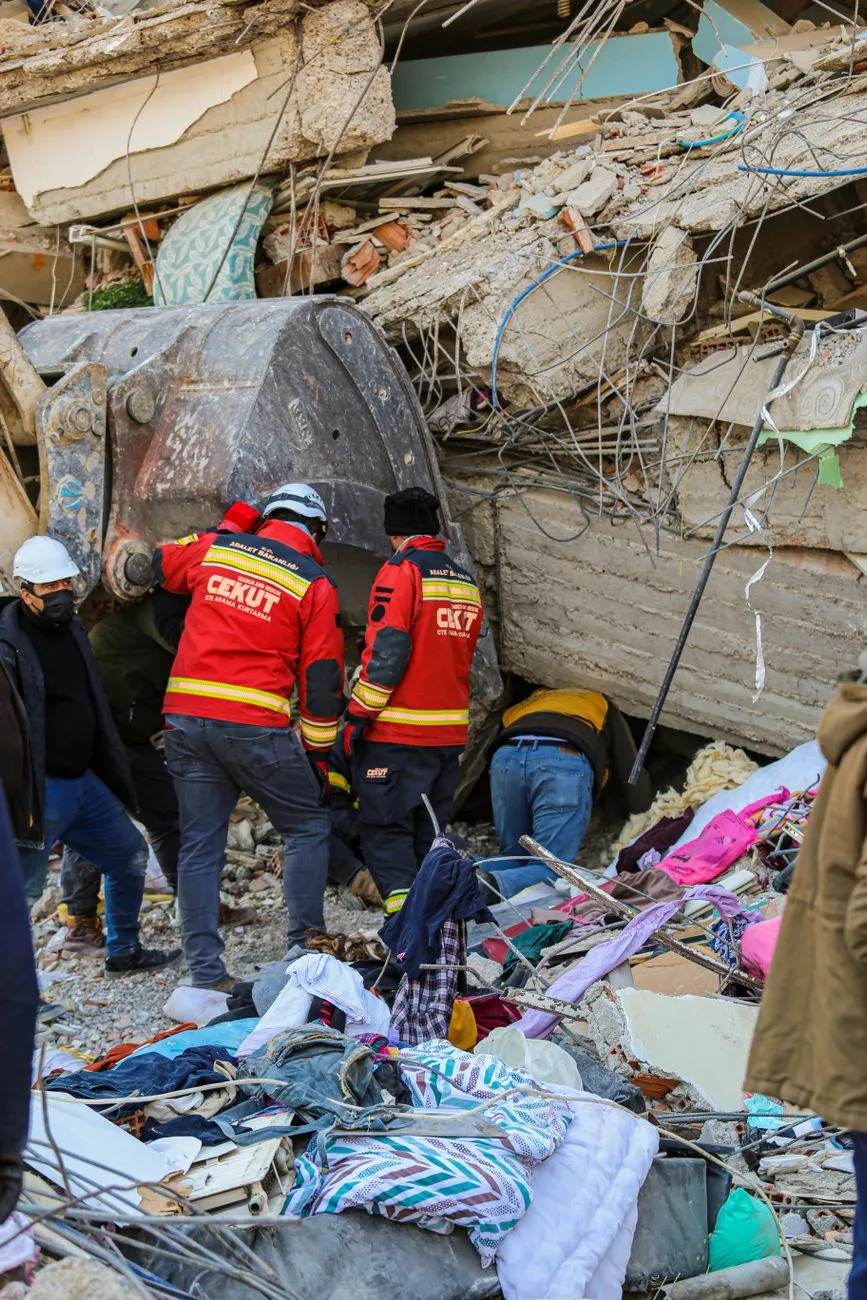
Vincent Ochieng of the Red Cross said contact tracing continued. “We are continuing to get in touch with the families to ascertain the number..we are still doing contact tracing,” he said. Nairobi Governor Johnson Sakaja said more machines were coming. “We are summoning more equipment to hasten the process.” Excavators and crews cut through reinforced concrete slabs and metal toward the lower levels, moving with care so the damaged pile would not shift again.
Sakaja said the building had no occupation certificate and lacked required permits. An occupation certificate is the formal sign-off that a structure is safe and legally fit to occupy. The National Construction Authority named 9th Street Plaza Limited as developer and Stromax Holdings E.A. Limited as contractor. It listed Emmanuel Mwangi Maina as project architect and Joseph Muturi Mugu as structural engineer. Sakaja said the property belonged to the estate of the late Wilson Mutia Musyoki, with John Mutia Musyoki listed as developer on record.
Police opened a manhunt for the owner and contractor and a criminal investigation into possible negligence and regulatory violations. Police spokesperson Muchiri Nyaga said the service was working with other professional bodies “to establish the cause of the collapse and determine criminal liability.” He added: “Any individual or entity found culpable of negligence or of violating building regulations will face the full force of the law.”
Those steps answer a record larger than one tower. Kenya’s National Building Inspectorate found that 87 percent of buildings examined nationwide last year failed to meet standards or lacked required approvals. A separate audit of nearly 15,000 buildings classified 4.8 percent as very dangerous and 72.3 percent as unsafe. The Eastleigh collapse did not invent that pattern; it put shoppers and workers under it.
The strongest reading of the facts starts with the missing certificate and the 87 percent failure rate, not with a new slogan. Permits, inspections, and occupation sign-off already exist so private building does not become a public hazard. When an unfinished high-rise carries open shops on its ground floor and basement while lacking the paper that says it is fit to occupy, the failure is enforcement. Free enterprise holds only when the developer, contractor, architect, and engineer meet the same measurable standards; otherwise the market rewards the shortcut until concrete fails and families wait in a Red Cross tent. Limited government is not unenforced government. The taxpayer and the ordinary resident pay when codes are ignored: once in the rescue, again when a busy street cannot be trusted. Public safety and the rule of law meet at the point Nyaga named, criminal liability for negligence and for violating building regulations, applied to named parties.
Bwaio said another cousin, a plumber working in the building opposite, saw the collapse and could not return. “He is too traumatised to even step here,” Bwaio said. His charge from his mother remained the one he carried to the site: do not leave without him or his body.