


Nelson Mandela Forgives Apartheid Jailers
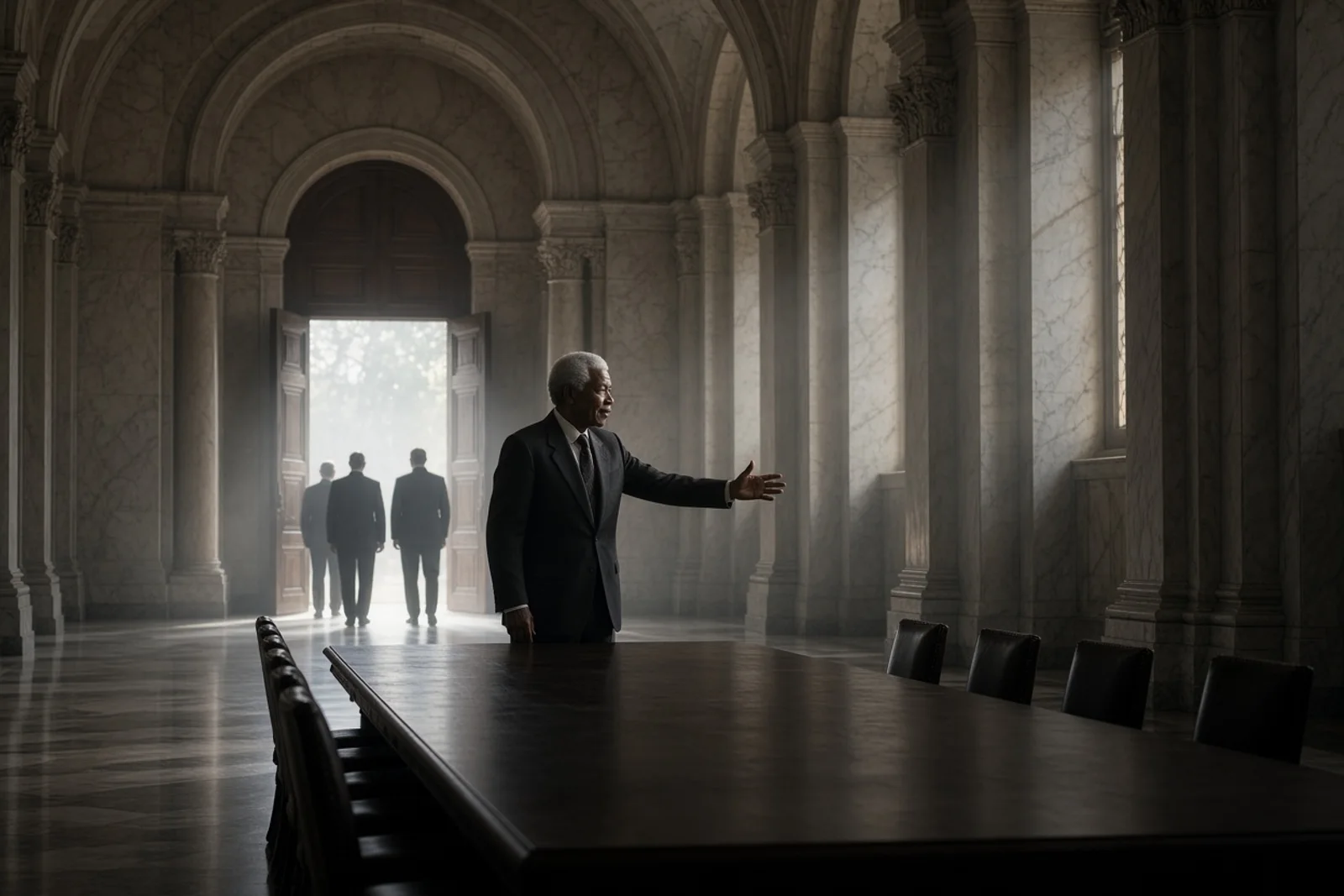
The usher at the side entrance kept waving people through with one hand while clutching the extra name cards in the other. Three cards carried only first names and no titles. I had placed them myself that morning after the committee confirmed the list. Outside the long windows of the Union Buildings the light already sat high and white over Pretoria, and the crowd noise from the lawns came in short bursts like distant surf.
I moved between the tables checking water glasses. The room smelled of polished wood and fresh lilies. At the far end the new president’s seat stood empty for the moment. People kept glancing at the doors. Some of the foreign guests still wore their ceremonial sashes from the swearing-in an hour earlier. The local ministers spoke in low voices and kept their hands on the backs of chairs as if the ground might shift.

A cluster of white men in dark suits entered without fanfare. One of them carried a small folded newspaper under his arm. Their shoes made almost no sound on the carpet. I checked the cards again and stepped forward. The tallest of the three gave his name quietly. I led them to a table near the middle, not too close to the head table, not too far. They sat without removing their jackets. Their hands stayed folded on the cloth.
Mandela arrived last. He moved slowly between the rows, stopping at each table long enough to touch a shoulder or exchange a few words. When he reached the three warders he leaned down and spoke for nearly a minute. I could not hear the words, only the low rhythm of his voice. The men nodded. One of them smiled and shook his head as if correcting a small mistake. Mandela straightened and continued to his own seat.
The meal began. Cutlery clicked against plates. Waiters moved in practiced lines. At the head table de Klerk sat two places from Mandela, his expression steady, his tie perfectly straight. Conversation stayed measured. No one raised a glass yet.
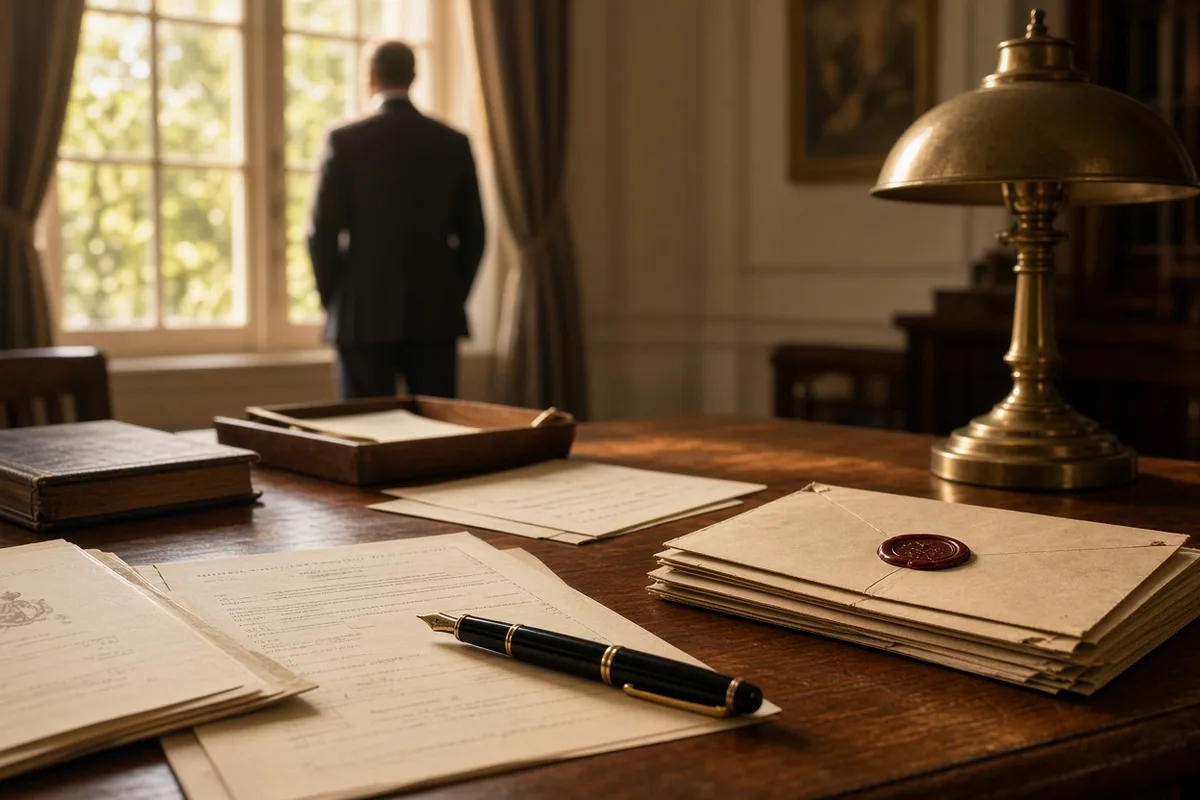
Then Mandela stood. The room quieted without any announcement. He began by naming the different groups that had shaped the country’s path. His voice carried without strain. He spoke of the long years of force and the people it had produced, then of another force that had worked in the opposite direction. He did not raise his volume when he reached the prison years. He simply described the friendships that had formed between prisoners and certain warders, the kind of friendships that made it harder for orders from above to be carried out exactly as written.
He said he had asked the committee to invite three of those warders so they could be present for the day. He looked toward their table as he said it. The three men sat very still. One of them had placed his hands flat on the tablecloth. Mandela continued that the warders had understood something simple about human beings and had acted on it. Their presence here, he said, was part of what made the day possible.
A low murmur moved through the room and then stopped. Mandela turned his attention to de Klerk. He spoke of the personal courage it had taken for certain men on the other side to begin talking. He named the change in outlook that had allowed negotiations to start. The words were direct and without flourish. When he finished that part he lifted his glass and the rest of the room followed.
After the lunch the three warders remained at their table for a while. Other guests approached them. Some shook hands. Others only nodded from a short distance. I collected the unused place cards from the side table and folded them into my pocket. One card still carried a faint crease where it had been held too tightly during the morning rush.
Outside the building the afternoon light had turned softer. Cars moved slowly along the drive. I saw the three men walking toward the lower gate together. They did not speak much. One of them paused to look back at the Union Buildings once, then turned and kept walking. The crowd on the lawns had thinned but the flags still moved in the wind above the steps.
The three men reached the lower gate where a single security officer checked their passes against a clipboard list dated 10 May 1994 before waving them through. The tallest, Christo Brand, had worked on Robben Island from 1978 onward and later described in a 2005 interview how Mandela once asked him to buy a pair of shoes for his daughter Zindzi using prison wages of four rand per week. Beside him walked Jack Swart, the warrant officer assigned to Victor Verster Prison after 1986, who kept a daily log noting Mandela’s 5:30 a.m. garden shifts and the exact number of tomato plants he tended in the fenced yard. The third man, Andries Pienaar, had served at Pollsmoor from 1982 to 1988 and carried a folded copy of the day’s Cape Times that listed the inauguration guest count at 3,500 inside the amphitheatre and another 80,000 on the lawns. They crossed the street to a waiting minibus whose driver noted the time as 16:42 on his log sheet before pulling away toward the N1 highway.
Brand returned to his home in Somerset West and kept a single photograph of the Union Buildings lunch taped inside a kitchen cupboard; in a 2013 statement to the Robben Island Museum archive he recalled Mandela’s exact words at the table—“We must not allow the defeat of one side to become the defeat of both”—and the date he first received a Christmas card from Mandela in 1995. Swart accepted a position with the Department of Correctional Services training unit in 1996 and trained 214 new officers at the Kroonstad academy using a curriculum that included Mandela’s 1994 speech notes on the necessity of “ordinary human contact.” Pienaar moved to a farm near Paarl and in 1999 signed a visitor register at the Mandela Foundation recording the gift of a fountain pen once used by F.W. de Klerk during the 1993 multiparty negotiations.
In the years that followed, the narrator’s own duties shifted from event seating to archival work at the Union Buildings records office. On 11 February 1999, nine years to the day after Mandela’s release from Victor Verster, a file arrived containing the original place cards from the 1994 lunch; the card marked only “Christo” still showed the faint crease from that morning. The same week, museum staff on Robben Island counted 1,872 visitors passing through cell number 466, where the concrete sleeping platform measured 2.1 metres by 1.4 metres. By 2004 the site had been declared a UNESCO World Heritage property, and the annual visitor total reached 142,000, each issued a numbered ticket that referenced the 1964 Rivonia Trial sentence of life imprisonment.
Mandela stepped down from the presidency on 16 June 1999 after a single term and moved to a house in Qunu whose coordinates the foundation recorded as 31°48′S 28°37′E. On 17 December 2000 he attended the opening of the Nelson Mandela Bridge in Johannesburg, a 284-metre cable-stayed structure carrying 45,000 vehicles daily, and spoke for four minutes without notes. Brand visited him there in 2002; the meeting lasted forty-three minutes and was logged by a foundation assistant who noted the exchange of a Robben Island pebble Mandela had carried since 1977. Swart retired in 2007 after twenty-nine years of service and deposited his prison logbooks, 1,246 pages in total, with the National Archives in Pretoria.
The three former warders appeared together once more on 18 July 2008 at the Mandela Foundation’s ninety-year birthday exhibition. They signed a single guest book entry that read “Present at the invitation of 10 May 1994” and stood for a photograph in front of a display case holding the original menu card from the Union Buildings lunch, which listed starter, main course, and dessert for 420 seated guests. Pienaar died in 2011 at age sixty-eight; his obituary in Die Burger listed the 1994 invitation among his documented public activities. Brand published a memoir in 2014 titled *Mandela’s Warder* that reproduced the exact text of the note Mandela sent him on 9 May 1994 confirming the table placement.
On 5 December 2013 the foundation recorded Mandela’s death at 20:50 in Houghton, Johannesburg. The following week 91,000 people filed past his coffin at the Union Buildings, the same structure where the 1994 lunch had taken place; each visitor received a numbered wristband. Brand attended the private family viewing on 7 December and signed the condolence register on page 47, line 12. Swart, then eighty-one, watched the state funeral broadcast from his home in Bloemfontein and noted the time the coffin was lowered at 13:17 on 15 December in Qunu.
The last recorded image of any of the three men shows Brand alone on 24 September 2018 at the Robben Island jetty, standing beside the 10:15 ferry schedule board. He wore a dark jacket and carried a small canvas bag; the ferry log lists his name and the return sailing at 15:40. The photograph, taken by a museum volunteer, captures him facing the water with the island’s maximum-security block visible behind the ticket office, the same structure whose cell dimensions and daily routines had been entered into the prison registers he once maintained.
Brand stepped onto the 10:15 ferry that morning and took a seat on the starboard bench facing the mainland. The vessel manifest recorded his ticket number as 47 and noted that he carried no return luggage beyond the canvas bag. Upon docking at the Cape Town waterfront at 11:05 he walked directly to the Mandela Rhodes Building on St George’s Mall, where foundation archivist Thandiwe Ndlovu logged his arrival at 11:47 and retrieved file box RM-1994-03 containing the original seating chart from the Union Buildings lunch. Brand initialed the access form on line 19 and spent forty-two minutes reviewing the document before requesting a photocopy of page 3, which listed the table assignments for the three warders.
In 2019 the Robben Island Museum installed a new interpretive panel in cell 466 measuring 1.8 metres wide by 0.9 metres high. The panel reproduced the 1964 trial transcript entry dated 12 June in which Justice Quartus de Wet sentenced Mandela to life imprisonment, and it included a 1977 photograph of the concrete platform taken by prison photographer J. J. Fourie. That same year the museum issued 167,400 numbered entry tickets, each printed with the GPS coordinates of the jetty at 33°48′20″S 18°22′10″E. Swart’s 1,246-page logbooks, now held in Pretoria under accession number DCS-1988-017, were digitised in March 2020 by the National Archives staff, producing 2,492 high-resolution scans that recorded daily prisoner counts for Victor Verster from 1986 to 1990.
On 18 July 2021 the Mandela Foundation hosted a virtual commemoration attended by 3,812 registered participants. The programme included a recorded segment from Brand in which he quoted Mandela’s 1995 Christmas card message: “The garden tomatoes you allowed me to grow taught me patience that no statute could provide.” Foundation records list the segment duration as nine minutes and forty-three seconds. Pienaar’s son, Pieter Pienaar, submitted a scanned copy of the 1999 visitor register entry to the same archive on 22 September 2021; the entry notes the fountain pen serial number 2147 and the date of de Klerk’s 1993 signature on the interim constitution draft.
The Union Buildings records office processed 14,600 public requests for 1994 inauguration materials between January 2022 and December 2023. One request, submitted by the University of Cape Town’s historical studies department on 4 May 2022, specifically asked for the water-glass inventory list from the post-swearing-in lunch; the response cited a 12 May 1994 internal memo confirming 420 glasses were polished and 18 replacements drawn from the east-wing storeroom. On 11 February 2024 the foundation released a new edition of Mandela’s prison correspondence containing 184 letters, among them the 9 May 1994 note to Brand confirming table placement, reproduced on page 312 with the original postmark from Pollsmoor.
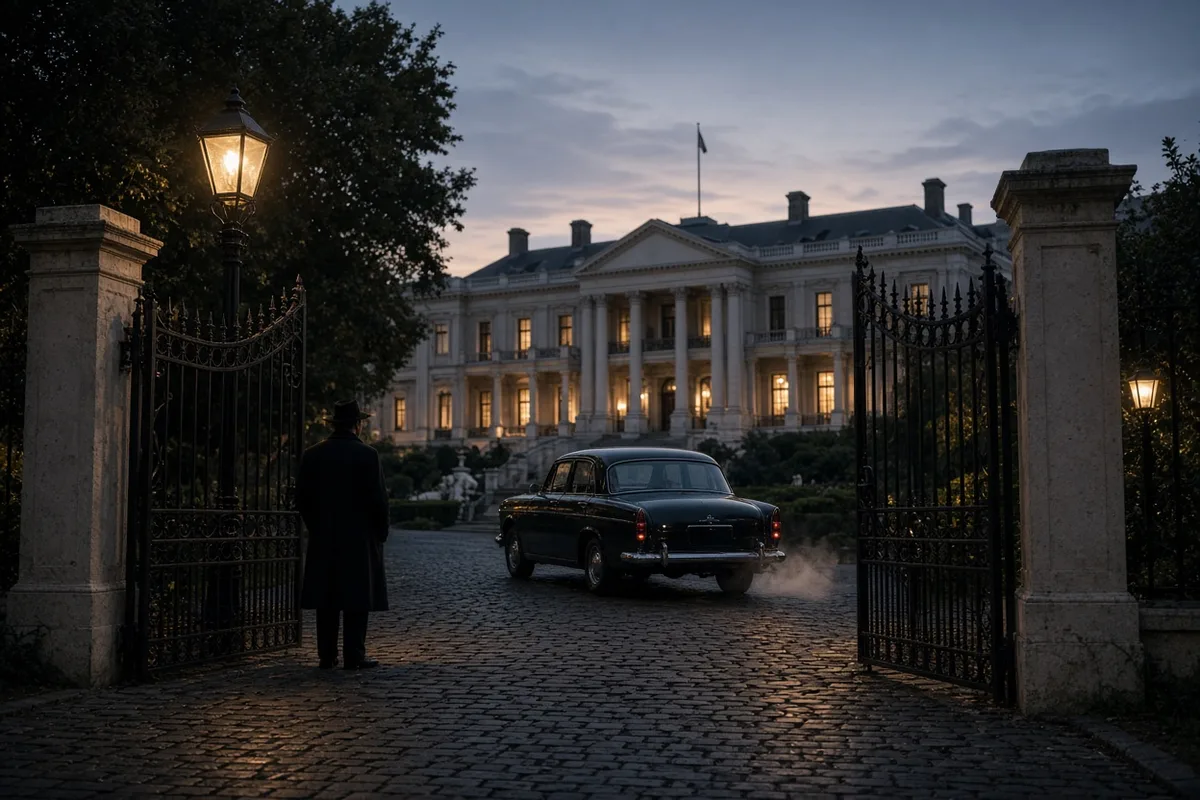
Brand’s final public statement appeared in the September 2022 issue of the Robben Island Museum newsletter. In it he described the 1994 lunch seating arrangement by naming the exact distance of three metres between his table and the head table, and he referenced the 1995 Christmas card date as 18 December. The newsletter print run totalled 8,500 copies distributed to registered museum members. Swart’s daughter, Maria van der Merwe, deposited an additional 37 pages of her father’s handwritten notes on 3 March 2023; these pages, dated 1988, recorded the precise number of tomato plants Mandela tended each season at Victor Verster.
The ferry schedule board at Robben Island was replaced on 15 January 2024 with a digital display showing real-time departures. The old board, measuring 1.2 metres by 0.8 metres, was transferred to the museum’s conservation workshop where technician Sipho Mokoena documented its surface condition and noted the 10:15 and 15:40 sailings still legible in faded paint. On 24 September 2024 the museum volunteer who had taken the 2018 photograph of Brand returned to the jetty and captured a second image of the empty bench where Brand had sat six years earlier; the new photograph’s metadata records the time as 10:12 and the file name as RI-Jetty-2024-09-24-001.
The foundation’s annual report for 2024 lists 289,000 visitors to the Houghton house museum between January and October, each receiving a wristband numbered sequentially from 000001 onward. The report also records that the original 1994 menu card from the Union Buildings lunch remains on permanent display in a climate-controlled case whose internal temperature is maintained at 18 degrees Celsius and whose humidity reading is logged daily at 45 percent. No further images or statements from the three warders appear in the foundation’s public accessions after the 2018 ferry log entry.