


Nicholas Winton and the 669 Children
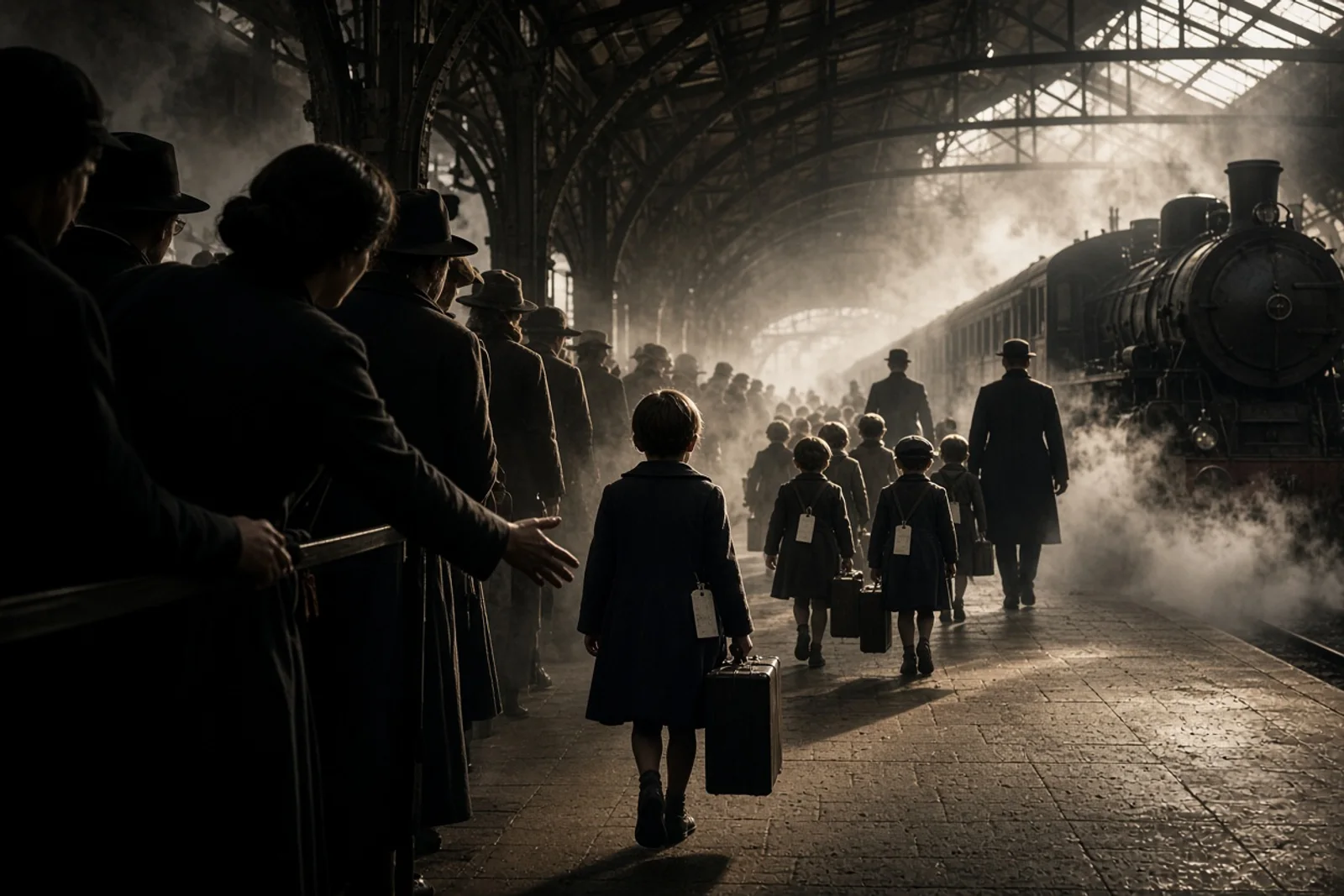
The tag around my neck said a number, not a name. My mother pinned it herself, her fingers cold as the platform stones, and she told me not to lose it no matter what happened between here and wherever the train was going. I was too young to understand why she was smiling and crying at once. I only understood the whistle, and the crush of other children with the same square of cardboard swinging against their coats, and the fact that she was not getting on.
Months before that morning, Prague had already begun to change shape around us. The Munich Agreement had handed the Sudetenland to Hitler in the autumn of 1938, and within weeks more than a hundred thousand people had come pouring across the rest of Czechoslovakia looking for a floor to sleep on. Camps went up that were never meant to hold what they held. I remember the smell of them before I understood what a refugee camp was — wet wool, boiled cabbage, too many bodies and not enough coal. My own family still had our flat, still had our furniture, but you could feel the ground tilting under everyone, Jew and gentile alike, waiting to see how far the tilt would go.

It was into that tilt that a young Englishwoman named Doreen Warriner had already stepped, arriving that October with nothing but a sense that Britain had betrayed the Czechs and a wish, as she put it herself, to do something about it. She worked for the British Committee for Refugees from Czechoslovakia, mostly trying to get political prisoners and adults out before the Gestapo lists caught up with them. Nobody was doing the same for the children. Not yet.
He arrived in the last days of that December, a stockbroker from London, thirty years old going on much older, brought over at the urging of his friend Martin Blake, a schoolmaster who had written to say: come and see this for yourself before you go skiing. His name, I would learn much later, had once been Wertheimer, changed by his own German Jewish family to sound safely, unremarkably English. He walked through the camps with Blake and came out the other side changed. He had already watched Kristallnacht burn through Germany's Jewish streets that November on the newsreels. He had already heard that Jewish organizations in Britain were pulling children out of Germany and Austria by the thousand on what people were calling the Kindertransport. What he saw in Prague told him nobody was doing it here, and that if nobody did, the children in front of him would not survive what was coming.
He did not ask permission first. That detail matters more than it sounds. He simply opened a Children's Section under the Committee's name, before anyone in London had agreed to let him, and began taking applications from a room in the Hotel Europa. Within days the queue outside his door stretched down the corridor and out onto the street. My mother stood in that queue for hours, holding my papers, holding my photograph, holding herself together while men and women around her did the same. Nobody spoke much. There was nothing to say to strangers that wasn't already written on your own face.

The office moved soon after to a proper address in central Prague, because a hotel room could not hold what was coming to it. Doreen Warriner was there. So was Trevor Chadwick. So was Martin Blake, moving between them. They took down names, ages, dates of birth, photographs pinned to forms with a pin that must have gone through a thousand small faces before the winter was over. I sat on my mother's lap while a stranger wrote my number into a ledger, and I remember being told to smile for the camera the way you smile for a birthday, and not understanding why my mother's hand was shaking on my shoulder while I did.
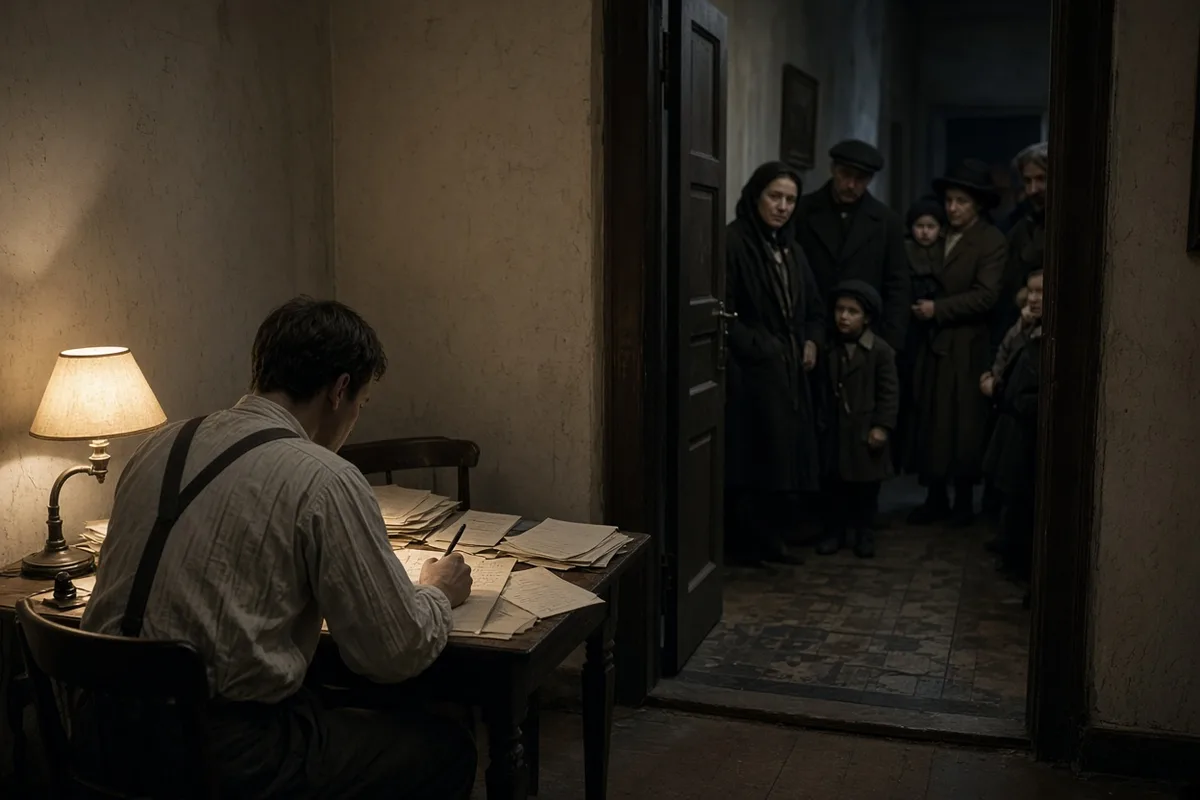
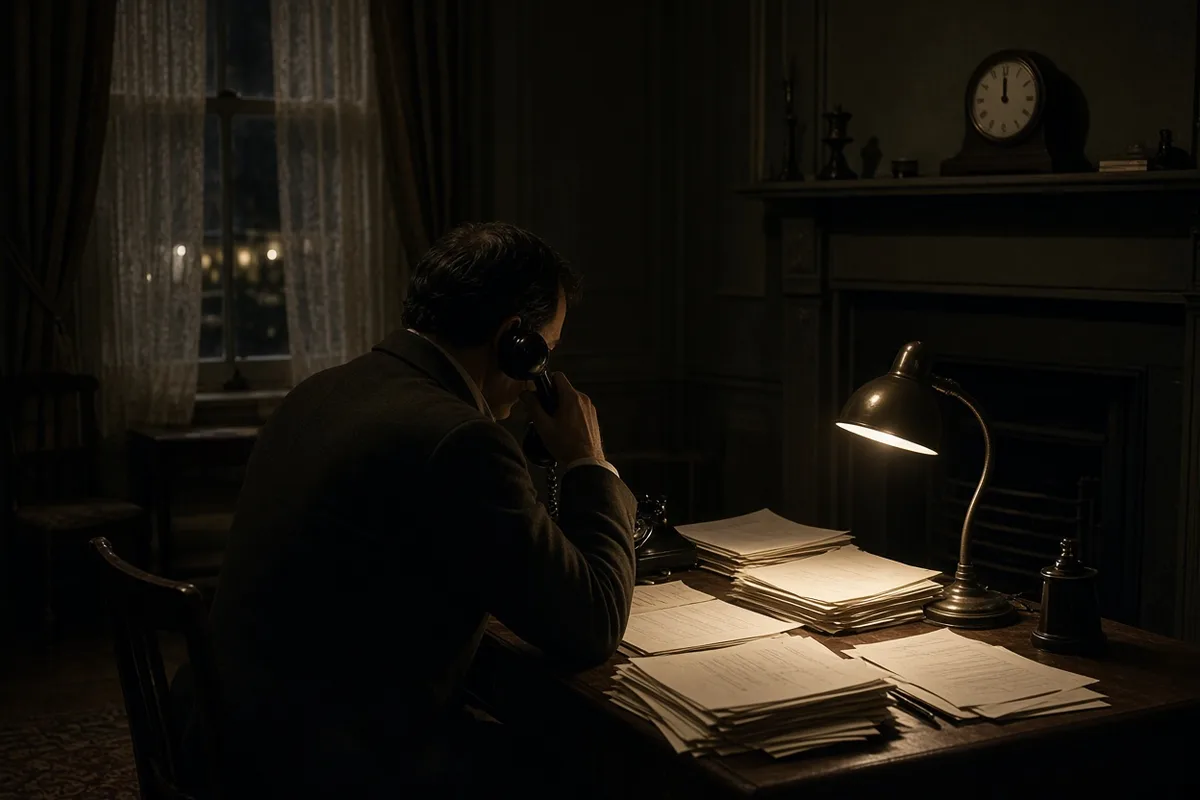
He went back to London almost at once, because the paperwork that mattered now was not in Prague. The British government would take unaccompanied children, but only against a guarantee of fifty pounds a head, money to ensure each child could one day be sent home again rather than become a burden on the state. Fifty pounds was not nothing in 1939. He had to raise it, family by family, stranger by stranger, and he had to find British households willing to open a spare room to a child who spoke no English and might arrive with nothing but a small case and a number pinned to a coat. He wrote letters to governments and embassies across the world asking for visas, for quotas, for anything. Almost all of them said no. Sweden said yes to a portion. Britain said yes, conditionally, and that conditional yes became the whole of the operation. By day he sat at his desk on the Stock Exchange floor, trading as he always had, because the work still had to pay for itself and for him. By evening and long into the night he became someone else entirely, writing letters, telephoning strangers, matching a child's photograph to a family's spare room by lamplight.
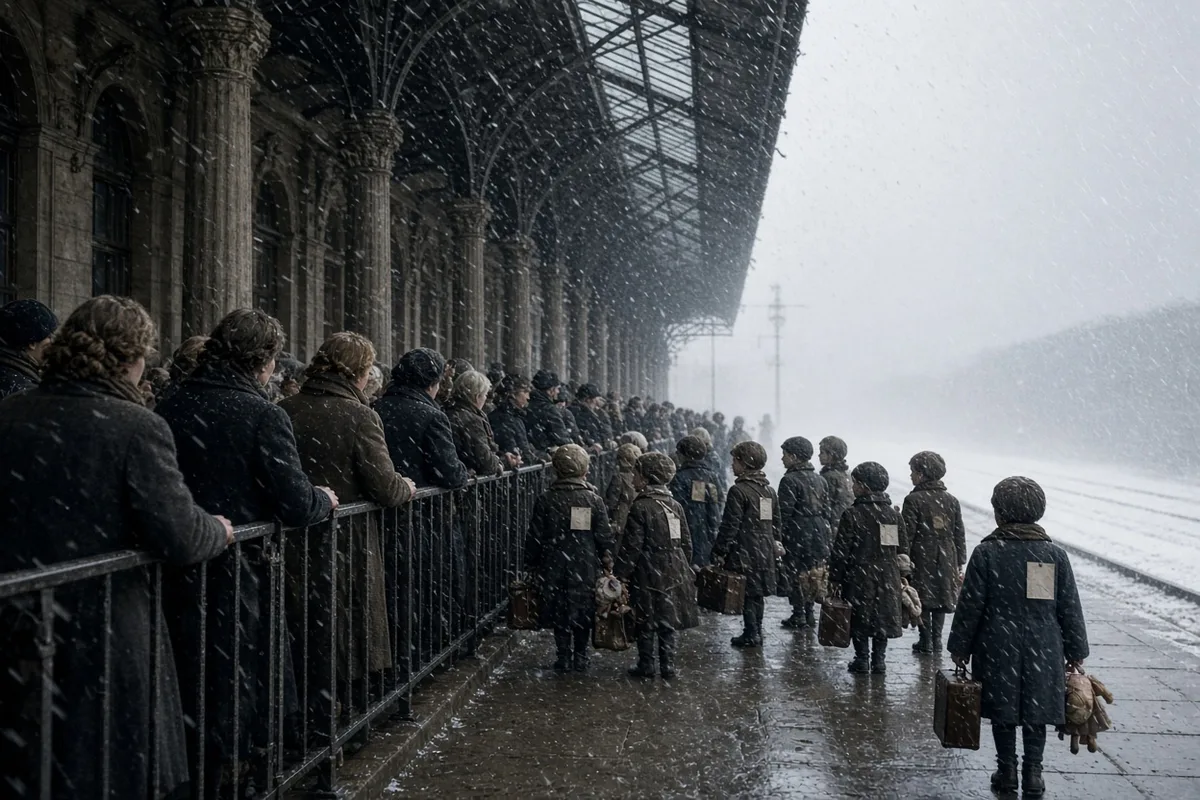
The first of us left by air, on the fourteenth of March, 1939. I was not on that flight — I would come later, by train — but I heard about it from the mothers still waiting in Prague, spoken of the way you speak of a door that has, against all expectation, opened. It left the day before the Germans came. On the fifteenth, the tanks rolled into Bohemia and Moravia, and the country that had issued our passports stopped existing in any form that could protect us. After that there was no flying anyone out. The trains would have to do it instead, crossing Germany itself, in plain sight of the country we were fleeing, all the way to the Atlantic coast, and then a ship across the water to England.
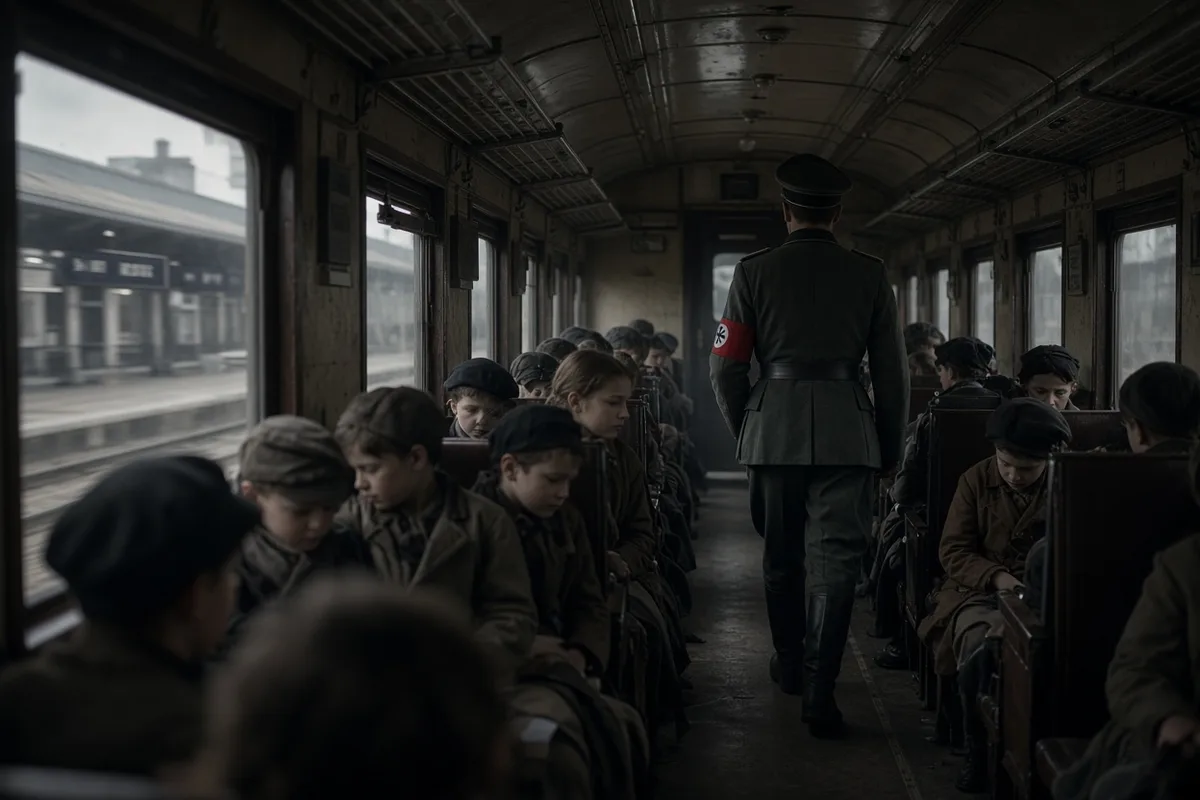
I boarded one of those seven trains that followed. I do not remember which month, only that it was warm enough to not need the coat I was wearing, and that I wore it anyway because my mother had sewn something into the lining she did not tell me about. The carriage smelled of other children's fear, which has its own smell, sharper than an adult's. Somewhere past the frontier the train slowed and German officials came through checking papers, and every child on that carriage went silent in a way children are not naturally silent, and then the train moved again, and somebody's mother's silence became somebody's held breath let out. We crossed into Holland, then onto a boat, the Channel gray and enormous under us, and none of us had ever seen so much water in our lives.
At the London terminus there were people standing with names written on cards, the way you'd meet a stranger off a boat, because that is exactly what we were to them. Families who had answered a stranger's letter and agreed to take in a child they had only seen in a photograph pinned to a form. Some of the placards had our numbers instead of names, because that was all the family had been given. I remember watching children peeled away one by one from the group I had crossed an ocean strip with, each one led off by the hand of someone speaking a language none of us yet understood, and feeling the platform grow emptier and colder the longer I stood there waiting for my own name to be called.
We grew up in England not knowing, most of us, what was happening to the people we had left behind. Letters came for a while and then stopped coming. Some of us would learn only after the war that a mother, a father, an aunt, a whole street of neighbors had gone into a place with a name we did not yet know how to say, and had not come out. For some of us, one relative survived out of a dozen. I have known people from those trains who could count on one hand the family members left to them, and still have fingers spare.
The last of the trains pulled out of Prague on the second of August, 1939, carrying its own carriage full of children with tags around their necks, not knowing it would be the last that made it. A month later Germany invaded Poland, Britain declared war, and the corridor across the continent that had carried eight trainloads of children to safety closed as suddenly as it had opened. Whatever plans existed for more never left the drawing board. The war simply arrived and stopped the clock on the whole operation, mid-motion, the way a hand stops a swinging door.
He never spoke of it afterward. Not to colleagues on the Exchange floor, not to new friends, barely to his own family. He married, he had children of his own, he moved to Maidenhead, and for the better part of fifty years the story of the trains sat folded into a scrapbook in his attic — names, photographs, the same small pinned faces from the Prague office — untouched, unread by anyone but him, if even by him.
It was his wife who found it, going through the attic the way you go through an attic when you've lived somewhere long enough that the past has started to accumulate above your head. She opened the scrapbook and found names she had never heard him mention, ledgers of children she did not know existed, and a story her husband of decades had simply never told.
By February of 1988 that scrapbook had made its way, through channels I still do not fully know, into the hands of a television programme called That's Life, hosted by Esther Rantzen. On the twenty-seventh of that month, the show brought him into its studio audience under some pretext or other, an old man in his late seventies sitting among strangers, expecting nothing in particular. I was there myself that day, invited on grounds I did not question either, told only that the programme wanted to speak about wartime memories. I did not know his face. I did not know, sitting three rows back, that the man near the front had a number in a ledger fifty years old with my own photograph pinned inside it.
Rantzen held up the scrapbook to the cameras and began to read from it. She read the name Vera Diamant, a woman sitting in that same audience, and the camera found her, and beside her, close enough to touch, sat the old man neither of them had recognized as anything but another audience member. Rantzen said his name. She said what he had done, forty-nine years before, on trains that had carried children like Vera and like me out of a country that no longer existed under that name. The studio went silent in that particular way a room goes silent when something too large to process has just been said aloud.
Then Rantzen asked whether anyone else in that audience owed their life to the man sitting in seat whatever-it-was, and asked them to stand.
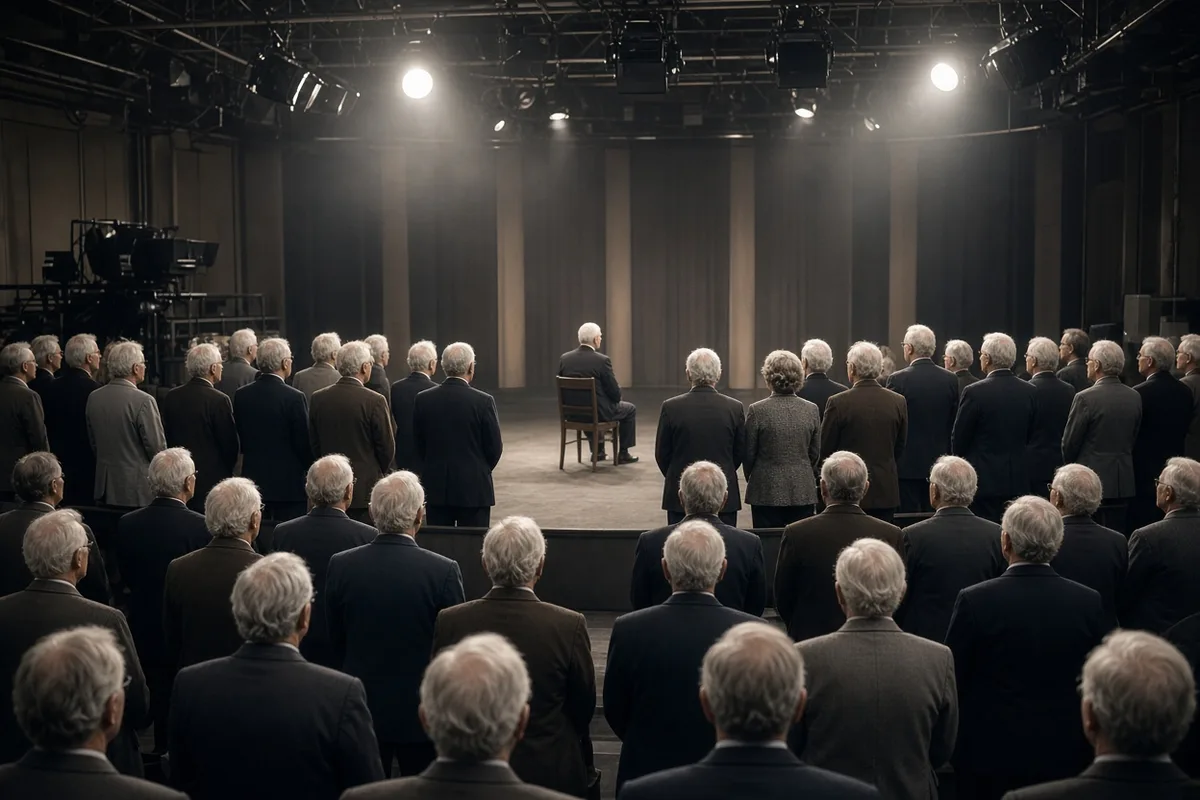
I stood. I was not the only one. Around him, row after row, people I had never met and would never have recognized rose to their feet, most of us gray-haired ourselves by then, some with grandchildren of our own, all of us tagged once, decades ago, with a number instead of a name. He turned in his seat to look at what had risen around him and could not, for a moment, speak at all. Vera Diamant, grown now into Vera Gissing, leaned toward him and said the only two words that seemed to fit the room. Thank you. He wiped his eye with the back of his hand, an old man ambushed at last, after fifty years of silence, by the exact size of what he had done.
Later they would count it properly. The scrapbook itself listed six hundred and sixty-four names. Researchers working on a documentary years afterward found five more children who had traveled on transports he financed but who had never made it into his own ledger. Six hundred and sixty-nine, in the end, though even that number is really just the ones anyone managed to write down. I think of the ones who did not make the trains at all, whose applications sat in that Prague office when the last one pulled out on the second of August, the ones the war simply closed the door on before their turn came.
I still have the tag, somewhere, in a drawer I do not open often. It has no name on it. Just a number, and the fading ink of a stranger's handwriting, and underneath it, if you hold it to the light, the shadow of a pin-hole where a photograph of a child was once fixed, briefly, to a piece of paper, so that someone she would never meet could decide, in an office thousands of miles from anywhere she would ever call home, that she was worth saving.