

Nvidia reportedly discusses Reflection AI acquisition
Reflection AI introduced Beam on October 5, 2026, its first open-weight model that users could modify themselves. Co-founders Misha Laskin and Ioannis Antonoglou put forward a sparse mixture-of-experts system with 501 billion total parameters and 23 billion active at any one time. In a sparse mixture-of-experts design, each query is routed only through the specialist subnetworks needed for that task, leaving the rest idle so a model this large can still answer without engaging every parameter. An open-weight model releases its trained parameters so others can download them, run them on their own hardware, and change them without asking the original lab.
The work was aimed at coding, reasoning, and agentic loads. An agent, in this sense, is a system built to carry a multi-step task through to a finished result rather than stop after a single reply. Laskin had stated the underlying research pressure in one plain sentence: someone needs to solve the depth problem too. Reflection reported that Beam was still in final red-teaming and evaluations. The weights, technical report, model card, and developer materials were promised for later in October. They were not yet public. Outside developers could not inspect the parameters or reproduce the company’s claims on their own machines; early access existed only as a signup list while the calendar and the unreleased weights both kept moving.
Reflection AI was founded in 2024 by Laskin and Antonoglou, both former Google DeepMind researchers who had worked as core contributors to the development of Gemini. They carried those credentials into a new lab built around open-weight models. On October 9, 2025, the company raised $2 billion at an $8 billion valuation, with Nvidia among the investors. Reuters later corrected a description that had named Nvidia as the lead investor. A financing set in March produced a $25 billion pre-money valuation; Reflection’s newsroom recorded the close on April 23, 2026. Nvidia’s own investment reached $800 million, enough to rank it among Reflection’s largest shareholders. The people who started the company, the capital that valued it first at $8 billion and then at $25 billion, and Nvidia’s existing stake stood complete before any later talk of a fuller arrangement.

On October 10, 2026, the Financial Times reported that Nvidia and Reflection had entered early-stage talks covering a possible acquisition or a deeper investment. Multiple people familiar with the matter told the newspaper that a deal could be reached within weeks, while cautioning that the discussions could still fall apart. A post circulating on X carried the same claim. Neither Nvidia nor Reflection confirmed the report. The structures under consideration ranged from a full purchase of the company to an added equity investment to an expanded arrangement for chips and computing capacity. One path under discussion was an acqui-hire, under which Nvidia would hire Reflection’s employees and secure licenses to its technology without acquiring the firm outright. Nvidia had used that same structure for its $20 billion Groq deal in December of the previous year. The Financial Times reported that it could not establish the terms under discussion.
In September Nvidia had paid $13 billion for Hugging Face, the open-source AI model repository. That figure sat well below Reflection’s last mark. No deal price had been established, and every structure on the table remained open. Nvidia already fielded its own open-source line under the name Nemotron, yet it still lacked a frontier-class proprietary model. That gap widened as low-cost open models from Chinese developers, DeepSeek among them, moved quickly through the same market. The rise of those systems sharpened the case for a domestic open-source stack that could be built and maintained inside the United States. In July, Jensen Huang insisted the country had to construct that ecosystem itself, describing it as essential to creating opportunities for innovation and prosperity across America.
Open-weight models offered enterprises and governments a path the closed labs did not: the trained parameters could be downloaded, run on hardware the buyer already controlled, and modified for local work at a lower cost than licensing a locked system. Every such deployment still required chips. A closer tie to Reflection would push Nvidia further into both halves of the exchange—the processors that train and serve the models, and a frontier open-weight effort whose users would keep needing more of them—extending the company’s reach from silicon into the models themselves. The scale of compute already committed to Beam showed how tightly those two sides of the business were bound.

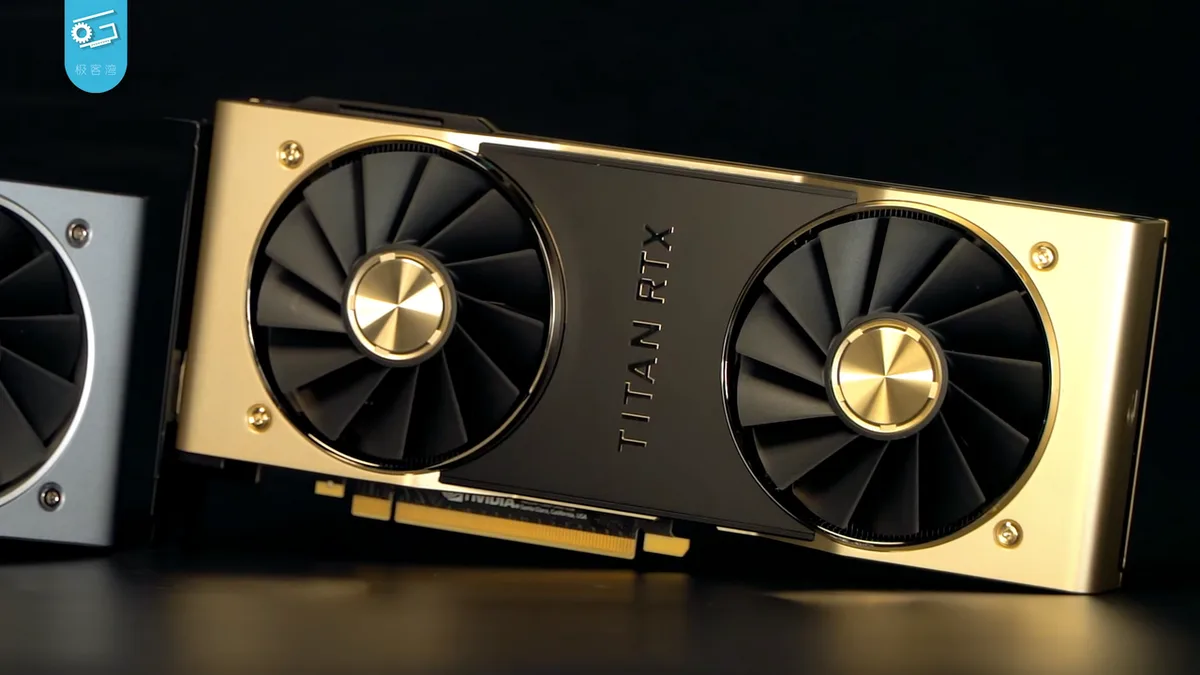
Beam trained on 23.8 trillion tokens, the small units of text and code a model processes while it learns, and more than 100 million reinforcement-learning rollouts. In reinforcement learning, a model tries sequences of actions, receives a score for each attempt, and adjusts toward the attempts that succeed. The rollouts are those scored tries, run again and again until the model’s behavior improves. The company reported that the full training effort used 10,500 Nvidia GB300 graphics processing units over four weeks. A graphics processing unit, or GPU, is the specialized chip built to handle the mass of parallel calculations that modern model training requires.
The cost of compute did not stop when the training window closed. Reflection pays SpaceX $150 million per month for compute. Arrangements with SpaceX have been described elsewhere as worth up to $6.3 billion. A separate deal with Nebius is worth more than $1 billion. Reflection also plans a 250-megawatt AI data center in South Korea with Shinsegae Group, set to run on Nvidia technology. The 10,500 GPUs finished their four weeks. The $150 million monthly payments to SpaceX did not.
Nvidia held $99.9 billion in cash and short-term investments at the end of last quarter, dry powder enough for large mergers and acquisitions. Any closer bind—a full purchase, an acqui-hire, or an expanded arrangement for chips and computing capacity—would sit beside customers who also train their own models. Beam’s weights were still unreleased. Outside developers could not yet download them or test the lab’s reported results on hardware they controlled. The October calendar advanced. The unconfirmed talks advanced with it. The weights stayed offline.