


Otto I Ends Magyar Threat at Lechfeld
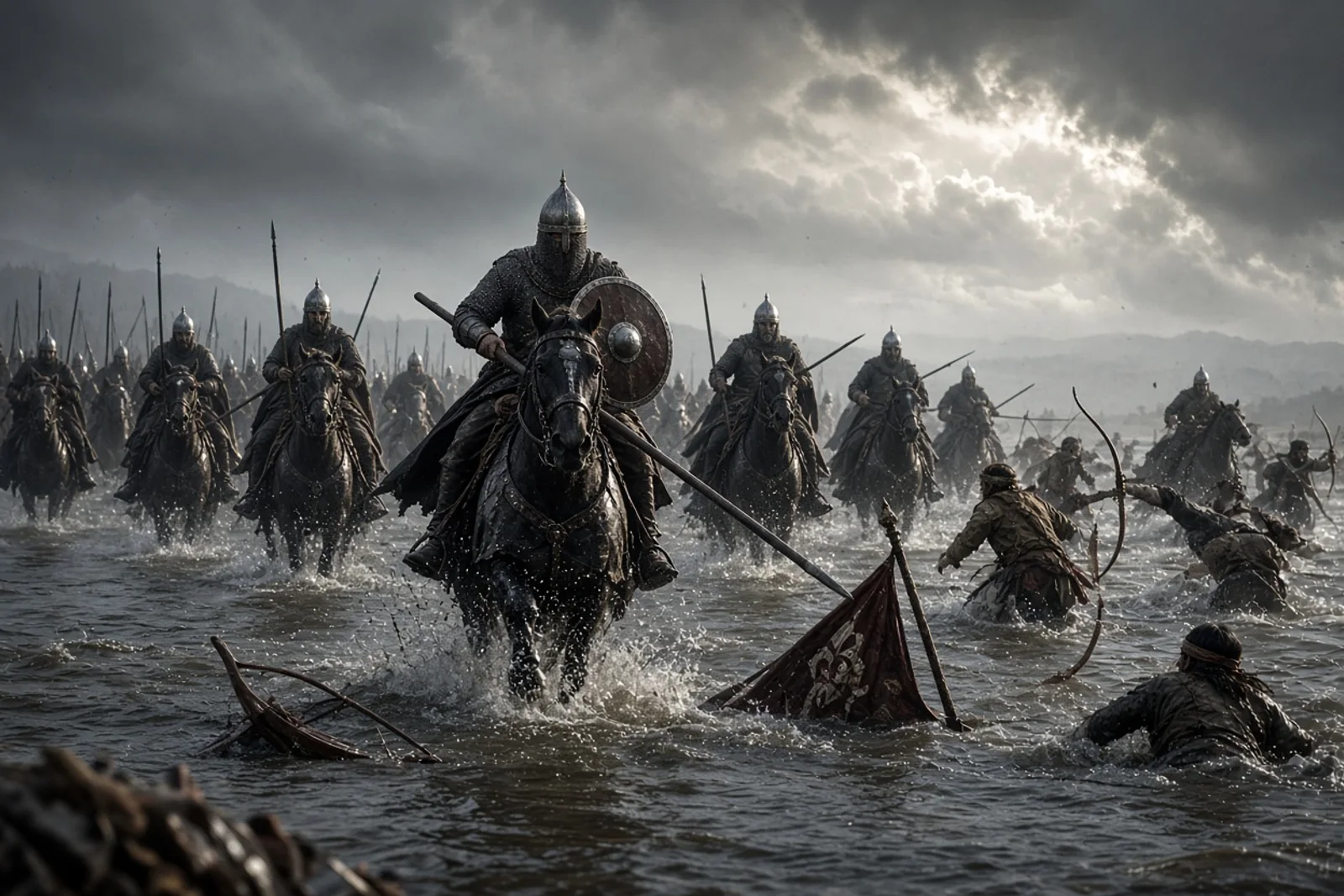
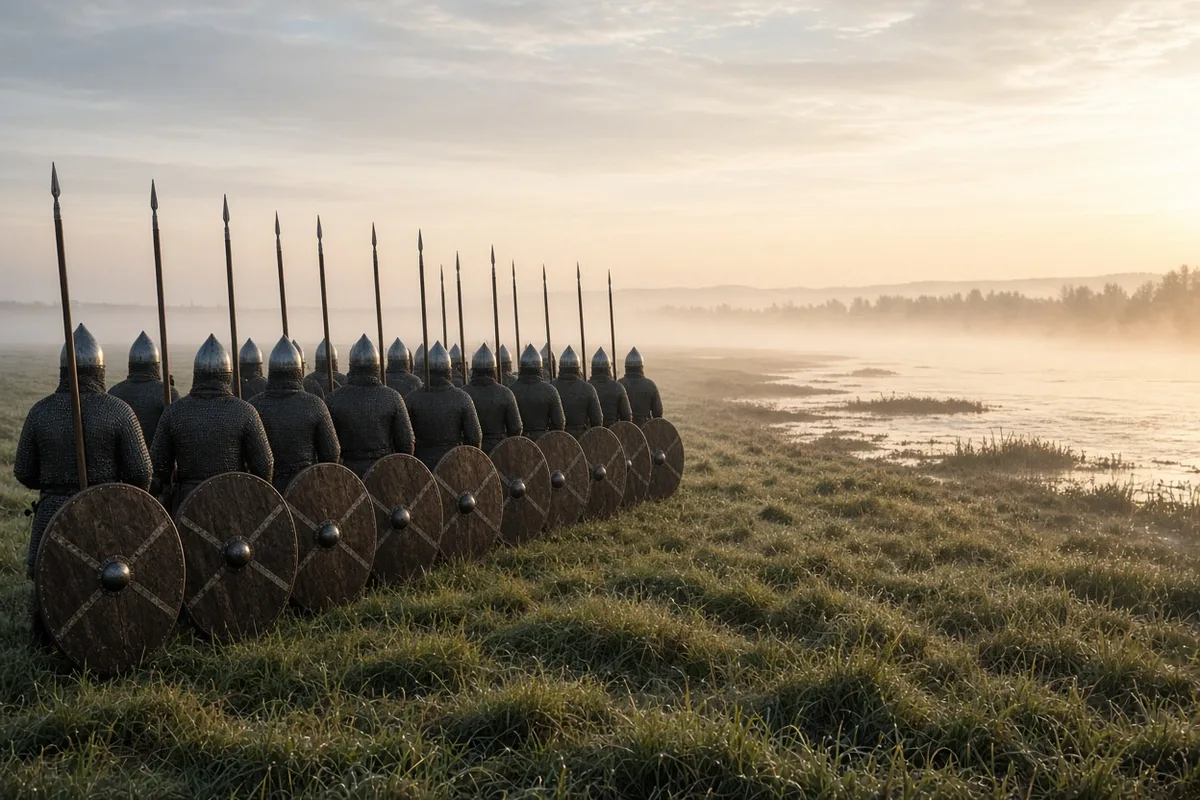
We moved at first light through the broken ground west of Augsburg, eight legions strung out along a track that twisted between stands of pine. My place was in the third Bavarian line, shield on the left arm, spear balanced across the shoulder. The air still carried the cool of night. Ahead the ground opened into the flat stretch where the Hungarians waited with their bows.
We had fasted the day before. At dawn the priests moved among the ranks. Each man touched the next and swore the same words: first to the king, then to the man beside him. Conrad rode past our front on a grey horse, mail bright at the shoulders. Men straightened when they saw him. He had come in the night with fresh Franconian riders, and the camp had grown louder for it.
The order came to advance under the trees so the arrows would lose force. We stepped over roots and low branches. From the left I heard the first shafts strike wood and leather. One man dropped without sound. Another cursed and pulled a point from his thigh. The line held. We kept the trees between us and the open ground until the order to close.
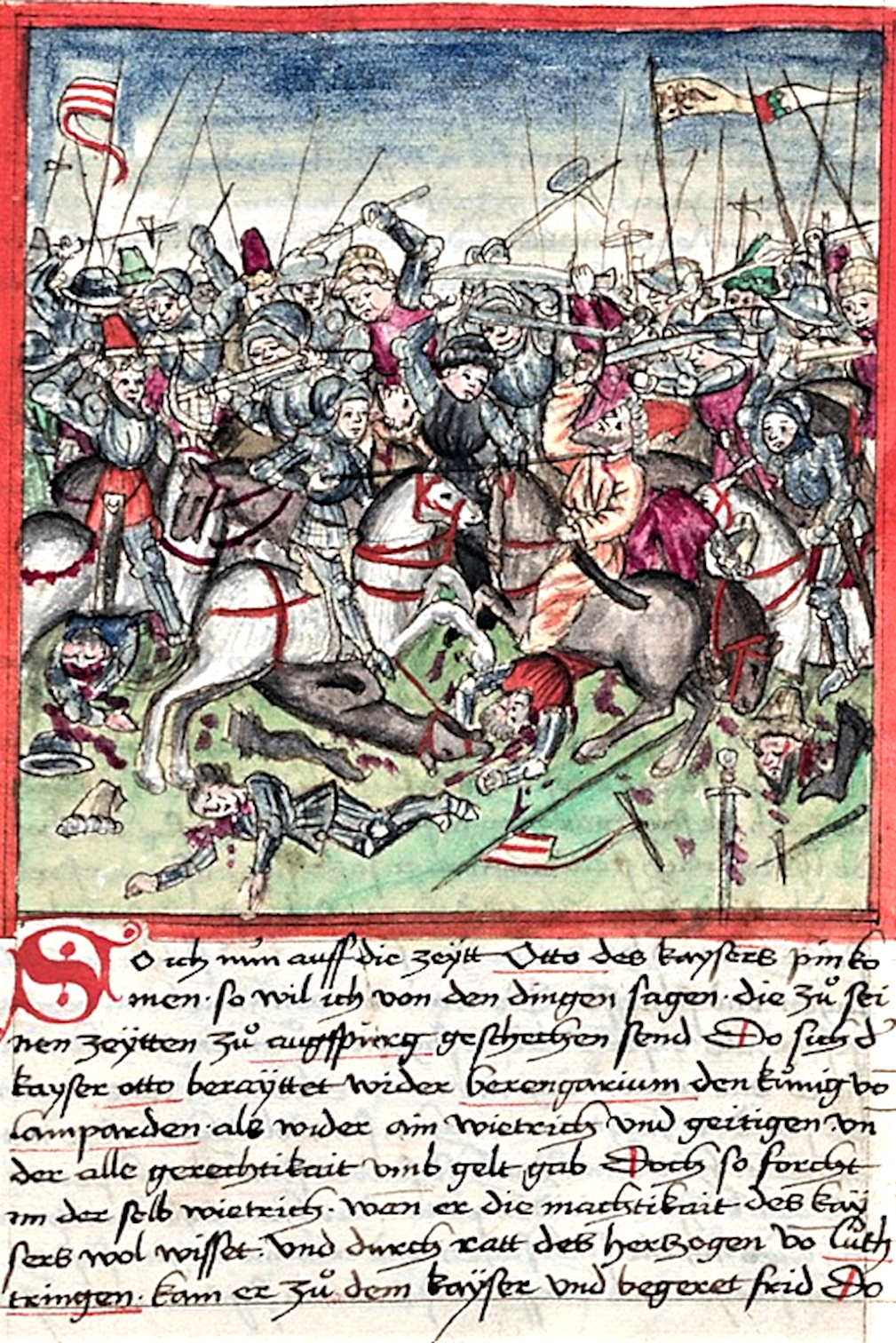
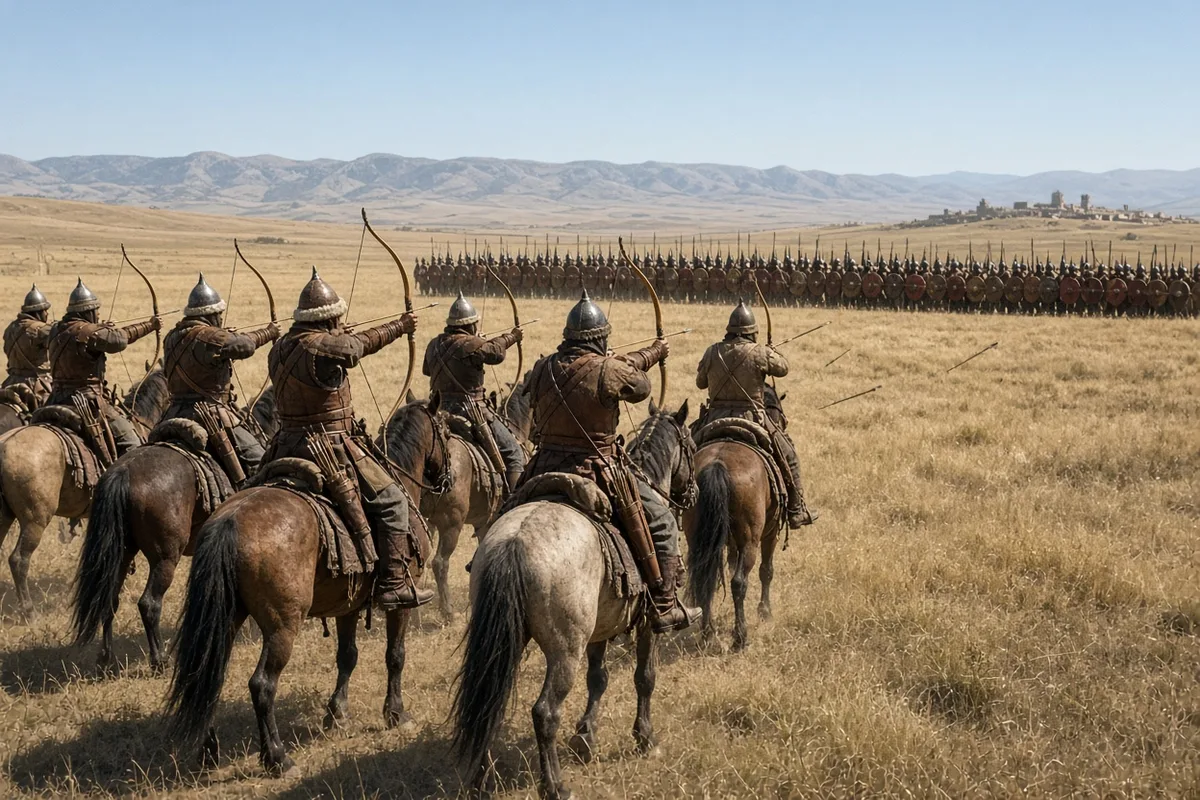
When we reached the edge the Hungarians wheeled and loosed again. Their horses moved like a single herd. Our heavy cavalry answered from the right, Conrad at the head. The shock carried through the ground into my boots. Spears met lighter armor. Men and horses went down together. The Hungarians gave ground but did not scatter. They fell back toward the Lech in order, still shooting over their shoulders.

Otto did not press the pursuit. Messengers left camp before dark with orders for every ford and bridge east of us to be held. We returned to the tents around Augsburg as the light failed. Rain began in the night, light at first, then steady. By morning the fields were soft and the river rose.
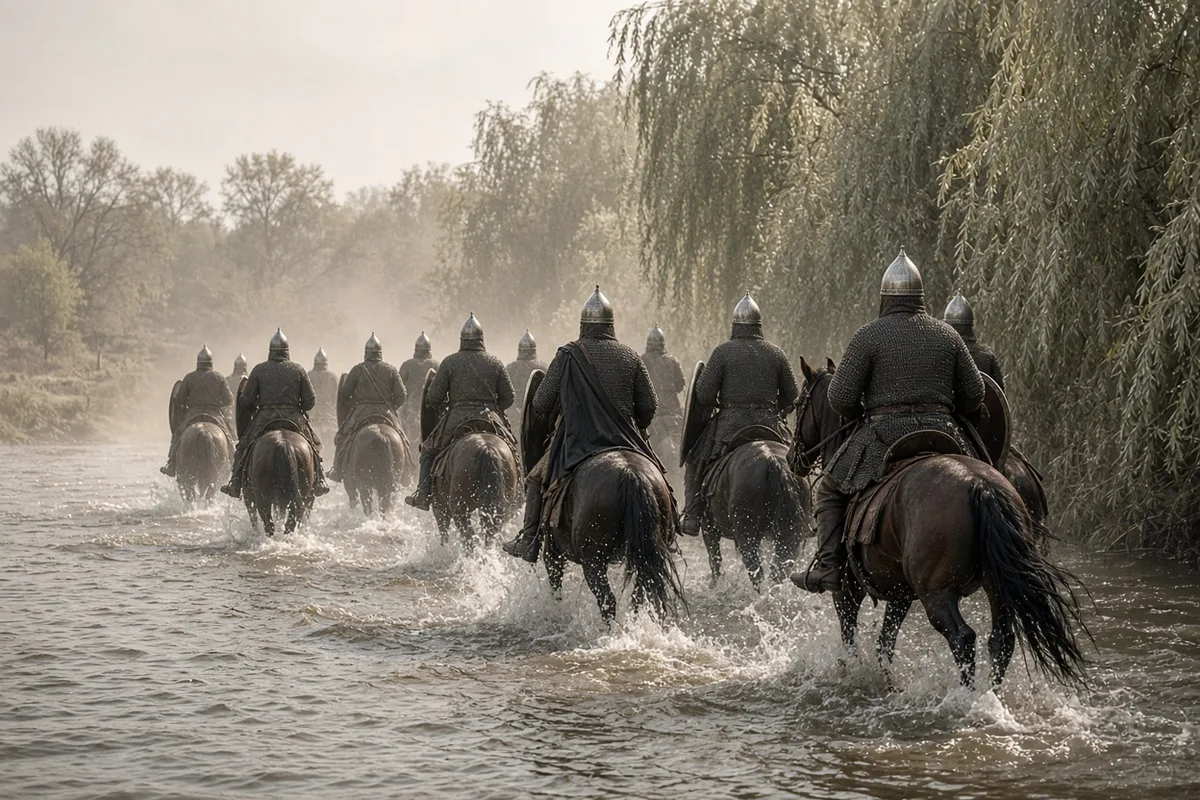
On the second day the Hungarians tried to cross lower down. Water reached the bellies of their ponies. German detachments waited on the far bank and drove them back into the current. Some drowned. Others turned upstream and were caught between our riders and the flooded banks. I spent that afternoon with a party sent to cut off stragglers. We found three men trying to lead wounded horses through a stand of alders. They dropped their bows when they saw us. We took them alive.
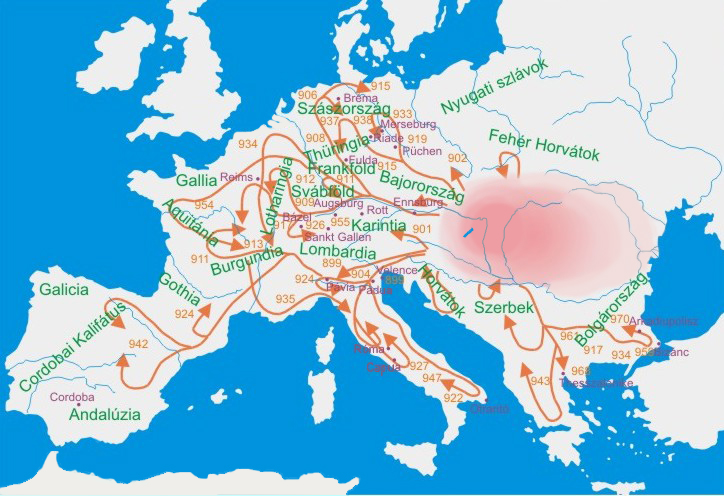
The third day the rain still fell. The Hungarians who remained moved in smaller groups, their arrows spent or wet. We followed the tracks through mud that pulled at every step. Near midday we came on a larger band near the river. Their leaders wore richer gear, gold at the belts. One carried a banner of red cloth. Conrad’s men closed from one side while our Bavarian line blocked the other. The fight was short. The banner fell into the water and was swept away.
Bulcsú and the two chieftains Lél and Súr were among those taken. They were bound and sent under guard to Augsburg. We stayed on the field two more days collecting what could be used and burning what could not. The bodies of their dead lay where they had fallen, already beginning to swell in the wet heat.
When the last crossings were cleared, Otto ordered the army to rest. Conrad rode among the wounded that evening, speaking to men by name. Some said the king would be proclaimed emperor for this. Others spoke only of the river and the rain that had finished what the charge began. I sat with my shield across my knees and listened to the water still rising in the dark.
We marched the prisoners north under guard the next morning, Bulcsú riding with his hands lashed to the saddle pommel and Lél beside him still wearing the silver torque taken from a dead Franconian at the first clash. Súr walked on foot after his pony foundered in the mud near the Wertach ford. The column reached Regensburg on the fifteenth day of August, where Duke Henry’s men took them in charge. Four days later the three were hanged from the walls above the Danube gate while the townspeople watched from the riverbank. The executioner used ropes of new hemp, and the bodies turned slowly in the wind until the ropes were cut and the corpses thrown into the current. Otto himself gave the order, according to the messenger who returned with the news, saying the same words he had spoken at the muster outside Augsburg: no quarter for those who broke the peace sworn at the river crossings.
I remained with the Bavarian levy another month, clearing the last Hungarian stragglers from the Isar valley. We found twenty-three ponies abandoned near Freising on the twenty-third of August, their saddles still bearing the stitched felt panels the Magyars used for archery. The animals were driven to the royal stud at Regensburg and branded with Otto’s mark. By the first week of September the last raiding parties had withdrawn across the Enns, and the king dismissed the greater part of the host. I returned to my holding near the Ammersee with two captured bows and a share of the silver taken from the chieftains’ baggage. The priest at the village church recorded the names of the twenty-seven men from our valley who had not come back, listing them in the margin of the missal so that masses could be said on the anniversary of the Lechfeld fight.
In the spring of the following year Otto crossed the Alps with an army of twelve thousand and entered Pavia. He remained in Italy through the winter, settling disputes among the Lombard counts and receiving the iron crown at Pavia on the twenty-fifth of December 951. Messengers brought word each month of his movements, and men in the villages repeated the figures: three thousand horses lost to the Magyars at the Lech, yet the royal stables at Frankfurt still held enough remounts to field four new squadrons. When Otto returned north in 952 he confirmed the Bavarian privileges at a diet held at Augsburg itself, granting the bishopric an additional toll on the Lech bridge that brought in four hundred silver pennies each year. The same assembly renewed the ban on Hungarian traders entering the duchy without royal letters.
Ten years after the battle I stood again on the field west of Augsburg when Otto passed through on his way to meet the eastern envoys. The plain had been plowed and sown with rye, yet the furrows still turned up arrowheads and broken buckles. The king rode at the head of two hundred armored men, his banner the black eagle on gold that had been carried at the Lech. He stopped long enough to speak with the reeve of the village and asked after the condition of the fords. One of his chaplains read aloud from the chronicle kept at Saint Emmeram’s, the passage describing how the rain had risen three feet in a single night and turned the Hungarian retreat into slaughter. The words were those of a monk who had spoken with survivors, and the numbers given were seven thousand dead on the Hungarian side against nine hundred and fifty-two on ours.
Otto was crowned emperor at Rome on the second day of February 962 by Pope John XII in the basilica of Saint Peter. The diploma he issued the following week granted the see of Augsburg the right to mint its own coin and to hold an annual market on the feast of Saint Afra. The document named the battle explicitly, stating that the victory had secured the frontier so that pilgrims might travel without fear. I did not see the crowning, but the text of the diploma was read in the cathedral square at Augsburg before the assembled freemen, and the notary counted out the exact privileges granted: exemption from the royal host except in case of invasion, and the revenue from three salt pans near the river.
In the years that followed the raids ceased. The Hungarian leaders who survived turned to settlement along the Tisza, and their envoys appeared at the Easter court in Quedlinburg in 973 to offer tribute of thirty falcons and two hundred marten pelts. My own son rode with the Bavarian contingent that escorted the gifts north, and he returned with a silver arm ring given by the emperor’s marshal. The ring bore the inscription “Otto imperator” in letters cut by a Lombard craftsman. By then the Lech bridge had been rebuilt in stone, its three arches spanning the narrowed channel where the Hungarians had drowned. The toll collected there paid for a new tower on the cathedral and for the bronze doors cast in 1010 that still stand at the west entrance.
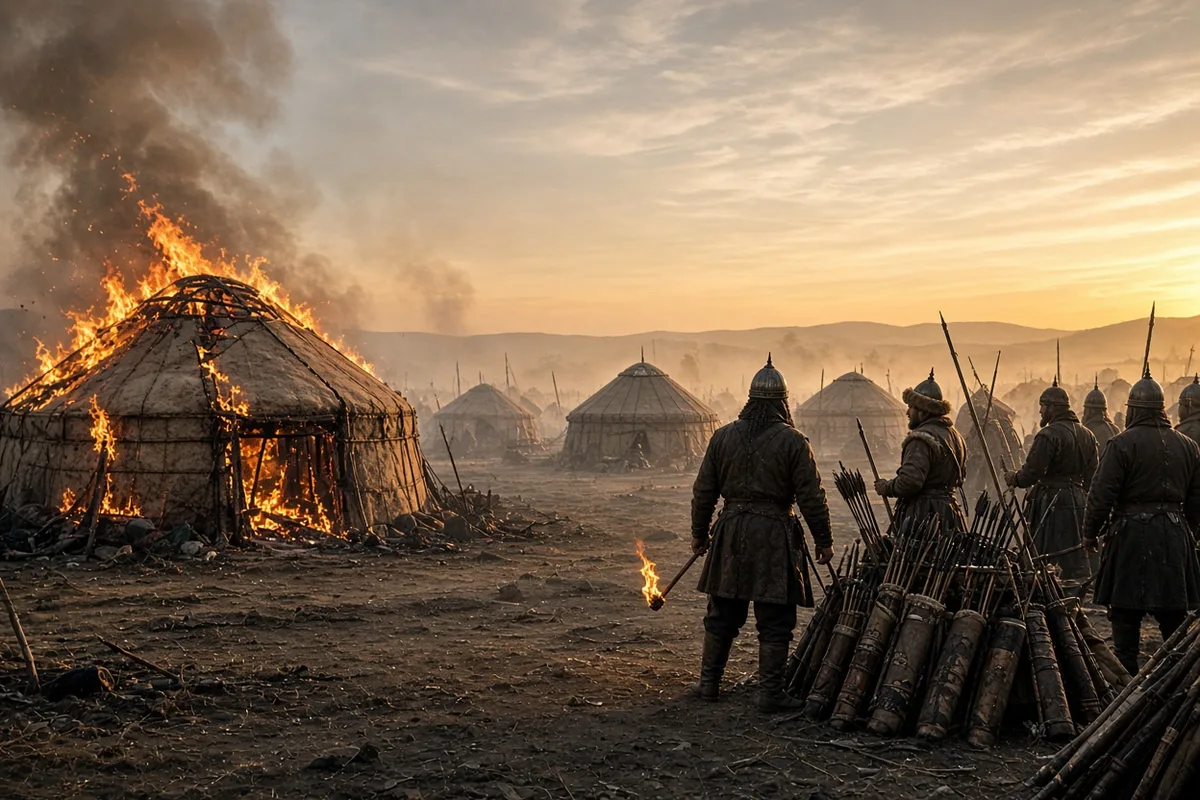
I lived to see the fiftieth anniversary of the battle, when the bishop ordered a stone cross raised on the low ridge where Conrad’s charge had broken the first Hungarian line. The mason cut the date “10 August 955” into the base and the names of the three chieftains beneath it. On the day the cross was dedicated I walked the field once more, leaning on a staff because the old wound in my thigh had stiffened. A boy from the village asked me which direction the arrows had come from, and I pointed to the line of pines still standing on the western edge. The trees had grown taller, their trunks now thicker than a man’s shield, yet the ground beneath them remained the same broken ground where we had first felt the shafts strike.
The boy stayed beside me until the bishop’s procession moved on toward the new chapel at the village edge. He asked how many arrows had struck the pines that day, and I told him the count we had gathered afterward came to four hundred and seventeen shafts pulled from the trunks and the ground beneath, most of them still fletched with the gray goose feathers the Magyars preferred. The reeve noted the number in the margin of the parish roll so the woodward could claim payment for the damaged timber when the next royal forester rode through.
Two winters later the same reeve led a party that widened the track into a proper road running east from the field toward the Lech bridge. The work took forty-three days and used stone taken from the old Roman foundation near the Wertach ford, each block numbered and reset so the carts bringing salt from Reichenhall could pass without sinking. I walked the new stretch once with my grandson and counted the ruts left by the supply wagons that had followed Otto’s host in 955; the deepest still measured a hand’s breadth across and held water after every rain.
In the year 1030 the bishop of Augsburg ordered a second stone set beside the cross, this one recording the grant of market rights made by Otto at the diet of 952. The inscription listed the tolls: one penny for each horse, half a penny for each man on foot, and two pennies for every wagon carrying Hungarian pelts or falcons. The stone mason copied the figures from the original diploma kept in the cathedral treasury, and the reeve read them aloud each Michaelmas when the accounts were settled.
My son’s son rode with Duke Henry’s levy when the emperor came south again in 1040 to settle the frontier along the Enns. He returned with a bronze buckle taken from a later raiding party that had been turned back near Melk, and he placed it on the altar at our village church beside the two bows I had brought home. The priest entered the gift in the same missal that still carried the names of the twenty-seven men from our valley, adding the date and the weight of the buckle, which came to fourteen ounces.
By 1100 the pines on the western edge had been cut for ship timbers bound for the Danube, and the open ground was divided into strips measured by the royal rod. The new holders paid an annual rent of twelve silver pennies each to the see of Augsburg, the sum fixed in the charter issued after the Lechfeld victory and renewed at every change of bishop. One strip still bears the name “Bulcsú’s acre” in the terrier kept at the cathedral, though no one remembers which chieftain once lay there.
The stone cross stood through the rebuilding of the Lech bridge in 1298, when three new arches replaced the timber spans and the toll house was moved to the eastern bank. The mason who reset the cross cut an additional line beneath the chieftains’ names, noting that the river had been measured at fourteen feet above its summer level on the night of the tenth of August 955, according to the account preserved at Saint Emmeram’s. The water mark was still visible on the bridge pier when I last crossed it in my eighty-third year.
In the spring after my ninetieth winter the parish priest brought a parchment copy of the 962 diploma to the field so that the freemen could hear the privileges read once more before the cross. The notary counted out the clauses in a clear voice: exemption from host service except in case of invasion, the right to hold the Afra market, and the revenue from the three salt pans. When the reading ended, the men walked the furrows and turned up two more arrowheads and a single silver penny of Otto’s mint, its edge still sharp enough to cut thread.
The last time I stood on the ridge the cross had been enclosed by a low wall of field stones gathered from the same broken ground where we had formed the line. A traveler from the Italian court stopped to copy the inscriptions into his book and asked whether any man still living remembered the rain that night. I gave him the names of the three chieftains as they had been spoken at the hanging, and he wrote them in the same order the executioner had used when the ropes were cut and the bodies dropped into the Danube current below the Regensburg gate.