



Book argues Northern Ireland peace rested on silence over justice
In 60 seconds
- In December 1972 the IRA abducted Jean McConville, a Belfast mother of ten; neighbors watched and said nothing for decades.
- Dolours Price and Brendan Hughes became militants through inherited grievance and shocks like Burntollet, then broke silence when they felt the peace betrayed them.
- Keefe lays out testimony from Hughes and Price placing Adams in IRA leadership and the McConville operation; Adams has always denied membership.
- Boston College promised paramilitary interviewees sealed tapes until death; police subpoenas forced partial release and collapsed that premise.
- McConville's remains turned up by chance on a County Louth beach in 2003; no one has been convicted for her murder.
- The Good Friday Agreement traded early releases and limited justice for stability, leaving families and some combatants without reckoning.
The big idea
Keefe argues that societies exiting internal political violence often cannot afford the whole truth, so peace rests on managed silence instead of full accounting. Political transformation in Northern Ireland required a public denial of the violent past that foot soldiers had been ordered to create.
The book in brief
On a December night in 1972, masked people, some of them women, pulled Jean McConville from her flat in Divis Flats, Belfast. The widowed mother of ten was never seen alive again. Her children scattered into care. Neighbors who watched said nothing. Keefe anchors the book on this single crime because it shows how IRA suspicion of informing, true or not, terrorized ordinary Catholic communities and enforced their silence.
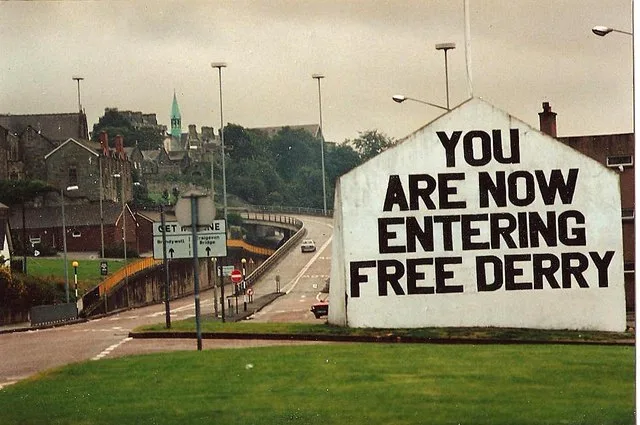
He then traces how militants were made. Dolours and Marian Price came from a republican family; the 1969 ambush of a civil rights march at Burntollet Bridge convinced Dolours that nonviolent reform was futile. The sisters drove a car bomb to London in 1973, were caught, and hardened further under force-feeding during a prison hunger strike. Brendan Hughes ran Belfast IRA operations with tactical skill, treating the killing of suspected touts, including women, as grim necessity. Both later said the McConville operation sat under that logic.
After the 1998 Good Friday Agreement, Adams and Sinn Féin pivoted to electoral politics while Adams publicly denied ever joining the IRA. Hughes and Price experienced that denial as betrayal of the war they had fought on his orders. Personal grievance, more than legal fear, drove them to the Boston College oral history project, which had promised interviews would stay sealed until each speaker died. Hughes's tapes emerged after his 2008 death and named Adams; Price gave parallel accounts to journalists and to the archive.
Police in Northern Ireland subpoenaed the tapes through U.S. courts. Boston College was compelled to hand over portions while some participants still lived, shattering the project's promise and endangering future testimony. Price's health collapsed under trauma, addiction, and rage at the peace; she died in 2013 before prosecution. McConville's remains surfaced by accident in 2003 when erosion exposed them on a beach, not through confession. The IRA's Army Council had offered partial locations without admitting who ordered the killings.
Keefe closes on the architecture of the bargain itself. The Agreement released paramilitary prisoners early and made meaningful sentences for most Troubles killings unlikely. The culture summed up as 'whatever you say, say nothing' did not vanish; it changed function, shielding former combatants and communities from wounds peace could not otherwise hold. He does not claim full prosecution would have been better. He presents the trade-off as real, costly, and unresolved for families like the McConvilles.
Context
Keefe's 2018 narrative nonfiction uses the Boston College oral history tapes as its spine, reconstructing one disappearance to examine how the Troubles were fought and how they were remembered.
The key ideas
1
A mother vanishes
IRA suspicion of informing, accurate or not, could be lethal, and the community silence that followed was enforced by fear.
Rumored guilt
Helped a wounded soldier or carried an army radio
Keefe's reading
Neither claim substantiated; likely innocence is central
Masked abductors took Jean McConville from Divis Flats in December 1972. She left ten children who were split into foster care and institutions. Neighbors saw the seizure and stayed quiet for decades.
Keefe treats the rumors that she helped a wounded British soldier or carried an army radio as unsubstantiated. Her likely innocence gives the crime its moral weight. The IRA's internal security logic made ordinary West Belfast residents complicit through terror rather than conviction.
Hiding the body placed her among the 'disappeared,' a small set of victims denied even a funeral. That method differs from the bombings and shootings that dominate most Troubles accounts. It frames the book's lasting puzzle: who gave the order, who carried it out, and why almost no one would say forty years on.
In practice: Neighbors who watched the abduction from the flats said nothing then and kept saying nothing for decades.
2
How militants are made
The IRA's most committed operatives were shaped by inherited grievance and dateable shocks, not abstract doctrine alone.
- late 1960sCivil rights marches; republican family inheritance
- 1969Burntollet Bridge ambush ends faith in nonviolence
- 1973London car bomb, arrest, hunger strike, force-feeding
Dolours Price grew up in a republican family; her father and aunt were IRA veterans. Civil rights marches in the late 1960s still seemed open until Burntollet Bridge in 1969, when loyalists ambushed a peaceful march with police complicity. She called that day the moment reform through nonviolence looked futile.
She and her sister Marian became key operatives. In 1973 they drove a car bomb to London to bring the war to the English public. Capture, conviction, and a prison hunger strike against force-feeding followed. Republicans read force-feeding as torture; it hardened rather than broke her.
Keefe uses the sisters to show reciprocal escalation between the British state and the IRA. The same chapter introduces Gerry Adams, whom Price later named as commander of the unit that took McConville. People who later insisted they had no regrets and people who later insisted they knew nothing were often the same people, years apart.
In practice: The Burntollet ambush in 1969, not a manifesto, was the hinge that turned Price from civil-rights marcher into IRA volunteer.

3
Ruthlessness that outlives its cause
Guerrilla success demanded a ruthlessness practitioners could not live with once the political goals shifted.
Brendan Hughes ran Belfast IRA operations with enough skill to stay free for years as one of the most wanted men in Northern Ireland. Keefe shows the operational machine: compartmentalized cells, informers at every level, and a security culture that made killing suspected touts, including women, feel like necessity.
Hughes later said he oversaw the unit involved in McConville's killing and did not flinch from the fact in the abstract. His crisis came after 1998. Adams and Sinn Féin moved into electoral politics while denying IRA membership in public. Hughes felt the violence he had ordered had served a cause its leadership then disowned, leaving foot soldiers exposed as killers for a war leaders claimed never to have fought.
That sense of betrayal, more than court risk, drove him to record Boston College testimony and break the IRA code of silence. The unraveling of secrecy reads less like detectives cracking a case than like participants deciding silence no longer served them.
In practice: Hughes spoke to the archive after the Good Friday pivot because he believed Adams had publicly erased the war Hughes had fought on orders.

4
The politics of denial
Adams's consistent public denial of IRA membership was not incidental to his statesman role; it was structurally required for it.
Keefe sets out sworn testimony from former comrades, including Hughes and Price, that places Adams as a senior Belfast IRA commander in the early 1970s and ties him to the McConville operation and other actions. Adams has always denied ever being a member.
Keefe does not simply pronounce guilt. He lays the documentary and testimonial record beside the denial and lets the contradiction stand. Decades of consistent denial against named accusers is, in his framing, a remarkable act of discipline.
The denial was necessary for the peace bargain. For Sinn Féin to be accepted as a legitimate party and for Adams to be received as a statesman by British and American governments, the IRA had to be recast as something he led politically but never joined militarily. Former combatants were expected to stay silent about their own acts while that version of history took hold.
In practice: Hughes and Price both named Adams directly in connection with McConville; he has denied IRA membership in full and no charge on that killing has been brought against him.

5
Sealed tapes that could not stay sealed
Confidentiality promises used to extract historical truth collapse when they meet live criminal investigations.
Boston College researchers, led by Ed Moloney and former IRA prisoner Anthony McIntyre, recorded former paramilitants from both sides under a promise the tapes would remain sealed until each interviewee died. Hughes and Price both gave long interviews. Hughes's account, released after his 2008 death, described ordering McConville's killing and implicated Adams.
The project aimed to save testimony otherwise lost to the code of silence. Instead it became a legal battleground. The Police Service of Northern Ireland subpoenaed the archive through U.S. courts as evidence for unsolved murders. After a long fight, Boston College had to surrender portions, including material tied to Price.
Interviewees had spoken because they believed they were safe until death. The subpoena proved that false while some were still alive, endangering them and chilling similar projects elsewhere. Keefe reads the episode as a caution about legal promises extracting truth from unresolved violence. The partial release, plus Price's unguarded press interviews, also locked her into the frame as the living witness who could confirm Adams's role.
In practice: Police subpoenas forced handover of archive portions while Price was still alive, voiding the until-death seal she had trusted.

6
Guilt that outlasts the cause
Unprocessed guilt from political violence can survive long after the cause that justified the violence has been set aside.
During the war
Could carry out and defend the violence as necessary
After the bargain
Could not bear the demand to pretend it never happened
After prison, Dolours Price married actor Stephen Rea, raised children, and lived for years with what Keefe presents as unresolved trauma: eating disorders, addiction, and PTSD tied to the hunger strike and to violence itself. She grew estranged from the peace process and from Adams, reading the Good Friday Agreement as a betrayal of people who had killed and been imprisoned for a cause now treated as unnecessary.
In talks with Ed Moloney and in her Boston College interview she said she had driven McConville to the execution site and that Adams, named by IRA rank, had ordered the operation. Keefe notes inconsistencies across her tellings and the possible shaping effects of memory, alcohol, and resentment, yet finds the core claim about her role and Adams's involvement credible and backed by Hughes's separate account.
She died in 2013 before any prosecution over the confessions. Keefe presents her deterioration not as private weakness but as the foreseeable cost of a settlement that gave combatants no formal way to reckon with what they had done.
In practice: Price said she drove McConville to the execution site and named Adams by his IRA rank; she died in 2013 before facing charges on that account.
7
Remains without reckoning
Hidden violence still generates pressure toward disclosure, driven more by grieving families than by institutions.
For more than thirty years the McConville children campaigned for their mother's body, appealing publicly and directly to the IRA. They were later aided by the Independent Commission for the Location of Victims' Remains, created after the Agreement to address the disappeared.
In 2003, erosion on a County Louth beach exposed her remains. A family out walking found them. No confession or intelligence breakthrough produced the grave. Keefe uses the almost accidental recovery to mark the gap between the institutional peace—prisoner releases, political reintegration—and the ad hoc, incomplete help available to victims' families seeking basic facts.
By the 1990s the IRA's Army Council had begun quietly cooperating on some disappeared cases, partly from political cost and partly from pressure by figures who wanted the embarrassments cleared without admitting culpability. Cooperation gave locations without honesty about who ordered the killings or why. Michael McConville is left with a burial that still brought no conviction and no chain-of-command accounting.
In practice: McConville's bones were found by walkers after beach erosion in 2003, not because anyone in the operation confessed.
8
Peace that requires forgetting
Durable peace after civil conflict can depend on suppressing truth rather than resolving it.
Full justice path
Prosecutions, disclosure, chain-of-command exposure; risks reopening conflict
Stability path taken
Early releases, managed half-disclosure, silence that protects the settlement
The 1998 Good Friday Agreement released paramilitary prisoners early and effectively ensured most Troubles-era killers, republican and loyalist, would never serve meaningful sentences even if identified. Keefe presents the trade as deliberate: political stability purchased at the cost of formal justice. Large-scale violence ended; thousands of families like the McConvilles did not get resolution.
He links that bargain to the book's title phrase, drawn from Seamus Heaney on a culture where informing or even plain speech about violence carried lethal risk. 'Whatever you say, say nothing' became a survival habit across society, not only among combatants. After the Agreement the habit changed function: it protected figures such as Adams from prosecution and protected communities from reopening wounds peace could not contain.
Keefe refuses the easy claim that aggressive prosecutions and full disclosure would have been better. Any full reckoning risked destabilizing the peace itself. The chapter widens beyond McConville to ask what societies from South Africa to the former Yugoslavia owe truth versus stability, and answers that the choice is rarely clean.
In practice: Early prisoner releases under the Agreement made meaningful sentences for most identified Troubles killers unlikely on both sides.
Key terms
- the disappeared A small set of IRA victims whose bodies were hidden, denying families a funeral or known grave
- tout Suspected informer; IRA internal security treated the label as potentially capital
- Boston College tapes Oral history interviews with former paramilitants, promised sealed until each speaker's death, later partly subpoenaed
- Good Friday Agreement 1998 settlement that released paramilitary prisoners early and traded full justice for political stability
- whatever you say, say nothing Cultural rule of enforced discretion about violence, drawn from Heaney; survival habit that outlasted the war
- Army Council IRA leadership body that later offered partial help locating the disappeared without admitting who ordered the killings
- force-feeding Prison response to republican hunger strikes; read by inmates as torture and a hardener of commitment
What to do
- Ask what institutional bargain any single account of a contested conflict is serving, whose silence it needs, and who gains if the story stays incomplete.
- When reading investigative work built on named accusations, separate the narrative conclusion from the evidentiary standard and check whether the accused has answered.
- Before you request candid testimony about wrongdoing in any archive or workplace process, build real protections you can actually keep.
- Treat a confidentiality promise you cannot legally guarantee as a promise that will eventually fail the person who trusted it.
- Read character-driven conflict books as arguments about one crime and its aftermath, not as full histories of every side.
Questions to think with
- What does a peace process owe victims' families when full disclosure might reopen violence?
- If key accusers are dead and cannot be cross-examined, how should readers weigh their testimony against a consistent denial?
- When does personal grievance sharpen a witness's truth, and when does it distort it?
- Should historical archives ever promise seals they cannot defend against criminal subpoenas?
- Is managed half-truth a responsible settlement tool or only a delay of reckoning?
The other side
The book's central case against Adams rests on testimony from two dead people, Hughes and Price, who cannot be cross-examined and who held personal grievances against him when they spoke; Keefe's persuasive force comes partly from narrative momentum and character sympathy, which is not legal proof. Adams denies the allegations in full and has never been charged for the McConville killing. Sinn Féin supporters call the book one-sided for leaning on republican dissidents estranged from the peace while giving less weight to those who backed Adams's strategy. Loyalist violence and British state collusion get less sustained attention than IRA operations. Historians also flag ethical trouble in relying on Boston College material participants believed would stay permanently sealed—a tension Keefe explores but does not close.
Who it's for
Readers of narrative nonfiction who want a true-crime thread that opens onto history, and anyone trying to understand Northern Ireland, the IRA, or how peace processes manage unresolved violence, memory, and guilt. It is narrower than a full history of the thirty-year conflict.