



Thich Nhat Hanh finds peace in breath and ordinary chores
In 60 seconds
- Thich Nhat Hanh argues peace is a practice in each breath, step, and chore, not a prize for calmer circumstances.
- He holds that most suffering comes from replaying the past or rehearsing the future, and that breath—existing only now—pulls attention back.
- Doing tasks only to get them over with, he claims, quietly trains the mind to devalue most of waking life.
- He rejects both suppressing and venting anger, offering instead to hold and transform it the way compost turns garbage into soil.
- Interbeing means nothing exists separately, so hostility toward others is a kind of self-harm and care is accurate self-interest.
- Activism run from an agitated mind, he warns, tends to reproduce the aggression it opposes; personal practice is a condition for effective peace work.
The big idea
Thich Nhat Hanh argues that peace is not reserved for calmer circumstances but built through attention to ordinary acts—breathing, walking, chores, anger, and listening. He grounds those practices in interbeing, the claim that nothing exists separately, so personal calm becomes the condition for compassion that does not collapse into more aggression.
The book in brief
Thich Nhat Hanh starts from the habit of treating peace as something waiting in better circumstances while ordinary life races by in distraction. He first anchors attention in the breath, then extends the same presence into walking and household tasks so mindfulness becomes a continuous habit rather than a special-occasion skill.
He next applies that habit to harder ground: working with anger without burying it or dumping it, and dismantling the sense that anyone stands alone. Interbeing becomes the hinge—once separation is seen as false, care for others reads as accurate self-interest rather than sacrifice.
The arc then widens from the kitchen to conflict at every scale. He argues that activism and hard conversations fail when they run on unexamined agitation, and that deep listening and careful speech reverse the usual order by putting understanding before rebuttal.
He closes by treating small gestures toward ease—a deliberate half smile, a pause for sky or flower—as practices that can cultivate joy rather than only report it. The book lands as a repeatable discipline of ordinary moments, offered without data, meant to scale from a sink to a negotiating table.
Context
Thich Nhat Hanh published this 1991 collection of short teachings to carry a monastic contemplative discipline into a secular, English-reading audience without requiring conversion to Buddhism. It mattered as an entry point that demanded neither doctrine nor ritual.
The key ideas

1
Breath as home base
Thich Nhat Hanh holds that conscious breathing is the simplest way to interrupt the mind’s drift into past and future because breath exists only now.
He opens with breathing because it is always available and needs no equipment, belief system, or special posture. The practice is to follow each in-breath and out-breath while silently noting that one knows one is breathing in or out, a device meant to anchor attention in the body rather than in thought.
The claim underneath is stronger than the exercise sounds. He holds that most suffering comes not from present circumstances but from the mind’s habit of replaying the past or rehearsing the future, and that breath is the one bodily process that exists only now, which makes it uniquely suited to pull attention back.
He does not claim breathing solves problems. He claims it restores the capacity to face them clearly. Presence, on this view, is a skill built through repetition on ordinary non-crisis moments so it is already strong when real crisis arrives.
Every later practice he describes—walking, dishes, working with anger—assumes the reader can first locate the breath and use it as a returning point.
In practice: He describes a person stuck in traffic who compounds the delay by resenting it; three conscious breaths, he suggests, can dissolve that second self-inflicted layer even if the cars stay put.
2
Walking without arriving
Thich Nhat Hanh argues that treating walking as mere transport trains the mind to devalue the present in favor of wherever it is going next.
Usual walking
Body moves while mind rehearses arrival; the walk is dead time.
Mindful walking
Steps tied to breath; each footfall is already home.
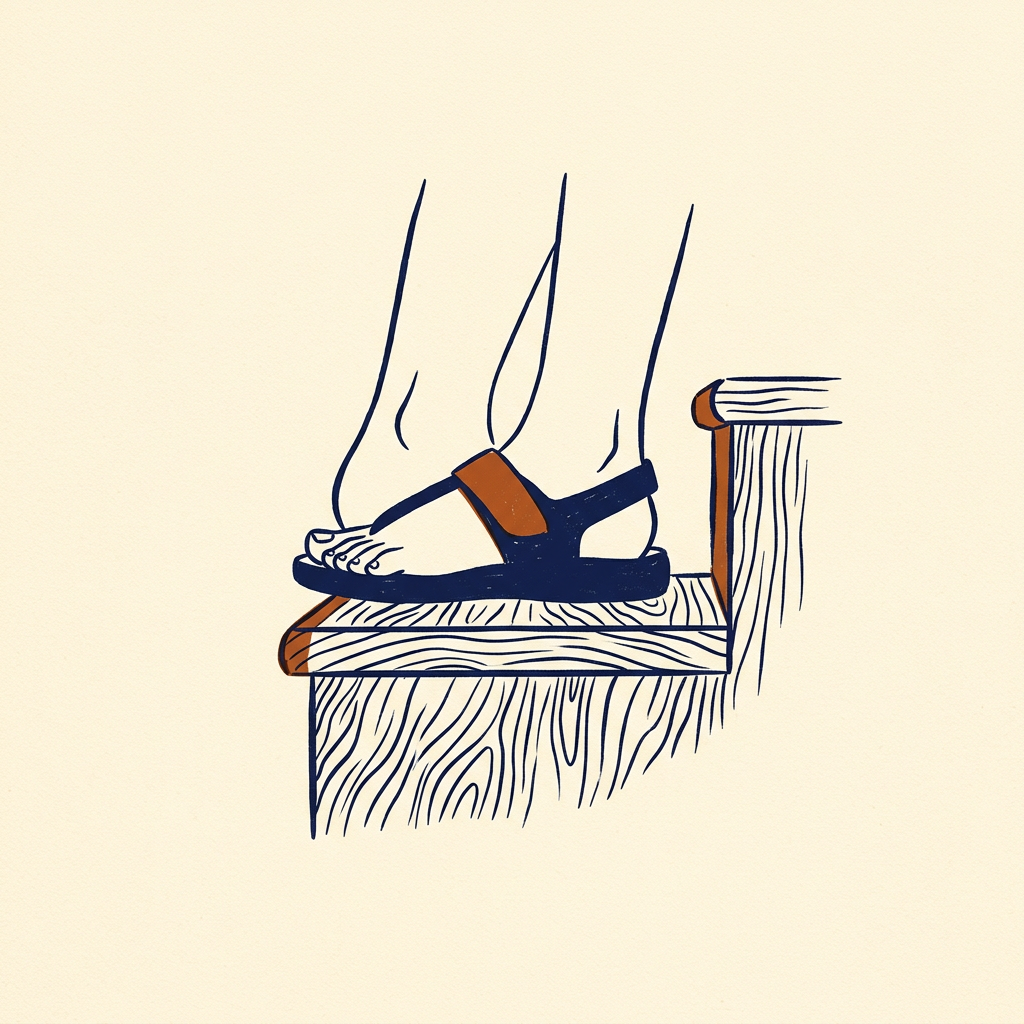
Building on breath, he frames walking meditation not as a hall ritual but as something to do on the way to a parking lot or up a flight of stairs. Ordinary walking, he says, usually happens in psychological absence: the body moves while the mind is already rehearsing arrival, so the walk itself becomes dead time.
He proposes coordinating steps with breath—for instance three steps per in-breath and three per out-breath—not because the ratio matters but because the coordination forces attention into the body’s actual movement. The line he offers with each step asserts that the present step is already the destination, not a means to one.
He is explicit that one can walk quickly and still be mindful. Speed and presence are separate variables; most people have simply let urgency dictate absence by default.
The chapter extends presence as a trainable habit into movement and sets the pattern the rest of the book repeats: take an activity assumed automatic and show it as either a daily opportunity or a small daily loss.
In practice: He suggests walking to a ringing telephone at normal or even slightly slower pace while staying with each footfall, rather than rushing the anticipated conversation into the legs.
3
Dishes done for themselves
Thich Nhat Hanh claims that doing a task only to get it over with quietly conditions the mind to devalue most of one’s waking life.
Chore to finish
Wash only to reach the tea; restlessness spoils both.
Task as practice
Wash to wash; water, plate, and hands fully met.
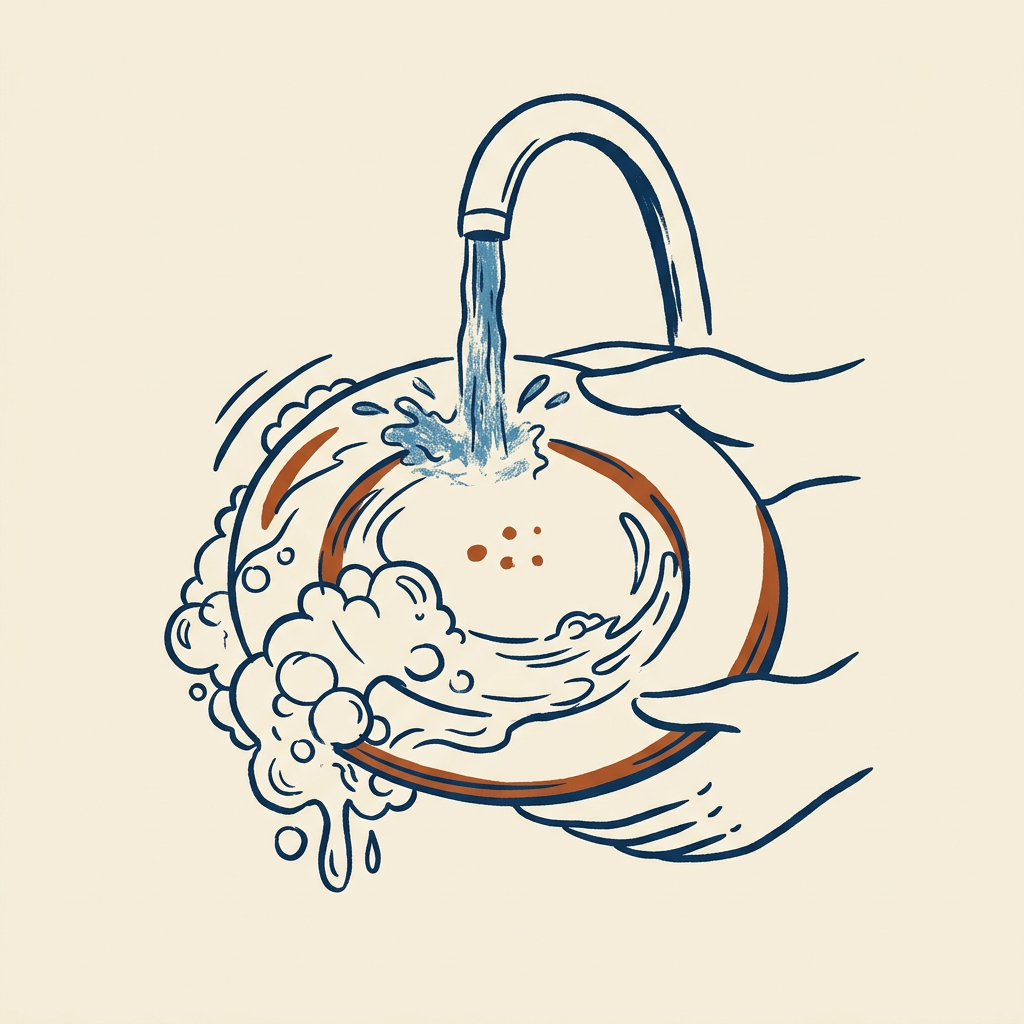
Having set breath and walking in place, he applies the same logic to household work, with washing dishes as the central case. One way is to wash in order to finish and reach the tea; the other is to wash dishes in order to wash dishes, present to water, plate, and hands.
His argument is that if a person cannot be happy while washing, they will likely not be happy drinking the tea afterward either, because the same restless, forward-leaning attention carries forward. Attention is a continuous habit, not a switch flipped on for vacations and off for chores.
He extends the point to cooking, gardening, and driving. A life of routine tasks treated as obstacles to clear is a life spent mostly absent from itself, no matter how pleasant the eventual reward. The instruction is modest: pick one recurring chore and do it slowly enough to notice sensations, without music, podcasts, or planning filling the time.
He is not against efficiency in principle, only against treating it as the only value that matters, since a life optimized purely for speed leaves no space in which peace could occur.
In practice: He uses washing dishes before tea as the test: the quality of attention on the plates predicts the quality of attention on the cup that follows.
4
Anger turned into compost
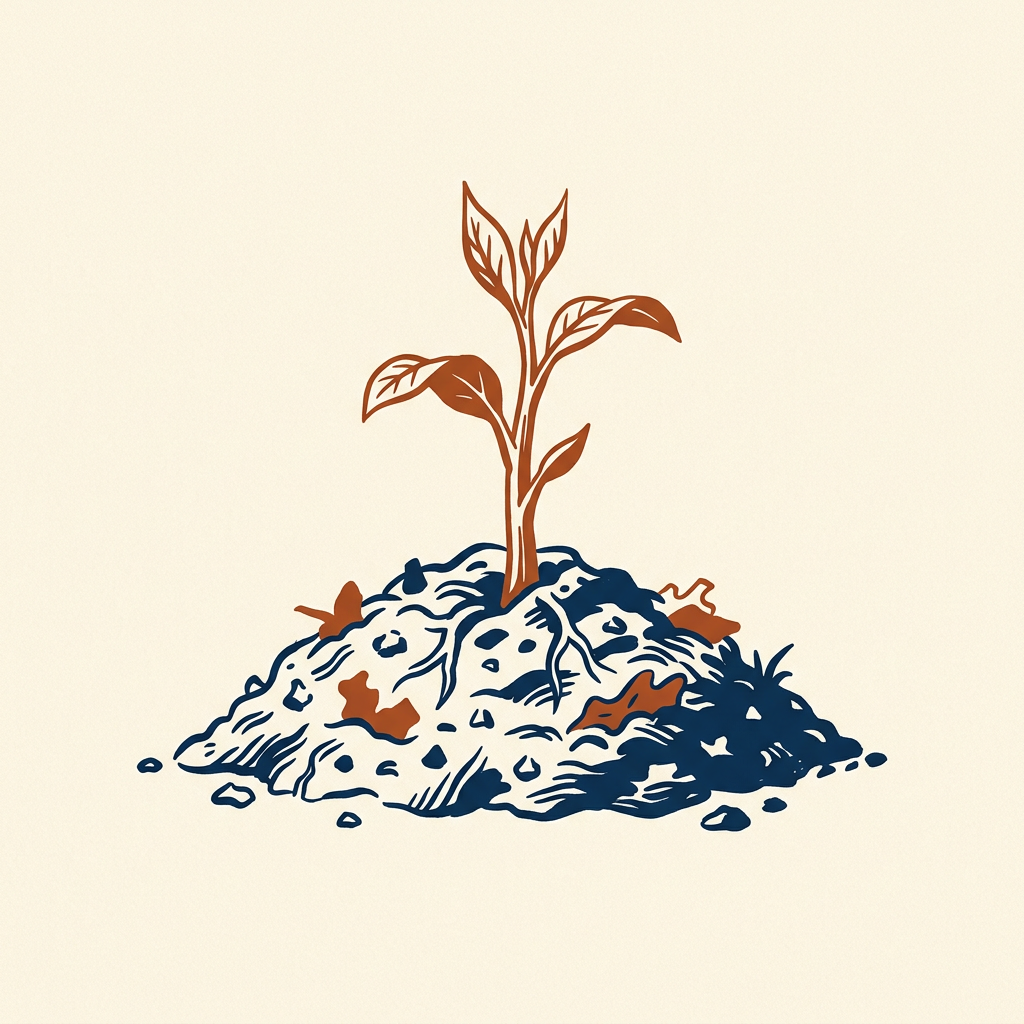
Thich Nhat Hanh rejects both suppressing and venting anger; the durable alternative is to hold and transform it the way compost turns garbage into soil.
With presence established, he turns to strong emotion. Repression, he says, buries anger without resolving it. Expression through confrontation often just discharges the emotion onto another person without changing its source.
His alternative is to return to conscious breathing the moment anger arises, treating the feeling as an object of attention rather than a command to act or a shameful thing to hide. The compost image carries the claim: garbage is not the opposite of the flower but the flower’s future material, given time and the right conditions. Anger is not something to eliminate but something to metabolize into understanding.
Sequencing is the practical point. He does not say the other person’s behavior was acceptable. He says acting from an unexamined emotional state usually makes the situation worse, and that a short delay can change the outcome without requiring the anger to disappear first.
The chapter matters because it applies the earlier practices to the hardest test case—an intense negative emotion—rather than leaving mindfulness useful only for calm, low-stakes moments.
In practice: Feeling anger toward someone who spoke harshly, he instructs breathing and calming the body before speaking, and only afterward considering what suffering in the other might have produced the words.
5
Nothing exists alone
Thich Nhat Hanh’s interbeing holds that every person and thing is made entirely of other things, so seeing oneself as separate is the root of most conflict.
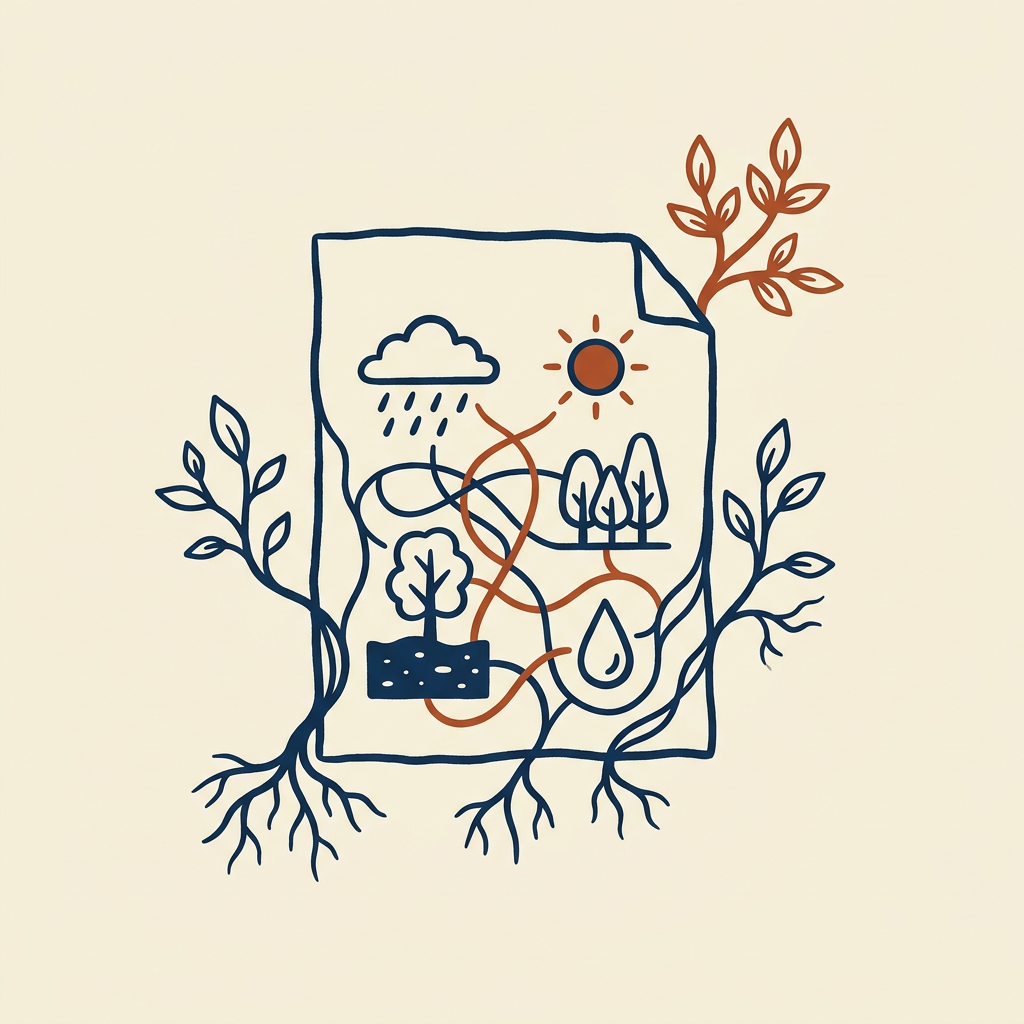
He introduces interbeing as the observation that nothing has an independent, isolated existence. A sheet of paper contains the tree; the tree contains sunlight, rain, and soil; the logger who cut the tree contains the bread from that morning, which contains the wheat farmer, and so on outward without limit.
From that observation he draws an ethical claim. If the self one wants to protect is not actually separate from the people and things around it, then hostility toward others is a kind of self-harm, and care for others is not sacrifice but a more accurate form of self-interest.
This grounds the earlier chapters. Full attention to any single thing reveals its interconnection with everything else; distracted attention keeps the illusion of separateness intact. He extends the view to conflict: an enemy is also a product of upbringing, fear, and prior suffering that made hostility likely—which does not excuse harm but undercuts the idea of a purely separate, purely blameworthy actor.
The chapter is the book’s philosophical hinge. The practices are methods; interbeing is the view of reality those methods are meant to reveal.
In practice: His paper teaching traces tree, sun, rain, logger, and farmer until the sheet is no longer a single isolated object.
6
Calm before peace work
Thich Nhat Hanh argues that activism from an agitated mind tends to reproduce the aggression it opposes, so personal practice is not separate from political effectiveness but a condition for it.
Agitated action
Reactive, exhausted, contemptuous of opponents; reproduces polarization.
Rooted action
Breath before reply, listening before rebuttal; practice sustains the work.
Writing from direct experience of war and exile, he holds that social and political peace work must be rooted in personal calm or it degrades into another form of the conflict it targets. During the Vietnam War he and colleagues helped villagers and war victims under bombardment and found they could not sustain that work—or keep from adding violence through their own reactions—without daily practice of the kind taught earlier.
Inner peace is not offered as a substitute for organizing, protest, or concrete aid; he was deeply involved in all three. The claim is that actions carried by people who are reactive, exhausted, or filled with hatred for an opposing side tend to produce more polarization than resolution.
His corrective is integration, not withdrawal: breathing before responding to provocation, listening to opponents rather than only rehearsing rebuttals, and treating one’s own fatigue and anger as signals requiring attention rather than badges of commitment.
Here the book’s almost domestic practices connect explicitly to large-scale conflict. The same discipline, he argues, scales from one person’s kitchen to a negotiating table.
In practice: He points to peace activists so consumed by opposition to war that they treat people who disagree with the same contempt they accuse war-makers of holding.
7
Listen before you speak
Thich Nhat Hanh holds that most quarrels are sustained not by disagreement over facts but by each side speaking without first understanding what the other is actually suffering.
Extending the peace-work argument into personal relationships, he describes deep listening and loving speech as practices for repairing broken communication between spouses, parents and children, or estranged communities. Deep listening means attending with the specific goal of understanding the other person’s suffering, setting aside the urge to correct, defend, or plan a response while they are still talking.
Loving speech means choosing words, once it is one’s turn, that aim to reduce suffering rather than to win the exchange, even when the content includes disagreement or a difficult truth. Most prolonged conflicts, he argues, are not really about the stated issue—money, a broken promise, a political position—but about accumulated, unexpressed hurt that each side is defending rather than examining.
A single act of being genuinely heard can do more to de-escalate than any argument about the original issue. This does not mean withholding disagreement indefinitely. It means sequencing understanding before argument, on the premise that arguments delivered to someone who does not feel heard are rarely received.
The chapter takes interbeing down to the scale of one relationship and shows what recognizing shared, interdependent suffering looks like in an actual conversation.
In practice: In a family where a parent and child have stopped speaking, he suggests one side must listen without preparing a rebuttal until the other feels their pain has registered, before any resolution of the original dispute is possible.
8
Smile as a practice
Thich Nhat Hanh argues that waiting to smile until one already feels happy reverses a workable path; small deliberate gestures can help produce calm rather than only follow it.
Smile as report
Wait until happiness arrives; joy stays postponed to future conditions.
Smile as practice
A small deliberate half smile and brief pauses help cultivate ease now.
The final substantive teaching addresses joy directly. He recommends deliberately smiling—even a small half smile when one does not feel particularly happy—as a practice comparable to conscious breathing, on the claim that the muscles associated with ease can help produce the ease they are usually thought only to express.
He extends this into small rituals: pausing to notice a flower, a patch of sky, or a moment of quiet before eating, treated as brief appointments with the present rather than accidents enjoyed only if they happen to occur. Most people, he says, postpone joy indefinitely for some future condition—finishing a project, resolving a conflict, achieving a goal—and that postponement, repeated across a lifetime, can mean joy is always scheduled and never collected.
He does not claim smiling erases real grief or that ritual pauses solve serious problems; elsewhere he is explicit about sitting with grief and anger rather than papering over them. The narrower claim is that among the responses available in an ordinary non-crisis moment, a small deliberate gesture toward ease costs almost nothing and is worth taking seriously as practice.
The chapter closes the arc from breath to joy. The same attentiveness trained on breathing and walking can eventually be aimed at cultivating well-being directly, not only at reducing suffering.
In practice: He treats a pause to notice a flower or a patch of sky before eating as a brief appointment with the present, not a lucky accident.
Key terms
- Conscious breathing Following the in-breath and out-breath to anchor attention in the body rather than in thought.
- Walking meditation Coordinating steps with breath so the walk itself is already the destination, not dead time between places.
- Interbeing Thich Nhat Hanh’s term for the observation that nothing has an independent, isolated existence.
- Anger as compost Holding and metabolizing anger into understanding the way garbage, given time, becomes soil for flowers.
- Deep listening Attending to someone’s words solely to understand their suffering, without preparing a defense or reply.
- Loving speech Choosing words that aim to reduce suffering rather than to win the exchange.
- Half smile A small deliberate smile practiced to help produce ease, not only to report a happiness already felt.
What to do
- Pick one routine task this week—dishes, the walk from car to desk, making coffee—and do it once a day with no phone, no planning, attention only on the sensations of the task.
- When anger next rises in a conversation, take three conscious breaths before responding and notice whether the first reply changes.
- In your next disagreement with someone close, spend two full minutes only listening, without preparing your response, before you speak at all.
- On one short familiar walk, coordinate steps with breath so attention stays in the footfalls rather than the arrival.
- Once before a meal, pause to notice one ordinary detail—a flower, a patch of sky, a moment of quiet—before eating.
Questions to think with
- When in an ordinary day do you most often treat the present as dead time on the way to something else?
- What changes in your next words if you take three breaths before answering anger?
- If the person you oppose is also made of causes and conditions, what shifts in how you hold the conflict?
- Are you postponing joy until a future condition that never quite arrives?
- Where does your caregiving or activism currently run on agitation rather than steadiness?
The other side
The book argues by illustration rather than evidence and does not cite studies or clinical outcomes. Claims that sound like testable psychological hypotheses receive no empirical support of the kind later attached to mindfulness research. Its contemplative tone assumes a reader stable and safe enough to choose to slow down. It says little to someone in acute danger, poverty, or crisis. Critics have noted that popularized presentations can flatten a demanding monastic discipline into lifestyle advice stripped of the ethical commitments that once gave the practice its force. The book is strongest as an invitation to attention and weakest as a theory of how attention scales to systemic problems.
Who it's for
A person who feels chronically rushed and wants a concrete way to slow down without changing their schedule, or someone in activism or caregiving who is burning out and needs a way to sustain compassion. It also suits a reader curious about Buddhist practice who wants an entry point that does not require doctrine or ritual.