



Persuasion is won before you make the ask
In 60 seconds
- Cialdini argues persuasive outcomes are usually settled by the audience’s state of mind before any substantive message arrives.
- Whatever sits in the foreground of attention is treated as the most important fact, even with no logical bearing on the decision.
- A two-second cue works only inside a privileged moment: homepage clouds versus pennies steered furniture shoppers toward comfort or price minutes later.
- French accordion music made French wine outsell German roughly three to one, while shoppers denied the music had influenced them.
- Unity cues such as a rigged shared birthday raised compliance with tedious requests more powerfully than mere liking.
- Frames that match a true feature of the offer are legitimate; false frames erode trust once noticed, and simply naming the cue can blunt it.
The big idea
Cialdini argues that the outcome of a persuasive attempt is largely decided in the moments before any argument is made, when a communicator shapes what the audience attends to, feels, and identifies with. Pre-suasion—arranging attention, association, timing, and shared identity ahead of the request—often matters more than the content that follows.
The book in brief
Cialdini opens by breaking with the view of persuasion as a contest of arguments. He proposes that communicators who install the right psychological conditions beforehand can win agreement almost regardless of what they say next. Field researchers saw compliance with an unappealing long survey roughly double after first asking people whether they considered themselves helpful; the yes created a self-image people then felt obligated to act consistently with. Nothing about the survey changed—only the mental frame one sentence earlier.
He next shows that people mistake salience for significance. Whatever occupies the foreground of attention is treated as causally central simply because it is visible. An honesty box in a break room drew roughly double the contributions when a picture of watching eyes hung above it rather than flowers, even though no one commented on the image and the rules never changed. Persuasion planning thus becomes attention design: decide what will sit in the spotlight the instant before the ask.
Timing and association tighten the mechanism. Privileged moments are brief windows in which a just-activated state can be linked to an upcoming choice; they decay fast if competing impressions intervene. On a furniture site, a faint background of clouds led visitors to value comfort and browse higher-priced sofas, while pennies pushed them toward cheapest options and smaller monthly payments—none reported noticing the backgrounds. In a supermarket wine aisle, French accordion music made French wine outsell German roughly three to one; German brass reversed the ratio. Shoppers almost never credited the music, inventing taste or price instead.
Cialdini then adds unity to his earlier principles: people comply more powerfully with those they experience as part of “we,” not merely as likable. A rigged shared birthday made strangers far more willing to read and comment on a large stack of poems. Family language, shared hometowns, alma maters, and kinship words in appeals work the same way. Self-relevant cues, threat, sexual content, and open curiosity gaps automatically hijack attention, so the first job is triggering one of those magnets before any argument can be evaluated.
The practical instruction is sequencing: place the priming element first and keep the gap to the request as short as possible. Asking whether someone is generous or lucky immediately before a donation or purchase raised giving; the same question earlier did little. Skilled negotiators open with a favorable cooperative frame so counterparts carry it into the real discussion. Cialdini closes by treating the tools as ethically neutral: priming safety before a car with a strong safety record aligns frame and substance; priming safety for an unrelated product is deceptive and tends to poison the whole relationship once discovered. Simply noticing and naming the cue often neutralizes it.
Context
Cialdini published Pre-Suasion in 2016 as a companion to his earlier work on influence, shifting the focus from classic principles of compliance to what happens in the seconds before persuasion begins. It gave marketers, managers, and readers of Influence a single account of how priming attention, association, and identity ahead of a request can matter more than the request’s content.
The key ideas
1
The moment before the message
Compliance with an unappealing long survey roughly doubled after people first answered yes to whether they considered themselves helpful.
No prime
Unappealing survey request alone
Helpful-person prime
Same survey after a yes to being helpful; compliance roughly doubles
Cialdini treats persuasion less as a contest of arguments and more as a sequencing problem. The decisive work happens when a communicator arranges the audience’s state of mind before any substantive content arrives. He calls that preparatory work pre-suasion: getting someone receptive to a message before they encounter it.
The channel of attention and self-concept through which content will be received usually does more work than the content itself. A single spoken yes locks in a self-image people then feel obligated to act consistently with. Professional persuaders who ignore that pre-suasive window leave most of their leverage unused.
The rest of the book unpacks the mostly unconscious mechanisms—attention, timing, association, identity—by which the priming operates. Attention itself, not argument quality, is the resource being managed.
In practice: Field researchers asking people to complete a long survey saw yes rates roughly double after first asking, “Do you consider yourself a helpful person?”

2
Attention equals importance
Whatever is placed in the foreground of attention is treated as causally central, even when it has no logical bearing on the decision.
Flowers overhead
Baseline honesty-box contributions
Watching eyes overhead
Contributions roughly double
People routinely mistake salience for significance. If something is visible, the mind assigns it outsized weight in judgment simply because it occupies the spotlight. Cialdini generalizes this into a practical rule: to change behavior you do not always need to change beliefs or incentives; you can change what is momentarily prominent in a person’s visual or mental field.
The lever is available before any words are exchanged—control what someone notices first. The same mechanism works against the persuader: let a counterpart’s attention settle on the one weak point in a strong offer and that weak point will be treated as though it were the whole offer.
Persuasion planning therefore becomes attention design. Decide what will sit in the spotlight in the instant before the ask, because whatever occupies it will be read as the most important fact in the room.
In practice: An honesty box for coffee payments drew roughly double the contributions when a picture of watching eyes hung above it rather than flowers, with no change in rules and no comments on the image.
3
Privileged moments decay fast
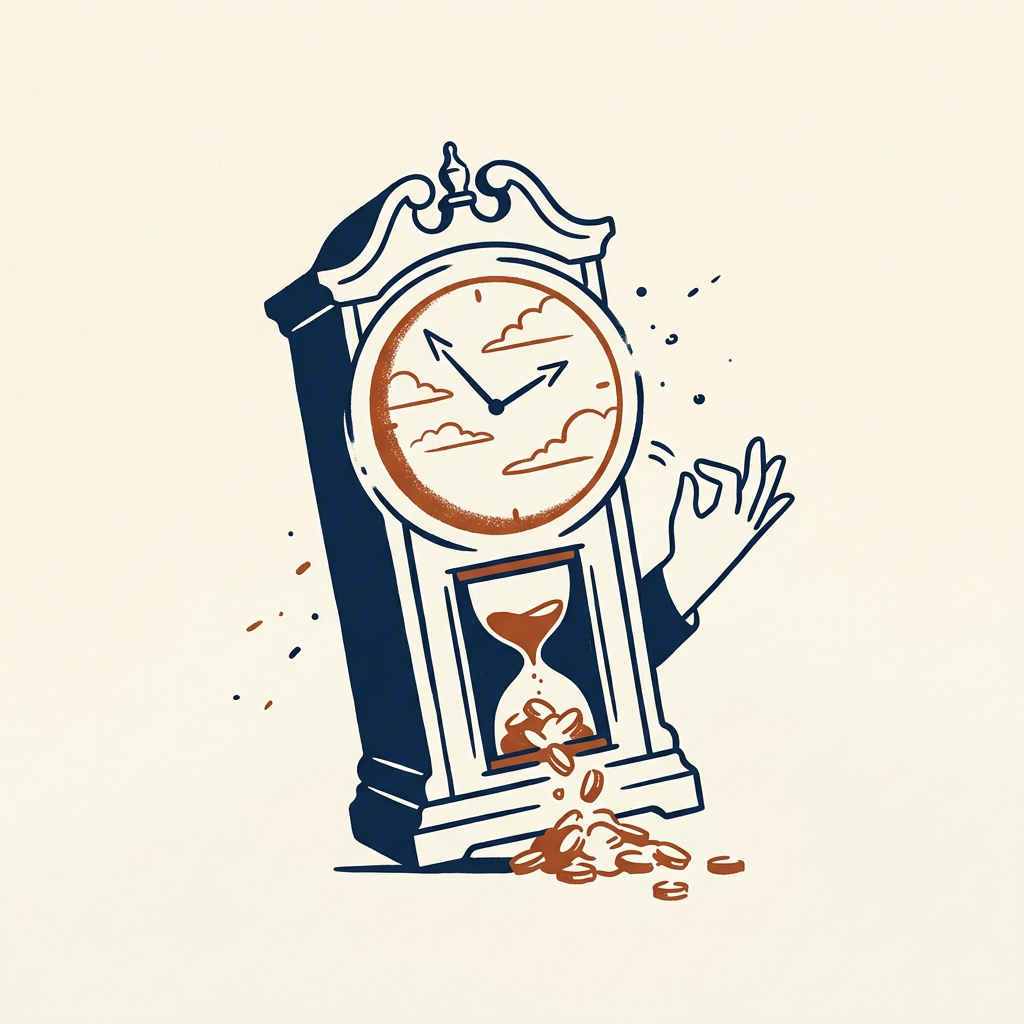
A faint homepage background of clouds versus pennies shifted furniture shoppers toward comfort or price minutes later, yet none reported noticing the images.
Cloud background
More time on comfortable, higher-priced sofas; comfort valued
Penny background
Cheapest options preferred; smaller monthly payments chosen
Once attention is shown to drive judgment, the next question is when to direct it. A privileged moment is a brief interval in which a particular psychological state has just been activated and can still be linked to an upcoming decision. Cues work when followed almost immediately by the related choice.
If too much time or too many competing impressions intervene, the same cue does essentially nothing. Sequencing so that the priming cue and the actual request sit close together is therefore not a minor tactic but the central design problem.
The practical implication recurs through the book: place the cue and the ask adjacent in time, because an hour earlier or a day earlier erases the effect.
In practice: On a furniture site, cloud backgrounds led visitors to browse higher-priced comfortable sofas and value comfort; penny backgrounds pushed them toward cheapest options and smaller monthly payments when financing was offered.

4
Association below awareness
French accordion music made French wine outsell German roughly three to one; German brass reversed the ratio, yet almost no shopper believed the music had mattered.
Association is the specific mechanism that lets an entirely unrelated stimulus—a song, a color, an image—transfer its emotional tone onto the decision that follows. People act on links they cannot consciously detect, then construct plausible reasons afterward rather than admit the unnoticed cause.
Self-reported reasons for a choice are therefore often manufactured after the fact. Brands build value the same way over years by pairing a name with unrelated positive imagery until the association feels, incorrectly, like an independent judgment about quality.
The chapter’s warning is that people are poor judges of their own susceptibility: the same studies that expose the effect also show subjects confidently denying it happened to them.
In practice: In a British supermarket wine aisle, French accordion days produced a roughly three-to-one French-over-German sales ratio; German brass-band days reversed it.

5
Unity before the ask
A rigged shared birthday made participants far more willing to comply with a stranger’s tedious request to read and comment on a large stack of poems.
Cialdini adds a seventh principle to the six from Influence: unity, the sense of shared identity between persuader and persuaded. Liking is about finding someone pleasant; unity is about experiencing them as an extension of oneself—a fellow member of “we” rather than a separate “you.”
Trivial cues can manufacture that perception. Categories people treat as near-genetic—family language, shared hometowns, alma maters, shared musical taste—trigger the same in-group response. Political and charitable appeals routinely borrow kinship words such as “brothers,” “family,” or “one of us” to collapse psychological distance.
Unity works through the same attention-and-association machinery already described, but it targets something more consequential than a passing preference: who counts as part of the self, a stronger predictor of cooperation than mere positive feeling.
In practice: Dale Miller, Julie Downs, and Deborah Prentice led participants to believe a stranger shared their birthdate; compliance with reading and commenting on a large stack of poems jumped substantially.
6
Attractors of attention
Self-relevant cues—using a name, referencing circumstances, or asking a question about the recipient’s own traits—capture attention far more reliably than a generic appeal.
Certain categories of stimuli hijack attention automatically and can be inserted into a message to guarantee it is noticed first. Cialdini groups them as attractors: sexual content, danger and threat, and above all anything the audience can construe as being about themselves.
Of the three, self-relevance is the most exploitable. The helpful-person opening worked not only as a commitment device but because it forced respondents to think about themselves, locking engagement onto whatever followed. Mystery and unresolved narrative—the curiosity gap—work the same way: an incomplete story keeps attention locked until resolution arrives.
A persuader’s first job is therefore not crafting the best argument but crafting the first few words or images so they trigger one of these automatic magnets. A technically superior message that never captures initial attention never gets evaluated on its merits.
In practice: Advertising and news headlines frequently withhold a key piece of information so the open question holds attention until the reveal.
7
Lead before you ask
Asking whether someone is generous or lucky immediately before a donation or purchase raised giving and buying; the identical question earlier in the conversation did little.
Attention, timing, association, and unity assemble into one practical instruction: place the priming element first and keep the gap between it and the actual request as short as possible. Effectiveness depends heavily on adjacency—the prime must sit directly upstream of the ask, not merely somewhere in the same interaction.
Skilled negotiators open sessions with a favorable frame, for instance describing an unrelated situation in which cooperation produced a good outcome, so counterparts unconsciously carry that frame into the substantive discussion. The opening is no longer small talk before the real content; it is where the frame gets set.
Once set, that frame does much of the interpretive work for everything said afterward. Identical content produces different responses depending entirely on the frame installed moments before it arrived. Optimizing only the central argument while neglecting the sentence that precedes it means optimizing the less decisive half of the interaction.
In practice: Fundraising and sales experiments showed higher giving and buying when an unrelated self-image question sat immediately before the request rather than at a disconnected earlier point.
8
Align frame with substance
Priming safety before a car with a strong safety record is legitimate; priming safety for a product with no safety-relevant features is deceptive and tends to poison the whole relationship once discovered.
Aligned frame
Safety prime before a car with a strong safety record
False frame
Safety prime before a product with no safety features; trust erodes when noticed
Pre-suasive techniques are ethically neutral tools. Their legitimacy depends entirely on whether the frame being installed is true to the underlying offer. Highlighting a genuinely true and relevant feature keeps cue and reality aligned.
Manufacturing a false impression unrelated to what is actually being sold carries real reputational risk. Audiences who feel misled by a frame extend that distrust to the entire relationship, not just the single transaction.
Recipients have a practical defense: because the techniques work through momentary attention rather than deliberate reasoning, simply noticing and naming the cue—becoming aware that a background image, a question, or a mood-setting detail has been placed deliberately—is often enough to neutralize its effect. Conscious attention to the technique competes with the automatic process it depends on.
In practice: Cialdini contrasts priming safety before showing a car with a strong safety record against priming safety before selling a product that has no safety-relevant features.
Key terms
- pre-suasion Getting someone receptive to a message by shaping attention, feeling, or identity before they encounter the content
- privileged moment A brief window when a just-activated psychological state can still be linked to an upcoming decision
- attention equals importance The mind treats whatever is currently salient as causally central, even without logical bearing
- association An unrelated stimulus transfers its emotional tone onto the choice that follows, often below awareness
- unity The sense that the persuader is part of one’s own in-group—“we” rather than a separate “you”
- attractors Stimuli—self-relevance, threat, sex, unresolved mystery—that automatically hijack attention
- curiosity gap An incomplete story or open question that holds attention until resolution is supplied
- sequencing Placing the priming cue immediately before the request so the installed frame shapes everything that follows
What to do
- Design the ten seconds before your next pitch as carefully as the ask: one question, image, or comment that primes a frame truly relevant to the offer, delivered immediately before the request.
- Audit emails, landing pages, and meeting openers for backgrounds, first lines, or opening questions that might be priming an irrelevant frame.
- When receiving a pitch, pause and name what you noticed first so conscious labeling weakens the cue’s automatic pull.
- Refuse to prime any state you cannot back with substance; a mismatched frame costs more trust than it gains in short-term compliance.
- Open a negotiation with a brief unrelated story of successful cooperation so the cooperative frame is already active when substance begins.
Questions to think with
- What single cue sits in the spotlight in the ten seconds before your most important recurring ask?
- Where in your materials might an unintended background, opener, or first question be priming the wrong criterion?
- Which true feature of your offer could honestly serve as a pre-suasive frame without overselling?
- When you last said yes to a request, what had you been attending to or feeling in the moments just before?
- How would you name a cue out loud, in real time, so its automatic effect loses force?
The other side
The book builds a general theory from vivid single studies—the wine aisle, furniture backgrounds, shared-birthday poems, eyes above the honesty box—yet several related priming traditions suffered a serious credibility crisis in the 2010s, with high-profile failures to replicate. Cialdini’s examples are not identical to the failed work, but they share the same methodological family: modest samples, commercial or lab settings, effects rarely replicated at the scale the confident tone implies. The evidence is drawn almost entirely from Western commercial participants, so claims about universal attention and identity are thinner across cultures than the prose suggests. The book also writes almost exclusively from the persuader’s chair, offering far more on installing frames than on how untrained people can reliably detect and resist them, and later critics have questioned whether effects this small and context-bound translate outside carefully controlled settings.
Who it's for
Marketers and copywriters who need to understand why identical offers convert at wildly different rates by context, plus managers and negotiators who must secure a yes before the proposal is even heard. Readers of Influence who want Cialdini’s account of the seconds before persuasion begins will get the most from the full book.