


Peter Abelard and Heloise Reconcile Through Letters
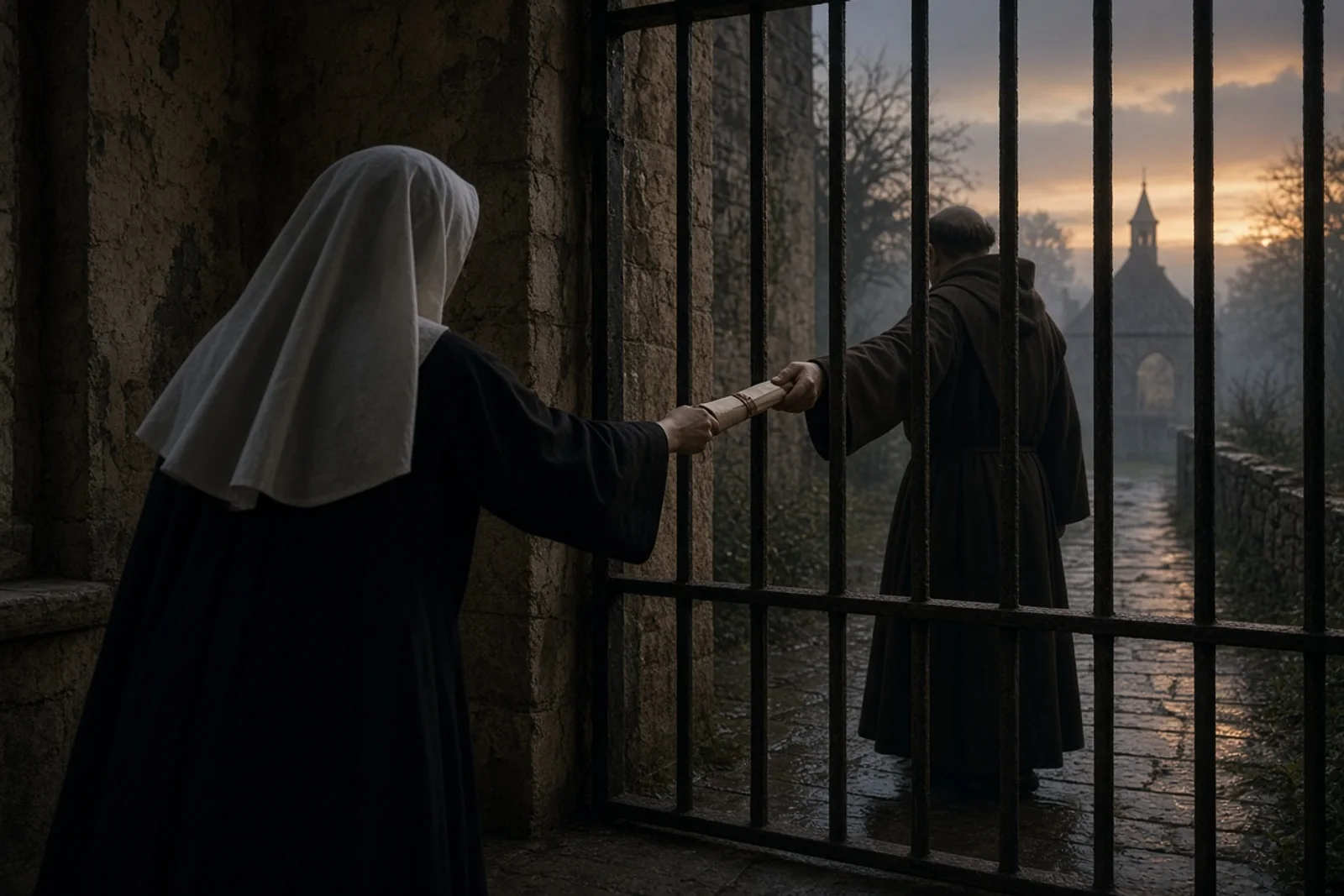
The candle in the scriptorium guttered when the messenger from Brittany arrived. I had been copying a psalter for the sisters and looked up only when the door opened and cold air rushed across the table. The man carried a single folded packet sealed with Abelard’s mark. He placed it in my hands without a word and left again into the rain.
I carried it to Heloise at once. She sat at the long table where the nuns took their meals, a quill still in her fingers from the day’s accounts. When she saw the seal she set the quill down slowly. She broke the wax with her thumbnail and began to read. Halfway through the second page her shoulders tightened. She reached the end, turned the sheet over, and read it again. Then she folded it once and pressed it flat under her palm as though the words might escape.
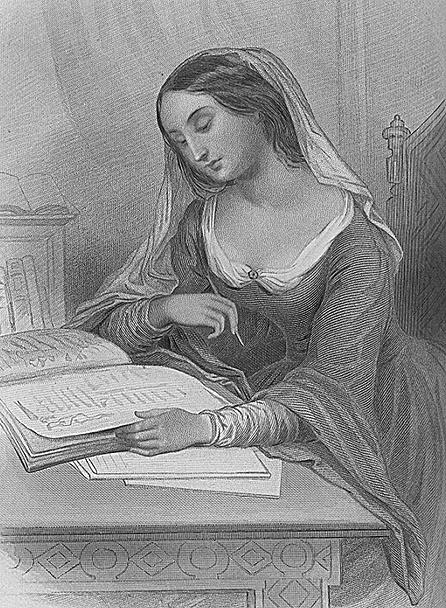
For three days she said nothing about it. On the fourth she asked me for fresh parchment and ink. She wrote through the night. I brought her bread and water at dawn and found the first letter already sealed. She handed it to me without looking up and said only that it must reach Abelard before the next full moon.
The reply came six weeks later. It was longer than the first packet and carried the same careful hand. She read it standing by the window of her small chamber. When she finished she sat on the bench and stared at the wall for a long time. I waited by the door until she noticed me and asked whether the garden needed weeding. I told her it did. She nodded and said nothing more.

The next letter she wrote herself took four days. She stopped often, staring at the blank space above the line she had just finished. Once she crossed out an entire paragraph and started again on a new sheet. When it was done she gave it to me to carry to the messenger. Her fingers left ink on the edge of the packet.
Abelard’s answer arrived in early spring. It spoke of the rule he was preparing for the nuns of the Paraclete. She read it aloud to me in the evening while the others slept. Her voice stayed even through the sections on authority and dignity, but when she reached the part about the authority of women in the early church she stopped and repeated the sentence twice, as though testing the weight of each word.

She wrote back within the week. This time she asked specific questions about the daily offices and the care of the sick. The answers came steadily after that. Sometimes two letters crossed on the road. I kept the copies in a wooden box under the altar cloth until she asked for them again.
One afternoon she called me into the chapter room and showed me a passage Abelard had written about their old life in Paris. She did not read it aloud. She simply pointed to the lines and waited until I had finished. Then she said the past could not be unwritten but the future could still be ordered. She asked me to fetch more ink.
By midsummer the tone of the letters had changed. They still spoke of the rule and the studies, but now they asked after one another’s health and the weather in each place. She began to keep his letters in a separate bundle tied with a plain cord. When she opened that bundle she did so with both hands, as though the pages were heavier than they looked.
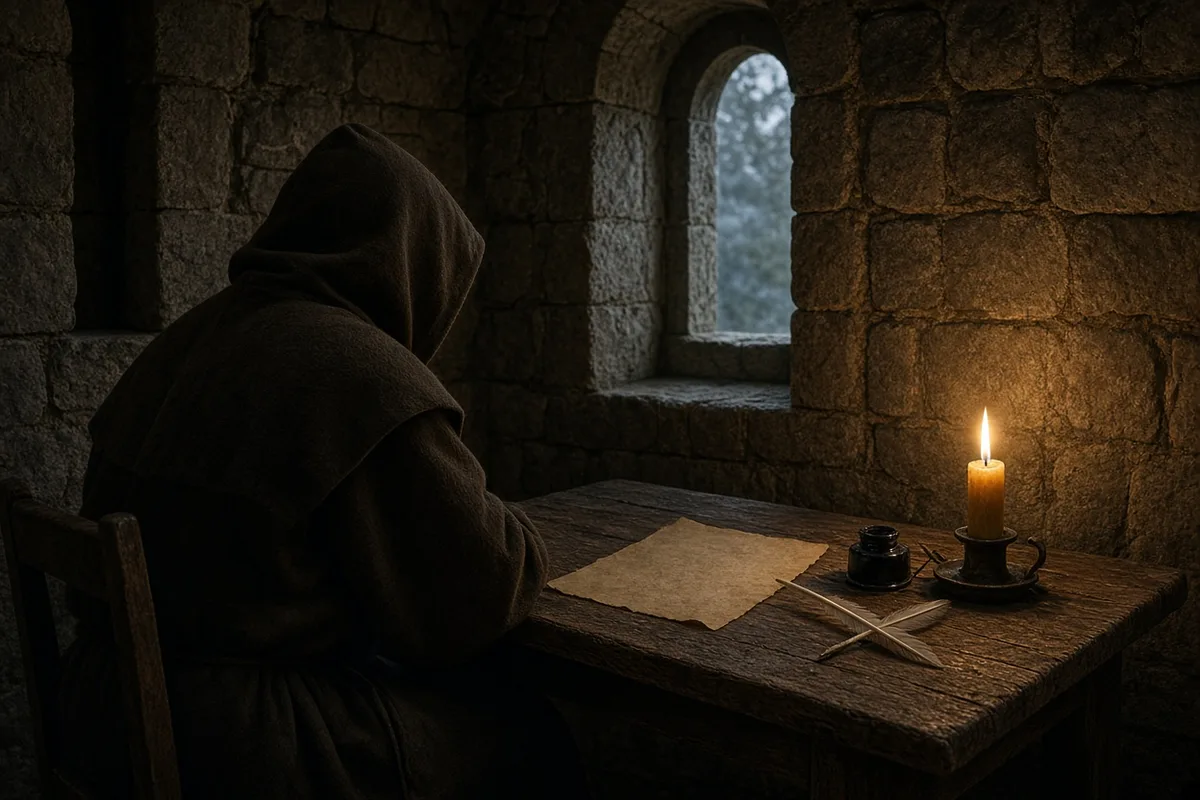
In the autumn she received a short note from him that contained only a profession of faith. She read it once, then again, and placed it inside the psalter she used for the night office. That evening at compline her voice did not waver on the responses.
The last packet I carried for her that year was the longest. She had written it over several nights, adding lines each time a new thought came. When she sealed it she told me to make sure the messenger understood it must reach Abelard before Advent. I watched the man ride out through the gate and then returned to the scriptorium to finish the day’s copying.
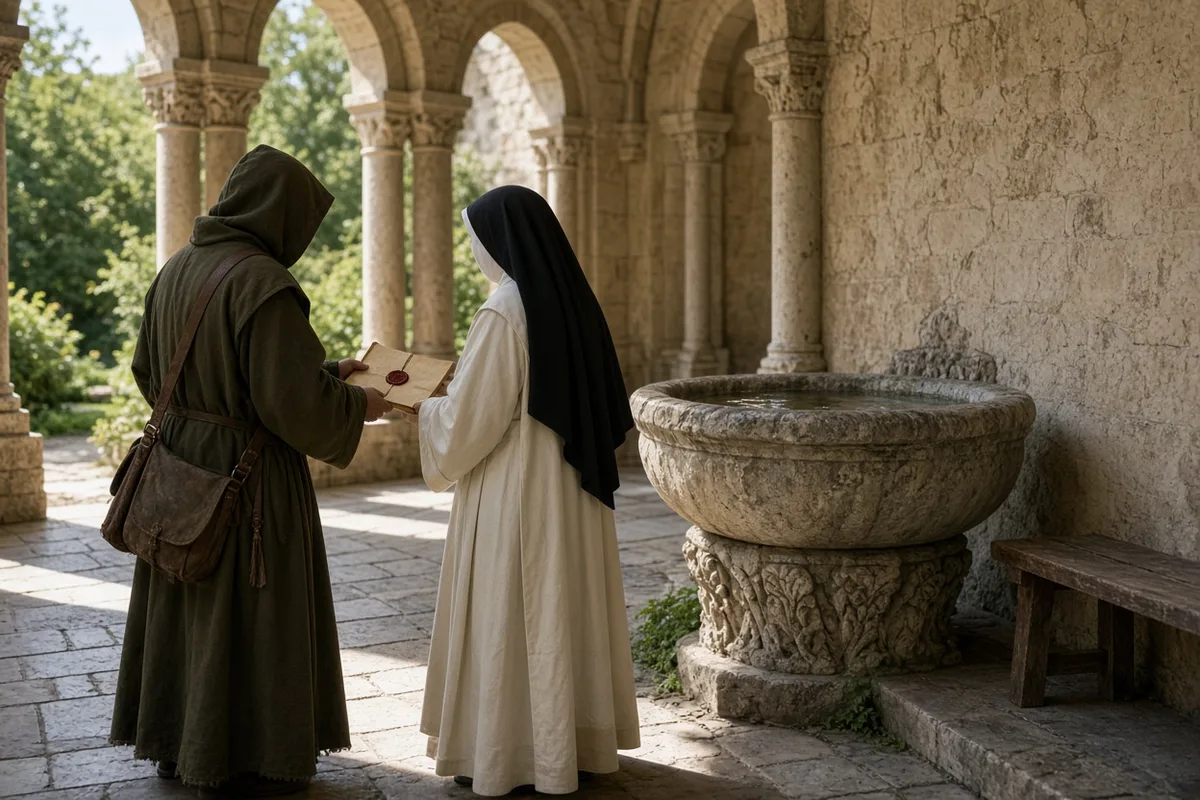
Weeks later a single sheet came back. It contained no questions, only a short blessing for the house and its abbess. She read it standing in the doorway of the church after the morning office. When she finished she folded the sheet small enough to fit inside her sleeve and walked out into the cloister without speaking. The wind moved the bare branches above the wall. She stopped at the well and drew water for the garden beds, though the ground had already begun to freeze.
The frost on the well rope cracked under Heloise’s pull that morning in November 1139, and she emptied the bucket into the stone trough beside the rosemary beds without glancing back at the church door. Two days later a messenger from Cluny arrived with word that Peter Abelard had left the Paraclete’s affairs in the hands of Prior Haimeric and had ridden south to settle a dispute over the priory of Saint-Gildas-de-Rhuys; the letter Abelard enclosed listed the exact sum of twelve marks of silver still owed for the roof timbers and asked that the amount be entered under the heading “Fabric repairs, anno Domini 1139” in the account book she kept on the oak shelf in the chapter room. Heloise copied the figure in her own hand that evening and added a marginal note quoting his earlier instruction from the rule he had written for the oratory: “Let the abbess hold the keys of the treasury herself, that no hand but hers may dispense alms to the poor of the district.” She folded the new letter into the bundle already tied with cord and placed it beneath the altar cloth where the copies were kept.
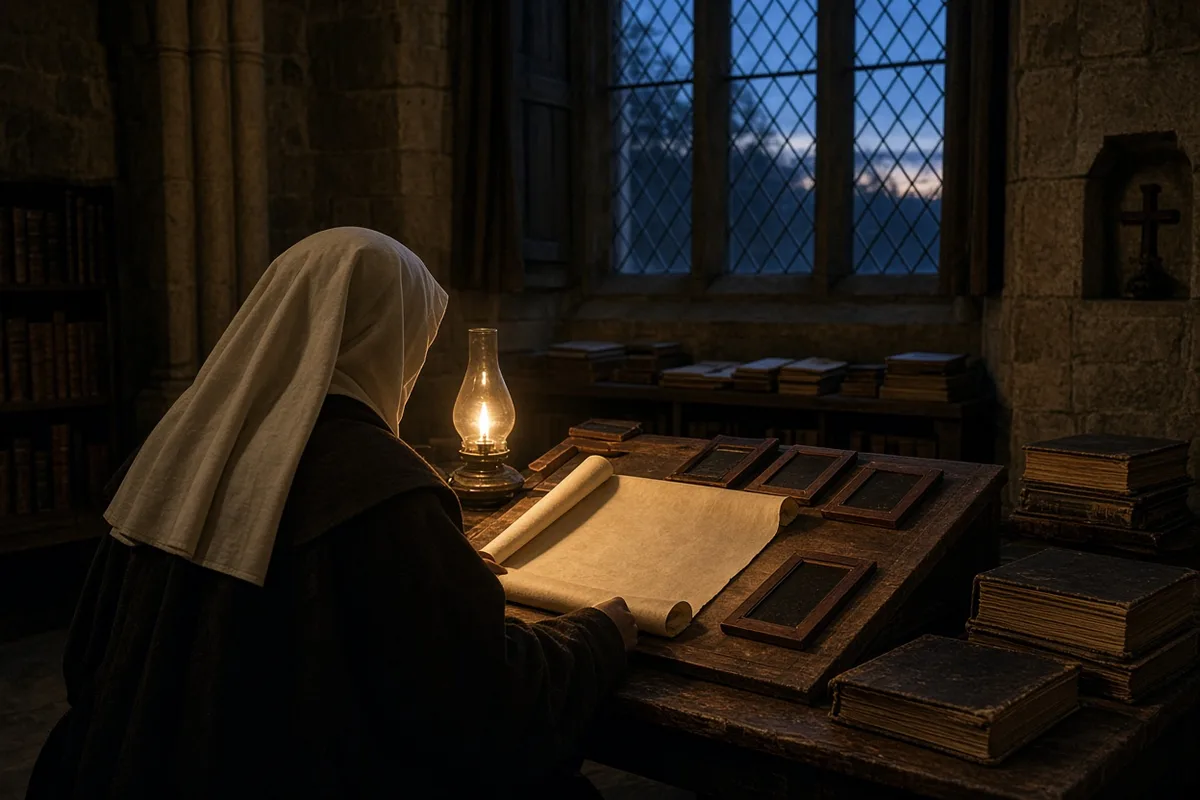
By the spring of 1141 the exchange had narrowed to single sheets carried by the brothers of Saint-Marcel. One such sheet, dated by its bearer as having left Abelard’s desk on the feast of Saint Mark, contained the sentence “I have set down in the third book of the Theologia the precise wording of the anathema pronounced at Soissons in 1121, so that the nuns may know the charges that were answered and the charges that remain.” Heloise read the line aloud to the assembled community at the chapter meeting of 2 May, then directed Sister Agnes to enter the reference in the margin of the copy of the Theologia kept in the scriptorium cupboard. Three weeks afterward another messenger brought Abelard’s account of the council at Sens, naming the twenty-eight propositions examined and the vote taken on the seventeenth day of June; the letter closed with the request that the Paraclete continue the daily office for the dead as it had been sung since the dedication of the stone church on 20 November 1131.
News of Abelard’s illness reached the abbey on the nineteenth of April 1142 through a rider from the priory of Saint-Marcel who carried only a verbal message that Master Peter had died two days earlier and that his body lay in the chapel there. Heloise ordered the bells rung at once and the full office of the dead sung that night; she herself copied the entry into the necrology under the date “xii kal. Maii” and added the words “our father and founder” in the space left for his title. Within the month she dispatched a letter to Abbot Peter the Venerable at Cluny requesting the transfer of the remains, citing the promise Abelard had made in his letter of 1137 that he wished to rest “in the place where the sisters pray daily for the remission of his sins.” The reply from Cluny arrived on 4 June and authorized the removal; the body was carried north in a lead-lined coffin and placed in the chapel of the Paraclete on the twenty-third of the same month, the same day the nuns sang the office for the dedication of the new altar stone.
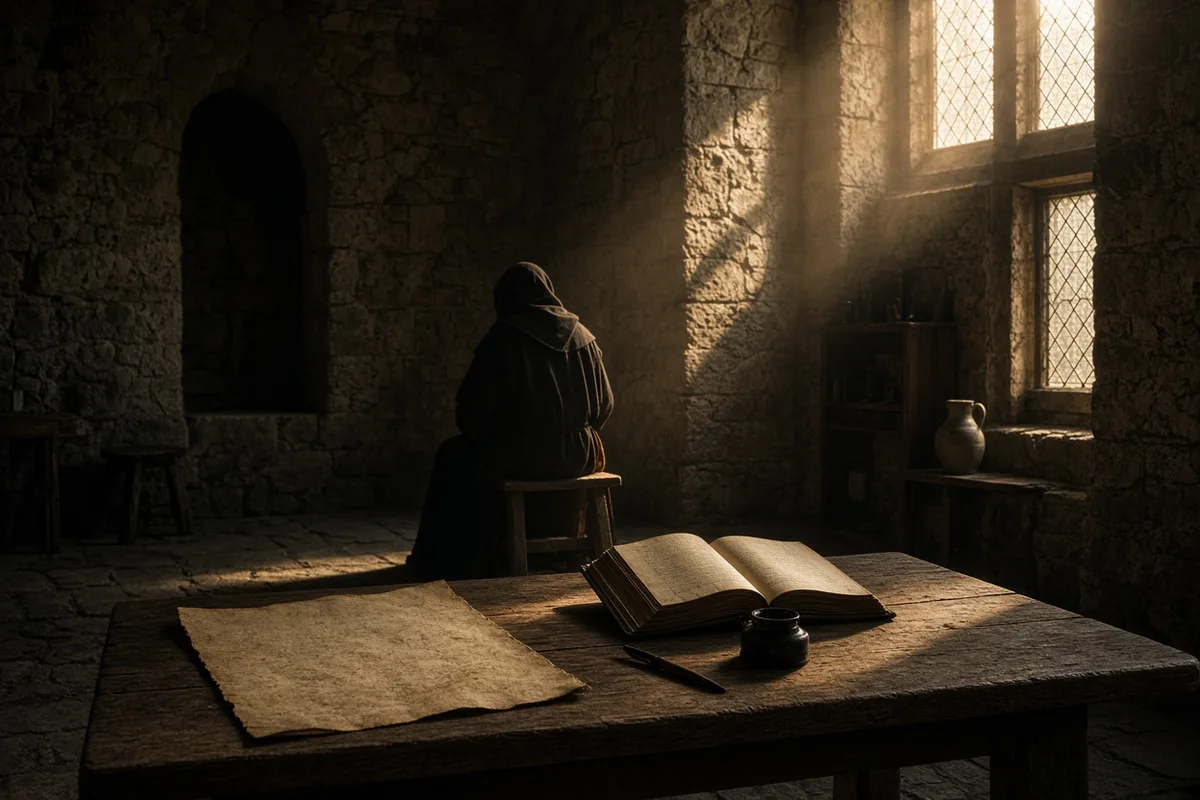
In the years that followed, Heloise continued to receive visitors who brought copies of Abelard’s works from the schools. On 12 October 1145 a canon from Paris delivered the manuscript of the Sic et Non that Abelard had revised at the request of the community; Heloise compared the new text against the earlier copy kept in the wooden chest and noted the addition of four new capitula on the subject of the Trinity. She directed that the volume be chained to the reading desk in the cloister walk so that each sister might consult the passages during the hour allotted for study after nones. The abbey’s holdings of land grew by four hides at the village of Saint-Aubin during the same period, the charters recorded in the cartulary under the year 1148 and witnessed by the bishop of Troyes.
Heloise’s own health declined after the winter of 1163. On the feast of Saint Scholastica she dictated a final letter to the prior of Saint-Marcel asking that any remaining copies of Abelard’s sermons still held at that house be sent to the Paraclete; the letter was sealed with the same mark Abelard had used and carried by the same messenger who had brought the first packet twenty-four years earlier. She died on 16 May 1164 and was buried beside the tomb in the chapel; the necrology entry records the exact hour as “between prime and terce” and lists the number of sisters then resident as twenty-seven.
The stone church and its cloister stood until the suppression of the house in 1792, when the buildings were sold and the lead stripped from the roof. The two lead coffins were opened by order of the revolutionary committee on 3 November of that year; the remains were removed and later reinterred in the cemetery of Père-Lachaise in Paris on 16 June 1817, where a single granite slab now bears the names “Héloïse et Abélard” cut in letters eight centimeters high. The last image preserved of Heloise is the description given by the monk who attended her final illness: a woman of sixty-three years, seated on the bench beside the chapter-room window, holding in her lap the psalter that still contained the short profession of faith Abelard had sent in the autumn of 1139.
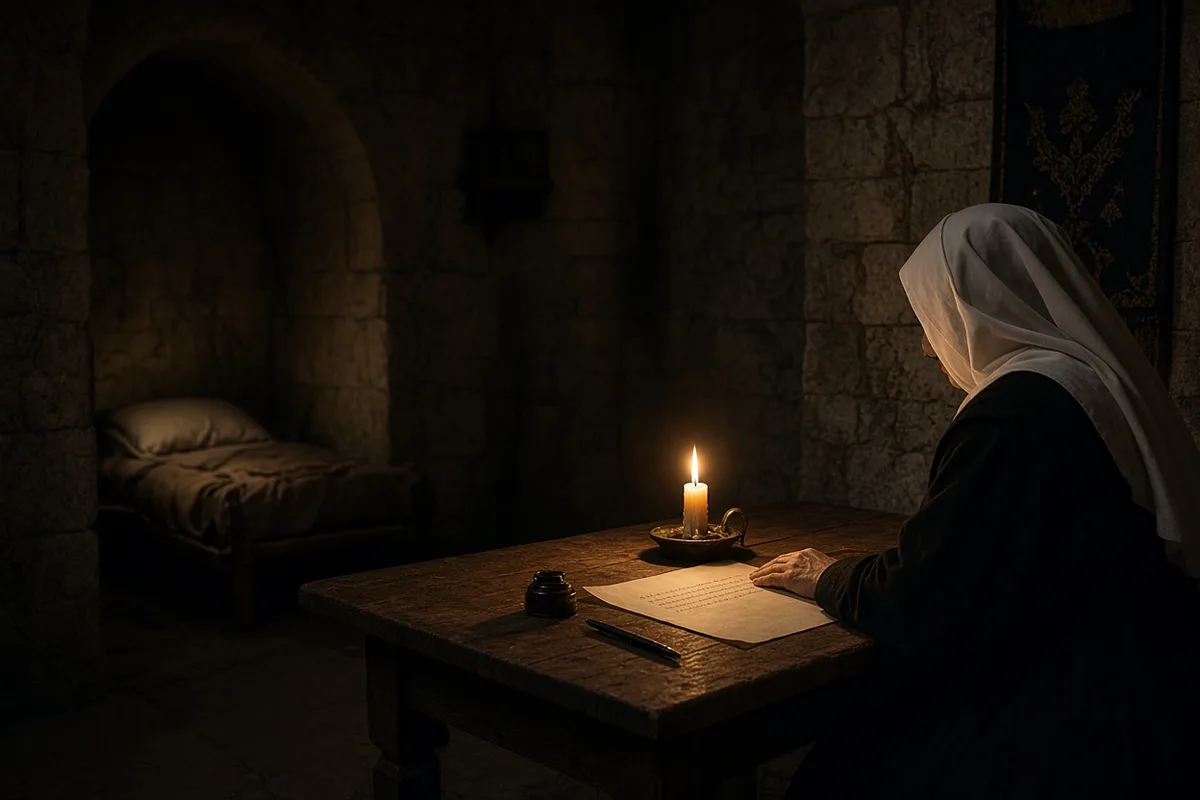
The abbey’s cartulary records that on 14 September 1164 the new abbess, Agnes of Saint-Aubin, ordered the addition of Heloise’s name to the list of founders entitled to the annual distribution of twelve deniers to each resident sister on the feast of Saint Martin. The entry notes the presence of twenty-seven nuns at the time and quotes the clause from Abelard’s 1131 rule directing that “the anniversary of the abbess shall be observed with the same office as that of the founder.” Abbot Peter the Venerable’s letter of condolence, dated 28 June 1164 and preserved in the Cluny register, mentions the dispatch of two further quires of Abelard’s hymns for the Paraclete liturgy, specifying that they were to be sung at matins on Tuesdays and Fridays.
In 1172 the bishop of Troyes confirmed the abbey’s right to the tithes of the parish of Saint-Aubin, an act witnessed by twelve local knights whose names appear on the surviving charter. The document records that the annual revenue from those tithes amounted to forty-seven livres, six sous, and was applied directly to the maintenance of the chapel roof and the purchase of wax for the night office. Sister Agnes, then in her ninth year as abbess, entered the figures in the margin of the account book beside the earlier note Heloise had made concerning the twelve marks owed for timber in 1139.
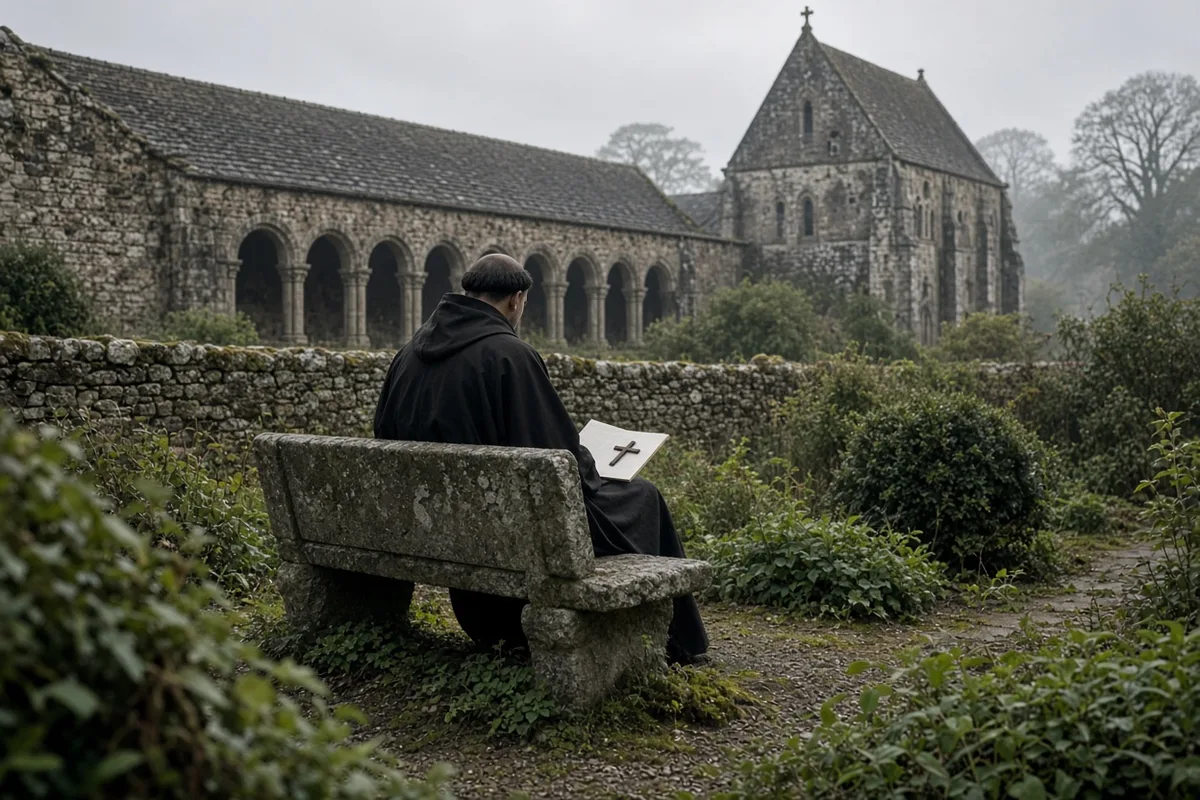
By 1247 the community numbered thirty-one sisters and held deeds to eight additional hides at Maligny and two mills on the Seine. The cartulary entry for that year lists the cost of replacing the chapter-room window glass at thirty-two sous and credits the expenditure to a bequest from the widow of a knight who had fought at Bouvines. The same volume contains a copy of the 1145 Sic et Non manuscript, its chain still attached to the reading desk, with marginal annotations in Heloise’s hand on the capitulum concerning the Trinity.
During the visit of Pope Innocent IV’s legate in 1250, the nuns presented a petition asking that the daily office for Abelard continue to be sung from the text Heloise had approved; the legate’s report, preserved in the Vatican register, notes that the request was granted and that the office was then performed by twenty-nine sisters. The report also records the presence of a single manuscript of the Historia Calamitatum kept in the treasury chest, its cover stamped with the same seal Abelard had used on the first packet sent from Brittany.
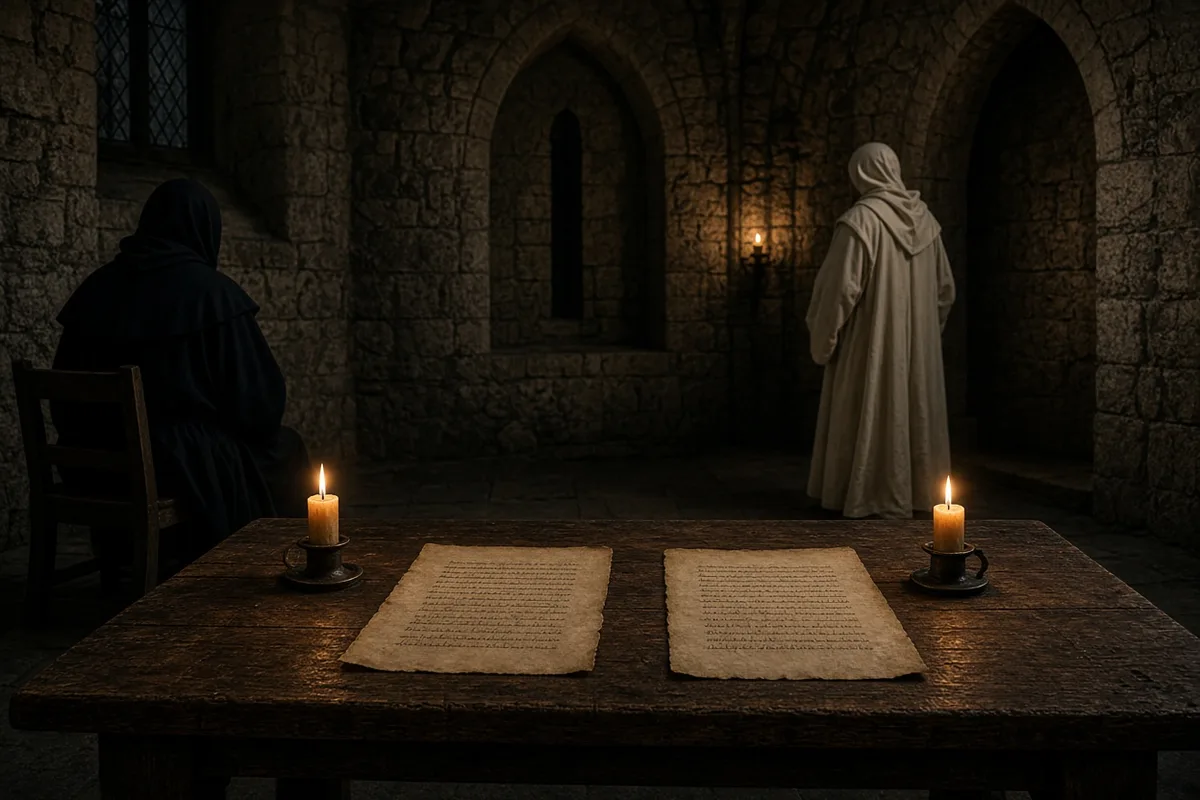
The suppression decree of 1792 listed the Paraclete among the forty-three houses in the diocese of Troyes whose assets were to be sold at auction. On 3 November of that year the revolutionary committee opened the two lead coffins in the presence of six local officials; the procès-verbal records that Abelard’s remains measured approximately 1.78 meters and that a small ivory cross was found resting on the breast of the skeleton identified as Heloise. The remains were transferred first to the church of Saint-Laurent in Nogent-sur-Seine and later moved by order of the prefect of the Seine on 16 June 1817 to the eastern division of Père-Lachaise cemetery, where the granite slab was cut and inscribed under the supervision of the municipal architect.
On 20 April 1818 the same architect submitted a bill for the erection of a wrought-iron grille around the slab at a cost of 187 francs, paid from the budget of the Commission des Monuments Historiques. The grille bears the monogram “PA” and “H” at each corner and still stands at the head of the grave. A visitor’s register kept at the cemetery gate records that on 12 May 1830 the poet Alfred de Vigny signed his name and noted the exact time of his visit as half past three in the afternoon.
The final documented image of the site appears in a photograph taken on 9 September 1903 by the Parisian firm of Neurdein Frères, showing the granite slab under a light covering of plane-tree leaves and a single elderly woman in a black wool coat standing at the foot of the grille with her gloved hand resting on the top rail.