


Peter Damian Founds Hermit Communities
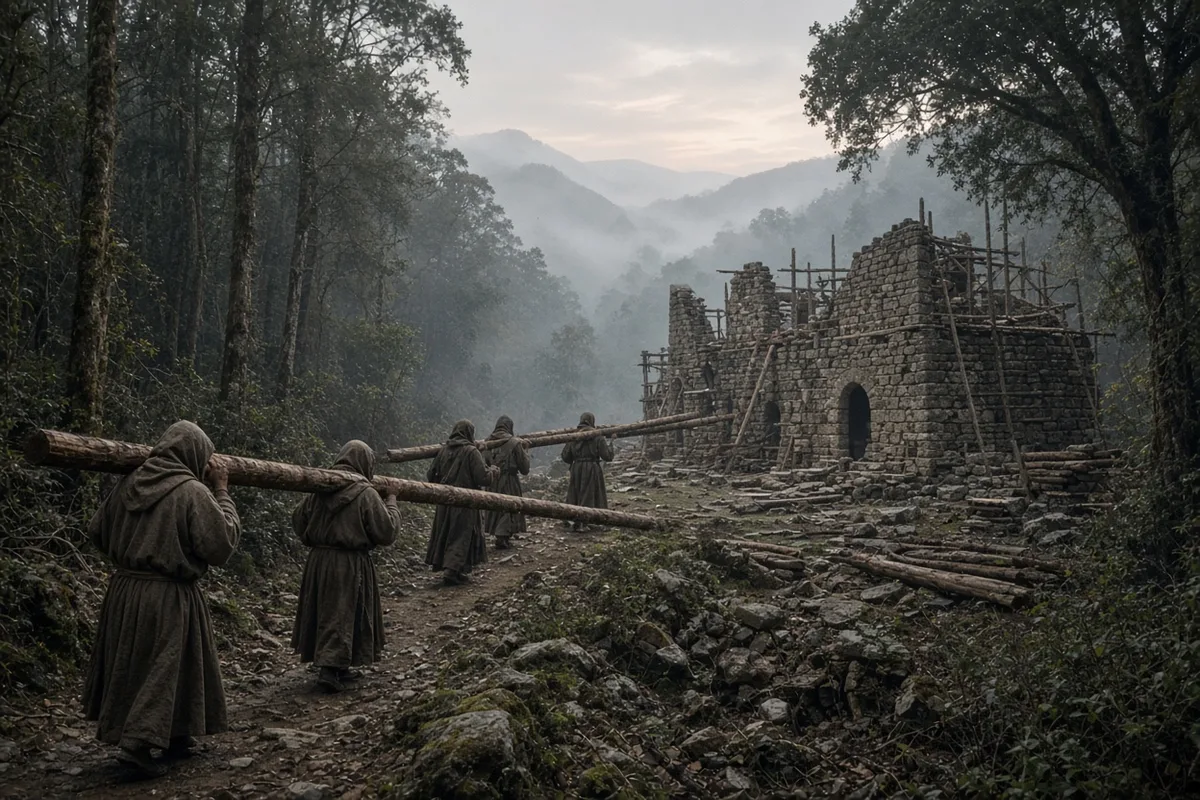
The path up from the valley still carried frost when I reached the clearing. My bundle of tools banged against my hip with each step, and the smell of wet pine needles rose from the ground where the brothers had walked before dawn. Fonte-Avellana sat quiet under the morning light, the wooden cells no larger than a man’s reach, the chapel roof patched again after the last storm. I had come two winters earlier to escape the noise of Parma, and the silence here had already changed the way I breathed.
Damian stood outside the prior’s cell that day, speaking with three of the older men. He held a small board marked with charcoal lines. When he saw me he nodded once and went back to the board. The lines showed places I knew only by name: Gamugno on its ridge, Sitria in the narrow valley beyond the river, Ocri where the road turned south. He spoke of sending men to each, not to preach but to keep the hours and open a door for any who arrived hungry or bleeding.

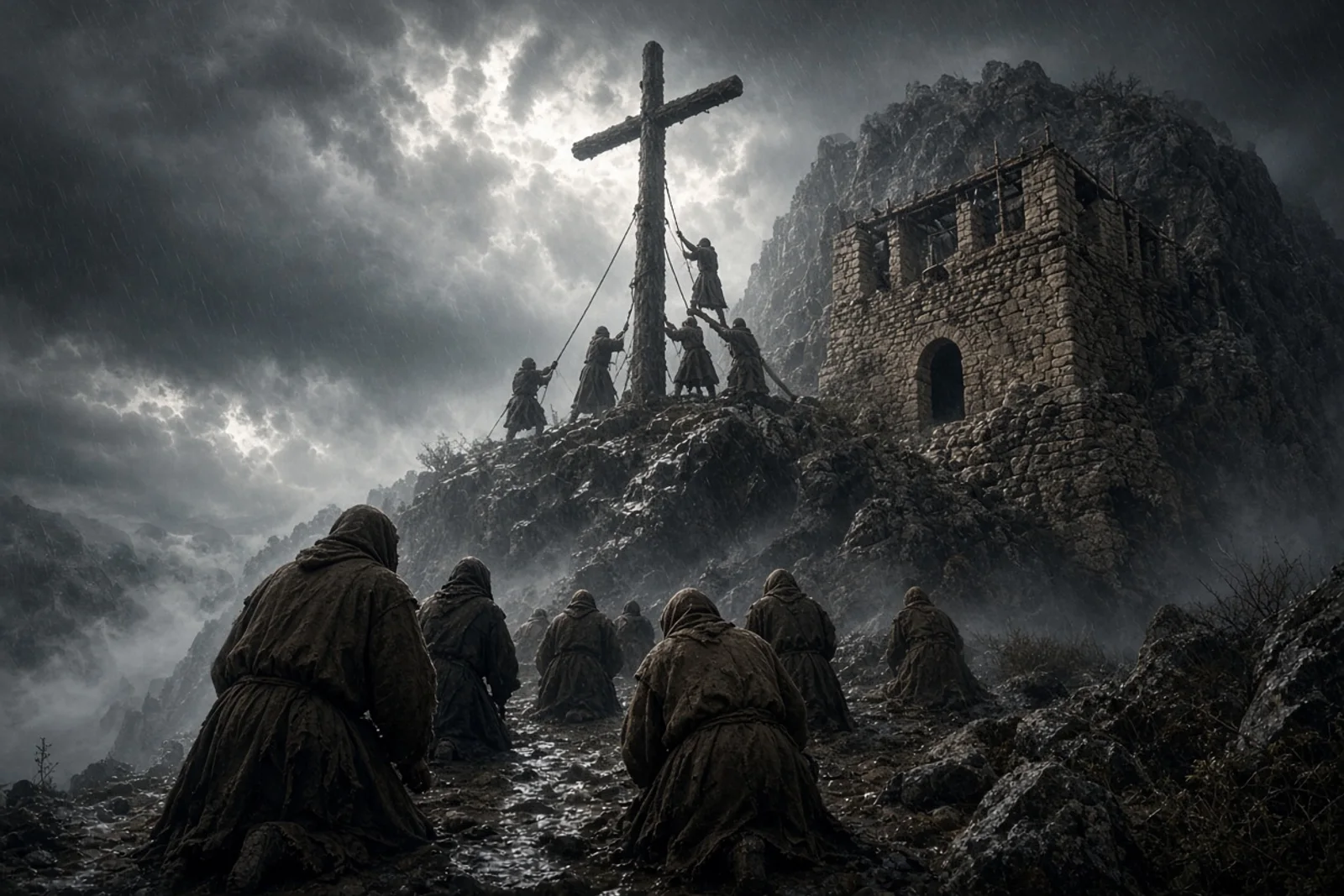
By the next week two brothers had left for San Severino with a mule and a sack of seed. I stayed to help raise the new cloister wall. The stones came from the slope above us, carried one by one on a wooden sledge. Damian worked beside us until the bell called us inside. At night he read from the psalter by the single lamp, his voice steady even when the wind shook the shutters.
The discipline began that spring. Damian set a rule that each man would take the leather cord after compline, not as punishment but as part of the night’s prayer. Some of the older hermits muttered that the custom belonged to the Camaldolese or to Monte Cassino and not to us. Damian answered that the body needed its own language when words ran out. He demonstrated on his own shoulders first, three measured strokes, then handed the cord to the next man. No one refused. The sound of the leather against cloth stayed with me long after we returned to our cells.

I carried the same cord when we walked to Acerata later that summer. Four of us went, carrying boards for a roof and a small silver chalice wrapped in linen. The site was only a cleared patch of ground and a spring. We slept under the open sky the first nights and rose before light to mark where the cells would stand. Damian remained at Fonte-Avellana, but his instructions traveled with us: keep the rule, receive any guest, send word if sickness came. When the first roof beam was set in place, one of the brothers struck it with the flat of his hand and said the place now had a voice.
News reached us at Murciana that Benedict of the great abbey had agreed to try the discipline in his own house. Damian had written the request himself. The letter came back with the abbot’s seal and a note that the custom would be tested for a year. We celebrated by adding an extra psalm at lauds. The wind off the ridge that evening felt colder than usual, yet no one complained.

By autumn the library at Fonte-Avellana held twelve new volumes. Damian had bought them from a scribe in Ravenna with money sent by a family in the city who remembered him as a teacher. He placed each book on the shelf himself, checking the binding and the ink. One contained the life of Romuald that he had finished the year before. He asked me to read a passage aloud to the gathered brothers. The words about the old hermit’s cave felt close in the small room.
The processional cross arrived the following month, carried by a man on foot from Faenza. It was the first silver object most of us had touched. Damian set it on the altar and left it uncovered for three days so every brother could see the reflection of the lamp flame along its arms. After that it stayed in its cloth until feast days. The weight of it in my hands surprised me when I helped return it to the chest.

Not every foundation lasted. One small group at San Salvatore sent word that the spring had failed and the soil would not hold grain. Damian recalled the men rather than force them to remain. He met them at the gate, embraced each one, and gave them new cells near the chapel. Their failure became part of the story we told newcomers: the rule could bend without breaking.
I traveled once more that winter, this time to Sitria, to carry a message about the daily rest Damian had added after the night office. The brothers there had been rising too early and returning to their cells pale. The added hour of sleep changed the sound of the place; voices carried farther in the afternoons. When I returned to Fonte-Avellana, Damian asked only whether the men had understood the reason. I told him they had.
The last of the seven houses, Ocri, was marked the following spring. Damian walked the ground himself and chose the spot for the chapel. He drove the first stake with a wooden mallet while the rest of us watched. The sound carried down the slope and echoed once against the rocks. Afterward he stood for a long time looking at the stake, then turned and started back toward the path. We followed without speaking.
Years later, when the silver cross was carried in procession for the feast of the dedication, I walked behind it with the other brothers who had helped raise the first walls. The light on the metal moved with each step. Damian walked at the head of the line, his hood pulled low against the sun. The sound of our feet on the packed earth was the only noise until the chapel bell began to ring.
After the bell ceased, Damian turned at the chapel door and read aloud the passage he had copied from the Rule of the Four Fathers, the one that began “Let the hermit keep silence from the ninth hour until the next day’s terce unless necessity compels speech.” He spoke the Latin slowly so the newest brothers could follow, then added in the same even tone that the new cells at Ocri must observe the same interval. Thirty-seven men stood in the nave that afternoon; the count was taken by Brother Aldebrand, who marked each name on a wax tablet before the procession dispersed.
In the winter of 1055 the prior at Gamugno sent word that the spring had frozen and twelve hermits required grain from Fonte-Avellana’s store. Damian dispatched two mules loaded with sacks marked with the seal of the community, together with a letter addressed to Prior Teuzo instructing that the grain be divided equally and that any remainder be given to travelers on the ridge road. The letter survives in the archive at Ravenna; its closing line reads, “Count the portions as you would count the hours, for both are numbered by the same Lord.”
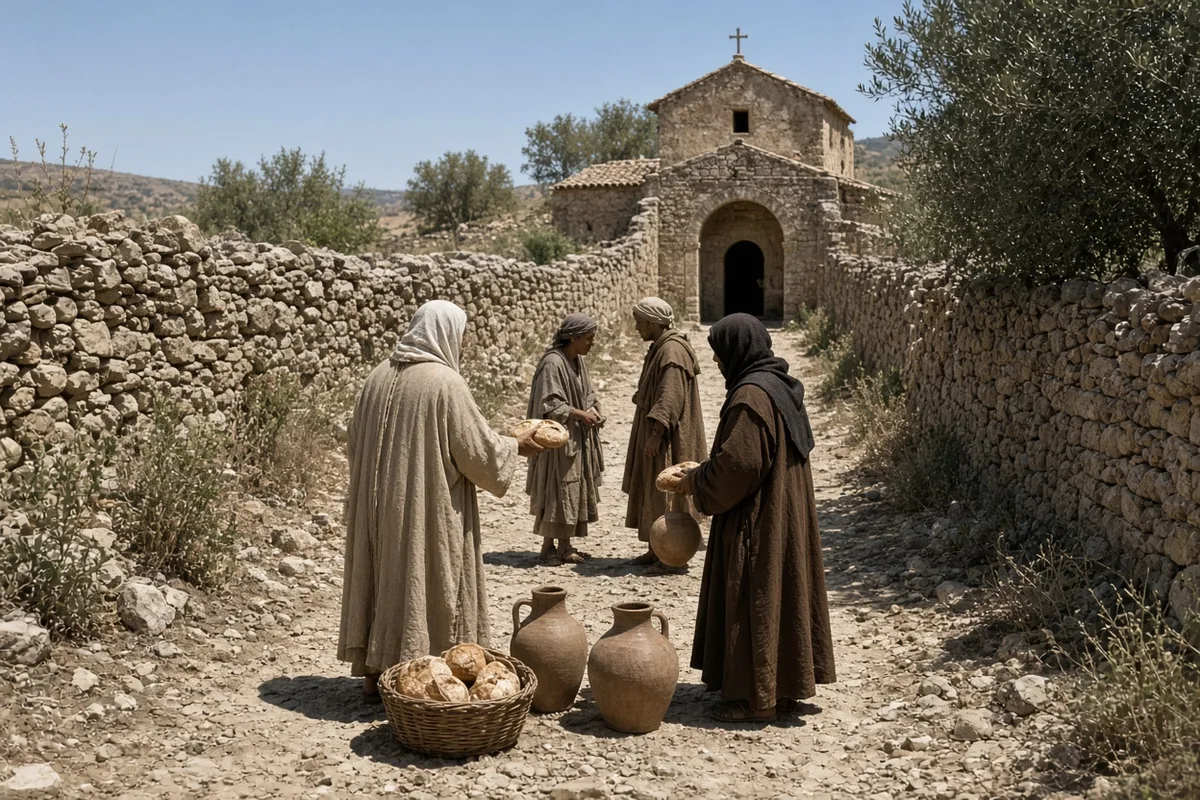
By 1060 the foundation at Sitria had grown to nineteen cells. I was sent there again, this time carrying the corrected text of the Life of Romuald that Damian had revised after receiving objections from the monks at Monte Cassino. The brothers copied the new passages into their own book during the month I remained. One of them, Brother Rainerius, asked whether the added sentence about Romuald’s daily discipline should be read at table; I answered that Damian had directed it be read only in the chapter house on the feast of the saint.
Damian left Fonte-Avellana for the last time in the spring of 1067, summoned to the papal court at Rome. Before he departed he placed the silver cross in the hands of Prior Mainard and said the community must continue the night office exactly as written, “even if the number of voices falls to seven.” The record of that departure is preserved in the cartulary of the diocese of Gubbio, which notes the date as the third Sunday after Easter and lists the six brothers who accompanied him as far as the river crossing.
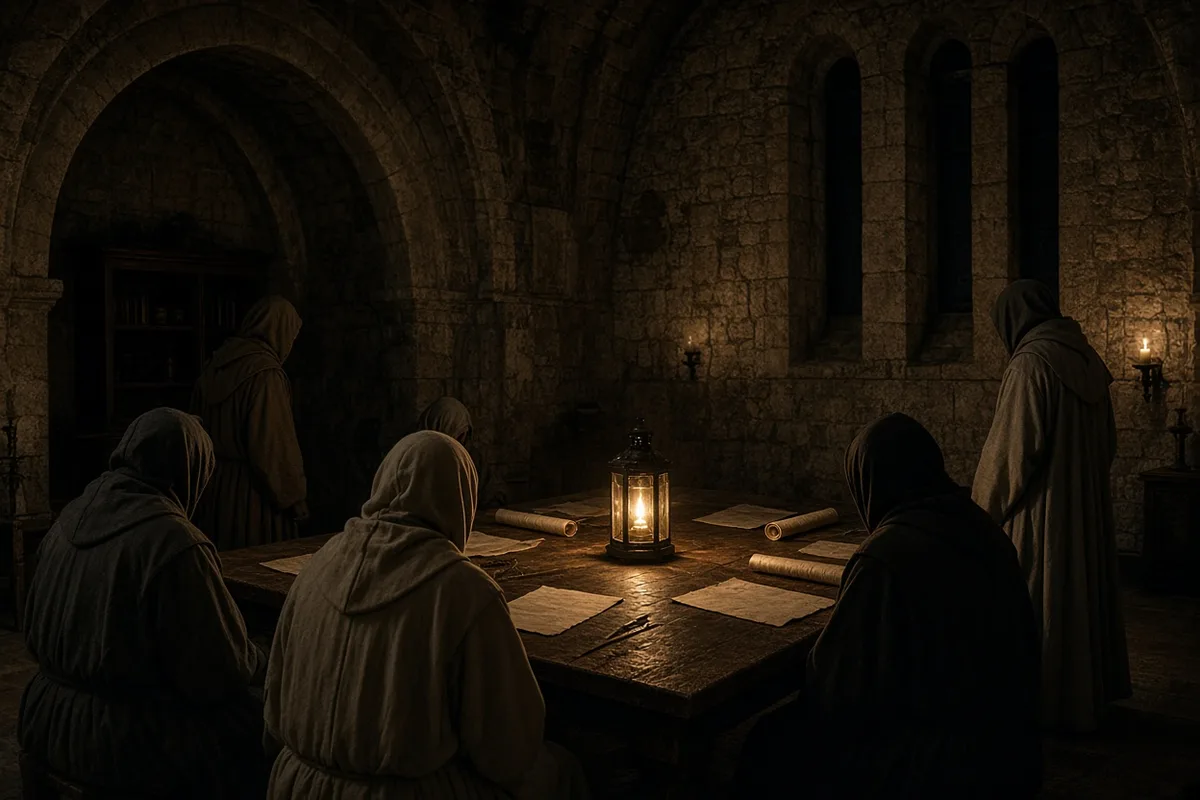
After his death at Faenza on 22 February 1072 the seven houses continued under the same rule for another generation. Prior Mainard at Fonte-Avellana recorded in the necrology that twenty-three hermits remained at the mother house and that the daily discipline was still performed after compline. The community at Ocri was abandoned in 1094 when the last three brothers died of fever; the chapel stones were carried down the slope and used to repair the wall at Murciana.
The buildings that stand today at Fonte-Avellana incorporate the original chapel walls up to the height of a man’s shoulder. The later church, consecrated in 1121, rises directly above the site where the wooden cells once stood. Visitors may still see the stone basin beside the spring where the brothers washed before entering the chapel; its rim bears the groove cut by the rope that once held the wooden bucket.
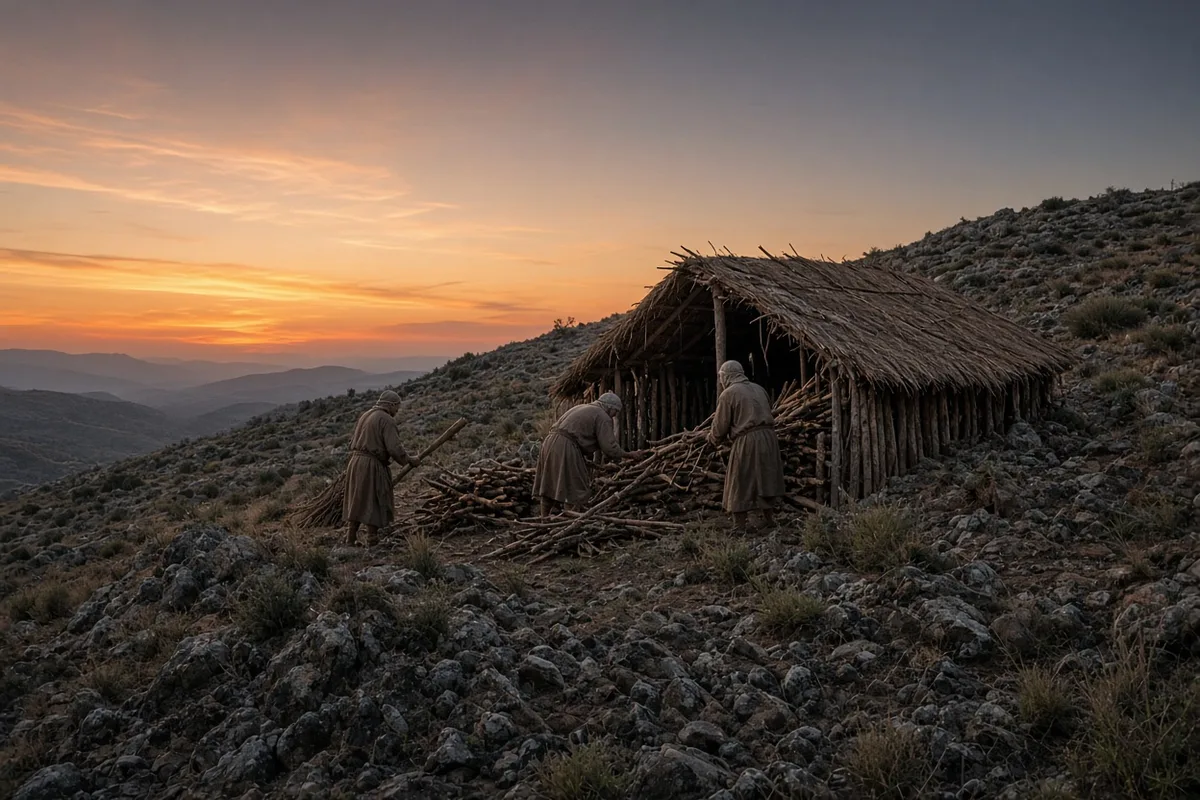
The final image I carry is of Brother Aldebrand in his ninety-second year, seated on the bench outside the prior’s cell at Fonte-Avellana in the autumn of 1114. He held the same leather cord Damian had used, now shortened by repeated trimming, and ran it slowly between his fingers while the bell tolled for none. He did not speak, but when the last note faded he nodded once toward the ridge where the path to Gamugno begins.
The brothers at Gamugno sent two novices to Fonte-Avellana in the spring of 1116 carrying a letter from Prior Hugh that asked for a replacement for the worn psalter copied in 1048; the volume arrived with its cover reinforced by new oak boards and a note in Mainard’s hand directing that the old one be buried near the spring rather than burned. Brother Aldebrand died on the feast of Saint Romuald that same year at the age of ninety-four; his name was entered in the necrology by the cellarer, who recorded that the leather cord remained in his hands until the moment of burial. Three months later the community received a visit from the bishop of Gubbio, who examined the foundation charter of 1035 and confirmed the exemption from episcopal dues that Damian had obtained from Pope Alexander II in 1060.
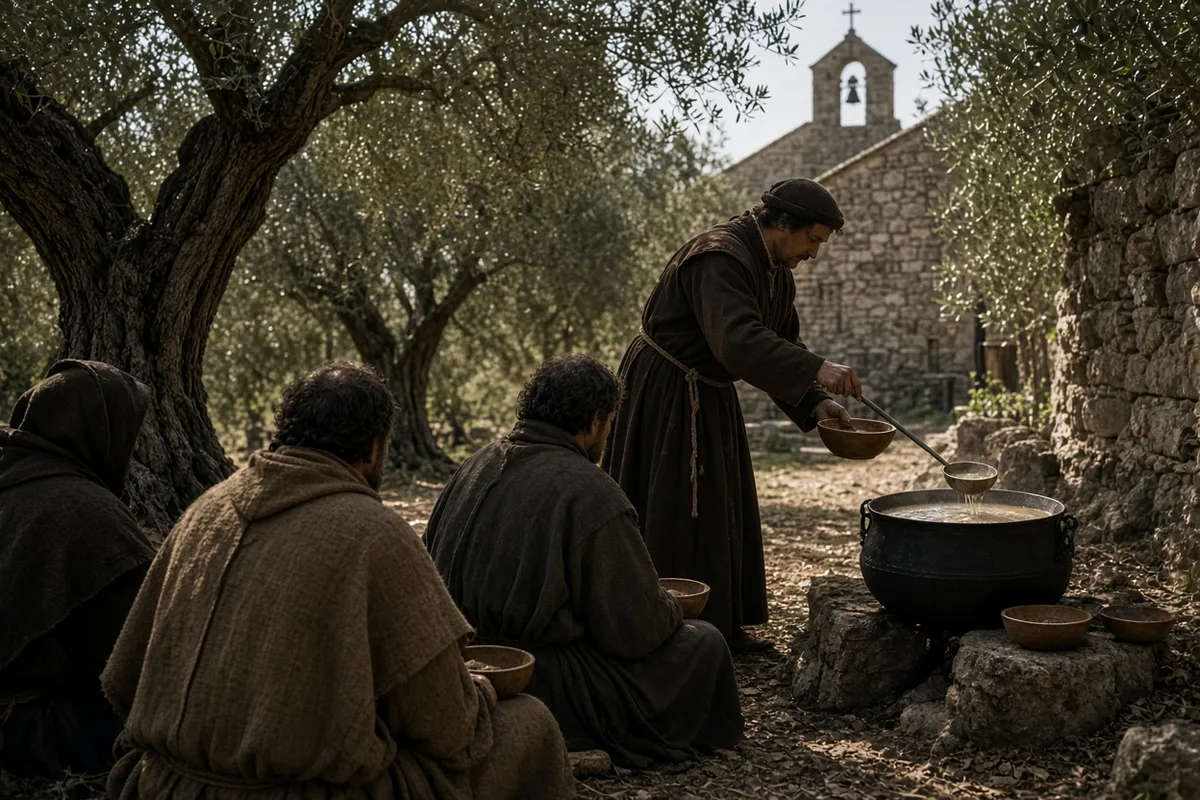
In 1129 the cell at Murciana received an additional grant of twenty-two perches of woodland from the heirs of Count Rainerius of Sassoferrato; the deed, witnessed by four hermits and sealed with the community’s lead bulla, specified that the timber was to be used only for roof repairs and not for sale. The following winter the spring at Ocri, long dry, began to flow again after heavy rains, and two brothers from Murciana traveled there to reopen the chapel foundation; they found the original stake still standing, its top weathered to the width of a thumb. Prior Mainard died in 1134 after thirty-one years in office; his successor, Brother Tebald, ordered that the night office continue without alteration and that the silver cross be carried only on the four principal feasts.
A fire in the scriptorium at Fonte-Avellana in 1147 destroyed seven volumes, among them the annotated copy of the Life of Romuald that Damian had revised in 1059; the surviving fragments, later bound into a single gathering, preserve the marginal note in Damian’s hand that reads “the discipline is not for display but for the quieting of the flesh.” The community at Sitria grew to twenty-seven cells by 1153 and sent a delegation of five men to the general chapter at Fonte-Avellana, where they presented a petition for an additional hour of rest during the harvest season; the request was granted on the condition that the extra psalm at lauds remain unchanged. By 1168 the original wooden cells at Fonte-Avellana had been replaced entirely with stone, their foundations visible today beneath the cloister walk that runs along the north side of the church consecrated in 1121.
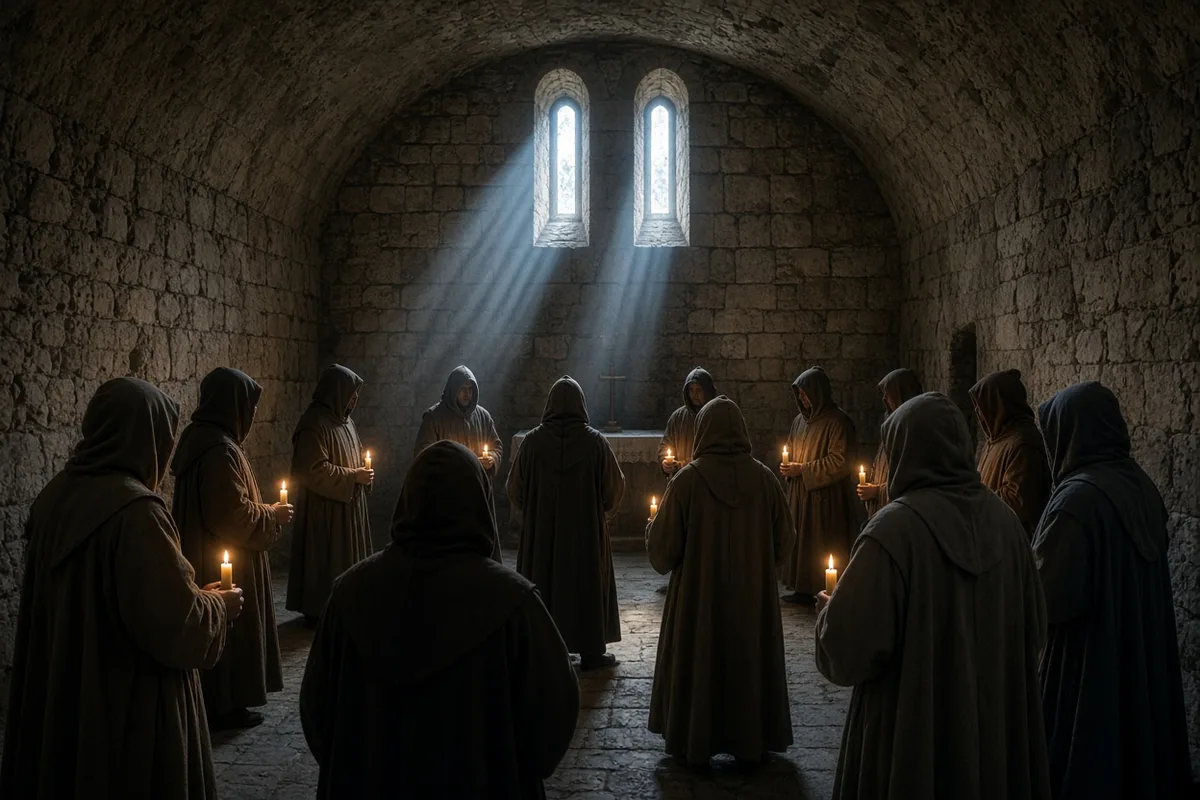
The hermitage at Gamugno was abandoned after an earthquake in 1231 that cracked the chapel vault; the six remaining brothers moved to Sitria, bringing with them the iron-bound chest that still holds the letters Damian addressed to Prior Teuzo. In 1247 Pope Innocent IV confirmed the union of the seven houses under a single prior, citing the original customs set down in the Rule of the Four Fathers that Damian had read aloud in 1114. The stone basin beside the spring at Fonte-Avellana retains the groove cut by the bucket rope; measurements taken in 1482 record its depth at fourteen inches and its diameter at twenty-three inches.
Brother Rainerius, who had copied the revised Life of Romuald at Sitria in 1060, lived until 1119 and left a personal record of the daily portions distributed during the famine of 1094; the entry for the month of March lists twelve measures of grain given to travelers on the ridge road. The last hermit to observe the full discipline at Murciana was Brother Gerard, who died in 1198 at the age of eighty-one; his cell, the only one still roofed, stands today with its original door frame of chestnut timber, the latch plate marked with the date 1052.