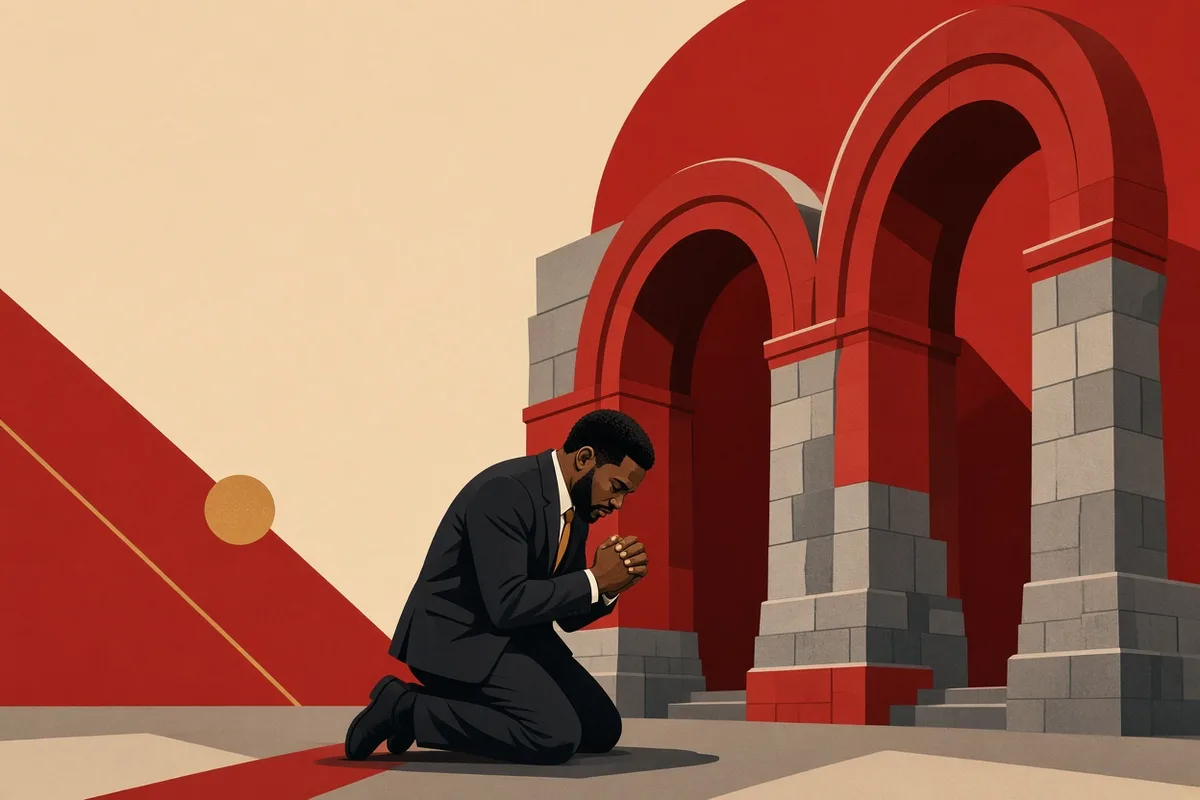



Pope Gregory the Great Sends Augustine to England
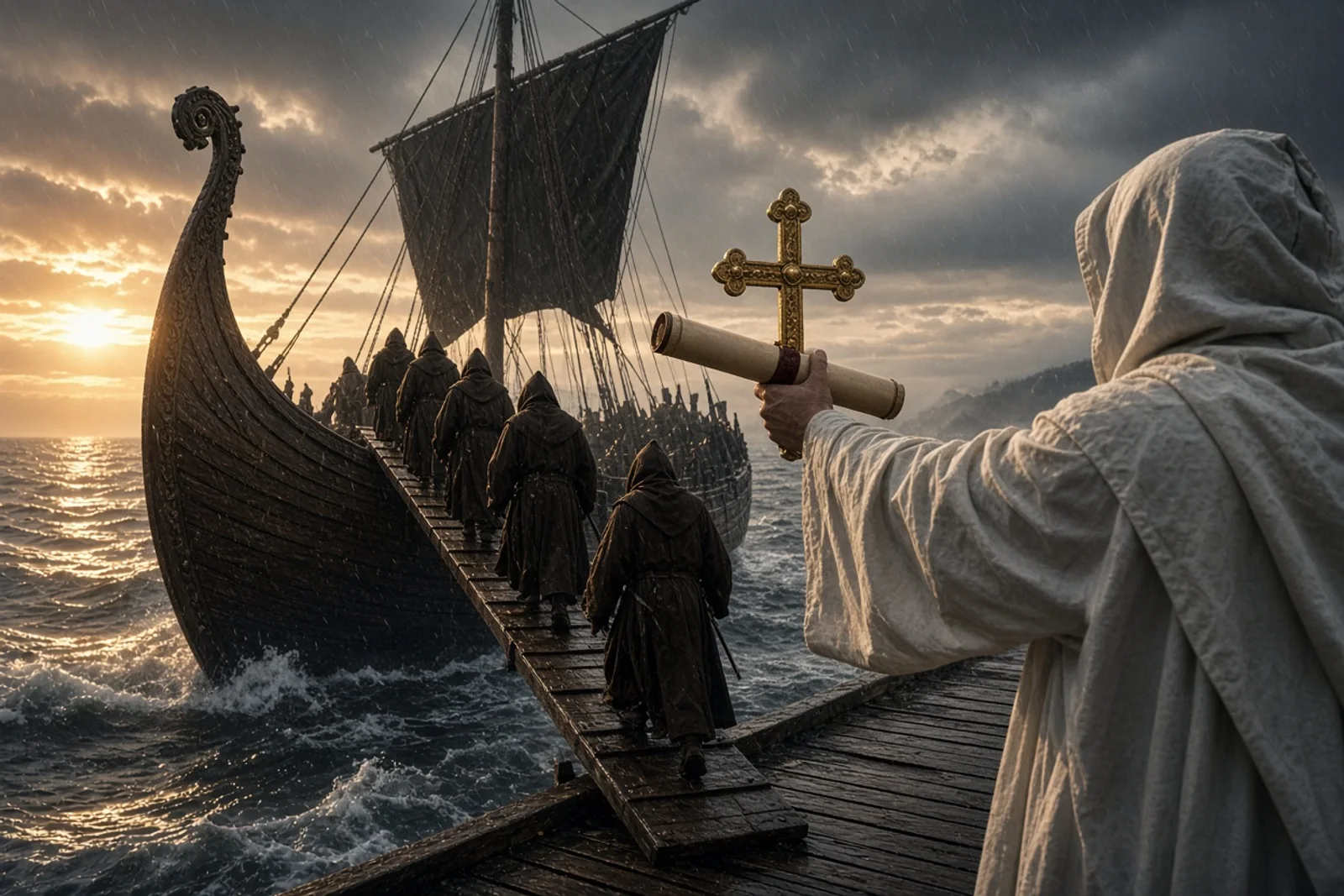
The road out of Rome still smelled of the Tiber at low tide when we set out, packs heavy with the pope’s sealed letters and little else. Augustine walked at the front, his sandals already wearing thin on the stones. I kept pace a few steps behind, watching how he turned every so often to count us. Forty men, most of them younger than he was, none of us sure what waited beyond the mountains.
By the time we reached the passes the nights had grown colder. We slept in abandoned way stations where the wind came through the broken shutters. One brother woke shouting that he had dreamed the English cut out our tongues because we could not speak their speech. Augustine told him to pray instead of dreaming, but the next morning two more said they had seen the same thing.
We argued in whispers after dark. The work was good, we all agreed, yet none of us wanted to die among strangers whose words we could not even beg mercy in. Augustine listened without answering for three nights. On the fourth he said he would go back alone and ask Gregory to release us. We gave him what food we could spare and watched him walk south until the road bent.
We waited in a half-ruined hospice near the Rhone. The days passed slowly. We mended our cloaks and tried not to count how many times the door opened without Augustine returning. When he finally appeared, the seal on the new letter was still soft from the wax. He read it aloud by the hearth while the rest of us stood close enough to feel the heat on our faces.
Gregory’s words did not promise safety. They only said it was worse to turn back than to keep walking. Augustine folded the letter and put it inside his robe. No one spoke against going forward after that.

We crossed into Frankish lands in early summer. The kings Theodoric and Theodebert had been warned we were coming. Their officials met us at the border with horses and an escort of armed men who spoke Latin. They asked no questions about our purpose, only whether we needed fresh bread or a place to wash. We stayed two nights in one of their halls, where the smoke from the central fire stung our eyes but the straw on the floor was clean.
From there the road ran toward Arles. Bishop Etherius received us in the courtyard of his church. He gave Augustine a sealed packet of his own letters and told the servants to fill our sacks with dried fruit and salted meat. One of his priests asked quietly whether we truly meant to cross the sea. Augustine answered that we had already crossed more than water.
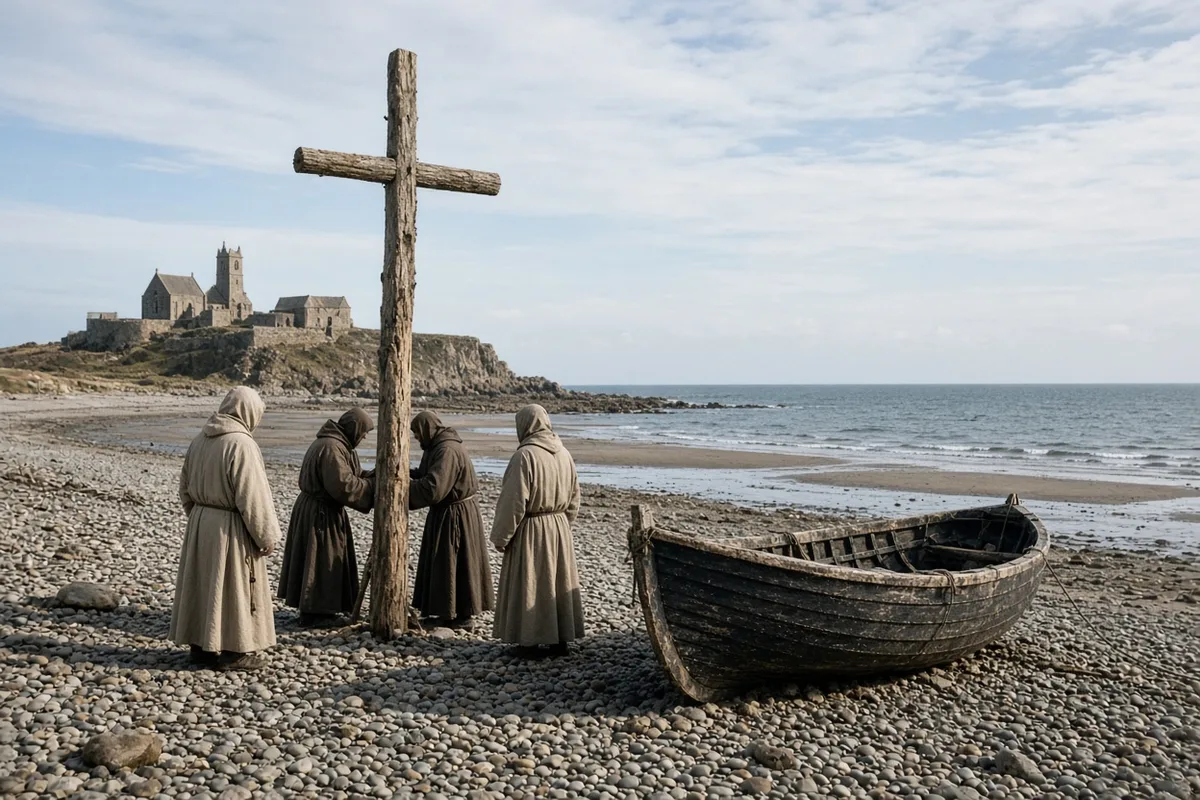
The channel was narrow and gray when we finally saw it from the Kentish shore. The island they called Thanet rose low and flat, its fields already cut for hay. We landed on a stretch of shingle where the tide had left long ridges of weed. Forty men stepped onto the wet stones and stood without speaking while the boatmen pushed off again.
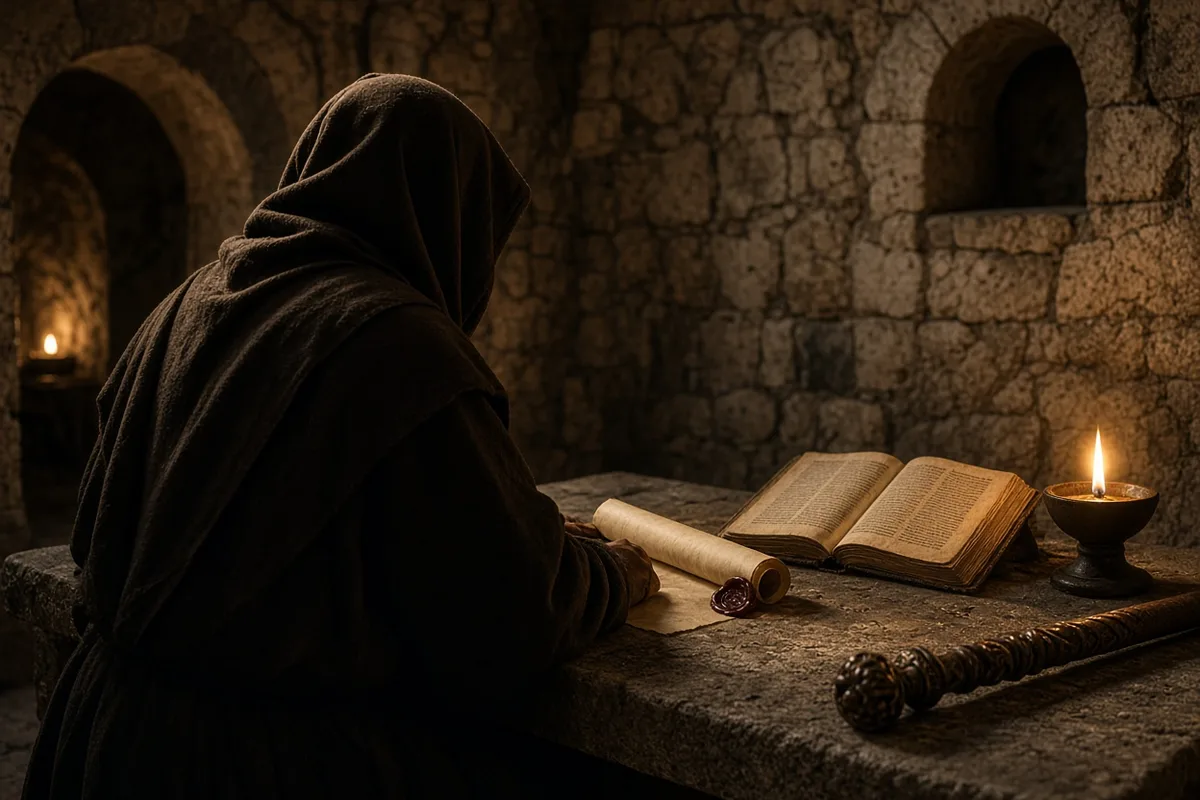
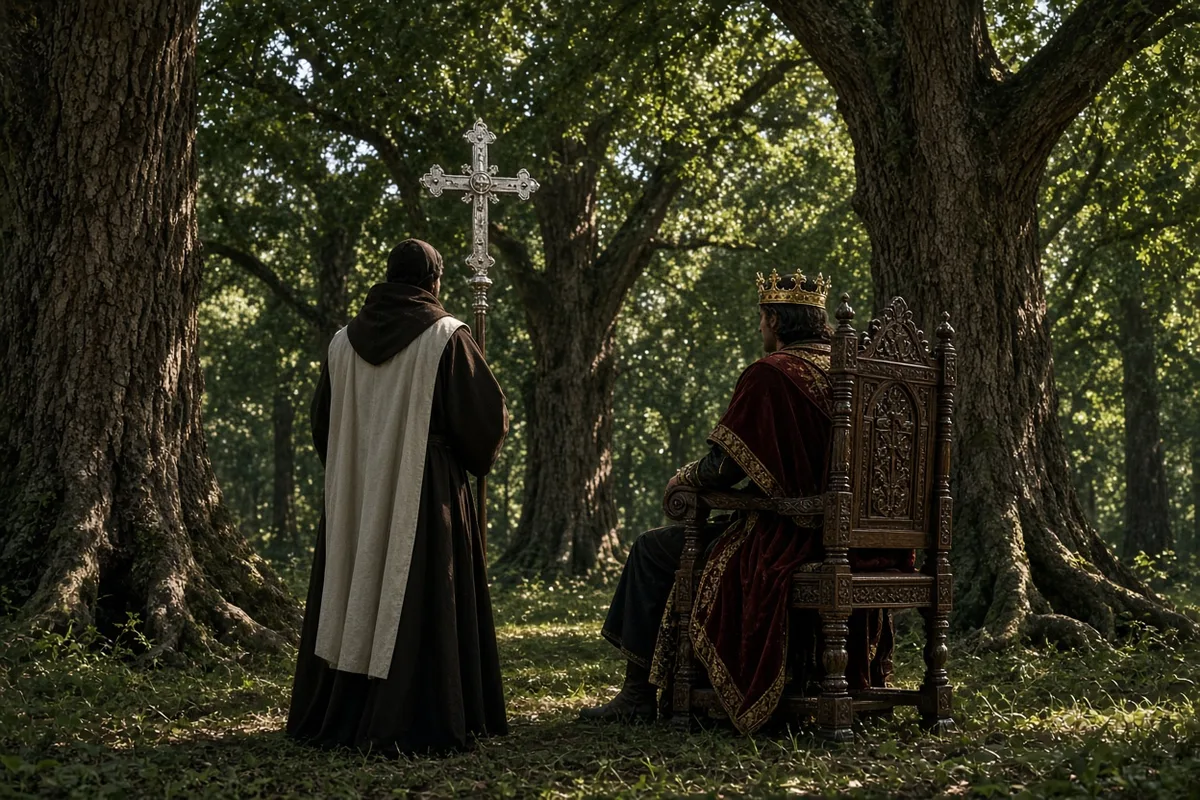
King Ethelbert had been told of our coming. He sent word that we could preach, but only in the open air, and that we must not approach his hall until he decided whether our God was stronger than the ones his people already knew. We set up a rough shelter of branches and sailcloth near the landing place. Every morning Augustine stood on a fallen log and spoke while the rest of us translated as best we could into whatever words the listeners seemed to understand.
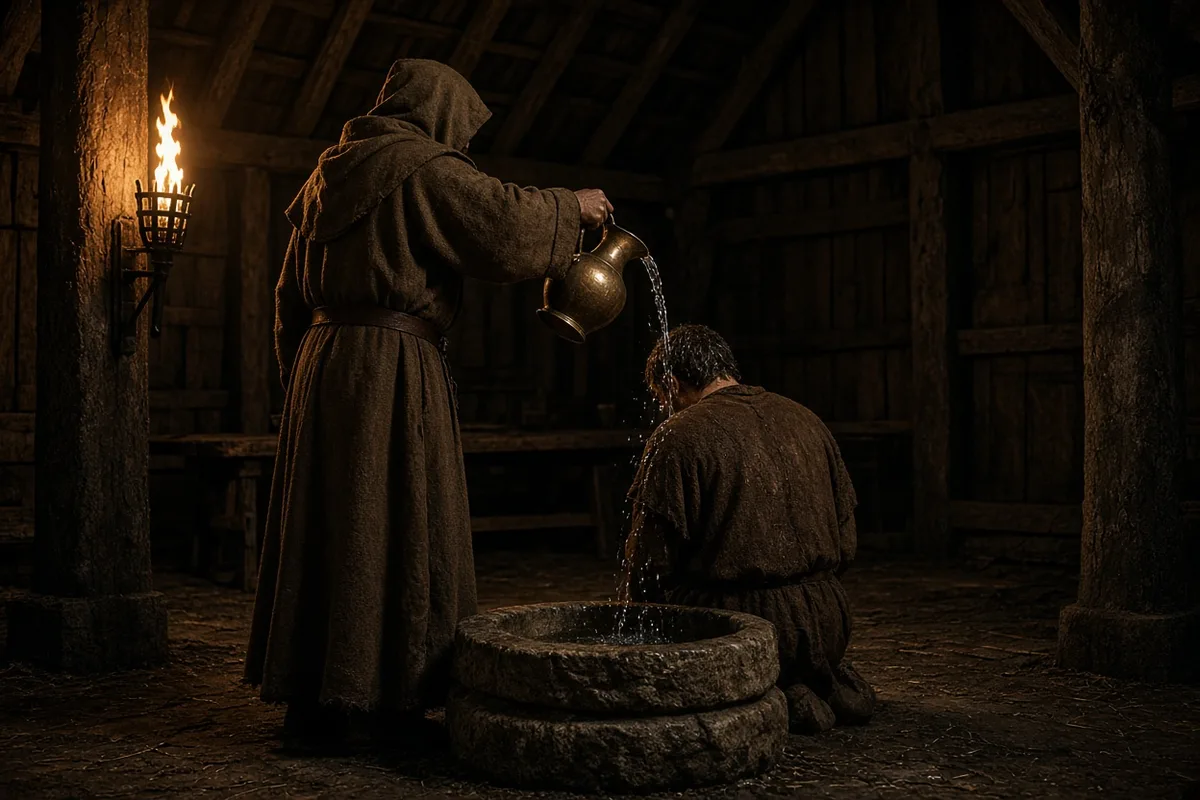
The first converts were women from the nearby villages. They brought small offerings of milk and eggs and asked whether the new God would protect their children from the fevers that came with the autumn rains. Augustine told them to bring the children to be signed with the cross. He did not promise healing, only that the sign would be remembered.
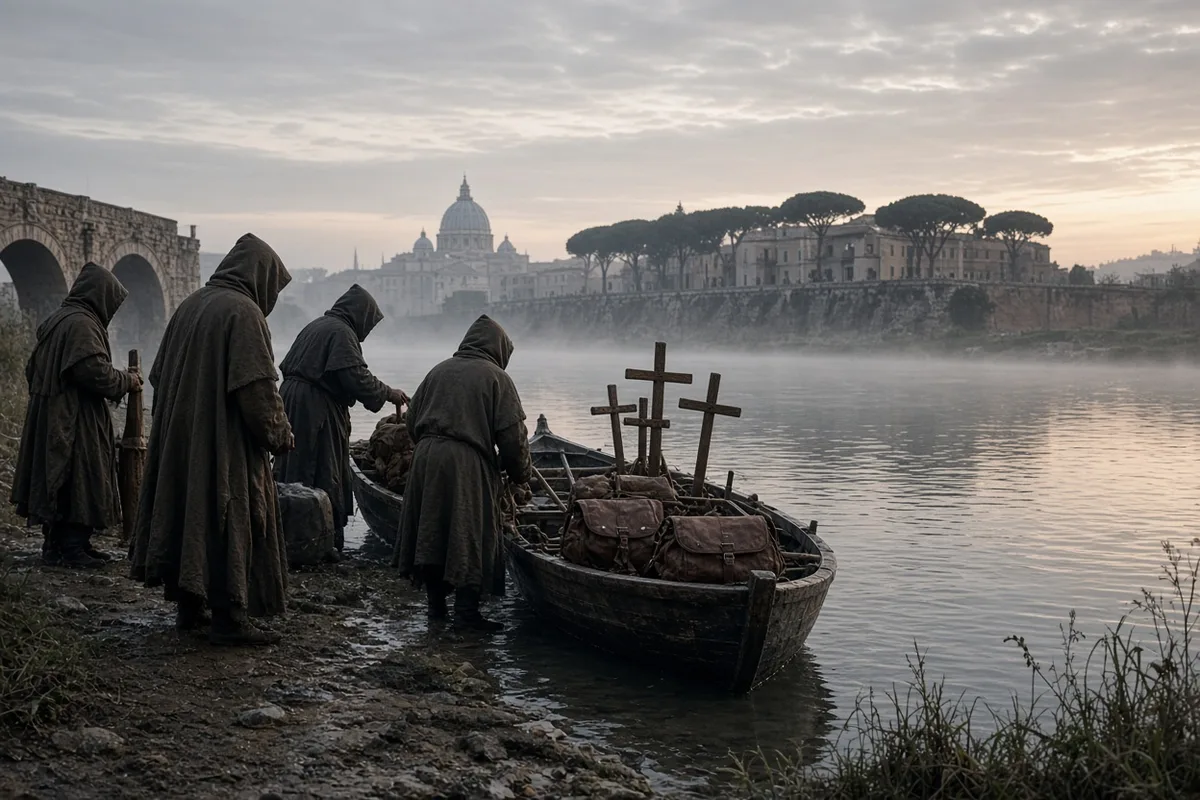
By the time the leaves turned we had moved inland to a wooden building the king allowed us to use. Ethelbert himself came once, standing at the back while Augustine spoke. He left without saying anything, but the next week his reeve brought a cart of timber and nails so we could strengthen the roof before winter.
I stayed through that first winter and the spring that followed. Augustine was made bishop in a ceremony held in the open because there was still no proper church. The new converts stood in a half-circle around us, their breath white in the cold air. When the rite was finished Augustine looked older than he had on the road from Rome, though only a year had passed.
Some of the brothers who had come with us returned to Gaul the following summer. I remained with the ones who chose to stay. The letters from Gregory continued to arrive, carried by traders who knew the southern ports. Each one asked the same thing in different words: whether the English had yet turned.
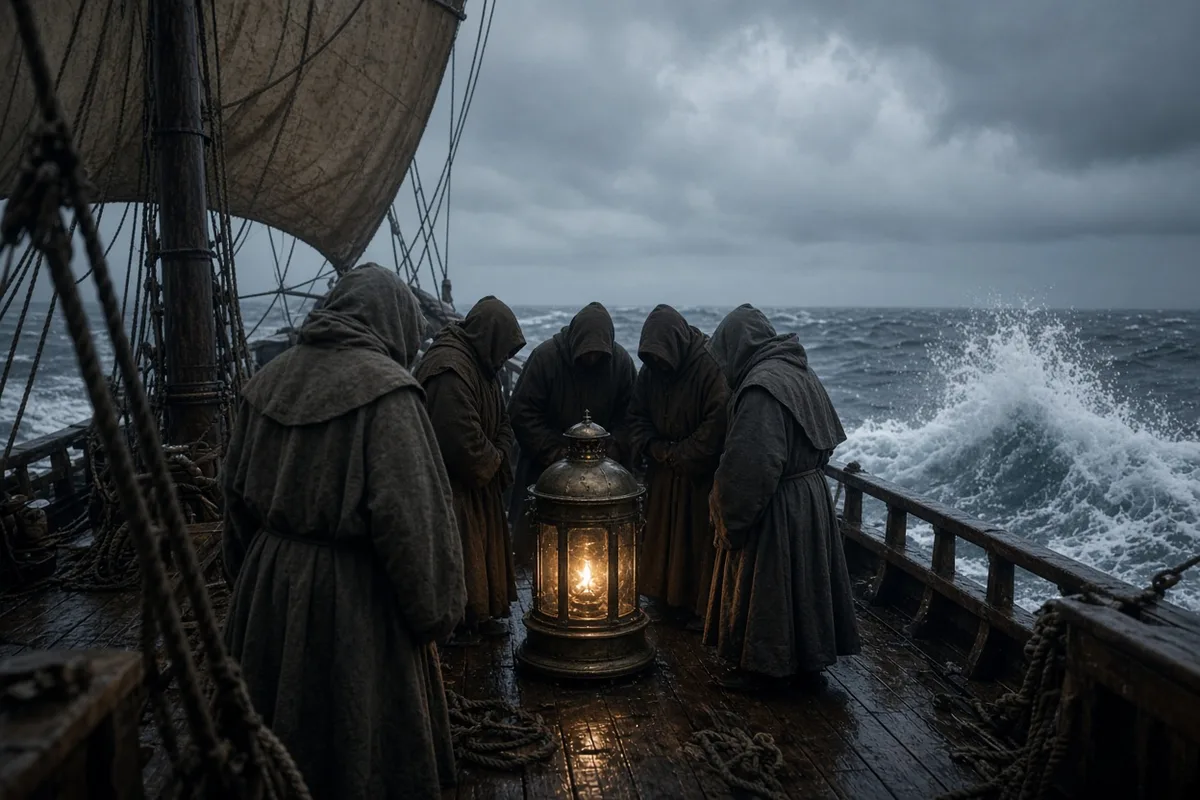
We answered as best we could with whatever news the traders agreed to carry back. The fields around Thanet were being planted again. The king’s hall had accepted a wooden cross above its door. Augustine no longer counted us every morning. There were fewer of us now, and the work was no longer something we discussed. It was simply what we did between one tide and the next.
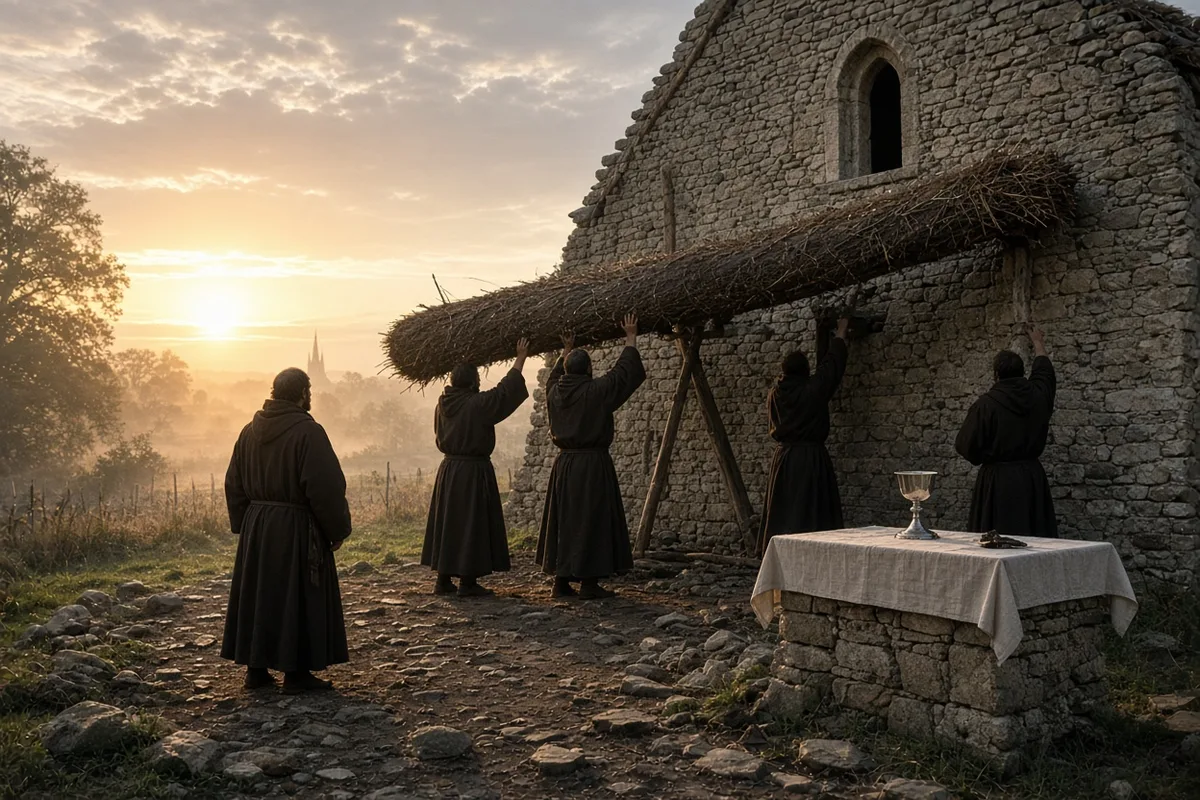
In the spring of 598 the reeve returned with ten more carts, this time carrying squared oak beams cut from the Weald and iron nails forged at the king’s own smithy in Canterbury. Augustine set us to work on a rectangular timber church measuring sixty feet by twenty-five, its walls daubed with clay mixed from the riverbank and its roof thatched with reeds taken from the Stour marshes. He placed the altar at the eastern end exactly as Gregory had directed in the letter carried by the trader Paulinus, the one that said the table of the Lord must stand where the sun rises so the faithful might face the light when they offered the host. Every morning we mixed mortar in wooden troughs while the new converts, now numbering nearly two hundred, carried baskets of flint from the fields to build a low wall around the plot. By midsummer the roof was on and we had hung a single bronze bell, the one Ethelbert’s reeve had bought from a Frankish ship at Richborough, its clapper striking the hour for prime and vespers.
That same year Queen Bertha’s chaplain, the bishop Liudhard, came from the royal hall with a silver chalice and a book of the Gospels bound in red leather that he said had belonged to her mother in Paris. He placed both on the new altar and asked Augustine whether the Roman rite would allow the queen’s Frankish priests to continue saying mass in their own tongue on feast days. Augustine answered that Gregory had written only that the liturgy must follow the custom of the apostolic see, yet he permitted Liudhard to celebrate once a month provided the words of consecration remained in Latin. The queen herself attended the first such mass on the feast of St. John the Baptist, arriving in a cart drawn by two white oxen and accompanied by her daughter Ethelburga, then nine years old. She knelt on the packed earth floor and afterward gave Augustine a linen corporal embroidered with crosses that she had worked with her own hands during the winter.
In the autumn of 601 the ship from Marseilles brought four more monks sent by Gregory: Mellitus, Justus, Paulinus, and Rufinianus, together with a pallium of white wool for Augustine and a set of replies to the nine questions he had sent the year before. The letter that accompanied the pallium, dated 1 June according to the Roman calendar, began with the words “To our most reverend and holy brother Augustine, bishop,” and went on to grant him authority over all the bishops of Britain. Augustine read it aloud in the timber church while the new arrivals stood in a line, their traveling cloaks still stiff with salt from the crossing. Mellitus carried an additional packet addressed to King Ethelbert, urging him to destroy idols yet spare the temples themselves, sprinkling them with holy water as Gregory had instructed in a separate letter to Mellitus dated the same day.
By 603 the number of baptized Christians in Kent had reached ten thousand, counted by the reeves who kept tallies on notched sticks during the great assembly at Canterbury at Easter. Augustine consecrated Justus as bishop for the new church at Rochester, twenty-five miles west, and sent Mellitus to the East Saxons with letters from Ethelbert commanding King Saebert to receive him. We built a second timber church inside the Roman walls of London, using stones taken from the old Mithraeum, its foundations laid on the site where the temple of Diana had stood. Paulinus remained with us and began teaching the sons of the Kentish nobles to read the psalter in Latin, using wax tablets and styluses cut from bone. That winter Augustine fell ill with a fever that left him unable to stand for weeks; he recovered enough to celebrate Christmas mass but walked with a stick afterward and no longer climbed the ladder to inspect the thatch.
Augustine died on 26 May 604 and was buried first in the porticus of the timber church, the grave marked only by a wooden cross painted red. Six months later the brothers moved his body to a stone sarcophagus brought from Gaul and placed it beneath the altar. Laurentius, who had come with us from Rome, succeeded him as archbishop and immediately wrote to Gregory’s successor Sabinianus asking for more books and vestments. The new church of stone, begun in 609 with funds Ethelbert provided from the royal treasury, measured one hundred and forty feet in length and incorporated the old timber walls as scaffolding. Its eastern apse was finished in 613, the year Ethelbert himself was buried beside Augustine. By then the fields around the monastery held thirty monks and twice as many lay brothers who worked the land granted by the king’s charter of 605, the one that gave us “the vill called Sturry with all its appurtenances, fields, woods, and fisheries.”
The last letter I carried myself was in 610, when Laurentius sent me to Rome with news that the East Saxons had returned to their old gods after Saebert’s death. Pope Boniface IV received me in the Lateran and gave me a fragment of the True Cross sealed in a golden reliquary to bring back. I returned to find the stone church already in use, its windows glazed with green glass from the workshops at Worms. The community had grown to fifty-two monks, their names recorded each year in the liber vitae that Laurentius kept on the altar. I remained there until my own seventieth year, copying manuscripts in the scriptorium built against the north wall and teaching the novices the rule Gregory had sent in 598.
When the Viking ships came in 851 they burned the thatched outbuildings but left the stone church standing, its walls blackened yet whole. The monks who survived rebuilt the cloister with fresh timber and continued to say the hours. In later centuries masons added the Norman tower and the crypt beneath the choir, yet the original Roman foundations Augustine laid remained visible in the undercroft whenever the floor was lifted for repair. Today the same site holds the cathedral whose bells ring across the city, its nave filled each morning with visitors who pause at the place where the first altar once stood, the spot still marked by a circle of darker stone set into the pavement.
In 1220 the monks of Christ Church translated the relics of Thomas Becket into a new shrine behind the high altar, the feretory supported by four oak posts and covered with plates of gold weighing two hundred and fifty marks, while the prior Henry of Eastry recorded in the cathedral’s obituary list that the procession included two archbishops, eighteen bishops, and the young King Henry III, who offered a golden cup at the tomb. The same year the chapter purchased an organ from a maker in Cologne for thirty pounds and installed it in the north transept, its bellows worked by two lay brothers during the daily office.
During the Dissolution the commissioners of Thomas Cromwell removed the shrine on 18 September 1538, melting down the gold and sending the bones of Becket to London for examination, yet the stone circle marking Augustine’s first altar remained untouched beneath the pavement because the workmen mistook it for part of the earlier Norman work. The last prior, Thomas Goldwell, surrendered the monastery on 30 March 1540 and received a pension of two hundred marks a year; he died in 1557 at Canterbury’s parish of St. Dunstan.
After the Restoration the dean and chapter rebuilt the south transept roof in 1663 using oak from the Wealden estates granted in Ethelbert’s 605 charter, the new beams numbered and jointed according to the drawings of the surveyor Christopher Wren. In 1834 the glazier William Wailes replaced the medieval east window with stained glass depicting the mission of 597, its central light showing Augustine holding the pallium sent by Gregory on 1 June 601.
On 1 June 1942 a Luftwaffe raid dropped a high-explosive bomb that shattered the nave’s south aisle windows but left the darker stone circle intact under the crossing; the verger Arthur Smith noted in his logbook that the blast scattered fragments of thirteenth-century floor tiles across the choir steps. Post-war masons relaid the pavement in 1954 using Portland stone cut to the original medieval dimensions.
Each morning the verger unlocks the west doors at seven forty-five and walks the length of the nave to the crossing, pausing at the circle of darker stone where a single votive candle now burns in a brass stand placed there in 1997 by the Friends of Canterbury Cathedral. The last monk to keep the liber vitae, Brother Anselm, died in the infirmary on 12 March 1978 at the age of ninety-one, his name entered on the final page in the hand of the archivist.
Visitors still trace the outline of that circle with the toe of a shoe before moving on toward the crypt, where the original Roman foundations remain visible beneath the modern grille installed in 2016.