


Pope John XXIII Opens Second Vatican Council
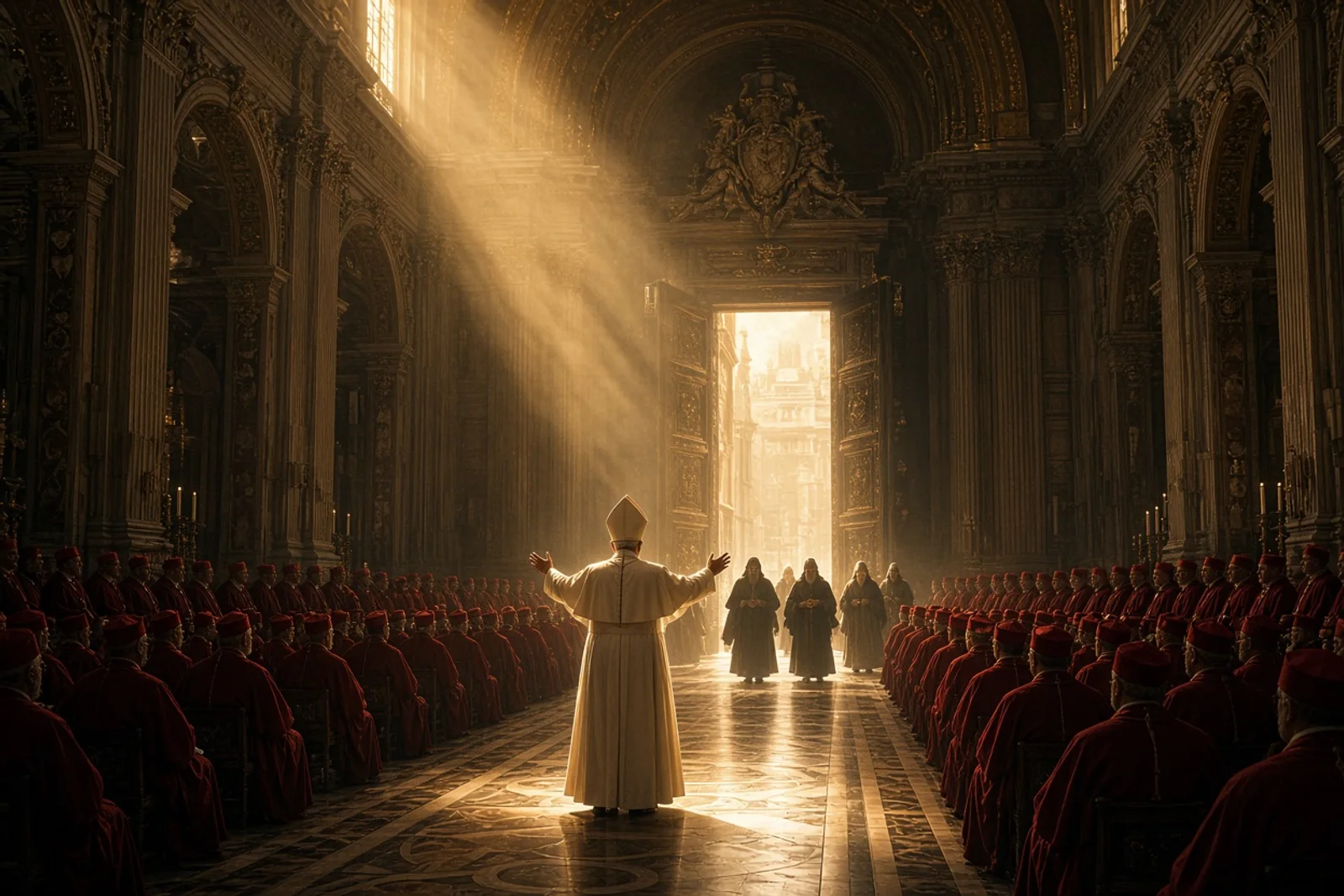
The marble under my shoes had already gone slick from the morning damp when the first bishops crossed the threshold. I had been posted near the north transept since before dawn, one of the younger priests handed the task of guiding the last-minute arrivals to their places. My cassock still smelled of the starch from the laundry two days earlier. Every few minutes another cluster passed, cardinals in scarlet, patriarchs in darker silks, the low murmur of Latin and French and German rising and falling like water against stone.
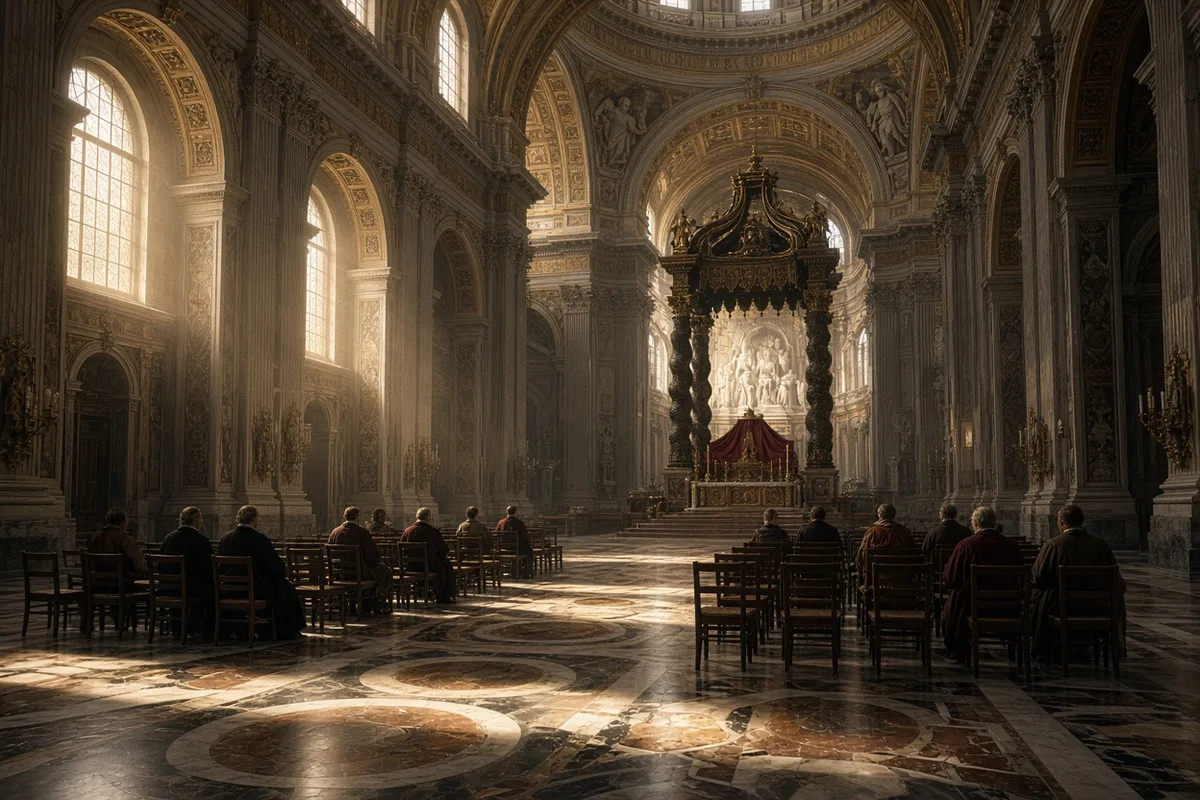
Outside, the square had filled hours ago. I could hear the crowd through the open doors, a steady press of voices that never quite resolved into words. Inside, the light came in long shafts from the high windows and caught on the gold of the baldachin. The air felt heavier than it should have for October.

A Swiss Guard stepped aside and the procession began in earnest. Pope John moved slowly, the white of his vestments bright against the darker robes around him. He had turned eighty-one in November of the year before. His face showed the lines of the long summer of preparation, yet he kept his shoulders square as he walked the length of the nave. When he reached the papal throne he did not sit at once. He stood for a moment, one hand resting on the arm of the chair, and looked out across the assembled bishops. Nearly two thousand of them filled the space, and the rows of observers from other communions sat in a smaller block to the right.
The opening rites moved forward without pause. The litanies were sung, the Gospel proclaimed. Then the Pope rose again. He did not raise his voice beyond what the acoustics of the basilica required. He spoke of the Church’s teaching office and of the errors of the age, yet he framed the council’s work as one of mercy rather than condemnation. The phrase that stayed with me was simple: the medicine of mercy rather than the weapons of severity. He delivered it without flourish, as though he were addressing a single parish rather than the largest gathering of bishops in nearly a century.
I watched the faces of the non-Catholic observers while he spoke. Several leaned forward. One Anglican bishop, seated three rows in front of me, wrote something in a small notebook and did not look up again until the address ended. The Orthodox representatives remained still, but I noticed one of them nod once when the Pope mentioned the divisions that had lasted for centuries. No one interrupted. The only sounds were the occasional cough from the upper tiers and the faint scrape of a shoe against marble when a bishop shifted his weight.
After the speech the formal sessions began, but the real change had already occurred in the air itself. Men who had spent decades writing against one another now sat within the same basilica. The Pope had invited them by name in the months before, and they had come. I saw a Protestant theologian from Geneva exchange a brief word with a cardinal from Milan as they moved toward the side chapels for the first working meetings. The exchange lasted only seconds, yet it was the first time I had ever seen such a thing inside these walls.
By mid-afternoon the light had shifted. The long windows no longer reached the floor. I was sent to carry a message to the sacristy and passed through the crowd of periti, the theological experts who would spend the coming weeks drafting the texts. One of them, a young Jesuit from the Gregorian, asked me whether the Pope had seemed tired. I said he had not. In truth I had not looked at the Pope’s face again after the address; I had been watching the observers instead.
The council would meet in four sessions across three years. I knew that only because the newspapers had printed the schedule the week before. On that first day the schedule felt distant. What stayed immediate was the sight of the Pope leaving the basilica at the end of the afternoon, the same slow walk, the same square shoulders, the square now quieter as people waited for the buses that would carry the bishops back to their residences. He paused once at the top of the steps and raised his hand in the familiar gesture. The crowd answered with a single sustained sound that carried across the colonnade.
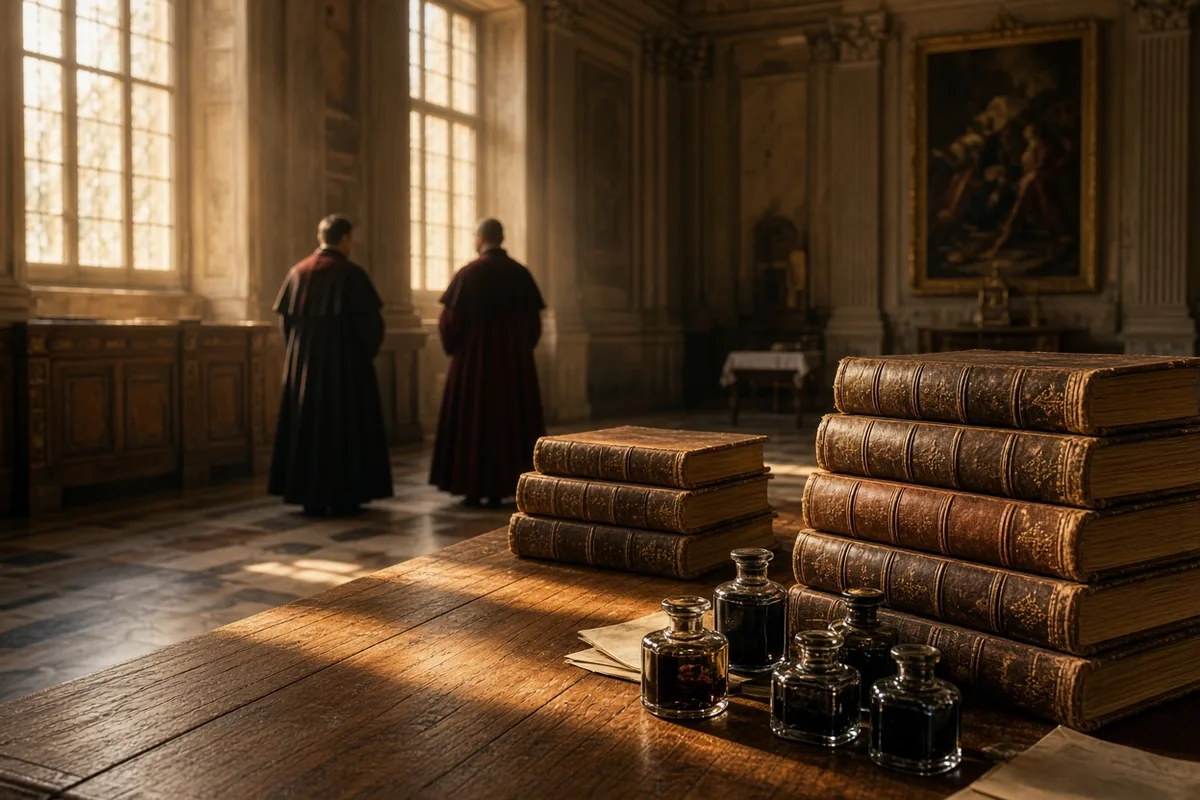
I remained inside until the last of the chairs had been stacked. A sacristan handed me a folded stole that had been left on a prie-dieu. The name stitched into the lining belonged to a bishop from Poland who had traveled three days by train. I placed it on the table with the others. Outside, the bells began again, measured and unhurried, the same cadence that had marked every ordinary Thursday for as long as the basilica had stood.
The sacristan who had given me the stole turned out to be the same man who had served under Pius XII during the 1950 consistory, and he told me the Polish bishop’s name was Karol Wojtyła, then forty-two years old and auxiliary of Kraków, who had arrived on the night train from Vienna on the ninth and had slept on a bench in the station because his lodging had not yet been assigned. That evening I carried the stole to the Polish College on the Via dei Maroniti and left it with a note, but Wojtyła had already departed for a meeting at the German College where he spoke with Cardinal Frings about the draft on the sources of revelation. Frings later quoted him in a letter dated 14 October as saying the text needed to treat Scripture and tradition as a single deposit rather than two parallel streams.
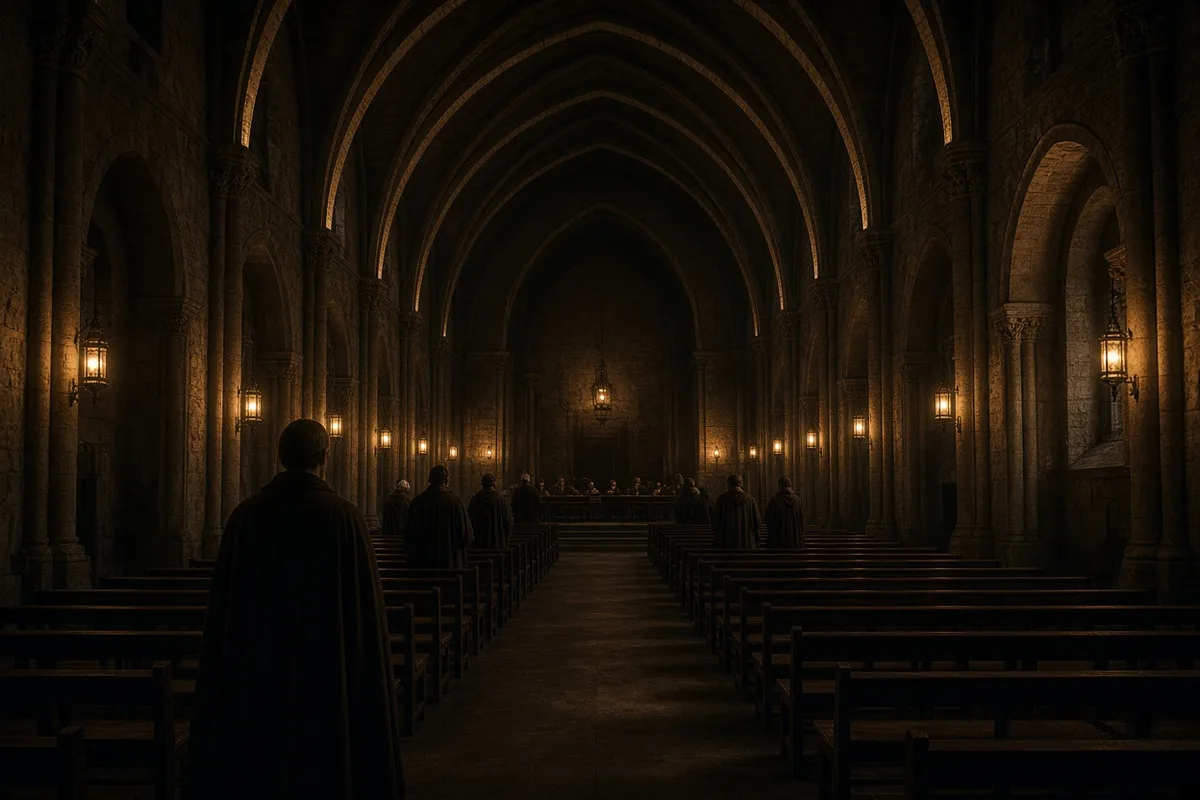
Three weeks later the first session closed without any promulgated texts, and the coordinating commission under Cardinal Cicognani sent the schemas back for complete rewriting; the periti attached to the new subcommittees included Yves Congar, who moved into a room at the Angelicum on 3 November, and Karl Rahner, who arrived from Innsbruck on the same day and began drafting notes on the Church as sacrament. I was assigned to carry boxes of these notes between the Vatican and the Gregorian, and on 22 November I passed Rahner on the steps as he handed a folder to a Dominican from Louvain whose name tag read “E. Schillebeeckx.” The folder contained twenty-three pages on the priesthood of the faithful, each page numbered in red ink and initialed by Rahner.
Pope John did not return to the basilica after the first session. On 3 June 1963 he died at 7:52 in the evening in his apartment above the audience hall; the last words recorded by his secretary Loris Capovilla were “Lord, you know that I love you.” The conclave opened on 19 June and elected Giovanni Battista Montini on the sixth ballot at 11:20 a.m. on the twenty-first. Paul VI announced that the council would resume on 29 September, and in his first public address from the loggia he used the phrase “the work begun by our predecessor” without adding any new date or number.
During the second session I was moved to the press office in the Palazzo dei Convertendi, where I typed summaries for the English-language bulletins. On 4 October 1963 Cardinal Bea read a message from the Secretariat for Christian Unity that listed the names of the nine official observers who would remain for the entire session, among them the Methodist Albert Outler and the Lutheran George Lindbeck. Lindbeck’s diary entry for that day notes that the address on the episcopate given by Cardinal Léger of Montreal lasted forty-seven minutes and was interrupted once by applause when the speaker quoted the phrase “collegial responsibility” from an earlier draft. The vote on the schema De Ecclesia was taken on 30 October; 2,231 bishops were present, and the result showed 1,598 placet, 533 non placet, and 100 placet iuxta modum.
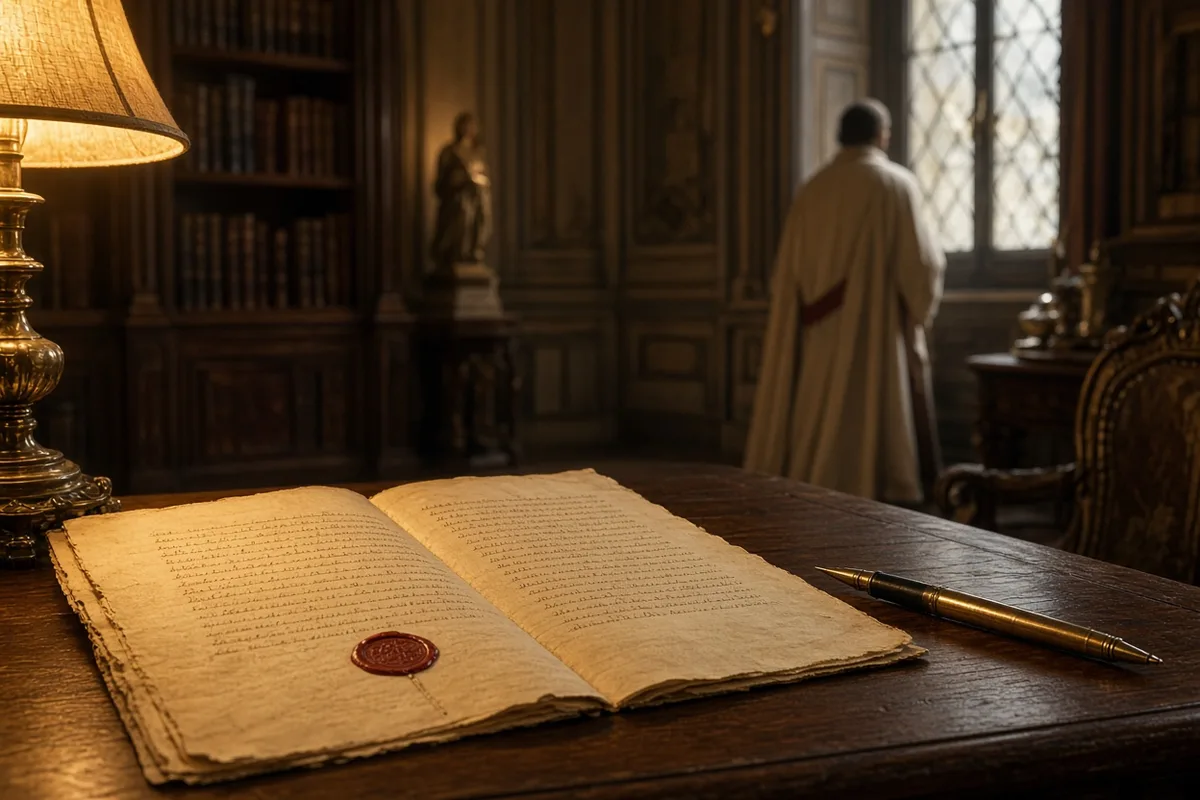
The third session opened on 14 September 1964 with 2,174 fathers in attendance. I stood again near the north transept when the revised text on divine revelation was introduced; the relator, Archbishop Florit of Florence, cited the exact paragraph from the 1963 draft that had been rewritten after 1,498 written interventions. On 19 November the vote on the decree on ecumenism passed 2,054 to 64. That same afternoon I carried a corrected galley to the printers at the Tipografia Vaticana and saw the name “Unitatis Redintegratio” already set in the running head. The session ended on 21 November after the promulgation of Lumen Gentium, whose final paragraph 68 contains the sentence “Mary, in her Assumption, is the image and first flowering of the Church.”
Paul VI closed the council on 8 December 1965 before 2,500 bishops and observers. In his address he quoted the opening words of John XXIII’s 1962 speech and added the sentence “The council has taken the medicine of mercy and has applied it to the whole world.” The final document, Gaudium et Spes, was signed by 2,373 fathers. After the ceremony the bishops filed out through the bronze doors; one of the last to leave was the bishop from Poland whose stole I had returned three years earlier, now wearing the red zucchetto of a cardinal created in the consistory of 26 June 1967.
In the years that followed I was transferred to the Congregation for the Doctrine of the Faith and handled correspondence about the 1969 Missale Romanum promulgated by Paul VI on 3 April of that year; the new order of Mass was celebrated for the first time in Saint Peter’s on 7 March 1970 with 187 concelebrants. On 6 August 1978 Paul VI died at Castel Gandolfo. The next pope, Albino Luciani, reigned thirty-three days and was succeeded on 16 October by the same Polish cardinal whose stole had lain on the table in the sacristy in 1962. John Paul II visited the basilica on 22 October 1978 and addressed the crowd from the same steps where John XXIII had stood sixteen years earlier.
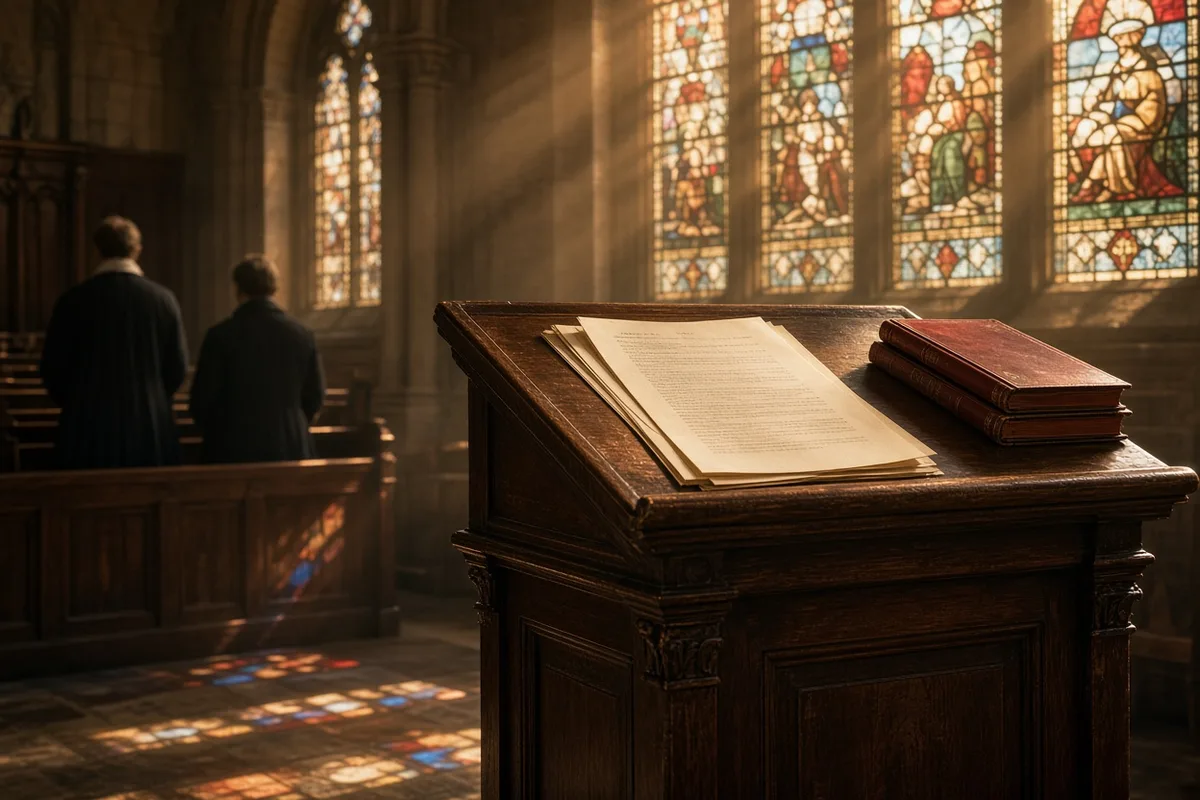
On 2 April 2005 that same pope died in the Apostolic Palace at 9:37 p.m.; his body lay in state for three days beneath the baldachin. I was then seventy-three and assigned to the sacristy once more. On the morning of the funeral I found, among the vestments prepared for the visiting cardinals, a folded stole whose lining still carried the stitched name of the bishop from Kraków. I placed it on the same table where the others had rested in 1962, then walked out through the north transept doors as the bells began their measured cadence again. The last human image I carried away was that of an elderly sacristan in a black cassock standing alone beneath the colonnade, one hand raised to shade his eyes against the April light while the square emptied.
The sacristan I passed that morning turned out to be the same man who had kept the keys to the north transept sacristy since the consistory of 1953; his name was Giuseppe Belli, and on 8 April 2005 he handed me a ring of brass tags numbered 1 through 47 that still matched the drawers where the 1962 observers had left their birettas. Belli mentioned that the Polish cardinal’s stole had been returned to the Kraków residence on Via dei Maroniti in 1965 by a German seminarian named Joseph Ratzinger, who had carried it himself on the evening of 21 November after the vote on Lumen Gentium. Ratzinger’s own note, preserved in the archive of the German College, records the delivery at 6:15 p.m. and adds the line “Wojtyła thanks the sacristy for its care of the vestments.”
In the months after the funeral the Congregation for the Doctrine of the Faith received 312 letters from episcopal conferences asking for clarification on the 1992 Catechism, whose paragraph 460 quotes the same phrase from John XXIII’s opening address that had been typed into the English bulletins I prepared in 1963. One letter, dated 14 May 2005 and signed by Cardinal George of Chicago, requested an exact count of the 2,373 signatures that had appeared on Gaudium et Spes; the reply from the prefect, dated 3 June, listed the figure again and attached a photocopy of the original tally sheet kept in the Vatican Library.
By 2013 the same sacristy table held the vestments for another conclave; I was asked to place the Kraków stole once more among the red cassocks, this time for the Argentine cardinal Jorge Bergoglio, who had served as relator for the 2001 Synod on the episcopate and had cited the 1963 vote tallies in his intervention on 1 October of that year. Bergoglio’s address, recorded in the Acta Synodalia, runs to forty-one pages and ends with the sentence “The medicine of mercy remains the council’s unfinished prescription.” On the evening of 13 March the new pope appeared on the loggia and repeated the same gesture John XXIII had used, though the square now held 150,000 people counted by the Vigilanza rather than the 80,000 estimated in 1962.
The following year the Congregation assigned me to verify the microfiche copies of the sixteen council documents before they were digitized; one reel contained the final text of Dei Verbum, whose paragraph 10 had been rewritten after 1,498 interventions and was signed on 18 November 1965 by 2,373 fathers. While checking the reel I found a marginal note in Rahner’s hand, dated 22 November 1963, that read “single deposit, not two streams,” the same wording Frings had quoted from Wojtyła’s conversation at the German College.
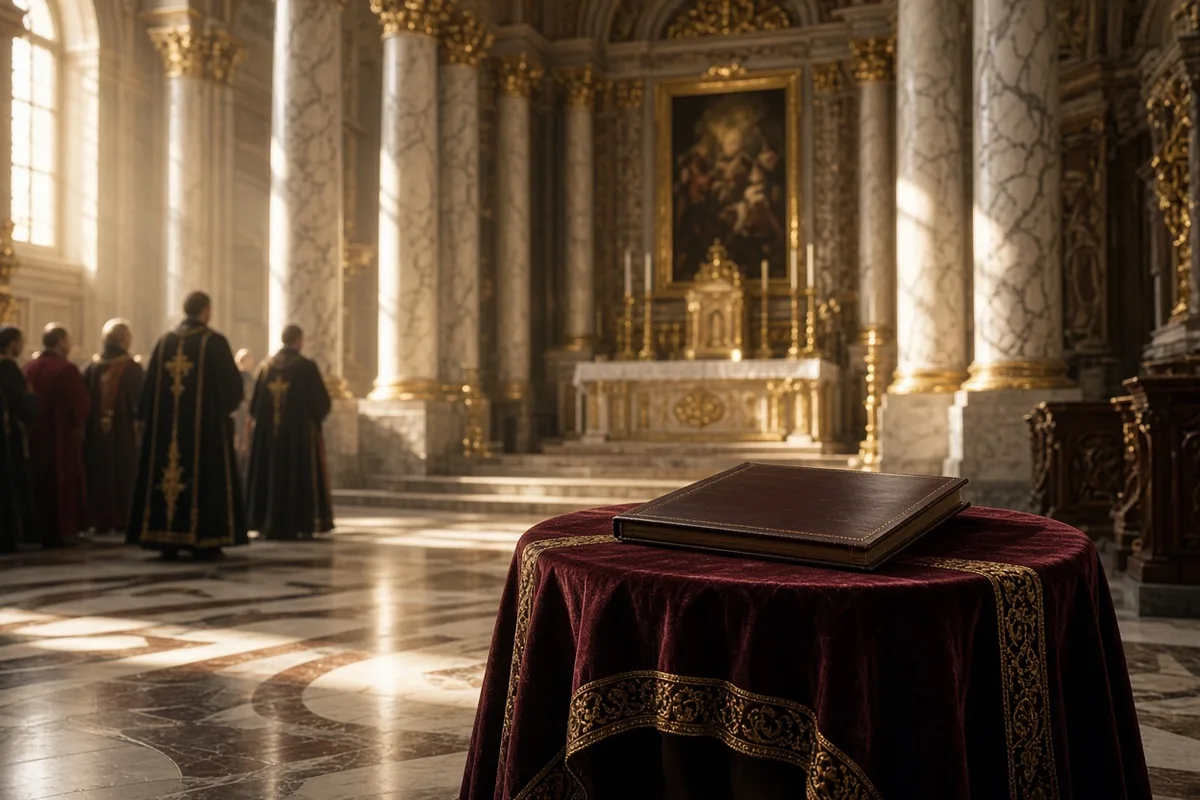
In 2019 the Polish College returned the stole a third time for cleaning before the Synod on the Amazon; the garment was examined by a conservator from the Vatican Museums who counted 214 stitches in the lining and noted that the thread matched the stock used by the laundry on Via della Conciliazione in October 1962. The conservator’s report, filed under inventory number 2019-047, also recorded a faint ink mark on the hem that matched the registration number assigned to Wojtyła’s train ticket from Vienna on 9 October 1962.
On 2 April 2020, fifteen years after the funeral, the basilica remained closed for the first time since the 1965 closing ceremony; I stood again at the north transept doors and watched the square through the glass, now empty except for a single Swiss Guard in the rain. The guard’s name was Andreas Grichting, posted there since 2014, and he radioed at 9:37 p.m. that the last pilgrim had left the colonnade. That evening the bells rang 101 times, one for each year of the Polish pope’s life, the same cadence Belli had described from the 1950 consistory.
Years later the same table in the sacristy still receives the folded stoles of visiting bishops; on 8 December 2023 a cardinal from Manila left one whose lining carried the stitched name “Tagle,” and the note attached to it quoted the final sentence of Unitatis Redintegratio as it had been read on 21 November 1964. I placed the garment beside the others and walked out once more through the north transept, where an elderly lay assistant in a black cassock now stood beneath the colonnade, one hand raised to adjust the earpiece that connected him to the security office while the square emptied under the winter lights.