



Private adversity forges leaders who meet national crisis

In 60 seconds
- Goodwin argues leadership is assembled through crisis response, not fixed at birth.
- Lincoln, Theodore Roosevelt, FDR, and LBJ each metabolized private hardship—depression, grief, paralysis, anxious poverty—into distinct public skills.
- Ambition needs an early moral story of self-education or will; without it, it yields careerists.
- Crisis leadership styles diverge: cabinet inclusion, bully-pulpit pressure, fireside empathy, cloakroom persuasion.
- LBJ’s civil-rights mastery and Vietnam failure sprang from the same unshakeable faith in personal negotiation.
- Across eras they made citizens partners by explaining hard choices, drawing on character built long before the emergency.
The big idea
Goodwin argues leadership is manufactured, not born: each man’s public skill in national emergency traces to how he metabolized an earlier private struggle. Parallel biographies of Lincoln, Theodore Roosevelt, FDR, and LBJ show crisis revealing capacities already forged, not summoning them from nowhere.
The book in brief
Goodwin opens by rejecting the born-leader myth. She braids four lives—Lincoln, Theodore Roosevelt, FDR, LBJ—into three movements: early ambition, adversity and growth, then crisis leadership. Each man reached adulthood carrying a wound that could have broken him: poverty and melancholy, childhood frailty plus a double death, polio at thirty-nine, Hill Country insecurity. How each answered that private emergency, she claims, manufactured the capacity later drawn on in public emergency.
Ambition alone is not enough. Lincoln’s self-taught law and string of early failures gained direction only when framed as moral self-improvement through reason. Roosevelt’s Harvard advantages were steered by a private war on asthma and physical weakness that later became the strenuous-life creed. Without such an organizing story, Goodwin says, ambition produces careerists.
The middle movement isolates crucibles. After Alice and Mittie died on the same day in 1884, Roosevelt spent nearly two years in the Dakota Badlands ranching and rebuilding stamina; he returned harder and more willing to take risks. FDR’s 1921 paralysis forced dependency and image management at Warm Springs; Goodwin treats the felt powerlessness as the mechanism that later produced fireside empathy. LBJ’s Senate decades built the opposite gift—the Johnson Treatment of one-on-one vote trading—proving styles are not interchangeable.
Crisis chapters test the claim. Lincoln seats defeated rivals Seward, Chase, and Bates in his cabinet and times the Emancipation Proclamation after Antietam so it reads as strength. Roosevelt brokers the 1902 anthracite strike and wields the bully pulpit against trusts and for conservation. FDR’s March 1933 bank holiday and first fireside chat restore deposits before the hundred days’ fifteen major laws ride the regained confidence. LBJ converts Kennedy’s assassination into leverage for the 1964 Civil Rights Act and 1965 Voting Rights Act, then applies the same persuasion faith to Vietnam and produces a credibility gap.
She closes on shared threads: self-correction, direct explanation that treats the public as partner, and private struggle pre-dating public glory. Leadership, on this reading, is what a person has already built when the national storm arrives.
Context
Doris Kearns Goodwin uses parallel biographies of four presidents she had studied for decades to reframe leadership studies around character forged by struggle rather than charisma or pedigree. The 2018 book offered a historically grounded case against the myth of the born leader and mattered to readers seeking crisis lessons grounded in real lives rather than abstract trait lists.
The key ideas
1
Leadership is made
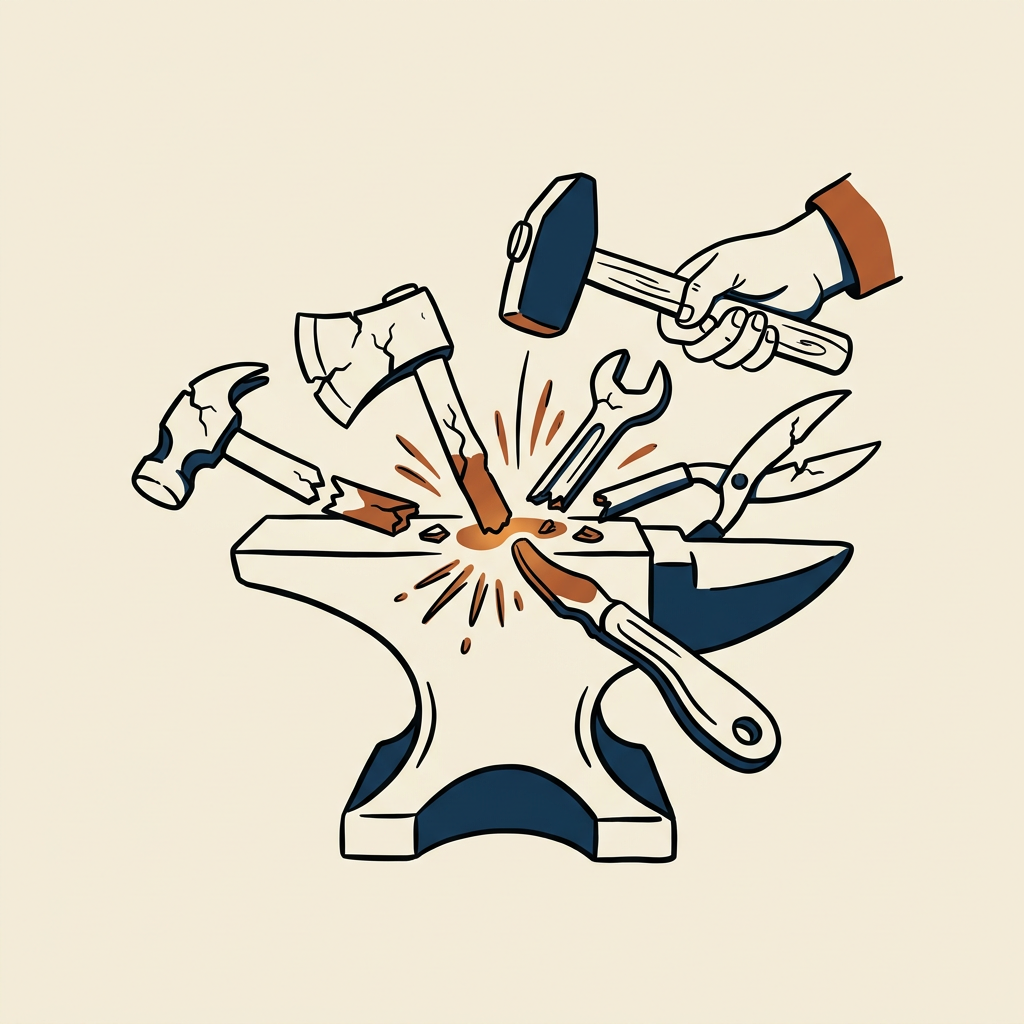
Goodwin claims leadership is a capacity assembled through specific crises that could as easily have broken the person, not a fixed trait present at birth.
She structures the book in three movements—ambition and formation, adversity and growth, crisis leadership—rather than four separate lives. Braiding Lincoln, Theodore Roosevelt, FDR, and LBJ forces the reader to see a recurring pattern across different men and eras.
Each arrived at adulthood already wounded. Lincoln knew poverty, almost no schooling, and at least two breakdowns contemporaries called melancholy. Roosevelt was a sickly asthmatic child who later lost wife and mother on one day. FDR was a charming, somewhat unfocused politician until paralysis at thirty-nine. LBJ carried Hill Country financial instability and a hunger for validation.
None were destined by pedigree alone. The opening bet is that national-emergency capacity was manufactured piece by piece by how each first answered personal emergency. Adversity is not a footnote; it is the claimed mechanism, and the rest of the book tests it against the record.
In practice: Lincoln’s documented melancholy in his twenties and thirties, and FDR’s polio at thirty-nine, are presented as raw material that later became patience and empathy rather than mere biography.
2
Ambition needs a story
Raw ambition does not make a leader; it requires an early narrative of self-education or moral purpose that gives the hunger direction.
Appetite alone
Office hunger, failed store, bankruptcy, early losses
Ambition as vocation
Self-mastery through reason or physical will that predates any national crisis
Goodwin distinguishes appetite from vocation. Lincoln had almost no institutional advantages: he taught himself law by borrowing books, walked miles to return them, failed at a store, lost a legislature race, and went bankrupt in a bad partnership.
What turned striving into leadership was the story he built around it—that self-improvement through reading and reasoned argument was a moral good, not only personal advantage. That story later gave his rise coherence pure office-hunger would lack.
Roosevelt’s path was the reverse privilege. Born to a prominent New York family, Harvard-educated, in the Assembly at twenty-three, his driving narrative was conquering the childhood asthma that nearly killed him, the exertion his father demanded. The later strenuous-life doctrine grew straight from that private bodily battle.
Ambition without an organizing story, she argues, produces careerists. Both men already carried an internal case for why they, specifically, should act when national crisis arrived.
In practice: Lincoln walking miles to return borrowed law books becomes the seed of later patient, reasoned cabinet management rather than mere hustle.

3
Grief rebuilds the self
Theodore Roosevelt’s later capacity for reinvention came from the 1884 double loss and Badlands ordeal, not talent or privilege alone.
- Feb 14, 1884Alice and Mittie die the same day
- 1884–86Badlands ranching, roundups, stamina rebuilt
- Return eastHarder, risk-ready public man
On February 14, 1884, Alice died of Bright’s disease after childbirth and Mittie of typhoid in the same house. Roosevelt’s diary marked the light going out of his life; he then largely stopped speaking of the loss.
He left his infant daughter with his sister and went to the Dakota Badlands as a rancher. Goodwin treats the nearly two years of roundups, chasing cattle thieves, and building stamina not as escape but as reconstruction far from patrician New York.
He returned harder, more physically capable, more emotionally guarded. The Badlands did not hand him new policy ideas; they gave him a new relation to hardship—he had already functioned under the worst he could imagine.
Later physical and political risks, from San Juan Hill to breaking with his party on trusts, trace to having survived that unchosen crucible. Endurance itself became an asset.
In practice: The 1902 anthracite strike mediation and antitrust fights draw on the same willingness to act that the Badlands proved to him after the double death.
4
Paralysis becomes empathy
FDR’s 1921 paralysis was the specific mechanism that converted a privileged, somewhat superficial politician into a leader who could connect with ordinary suffering.
- 1Illness strikesParalysis at thirty-nine ends easy physical privilege
- 2Dependency yearsWarm Springs, braces, managed public image
- 3Felt powerlessnessUnderestimation becomes empathy for ordinary suffering
- 4Fireside methodIntimate explanation restores public confidence
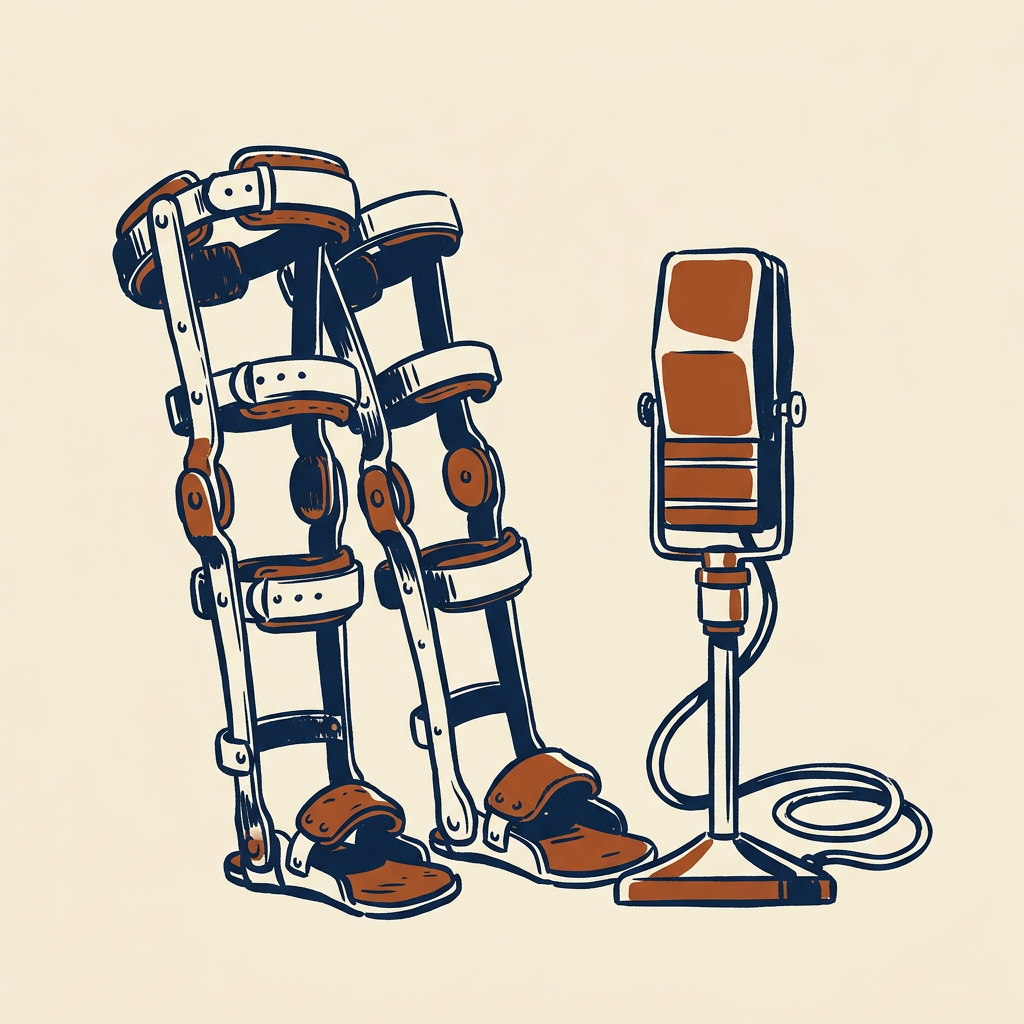
Before 1921 his career was promising but thin: lost the 1920 vice-presidential race, charming yet not profound. At thirty-nine, at Campobello, a paralytic illness left him unable to walk without heavy braces for life.
Goodwin traces the slow relearning of movement, the Warm Springs hydrotherapy retreat, and careful public-image management that hid the full disability. The point is not generic resilience. Dependency and being underestimated gave him a felt grasp of powerlessness his healthy wealthy youth never supplied.
That causal chain, she argues, produced the fireside-chat intimacy and the Depression-era ability to make struggling citizens feel understood. Empathy was not correlative decoration; paralysis forged it, and the communication style followed.
In practice: The March 12, 1933 fireside chat explaining the bank holiday in plain language, after which deposits reportedly began flowing back, is presented as the public fruit of years managing visible limitation.
5
Cloakroom, not podium
LBJ’s mastery was transactional one-on-one persuasion built over decades, proving successful leadership styles are not interchangeable.
- LLincolnPatient public reasoning and timing
- TT. RooseveltPhysical bravado and moral framing
- FFDRRadio intimacy and empathy
- LLBJHallway vote-trading and the Treatment
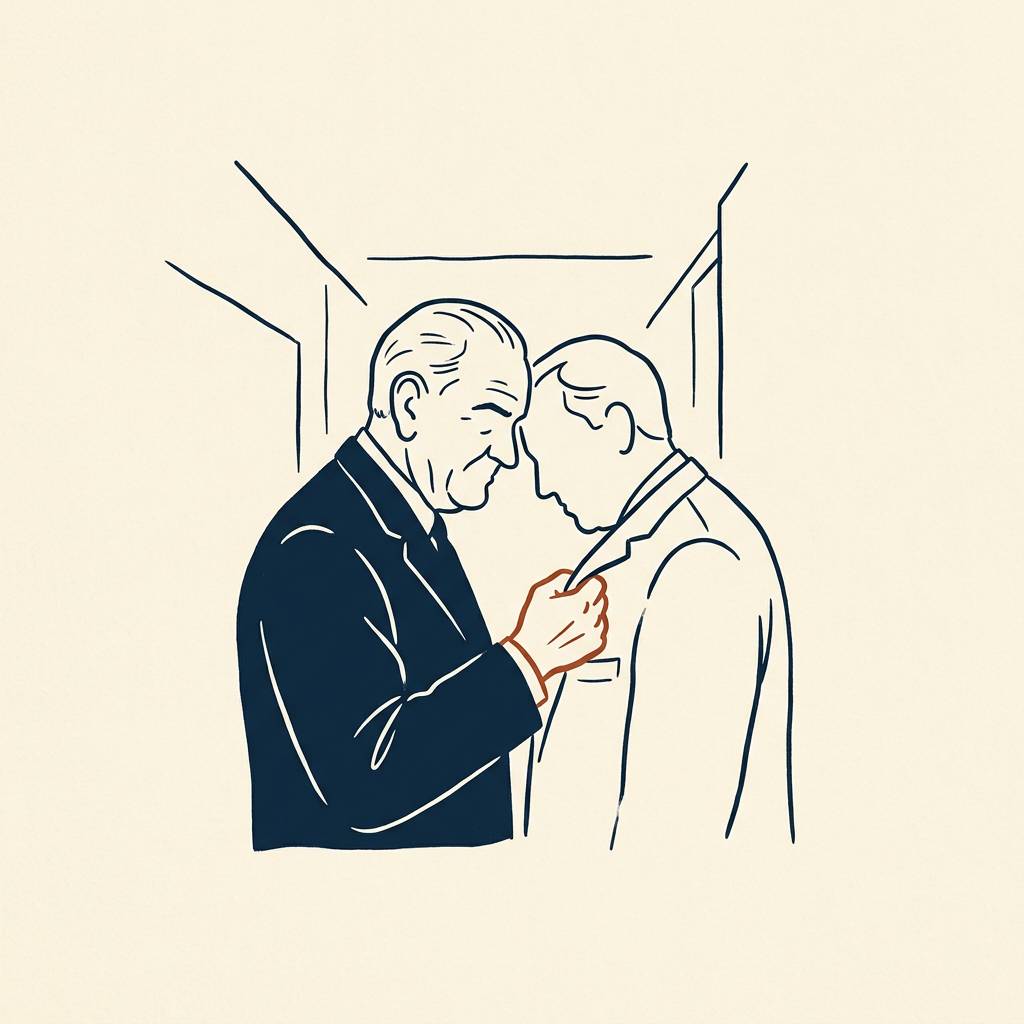
Lincoln, Roosevelt, and FDR each developed public voices for mass audiences. Goodwin shows Johnson building the opposite: the Johnson Treatment—intense, physically close, individualized bargaining.
As aide, congressman, then senator he catalogued what each colleague needed—a committee seat, a district project, flattery—and traded on it relentlessly. By 1955, at forty-six, he was the youngest Senate Majority Leader in history, counting votes before introduction and bridging segregationist South and liberal North by giving each faction something concrete.
Set against the prior chapters, the claim is that no single template exists. Patient reasoning, physical bravado, radio intimacy, and legislative horse-trading suit different problems. Copying another’s style wholesale, rather than building on one’s own formative strengths, courts failure. Johnson never needed to become a great orator; his crucible was the cloakroom.
In practice: His ability to assemble cross-faction coalitions by private delivery of specific needs, not shared public ideals, later scales to the Civil Rights Act push.

6
Rivals in the cabinet
Lincoln’s central act was seating defeated rivals beside him, showing a secure leader gains strength from sharp critics rather than loyalists.
After winning the 1860 nomination over better-known Seward, Chase, and Bates, he put all three in the cabinet—Seward at State, Chase at Treasury. Each doubted his fitness; Seward expected to run the administration.
Goodwin treats the choice as calculated confidence built on years of setback and self-command, not weakness. The payoff appears in the Emancipation Proclamation: drafted summer 1862, held back on Seward’s advice until a military victory would make it read as strength rather than desperation.
Antietam supplied that moment in September 1862; the preliminary proclamation followed days later. Timing itself was the leadership act—the same words at another hour would have carried different meaning at home and abroad.
Patience to wait and humility to take a rival’s counsel both trace to habits formed in private struggle long before.
In practice: Holding the proclamation until after Antietam so foreign governments and the public would read strength, not last-ditch desperation.
7
The bully pulpit
Theodore Roosevelt’s innovation was treating the presidency as a direct line to public opinion that could check Congress and party bosses.
- 1Choose a public fightStrike, trust, or conservation stakes
- 2Speak over bossesPress and pulpit frame the moral choice
- 3Raise public cost of resistanceCongressional and party delay becomes expensive
- 4Act as broker or enforcerPopular mandate lets him move first
↻ and round again
In October 1902 an anthracite coal strike threatened northeastern winter fuel. Prior presidents had sent troops to break strikes for owners. Roosevelt summoned operators and union leaders to the White House as neutral broker—the first time—and pressed arbitration; the compromise raised his public standing.
Goodwin links this to his wider use of press and speeches—the bully pulpit—to generate pressure for antitrust moves such as Northern Securities and for conservation that set aside millions of acres when Congress and bosses resisted.
The approach traces to Badlands reinvention: physical courage and decisive willingness transferred into political courage to break the cautious Republican deal-making style that had produced him. Where Lincoln led by timing and cabinet management, Roosevelt led by public confrontation and moral framing of fights he believed the public would finally back.
In practice: Summoning both sides in the 1902 coal strike rather than dispatching troops, then riding public approval toward trust-busting and conservation.
8
Confidence before programs
FDR’s Depression leadership rested as much on restoring psychological confidence through direct talk as on any single program’s substance.
He took office March 1933 with banks failing under runs and unemployment near twenty-five percent. First move: a national bank holiday closing every bank four days while emergency legislation passed.
On March 12, before reopening, the first fireside chat explained in plain language why the holiday was needed and why deposits were now safe. Money reportedly began flowing back within days. Goodwin calls this the distillation of his method: the legislation was conventional; persuasion to trust again made it work, using intimacy practiced while managing disability.
Over the hundred days Congress passed fifteen major laws—from agricultural adjustment to the Civilian Conservation Corps—an unprecedented pace that rode the political capital those early talks created. A different president with the same bills but without that communication gift, she implies, would have seen far slower recovery of public trust.
In practice: Deposits returning after the March 12 chat, before the full slate of hundred-days legislation had even finished passing.
9
Strength as blind spot
LBJ’s greatest achievement and greatest failure sprang from one trait: unshakeable confidence he could out-negotiate any opponent.
Domestic mastery
Civil Rights Act 1964, Voting Rights 1965, Medicare, Medicaid via tailored Senate trades
Foreign misapplication
Vietnam escalated as if it were another negotiable corridor deal, producing the credibility gap
After Kennedy’s assassination in November 1963 he used national shock as leverage, invoked the dead president in his first joint-session address, then applied decades of Senate vote-counting to break the filibuster. The Civil Rights Act was signed July 1964; Voting Rights and Great Society programs including Medicare and Medicaid followed in 1965.
Goodwin presents this as the fullest expression of transactional leadership: reading each senator’s need and delivering it at unmatched scale and speed on civil rights.
The same confidence made him treat Vietnam as another cloakroom problem solvable by incremental pressure and persuasion, even when military assessments suggested the war could not be won on his terms. He escalated troops through 1965 and after while publicly minimizing the buildup, creating the credibility gap journalists named between words and visible reality.
Vietnam is not a separate failure; it is evidence that the trait that won domestic votes could not recognize a conflict persuasion would not solve.
In practice: The identical personal-persuasion faith that broke the civil-rights filibuster later minimized the Vietnam buildup and widened the credibility gap.
10
Citizens as partners
Across styles and eras, all four succeeded by making citizens feel participants in the crisis rather than spectators, drawing on private struggle that predated the public one.
- 1Private crucible firstDepression, grief, paralysis, or anxious upbringing metabolized
- 2Self-correction habitViews and programs revised when evidence demands
- 3Explain the whyPublic treated as partner in hard decisions
- 4Crisis revealsNational emergency draws on capacity already built
After separate formation and crisis chapters, Goodwin extracts common threads she treats as leadership itself. First is self-reflection and correction: Lincoln revising emancipation views, Roosevelt adjusting trust policy after legal setbacks, FDR replacing struck-down New Deal programs, Johnson privately admitting the war strategy needed rethinking.
Second is communication that explains reasoning behind hard choices—Lincoln’s public letters, Roosevelt’s press conferences and essays, FDR’s fireside chats, Johnson’s televised voting-rights address—treating the public as partner, not audience to manage.
Third, and most important on her reading, each public strength grew from a private struggle that came first. Leadership is not summoned in the storm; it is built beforehand by how a person metabolizes adversity. She does not claim hardship guarantees leadership—many suffer without leading. Her narrower claim is that in these four cases the specific adversity and the later skill are traceable chapter by chapter.
In practice: Lincoln’s letters on emancipation, FDR’s chats, and Johnson’s joint-session voting-rights speech all explain the why rather than merely announce the what.
Key terms
- Manufactured leadership Capacity built piece by piece through response to personal emergency, not an innate spark.
- Organizing story Early narrative—self-mastery by reason or by physical will—that turns raw ambition into vocation.
- Crucible Unchosen ordeal (grief, paralysis, cloakroom years) that forges a later public skill.
- Team of rivals Lincoln’s choice to put defeated, doubting opponents in his cabinet as a source of strength.
- Bully pulpit Roosevelt’s use of the presidency to speak past bosses and generate public pressure for action.
- Fireside chat FDR’s plain-language radio talks that restored confidence by making listeners feel understood.
- Johnson Treatment Intense, close-range, individualized persuasion that traded on each colleague’s specific needs.
- Credibility gap The split between Johnson’s minimized public account of Vietnam and the visible scale of escalation.
What to do
- Name one past setback and the specific skill or habit it left you, rather than treating it as only something survived.
- This week, when a pressured decision lands, explain your reasoning to those affected instead of only announcing the outcome.
- For your next hard project team, deliberately include one person who has openly disagreed with your approach.
- Before locking a high-stakes choice, ask whether you are reusing a past style out of habit rather than because it fits this problem.
- When communicating bad or complex news, strip jargon and say what you are doing and why in the plainest sentences you can.
Questions to think with
- Which private adversity in your own history most shaped how you now handle public or workplace pressure?
- Are you building a team of rivals or a room of loyalists, and what does that choice reveal about your confidence?
- When has a strength that once worked become a blind spot applied to the wrong kind of problem?
- Do the people you lead feel like participants who hear your reasoning, or spectators who only receive decisions?
- If leadership is manufactured before the crisis, what are you metabolizing right now that a future emergency will draw on?
The other side
The central weakness is selection: Goodwin studies four men she already knew as successful presidents, so the book cannot test adversity-forges-leadership against failures who also suffered—Andrew Johnson, Hoover facing the same Depression, Nixon’s crucible yielding Watergate. Without that control group the causal claim stays after-the-fact interpretation. Her personal tie to LBJ softens the Vietnam treatment relative to his legislative wins, and the design—four American male presidents—says little about leadership without elections, a free press, or outside that narrow institutional frame.
Who it's for
Readers of presidential history who want four administrations compared through one lens, plus managers and civic-minded readers hunting crisis-leadership lessons grounded in biography rather than trait checklists. Those seeking a cross-cultural, gendered, or rigorously controlled theory of leadership will need other books.